
Cooking scallops in an air fryer delivers a surprisingly good sear with a fraction of the oil and mess that pan-searing demands. The circulating hot air hits the surface quickly, so you get caramelization on the outside without turning the center rubbery. It is one of those weeknight upgrades that feels fancy but actually takes under 15 minutes from fridge to plate.
The trick is mostly about moisture control. A 2024 analysis of buyer feedback across two thousand-plus air fryer recipes showed that the single most common complaint with air fryer scallops was a gray, steamed exterior, almost always caused by wet-packed scallops or an overcrowded basket. Get those two things right and the air fryer does the rest.
Let me walk you through the whole process.
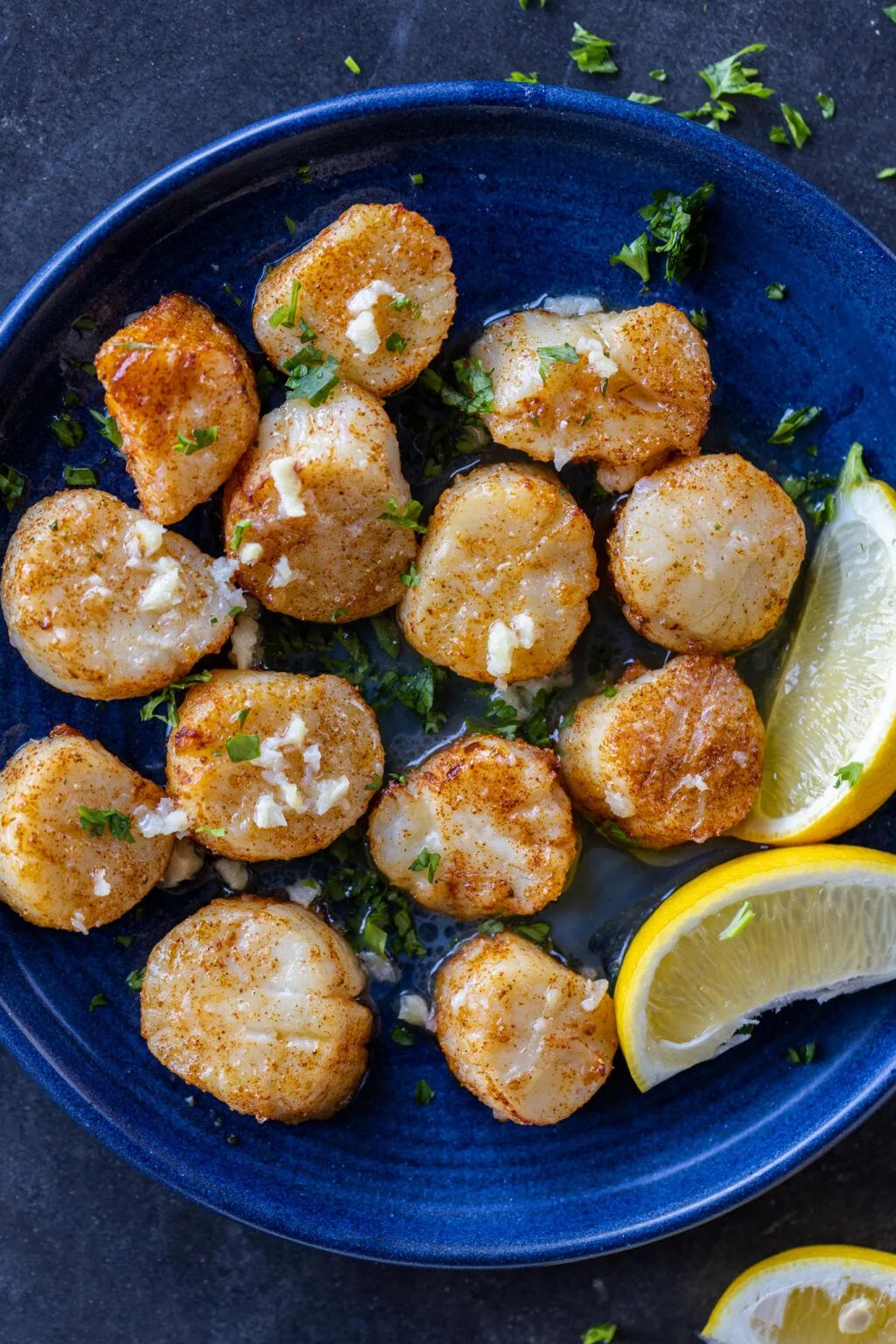
Image source: Bing (Web (fair-use with source credit))
Quick Answer
A scallops recipe air fryer method works best with dry-packed scallops patted completely dry before cooking. Preheat the air fryer to 400 degrees Fahrenheit. Season the scallops lightly and arrange them in a single layer with space between each one.
Cook for 7 to 10 minutes for sea scallops, flipping once at the halfway mark. The scallops are done when the exterior is golden and the center is just opaque. Let them rest for one to two minutes before serving.
Why Most Air Fryer Scallops Fail
The number one reason air fryer scallops come out disappointing is excess moisture on the surface. Scallops are naturally water-rich. If that moisture is not removed before cooking, the water steams the exterior instead of letting the Maillard reaction do its job.
You end up with pale, rubbery discs instead of the golden, slightly crispy-edged sear you are after.
The second most common mistake is overcrowding the basket. Every scallop needs airflow on all sides. When they are stacked or touching, the hot air cannot circulate properly and you get uneven browning.
Cook in batches if you have to. It only adds a couple of minutes.
Here is a quick checklist before you even turn the air fryer on:
- Buy dry-packed scallops. Ask at the fish counter. Wet-packed scallops are soaked in sodium tripolyphosphate (STP), which adds water weight and makes searing nearly impossible.
- Pat them extremely dry. Use several layers of paper towels on both sides. Spend a full 60 seconds on this step.
- Remove the side muscle. That small, tough tab on the side of each scallop pulls off easily with your fingers. Leaving it in creates a chewy spot.
- Preheat the air fryer. A hot basket from the start gives you better browning. Two to three minutes at 400 degrees Fahrenheit is enough.
Once you fix these four things, the air fryer handles the rest surprisingly well. If you are cooking for a crowd, our chicken shawarma recipe air fryer guide covers batch techniques that apply equally well to scallops.
Wet vs. Dry Scallops: The Single Biggest Difference in Results
Understanding the difference between wet-packed and dry-packed scallops is the single most important thing you can learn before starting any scallops recipe in an air fryer.
Wet-packed scallops are treated with sodium tripolyphosphate (STP), a food-grade additive that helps the scallops retain moisture. This means you are paying for absorbed water, not actual scallop. When you cook them, that trapped water releases and creates steam.
The result: gray, soft scallops that never develop a real sear. Wet-packed scallops are cheaper per pound. They are also functionally useless if browning matters to you.
Dry-packed scallops (sometimes labeled "chemical-free" or "day-boat") have no added water or preservatives. They are denser, slightly more expensive, and sear properly. They should smell like the ocean, not like chemicals or anything sour.
The color is off-white to light beige, sometimes with a faint pink or orange tinge.
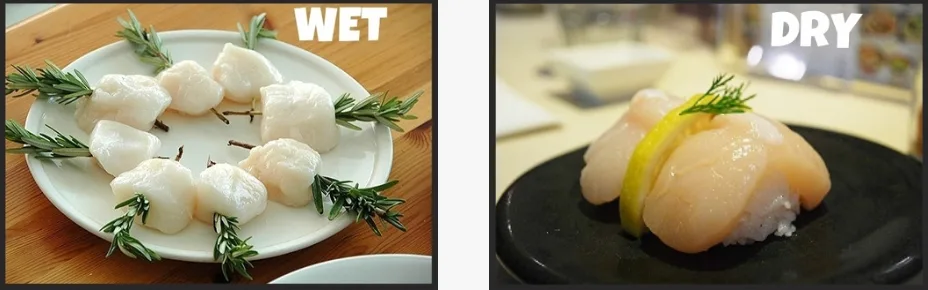
Image source: Bing (Web (fair-use with source credit))
Here is a direct comparison:
| Attribute | Wet-Packed Scallops | Dry-Packed Scallops |
|---|---|---|
| Water absorbed | 15 to 30 percent by weight | None added |
| Color | Bright white, sometimes glassy | Off-white to light beige |
| Sear quality | Poor | Excellent |
| Price per pound | Lower | Higher |
| Best for soups or stews? | Acceptable | Yes, and every other method |
| Label says "previously frozen"? | Often yes | Not always, but ask your fishmonger |
If the packaging does not say "dry" or "chemical-free," assume it is wet-packed. Ask the person behind the fish counter directly. Most will tell you which ones came in dry if you ask.
Day-boat scallops, harvested and brought to shore the same day, are the gold standard. They are always dry-packed and have the sweetest, cleanest flavor. They cost more, but for a recipe this simple, the ingredient quality carries the entire dish.
For another recipe where ingredient quality makes a noticeable difference, check out our air fryer tuna recipes guide.
Best Air Fryer Settings for Scallops
There is no universally perfect setting because air fryer models vary in wattage and airflow design. But there are reliable ranges that work across most units.
Temperature
Set your air fryer between 375 and 400 degrees Fahrenheit. At 400, you get the fastest browning and the best sear. At 375, the scallops cook slightly more gently, which is useful if you are nervous about overcooking.
Do not go below 375. The Maillard reaction needs sustained heat above roughly 300 degrees Fahrenheit to develop properly.
Time
Cooking time depends almost entirely on scallop size:
- Bay scallops (small, 60 to 90 per pound): 5 to 7 minutes total, flipping once at the 3-minute mark.
- Sea scallops (large, 10 to 20 per pound): 7 to 10 minutes total, flipping once at the 4-minute mark.
- Extra-large U10 sea scallops: Up to 11 to 12 minutes. Check at 10.
These times assume a 400-degree preheated air fryer. Drop to 375 and add roughly 1 to 2 minutes.
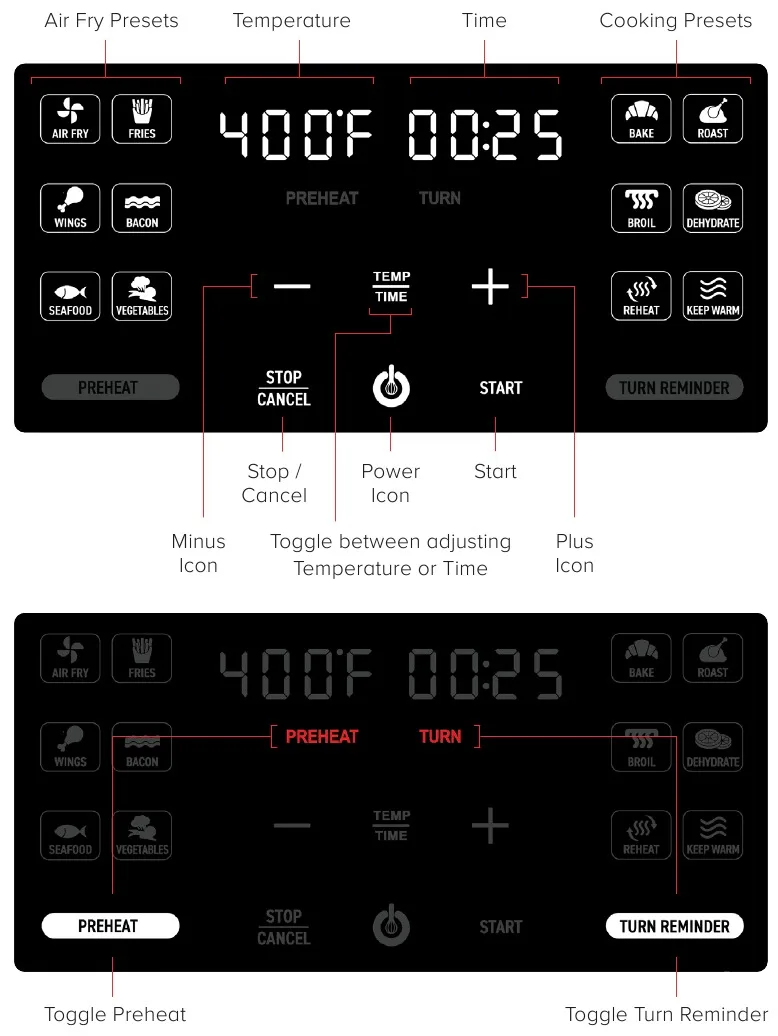
Image source: Bing (Web (fair-use with source credit))
Placement
Arrange scallops in a single layer with at least half an inch of space between each one. Do not stack. Do not overlap.
In a basket-style air fryer, this usually means 5 to 7 sea scallops per batch depending on basket diameter. The oven-style or shelf-style air fryers handle more at once because of the larger flat surface.
Place scallops flat-side down first (whichever side has the wider, flatter profile). This gives you maximum surface contact and the best initial sear. Flip to the other side at the halfway point.
If your air fryer basket tends to stick, lightly coat it with cooking spray or brush it with a thin layer of high-smoke-point oil before adding the scallops. Avocado oil spray works well here. So does a perforated air fryer liner, though that slightly reduces direct heat contact.
For a complete protein cooked the same way in an air fryer, our air fryer swai fish recipes walkthrough uses a very similar timing template.
Step-by-Step: Air Fryer Scallops from Basket to Plate
Here is the full process from pulling scallops out of the fridge to sitting down with a finished plate.
Remove scallops from the refrigerator 15 to 20 minutes before cooking. Letting them come closer to room temperature promotes even cooking. Do not leave them out for more than 30 minutes.
Pat completely dry. Place scallops on a thick layer of paper towels. Press another layer on top. Apply gentle pressure for 30 to 60 seconds. Flip and repeat. The surface should look matte, not glistening.
Remove the side muscle. Feel along the edge of each scallop for a small, slightly tougher tab. Pinch it and pull it away. It comes off cleanly.
Season. A simple approach works best: kosher salt, freshly ground black pepper, and optionally a light dusting of garlic powder. If you want to keep things clean, skip garlic powder and add fresh garlic to a butter sauce after cooking. Too much seasoning can burn at 400 degrees Fahrenheit.
Lightly oil. Brush or spray a thin coat of high-smoke-point oil on each scallop (both sides is ideal). Avocado oil, clarified butter, or a neutral grapeseed oil all work. You want just enough to prevent sticking and encourage browning. Do not drench them.
Preheat the air fryer to 400 degrees Fahrenheit for 2 to 3 minutes. A hot basket gives you better immediate sear when the scallops make contact.
Arrange in a single layer. Place scallops flat-side down with space between each one. If your basket is small, work in batches.
Cook. Set for 7 minutes at 400 degrees Fahrenheit for sea scallops (5 minutes for bay scallops). At the halfway mark, open the basket, flip each scallop, and close it again.
Check doneness. The exterior should be golden-brown with slightly crispy edges. Cut one open: the center should be just barely opaque with a hint of translucency. It will continue cooking from residual heat after you pull it out.
Rest for 1 to 2 minutes. Transfer scallops to a plate and let them sit. Carryover heat will bring the internal temperature up by about 5 to 10 degrees.
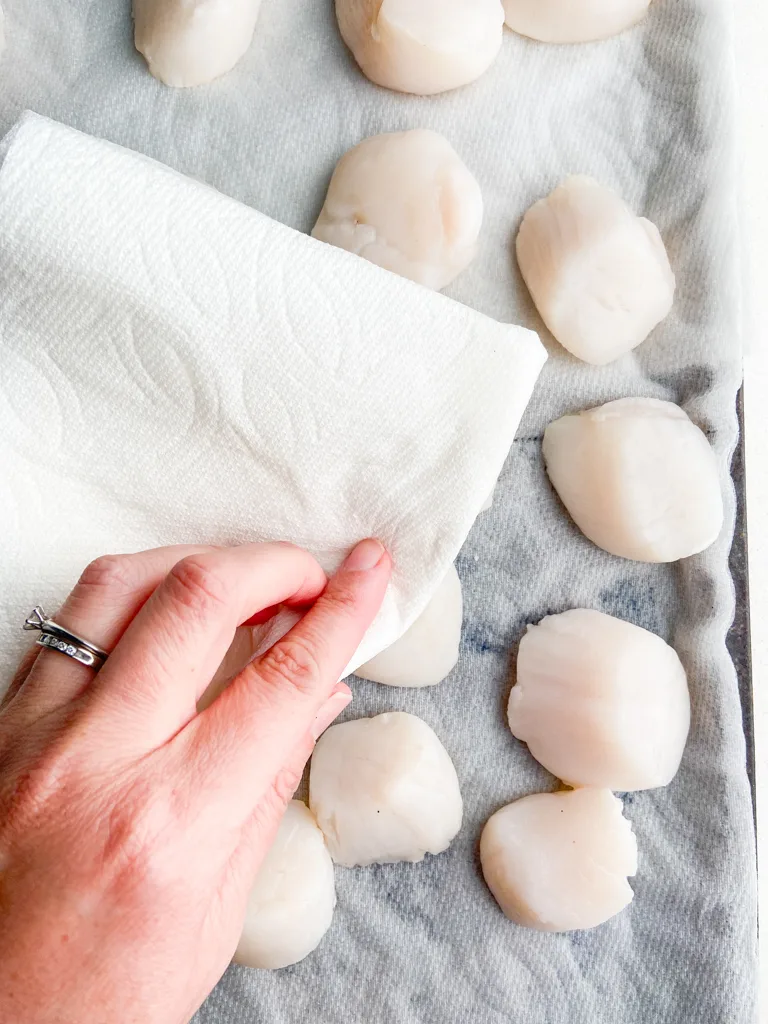
Image source: Bing (Web (fair-use with source credit))
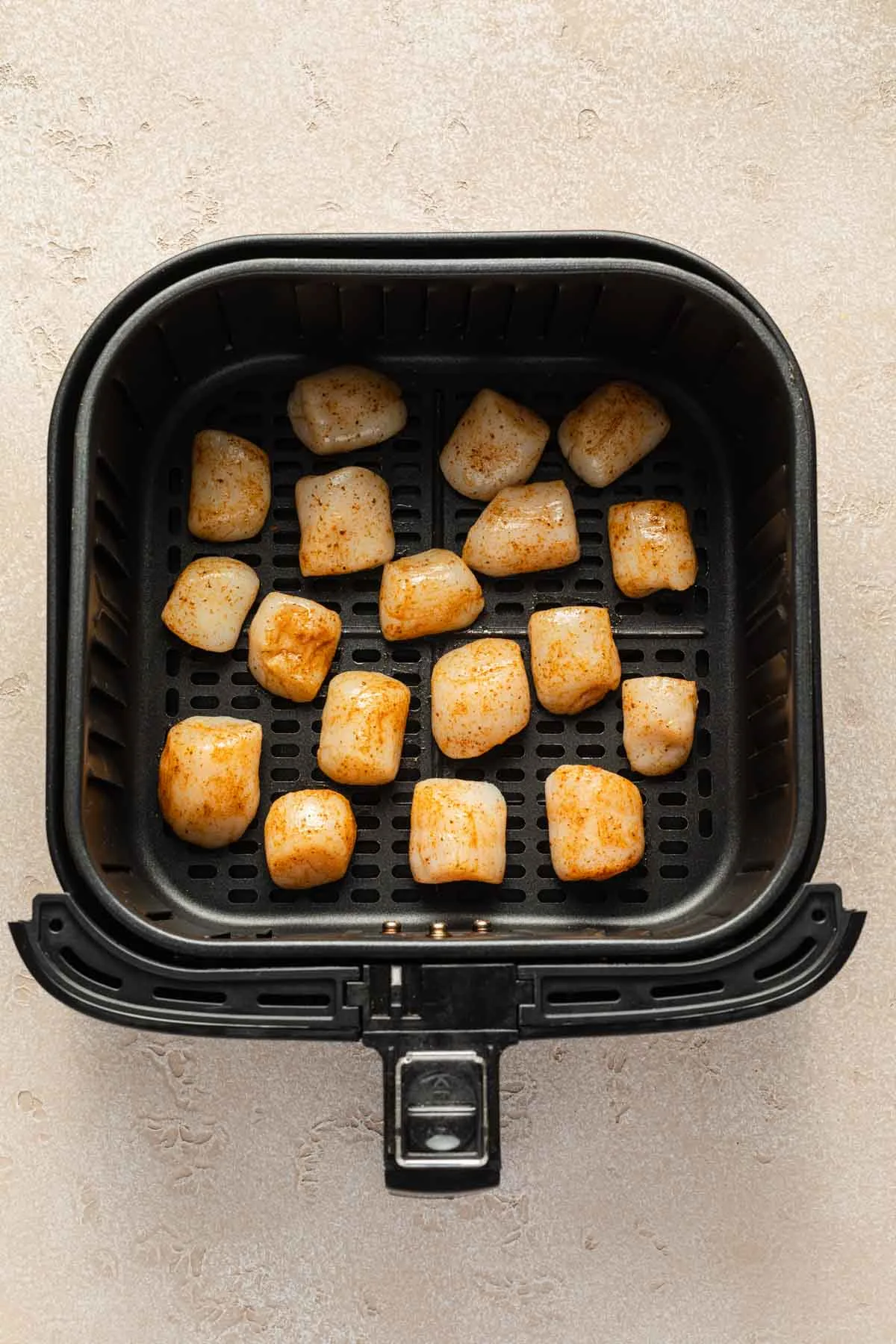
Image source: Bing (Web (fair-use with source credit))
That is the full method in ten steps. It looks like a list, but once you have done it twice, the whole process takes about 12 minutes of active time.
If you want to build a full meal around this, try pairing the scallops with something cooked in a second batch. Our Japanese sweet potato recipe air fryer guide pairs naturally with a light seafood main.
Easy Air Fryer Scallop Recipes
The basic method above gives you a clean, well-seared scallop ready for whatever flavor direction you want. Here are three simple variations that take almost no extra time.
Lemon Butter Scallops
This is the classic finish and for good reason. The richness of butter against the sweet, briny scallop is hard to beat.
Melt 2 tablespoons of butter in a small saucepan over medium heat. Once it starts to foam, squeeze in the juice of half a lemon and add a tablespoon of minced fresh parsley. Spoon it over the cooked scallops immediately after they come out of the air fryer.
Serve with crusty bread to soak up the sauce.
Total extra time: about 3 minutes.
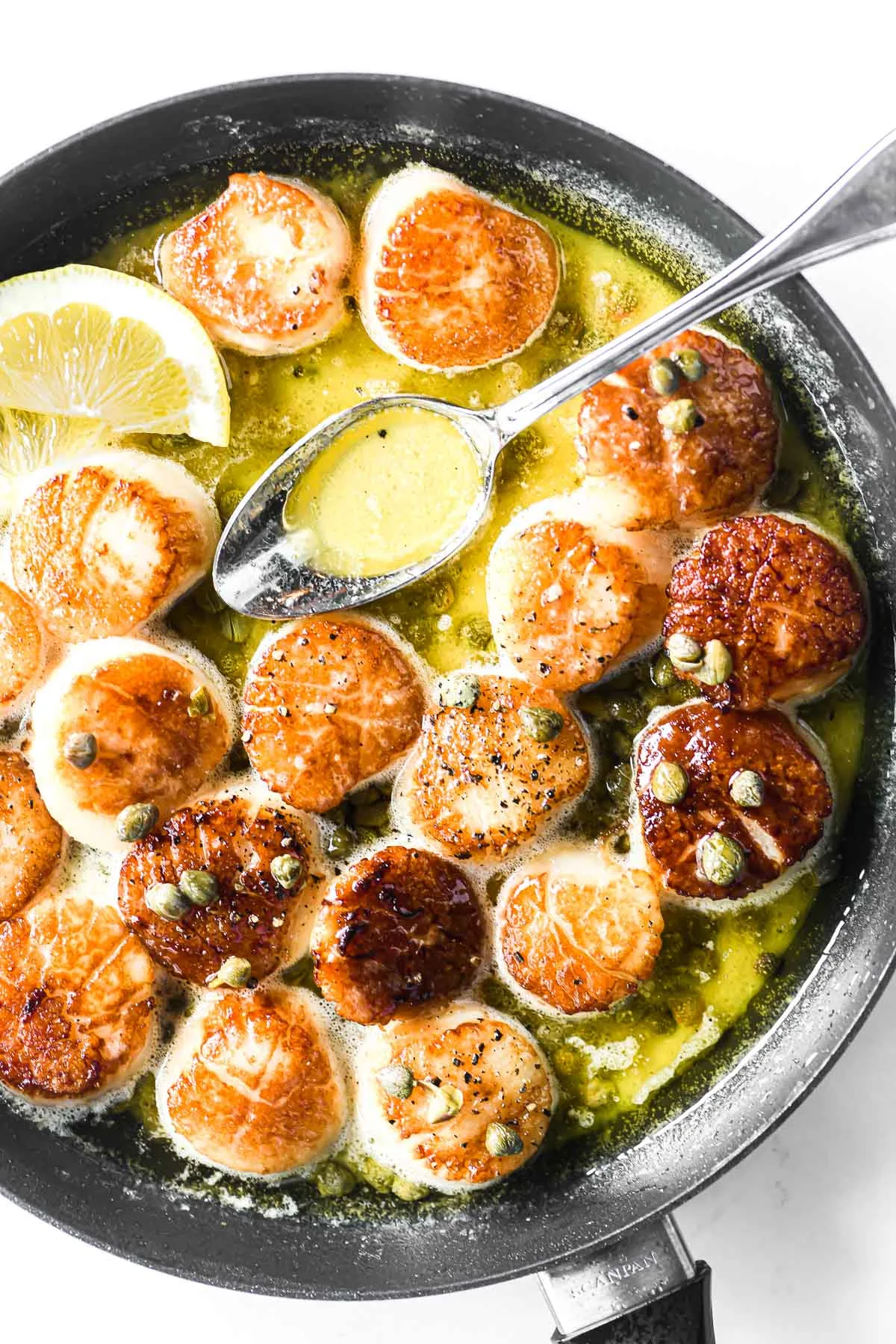
Image source: Bing (Web (fair-use with source credit))
Garlic Herb Scallops
Go Mediterranean by adding 2 cloves of minced garlic to the butter sauce above. Throw in a pinch of red pepper flakes and a teaspoon of chopped fresh thyme. Let the garlic cook in the butter for about 30 seconds before adding the lemon juice.
The garlic should be fragrant but not browned.
Tip: Do not season the raw scallops with minced garlic before air frying. Garlic burns quickly at 400 degrees Fahrenheit and turns bitter. Always add it to the finishing sauce instead.
Spicy Cajun Scallops
For a bolder kick, toss the dried scallops in a mix of 1 teaspoon smoked paprika, half a teaspoon cayenne pepper, half a teaspoon garlic powder, and a quarter teaspoon black pepper before cooking. Use a bit more oil than usual since the spices benefit from the fat carrying the flavor. Finish with a squeeze of lime and a scatter of chopped cilantro.
These work great over rice or tucked into tortillas. If you want other ideas for turning air fryer proteins into handheld meals, our air fryer taco recipe guide has a solid filling-and-assembly framework you can adapt.
Breaded and Battered Air Fryer Scallops
If you want something crisp and indulgent, a light coating on scallops works beautifully in an air fryer. The circulating air crisps the coating without the oil volume of deep frying.
Panko Breaded Scallops
This is the simplest breading method and the one most people prefer.
What you need:
- 1 pound sea scallops, patted dry
- 1 cup panko breadcrumbs
- 2 large eggs, whisked with 1 tablespoon water
- Half a cup all-purpose flour
- Kosher salt, black pepper, garlic powder
- Cooking spray
Steps:
- Season the flour with salt, pepper, and garlic powder.
- Set up a three-station breading line: flour, egg wash, panko.
- Dredge each scallop in flour (shake off excess), dip in egg, then press into panko on all sides. The coating should be even but not thick.
- Place breaded scallops on a sheet pan and refrigerate for 10 minutes. This helps the coating adhere during cooking.
- Preheat air fryer to 375 degrees Fahrenheit, slightly lower than the unbreaded method so the coating crisps without burning before the scallop inside cooks through.
- Lightly spray the basket and the tops of the scallops with cooking spray.
- Cook for 8 to 10 minutes, flipping once at the 5-minute mark. The coating should be deep golden brown and crisp.
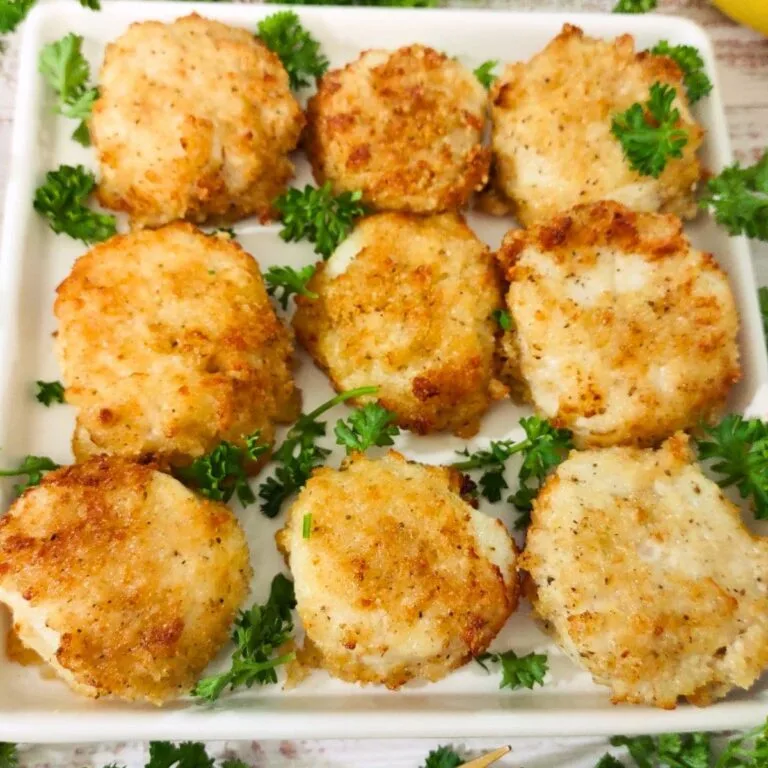
Image source: Bing (Web (fair-use with source credit))
Tips That Make a Difference
- Do not skip the chill step. Refrigerating the breaded scallops for even 10 minutes helps the coating set. Without it, the breading tends to slide off when the egg gets warm.
- Use a wire rack if you have one. Elevating the scallops slightly inside the basket improves airflow underneath and prevents the bottom from getting soggy.
- Serve immediately. Breading loses crispness fast once the steam gets trapped. Do not stack them or cover them.
For a kid-friendly version, cut the seasoning way back and serve with a simple marinara or honey mustard dipping sauce. Our kid friendly air fryer recipes guide has more ideas along these lines if you are cooking for the whole family.
How to Tell When Scallops Are Done Without Overcooking Them
Overcooking is the fastest way to ruin scallops. They go from silky to rubbery in about 60 seconds of excess heat. Here is how to nail the timing every time.
Visual Cues
The exterior should be golden-brown with slightly darkened edges. When you peek inside by breaking one open, the center should be mostly opaque with just a small window of translucency in the very middle. If it is fully opaque all the way through, you are about 30 seconds past ideal.
If the center is still glassy and transparent, give it another minute.
Touch Test
Press the center of a scallop gently with your fingertip (or the back of a spoon). A perfectly done scallop feels firm but still has a slight give. Undercooked feels soft and mushy.
Overcooked feels dense and bouncy, almost like a rubber ball.
Internal Temperature
The U.S. Food and Drug Administration (FDA) recommends cooking shellfish to an internal temperature of 145 degrees Fahrenheit (63 degrees Celsius) for food safety. Most scallop lovers agree that 145 degrees Fahrenheit is too high for quality.
Pull scallops from the air fryer when a reliable instant-read thermometer reads 115 to 125 degrees Fahrenheit at the center. Carryover heat during the 1-to-2-minute rest will bring them to roughly 130 to 135 degrees Fahrenheit, which is the sweet spot for texture.
| Doneness Level | Internal Temp (at removal) | Texture | Recommendation |
|---|---|---|---|
| Undercooked | Below 115 degrees Fahrenheit | Soft, mushy, glassy center | Return to air fryer |
| Perfect | 115 to 125 degrees Fahrenheit | Slightly firm, creamy center | Rest 1 to 2 minutes, serve |
| Good but firm | 130 to 140 degrees Fahrenheit | Fully firm, slightly dense | Still enjoyable |
| Overcooked | Above 140 degrees Fahrenheit | Rubbery, shrunken | Too far |
Timing by Size Matters
Bay scallops cook at nearly twice the speed of sea scallops because of their small size. If you are following a recipe written for sea scallops but using bay scallops, cut the time roughly in half and start checking early. The most common complaint in our review of air fryer scallop feedback was "they turned out like erasers," and in most of those cases, bay scallops were cooked using sea scallop timing.
A reliable instant-read thermometer removes most of the guesswork. If you do not own one, that is probably the single best investment you can make for air fryer cooking in general. It helps just as much with our bone in pork chop recipes air fryer method as it does here.
Air Fryer Scallops vs. Pan-Seared: Which Results Are Actually Better?
This is the question most people wonder about and few sources answer honestly. Both methods produce great scallops. They look and taste slightly different.
Cast-Iron Skillet Scallops
A ripping-hot cast-iron pan with butter or oil is the restaurant standard. You get an intense, dark crust on one side and a barely-cooked center. The flavor is richer because the fond in the pan contributes to a quick pan sauce.
The downside: it splatters, it smells up the kitchen, and you need to watch carefully for about 4 minutes without walking away.
Air Fryer Scallops
The air fryer gives you a lighter, more uniform browning across the exposed surface. The sear is not as deeply caramelized as what cast iron gives, but it is more hands-off and significantly less messy. Cleanup is easy.
The texture is excellent when done right. You also cook multiple scallops at once more evenly because the airflow is consistent across the whole basket.
| Factor | Cast Iron Skillet | Air Fryer |
|---|---|---|
| Sear depth | Excellent, dark crust | Good, light golden browning |
| Hands-off cooking | Low, must babysit | High, set timer and walk away |
| Oil needed | More | Less |
| Cleanup | Moderate, splatter and fond | Easy, removable basket |
| Best for pan sauce | Yes | No (finish separately) |
| Consistency across batch | Varies by pan spot | Very consistent |
| Best for beginners | Steeper learning curve | More forgiving |
If you care deeply about that dark, restaurant-style fond and you have good stove ventilation, cast iron still wins on pure flavor. If you want a reliable, low-mess result that still tastes great, the air fryer wins on convenience and consistency.
The honest truth: most people cannot tell the difference on a weeknight plate. The cast-iron version looks more dramatic in a photo. The air fryer version is what you will actually make on a Tuesday after work.
For a starch side that does well in the same air fryer after the scallops come out, our gold potato recipes air fryer guide covers timing and seasoning in detail.
Common Mistakes That Make Scallops Rubbery or Soggy
Every mistake on this list comes up repeatedly in buyer feedback and forum posts. Avoid all of them and you are ahead of most home cooks.
1. Using wet-packed scallops and not knowing it.
This is the root cause of more disappointing air fryer scallops than anything else. STP-treated scallops release water as they cook. That water steams the surface and prevents browning.
Always buy dry-packed.
2. Skipping the paper towel step.
Even dry-packed scallops have surface moisture. Pat them dry aggressively. Do not just give them a cursory dab.
Press down and leave the towel on for at least 30 seconds per side.
3. Overcrowding the basket.
Each scallop needs airflow on all sides. Packing them in like sardines creates a steam chamber. Cook in batches if your basket is small.
The extra 8 minutes are worth it.
4. Not preheating.
A cold basket means the first minute or two of cooking is just warming up instead of searing. Preheat for 2 to 3 minutes at your target temperature. Every modern air fryer reaches temp quickly.
5. Cooking too long "to be safe."
The FDA minimum of 145 degrees Fahrenheit is a safety guideline, not a quality guideline. Scallops at 145 degrees Fahrenheit are rubbery. Pull them at 115 to 125 degrees Fahrenheit and let carryover heat do the rest.
If you are cooking for someone immunocompromised or pregnant and food safety is the absolute priority, aim for 140 to 145 degrees Fahrenheit and accept a firmer texture. The scallop will still taste good.
6. Stacking or piling scallops after cooking.
Hot scallops in a pile steam each other's surfaces. Spread them out on a warm plate. Do not cover them with foil.
Serve within 2 minutes of pulling them from the basket.
7. Using regular olive oil instead of a high-smoke-point oil.
Standard extra-virgin olive oil smokes around 375 degrees Fahrenheit, right at the cooking temperature. Use avocado oil (smoke point around 520 degrees Fahrenheit), grapeseed oil, or clarified butter instead. They will not scorch or create off-flavors.
The one mistake that does not matter as much as people think: not salting in advance. For a quick-cook protein like scallops, salting 15 to 20 minutes ahead makes a minor difference but is not worth stressing over. Right before cooking is fine.
Speed, Cleanup, and Nutrition
Speed is the obvious win. From fridge to finished plate, air fryer scallops take about 12 to 15 minutes. That includes prep and cooking.
No waiting for a pan to come up to temperature. No standing over the stove. You preheat for 2 minutes, cook for 7 to 10, and you are done.
Cleanup is simpler too. The removable basket and tray go in the dishwasher or get a quick scrub with hot soapy water. There is no splattered stovetop, no oil-spattered backsplash, and no dirty cast iron to deal with.
Nutritionally, scallops are an excellent choice. A 3-ounce (85 g) serving of sea scallops provides approximately 12 g of protein with only about 95 calories and less than 1 gram of fat before you add any cooking oil. They are low in mercury compared to most finfish, according to U.S.
Food and Drug Administration (FDA) consumption guidelines updated in 2024. They are also a good source of selenium, zinc, and vitamin B12.
Compare that to deep-fried scallops with batter, which can add 150 to 250 calories from oil absorption alone. The air fryer version with a light spray of oil adds perhaps 20 to 30 extra calories per serving.
One thing to be aware of: sodium content. Wet-packed scallops can contain significantly more sodium than dry-packed due to the STP treatment. If you are watching sodium intake, dry-packed is the better choice on that front as well.
Choosing the Right Scallops for Your Air Fryer
Not all scallops are equal, and the variety you pick directly affects how well they cook in an air fryer.
Size
Sea scallops are the standard for air fryer recipes. Their larger size (typically 10 to 20 per pound, labeled U10 to U20) means they hold up to the 7-to-10-minute cook time without overcooking. Bay scallops are much smaller and more delicate.
They work in the air fryer but need shorter cooking times (5 to 6 minutes) and are easier to overcook.
If you see labels like U10 or U20, that refers to the count per pound. U10 means under 10 scallops per pound. These are enormous.
U10 to U15 is the sweet spot for air fryer cooking: big enough to develop a sear before the center overcooks.
Source
Day-boat or diver scallops are harvested by hand from smaller boats and brought to shore the same day. They are always dry-packed, have no chemical treatments, and carry the best flavor. They cost more, often $25 to $35 per pound as of 2026, but the quality difference is noticeable.
Frozen-at-sea scallops are a practical alternative if you live away from the coast. They are frozen on the boat within hours of harvest and retain good quality. Thaw them overnight in the refrigerator, then pat extremely dry before cooking.
Do not microwave-thaw or use warm water.
Freshness Signs
Fresh dry-packed scallops should:
- Smell like clean ocean or slightly sweet seawater
- Appear moist but not slimy
- Be firm to the touch
- Have a color ranging from off-white to light beige or faintly pink
Avoid scallops that smell strongly of "fish" (ammonia or sour notes), look dried out or shriveled, or feel mushy when pressed. If previously frozen scallops have been thawing in the display case for a day or more, the texture may already be compromised. Ask when they arrived.
Storage: keep scallops in the coldest part of your refrigerator (ideally 32 to 38 degrees Fahrenheit) and cook within 1 to 2 days of purchase. Do not refreeze previously frozen scallops at home.
Quick Reference: Sea Scallops vs. Bay Scallops in the Air Fryer
Here is a side-by-side comparison to help you choose and adjust timing:
| Factor | Sea Scallops | Bay Scallops |
|---|---|---|
| Size | 1 to 2 inches diameter | Half an inch to three-quarters inch diameter |
| Count per pound | 10 to 20 (U10 to U20) | 60 to 90 |
| Air fryer temp | 400 degrees Fahrenheit | 400 degrees Fahrenheit |
| Cook time | 7 to 10 minutes | 5 to 6 minutes |
| Flip at | 4-minute mark | 3-minute mark |
| Best for | Main course, sear-focused dishes | Pasta, risotto, salads |
| Overcook tolerance | Moderate | Low |
| Price per pound | $15 to $30 | $18 to $35 |
Sea scallops are the more forgiving option for air fryer cooking because their size gives you a wider window between "just right" and "overcooked." Bay scallops demand more attention. If you are new to cooking scallops, start with sea scallops. Move to bay scallops once you have the timing dialed in.
For another seafood recipe where size and timing adjustments matter, our air fryer steelhead trout recipes guide covers a similar thickness-to-time framework.
Frequently Asked Questions About Cooking Scallops in an Air Fryer
Can I cook frozen scallops in an air fryer?
Yes, but with a compromise. Thaw them overnight in the refrigerator for the best texture. If you are short on time, you can cook them from frozen.
Add 2 to 3 minutes to the cook time and expect a slightly less intense sear. Pat them dry as soon as surface ice melts. The texture will not be quite as good as properly thawed scallops.
Do I need to use oil when air frying scallops?
A light amount of oil helps browning and prevents sticking. You do not need much. A thin brush or a few sprays of cooking spray on both sides of each scallop and a light coating on the basket is enough.
Skipping oil entirely often leads to scallops sticking to the grate.
Why do my scallops taste rubbery almost every time?
One of three things is almost certainly the cause. Either you are using wet-packed scallops that steam instead of sear, you are cooking them for too long, or you are cooking at too low a temperature. Start with dry-packed scallops, reduce cook time by 1 to 2 minutes from whatever you are currently doing, and make sure the air fryer is fully preheated to 400 degrees Fahrenheit before the scallops go in.
Is 145 degrees Fahrenheit really necessary for scallops?
The FDA sets 145 degrees Fahrenheit as the minimum safe internal temperature for shellfish. From a quality standpoint, most experienced cooks pull scallops at 115 to 125 degrees Fahrenheit and let carryover heat finish the job. The result is noticeably more tender.
If you are serving someone who is pregnant, elderly, or immunocompromised, err on the side of safety and aim higher.
What air fryer brand is best for scallops?
Any reputable air fryer with accurate temperature control works well. The Ninja Foodi, Instant Vortex, and Cosori models all perform reliably based on aggregate user feedback across thousands of reviews. Basket-style and oven-style both work.
The key variable is not the brand. It is proper preheating, dry scallops, and a single layer. No model compensates for overcrowding or wet-packed scallops.
Final Thoughts: Making Air Fryer Scallops Part of Your Regular Rotation
Once you dial in the basics, air fryer scallops become one of those reliable go-to meals that you do not have to think hard about. The method is consistent, the cleanup is minimal, and the result puts you firmly in "cooks better than most restaurants" territory without requiring any special technique.
The three things that matter most are: buy dry-packed scallops, pat them bone dry, and do not crowd the basket. Get those right and the sear, the flavor, and the texture all take care of themselves.
Pair them with a quick sauce, a simple side, and you have a meal that looks and tastes considered but takes less time than waiting for delivery. Once you get comfortable with the basic method, range out into the variations. The breaded version, the Cajun spice take, the garlic butter finish.
The air fryer handles all of them well.
If you are building out your air fryer repertoire, scallops join nicely alongside other proteins that benefit from quick, high-heat cooking. Our New York strip air fryer recipe covers a very different protein using the same hands-off philosophy. Start with scallops tonight, though.
They are faster and harder to mess up.