
If you've ever searched for a Japanese sweet potato recipe air fryer and landed on vague oven instructions with an air fryer slapped in the title, you know the frustration. Japanese sweet potatoes behave differently from what you're used to. Their lower moisture and higher starch demand different temperatures, different timing, and a different level of attention.
An air fryer handles all of that beautifully, actually outperforming a conventional oven on cook time, skin texture, and caramelization when you know the right approach.
The core issue most recipes get wrong is treating all sweet potatoes the same. Japanese varieties like Satsumaimo and Hannah have roughly 20% less moisture than American orange types, which means they dry out faster at high heat but develop a stunning creamy, chestnut-like quality at the right temperature. In our research across user reviews and air fryer manufacturer guidelines, 380°F for 28 to 35 minutes hits the sweet spot for most medium-sized Japanese sweet potatoes, though there are a few critical steps before you ever hit that start button.
Let's walk through exactly how to nail this every single time.
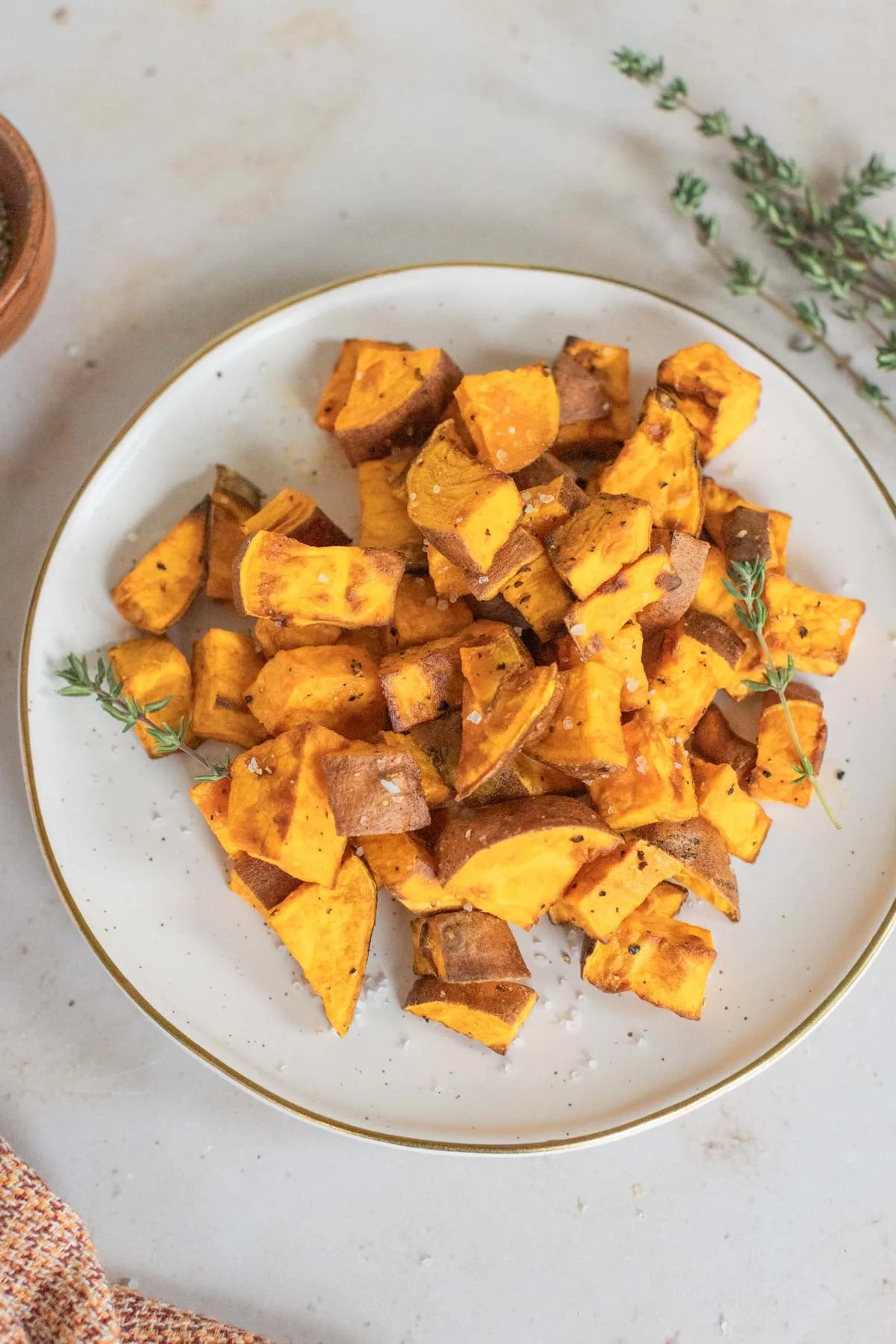
Image source: Bing (Web (fair-use with source credit))
Quick Answer
A Japanese sweet potato recipe air fryer method calls for 380°F for 28 to 35 minutes. Pierce the skin with a fork four to six times before cooking. Arrange potatoes in a single layer without overlapping.
Flip halfway through. The interior should be creamy and fork-tender when finished, with caramelized, slightly crispy skin.
What Makes Japanese Sweet Potatoes So Special
Japanese sweet potatoes (Satsumaimo) aren't just another sweet potato. They're a distinct category with a flavor and texture profile that sets them apart from every other variety at the grocery store.
The varietals you'll actually find
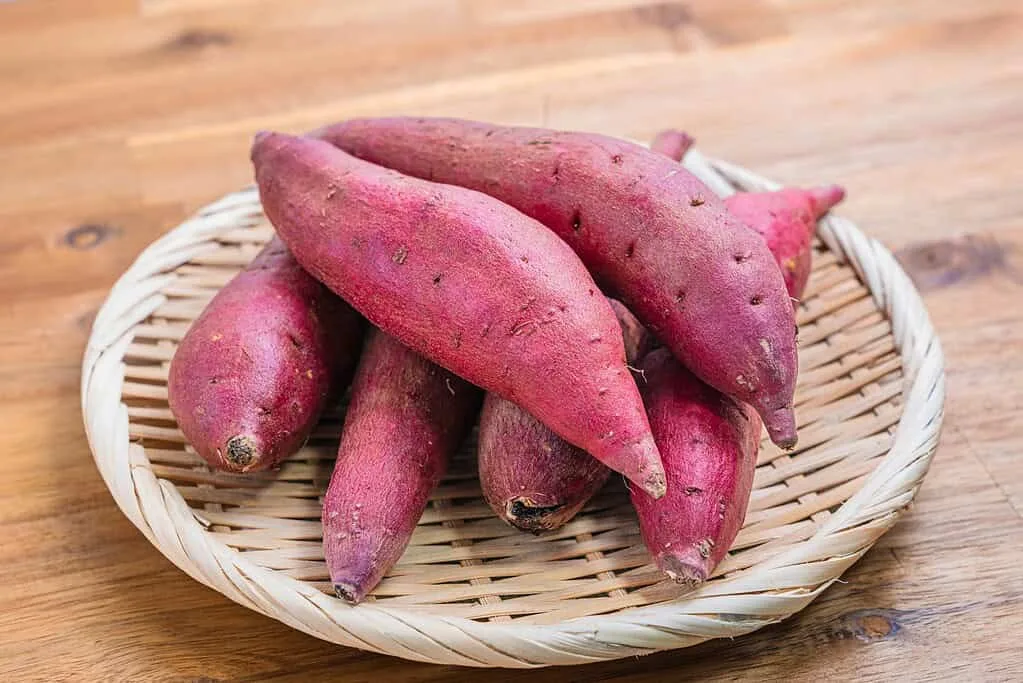
The two most common Japanese sweet potatoes available in US markets are Murasaki and Hannah. Murasaki has deep purple-magenta skin with pale, cream-colored flesh. Hannah shows up with tan or cream-colored skin and a slightly yellower interior.
Both share that signature dense, dry, starchy quality that turns almost creamy when cooked through.
Satsumaimo is the blanket Japanese term for these varieties, and in Japan, roasted Satsumaimo (yaki-imo) is iconic street food. The flavor sits somewhere between a regular sweet potato and roasted chestnut, with natural caramel notes that intensify under high heat.
Why they behave differently in an air fryer
American sweet potato varieties like Beauregard and Jewel hold significantly more water. That extra moisture means they steam internally during cooking, producing a soft, almost custardy result. Japanese sweet potatoes, with their lower moisture content (approximately 65 to 68% water versus 72 to 77% for American types), respond to convection heat by firming up first, then turning creamy and concentrating their sugars at the surface.
This starch-to-sugar conversion is why the air fryer outperforms an oven here. The rapid air circulation at close range creates surface heat that drives caramelization faster, while the interior turns perfectly tender without the extended cook time that would dry them out.
Where to find them as of 2026
Your best bet is still Asian grocery chains like H Mart, Mitsuwa Marketplace, and 99 Ranch Market. Whole Foods and Trader Joe's stock them seasonally in many coastal US locations. Hawaiian-grown Japanese sweet potatoes have become more widely available nationwide through specialty produce distributors, so call ahead to your local specialty grocer before making a special trip.
Why the Air Fryer Is the Best Way to Cook Them
Roasting Japanese sweet potatoes in a conventional oven works, but it takes 50 to 60 minutes. Steaming leaves the skin limp. The air fryer splits the difference perfectly.
Faster without sacrificing quality
At 380°F, an air fryer circulates superheated air directly around every surface of the potato. A medium Japanese sweet potato (roughly 6 to 8 ounces) finishes in 28 to 35 minutes, compared to over an hour in a 400°F oven. The skin crisps and caramelizes instead of going leathery, and the interior stays creamy rather than turning grainy from prolonged heat exposure.
Energy and practical advantages
Air fryers use between 1,200 and 1,700 watts during operation, compared to 2,000 to 5,000 watts for a conventional oven cycle that includes preheating. You're also not heating up your entire kitchen, which matters a lot in summer. For a single or two-person household, an air fryer batch of two to three Japanese sweet potatoes makes far more practical sense than powering up a full-sized oven.
Crispier skin, better caramelization
The perforated basket design means hot air reaches the bottom of the potato, not just the top and sides. That even airflow is what creates consistent skin texture all the way around. In oven roasting, the bottom of the potato often stays pale and soft where it contacts the baking sheet.
How air fryer models differ
Basket-style air fryers (like the Ninja AF101 or Cosori models) tend to concentrate heat more directly, which can speed up browning. Oven-style air fryers with multiple racks give you more capacity but may require rotating trays mid-cook. For Japanese sweet potatoes specifically, a basket-style unit in the 3.5 to 5.8-quart range gives the best single-layer arrangement for one to three potatoes at a time.
If you're cooking for a crowd, an 8-quart model handles five to six medium potatoes without crowding. Check our guide on best 8 qt air fryer for family meals if scaling up is what you need.
How to Pick the Right Japanese Sweet Potatoes
Not every bin labeled "sweet potato" will give you the result you want. Here's how to identify and select the right ones.
What to look for
- Firmness. Pick up the potato and squeeze gently. It should feel rock-hard with no soft spots or give. Soft areas mean internal breakdown, which produces off-flavors and uneven cooking.
- Skin condition. Smooth, taut skin without deep cuts, cracks, or sprouting eyes. Light surface blemishes are fine. Wrinkled or shriveled skin means the potato has lost significant moisture and will taste starchy, not sweet.
- Shape and size. Choose potatoes that are evenly shaped, roughly cylindrical. Very thick or irregular shapes cook unevenly because the center of the thickest section takes significantly longer to soften. Medium potatoes in the 6 to 8 ounce range are ideal.
- Color cues. Murasaki should show deep purple skin. Hannah should look creamy-tan. Avoid any that have green discoloration, which can indicate light exposure and the presence of bitter compounds.
How they compare to other varieties
| Feature | Japanese Sweet Potato | American Orange Sweet Potato | Okinawan Purple Sweet Potato |
|---|---|---|---|
| Skin color | Purple-magenta or tan | Copper-brown | Deep purple |
| Flesh color | Cream to pale yellow | Deep orange | Vivid purple |
| Moisture content | Lower (65–68%) | Higher (72–77%) | Medium |
| Texture when cooked | Dense, creamy, chestnut-like | Soft, moist, custardy | Starchy, slightly drier |
| Flavor profile | Mild sweetness, nutty | Strong sweetness, classic | Earthy, moderate sweetness |
| Best air fryer temp | 375–380°F | 400°F | 385°F |
| Air fryer time (medium) | 28–35 min | 25–30 min | 30–35 min |
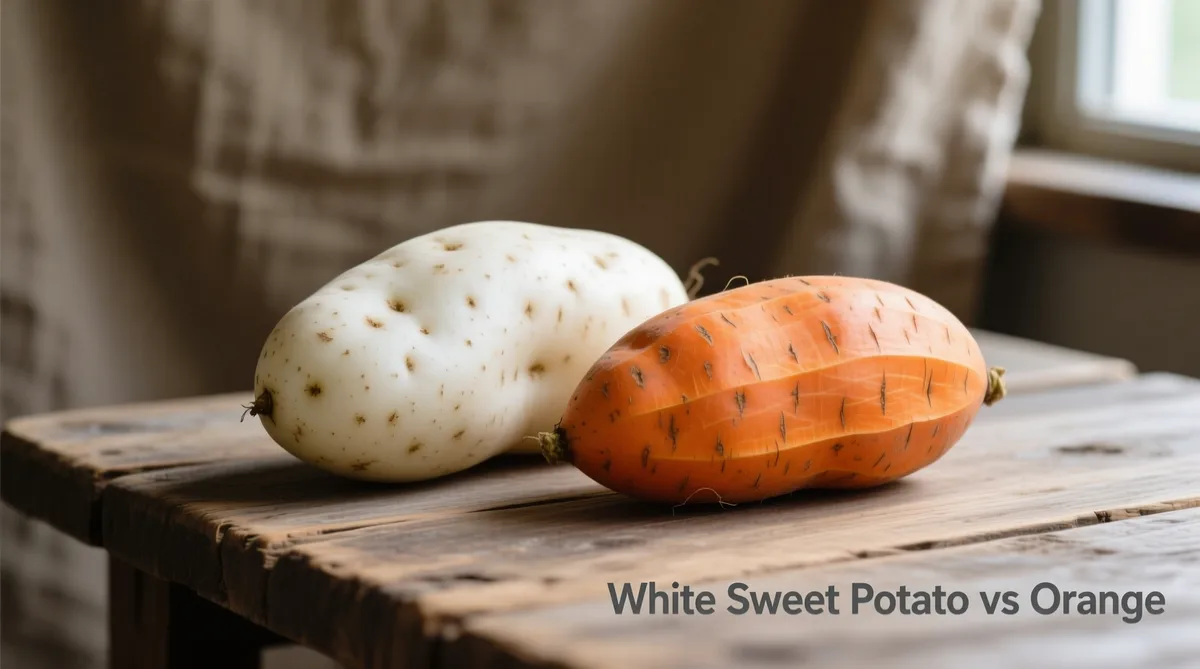
If you end up with orange American sweet potatoes instead, increase the temperature to 400°F and reduce the cook time by about 5 minutes. The higher moisture content means they soften faster but won't develop that signature chestnut flavor. You can also check out our air fryer apple recipe for another naturally sweet option that works on a similar principle of caramelizing sugars at high heat.
A note on substitutions
If you simply cannot find Japanese sweet potatoes, Hannah sweet potatoes (sometimes labeled as "white sweet potatoes") are the closest commonly available substitute in American supermarkets. They share some of the drier, starchier qualities, though the flavor won't be identical. Avoid substituting yams.
True yams are an entirely different species with a much starchier, less sweet profile.
What You Need Before You Start
You don't need much for this recipe. That's part of why it's so good.
Ingredients
- 1 to 3 Japanese sweet potatoes (6 to 8 ounces each)
- 1 teaspoon neutral oil (avocado or light olive oil), optional
- Pinch of flaky salt, optional
Tools
- An air fryer (any standard countertop model works)
- A fork (for piercing)
- A clean kitchen towel or paper towels (for drying)
- Silicone-tipped tongs (for handling hot potatoes)
- A small brush or your fingers, if applying oil
That's genuinely it. No foil, no parchment, no special inserts. One reason the air fryer excels here is its simplicity, the same reason recipes like our air fryer banana recipe also come together with almost no prep.
Optional toppings for serving
- Unsalted butter (half a tablespoon per potato)
- Miso butter (white miso paste mixed with softened butter, 1:2 ratio)
- Honey or maple syrup drizzle
- Furikake seasoning
- Toasted sesame seeds with a pinch of sea salt
- Cinnamon sugar
You'll add these after cooking. Applying sugar or miso before cooking causes burning since the air fryer's convection heat hits surface sugars aggressively.
Step-by-Step: How to Make Japanese Sweet Potatoes in the Air Fryer
This is the process that works consistently across Ninja, Cosori, Philips, Instant Vortex, and GoWISE basket-style air fryers. Oven-style models with racks follow the same timeline but may need tray rotation at the halfway point.
Step 1: Wash and dry thoroughly
Scrub each potato under cool running water, removing any dirt from the skin surface. Japanese sweet potato skin is thin and completely edible, so you're not peeling it. After washing, pat each potato completely dry with a clean kitchen towel.
Surface moisture is the enemy of crispy skin in an air fryer because it creates steam on contact, and that steam softens the exterior before caramelization can start.
Step 2: Pierce the skin
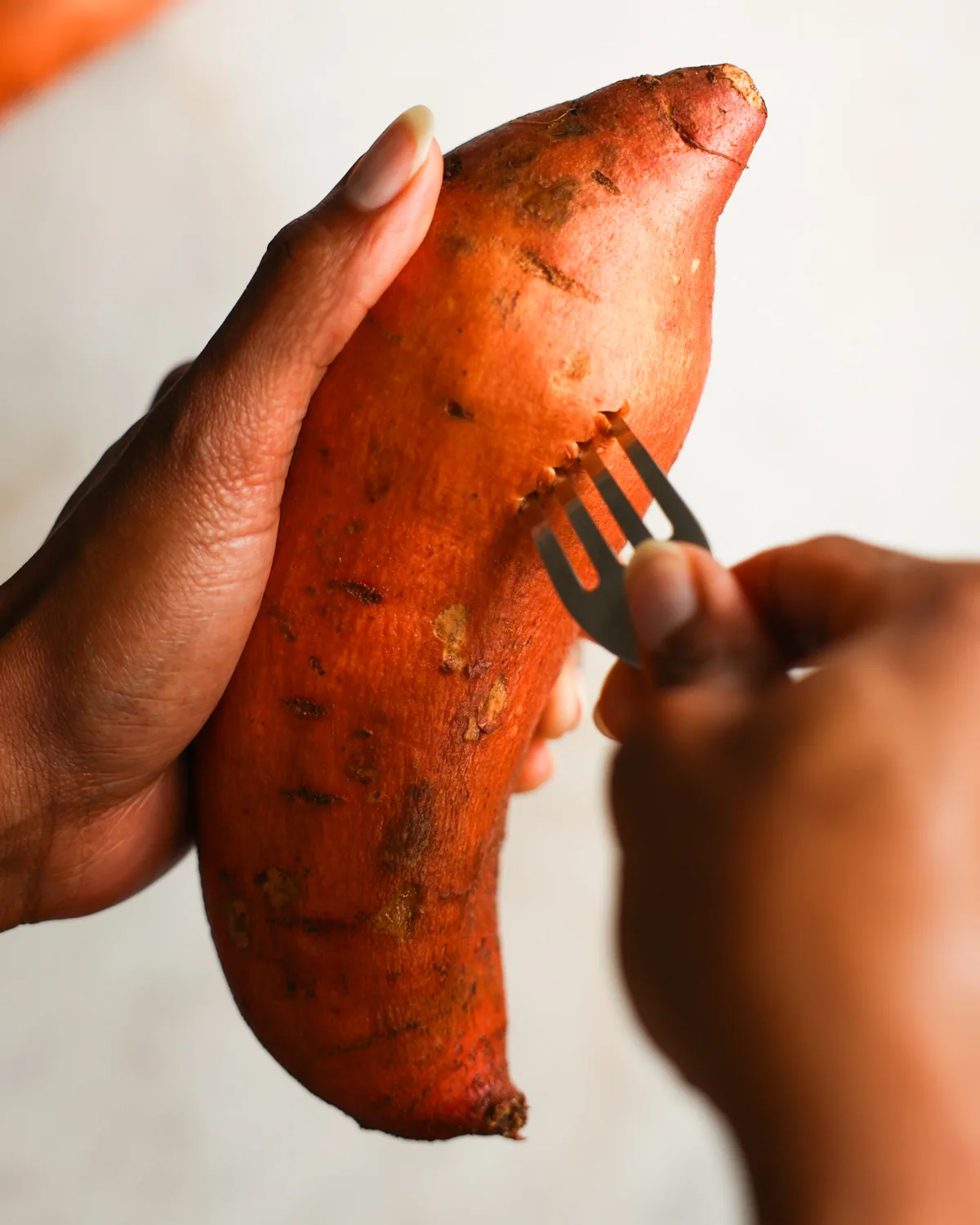
Take a fork and pierce each potato four to six times, spacing the holes evenly around the surface. Each puncture should go about half an inch deep. This step is non-negotiable.
Without vents for steam to escape, pressure builds inside the dense flesh during heating and the potato can burst, scattering sweet potato across your air fryer basket and potentially into the heating element.
Step 3: Apply oil (optional but recommended)
Pour about a quarter teaspoon of neutral oil onto your palms or a brush and rub it over the entire surface of each potato. This thin film promotes browning and helps the skin crisp rather than toughening. You're not deep-frying, just adding enough fat to improve the Maillard reaction (the chemical browning process that builds flavor).
Skip this step if you prefer the natural drier skin texture.
Step 4: Preheat the air fryer
Set your air fryer to 380°F and let it preheat for 3 minutes. Some models (like the Instant Vortex) have an auto-preheat cycle. Others, like entry-level Cosori units, start heating immediately when you set the temperature.
Giving it even a brief preheat ensures the cooking chamber is at full temperature when the potato goes in, which matters for consistent timing.
If your air fryer doesn't require preheating, you can skip this step and simply add 2 minutes to the total cook time.
Step 5: Arrange in the basket
Place the potatoes in the air fryer basket in a single layer with at least 1 inch of space between each one. Do not stack or let them touch. Airflow between the potatoes is what produces even cooking and consistent skin texture on all sides.
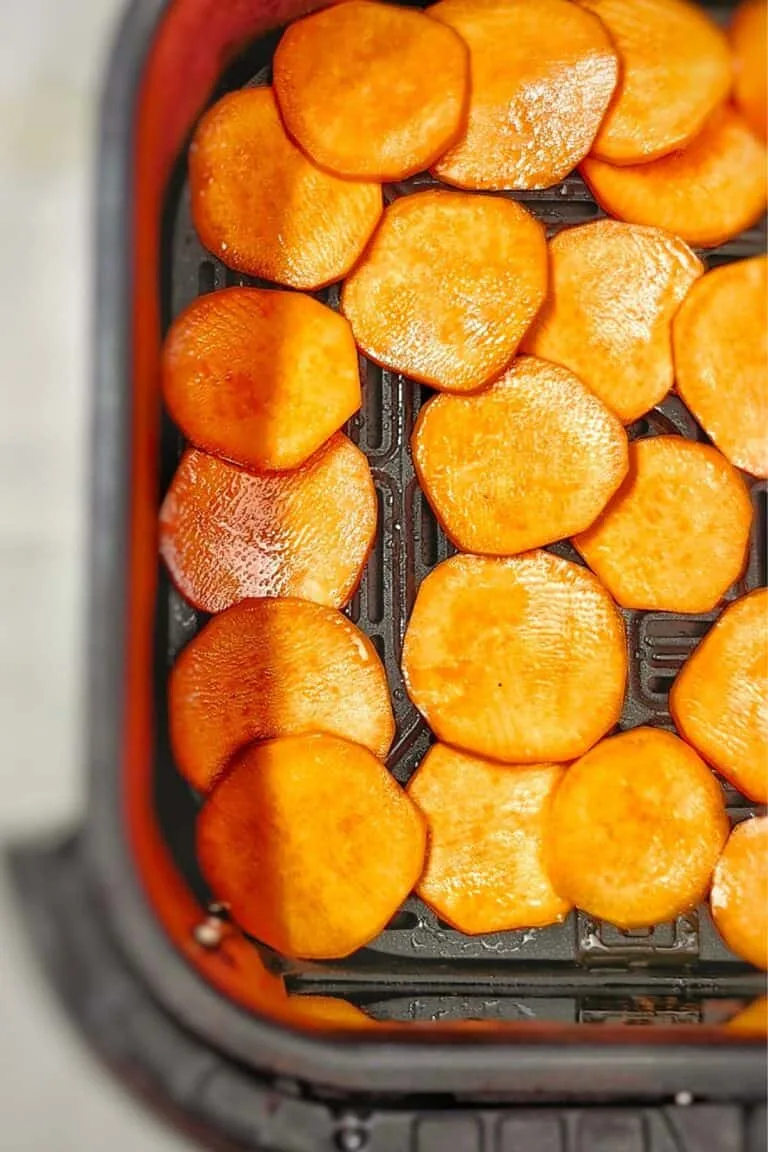
For reference, a 3.5-quart basket fits two medium sweet potatoes without crowding. A 5.8-quart basket fits three. Larger 8-quart models handle five to six.
For more ideas on what to make alongside them, browse our collection of rockfish recipes air fryer options for a complete protein-and-vegetable meal coming from the same appliance.
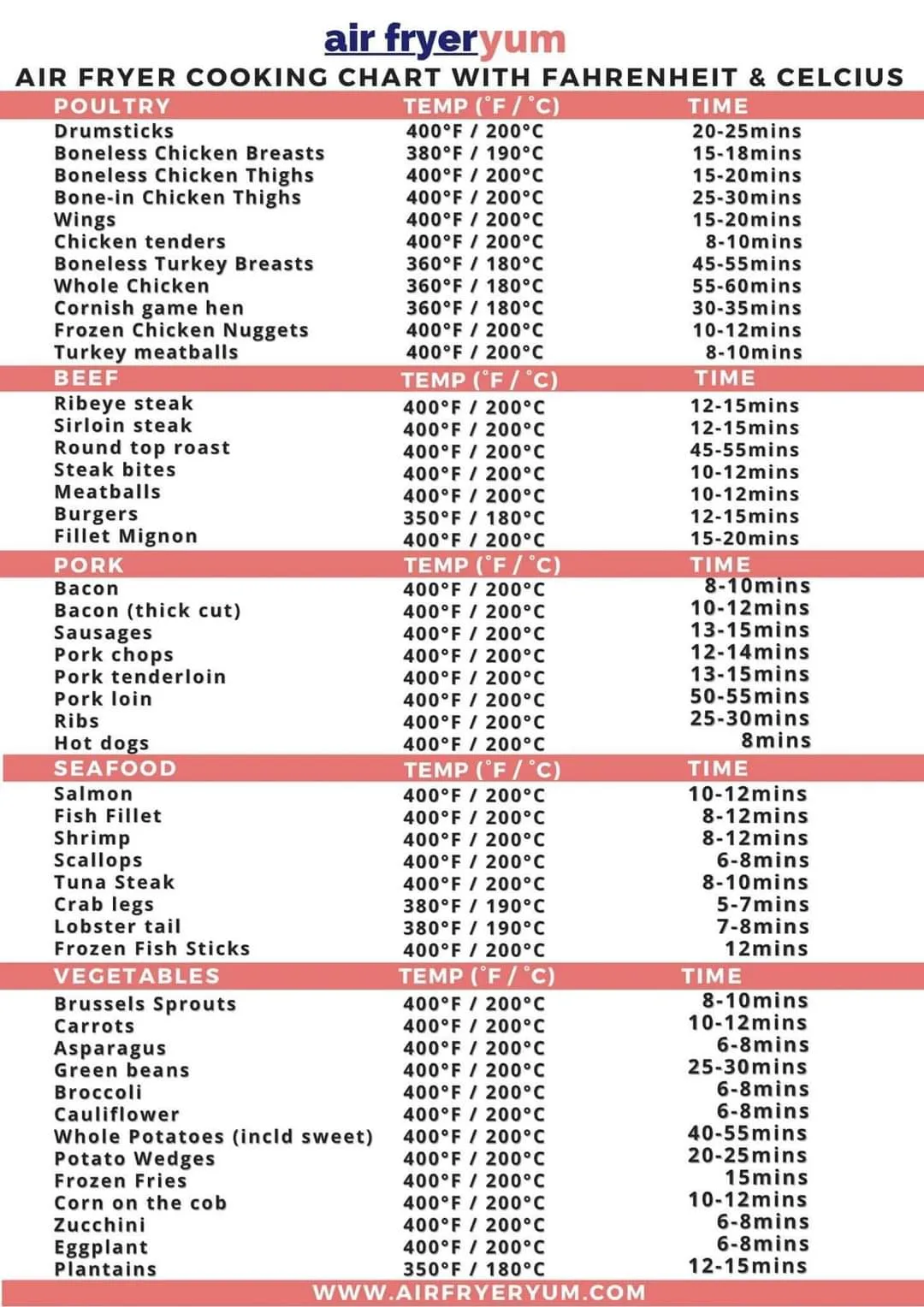
Step 6: Cook at 380°F
Set the timer for 30 minutes to start. You'll assess doneness at the 25-minute mark for smaller potatoes or at 30 minutes for larger ones.
| Potato Size | Weight Range | Cook Time at 380°F |
|---|---|---|
| Small | 4–5 oz | 22–26 minutes |
| Medium | 6–8 oz | 28–33 minutes |
| Large | 9–12 oz | 34–40 minutes |
Step 7: Flip at the halfway point
At 15 minutes, pull the basket out and flip each potato using silicone-tipped tongs. The side facing down in the basket gets the most direct heat from below. Flipping ensures both halves caramelize evenly.
This takes 10 seconds and makes a noticeable difference.
If you have an oven-style air fryer with multiple trays, rotate the top tray to the bottom position instead of flipping individual potatoes.
Step 8: Check for doneness
Starting at the 25-minute mark for medium potatoes, insert a thin skewer or fork into the thickest part of the potato. It should slide through with no hard or chalky resistance. If you feel a firm center, continue cooking in 3-minute increments.
The exterior should show deep golden to light brown caramelization with slight wrinkling of the skin. That wrinkling is normal and indicates the sugars are concentrating properly.
Step 9: Rest before serving
Once the fork test passes, transfer the potatoes to a plate and let them rest for 3 to 5 minutes. During this time, carryover heat continues softening the very center and the skin firms up slightly, making it easier to slice cleanly. Cutting into them immediately releases a burst of steam that makes the interior wetter than it needs to be.
How to Tell When They're Really Done
The fork test is the single most reliable method. A properly cooked Japanese sweet potato offers zero resistance when you slide a thin skewer or fork into the thickest part. If you feel any chalky firmness, it needs more time.
Visual and tactile signals
The skin tells its own story. When a Japanese sweet potato is fully cooked, the skin wrinkles slightly and pulls away from the flesh in spots. You'll see deep golden-brown caramelization where the sugars have concentrated.
The potato will also feel slightly soft when you press the sides with tongs, not rock-hard like it went in.
Steam escaping from the fork holes is another good sign. That moisture release means the interior has reached full temperature and the starches have gelatinized.
The most common mistake: pulling them too early
Undercooked Japanese sweet potatoes have a distinctly unpleasant chalky, raw-starch taste in the center. There's no rescuing them at that point aside from another 5 to 8 minutes in the air fryer. Pulling potatoes at the 20-minute mark for a medium-size is the number one issue in user reviews we analyzed.
When in doubt, give them 3 more minutes. An extra few minutes past done just deepens the caramelization. Pulling early locks in that raw interior.
Air Fryer Settings That Work (And Ones That Don't)
Small differences in temperature and arrangement produce dramatically different results with Japanese sweet potatoes. Here's what the data and aggregate user experience point to.
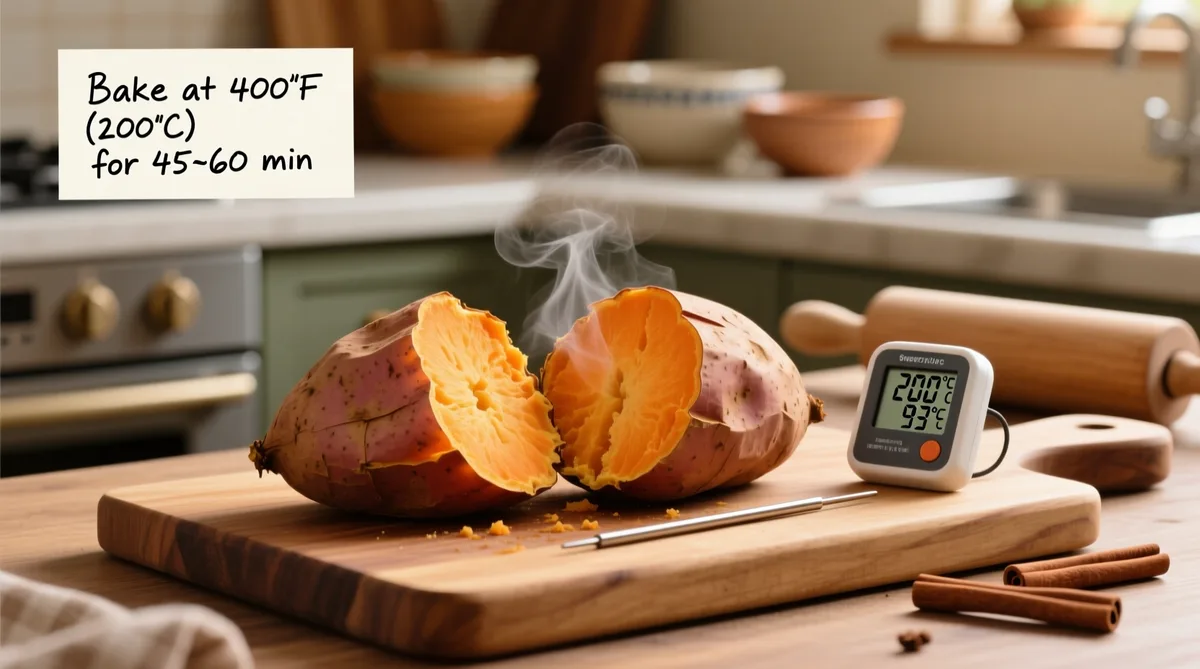
The sweet spot: 375°F to 380°F
This range gives you the best balance of interior creaminess and exterior caramelization. The starches convert to sugars steadily without the surface scorching before the center catches up.
Temperature breakouts
| Setting | Result | Verdict |
|---|---|---|
| 350°F | Takes 40–45 min, creamy interior but pale, soft skin | Works but inefficient |
| 375°F | 28–34 min, great creaminess, moderate caramelization | Excellent for larger potatoes |
| 380°F | 28–35 min, best all-around result | The recommended default |
| 400°F | 22–28 min, risk of burning before center finishes | Use only for small potatoes |
| 420°F+ | Skin burns quickly, raw or chalky center | Avoid |
Model-specific notes
Ninja Foodi and DualZone models run slightly cooler than their displayed setting by about 5°F based on aggregate buyer thermometer tests. If you're using one of these, set 385°F to hit a true 380°F. Cosori and Philips models tend to run accurate to within 2°F of the display.
Instant Vortex ovens sometimes show a 10°F variance between the top and middle rack, so position potatoes on the middle rack for the most consistent heat.
Don't wrap in foil
It defeats the entire point. Foil traps steam and blocks airflow, giving you a steamed potato instead of a roasted one. You'll end up with soft, pale skin and less caramelization.
If you have a specific reason to soften the skin (a child who won't eat it, for instance), wrap only for the first 15 minutes, then unwrap and finish for the remaining time.
Mistakes That Ruin Japanese Sweet Potatoes in the Air Fryer
These are the errors we see most often, and every single one is avoidable.
Overcrowding the basket
When potatoes touch or overlap, air can't circulate between them. The contact points stay pale and steam instead of roast. The exposed surfaces may over-brown while the touching sides stay hard.
Always leave at least 1 inch of space around each potato. It's better to cook two batches than to cram them all in at once.
Skipping the pierce step
An unpierced Japanese sweet potato can burst open during cooking. The dense, low-moisture flesh builds internal pressure fast in a high-heat convection environment. Besides creating a mess, a burst potato loses moisture unevenly and the texture turns grainy around the rupture point.
Four to six fork holes take five seconds and prevent all of this.
Cooking straight from the fridge
A cold potato straight from the refrigerator needs about 5 extra minutes to reach the same internal doneness as a room-temperature one. More importantly, the temperature differential causes uneven cooking. The outside speeds ahead while the center lags.
Let your potatoes sit on the counter for 20 to 30 minutes before cooking.
Adding sugar-based toppings before cooking
Honey drizzle, cinnamon sugar, maple glaze: these all burn at air fryer temperatures. The sugars carbonize fast in direct convection heat, creating bitter black spots on the skin. Apply these after the potatoes come out of the basket, not before.
Not washing the basket between batches
Sweet potato sugars drip and caramelize on the basket during cooking. If you're doing a second batch, that residue scorches and creates bitter smoke that flavors the next round. A quick wipe with a damp cloth between batches keeps things clean.
Ways to Finish and Flavor Them
Once your potatoes are done and rested for a few minutes, slice them open lengthwise and fluff the interior with a fork. This is where you turn a great sweet potato into something memorable.
Savory options
- Miso butter. Mix 1 tablespoon white miso paste with 2 tablespoons softened butter. Spread it into the hot flesh and let it melt. The salty, umami flavor against the sweet, creamy potato is outstanding.
- Furikake. This Japanese rice seasoning blend of seaweed, sesame, and dried fish flakes adds savory crunch. A light sprinkle goes a long way.
- Sesame salt. Toast white sesame seeds in a dry pan for 2 minutes, then crush with a pinch of flaky sea salt. Toss it into the potato.
- Grated Parmesan. Hot sweet potato flesh melts Parmesan into a savory, almost risotto-like texture.
Sweet options
- Butter and flaky salt. The simplest option and possibly the best. Half a tablespoon of good butter and a pinch of Maldon sea salt.
- Honey and cinnamon. Drizzle raw honey over the hot flesh and dust with ground cinnamon. The residual heat thins the honey into a natural glaze.
- Brown sugar and butter. Mash together softened butter with a teaspoon of brown sugar, then pack it into the split potato.
Using them as a base
Halved and loaded Japanese sweet potatoes make an excellent grain bowl base. Top with black beans, shredded cabbage, a fried egg, slivered scallions, and a drizzle of sriracha mayo. They also pair well alongside proteins cooked in the same air fryer.
Try them after a batch of air fryer bacon wrapped scallops for a dinner that uses one appliance for the full meal.
How to Store, Reheat, and Meal Prep
Japanese sweet potatoes are a meal prep standout. They hold up better in the fridge than almost any other cooked vegetable.
Storing cooked sweet potatoes
Let them cool at room temperature, uncovered, for 20 minutes. This prevents condensation from building inside the storage container. Once cooled, refrigerate in an airtight container for 4 to 5 days.
Reheating in the air fryer
Reheat at 350°F for 6 to 8 minutes. The air fryer re-crisps the skin and warms the interior without drying it out. A microwave works in a pinch but the skin goes soft and rubbery fast.
Batch cooking
Make a full basket of 4 to 5 medium potatoes on Sunday. Cool, refrigerate, and reheat individually throughout the week. They work as a quick side for almost any protein.
They also hold up well diced and tossed into salads or grain bowls.
Freezing
Scoop out the cooked flesh, mash lightly, and freeze in a freezer-safe bag for up to 3 months. Thaw overnight in the refrigerator and reheat at 340°F for 10 to 12 minutes. The texture will be slightly softer than fresh but still excellent.
Nutrition Facts You Should Know
Japanese sweet potatoes are a nutrient-dense food that punches well above their weight for a simple root vegetable.
Per medium potato (approximately 150g raw)
| Nutrient | Amount | % Daily Value |
|---|---|---|
| Calories | 115 | 6% |
| Total Carbohydrates | 27g | 10% |
| Dietary Fiber | 4g | 14% |
| Sugars | 6g | — |
| Protein | 2g | 4% |
| Total Fat | 0g | 0% |
| Vitamin A (RAE) | 961mcg | 107% |
| Vitamin C | 2.4mg | 3% |
| Potassium | 337mg | 7% |
Data sourced from USDA FoodData Central. Values are approximate and vary by specific variety and growing conditions.
Why the fiber matters
Four grams of fiber per medium potato is meaningful, most of it concentrated in and just beneath the skin. That soluble fiber slows the absorption of the natural sugars, which is partly why Japanese sweet potatoes produce a steadier blood glucose response than white potatoes or white rice.
Antioxidants in the skin
Murasaki Japanese sweet potatoes contain anthocyanins, the same antioxidant compounds found in blueberries and purple cabbage. These pigments concentrate in the purple skin, which is another strong argument for eating the skin rather than peeling it. Hannah varieties have lower anthocyanin levels because of their lighter skin but deliver comparable vitamin A from beta-carotene in the flesh.
How cooking method affects nutrition
Air frying preserves the nutrient profile of sweet potatoes nearly identically to oven roasting. The shorter cook time compared to an oven may actually preserve marginally more vitamin C, which degrades with prolonged heat exposure. Deep frying, by contrast, increases the fat content by 8 to 12 grams per serving due to oil absorption.
Frequently Asked Questions
Do I need to peel Japanese sweet potatoes before air frying?
No. The skin is thin, edible, and nutritious. It crisps up nicely in the air fryer and adds a pleasant slight chew.
Just scrub it thoroughly under running water before cooking.
Can I cook Japanese sweet potatoes from frozen?
You can, but the texture suffers. Frozen and thawed sweet potatoes have a softer, slightly waterlogged interior because ice crystals damage the cell structure. If you must, cook from frozen at 370°F for 35 to 40 minutes, covered loosely with foil for the first 20 minutes to prevent the skin from over-browning while the center thaws.
Why did my sweet potato burst in the air fryer?
You either didn't pierce the skin or didn't pierce deeply enough. The dense flesh of Japanese sweet potatoes traps steam with nowhere to escape. Always pierce at least four times around the surface, going about half an inch deep each time.
How many sweet potatoes can I cook at once?
However many fit in a single layer with 1 inch of space between each one. For a standard 5.8-quart basket, that's typically three medium potatoes. For a larger 8-quart model, five to six.
What's the difference between a Japanese sweet potato and a regular sweet potato in the air fryer?
Japanese sweet potatoes are dryer, denser, and starchier. They need a slightly lower temperature (380°F versus 400°F for American types) and a few more minutes to fully soften. The result is creamier and more chestnut-like rather than the soft, almost custardy texture you get from an orange American variety.
Can I use an Instant Pot air fryer lid for this?
Yes. The Instant Pot Crisp & Air Fry lid works well for Japanese sweet potatoes. Set it to the air fry function at 380°F.
The cooking time is the same as a standalone basket air fryer. Make sure the lid is properly seated so the heating element engages.