
If you've ever pulled a sad, soggy potato out of an air fryer and wondered where you went wrong, you're not alone. The truth is, russet potato air fryer recipes are some of the most forgiving and rewarding things you can cook in the appliance, but only if you understand what makes russets different from other varieties. Their high starch content and thick skin make them uniquely suited to air frying, delivering that fluffy interior and shatteringly crispy exterior that other potatoes simply can't match.
A medium russet potato baked in the air fryer takes about 35 to 40 minutes at 400°F, compared to 60 to 75 minutes in a conventional oven, according to aggregate user reports across major air fryer models as of 2026. That speed, combined with the texture payoff, is why russets dominate air fryer recipe searches. Let's walk through every preparation method so you can nail them all.
Quick Answer
Russet potatoes are the top choice for air fryer recipes because their high starch content produces a fluffy interior and crispy skin. A whole baked russet takes 35 to 40 minutes at 400°F. Wedges need 18 to 22 minutes, and fries take 15 to 20 minutes.
Always dry the potatoes thoroughly and avoid overcrowding the basket for the best results.
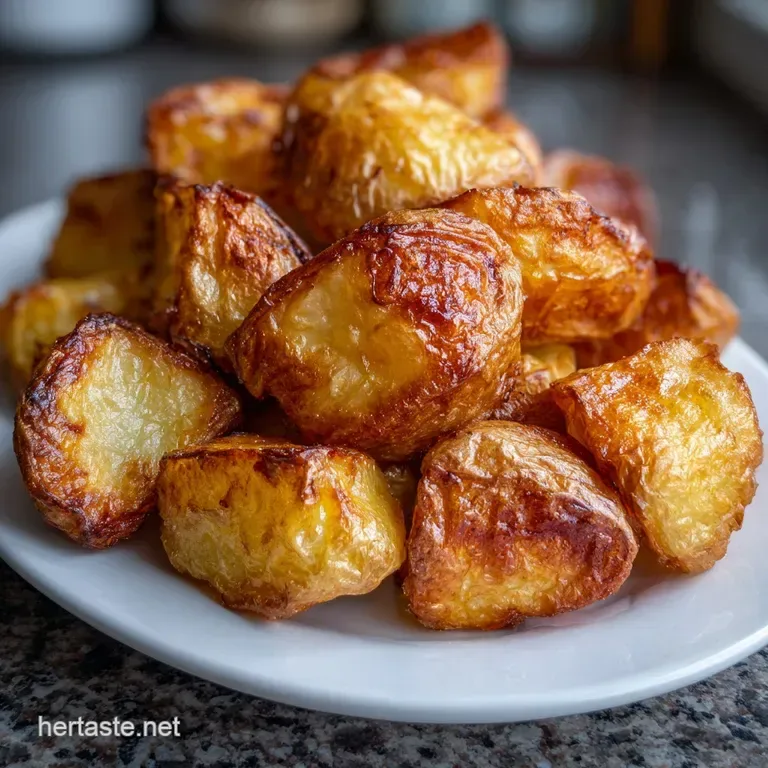
Image source: Bing (Web (fair-use with source credit))
Why Russet Potatoes Are the Best Choice for Your Air Fryer
Russet potatoes contain roughly 22% starch by weight, the highest of any common cooking potato. That starch is the secret behind the fluffy, almost cloud-like interior you get when air frying. Lower-starch varieties like red or Yukon Gold potatoes hold more moisture, which means they steam inside the air fryer instead of crisping properly.
The thick, netted brown skin on a russet also works in your favor. It acts as a natural shell that protects the interior moisture while the hot air circulation dehydrates the outer layer into something genuinely crispy. Thin-skinned varieties can't achieve that same contrast.
Here's how the main potato types behave in an air fryer:
| Potato Type | Starch Level | Best Air Fryer Use | Interior Texture |
|---|---|---|---|
| Russet (Idaho) | High (~22%) | Baked, wedges, fries, chips | Fluffy, dry |
| Yukon Gold | Medium (~18%) | Cubes, home fries | Creamy, slightly waxy |
| Red potatoes | Low (~15%) | Roasted cubes, salads | Firm, waxy |
| Sweet potato | Medium-high | Wedges, fries | Dense, sweet |
If you're after the classic baked potato experience or the crispiest possible fries, russets win every time. They're also the most widely available and affordable potato in the United States, averaging $0.80 to $1.50 per pound for conventional varieties as of 2026, according to USDA retail price data.
One thing to watch: because russets are so starchy, they benefit from a quick soak in cold water before cutting. This pulls excess surface starch off, which prevents gummy textures and helps the exterior crisp up faster.
How to Bake a Whole Russet Potato in the Air Fryer
A perfectly air-fried baked russet has crispy, salty skin and a steaming fluffy center. It's one of the simplest things you can make, but a few details separate a great result from a mediocre one.
Start by scrubbing the potato under cold water to remove any dirt. Pat it completely dry with a clean towel. This matters more than people think, because any surface moisture turns to steam and prevents the skin from crisping.
Pierce the skin 6 to 8 times with a fork. This lets steam escape during cooking and prevents the potato from splitting open. Rub the skin with about 1 teaspoon of oil (avocado or canola work best for high-heat cooking) and sprinkle generously with kosher salt.
Place the potato directly in the air fryer basket. Don't wrap it in foil, that traps moisture and defeats the purpose. Cook at 400°F for 35 to 45 minutes for a medium potato (around 8 ounces), flipping it halfway through.
Larger potatoes (12 ounces or more) may need up to 50 minutes.
The potato is done when the internal temperature reaches 205°F to 210°F and a fork slides into the center with no resistance. Let it rest for 5 minutes before cutting. This lets the interior starches set so you get that perfect fluffy texture instead of a gummy mess.
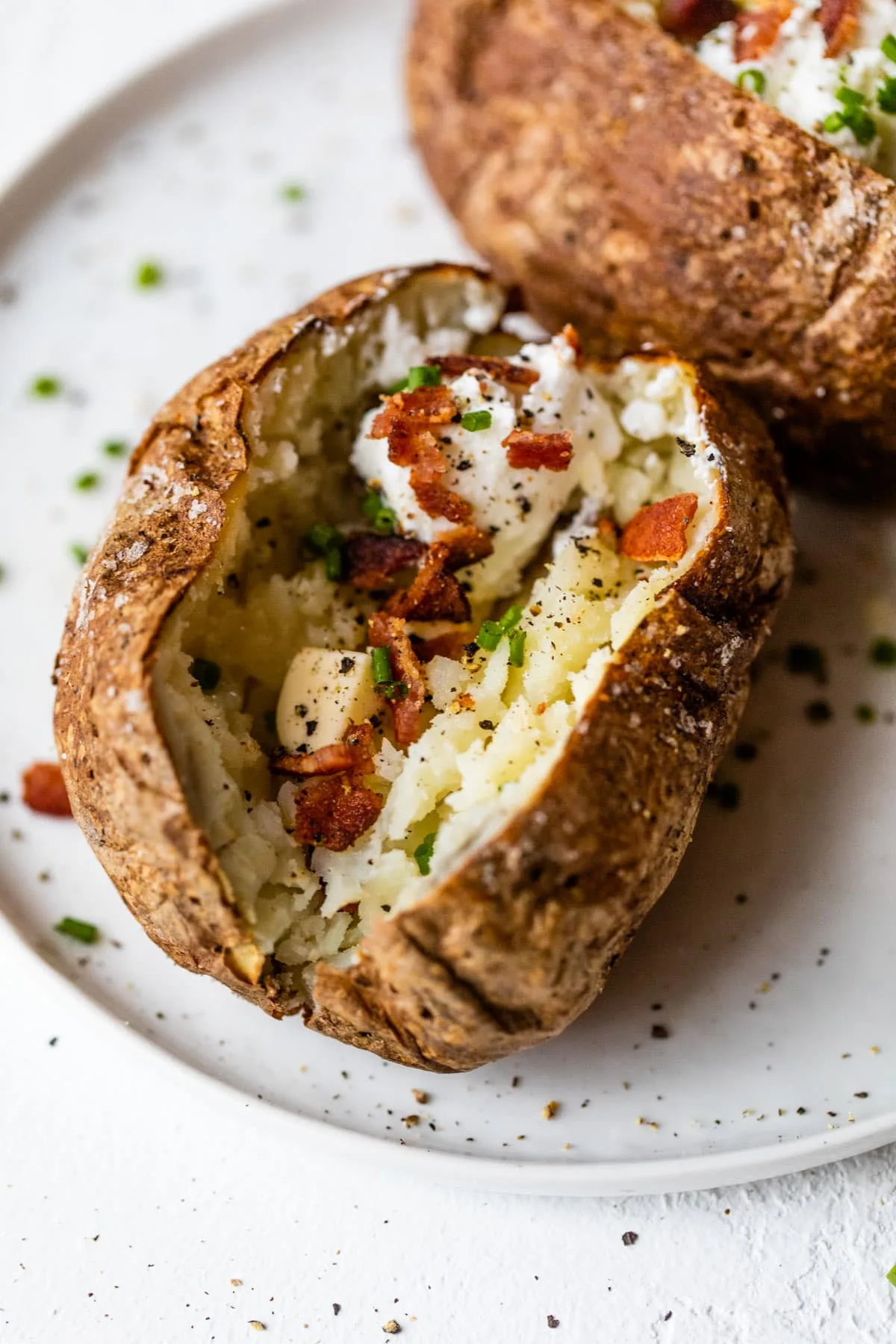
Image source: Bing (Web (fair-use with source credit))
Quick tips for the best baked russet:
- Don't skip the oil on the skin. It's the difference between leathery and crispy.
- If your air fryer runs hot, drop the temperature to 380°F and add 5 minutes.
- For extra-crispy skin, rub the oiled potato with a pinch of cornstarch before cooking.
- A loaded baked potato makes a great weeknight dinner. Check out our New York Strip Air Fryer Recipe for a complete meal pairing.
Crispy Air Fryer Russet Potato Wedges
Wedges are the crowd-pleaser of the air fryer potato world. They're easier to cut than fries, more forgiving with cook time, and they hold up to bold seasonings beautifully.
Cut a medium russet into 8 wedges lengthwise. If you want extra crispiness, soak the wedges in cold water for 15 to 30 minutes. This step removes surface starch that would otherwise turn gummy in the basket.
After soaking, drain them and pat very dry with paper towels or a clean kitchen towel.
Toss the dry wedges with 1 to 2 teaspoons of oil and your seasoning of choice. A reliable base is kosher salt, black pepper, garlic powder, and smoked paprika. Spread them in a single layer in the basket with a little space between each wedge.
Overcrowding is the number one reason potatoes come out soggy instead of crispy.
Cook at 400°F for 18 to 22 minutes, shaking the basket or flipping the wedges every 6 to 7 minutes. They're done when the edges are deeply golden and the interior is fork-tender.
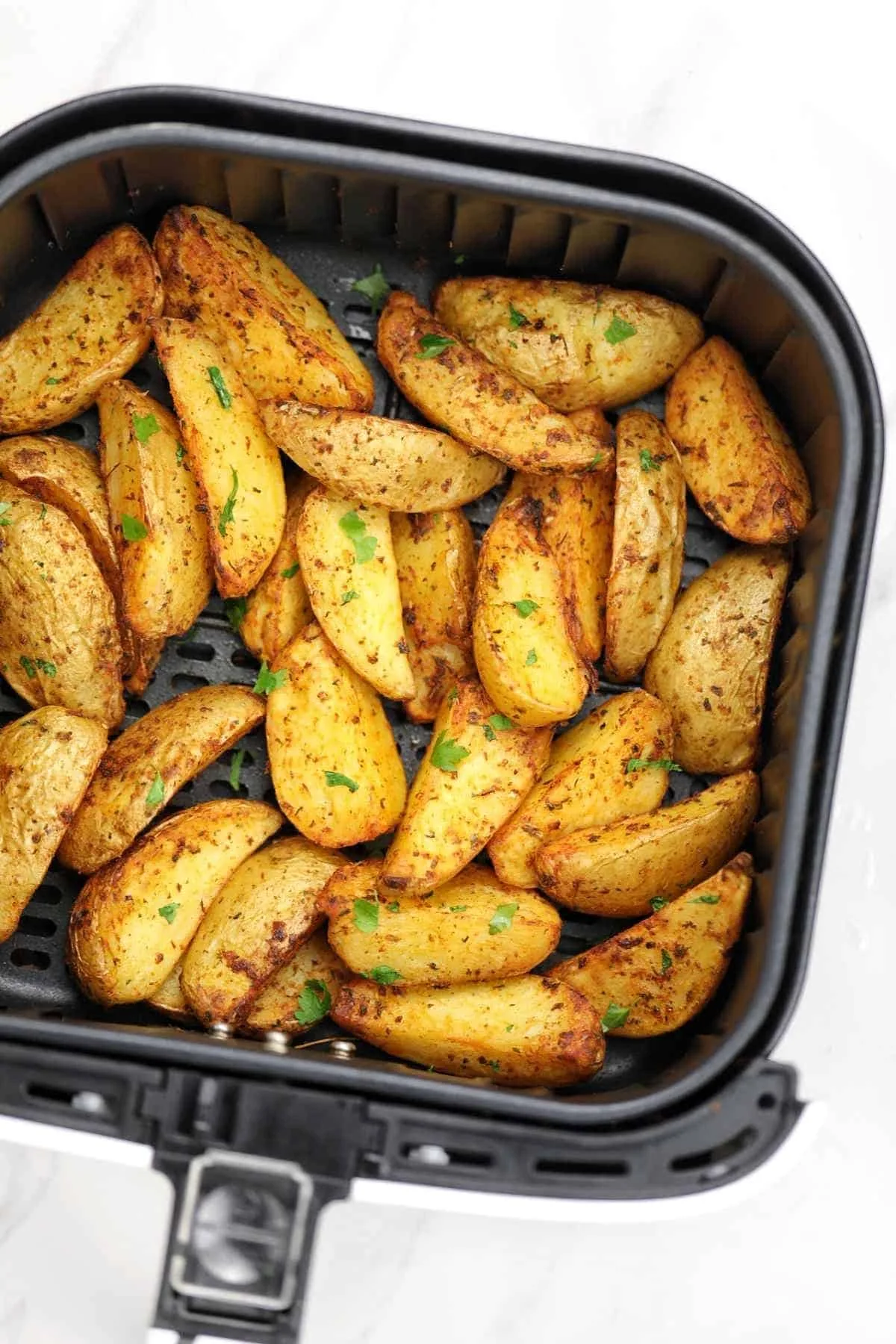
Image source: Bing (Web (fair-use with source credit))
Seasoning combinations that work well on russet wedges:
- Classic: Salt, pepper, garlic powder, onion powder
- Smoky: Smoked paprika, cumin, chili powder, salt
- Herb-forward: Dried rosemary, thyme, garlic powder, parmesan
- Spicy: Cayenne, garlic powder, onion powder, black pepper
If you're cooking for kids or want a milder option, the classic blend is always a hit. For more family-friendly ideas, browse our Kid Friendly Air Fryer Recipes collection.
Homemade Air Fryer Russet French Fries
Homemade fries are where the air fryer truly earns its countertop real estate. You get something remarkably close to deep-fried texture using a fraction of the oil. The key is in the cut and the soak.
Peel the russet (optional, but peeled fries crisp more evenly). Cut into sticks about ¼ inch thick and 3 inches long. Uniform thickness is critical.
Fries that are too thick won't cook through, and ones that are too thin will burn.
Soak the cut fries in cold water for at least 30 minutes. Some people soak for up to 2 hours for maximum crispiness. The water draws out excess starch from the cut surfaces, which is what allows them to go golden and crunchy instead of steaming together.
Drain and dry the fries thoroughly. This step is non-negotiable. Toss with 1 teaspoon of oil and a pinch of salt.
Arrange in a single layer in the basket. You'll likely need to cook in two batches for a standard 5-quart air fryer.
Cook at 380°F to 400°F for 15 to 20 minutes, shaking the basket every 5 minutes. They should be golden brown and crispy on the outside, tender inside. Season with additional salt the moment they come out of the basket.
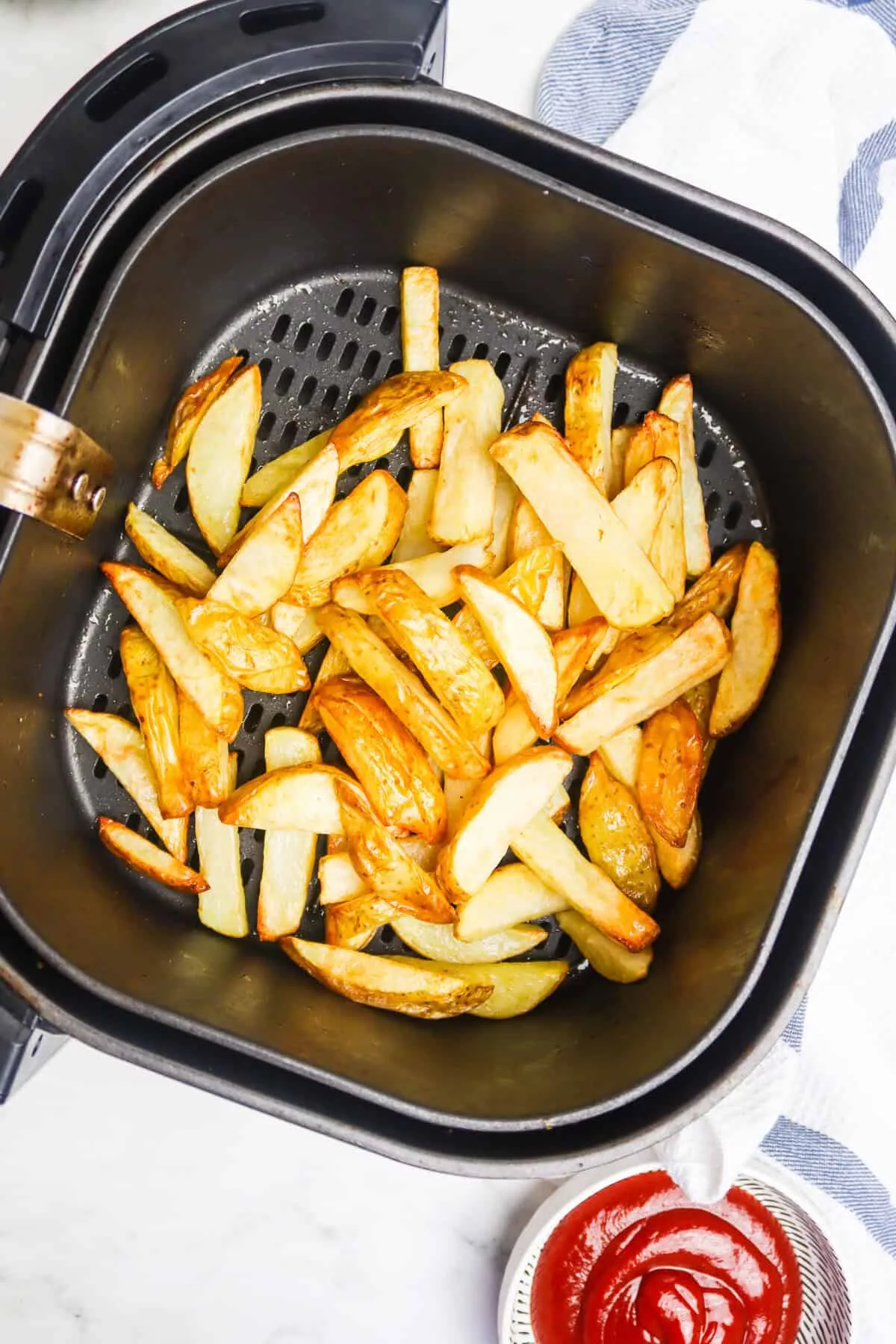
Image source: Bing (Web (fair-use with source credit))
A medium russet potato cut into fries and air fried with 1 teaspoon of oil comes in at roughly 205 calories per serving. The same portion deep fried would run 365 calories or more, according to USDA FoodData Central nutritional comparisons. That's a significant difference if you're making fries a regular part of your rotation.
If you're curious about how other potato varieties handle the air fryer, our Gold Potato Recipes Air Fryer guide covers Yukon Gold preparations in detail.
Air Fryer Russet Home Fries and Potato Cubes
Home fries are the ultimate comfort food side dish, and the air fryer cuts the usual pan-fry time in half. Russets work well here, though they require a gentler hand than Yukon Golds since their high starch content can make cubes stick together if you're not careful.
Cut peeled or unpeeled russet potatoes into ½-inch cubes. Soaking isn't necessary for cubes since the interior isn't exposed the way fries are, but patting them dry still helps. Toss with 1 to 2 teaspoons of oil, salt, pepper, and garlic powder.
Some people add diced onion or bell pepper, which softens beautifully in the basket alongside the potatoes.
Cook at 400°F for 15 to 18 minutes, shaking every 5 minutes. The cubes are done when they're golden on at least two sides and tender all the way through. If you like them extra crispy, bump the temperature to 425°F for the last 3 minutes.
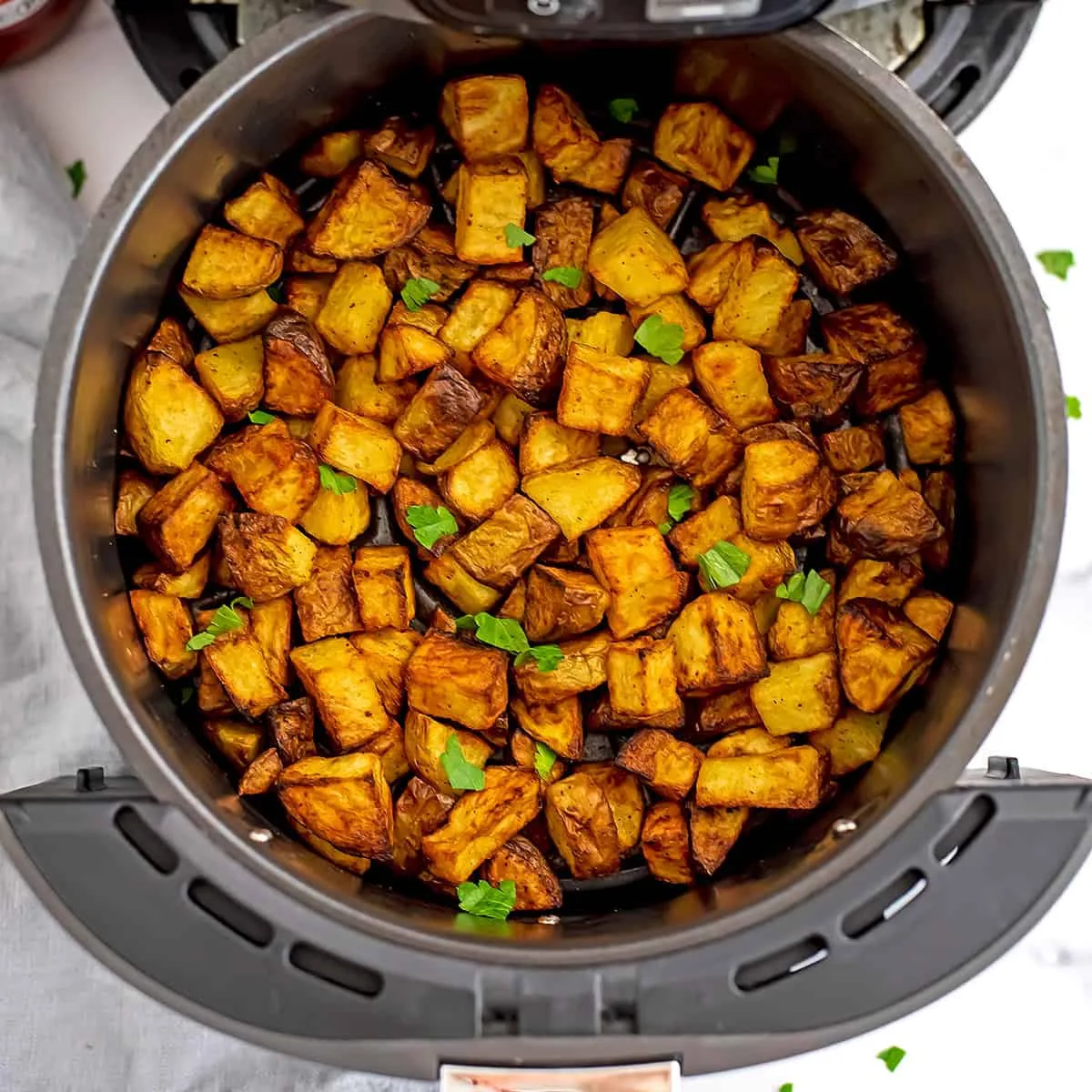
Image source: Bing (Web (fair-use with source credit))
Home fries pair well with proteins cooked in the same appliance. If you're building a full plate, our Chick Fil A Chicken Recipe Air Fryer guide walks you through a crispy air fryer chicken that shares the basket nicely.
Tips for better russet home fries:
- Don't skip the oil. Dry cubes will dehydrate and turn mealy instead of crispy.
- Keep the cubes uniform in size so they cook evenly.
- Shake, don't stir. Tongs or a spoon breaks the crust that's forming.
- For a breakfast twist, add crumbled cooked bacon in the last 2 minutes.
Air Fryer Russet Potato Chips
Thin-sliced potato chips are where the air fryer genuinely surprises people. They come out light, crunchy, and way lower in fat than anything from a bag. The catch is that you need to slice the potatoes consistently thin, about ⅛ inch or less.
A mandoline slicer makes this effortless. If you're using a knife, take your time and aim for uniform thickness. Soak the slices in cold water for 20 minutes, then drain and pat completely dry between clean towels.
Any leftover moisture will steam the chips instead of crisping them.
Lightly spray or brush both sides of each slice with oil. Arrange in a single layer in the basket. This will take multiple batches for any meaningful serving.
Cook at 350°F to 370°F for 12 to 15 minutes, flipping halfway through. Watch them closely in the last few minutes since they go from perfect to burned fast.
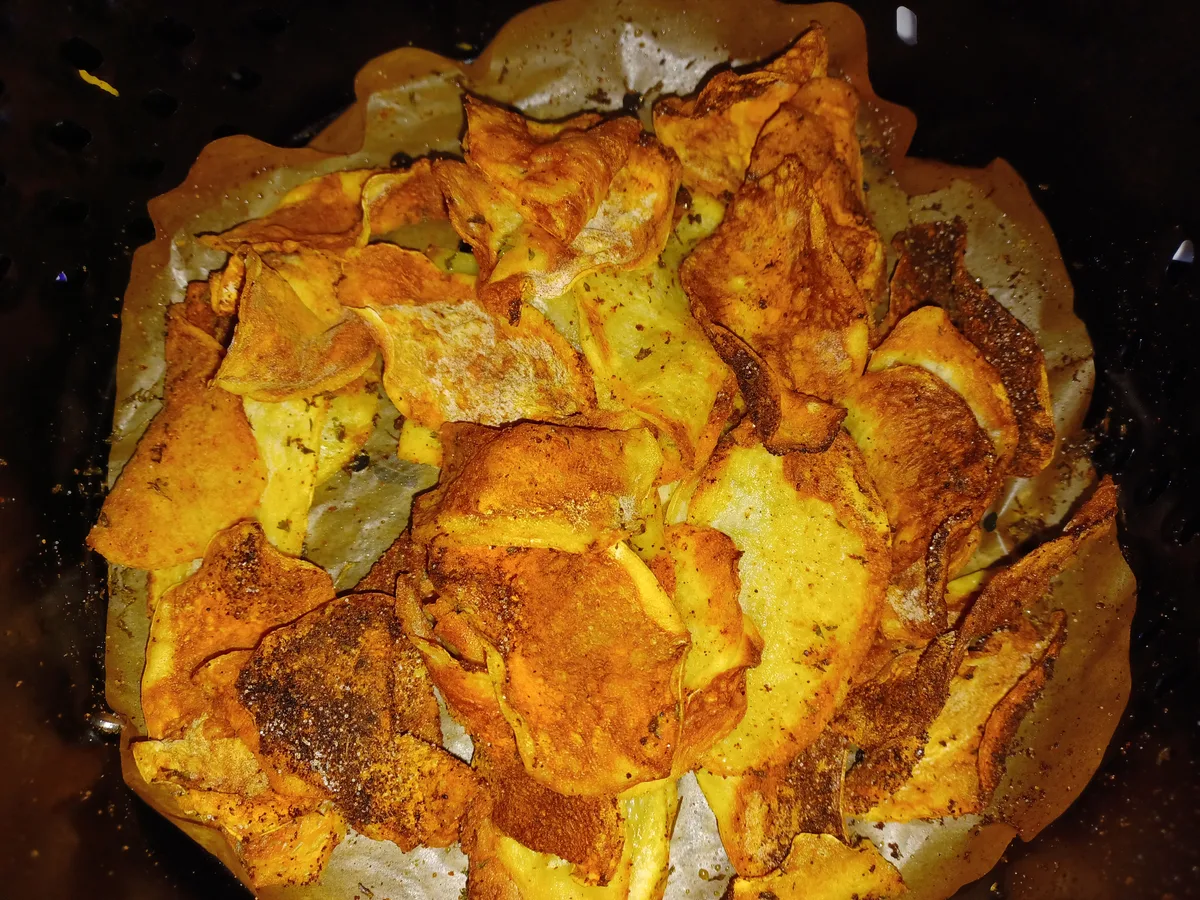
Image source: Openverse / NeoBatfreak
Season immediately after they come out. Salt is standard, but vinegar powder, ranch seasoning, or everything-bagel spice take them in fun directions. A batch of homemade russet chips runs about 130 to 150 calories per serving, compared to roughly 160 calories for a single ounce of store-bought with significantly more oil absorbed during manufacturing.
Russet vs. Other Potato Varieties in the Air Fryer
Not all potatoes behave the same in an air fryer, and understanding the differences saves you from disappointing results. The main dividing line is starch content, which determines whether a potato goes fluffy, waxy, or something in between.
Russet potatoes sit at the high-starch end. That structure breaks down during cooking into dry, fluffy granules with a crispy exterior shell. They're the right choice for baked potatoes, fries, wedges, and chips.
They fall apart if you try to keep them in neat pieces for a salad-style preparation.
Yukon Golds are the middle ground. They hold their shape better thanks to their waxy structure and slightly higher moisture content. They're excellent for home fries, cubes, and roasted potato medleys.
The tradeoff is that they never get quite as crispy as russets.
Red and new potatoes are low-starch and high-moisture. They're best when you want a firm, creamy bite, think potato salad or a hearty stew addition. In the air fryer, they roast nicely in cube form but won't give you the shattering crunch you're after with fries or chips.
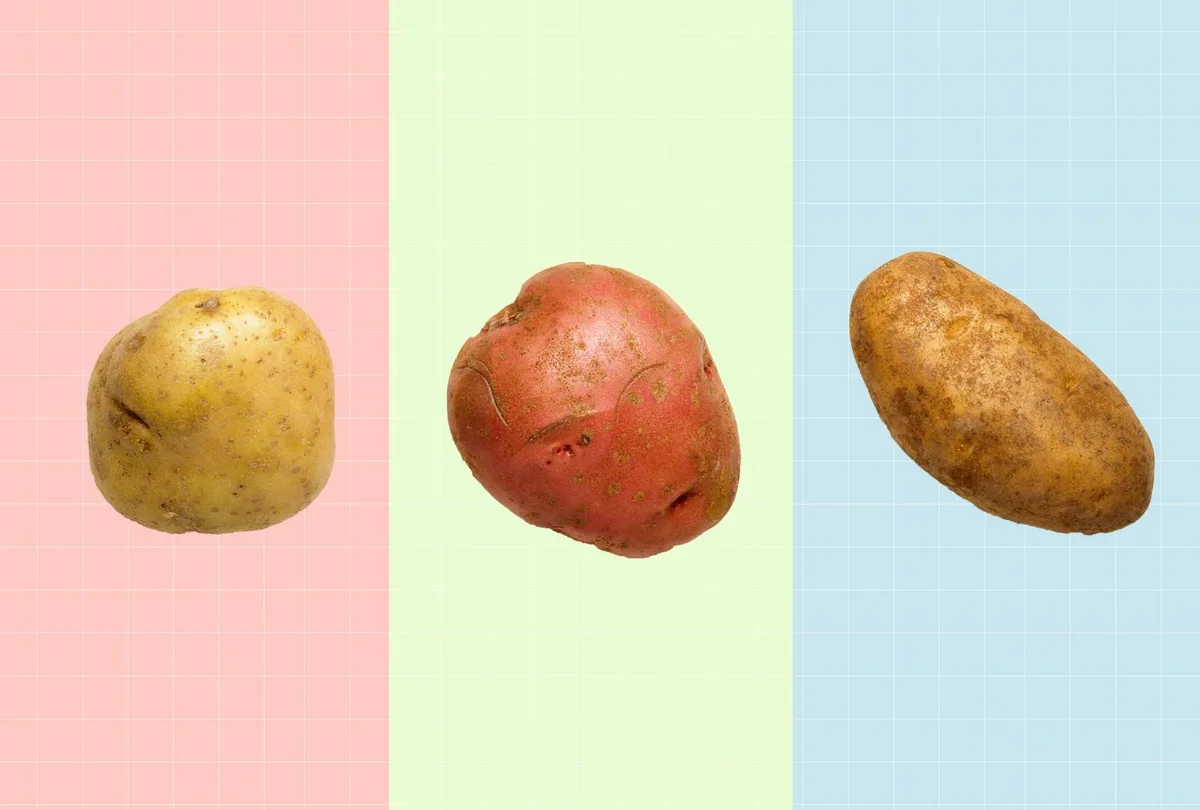
Image source: Bing (Web (fair-use with source credit))
Sweet potatoes are their own category entirely. Their natural sugar content means they caramelize and char faster than russets. If you're making sweet potato fries in the air fryer, drop the temperature by 15°F and shave a few minutes off the cook time to avoid burning.
Our Japanese Sweet Potato Recipe Air Fryer guide covers a slightly different approach worth trying.
The simple rule: high starch for crispy and fluffy, low starch for firm and creamy.
Air Fryer Russet Potatoes vs. Oven and Deep Fryer
Each cooking method produces a noticeably different result with russet potatoes, and the right choice depends on what you're prioritizing.
Air frying hits the sweet spot for most home cooks. A baked russet takes 35 to 40 minutes at 400°F in the air fryer versus 60 to 75 minutes in a conventional oven. The circulating hot air also creates a crispier skin than a standard oven's radiant heat.
Based on manufacturer wattage specifications, a typical air fryer running at 1,400W for 40 minutes uses roughly 0.93 kWh, while a 2,400W oven running for 60 minutes uses about 2.4 kWh, a roughly 60% energy reduction.
Deep frying still wins on pure texture for fries and chips. The oil bath transfers heat more aggressively, producing an all-over crunch that's hard to replicate with air alone. But you're looking at significantly more oil (quarts versus teaspoons), more cleanup, and a calorie count that runs 50% to 80% higher per serving.
The FDA notes that acrylamide, a compound formed when starchy foods cook above 248°F, is higher in deep-fried preparations than in air-fried ones.
Microwaving is faster than all of them for a baked potato, about 8 to 10 minutes. But the skin gets rubbery, and the interior tends to be dense rather than fluffy. Some people use a two-step method of microwaving to cook through, then finishing in the air fryer for 5 minutes to crisp the skin.
It's a decent shortcut when you're in a rush.
| Method | Baked Russet Time | Oil Needed | Best For |
|---|---|---|---|
| Air fryer | 35 to 40 min | 1 tsp | Everyday baking, fries, wedges |
| Oven | 60 to 75 min | 1 to 2 tsp | Large batches, even cooking |
| Deep fryer | 3 to 5 min (fries) | Several quarts | Maximum crunch, restaurant style |
| Microwave | 8 to 10 min | None | Speed, no crispiness needed |
For most people cooking one to four potatoes at a time, the air fryer is the clear winner on speed, energy use, and texture. Reserve deep frying for special occasions when you want that unmistakable all-over crunch.
Common Mistakes That Ruin Air Fryer Russet Potatoes
The air fryer is forgiving, but russet potatoes will expose bad habits fast. These are the errors we see most often in aggregate user reviews and recipe comments.
Overcrowding the basket. This is the number one problem. Russet potatoes need airflow on all sides to crisp. When pieces overlap or stack, they steam against each other and come out gummy.
Cook in batches if you have to. A single layer with gaps between pieces always beats a full basket of crowded potatoes.
Skipping the dry step. Wet potato skin won't crisp, no matter how hot the air fryer runs. Always pat potatoes dry after washing or soaking. Even a quick blot with paper towels makes a measurable difference in the final texture.
Not pricking whole potatoes. Steam builds up inside a whole russet during cooking. Without fork holes, the pressure can split the potato open, making a mess in the basket. Six to eight piercings around the surface is enough.
Using too much oil. More oil doesn't mean crispier potatoes. It means smoking, dripping, and a gummy coating. A light mist or 1 teaspoon tossed evenly is all a medium russet needs.
Excess oil pools in the basket and can trigger smoke alarms on some models.
Setting the temperature too high. Cranking to 420°F or 450°F burns the exterior before the interior cooks through. Stick to 380°F to 400°F for most russet preparations. The only exception is the last 2 to 3 minutes of a cook, where a brief high-heat blast can add extra crunch.
Forgetting to shake or flip. Hot spots exist in every air fryer. Shaking the basket every 5 to 7 minutes ensures even browning. Potatoes left unattended on one side will stay pale while the other side over-browns.
If you're new to the appliance and want to build confidence with simpler preparations first, our Air Fryer Toast Recipe is a great starting point before tackling potatoes.
How to Know When Your Air Fryer Russet Potatoes Are Done
The most reliable method is an internal probe thermometer. A whole baked russet is done at 205°F to 210°F. For wedges and cubes, visual cues work well: golden-brown edges, crispy exterior, and a fork that slides through the center without resistance.
If you cut into a potato and the center still feels dense or looks opaque, give it another 3 to 5 minutes. Undercooked russets have a waxy, almost crunchy bite that's easy to spot. Overcooked ones start to collapse and turn papery on the outside.
For fries and chips, taste testing one piece is the fastest way to confirm. They should snap cleanly and feel light, not heavy or greasy.
Air Fryer Russet Potato Recipes for Every Occasion
Baked russets make a solid weeknight dinner base. Load them with chili, cheese, broccoli, or leftover pulled pork. Wedges are perfect for game day or as a side with burgers.
Fries work as a quick lunch alongside a sandwich. Chips are the go-to snack when you want something crunchy without the guilt of a deep-fried bag.
For a full spread, pair your potatoes with our Bbq Chicken Recipes Air Fryer for a complete backyard-style meal without firing up the grill. If you're feeding a crowd, our Chicken Shawarma Recipe Air Fryer also pairs surprisingly well with crispy potato wedges.
Batch Cooking and Meal Prepping Russet Potatoes in the Air Fryer
Bake 4 to 6 russets at once in a large air fryer basket. Let them cool completely, then refrigerate for up to 5 days in a sealed container. Reheat in the air fryer at 350°F for 5 to 8 minutes to restore the crispy skin.
The microwave works in a pinch but won't bring the crunch back.
Par-baked potatoes also freeze well. Bake them for only 25 minutes, cool, wrap individually, and freeze for up to 3 months. Finish from frozen at 400°F for 15 to 20 minutes when you're ready to eat.
Nutrition, Calories, and Health Considerations
A medium plain baked russet (about 5.3 ounces) runs about 161 calories, according to USDA FoodData Central. With 1 teaspoon of oil added, expect around 205 calories. Air frying uses roughly 75% less oil than deep frying, which translates to meaningful calorie savings over time.
Russets have a high glycemic index, ranging from 78 to 111 depending on preparation method. Pairing them with protein, fat, or fiber helps moderate the blood sugar response. Adding cheese, sour cream, or serving alongside a piece of chicken are all practical ways to balance the meal.
One concern worth noting: acrylamide forms in starchy foods cooked at temperatures above 248°F. Air frying produces less acrylamide than deep frying, but more than boiling or steaming. Avoid charring or burning the exterior to keep levels as low as possible, per FDA guidance.
Frequently Asked Questions
Can you air fry a russet potato without oil?
Yes. The interior will still turn out fluffy, but the skin won't crisp as well. A light coating of oil makes a noticeable difference in texture.
If you're skipping oil entirely, expect a softer, more steamed result on the outside.
Do you need to soak russet potatoes before air frying?
For fries and chips, soaking removes surface starch and improves crispiness. For whole baked potatoes or cubes, it's not necessary. The soak matters most when you're exposing a lot of cut surface area to direct hot air.
Why are my air fryer potatoes soggy?
Overcrowding and excess moisture are the usual culprits. Dry your potatoes thoroughly and cook in a single layer with space between pieces. Also check that you're not using too much oil, which can pool and create a gummy coating instead of crispiness.
How many russet potatoes fit in an air fryer?
A 5-quart basket holds about 4 medium whole potatoes or enough cut pieces for 2 to 3 servings. Don't stack them. If you're cooking for a crowd, work in batches and keep finished potatoes warm in a 200°F oven.
Can you reheat a baked potato in the air fryer?
Absolutely. Reheat at 350°F for 5 to 8 minutes. The skin re-crisps beautifully, and the interior steams back to life.
It's noticeably better than reheating in a microwave, which tends to make the skin rubbery.
What is the best oil for air frying russet potatoes?
Avocado oil and canola oil are the top choices because of their high smoke points (520°F and 400°F respectively). Olive oil works but can smoke at higher temperatures. Avoid aerosol cooking sprays with propellants, as they can damage the nonstick coating on air fryer baskets over time.