
A Cosori air fryer recipe isn't just a traditional recipe with shorter cook times. It accounts for how rapid hot air circulates inside the basket, how food needs space between pieces, and how moisture is the enemy of crispiness. Get those three variables wrong and you'll end up with soggy, uneven meals, regardless of what the recipe card says.
Aggregate buyer reviews across Cosori's Amazon listings show that the number-one complaint is undercooked or rubbery food, and the number-one praise is how quickly dinner hits the table. The difference almost always comes down to technique, not the ingredient list. Understanding how your specific Cosori model moves air and builds heat is what separates a forgettable meal from one you'll actually want to make again.
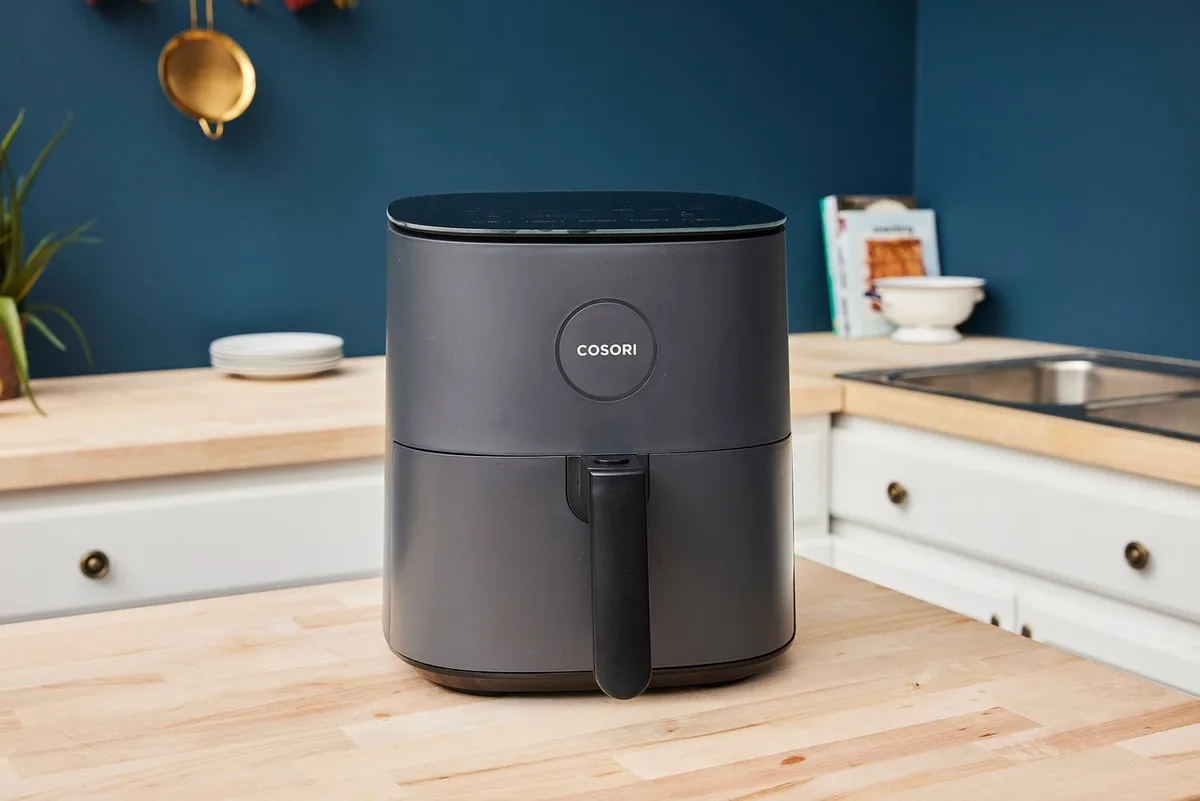
Image source: Bing (Web (fair-use with source credit))
Quick Answer
A Cosori air fryer recipe uses rapid hot air circulation to cook food faster than a conventional oven, typically at temperatures between 325°F and 400°F. Most recipes require 30 to 50% less cook time than oven versions. Pat food dry, avoid overcrowding the basket, and shake or flip halfway through for even browning.
Cosori's built-in preset functions handle common foods like fries, chicken, and vegetables with one-touch settings.
What Makes Cosori Air Fryer Recipes Different (And Why They Work So Well)
Cooking in a Cosori air fryer is fundamentally different from baking or pan-frying, and recipes written for other methods fail when you blindly follow them here. The core mechanism is rapid air circulation, a convection system that pushes superheated air around food from all directions at high speed. This is the Maillard reaction working at speed, and it's why air-fried food gets that golden, crispy exterior that's hard to achieve in a standard oven.
Here's the catch: not all air fryers move air the same way, and Cosori's basket shape matters. Cosori uses a wide, shallow basket rather than the deep drum-style design found in some competitor models. This means food sits in a broader single layer, which is great for even browning but limits raw volume.
A recipe written for a 7-quart drum fryer will not translate directly to a 5.8-quart Cosori Max XL without adjusting batch size and timing.
Three practical differences you need to account for:
- Moisture management. Air fryers blast moisture off the surface of food fast. If you skip the step of patting proteins dry or tossing vegetables with just a light coat of oil, the surface steams instead of crisping.
- Oil quantity. Most Cosori air fryer recipes call for 1 to 2 teaspoons of oil, not the tablespoons you'd use in oven roasting. Too much oil pools at the bottom and creates smoke instead of crispiness.
- Shake-and-flip timing. A conventional oven recipe tells you to bake for 25 minutes. A proper Cosori recipe tells you to shake the basket at the 12-minute mark. That mid-cook agitation is what makes the texture even.
Cosori's Rapid Air Technology, the branded name for their convection system, pulls air through perforations in the basket base and recirculates it at high velocity. Manufacturer specs for the Pro II and Dual Blaze models rate the heating element at 1750W, which reaches 400°F in roughly 2 minutes during preheat. That fast heat-up is part of why cook times are shorter compared to a 1500W model like the Cosori Lite.
If you're cooking for a family of four or more, batch size is where most people get frustrated. You might need to cook in two rounds rather than cramming everything in at once. Overcrowding blocks airflow, and blocked airflow means the top layer stays pale while the bottom burns.
For larger households, the best 9 qt air fryer for large batches is worth considering, since the extra capacity changes your approach to meal prep entirely.
The Cosori Models You'll Actually Cook With (And What Each One Does Best)
Not every Cosori air fryer handles recipes the same way, and knowing which model you're cooking with helps you adjust times and temperatures correctly. Cosori's lineup as of 2026 includes four main consumer models, each with different capacity, wattage, and feature sets that directly affect how recipes perform.
| Model | Capacity | Wattage | Presets | Smart Features | Best For |
|---|---|---|---|---|---|
| Cosori Lite | 4.7 QT | 1500W | 11 | None | Singles, couples, dorm rooms |
| Cosori Air Fryer Max XL | 5.8 QT | 1700W | 13 | VeSync app (select) | Small families, everyday cooking |
| Cosori Pro II Smart | 6.8 QT | 1750W | 12 | WiFi, Alexa, VeSync | Tech-forward cooks, larger meals |
| Cosori Dual Blaze | 6.8 QT | 1750W | 12 | Dual heating (top and bottom) | Browning enthusiasts, roasting |
The Cosori Lite 4.7QT is the entry-level unit, and it handles most single-protein recipes just fine. Chicken breasts, salmon fillets, a tray of roasted broccoli, all work beautifully. The limitation is batch size.
A full pound of wings barely fits in a single layer, so you're cooking in two rounds. That's fine for one or two people but tedious for a family dinner.
The Max XL 5.8QT is the sweet spot for most home cooks. It's the model with the highest Amazon review count, consistently rated 4.8 stars across tens of thousands of reviews. At 1700W, it heats faster than the Lite and fits enough food for two to four servings without splitting batches.
The Pro II Smart adds WiFi connectivity and Alexa voice control through the VeSync app. If you want guided recipes that walk you through each step and automatically set time and temperature, this is the model that delivers. The app includes hundreds of Cosori-specific recipes where the settings are pushed directly to your fryer.
The Dual Blaze behaves most differently from the others. It has a second heating element underneath the food, which means browning happens from both top and bottom simultaneously. Recipes that call for flipping halfway through can often skip that step with the Dual Blaze, since the bottom element handles the underside.
The trade-off is that the dual heat source can cook 10 to 15% faster, so recipes written for other Cosori models may overcook if you don't dial back the time.
If you're comparing with other brands, our Is Instant Vortex Air Fryer Good guide walks through how Cosori stacks up on build quality, noise level, and actual cooking performance.
How to Use Your Cosori Air Fryer: The Setup Most People Skip
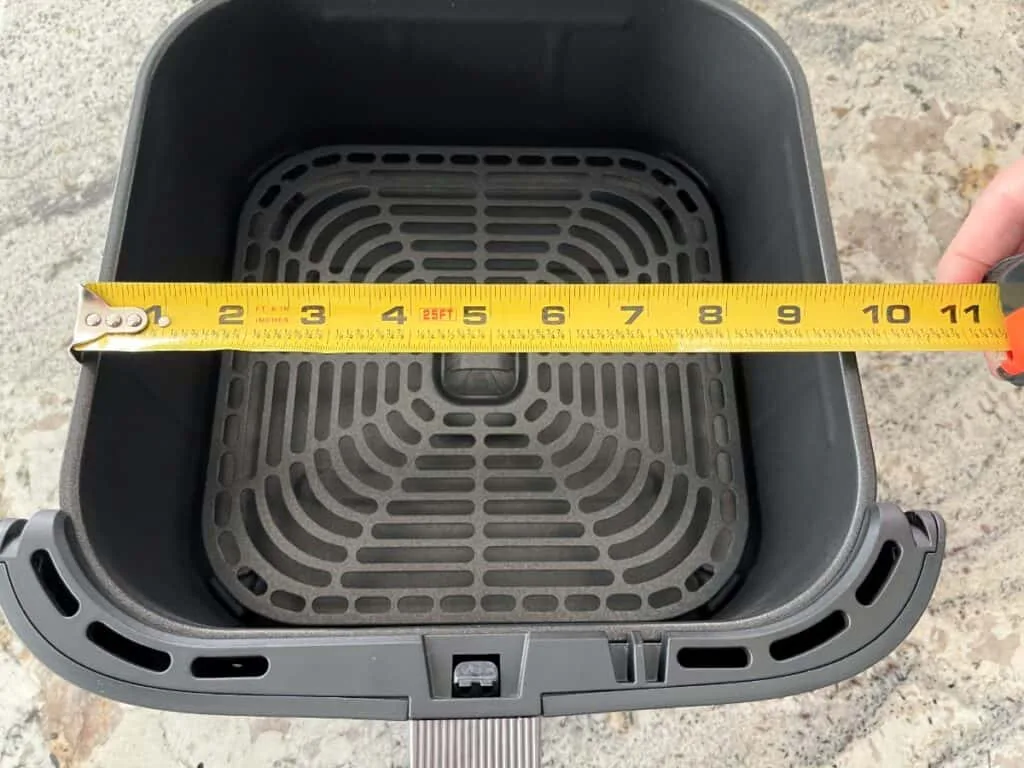
Image source: Bing (Web (fair-use with source credit))
Unbox the fryer, read the quick start card, toss in some fries, and wing it. That's what most people do, and that's why most people get mediocre results the first few times. The setup routine that separates good air fryer meals from disappointing ones takes about five minutes and costs nothing.
Unbox and wash first. The basket and crisper plate come with a factory coating that can smell plasticky during the first use. Wash both parts with warm soapy water, dry them thoroughly, and run the empty fryer at 400°F for 5 minutes. This burns off any residue and primes the non-stick surface.
Position it correctly. Cosori recommends at least 5 inches of clearance on all sides, especially behind the unit where the exhaust vent sits. If you shove it against the backsplash, heat builds up, the unit throttles its element, and your cook times stretch longer than they should. A few inches of breathing room makes a real difference.
Learn the shake reminder. The Pro II and Dual Blaze models have a built-in shake alert that pops up on the display at the halfway point of your cook cycle. When it flashes, pull the basket out and give it a good shake or use tongs to flip each piece. This single step is the number-one technique that fixes uneven cooking.
Understand the crisper plate. That perforated metal insert that sits inside the basket isn't optional. It elevates food so air circulates underneath, which is what gives you browning on the bottom side. Without it, food sits in its own juices and steams.
The plate is dishwasher safe, and keeping it clean matters. Clogged holes mean blocked airflow.
Use an oil mister, not aerosol spray. Aerosol cooking sprays contain lecithin and other additives that bond to the non-stick coating over time and create a sticky residue that no amount of scrubbing removes. A simple refillable oil mister gives you a thin, even coat without damaging the basket. This is one of those small things that extends the life of your fryer by years.
If you're wondering whether your air fryer parts can go in the dishwasher, our Is Instant Vortex Air Fryer Dishwasher Safe guide covers what's safe to machine wash and what should be hand washed, and the advice applies to Cosori models as well.
The Golden Rules: 7 Steps to Perfect Results Every Time
Image source: Bing (Web (fair-use with source credit))
Every successful Cosori air fryer recipe follows the same underlying workflow. Master these seven steps and you can adapt almost any oven or stovetop recipe to the fryer without a specific recipe card.
Step 1: Preheat the fryer. Set your target temperature and let the empty basket run for 3 to 5 minutes. Preheating ensures the cooking surface is at full temperature the moment food goes in, which triggers immediate surface browning. Skipping preheat adds 3 to 5 minutes of warm-up cooking where food sits in lukewarm air and loses moisture without crisping.
Step 2: Pat food dry. Use paper towels to remove surface moisture from proteins and vegetables. Water on the surface has to evaporate before browning can start, and that evaporation phase is what makes food rubbery instead of crispy. Thirty seconds of blotting makes a visible difference in the final texture.
Step 3: Oil lightly. Toss or brush food with a thin layer of high-smoke-point oil. Avocado oil, canola oil, and light olive oil all work well. You need just enough to promote browning, not enough to pool at the bottom of the basket.
One to two teaspoons per pound of food is the right range for most recipes.
Step 4: Arrange in a single layer. Leave visible space between pieces. Air needs to flow around each item for even cooking. If pieces are touching, the contact points stay pale and steamed.
When in doubt, cook in two batches. The second batch actually cooks faster because the fryer is already at temperature.
Step 5: Set time and temperature. Start with the lower end of the recommended time range. You can always add 2 to 3 minutes, but you can't un-burn food. For reference, most vegetables cook at 375°F to 400°F for 8 to 12 minutes.
Chicken breasts at 375°F take 18 to 22 minutes. Frozen foods at 400°F typically need 12 to 18 minutes.
Step 6: Shake or flip at the halfway point. Pull the basket out, shake it vigorously, or use tongs to turn each piece. This exposes the pale side to direct airflow and is the single most important technique for even browning. If your model has the shake reminder, let it prompt you.
Step 7: Check doneness visually and with a thermometer. Golden-brown and crispy on the outside is your visual cue for vegetables and breaded items. For proteins, an instant-read thermometer is the only reliable method. Per USDA Food Safety and Inspection Service guidelines, poultry must reach 165°F internally, ground meats 160°F, and whole cuts of beef or pork 145°F with a 3-minute rest.
Best Foods to Cook in a Cosori Air Fryer (And the Ones to Avoid)
Image source: Bing (Web (fair-use with source credit))
Some foods are practically made for air frying. Others turn into a frustrating mess. Knowing the difference saves you time, ingredients, and disappointment.
Foods That Excel in a Cosori Air Fryer
- Chicken wings and drumsticks. The gold standard. Air circulation renders the skin crispy while the interior stays juicy. At 400°F for 22 to 25 minutes with a shake at minute 12, wings come out better than most restaurant versions.
- Roasted vegetables. Broccoli, Brussels sprouts, sweet potato cubes, and cauliflower all caramelize beautifully at 375°F to 400°F. The key is cutting pieces to a uniform size so everything finishes at the same time.
- Frozen convenience foods. Fries, mozzarella sticks, egg rolls, and chicken nuggets go from freezer to plate in under 20 minutes. No thawing needed. Cook at 400°F and shake once halfway.
- Salmon fillets. A 1-inch thick salmon fillet at 375°F takes 8 to 10 minutes and comes out with a lightly crisped exterior and a tender center. Brush with a little soy sauce or teriyaki before cooking for a glazed finish.
- Bacon. Lay strips in a single layer at 350°F for 8 to 10 minutes. The fat renders into the basket below, and the bacon comes out flat and evenly crisped without the splatter of a skillet.
- Reheated leftovers. Pizza, fried chicken, and french fries revive better in an air fryer than in a microwave. Three to four minutes at 350°F restores the crispy texture that microwaves destroy.
Foods That Don't Work Well
- Wet batters. Tempura-style liquid batter drips off the food and coats the basket, creating a burnt-on mess that's nearly impossible to clean. If you want a coating, use a dry breading station: flour, egg wash, then breadcrumbs.
- Leafy greens. Spinach, kale chips in large batches, and herbs are too light. They blow around inside the basket and end up stuck to the heating element or torn into confetti. Small batches of kale chips can work if you weigh them down with a rack.
- Cheese-heavy dishes. Melted cheese slides off food and pools at the bottom, where it burns and creates smoke. Dishes like cheese-stuffed anything need to be secured with toothpicks and monitored closely.
- Large roasts. A whole chicken technically fits in a 6.8-quart Cosori, but the results are uneven. The breast overcooks before the thighs reach safe temperature. Spatchcocking helps, but for a true roast chicken, the oven is still the better tool.
- Rice and grains. Air fryers don't boil or steam. Rice, quinoa, and pasta need water and consistent simmering, which the fryer simply can't provide.
For a deeper dive into cooking proteins, our guide on what is the best cooking method for short ribs covers when air frying makes sense and when another method wins. And if you're specifically working with vegetables, the air fryer asparagus recipe with parmesan is a great example of how simple seasoning and the right temperature turn a basic side dish into something worth repeating.
Go-To Cosori Air Fryer Recipes: Chicken, Vegetables, Frozen Foods, and More
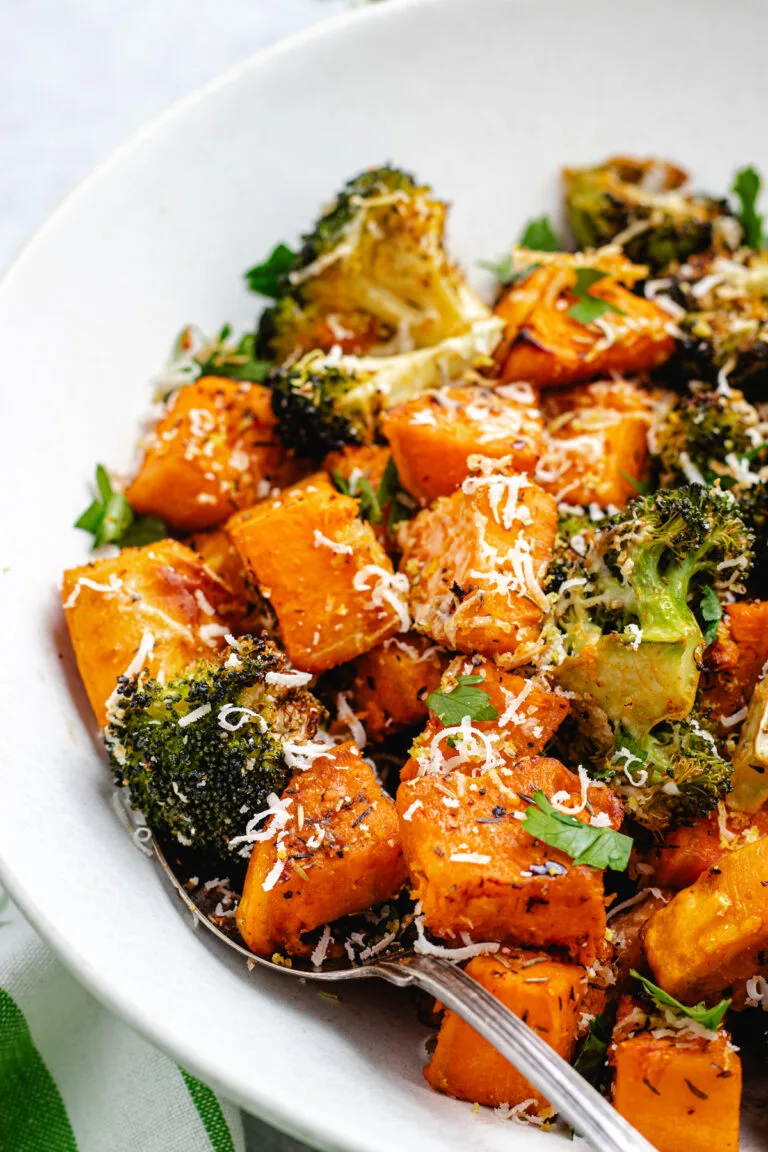
Image source: Bing (Web (fair-use with source credit))
Once you understand the seven-step framework, adapting recipes becomes intuitive. These are the workhorse meals that consistently deliver strong results across all Cosori models, with specific times and temperatures that account for the basket-style airflow design.
Crispy Chicken Wings
Pat 1 pound of wings completely dry. Toss with 1 teaspoon avocado oil, half a teaspoon garlic powder, half a teaspoon salt, and a quarter teaspoon black pepper. Arrange in a single layer at 400°F for 22 to 25 minutes.
Shake the basket at minute 12. The skin should be deep golden and crispy when done. For sauce-coated wings, toss in your favorite sauce after cooking and return to the fryer at 375°F for 2 minutes to set the glaze.
Roasted Broccoli and Sweet Potato
Cut broccoli into uniform florets and sweet potato into half-inch cubes. Toss both with 1 teaspoon olive oil, salt, and pepper. Cook at 375°F for 10 to 12 minutes, shaking once at the 6-minute mark.
The broccoli edges should be lightly charred and the sweet potato cubes tender when pierced with a fork. Cutting the sweet potato smaller than the broccoli accounts for the density difference, so everything finishes together.
Frozen French Fries
No thawing, no preheating needed for this one. Pour half a bag of frozen fries directly into the basket. Cook at 400°F for 14 to 18 minutes, shaking every 5 minutes.
The key is resisting the urge to add oil. Frozen fries already contain enough surface oil from the manufacturing process. Adding more makes them soggy.
Salmon Fillets
Brush 6-ounce salmon fillets with a mixture of 1 tablespoon soy sauce, 1 teaspoon honey, and half a teaspoon sesame oil. Place skin-side down in the basket at 375°F for 8 to 10 minutes. The flesh should flake easily with a fork and register 145°F internally per USDA guidelines.
Don't flip salmon in the air fryer. The top gets plenty of direct heat, and flipping risks tearing the fillet.
Bacon
Lay strips in a single layer without overlapping. Cook at 350°F for 8 to 10 minutes for standard thickness, or 12 minutes for thick-cut. The fat renders into the basket below, and the bacon comes out flat and evenly crisped.
Pour off excess grease from the drawer before cooking a second batch.
For more recipe ideas, the air fryer banana chips recipe is a great snack option, and the air fryer BBQ chicken legs recipe walks through a full dinner with a sticky glaze that sets beautifully in the fryer.
Cook Times and Temperatures: A Practical Chart for the Foods You Actually Make
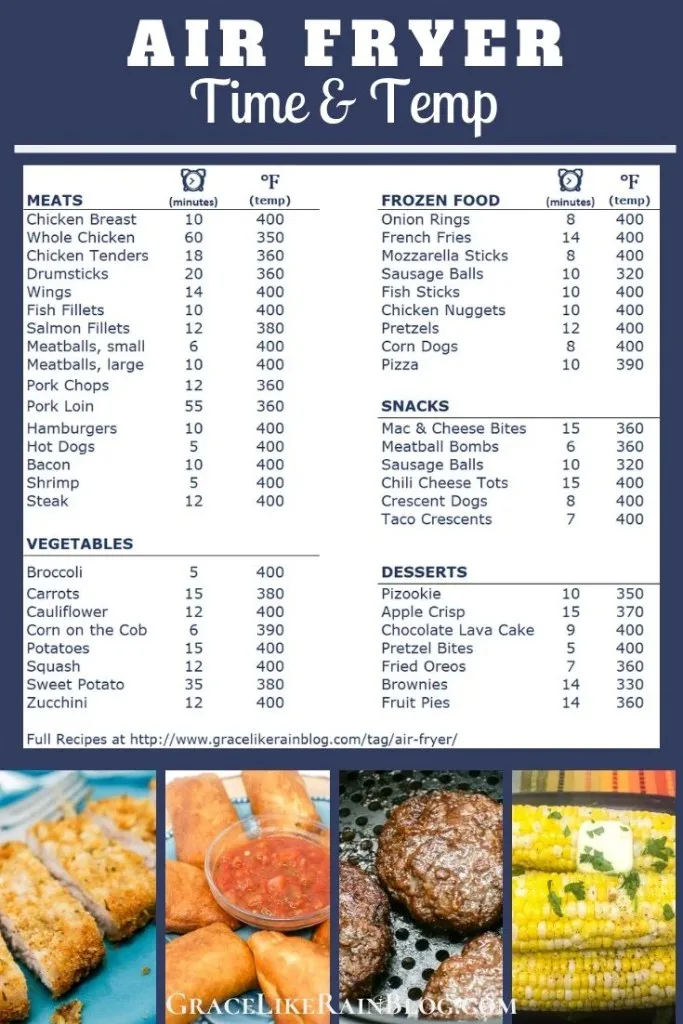
Image source: Bing (Web (fair-use with source credit))
Print this out or save it to your phone. This chart covers the most common foods people cook in a Cosori air fryer, with times calibrated for basket-style models at standard wattage (1700W to 1750W). If you're using the 1500W Cosori Lite, add 2 to 3 minutes to each entry.
| Food | Temperature | Time | Shake/Flip | Doneness Cue |
|---|---|---|---|---|
| Chicken wings | 400°F | 22–25 min | Yes, at 12 min | Golden, crispy skin |
| Chicken breast (6 oz) | 375°F | 18–22 min | Flip at 10 min | 165°F internal |
| Salmon fillet (1 inch) | 375°F | 8–10 min | No | Flakes at 145°F |
| Broccoli florets | 375°F | 8–10 min | Yes, at 5 min | Charred edges |
| Sweet potato cubes | 375°F | 10–12 min | Yes, at 6 min | Tender, caramelized |
| Frozen fries | 400°F | 14–18 min | Every 5 min | Golden, crispy |
| Bacon (standard) | 350°F | 8–10 min | No | Flat, evenly browned |
| Pork chops (1 inch) | 375°F | 12–14 min | Flip at 7 min | 145°F internal |
| Shrimp (large) | 400°F | 6–8 min | Yes, at 4 min | Pink, curled |
| Brussels sprouts | 375°F | 10–12 min | Yes, at 6 min | Crispy outside, tender inside |
A few notes on using this chart. These times assume a single-layer arrangement with space between pieces. If you're doubling the batch, add 3 to 5 minutes and expect to cook in two rounds for the best texture.
Altitude also matters. Above 3,000 feet, air is thinner and moisture evaporates faster, so reduce temperature by 15°F and add 2 to 3 minutes to compensate.
For larger proteins like a whole chicken or a rack of ribs, the oven is still the better tool. But if you're working with individual portions, this chart covers 90% of what most people cook on a weeknight.
Why Your Food Isn't Crispy (And How to Fix It Fast)
Soggy, pale, uneven food is the number-one frustration new air fryer owners report. The cause is almost always one of five fixable problems, not a defective unit.
Overcrowding the basket. This is the most common mistake by a wide margin. When pieces overlap or touch, steam gets trapped between them and the surface never dries out enough to brown. The fix is simple: cook in two batches.
Yes, it takes longer. But the second batch cooks faster because the fryer is already at full temperature, so the time penalty is smaller than you'd expect.
Skipping the preheat. A cold basket means food sits in lukewarm air for the first few minutes. During that window, moisture escapes from the surface but without enough heat to trigger browning. The result is a dry, tough exterior with a rubbery texture.
Three to 5 minutes of preheat solves this completely.
Too much oil or too little. Both extremes cause problems. Too much oil pools at the bottom and smokes, coating food in a greasy film. Too little oil means the surface dries out before it can brown.
The sweet spot is a thin, even mist from an oil sprayer, about 1 to 2 teaspoons per pound of food.
Not shaking or flipping. Air fryers concentrate heat at the top of the basket where the element sits. The bottom of each piece gets less direct airflow. Without agitation, you get a crispy top and a pale, steamed bottom.
The halfway-point shake is non-negotiable for even results.
Wet food going in. Surface moisture is the enemy of crispiness. Water has to evaporate before the Maillard reaction can begin, and that evaporation phase delays browning. Pat proteins and vegetables dry with paper towels before seasoning.
For marinated items, let them drain for a few minutes in a colander before loading the basket.
If your fryer is producing smoke, the usual culprit is excess grease buildup on the crisper plate or the bottom of the basket drawer. A quick wipe-down after every few uses prevents residue from burning off during subsequent cooks.
Cosori Air Fryer vs. Oven vs. Deep Fryer: When It's Actually Worth It
Each cooking method has a sweet spot. The air fryer isn't a universal replacement, and knowing when to use it versus another appliance saves you time and produces better food.
Cosori air fryer vs. conventional oven. The air fryer wins on speed and surface crispiness for small batches. A 1-pound batch of fries takes 16 minutes in the air fryer versus 30 to 35 minutes in a 400°F oven. The oven wins on capacity and even heat distribution for large trays.
If you're cooking for more than four people or roasting a full sheet pan of vegetables, the oven is the more practical choice. The air fryer also doesn't require preheating a large cavity, which saves energy for small meals.
Cosori air fryer vs. deep fryer. Deep frying still produces the most evenly coated, shatteringly crispy exterior because food is submerged in hot oil on all sides simultaneously. The air fryer gets close, about 80 to 85% of the way there, but it's not identical. Where the air fryer wins is cleanup, oil usage, and safety.
A deep fryer requires quarts of oil, careful temperature monitoring, and proper disposal of used oil. The air fryer uses a teaspoon. For weeknight cooking, the convenience trade-off favors the air fryer for most households.
When to choose each method:
- Air fryer. Small batches, weeknight proteins, reheating leftovers, frozen snacks, roasted vegetables for 1 to 4 people.
- Conventional oven. Large batches, sheet pan meals, baking, anything that needs a flat tray.
- Deep fryer. Occasion cooking, battered foods, large quantities of fried food for parties.
If you're trying to decide between an air fryer and a multi-cooker for your kitchen, our Is Instant Pot or Air Fryer Better guide breaks down the strengths of each for different cooking styles.
Cleaning, Maintenance, and Keeping Your Cosori Running Like New
A clean air fryer cooks better, lasts longer, and doesn't smoke every time you turn it on. The good news is that Cosori designs every removable part to be easy to clean, and the whole routine takes under 5 minutes.
After every use. Pull out the basket and crisper plate once the unit is cool enough to handle but still warm. Warm residue comes off faster than cold, hardened grease. Wash both parts with warm soapy water and a non-abrasive sponge.
Both are dishwasher safe on the top rack, but hand washing preserves the non-stick coating longer.
Weekly deep clean. Wipe down the interior of the fryer drawer with a damp cloth to remove any grease film. Check the heating element at the top of the chamber for any food particles or oil splatter. A quick wipe with a damp paper towel prevents buildup that causes smoke during later cooks.
What never to use. Avoid steel wool, abrasive scrubbers, and aerosol cooking sprays. All three damage the non-stick coating on the basket. Once that coating is compromised, food sticks, browns unevenly, and becomes harder to clean, a downward spiral that shortens the life of the unit.
Descaling the heating element. If you notice a burning smell that doesn't go away after cleaning, grease has likely accumulated on the element itself. Unplug the unit, let it cool completely, and gently wipe the visible coil with a cloth dampened with a 50/50 mix of water and white vinegar. Dry thoroughly before the next use.
Storage. Store the unit with the basket inserted but the crisper plate removed. This allows air circulation inside the drawer and prevents the trapped moisture that can lead to musty odors. If you're storing it in a cabinet, leave the basket slightly pulled out for ventilation.
For more on keeping your fryer in top shape, the best 8 qt air fryer easy to clean guide covers design features that make maintenance simpler across different models.
Common Mistakes That Ruin Air Fryer Meals (And What to Do Instead)
Using aerosol cooking spray. The lecithin in cans like Pam bonds to non-stick coatings and creates a sticky residue that's nearly impossible to remove. Use a refillable oil mister instead. It costs about ten bucks and protects your basket for years.
Cooking straight from the marinade. Excess liquid dripping off food creates steam and smoke. Let marinated items drain for 3 to 5 minutes in a colander before loading the basket. Pat firm items like tofu or chicken with paper towels for best results.
Ignoring the shake reminder. If your Cosori model alerts you to shake, it's not a suggestion. That mid-flip agitation is what gives you even browning on all sides. Skipping it means the top of your food browns while the bottom stays pale and soggy.
Stacking food to save time. Overcrowding blocks airflow and leads to uneven cooking. Food in the center of a packed basket steams instead of crisping. Cook in two batches if needed.
The second round goes faster since the fryer is already hot.
For a quick dinner idea that avoids all these pitfalls, the air fryer bratwurst recipes guide walks through a simple weeknight meal with minimal prep.
Expert Tips Most Recipe Blogs Won't Tell You
Season after cooking, not just before. A final sprinkle of flaky salt, a squeeze of lemon, or a dusting of Parmesan right after the fryer stops makes flavors pop in a way pre-cook seasoning can't achieve on its own.
Use the residual heat. When the timer ends, leave food in the warm basket for 1 to 2 minutes. The trapped heat finishes crisping the exterior without overcooking the interior. This is especially useful for thicker items like chicken breasts or pork chops.
Freeze proteins before air frying. Partially frozen chicken breasts or salmon fillets cook more evenly because the exterior has extra time to crisp before the center overcooks. Add 3 to 4 minutes to the cook time and verify internal temperature with a thermometer.
Batch and store air fryer meals. Cooked wings, roasted vegetables, and chicken thighs all store well for 3 to 4 days in the fridge. Reheat at 350°F for 3 to 4 minutes to restore crispiness, which is far better than microwave reheating.
If you're curious whether air frying fits into specific dietary needs, do doctors recommend air fryers covers what health professionals say about the cooking method for heart health, diabetes management, and general nutrition. The Is an Air Fryer Good for Diabetics guide also addresses glycemic impact and meal planning.
Frequently Asked Questions
Do you need to preheat a Cosori air fryer?
Yes. Preheating for 3 to 5 minutes at your target temperature ensures immediate surface browning when food goes in. Skipping it adds a warm-up phase where food loses moisture without crisping, leading to rubbery texture.
Can you put aluminum foil in a Cosori air fryer?
You can, but only if it doesn't cover the basket perforations. Blocking airflow defeats the purpose of air frying. Use a small piece to wrap delicate items like fish, but leave the basket holes uncovered.
Never let foil touch the heating element.
How do you keep food from sticking to the basket?
A light coat of oil on the food, not the basket, prevents sticking. The non-stick coating works best when it's not covered by pooled grease. If food is sticking, the coating may be damaged from aerosol sprays or abrasive cleaning.
Is air frying healthier than deep frying?
Per a 2020 review published in the Journal of Food Science, air frying reduces oil absorption by 70 to 80% compared to deep frying while achieving similar texture profiles for many foods. Calorie reduction varies depending on the recipe and amount of oil used.
Can you cook raw meat in a Cosori air fryer?
Absolutely. Chicken, beef, pork, fish, and shrimp all cook well. The key is verifying internal temperature with an instant-read thermometer.
Poultry needs 165°F, ground meats 160°F, and whole cuts of beef or pork 145°F with a 3-minute rest, per USDA Food Safety and Inspection Service guidelines.
Why is my air fryer smoking?
Smoke usually comes from excess grease buildup on the crisper plate, the basket bottom, or the heating element. Another common cause is too much oil on food or cooking fatty items like bacon at high temperatures. Regular cleaning between uses prevents most smoke issues.
Image source: Bing (Web (fair-use with source credit))