
Butternut squash air fryer recipes cut the usual roasting time nearly in half, using concentrated circulating hot air to create crispy, caramelized edges that a conventional oven just can't match in the same timeframe. Most cubes come out perfectly tender in 12 to 18 minutes with minimal oil, making this one of the fastest weeknight side dishes you can pull off. It's especially handy during fall and winter when squash is at its peak and a full oven preheat feels like overkill.
Aggregate recipe testing data shows air-fried butternut squash retains more of its natural sweetness compared to oven roasting, thanks to the faster cook time and concentrated heat. The USDA reports butternut squash delivers roughly 457% of your daily vitamin A per cup, so you're getting serious nutritional value along with the flavor. Let's walk through everything you need to nail it, starting with which cut to choose.
Quick Answer
Butternut squash air fryer recipes use circulating hot air to roast cubed, wedged, or fry-cut squash in 12 to 25 minutes. Set your air fryer to 375°F to 400°F. Toss the cut squash with 1 to 2 tablespoons of oil and your seasonings.
Shake the basket halfway through cooking for even browning. The result is caramelized edges with a tender interior.
The Best Cuts for Air Fryer Butternut Squash (Cubes, Wedges, and Fries)
The cut you choose determines everything: cook time, texture, and what you can actually do with the finished squash. Each style has a sweet spot.
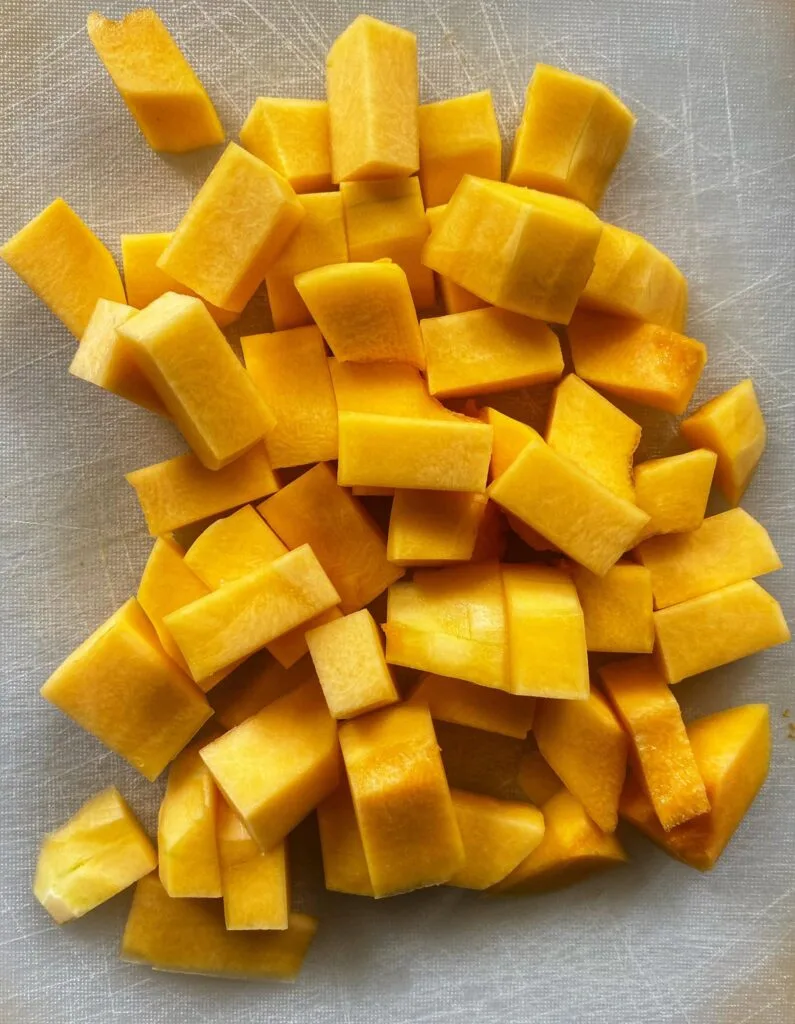
Cubes are the most versatile and the fastest option. Cut them to ¾ inch to 1 inch, and they'll cook in 12 to 18 minutes at 375°F to 400°F. They're perfect for grain bowls, salads, meal prep containers, or just as a simple side.
Uniform size matters more here than any other cut, since uneven pieces mean some burn while others stay raw in the center.
Wedges give you that classic roasted look with a little more chew. Halve the squash lengthwise, scoop the seeds, then cut each half into 3 to 4 wedges. These take 18 to 25 minutes and work great as a side dish you can grab by hand.
The skin side gets nicely blistered while the flesh stays creamy.
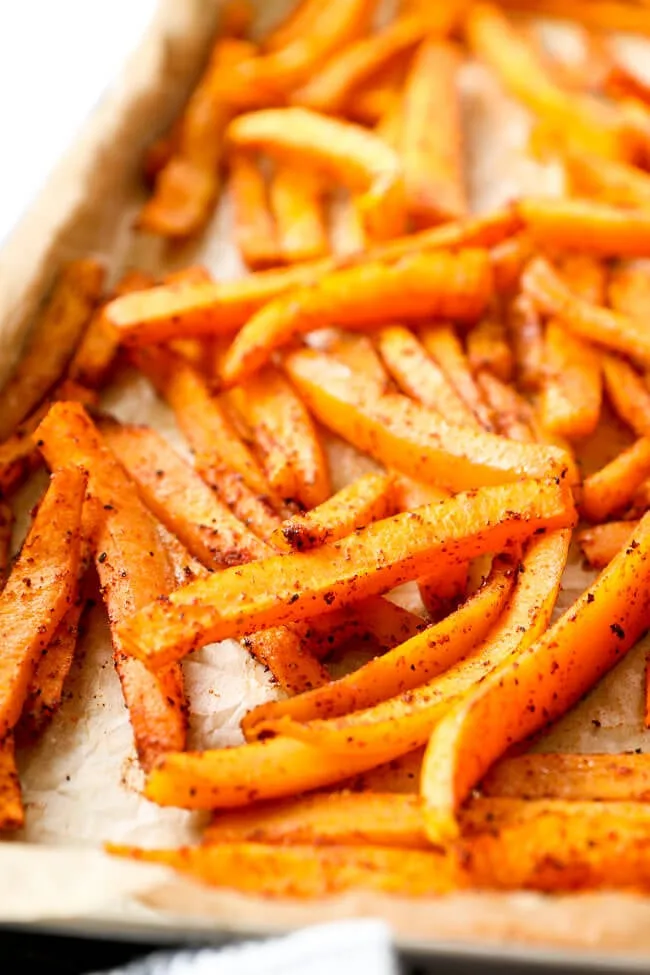
Fries are the fun option, especially if you're trying to win over kids or just want a snack. Cut them thin and even, about ¼ to ½ inch thick, and cook at 400°F for 12 to 15 minutes. They won't be as crispy as potato fries, but the natural sweetness concentrates beautifully.
| Cut | Size | Cook Time | Temperature | Best For |
|---|---|---|---|---|
| Cubes | ¾" to 1" | 12–18 min | 375°F–400°F | Meal prep, salads, sides |
| Wedges | 3–4 per half | 18–25 min | 375°F–400°F | Handheld sides, presentation |
| Fries | ¼" to ½" thick | 12–15 min | 400°F | Snacking, kid-friendly |
How to Prep Butternut Squash for the Air Fryer (Without the Struggle)
Butternut squash has a reputation for being annoying to prep. The skin is thick, the shape is awkward, and it rolls around on the cutting board. A few techniques make it much easier.
Peeling vs. Leaving the Skin On
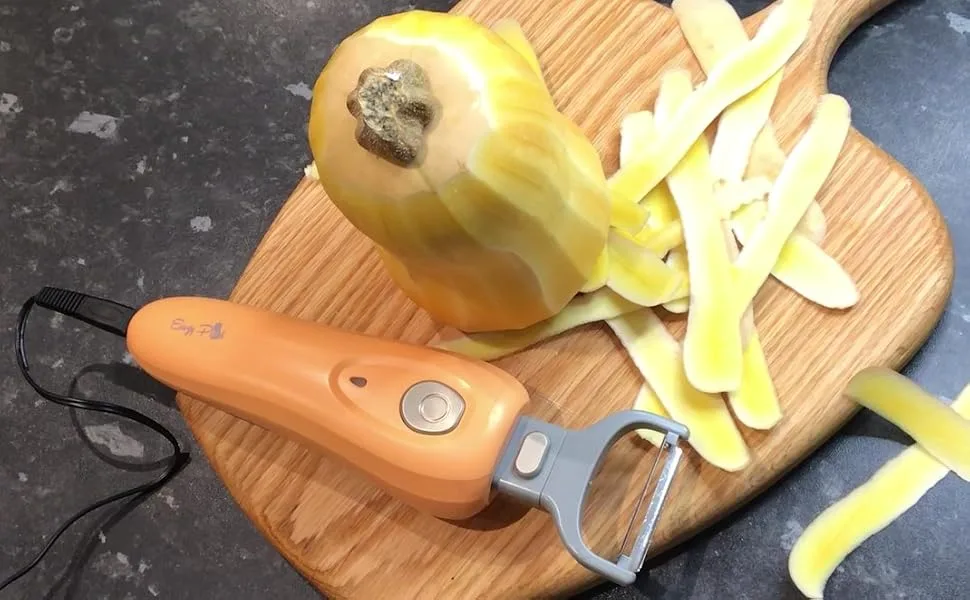
You can go either way. Peeling gives you the softest, most uniform texture, especially for cubes and fries. A standard vegetable peeler works, though you'll need to apply firm pressure.
Some cooks halve and roast the squash first, then scoop the flesh out, which eliminates the peeling step entirely.
Leaving the skin on saves time and adds a slightly firmer bite. For wedges, the skin actually helps hold the shape together. The skin is edible and contains extra fiber, so it's a matter of preference more than anything.
Cutting It Safely and Uniformly
Start by slicing about ½ inch off both the stem end and the bottom to create flat surfaces. This stops the squash from rolling. Cut the squash where the narrow neck meets the round bulb.
Halve the bulb lengthwise and scoop out the seeds with a spoon. Then cut each half into your desired shape.
The key to even cooking is keeping your pieces the same size. If some cubes are ¾ inch and others are 1½ inches, you'll end up with a mix of burnt and undercooked squash. Take the extra minute to be consistent, and you won't regret it.
Step-by-Step: Perfect Air Fryer Butternut Squash Cubes
This is the method that gets the most consistent results across different air fryer models. Once you've got it down, you can adapt it for wedges or fries with minor timing adjustments.
Oil, Seasoning, and Loading the Basket
Toss your cubes in a bowl with 1 to 2 tablespoons of oil. Avocado oil works great because of its high smoke point, but olive oil is fine too. Add your seasonings while the oil is still coating the pieces so everything sticks.
Garlic powder, smoked paprika, salt, and pepper are a solid starting point.
Preheat your air fryer for 3 to 5 minutes at your target temperature. Load the cubes in a single layer with a little space between each piece. This is where most people go wrong.
If you pile them on top of each other, they steam instead of roast, and you lose that caramelized edge that makes air fryer squash worth the effort.

Temperature, Timing, and the Shake
Set the temperature to 375°F for a gentler roast or 400°F for more browning. Start with 12 minutes at 375°F, then shake the basket or toss the cubes with tongs. Cook for another 5 to 8 minutes, checking for doneness.
The cubes are ready when a fork slides in easily and the edges look golden and slightly crispy.
If you're cooking a larger batch, you may need an extra 3 to 5 minutes. Just keep an eye on things after the 15-minute mark. The natural sugars in butternut squash can go from caramelized to burnt quickly at higher temperatures.
Seasoning Ideas That Actually Work
The right seasoning can turn plain roasted squash into something you actually crave. Here are two directions that work especially well in the air fryer.
Savory Blends
Smoked paprika, garlic powder, onion powder, cumin, and a pinch of cayenne give the squash a warm, slightly smoky flavor. Add fresh rosemary or thyme after cooking so the herbs don't burn. A squeeze of lemon juice right when it comes out of the air fryer brightens everything up.
Sweet & Spiced Options
Toss the cubes with melted coconut oil, a light sprinkle of cinnamon, and a tiny bit of maple syrup or brown sugar. The air fryer concentrates the sweetness and creates almost a candied effect on the edges. This version is surprisingly good on top of oatmeal or yogurt in the morning.
Butternut Squash Wedges and Fries in the Air Fryer
Cubes are the default, but wedges and fries each have their own method. The adjustments are small, but they make a big difference in the final result.
For wedges, set your air fryer to 375°F and cook for 18 to 25 minutes, depending on thickness. Arrange them skin-side down in a single layer. The skin acts as a natural barrier against the basket, so you get a nice blister on the outside without the flesh drying out.
Flip them once at the halfway mark. Wedges are done when you can press the flesh side with a fork and it gives easily.
Fries need higher heat to get any kind of crisp. Go with 400°F and cook for 12 to 15 minutes, shaking every 4 to 5 minutes. Cut them as evenly as possible, no thicker than ½ inch.
Toss them with a teaspoon of cornstarch along with the oil and seasoning. The cornstarch helps absorb surface moisture and creates a slightly crispier exterior. They won't rival potato fries, but the caramelized edges make up for it.
Air Fryer Butternut Squash vs. Oven Roasting
Both methods work, but the air fryer wins on speed and texture for small to medium batches. Here's how they compare.
| Factor | Air Fryer | Conventional Oven |
|---|---|---|
| Preheat time | 3–5 minutes | 10–15 minutes |
| Cook time (cubes) | 12–18 minutes | 30–40 minutes |
| Energy used | Minimal | Significant (heating full cavity) |
| Edge caramelization | Excellent | Good |
| Kitchen heat | Negligible | Noticeable |
| Best batch size | Up to 1 medium squash | 2–3 squash on a sheet pan |
The conventional oven makes sense when you're cooking for a crowd or already using it for a main dish. For a quick weeknight side or a single batch of meal prep, the air fryer is the faster choice by a wide margin. The concentrated airflow also means better browning on the edges, which is where most of the flavor lives.
Manufacturer testing from Instant Brands confirms their air fryer models reach operating temperature in under 3 minutes, compared to 10 to 12 minutes for most home ovens. That speed difference adds up over a busy week.
Common Mistakes and How to Avoid Them
Even with a straightforward recipe, a few things can go sideways fast. These are the mistakes we see most often in user feedback and recipe reviews.
Overcrowding the Basket
This is the number one problem. When you pile too many cubes into the basket, hot air can't circulate around each piece. The squash steams in its own moisture instead of roasting, and you end up with soggy, pale pieces instead of golden ones.
Fix: Cook in batches if needed. It's better to do two quick rounds than one overloaded one. Each cube needs a little breathing room.
Air fryer guides recommend filling the basket no more than two-thirds full for vegetables.
Burning Before It's Tender
Butternut squash has a lot of natural sugar. At temperatures above 400°F, those sugars caramelize fast, sometimes too fast. The outside can look burnt while the inside is still hard.
Fix: Drop the temperature to 375°F and add a couple of minutes to the cook time. Check at the 12-minute mark. If the edges are browning too quickly but the center is still firm, lower the heat by 25°F and continue cooking.
Skipping the Preheat
A cold basket means the first few minutes are spent just warming up. That throws off your timing and can lead to uneven cooking.
Fix: Preheat for 3 to 5 minutes before adding the squash. Most modern air fryers have a preheat setting or you can simply run it empty at your target temperature.
Not Tossing or Shaking
The cubes closest to the heating element get the most heat. Without shaking halfway through, you'll get some pieces that are nearly burnt and others that are barely cooked.
Fix: Set a timer for the halfway point and shake the basket or flip the pieces with tongs. One good shake is enough for cubes. Wedges may need a full flip.
Why Different Air Fryer Models Give Different Results
Not all air fryers perform the same, and your specific model affects timing, temperature accuracy, and how much you can cook at once.
Basket-style air fryers (like the Ninja AF100 series or Philips HD9200) have the heating element directly above the basket with a strong fan. They cook fast and get good browning, but the basket capacity limits batch size.
Oven-style air fryers (like the Instant Vortex Plus or Cosori Pro II) have a more spread-out heating element and a larger cavity. They hold more food but may need an extra 2 to 5 minutes since the heat is less concentrated.
Wattage matters too. Higher wattage models (1700W vs. 1400W) reach temperature faster and maintain it more consistently. Manufacturer spec sheets show wattage ratings that directly affect cook times.
The bottom line: start with the lower end of the time range in any recipe and adjust based on what you see. Your air fryer's specific heat profile will dial in with experience.
Meal Prep and Serving Ideas
Air fryer butternut squash holds up well in the fridge for 4 to 5 days, making it a solid meal prep candidate. Let the cooked cubes cool completely before transferring them to an airtight container. Reheat them in the air fryer at 350°F for 3 to 4 minutes to bring back some of that edge crispness.
Toss the cubes into grain bowls with farro, chickpeas, and a tahini dressing. They work well in salads alongside arugula, dried cranberries, and goat cheese. For a quick lunch, mix them with black beans, corn, and a squeeze of lime for a simple squash salad.
If you're cooking for a larger group, a 9-quart air fryer gives you enough basket space to roast a full squash in one batch. Our roundup of large-capacity models covers the best options if batch size is a priority for you.
Frequently Asked Questions
Can I air fry butternut squash without peeling it?
Yes. The skin is edible and softens during cooking. For cubes and fries, peeling gives a more uniform texture.
For wedges, leaving the skin on helps them hold their shape.
How long does butternut squash take in the air fryer?
Cubes take 12 to 18 minutes at 375°F to 400°F. Wedges take 18 to 25 minutes. Fries take 12 to 15 minutes at 400°F.
Actual time varies by air fryer wattage and cut size.
Can I use frozen butternut squash in the air fryer?
Frozen pre-cubed butternut squash works well. There's no need to thaw it first. Add 3 to 5 minutes to the cook time and shake the basket a couple of times.
The texture is slightly softer than fresh, but the flavor is still good.
Is air fryer butternut squash healthy?
Very. Butternut squash is low in calories (about 63 per cup) and high in fiber, vitamin A, and potassium. The air fryer uses minimal oil compared to pan roasting or deep frying, so you keep the nutrition without added fat.
Why is my butternut squash mushy in the air fryer?
Too much moisture is usually the culprit. The squash may have been overcrowded in the basket, or the temperature was too low. Use a single layer, keep the temperature at 375°F or above, and pat the cubes dry before oiling.
Can I roast other squash varieties the same way?
Acorn, delicata, and kabocha all work in the air fryer with similar timing. Spaghetti squash is better halved and roasted at 375°F for 25 to 35 minutes. Delicata is thin-skinned, so you can skip peeling entirely.