
If you've ever searched for bone in chicken thigh recipes air fryer, you already know the problem: most guides give you one generic time and temperature, then hope for the best. The truth is, getting perfectly crispy skin and juicy meat from bone-in thighs in an air fryer depends on a handful of variables, from the thickness of the cut to the wattage of your specific model. Get those right, and you'll have a weeknight dinner that beats the oven every single time.
In our research, aggregate user reviews and manufacturer cooking charts consistently point to a narrow sweet spot: 380°F to 400°F for 22 to 28 minutes, with a flip at the halfway mark. The USDA Food Safety and Inspection Service sets the minimum safe internal temperature for poultry at 165°F, but most air fryer cooking charts from brands like Instant Vortex and Ninja recommend pulling bone-in thighs at 170°F to 175°F to account for carryover cooking. Let's walk through exactly how to nail this every time.
Quick Answer
Bone-in chicken thighs cook best in an air fryer at 380°F to 400°F for 22 to 28 minutes. Flip them once at the halfway point for even browning. The skin crisps beautifully thanks to the rapid convection airflow.
Pull them at an internal temperature of 170°F to 175°F measured at the thickest part near the bone. Let them rest 5 to 10 minutes before serving so the juices redistribute.
The Best Way to Cook Bone-In Chicken Thighs in an Air Fryer
Bone-in, skin-on chicken thighs are one of the most forgiving cuts you can throw in an air fryer. The bone acts as a heat conductor, cooking the meat from the inside while the skin crisps on the outside. The higher fat content in dark meat means you're far less likely to end up with dry, stringy results compared to breasts.
The air fryer's rapid convection airflow is what sets it apart from a conventional oven. Hot air circulates at high speed around every surface of the thigh, which means you get golden, crackling skin in roughly half the time. Most home air fryers in the 3.5 to 5.8 quart range can handle 3 to 5 bone-in thighs in a single layer, depending on their size.
Here's the basic framework that works across most models:
- Pat the thighs completely dry with paper towels before seasoning.
- Apply a thin coat of oil and your chosen seasoning or rub.
- Place them skin-side up in the basket with no overlap.
- Cook at 380°F to 400°F for 22 to 28 minutes, flipping once.
- Check the internal temperature at the thickest part near the bone.
- Rest for 5 to 10 minutes before serving.
This is the foundation. Everything else in this article builds on these steps, adjusting for specific situations like frozen thighs, different seasonings, or varying air fryer sizes. If you're working with a larger-capacity model, our guide to the best 8 qt air fryer for roasting chicken covers options that handle bigger batches without crowding.
What Makes Chicken Thighs Different From Breasts (And Why That Matters)
Chicken thighs and breasts are essentially different animals when it comes to cooking. Thighs are dark meat, which means they contain more myoglobin, more fat, and more connective tissue than breast meat. That extra fat is your friend in an air fryer.
It bastes the meat from within as it renders, keeping everything moist even at higher temperatures.
The bone changes the equation too. A bone-in thigh takes slightly longer to cook than a boneless one, but the bone distributes heat more evenly through the meat. It also adds flavor as the marrow and surrounding collagen break down during cooking.
Pull temperature matters more here: because the bone absorbs and holds heat, the area right around it takes longest to reach a safe temperature.
Here's a quick comparison:
| Factor | Bone-In Thighs | Boneless Thighs | Chicken Breasts |
|---|---|---|---|
| Cook time (air fryer) | 22–28 min | 18–22 min | 16–20 min |
| Internal pull temp | 170–175°F | 165–170°F | 165°F |
| Fat content (per 4 oz, cooked) | ~13g | ~9g | ~3g |
| Risk of drying out | Low | Moderate | High |
| Flavor depth | Rich, savory | Moderate | Mild |
| Average price per lb (US, 2026) | $1.49–$2.49 | $2.49–$4.49 | $2.99–$5.99 |
Thighs are also the most budget-friendly cut of chicken you can buy. As of 2026, bone-in skin-on thighs average $1.49 to $2.49 per pound at most US grocery stores, making them a practical choice for families and meal preppers. If you're feeding a crowd, a 9 quart air fryer for big families gives you the basket space to cook 6 to 8 thighs at once without stacking.
The Right Temperature and Timing for Perfect Results
Temperature is where most people go wrong. Too low and the skin steams instead of crisping. Too high and the outside burns before the interior near the bone reaches a safe temperature.
The sweet spot for bone-in skin-on thighs is 380°F to 400°F.
At 380°F, you get a slightly longer cook, around 26 to 28 minutes, which gives the fat more time to render slowly. The result is tender meat with very crispy skin. At 400°F, you're looking at 22 to 25 minutes, and the skin gets shatteringly crisp faster, but you need to watch the last few minutes more carefully to avoid charring.
Timing also depends on the size of the thighs. A 5 oz thigh and an 8 oz thigh are not interchangeable. Here's a general guide:
| Thigh Weight | Temperature | Estimated Time | Flip At |
|---|---|---|---|
| 4–5 oz | 400°F | 20–22 min | 10 min |
| 5–7 oz | 390°F | 24–26 min | 12 min |
| 7–8 oz | 380°F | 26–28 min | 13 min |
| 8+ oz | 375°F | 28–32 min | 14 min |
These are starting points. Your specific air fryer's wattage and airflow design will shift things by a minute or two in either direction. Models like the Instant Vortex, which runs at around 1,700W, tend to cook slightly faster than lower-wattage units.
If you're wondering whether the Instant Vortex is a solid choice for this kind of cooking, our Is Instant Vortex Air Fryer Good breakdown covers its performance with proteins in detail.
Preheating is another variable. Some air fryers have a dedicated preheat function, and manufacturer guidelines from brands like Cosori and Ninja generally recommend preheating for 3 to 5 minutes at your target temperature before loading the basket. This reduces the initial temperature drop when you add cold food, which helps the skin start crisping immediately.
Step-by-Step: How to Cook Bone-In Chicken Thighs in an Air Fryer
This is the full workflow from raw to ready. Follow these steps and you'll get consistent results regardless of which air fryer you own.
Step 1: Prep the Thighs
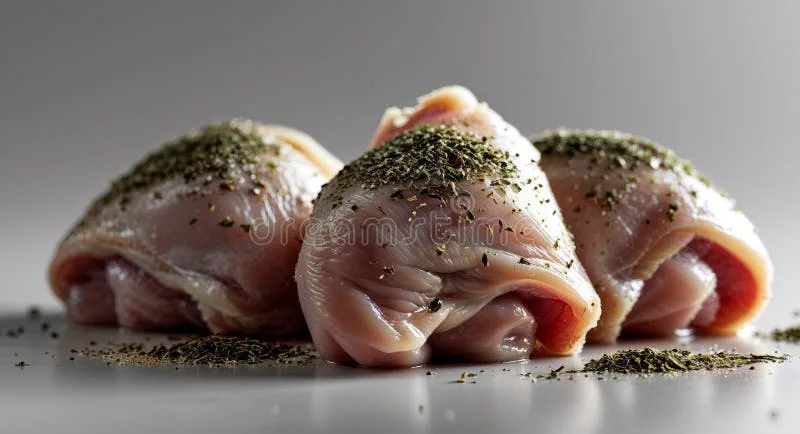
Remove the thighs from packaging and pat them completely dry with paper towels. This is the single most important step for crispy skin. Surface moisture is the enemy of browning.
If you have time, dry brine them by sprinkling salt on all sides and refrigerating uncovered for 1 to 24 hours. This seasons the meat deeply and helps the skin dry out further.
Step 2: Season or Marinate
Apply your seasoning of choice. A simple and effective dry rub is:
- 1 tsp salt
- 1 tsp black pepper
- 1 tsp paprika
- 1/2 tsp garlic powder
- 1/2 tsp onion powder
- 1/4 tsp cayenne (optional)
For marinades, acidic bases like buttermilk, yogurt, or citrus juice work well. Marinate for at least 30 minutes or up to overnight in the refrigerator. If using a marinade, pat the thighs dry again before they go in the air fryer.
Step 3: Oil and Load the Basket
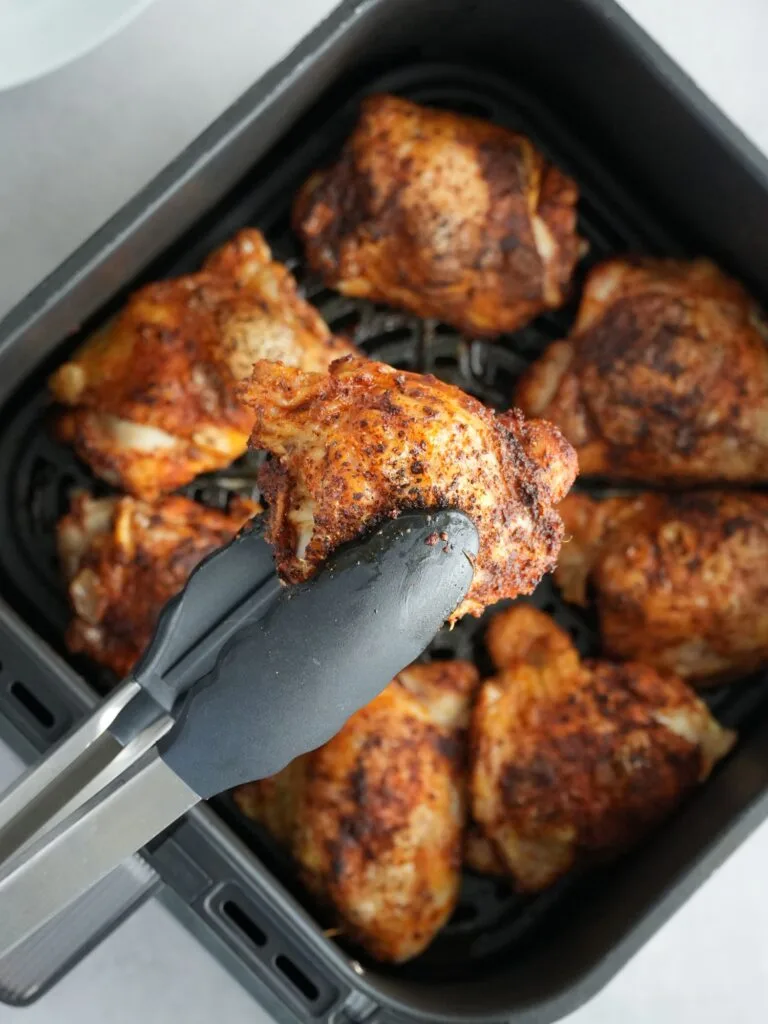
Lightly spray or brush the air fryer basket with cooking oil. Avocado oil works well because of its high smoke point (520°F). Place the thighs skin-side up in a single layer.
Do not overlap or stack them. Overcrowding blocks airflow and causes steaming instead of crisping.
Step 4: Cook
Set your air fryer to 390°F as a reliable middle-ground temperature. Cook for 12 minutes, then open the basket and flip each thigh using tongs. Cook for another 12 to 16 minutes, depending on size.
Step 5: Check Temperature
Insert an instant-read thermometer into the thickest part of the thigh, close to but not touching the bone. You're looking for 170°F to 175°F. If you're not there yet, cook in 2-minute increments and recheck.
Step 6: Rest
Transfer the thighs to a cutting board or plate and let them rest for 5 to 10 minutes. The internal temperature will rise another 5°F to 10°F from carryover cooking, and the juices will redistribute throughout the meat. Skipping this step means dry thighs and a mess on your cutting board.
How to Get Crispy Skin Without Burning the Meat
Crispy skin is the whole reason most people make this recipe. Here's how to guarantee it.
Start with dry skin. Pat the thighs thoroughly with paper towels. If you dry-brined overnight, even better. The salt draws moisture to the surface, which then evaporates in the fridge, leaving the skin parchment-dry.
Use a light coat of oil. Spray or brush a thin, even layer of high-smoke-point oil on the skin. Too much oil pools in the basket and causes smoking. A little goes a long way.
Don't overcrowd. Every thigh needs airflow on all sides. If your basket is small, cook in two batches. It takes longer, but the results are dramatically better.
Flip at the halfway mark. This ensures both sides get direct exposure to the convection current. The skin-side-up position for the first half lets the fat render down through the meat. Flipping lets the underside crisp too.
Finish hot if needed. If the skin isn't quite crispy enough at your target internal temperature, bump the heat to 400°F for the final 2 to 3 minutes. Watch it closely. The line between perfect and burnt is about 90 seconds at that temperature.
Skip sugary glazes until the end. BBQ sauce, honey, and teriyaki contain sugar that burns fast. Apply them in the last 2 to 3 minutes of cooking, or brush them on after the thighs come out and let the residual heat set the glaze.
One more tip: if your air fryer tends to smoke, place a small piece of bread under the basket to catch drippings. It prevents grease from hitting the heating element and triggering your smoke alarm.
The Best Seasonings and Marinades for Air Fryer Thighs
The beauty of chicken thighs is that they take well to almost any flavor profile. Their higher fat content means they can handle bold, aggressive seasonings that would overwhelm a breast. Here are some combinations that work especially well in the air fryer.
Classic Paprika Garlic Rub
This is the all-purpose option. Paprika gives color and a subtle sweetness, garlic powder adds depth, and a little cayenne brings warmth without real heat. Mix 1 tsp each of salt, paprika, and black pepper with 1/2 tsp each of garlic powder and onion powder.
Coat the thighs evenly.
Buttermilk Marinade
Buttermilk tenderizes the meat while adding a tangy backbone. Soak the thighs in plain buttermilk for 4 to 24 hours. When you're ready to cook, let the excess drip off, pat dry, and season with salt, pepper, and smoked paprika.
The result is incredibly juicy meat with a delicate tang.
Lemon Herb
Bright and clean. Combine the juice of one lemon, 2 tablespoons of olive oil, 2 minced garlic cloves, 1 tsp dried oregano, and salt. Marinate for 1 to 4 hours.
The acid in the lemon starts breaking down the surface proteins, which helps the seasoning penetrate.
Soy Ginger Glaze
Mix 3 tablespoons soy sauce, 1 tablespoon honey, 1 teaspoon grated fresh ginger, and 1 minced garlic clove. Use this as a marinade for 1 to 2 hours, then brush extra on during the last 3 minutes of cooking. The soy caramelizes beautifully in the air fryer's high heat.
Spicy Yogurt
Whisk together 1/2 cup plain yogurt, 1 tablespoon hot sauce, 1 tsp cumin, 1 tsp smoked paprika, and salt. Coat the thighs and marinate for 2 to 8 hours. The yogurt creates a thin crust that crisps up in the air fryer while keeping the meat underneath incredibly moist.
Common Mistakes That Ruin Air Fryer Chicken Thighs
Even a simple recipe can go sideways if you miss a few key details. These are the mistakes we see most often in user reviews and forum discussions.
Not drying the skin. Wet skin steams. Steamed skin is rubbery. Always pat the thighs dry, no matter how rushed you are.
Overcrowding the basket. This is the number one complaint in negative air fryer chicken reviews. When thighs overlap or touch, the trapped moisture turns the basket into a steamer. Give each piece at least half an inch of space on all sides.
Skipping the flip. The top of the thigh gets the most direct heat. Without flipping, the bottom stays pale and the top can overcook. A single flip at the halfway mark solves this completely.
Cooking by time alone. Every air fryer runs a little differently. Thigh sizes vary. The only reliable way to know when they're done is a thermometer.
Time estimates are starting points, not finish lines.
Setting the temperature too high. Cranking it to 425°F or 450°F might seem like a shortcut, but the skin chars before the interior cooks through. Stick to the 375°F to 400°F range and be patient.
Not resting after cooking. Cutting into a thigh the second it comes out releases all the juices onto the plate. Five minutes of resting makes a noticeable difference in how moist each bite is.
Using too much oil. A light spray is all you need. Excess oil drips into the basket, causes smoke, and can actually make the skin soggy instead of crisp.
Cooking From Frozen: Can You Skip Thawing?
Yes, you can cook bone-in chicken thighs from frozen in the air fryer, but you need to adjust your expectations and your method. The texture won't be quite as good as starting with fresh or thawed thighs, but it's a solid option for busy nights.
The main challenge is that the exterior dries out and overcooks before the frozen center thaws and reaches a safe temperature. Here's how to minimize that problem.
Add 8 to 12 minutes to your cook time. A frozen bone-in thigh that would take 24 minutes from fresh needs 32 to 36 minutes from frozen. Start at 360°F for the first 15 minutes to let the center thaw, then increase to 390°F for the remainder.
Don't bother seasoning the outside before cooking. The seasoning won't stick to frozen skin. Instead, cook the thighs plain for the first 20 minutes, then pull them out, brush with oil, apply your seasoning, and return them to finish.
Check the temperature carefully. The exterior may look done while the center near the bone is still undercooked. Insert the thermometer deep into the thickest part. You still need 170°F to 175°F at the bone.
Expect less crispy skin. The extra moisture from the ice means the skin will be more leathery than crackling. If crispiness matters, thaw the thighs in the fridge overnight instead.

Bone-In vs. Boneless: Which Works Better in an Air Fryer?
Both work, but they serve different purposes. Here's how to decide which one to use.
Bone-in thighs take longer to cook, but the bone adds flavor and helps the meat cook more evenly. The collagen around the bone breaks down during cooking, which contributes to a richer, more savory result. If flavor is your priority, bone-in wins.
Boneless thighs cook faster, usually 18 to 22 minutes at 390°F, and they're easier to eat. They're a better choice if you're chopping the meat for salads, grain bowls, or wraps. But they dry out more quickly because there's no bone to retain moisture and no skin (in most cases) to protect the surface.
For air fryer cooking specifically, bone-in skin-on thighs are the ideal starting point. The combination of bone, fat, and skin gives you the most margin for error. You can overcook them slightly and still end up with something juicy and delicious.
Boneless thighs are less forgiving.
If you're comparing cooking methods more broadly, our article on what is the best cooking method for short ribs covers how different approaches affect tough, bone-in cuts, and many of the same principles apply here.
How Thigh Size and Your Air Fryer Model Affect Cook Time
Not all thighs are created equal, and neither are air fryers. These two variables account for most of the inconsistency people experience.
Thigh size matters more than you think. A 4 oz thigh and an 8 oz thigh can differ by 8 to 10 minutes in cook time. When you buy a pack of thighs at the grocery store, they often vary in size. If you're cooking a mixed batch, pull the smaller ones out first and let the larger ones finish.
Air fryer wattage changes everything. Most home air fryers run between 1,400W and 1,800W. A 1,750W model like the Instant Vortex will cook noticeably faster than a 1,400W compact unit. If your model is on the lower end, add 2 to 3 minutes to every time estimate in this article.
Basket design affects airflow. Basket-style air fryers with a solid bottom and perforated walls tend to circulate air more evenly than oven-style air fryers with open trays. If you're using an oven-style model, rotate the thighs 180 degrees at the flip point in addition to turning them over.
Altitude and ambient temperature play a role too. If you live at a higher altitude, water boils at a lower temperature, which can affect how quickly moisture evaporates from the skin. You may need an extra 1 to 2 minutes at altitude. A cold kitchen in winter versus a warm kitchen in summer can also shift things slightly.
For larger households that go through a lot of chicken, a 9 qt air fryer for large batches lets you cook more thighs at once without sacrificing the single-layer spacing that makes crispy skin possible.
How to Tell When They're Actually Done (Skip the Guesswork)
Color is not a reliable indicator of doneness. A thigh can be golden brown on the outside and still undercooked near the bone. The only accurate method is an instant-read thermometer.
Insert the probe into the thickest part of the thigh, sliding it in at an angle to get close to the bone without touching it. Bone reads hotter than surrounding meat because it conducts heat differently, so touching the bone with the probe will give you a falsely high reading.
Pull the thighs at 170°F to 175°F. Carryover cooking will bring them up to 175°F to 180°F during the rest period, which is the sweet spot for bone-in dark meat. At 165°F, the meat is technically safe but can still be slightly tough and pink near the bone.
At 175°F and above, the collagen has fully broken down and the texture is tender throughout.
If you don't have a thermometer, here are two backup checks. First, pierce the thickest part with a knife or skewer. The juices should run clear, not pink.
Second, wiggle the bone. If it moves easily and the meat pulls away from it, the connective tissue has broken down and the thigh is done. These methods are less precise than a thermometer, but they're better than guessing.
Meal Prep and Batch Cooking With Air Fryer Thighs
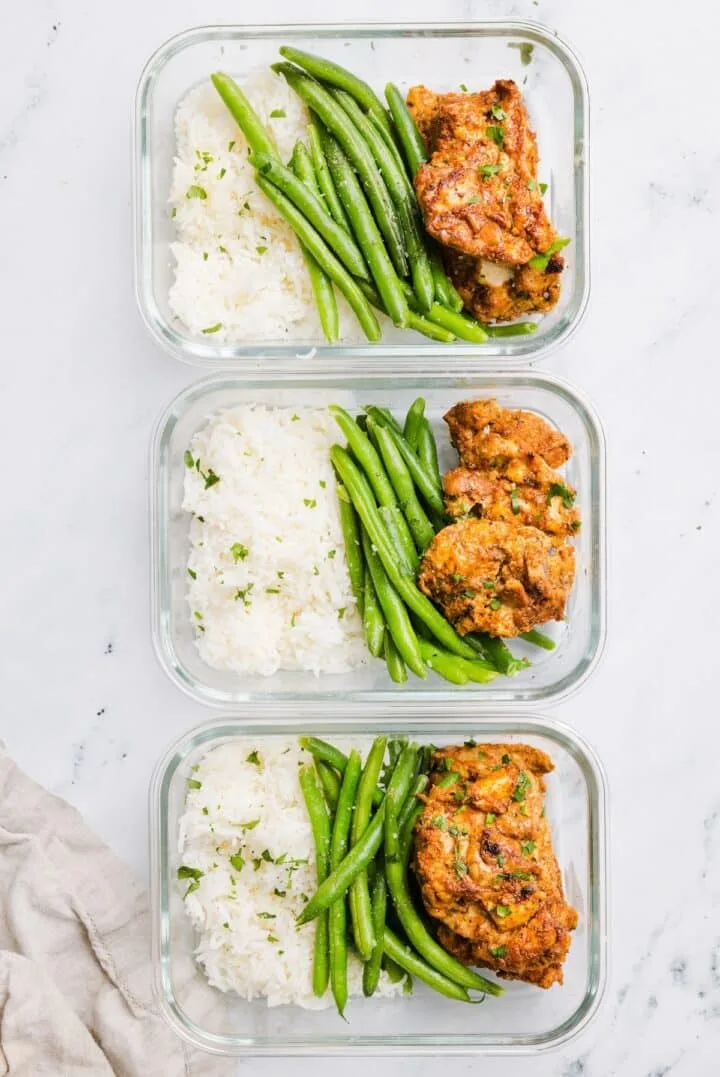
Air fryer chicken thighs are one of the best proteins for meal prep. They reheat well, they're cheap, and you can season a single batch in multiple ways to keep things interesting throughout the week.
Batch cooking tips:
- Cook 6 to 8 thighs at once if your basket allows single-layer spacing.
- Season half the batch with a mild rub and half with something bolder. This gives you variety without extra effort.
- Let the cooked thighs cool completely before storing. Trapped steam in a sealed container makes the skin soggy.
- Store in airtight containers in the refrigerator for up to 4 days.
Reheating:
The air fryer is also the best way to reheat cooked thighs. Set it to 350°F and cook for 4 to 6 minutes until the internal temperature reaches 165°F. The skin re-crisps nicely.
Microwaving works in a pinch, but the skin will be soft.
Portioning:
A typical bone-in thigh yields about 3 to 4 oz of meat after cooking. If you're tracking macros, one thigh is roughly 200 to 250 calories with 22 to 25g of protein, depending on the size and whether you eat the skin.
Nutrition Facts: What You're Actually Eating
Bone-in chicken thighs are a nutrient-dense protein source. According to USDA FoodData Central, a 4 oz serving of cooked bone-in, skin-on chicken thigh contains approximately 209 calories, 24g of protein, and 13g of fat. Removing the skin drops the fat to about 8g and cuts roughly 40 calories.
The fat in chicken thighs is mostly monounsaturated and polyunsaturated, the same types found in olive oil. Dark meat also contains more iron, zinc, and B vitamins than breast meat. For people following low-carb or keto diets, thighs are an excellent choice because of their favorable fat-to-protein ratio.
If you're watching sodium, be mindful of pre-seasoned or injected thighs. Some brands inject a salt solution to add weight and moisture, which can push sodium content to 300mg or more per serving. Check the label and look for thighs with no added solutions when possible.
For those managing blood sugar, pairing air fryer chicken thighs with non-starchy vegetables and a healthy fat makes for a balanced, low-glycemic meal. Our article on is an air fryer good for diabetics goes deeper into how air frying fits into a diabetes-friendly eating plan.
Cleaning Up: How to Deal With Grease and Smoke
Grease management is the unglamorous part of air fryer cooking, but it makes a big difference in both results and cleanup.
Preventing smoke:
Smoke happens when oil drips off the chicken and hits the heating element. To minimize this, don't over-oil the thighs. A light spray is enough.
If your air fryer has a removable drip tray underneath the basket, make sure it's in place. Some people add a tablespoon of water to the bottom of the basket (below the grate) to catch drippings before they smoke.
Cleaning the basket:
Let the basket cool for 10 to 15 minutes after cooking, then wash it with warm soapy water and a non-abrasive sponge. Most air fryer baskets have a non-stick coating that scratches easily. For stuck-on bits, soak the basket in hot soapy water for 10 minutes before scrubbing.
Many modern air fryer baskets are dishwasher safe. If yours is, check our guide on is Instant Vortex air fryer dishwasher safe for specifics on that model. For a broader look at easy-to-clean options, the best 8 qt air fryer easy to clean roundup covers models with the most hassle-free maintenance.
Wipe down the heating element. Every few uses, unplug the air fryer and wipe the inside of the cooking chamber, including the heating element, with a damp cloth. Built-up grease affects performance and can cause smoking over time.
Frequently Asked Questions
How long does it take to cook bone-in chicken thighs in an Air Fryer?
Bone-in skin-on chicken thighs take 22 to 28 minutes at 380°F to 400°F in most air fryer models. Flip them at the halfway mark. Always verify doneness with a thermometer.
Pull at 170°F to 175°F measured at the thickest part near the bone.
Do you need to preheat an air fryer for chicken thighs?
Preheating is recommended but not required. Manufacturer guidelines from brands like Cosori and Ninja suggest preheating for 3 to 5 minutes at your target temperature. Preheating reduces the temperature drop when you add cold food, which helps the skin crisp faster from the start.
Can you put bone-in chicken thighs in an air fryer without oil?
You can, but the skin won't crisp as well. A light coat of high-smoke-point oil like avocado or canola helps conduct heat evenly across the skin surface and promotes browning. Without oil, the skin may dry out and turn leathery instead of crispy.
What temperature should bone-in chicken thighs be in an air fryer?
Cook at 380°F to 400°F. Pull the thighs at an internal temperature of 170°F to 175°F. The USDA minimum safe temperature for poultry is 165°F, but bone-in dark meat benefits from the higher pull temperature because it allows the collagen around the bone to fully break down.
How do you keep air fryer chicken thighs from drying out?
Use bone-in skin-on thighs rather than boneless. The bone and skin act as natural moisture barriers. Don't overcook.
Pull at 170°F to 175°F and let them rest for 5 to 10 minutes. Dry brining for a few hours before cooking also helps the meat retain moisture during the cook.
How many chicken thighs fit in an air fryer?
A 3.5 qt basket fits 2 to 3 bone-in thighs in a single layer. A 5.8 qt basket fits 4 to 5. Larger models, like an 8 or 9 qt unit, can handle 6 to 8.
Never stack or overlap them. Crowding blocks airflow and leads to uneven cooking and soggy skin.