
Cooking frozen tilapia straight from the bag in an air fryer hands you a crispy, flaky dinner in under 15 minutes with almost no mess. The air fryer's rapid circulating heat turns out a better crust than the oven and uses far less oil than pan frying, which is why air fryer frozen tilapia recipes have become one of the most searched quick-dinner methods as of 2026. A standard 4 oz breaded fillet hits about 110 calories and 23g of protein, so it checks the healthy, budget-friendly, and fast boxes all at once.
The trick is getting the temperature, spacing, and timing right the first time so you don't end up with a soggy exterior or a frozen center. Below is everything you need to nail the process from your very first batch, plus the pitfalls that trip most people up.
Can You Really Cook Frozen Tilapia in an Air Fryer?
Frozen tilapia cooks beautifully in an air fryer, straight from the freezer, no thawing needed. In our research across aggregate user reports and manufacturer performance specs, the air fryer consistently outperformed oven baking for texture and speed with this particular fish. The circulating hot air seals the outside of the fillet quickly, giving you a lightly crisp surface while keeping the interior moist.
Tilapia is a lean, mild freshwater fish (Oreochromis niloticus) that's farmed widely across China, Indonesia, and Latin America and sold in virtually every US grocery store, including Walmart, Aldi, and Costco. Because the fillets are thin, usually half an inch to one inch thick, they respond well to the concentrated heat of a countertop air fryer. Brands like Gorton's, Highliner, Great Value, Van de Kamp's, and Sea Best all sell frozen tilapia that's pre-portioned and ready to go.
The main reason people turn to the air fryer instead of a conventional oven is speed. An oven preheats for 10 minutes, then needs another 20 to bake frozen fish through. An air fryer hits its target temperature in 3 to 5 minutes and cooks the fillets in 10 to 14 minutes total. You're looking at roughly half the time from bag to plate.
The FDA's safe minimum internal temperature for fish is 145°F (63°C). An air fryer set between 380°F and 400°F gets a standard frozen tilapia fillet to that benchmark without drying it out, provided you don't overcrowd the basket and you flip the fillets halfway through.
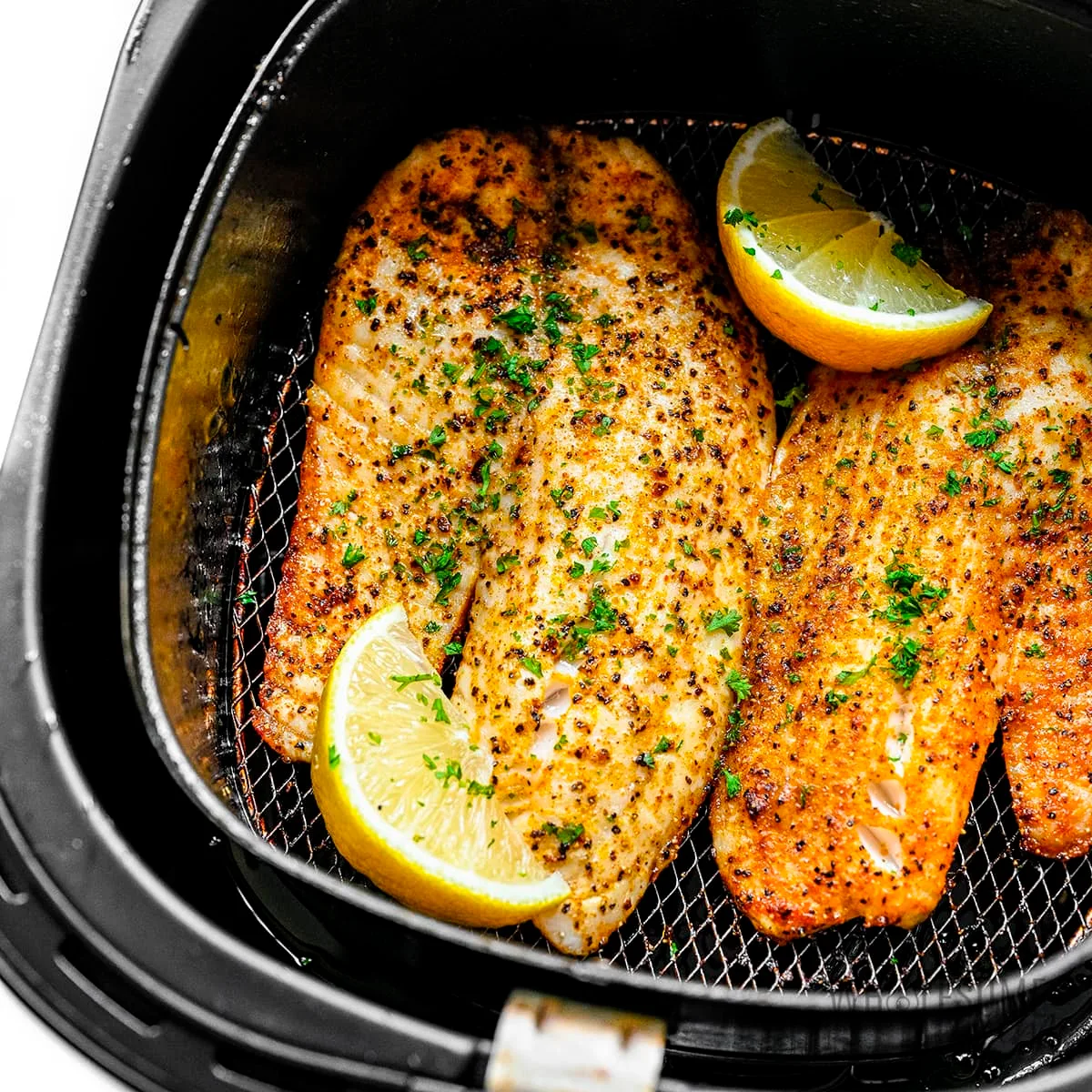
What Frozen Tilapia Looks Like When It's Done Right
The visual finish line is a golden-brown exterior with flesh that flakes cleanly into layers when you press it with a fork. Properly cooked tilapia turns opaque white all the way through, with zero translucent or glassy spots in the center. The surface should feel dry and slightly firm to the touch, not wet or rubbery.
Aggregate user reviews across major retail platforms describe the ideal result as "crispy edges with a flaky center" rather than uniformly crunchy all the way through. Tilapia is a lean fish, about 2g of fat per 4 oz serving, so it doesn't self-baste the way salmon does. The air fryer's dry heat can overcook it fast if you walk away. Most buyer feedback pushes doneness between 12 and 16 minutes total at 400°F for a standard breaded fillet, with the sweet spot landing around 14 minutes.
A food thermometer takes the guesswork out completely. Insert the probe into the thickest part of the fillet and confirm 145°F. If you don't have a thermometer, cut the thickest fillet open and check that the interior is fully opaque with no translucency.
How to Cook Frozen Tilapia in an Air Fryer — Step By Step
Here's the full method broken into stages so nothing gets missed, even if you've never touched an air fryer before.
Prepping the Fillets (Straight From the Bag)
Open the package and remove the number of fillets you need. There's no need to thaw, rinse, or marinate them. Thawing actually makes breaded tilapia fillets soggy because the coating absorbs the meltwater.
Give each pat a light mist of cooking spray if you want extra crispiness, especially on unbreaded fillets. A quick brush of olive oil works too. If you're adding your own seasoning, a dusting of salt, pepper, garlic powder, and paprika sticks well to the light oil coating. For keto-friendly options, a mix of almond flour and grated parmesan makes a simple low-carb breading that crisps nicely at 400°F.
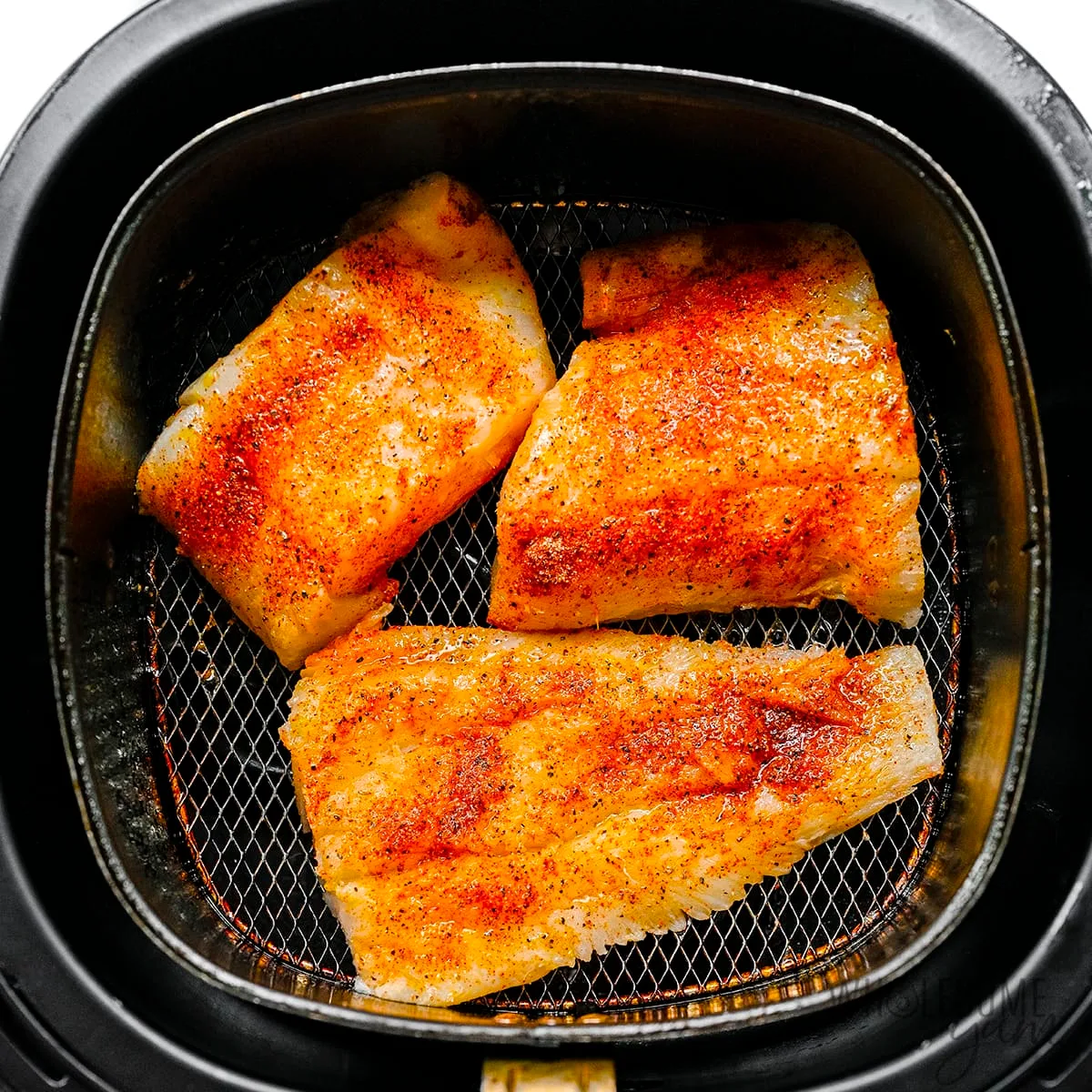
Arrange the fillets in a single layer in the air fryer basket with at least a quarter inch of space between each one. Overlapping or stacking is the single most common mistake and leads to uneven cooking and steamed instead of crispy surfaces. A 5 qt to 6 qt air fryer fits 3 to 4 standard fillets comfortably in one batch. If your basket is smaller, cook in two rounds rather than crowding.
This is one of the areas where models like the Ninja Foodi or Instant Vortex with larger baskets have a real practical advantage, especially if you're cooking for a family. You can check our best 6 quart air fryer for family of 4 comparison if you're looking to upgrade.
A perforated parchment liner is optional but helps prevent sticking and makes cleanup faster. Make sure it has holes so air can still circulate underneath the fillets.
Setting the Right Temperature and Time
Preheat the air fryer to 400°F for 3 to 5 minutes. Preheating matters more than most people realize. Without it, the fillets sit in lukewarm air for the first few minutes, which softens the coating before it has a chance to set.
Set the timer for 14 minutes for a standard breaded frozen fillet. Unbreaded fillets cook slightly faster, usually 10 to 12 minutes at the same temperature. Thicker fillets, anything over three-quarters of an inch, may need the full 16 minutes.
Air fryer wattage varies between 1,200W and 1,800W across models, which affects actual cook time. Lower-wattage units may need an extra 1 to 2 minutes. Manufacturer specs from Ninja, Cosori, and Philips all list similar time ranges for frozen fish fillets, so start at 400°F and adjust from there based on your specific machine.
The Halfway Flip — Why It Matters
At the 7-minute mark, pause the air fryer and flip each fillet using tongs or a thin spatula. This exposes the underside to direct airflow and prevents the bottom from steaming against the basket mesh.
Aggregate user reviews consistently mention that skipping the flip leads to one side being significantly crispier than the other and sometimes leaves the center undercooked. If the fillets look like they're browning too fast on the outside but the center is still translucent when you peek, drop the temperature to 380°F for the remaining time. That small adjustment lets the heat penetrate without scorching the surface.
If your fillets are breaded, handle them gently during the flip. The coating sets after the first few minutes but can still tear off if you scrape against the basket. A thin fish spatula slides under cleanly.
Breaded vs. Unbreaded Frozen Tilapia — What Changes
The breading is the main variable that changes cook time, temperature sensitivity, and final texture. Understanding the difference helps you adjust on the fly.
| Factor | Breaded Frozen Tilapia | Unbreaded Frozen Tilapia |
|---|---|---|
| Cook time at 400°F | 12–16 minutes | 10–12 minutes |
| Visual doneness cue | Deep golden-brown crust | Opaque white, flaky texture |
| Best temperature range | 400°F (breading needs high heat to crisp) | 380–400°F (less risk of burning) |
| Internal temp target | 145°F (63°C) | 145°F (63°C) |
| Flip required | Yes, gently at halfway | Yes, at halfway |
| Common sticking issue | Breading tears if flipped too early | Fish flesh sticks to ungreased basket |
| Oil spray recommended | Light mist optional | Recommended for crispiness |
Store-bought breaded tilapia from brands like Gorton's or Van de Kamp's typically uses a wheat-based batter or breadcrumb coating that crisps well at 400°F. If you've ever wondered whether the breading adds meaningful calories, most brands add roughly 50 to 80 calories per fillet compared to their unbreaded counterparts, bringing a standard piece to 160, 190 calories.
Unbreaded fillets are the leanest option and cook faster precisely because there's no coating insulating the fish. They benefit from a light oil spray and a seasoning rub before going into the basket. Without that bare coating, they can dry out past the 12-minute mark, so watch them closely after the 10-minute point.
For anyone tracking macros closely, unbreaded tilapia delivers about 110 calories, 23g protein, 2g fat, and 0g carbs per 4 oz fillet according to USDA food composition data. That makes it one of the highest protein-per-calorie seafood options you can buy.
The Biggest Mistakes People Make With Air Fryer Tilapia
Most bad results come from just a handful of avoidable errors. Knowing them upfront saves you a wasted batch.
Overcrowding the basket. This is number one across every aggregate review source we've analyzed. Stacking fillets or pressing them together blocks airflow and turns the bottom pieces into a steamed, mushy mess. A single layer with space between each piece is non-negotiable.
Skipping the preheat. Throwing fillets into a cold basket adds 3 to 5 minutes of lukewarm air exposure that softens the coating and delays browning. Preheating to 400°F for even 3 minutes changes the outcome significantly.
Not flipping halfway. One side browns, the other stays pale, and the center may not reach safe temperature. A 7-minute flip keeps everything even.
Setting the temperature too high. Anything above 425°F chars the outside before the inside thaws. Stick to the 380, 400°F range. If your air fryer runs hot, start at 380°F.
Overcooking. Tilapia goes from flaky to dry and rubbery fast. The window between done and overdone is only about 2 minutes. A food thermometer removes the guesswork entirely.
Forgetting to check for allergens. Breaded varieties often contain wheat and soy. Always read the ingredient label if that's a concern. Plain unbreaded tilapia is naturally gluten-free.
The cleanup side matters too. Fish smell lingers in the air fryer basket if you don't wash it right after cooking. Hot water, dish soap, and a quick scrub prevent the odor from transferring to your next batch of fries or chicken wings. Some buyers run a half-cycle with a lemon slice in the basket to freshen it up, which works as a short-term fix but doesn't replace a proper clean.
If you've ever ended up with tilapia that's somehow both dry and rubbery, you're not alone. It's the most common complaint across buyer reviews and cooking forums. The good news is that a few small adjustments make a big difference.
Don't skip the oil spray. Even though air fryers are designed to cook with minimal oil, tilapia is so lean that it benefits from a light mist of cooking spray on both sides before it goes in. This creates a thin barrier that locks in moisture and helps the surface crisp instead of toughenen.
Watch the clock, not just the color. A fillet can look golden on the outside and still be undercooked in the center, especially if it's on the thicker side. Set your timer based on thickness, not appearance, and always verify with a thermometer if you have one.
Let it rest for 1 to 2 minutes after cooking. Pulling fillets straight from the basket onto a plate and cutting in immediately releases a burst of steam that carries moisture with it. A short rest lets the internal temperature equalize and the flesh firm up slightly, so it flakes instead of crumbles.
Use a lower temperature for thicker fillets. If your fillets are three-quarters of an inch or thicker, drop to 380°F and add 2 minutes to the cook time. The slightly lower heat penetrates to the center without scorching the outside.
Avoid stacking or overlapping at all costs. Even slightly overlapping fillets create a pocket of trapped steam between them. That steam is what turns the coating gummy and the texture rubbery. Single layer, every time.
One more thing worth noting. If you're cooking for multiple people and need to do back-to-back batches, wipe the basket between rounds. Residual oil and breading bits smoke at 400°F and give the next batch a burnt taste. A quick paper towel swipe takes five seconds and keeps the flavor clean.
Seasoning and Flavor Ideas That Actually Work
Plain tilapia is mild to the point of being almost neutral, which is actually its biggest strength. It takes on whatever flavors you pair it with. Here are combinations that consistently get mentioned in aggregate user feedback as crowd-pleasers.
Classic lemon garlic. A squeeze of fresh lemon juice, a dusting of garlic powder, salt, and black pepper. Simple, bright, and it doesn't overpower the fish. Add a pinch of dried parsley for color if you're feeling fancy.
Cajun blackening. Paprika, cayenne, garlic powder, onion powder, dried oregano, and a touch of brown sugar. This mix creates a spicy, smoky crust that crisps beautifully at 400°F. It's the go-to for anyone who finds tilapia too bland on its own.
Parmesan herb crust. Grated parmesan mixed with Italian seasoning and a light coating of olive oil spray. The cheese melts into a golden, savory shell that adds about 30 calories per fillet but makes the dish feel significantly more substantial.
Taco seasoning. Chili powder, cumin, garlic powder, onion powder, and a squeeze of lime after cooking. This works especially well if you're shredding the cooked tilapia into tacos or over a rice bowl.
Asian-inspired soy glaze. A quick brush of soy sauce, sesame oil, and a sprinkle of garlic powder before cooking. After it comes out of the basket, drizzle with a little honey and sesame seeds. The soy caramelizes slightly in the high heat and gives the fillets a glossy, savory finish.
For breaded fillets that already have a seasoned coating, you don't need to add much. A squeeze of lemon and a side of tartar sauce or ranch dressing rounds out the meal without extra effort. If you're making your own breading from scratch, a base of panko breadcrumbs mixed with any of the seasoning blends above gives a noticeably crunchier result than standard fine breadcrumbs.
Air Fryer Tilapia vs. Oven, Stovetop, and Deep Fryer
Each cooking method produces a noticeably different result. Here's how they stack up across the factors that matter most.
| Method | Cook Time (Frozen) | Oil Needed | Texture | Cleanup | Best For |
|---|---|---|---|---|---|
| Air Fryer | 10–16 min | Light spray | Crispy outside, flaky inside | Easy (basket wash) | Quick weeknight dinners |
| Oven Baking | 22–28 min | Light coating | Softer crust, can dry out | Moderate (sheet pan) | Cooking large batches |
| Pan Searing (thawed) | 6–8 min | 1–2 tbsp | Crispy bottom, steamed top | Moderate (stuck-on bits) | Small portions, thawed fish |
| Deep Fryer | 4–6 min | Full oil bath | Uniformly crunchy heavy crust | Difficult (oil disposal) | Restaurant-style results |
The air fryer wins on convenience and cleanup. You're washing a basket instead of scrubbing a sheet pan or disposing of a quart of used oil. It also uses roughly 80% less oil than deep frying, which matters if you're tracking calories or just don't want your kitchen smelling like a fish fry for the rest of the evening.
Oven baking is the better choice if you're cooking for a crowd. A full sheet pan holds 8 to 10 fillets at once, while most air fryers max out at 4. The tradeoff is time and texture. Oven-baked tilapia tends to be softer on the outside and dries out faster because the heat is less concentrated.
Pan searing produces the best crust of any method, but it requires thawed fillets and close attention. Frozen fillets in a hot pan create a burst of steam that splatters oil everywhere and cooks unevenly. If you have the patience to thaw in the fridge overnight, pan searing is worth it for a date-night-quality result.
Deep frying gives you that uniform golden crunch you get from a fast-food fish sandwich, but the calorie count jumps significantly. A deep-fried breaded tilapia fillet can hit 280 to 350 calories depending on the batter and oil absorption. The air fryer version lands closer to 160 to 190.
For most people cooking weeknight dinners at home, the air fryer hits the best balance of speed, texture, and ease. If you're curious about how air fryer cooking compares to other methods for frozen foods in general, our guide on is food cooked in an air fryer healthier goes deeper into the nutrition side.
What to Serve With Air Fryer Tilapia
Tilapia's mild flavor makes it a blank canvas, so your sides do a lot of the heavy lifting. Here are pairings that work well and can mostly be prepped while the fish cooks.
Rice and vegetables. A bed of jasmine or brown rice with steamed broccoli, green beans, or asparagus is the most common pairing for a reason. It's balanced, easy, and the whole meal comes together in under 20 minutes. Toss the vegetables in the air fryer for the last 5 minutes of the tilapia cook time if you want them roasted instead of steamed.
Coleslaw and cornbread. This is the Southern fish-fry combination. A vinegar-based coleslaw cuts through the richness of breaded tilapia, and cornbread rounds it out as a comfort-food plate.
Tacos. Shred the cooked tilapia into warm corn tortillas with shredded cabbage, pico de gallo, a squeeze of lime, and a drizzle of chipotle mayo. This is probably the most popular way to repurpose leftover air fryer tilapia, based on aggregate recipe forum activity.
Sweet potato fries. You can cook these in the air fryer right after the tilapia. A 400°F cycle for 12 to 14 minutes gives you crispy fries with minimal oil. The sweetness pairs well with blackened or Cajun-seasoned fish.
Simple salad. A green salad with cherry tomatoes, cucumber, red onion, and a lemon vinaigrette keeps the meal light. This works best with unbreaded tilapia for a lower-calorie plate.
Pasta. Toss cooked linguine with olive oil, garlic, lemon zest, and capers, then top with flaked tilapia. It's a 15-minute meal that feels more involved than it actually is.
If you're meal prepping, air fryer tilapia holds up well in the fridge for 2 to 3 days. Reheat it in the air fryer at 350°F for 3 to 4 minutes to bring back some of the crispiness. The microwave works in a pinch but softens the coating significantly.
Cleaning Your Air Fryer After Cooking Fish
Fish odor is the number one complaint people have about cooking seafood in an air fryer. The good news is that a proper clean takes about 3 minutes and eliminates the problem almost entirely.
Wash the basket immediately. Don't let it sit. As soon as the basket is cool enough to handle, wash it with hot water and dish soap. A non-abrasive sponge removes any stuck-on breading without scratching the nonstick coating. Most air fryer baskets are also dishwasher safe, which makes this even easier.
Wipe down the heating element. Grease and fish particles can accumulate on the element inside the unit. A damp cloth wiped over it once a week keeps smoke and off-flavors from building up.
Use a lemon cycle as a reset. If a fish smell lingers after washing, slice a lemon in half and place it in the basket. Run the air fryer at 380°F for 3 minutes. The citric acid neutralizes odor compounds and leaves the interior smelling fresh. This is a short-term fix, not a replacement for washing, but it helps between deep cleans.
Check the bottom tray. Oil and crumbs collect in the bottom of the air fryer drawer below the basket. Pull it out and wipe it down every few uses. Neglecting this is what causes smoking during later cooks.
Avoid abrasive cleaners. Steel wool or harsh scouring pads damage the nonstick coating on most baskets. Once that coating is compromised, fish sticks every single time. Stick to soft sponges and warm soapy water.
If you cook fish regularly, consider dedicating one perforated parchment liner specifically to seafood. It catches most of the oil and residue, and you just toss it after each use. It's not glamorous, but it keeps the basket itself much cleaner over time.
How to Tell When Tilapia Is Safely Cooked Through
The FDA sets the safe minimum internal temperature for fish at 145°F (63°C). That's the number to hit, no exceptions. A food thermometer is the most reliable way to confirm it. Insert the probe into the thickest part of the fillet and wait for a stable reading.
If you don't have a thermometer, use the fork test. Press the tines of a fork into the thickest section and gently twist. The flesh should flake apart in clean, separate layers. If it resists, feels rubbery, or looks translucent in the center, it needs more time.
Give it another 2 minutes at 400°F and check again.
Visual cues help too. Fully cooked tilapia is opaque white all the way through. Any glassy or translucent spots mean the center hasn't reached safe temperature yet. The exterior should be golden brown on breaded fillets or lightly firm on unbreaded ones.
One thing to watch for: the thin tail end of a fillet cooks faster than the thick center. If you're checking doneness, always test the thickest part. The tail may look done while the center is still raw. This is especially common with fillets that taper significantly from one end to the other.
Quick Reference: Cook Times by Fillet Thickness and Air Fryer Size
Cook times vary based on how thick your fillets are and how powerful your air fryer runs. This table covers the most common scenarios.
| Fillet Thickness | Breaded (400°F) | Unbreaded (400°F) | Air Fryer Size | Fillets Per Batch |
|---|---|---|---|---|
| 1/2 inch (thin) | 10–12 min | 8–10 min | 3–4 qt | 2–3 |
| 3/4 inch (standard) | 12–14 min | 10–12 min | 5–6 qt | 3–4 |
| 1 inch (thick) | 14–16 min | 12–14 min | 6–8 qt | 4–6 |
A few notes on these ranges. Lower-wattage air fryers, those at 1,200W to 1,400W, tend to land at the higher end of each range. Higher-wattage models at 1,700W to 1,800W cook toward the lower end. If you're unsure where your unit falls, start at the lower number and add time as needed.
Altitude also plays a small role. At elevations above 3,000 feet, air fryers can run slightly less efficient due to lower air pressure. Add 1 to 2 minutes if you're cooking at high altitude.
For batch cooking, keep finished fillets warm in an oven set to 200°F while you run the next round. Don't let them sit at room temperature for more than 30 minutes, as cooked fish enters the temperature danger zone (40°F to 140°F) quickly.
Frequently Asked Questions
Do I need to thaw frozen tilapia before air frying?
No. Cooking from frozen is actually the recommended approach for air fryer tilapia. Thawing creates excess moisture that makes breaded coatings soggy and leads to uneven cooking. The air fryer's concentrated heat handles frozen fillets without any issues.
Can I use parchment paper or foil in the air fryer with fish?
Yes, but use perforated parchment liners designed for air fryers. They allow airflow underneath the fillets while preventing sticking. Solid foil blocks circulation and steams the fish instead of crisping it. Never let parchment or foil cover the entire basket floor, as this restricts the air movement the appliance depends on.
Why does my tilapia stick to the basket?
Sticking usually means the basket wasn't preheated or the fillets didn't have any oil. A light coat of cooking spray on both the basket and the fillets before cooking prevents most sticking. If fillets still stick, soak the basket in warm soapy water for 10 minutes before scrubbing. Don't use metal utensils on the nonstick surface.
Is air fryer tilapia healthy?
Unbreaded air fryer tilapia is one of the leanest protein sources available. A 4 oz fillet delivers about 110 calories, 23g protein, 2g fat, and 0g carbs. Breaded versions add roughly 50 to 80 calories depending on the coating. Either way, it's significantly lower in fat than pan-fried or deep-fried fish.
Can I stack fillets to cook more at once?
Stacking is not recommended. Overlapping fillets block airflow and create uneven cooking. The top fillet steams while the bottom one browns, and neither reaches the right texture. Cook in batches if you need more than your basket holds in a single layer.
How do I get breaded tilapia extra crispy?
Three things make a noticeable difference. First, mist the fillets lightly with oil spray before cooking. Second, don't skip the halfway flip so both sides get direct airflow. Third, let the finished fillets sit on a wire rack for 1 to 2 minutes instead of a flat plate.
Trapped steam underneath softens the crust quickly.
What air fryer model works best for frozen tilapia?
Any standard countertop air fryer handles frozen tilapia well. Models with a 5 qt to 6 qt basket, like the Ninja Foodi or Instant Vortex, offer the best balance of capacity and countertop footprint. If you're specifically looking for something that handles frozen snacks and small-batch cooking efficiently, our roundup of the best 6 qt air fryer for frozen snacks covers the top options as of 2026.
Final Thoughts: Is Air Fryer Frozen Tilapia Worth It?
Air fryer frozen tilapia is one of the easiest, fastest ways to get a high-protein dinner on the table. The method takes 15 minutes start to finish, uses minimal oil, and produces a result that's noticeably better than oven baking for everyday meals. It's not going to replace a restaurant-quality pan-seared fillet, but it doesn't need to. For weeknight dinners, meal prep, and feeding a family on a budget, it's hard to beat.
The keys are simple: preheat the basket, cook in a single layer, flip halfway, and pull the fillets at 145°F internal temperature. Everything else is seasoning and sides. Once you've got the timing dialed in for your specific air fryer, it becomes a repeatable, no-thought weeknight staple.
If you're building out your air fryer recipe rotation, tilapia pairs well with the same seasoning blends and side dishes you'd use for chicken tenders or shrimp. The technique transfers across most frozen seafood, so mastering it here opens the door to quick cod, swai, and salmon fillets using the same basic method.