
If you've ever tried making buffalo cauliflower in an air fryer and ended up with a soggy, limp mess, you're not alone. The air fryer buffalo cauliflower recipe that actually works comes down to a few specific steps that most recipes gloss over. Get the prep right, and you'll have crispy, golden florets with that tangy buffalo kick in about 25 minutes.
The biggest reason most attempts fail is moisture. Cauliflower is about 92% water by weight, and if you skip the drying step or overcrowd the basket, steam builds up and turns your coating soft before it ever crisps. In our research across verified buyer feedback and manufacturer guidelines, the cooks who consistently got crispy results all did three things the same way: they dried the florets thoroughly, used a light coating of oil spray, and cooked in a single layer at 380°F to 400°F.
Here's exactly how to do it.
Quick Answer
An air fryer buffalo cauliflower recipe starts with dry, bite-sized florets coated in a light breading. Cook them at 380°F to 400°F for 10 to 15 minutes in a single layer. Toss with buffalo sauce after cooking for the best crispiness.
Total time is about 25 minutes from prep to plate.
Why Most Air Fryer Buffalo Cauliflower Turns Out Soggy
The number one complaint in aggregate user reviews is a soft, mushy coating instead of the crunchy bite people expect. It's not the air fryer's fault. It's almost always one of three preventable mistakes.
Excess moisture on the cauliflower. If you wash the cauliflower and toss it straight into the coating, the breading slides right off or turns gummy. Water is the enemy of crispiness. You need to pat every floret completely dry with paper towels before it touches any batter or breading.
Overcrowding the basket. It's tempting to dump the whole batch in at once, but air fryers work by circulating hot air around each piece. When florets overlap, they steam each other instead of crisping. Cook in batches if you have to.
A single layer with space between each piece makes a noticeable difference.
Adding the sauce too early. Buffalo sauce is mostly liquid. If you toss the florets in sauce before air frying, the coating absorbs the moisture and never crisps properly. The right move is to sauce them after they come out of the basket, or at the very last minute of cooking.
Fix those three things and you're already ahead of most recipes out there.
The Go-To Air Fryer Buffalo Cauliflower Recipe
This recipe uses a simple dry coating that sticks well and gets genuinely crispy. It's naturally adaptable for gluten-free, vegan, or keto diets with the swaps noted below.
Ingredients:
- 1 medium head of cauliflower, cut into 1.5 to 2-inch florets (about 4 cups)
- 1/3 cup all-purpose flour (or almond flour for keto, or a gluten-free 1:1 blend)
- 1 tablespoon cornstarch
- 1/2 teaspoon garlic powder
- 1/2 teaspoon smoked paprika
- 1/4 teaspoon salt
- 1/4 teaspoon black pepper
- 1 large egg, beaten (or 1 flax egg for vegan: 1 tablespoon ground flaxseed + 3 tablespoons water, rested 5 minutes)
- 1/2 cup panko breadcrumbs (or crushed pork rinds for keto)
- Avocado oil or olive oil spray
- 1/3 cup buffalo sauce (Frank's RedHot Buffalo Wings Sauce or homemade)
- 1 tablespoon melted butter or vegan butter
Equipment:
- Air fryer (any size, but a 5.8qt or larger works best for single-layer cooking)
- Three shallow bowls for the coating station
- Paper towels
This recipe makes about 4 servings as an appetizer or 2 as a main. If you're cooking for a crowd, double it and work in batches. For a larger air fryer that handles big batches well, our guide to the best 9 qt air fryer for large batches covers models that make that easier.
How to Prep Cauliflower for Maximum Crispiness
Prep is where this recipe is won or lost. The coating and cooking matter, but if the cauliflower isn't prepped properly, nothing else will save it.
Step 1: Cut uniform florets. Aim for pieces that are roughly 1.5 to 2 inches across. Anything smaller burns before the inside cooks through. Anything larger stays raw in the center by the time the outside browns.
Cut through the stem and let the florets naturally separate into bite-sized clusters.
Step 2: Wash and dry thoroughly. Rinse the florets under cold water, then spread them on a clean kitchen towel or paper towels. Pat them dry on all sides. Let them air dry for 5 to 10 minutes if you have time.
The drier the surface, the better the coating sticks.
Step 3: Set up your coating station. You need three shallow bowls in a row. Bowl 1 is the flour mixture (flour, cornstarch, garlic powder, paprika, salt, and pepper). Bowl 2 is the beaten egg.
Bowl 3 is the panko breadcrumbs. The cornstarch in Bowl 1 is the secret. It creates a thinner, crispier coating than flour alone.
Step 4: Dredge in order. Take a few florets at a time through Bowl 1, then Bowl 2, then Bowl 3. Shake off the excess at each stage. You want a thin, even layer, not a thick clumpy crust.
Thick coating takes longer to crisp and often ends up doughy in the middle.
Step 5: Spray with oil. Once all the florets are coated, give them a light, even spray of avocado oil on all sides. This is what gives you that golden, fried-looking finish. You only need about 1 to 2 teaspoons total.
Too much oil pools in the basket and causes smoking.
Step-by-Step: Coating and Air Frying Buffalo Cauliflower
Once your florets are coated and oiled, the cooking part is straightforward. The key is resisting the urge to walk away and forget about them.
Step 1: Preheat the air fryer. Set it to 380°F and let it run for 3 minutes. Preheating matters. If you put the cauliflower in a cold basket, the coating starts absorbing moisture from the cauliflower instead of crisping.
Most modern air fryers preheat quickly. If yours has a preheat function, use it.
Step 2: Arrange in a single layer. Place the coated florets in the basket with space between each one. Don't stack them. Don't let them touch.
This is the step most people skip, and it's the reason their cauliflower steams instead of fries. If your air fryer is on the smaller side, cook in two batches. It takes an extra 15 minutes but the texture difference is worth it.
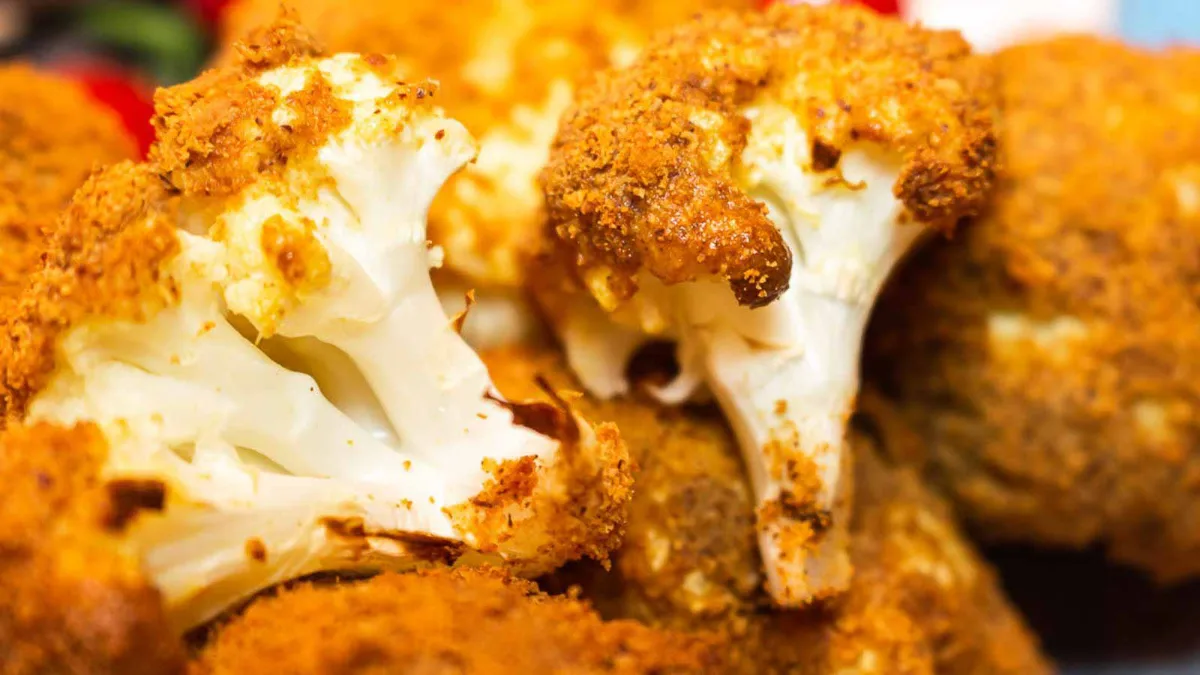
Step 3: Cook at 380°F for 10 to 12 minutes. At the 5-minute mark, open the basket and shake it gently or flip each floret with tongs. This ensures even browning on all sides. At 10 minutes, check for doneness.
The coating should be golden brown and the cauliflower should be fork-tender but not mushy. If it needs more time, add 2-minute increments.
Step 4: Make the buffalo sauce while the cauliflower cooks. Warm 1/3 cup of buffalo sauce with 1 tablespoon of melted butter in a small saucepan over low heat, or microwave for 20 seconds. The butter rounds out the sharp vinegar bite of the hot sauce and helps it coat the florets evenly.
Step 5: Toss with sauce. As soon as the florets come out of the air fryer, transfer them to a large bowl. Pour the warm buffalo sauce over them and toss gently with tongs until evenly coated. Work quickly.
The hotter the florets are when they meet the sauce, the better the sauce clings.
Step 6: Optional second cook. If you want the sauce to set and get slightly caramelized, put the sauced florets back in the air fryer for 2 minutes at 400°F. This step is optional but adds a nice sticky finish.
Step 7: Serve immediately. Buffalo cauliflower is at its crispiest in the first 5 to 10 minutes after cooking. Serve with ranch or blue cheese dressing and celery sticks on the side.
If you're wondering whether your specific air fryer model can handle this kind of recipe consistently, our Is Instant Vortex Air Fryer Good breakdown covers how that popular model performs with breaded foods.
Homemade Buffalo Sauce vs. Store-Bought — Which Works Better
You have two options here, and both work. The choice comes down to convenience versus control over flavor.
Store-bought buffalo sauce is the faster route. Frank's RedHot Buffalo Wings Sauce is the most widely used and the one most people recognize as the "real" buffalo flavor. It's a cayenne pepper-based hot sauce blended with butter flavoring, vinegar, and garlic.
Texas Pete's Buffalo Wing Sauce is a solid alternative with a slightly milder heat. Either one takes zero prep time.
Homemade buffalo sauce lets you dial in the exact heat and richness you want. The basic recipe is simple: combine 1/2 cup of Frank's RedHot (or any cayenne-based hot sauce) with 1/4 cup of melted unsalted butter, a pinch of garlic powder, and a splash of Worcestershire sauce. Warm it together until smooth.
The ratio of hot sauce to butter controls the heat level. More butter makes it milder and richer. More sauce makes it sharper and spicier.
In our research, the taste difference between a good store-bought sauce and a homemade version is small. Most people can't tell the difference once the sauce is on crispy cauliflower. Where homemade wins is if you need to control sodium, avoid certain allergens, or want a specific heat level that store-bought doesn't offer.
Quick comparison:
| Factor | Store-Bought | Homemade |
|---|---|---|
| Prep time | None | 3 to 5 minutes |
| Heat control | Fixed | Fully adjustable |
| Sodium | Higher (varies by brand) | Controllable |
| Shelf life | Months unopened | 1 week refrigerated |
| Cost per batch | About $0.50 to $1.00 | About $0.30 to $0.60 |
| Flavor consistency | Identical every time | Varies by batch |
For a weeknight snack, store-bought is the practical call. If you're making this for a party or want to impress, homemade takes 3 extra minutes and gives you bragging rights.
How to Get the Coating to Actually Stick
A coating that falls off halfway through cooking is one of the most frustrating things about making buffalo cauliflower. The fix is all about the order of operations and making sure each layer has something to grip.
Dry the florets first. This is the step people rush. After washing, pat every piece dry and let them sit for a few minutes. Any surface moisture creates a barrier between the cauliflower and the flour.
The flour needs to grab onto a dry surface, not slide across water.
Use cornstarch in the flour mix. Cornstarch absorbs residual moisture better than flour alone and creates a thinner, more adhesive first layer. A ratio of about 3 parts flour to 1 part cornstarch works well. This thin layer is what the egg wash bonds to.
Don't skip the egg wash. The egg acts as the glue between the flour and the panko. Some recipes try to go straight from flour to breadcrumbs, but the coating won't hold. Beat the egg until smooth and let each floret sit in it for a second before moving to the breadcrumbs.
Press the panko on firmly. After the egg wash, press the florets into the breadcrumbs with your hands. Don't just roll them around. Press the crumbs into the surface so they embed into the egg layer.
Then shake off the loose excess.
Let them rest before cooking. After coating, let the florets sit on a plate or wire rack for 3 to 5 minutes. This gives the coating time to set and bond. If you put them straight from the breadcrumb bowl into the air fryer, the coating is still loose and more likely to blow off in the circulating air.
Spray oil after coating, not before. A light mist of oil spray after the breadcrumbs are on helps them crisp and stay in place. Spraying oil before the egg wash creates a slippery surface that the flour can't grip.
If you're using a flax egg for a vegan version, the coating may be slightly less sturdy than with a regular egg. Press the panko on a bit more firmly and add an extra minute of rest time before cooking.
Air Fryer Settings: Temperature, Time, and Batch Size
Getting the settings right makes the difference between golden, crispy florets and burnt or undercooked ones. Here's what works across most models.
Temperature: 380°F to 400°F. This is the sweet spot for breaded cauliflower. Below 380°F, the coating steams instead of crisps. Above 400°F, the outside burns before the inside is tender.
Start at 380°F. If your air fryer runs cool or you want extra crunch, bump it to 400°F for the last 2 minutes.
Time: 10 to 15 minutes total. Most florets are done in 10 to 12 minutes at 380°F. Shake or flip at the 5-minute mark. If your florets are on the larger side or your air fryer has less powerful airflow, expect 14 to 15 minutes.
The coating should be deep golden brown and the cauliflower should yield easily to a fork.
Preheat for 3 minutes. A preheated basket gives the coating an immediate blast of heat, which sets the outer layer before moisture can seep through. Skipping preheat adds 2 to 3 minutes to the effective cooking time and often results in a softer coating.
Batch size depends on your air fryer. The general rule is one layer with at least half an inch of space between florets. For a 3 to 4 quart air fryer, that's about 1 to 1.5 cups of coated florets per batch. For a 5.8 to 8 quart model, you can fit the full recipe in one batch.
If you're working with a smaller unit, plan on two rounds and keep the first batch warm in a 200°F oven while the second cooks.
Shake or flip halfway. Air fryers have hot spots, usually near the back or around the edges. Shaking the basket or flipping each piece at the halfway point ensures even browning. Don't skip this.
The difference between the top and bottom of each floret can be dramatic if you don't.
If you're using a dual-basket air fryer, you can cook both batches simultaneously. Our roundup of the best 8 qt air fryer with dual basket covers models that handle this well.
Baked, Deep-Fried, or Air Fryer: How the Methods Really Compare
Each method produces a noticeably different result. Here's how they stack up on the factors that matter most.
Air fryer is the best balance of crispiness, convenience, and health. It uses 1 to 2 teaspoons of oil compared to several cups for deep frying. The circulating hot air creates a crispy exterior that's close to deep-fried texture.
Cook time is 10 to 15 minutes. Cleanup is minimal since there's no oil to dispose of.
Oven baking is the most hands-off but produces the least crispy result. Spread the coated florets on a parchment-lined sheet and bake at 425°F for 25 to 35 minutes, flipping once. The coating browns but rarely gets truly crunchy.
The advantage is capacity. You can fit a full batch on one sheet pan with no need to work in rounds.
Deep frying gives the crispiest, most indulgent result. Submerge the coated florets in 375°F oil for 3 to 4 minutes until golden. The texture is unbeatable, but you're looking at a quart or more of oil, the mess of disposal, and significantly more calories.
Per serving, deep-fried buffalo cauliflower runs about 300 to 400 calories compared to 120 to 180 for the air fryer version.
Comparison at a glance:
| Factor | Air Fryer | Oven Baked | Deep Fried |
|---|---|---|---|
| Cook time | 10 to 15 min | 25 to 35 min | 3 to 4 min |
| Oil used | 1 to 2 tsp | 1 to 2 tbsp | 1 to 2 quarts |
| Crispiness | High | Medium | Highest |
| Calories per serving | 120 to 180 | 130 to 190 | 300 to 400 |
| Cleanup | Easy | Easy | Messy |
| Batch size | Small to medium | Large | Medium |
| Hands-on time | Moderate | Low | High |
For most home cooks, the air fryer wins. It's fast, uses a fraction of the oil, and gets close enough to deep-fried texture that the tradeoff is worth it. Oven baking works when you're feeding a crowd and don't want to manage multiple batches.
Deep frying is a special occasion move.
Common Mistakes That Ruin Air Fryer Cauliflower
Even with a solid recipe, a few small errors can turn crispy florets into a soggy disappointment. Here are the mistakes we see most often in user reviews and feedback.
Not drying the cauliflower enough. This is the single biggest cause of failure. Wet florets steam instead of fry, and the coating slides right off. After washing, pat every piece dry and let them air dry for at least 5 minutes.
If you're in a hurry, roll them gently in a clean towel.
Skipping the preheat. A cold basket means the coating sits in a warm, humid environment for the first few minutes instead of getting an immediate blast of dry heat. That's enough time for moisture to seep into the breading. Three minutes of preheat makes a real difference.
Overcrowding the basket. When florets are touching or stacked, hot air can't circulate around them. They end up steaming in their own moisture. Leave space between each piece.
If your basket is small, cook in two batches. The extra 15 minutes is worth the texture improvement.
Using too much oil. A light spray is all you need. More than a teaspoon or two and the oil pools in the bottom of the basket, smokes, and makes the coating greasy instead of crispy. Hold the spray can about 8 inches away and mist evenly.
Adding sauce before cooking. Buffalo sauce is wet. If you toss the florets in sauce before they go in the air fryer, the coating absorbs the liquid and turns soft. Always sauce after cooking, or at most during the last 2 minutes.
Cooking at the wrong temperature. Below 370°F, the coating won't crisp. Above 410°F, the outside burns before the inside is tender. Stick to 380°F to 400°F and adjust by 10-degree increments if your model runs hot or cold.
Not shaking or flipping. Air fryers have uneven heat distribution. The pieces closest to the heating element brown faster. Shaking the basket or flipping each floret at the halfway point ensures everything cooks evenly.
Letting them sit too long after cooking. Buffalo cauliflower starts losing crispiness within 10 minutes as steam escapes from the hot interior. Serve them as soon as they're sauced. If you need to hold them, a wire rack in a 200°F oven buys you another 10 minutes without too much texture loss.
Best Dips and Sides to Serve with Buffalo Cauliflower
The right dip and a classic side turn buffalo cauliflower from a snack into a proper spread. Here's what works best and why.
Ranch dressing is the most popular pairing for a reason. The cool, creamy, herby flavor cuts through the heat of the buffalo sauce. Store-bought Hidden Valley or Ken's Steak House works fine.
For homemade, mix 1/2 cup sour cream, 1/4 cup mayonnaise, 1 tablespoon lemon juice, and a pinch each of dill, garlic powder, onion powder, and parsley. Refrigerate for 30 minutes before serving so the flavors meld.
Blue cheese dressing is the traditional buffalo wing companion. It's tangier and more pungent than ranch, which some people love and others find overpowering. If you're serving a crowd, put both out and let people choose.
For a quick version, stir crumbled blue cheese into sour cream with a splash of lemon juice and a pinch of salt.
Celery sticks are the classic side. They add a fresh, crunchy contrast to the spicy, crispy cauliflower. Cut stalks into 4-inch pieces and serve them cold.
Carrot sticks work too if you want a slightly sweeter option.
Other sides that work well:
- Cucumber slices with a sprinkle of salt and lime
- Tortilla chips for scooping up any extra sauce
- A simple green salad to balance the richness
- Warm pita bread or naan for a more filling spread
If you're building a full game day spread, buffalo cauliflower pairs well with other air fryer appetizers. Our air fryer banana chips recipe is a sweet counterpoint that's easy to make in the same appliance.
Variations: Vegan, Gluten-Free, Keto, and Extra Spicy
This recipe adapts easily to different dietary needs without sacrificing texture or flavor.
Vegan version. Replace the egg with a flax egg (1 tablespoon ground flaxseed mixed with 3 tablespoons water, rested 5 minutes). Use vegan butter in the buffalo sauce and a plant-based ranch for dipping. The flax egg coating is slightly less sturdy than regular egg, so press the panko on firmly and let the coated florets rest for 5 minutes before cooking.
Gluten-free version. Swap the all-purpose flour for a gluten-free 1:1 baking flour like Bob's Red Mill or King Arthur. Use gluten-free panko or crush gluten-free rice cereal for the outer coating. Check the buffalo sauce label.
Most are naturally gluten-free, but some brands add thickeners that contain wheat.
Keto version. Replace the flour with almond flour and the panko with crushed pork rinds. The pork rind coating gets exceptionally crispy and adds a savory, almost bacony flavor. Net carbs drop to about 4 to 5 grams per serving with this swap.
Use a sugar-free buffalo sauce or make your own to keep carbs low.
Extra spicy version. Add 1/2 teaspoon of cayenne pepper to the flour mixture and use a hotter buffalo sauce like Mad Dog 357 or add a few dashes of habanero hot sauce to the mix. You can also toss the cooked florets in buffalo sauce and then dust them with a light coating of cayenne before the optional second cook.
Naked (unbreaded) version. Skip the coating entirely. Toss dry florets with 1 tablespoon of oil, salt, garlic powder, and smoked paprika. Air fry at 400°F for 8 to 10 minutes until charred at the edges.
Toss with buffalo sauce after cooking. This is the lowest carb option and has a roasted, slightly smoky flavor that's different but still good.
How to Reheat Leftover Buffalo Cauliflower (Without It Getting Soggy)
Leftover buffalo cauliflower is never quite as crispy as fresh, but the right reheating method gets you close. The wrong method turns it into a soft, sad version of itself.
Air fryer reheating is the best option. Set the air fryer to 375°F and cook the leftovers for 3 to 4 minutes in a single layer. The circulating hot air re-crisps the coating without adding more oil. Shake the basket once halfway through.
This method restores about 80% of the original crispiness.
Oven reheating is the second-best choice. Spread the florets on a wire rack set over a sheet pan and bake at 400°F for 5 to 7 minutes. The wire rack lets air circulate underneath, which prevents the bottom from getting soggy. Don't use a flat sheet pan without a rack.
The contact surface steams and softens.
Microwave reheating should be avoided. Microwaves heat by exciting water molecules, which is exactly what you don't want when you're trying to preserve a crispy coating. The result is uniformly soft and rubbery. If a microwave is your only option, use the lowest power setting for 30-second bursts and accept that the texture will be compromised.
Tips for better leftovers:
- Store leftovers in a single layer in an open container, not sealed. Trapped steam softens the coating overnight.
- If you know you'll have leftovers, sauce only what you plan to eat right away. Store plain crispy florets and toss with fresh sauce when reheating.
- Leftovers keep for 2 to 3 days in the refrigerator. Beyond that, the cauliflower starts breaking down and releasing moisture.
Expert Tips That Make a Noticeable Difference
These are the small details that separate good buffalo cauliflower from great buffalo cauliflower. None of them add much time, but they all improve the result.
Use parchment liners with holes. Air fryer-specific perforated parchment liners prevent the coating from sticking to the basket without blocking airflow. They also make cleanup significantly easier. Generic parchment paper blocks the air vents and defeats the purpose of the air fryer.
Cut florets with the stem side down. When you cut through the stem first, the florets naturally separate into uniform, bite-sized clusters. If you try to pull them apart by hand, you get irregular pieces with ragged edges that cook unevenly.
Season every layer. Add salt and spices to the flour, a pinch of salt to the egg wash, and a light sprinkle of garlic powder to the panko. Seasoning in stages builds deeper flavor than just relying on the buffalo sauce at the end.
Warm the buffalo sauce before tossing. Cold sauce cools the florets on contact and doesn't spread as evenly. Warming it for 20 seconds in a microwave or a few seconds in a saucepan makes it thinner and more coating-friendly.
Use a wire rack after saucing. If you've done the optional second cook to set the sauce, transfer the florets to a wire rack for 2 minutes instead of leaving them in the basket. This prevents the bottom pieces from sitting in pooled sauce and getting soggy.
Double-coat for extra crunch. For a thicker, crunchier coating, go through the full flour-egg-panko sequence twice. Let the first coat set for 3 minutes, then repeat. This adds about 5 minutes of prep time but creates a substantial, almost deep-fried crust.
Don't skip the butter in the sauce. Buffalo sauce without butter is just hot sauce. The butter adds richness, rounds out the vinegar acidity, and helps the sauce cling to the cauliflower. Even a single tablespoon makes a noticeable difference.
If you're looking for an air fryer that handles breaded recipes consistently, our guide to the best 8 qt air fryer easy to clean covers models with nonstick baskets and dishwasher-safe parts that make cleanup after breaded recipes much simpler.
Nutrition Facts and How It Compares to Real Buffalo Wings
Air fryer buffalo cauliflower is significantly lighter than traditional buffalo wings, but the exact numbers depend on the coating and how much sauce you use.
Air fryer buffalo cauliflower (per serving, about 1 cup of florets with breading and sauce):
| Nutrient | Amount |
|---|---|
| Calories | 120 to 180 |
| Total fat | 4 to 7 g |
| Saturated fat | 1.5 to 3 g |
| Carbohydrates | 16 to 22 g |
| Fiber | 2 to 3 g |
| Protein | 4 to 6 g |
| Sodium | 400 to 650 mg |
Traditional buffalo chicken wings (per serving, about 6 wings with sauce):
| Nutrient | Amount |
|---|---|
| Calories | 400 to 550 |
| Total fat | 28 to 40 g |
| Saturated fat | 8 to 14 g |
| Carbohydrates | 2 to 5 g |
| Fiber | 0 g |
| Protein | 24 to 32 g |
| Sodium | 800 to 1,200 mg |
The cauliflower version wins on calories and fat by a wide margin. The tradeoff is protein. Wings deliver about 24 to 32 grams of protein per serving, while cauliflower provides 4 to 6 grams.
If protein matters to you, consider serving the buffalo cauliflower alongside a higher-protein dip like Greek yogurt-based ranch or adding a side of grilled chicken.
The sodium numbers are worth watching. Buffalo sauce is salty, and the breading absorbs a good amount of it. Using a lower-sodium hot sauce or making your own buffalo sauce lets you control this.
Per the USDA, adults should aim for less than 2,300 mg of sodium per day, so a single serving of buffalo cauliflower at 650 mg is about 28% of that limit.
For the keto version with almond flour and pork rind coating, calories drop slightly to about 110 to 150 per serving, carbs fall to 4 to 6 grams, and fat increases to 7 to 10 grams. Protein stays roughly the same.
Frequently Asked Questions About Air Fryer Buffalo Cauliflower
Can I use frozen cauliflower florets instead of fresh?
Yes, but the results won't be quite as crispy. Frozen florets contain more moisture than fresh, and that extra water makes it harder for the coating to set. If you're using frozen, don't thaw them first.
Pat them dry as best you can while still frozen, coat them, and add 2 to 3 extra minutes to the cooking time. The coating may be slightly softer, but the flavor will still be good.
How do I make buffalo cauliflower less spicy?
Use a mild buffalo sauce or cut the hot sauce with more butter. A 1:1 ratio of Frank's RedHot to melted butter produces a medium heat. For mild, go 1 part hot sauce to 2 parts butter.
You can also add a teaspoon of honey to the sauce to round out the heat with a touch of sweetness.
Why does my coating fall off during cooking?
The most common cause is wet cauliflower. Make sure the florets are thoroughly dried before coating. The second most common cause is not pressing the breadcrumbs firmly enough into the egg wash.
Press them on by hand and let the coated florets rest for 3 to 5 minutes before air frying. If the coating still falls off, try a double coat for extra adhesion.
Can I make buffalo cauliflower ahead of time?
You can prep and coat the florets up to 4 hours in advance. Store them uncovered in the refrigerator on a wire rack. The cool air helps the coating set.
Cook them straight from the fridge when you're ready. Don't sauce them ahead of time. The sauce will make the coating soggy if it sits for more than a few minutes.
What air fryer works best for buffalo cauliflower?
Any air fryer works, but models with a larger basket (5.8qt or above) make it easier to cook in a single layer without overcrowding. Basket-style air fryers tend to circulate air more evenly than oven-style models for breaded foods. If you're shopping for one, our best 8 qt air fryer for roasting chicken guide covers models with strong airflow that work well for coated vegetables too.
How many servings does one head of cauliflower make?
One medium head of cauliflower, which weighs about 1.5 to 2 pounds, yields roughly 4 cups of florets. That's about 4 appetizer servings or 2 main dish servings. If you're feeding a crowd or want leftovers, plan on one head per 3 to 4 people.