
If you've ever grabbed a bag of frozen fries or stared at a pack of chicken wings wondering if dinner could be faster and less messy, sur la table air fryer recipes are exactly what you need. Air frying cuts cook times by 25 to 50 percent compared to a conventional oven, and most recipes need little to no oil. That means crispier results with a fraction of the cleanup.
Sur La Table air fryers use rapid air circulation technology, which moves superheated air around food at high speed to create that golden, crunchy texture without submerging anything in oil. Whether you're reheating last night's pizza or roasting a tray of Brussels sprouts, the technique is straightforward once you understand how the appliance actually works. Let's break it all down so you can start cooking with confidence.
Quick Answer
Sur La Table air fryer recipes cover everything from crispy chicken wings and roasted vegetables to quick frozen meals and small-batch baking. Most recipes cook at 350°F to 400°F for 8 to 25 minutes depending on the food. The key is arranging food in a single layer so hot air circulates evenly.
You'll use up to 80 percent less oil than deep frying.
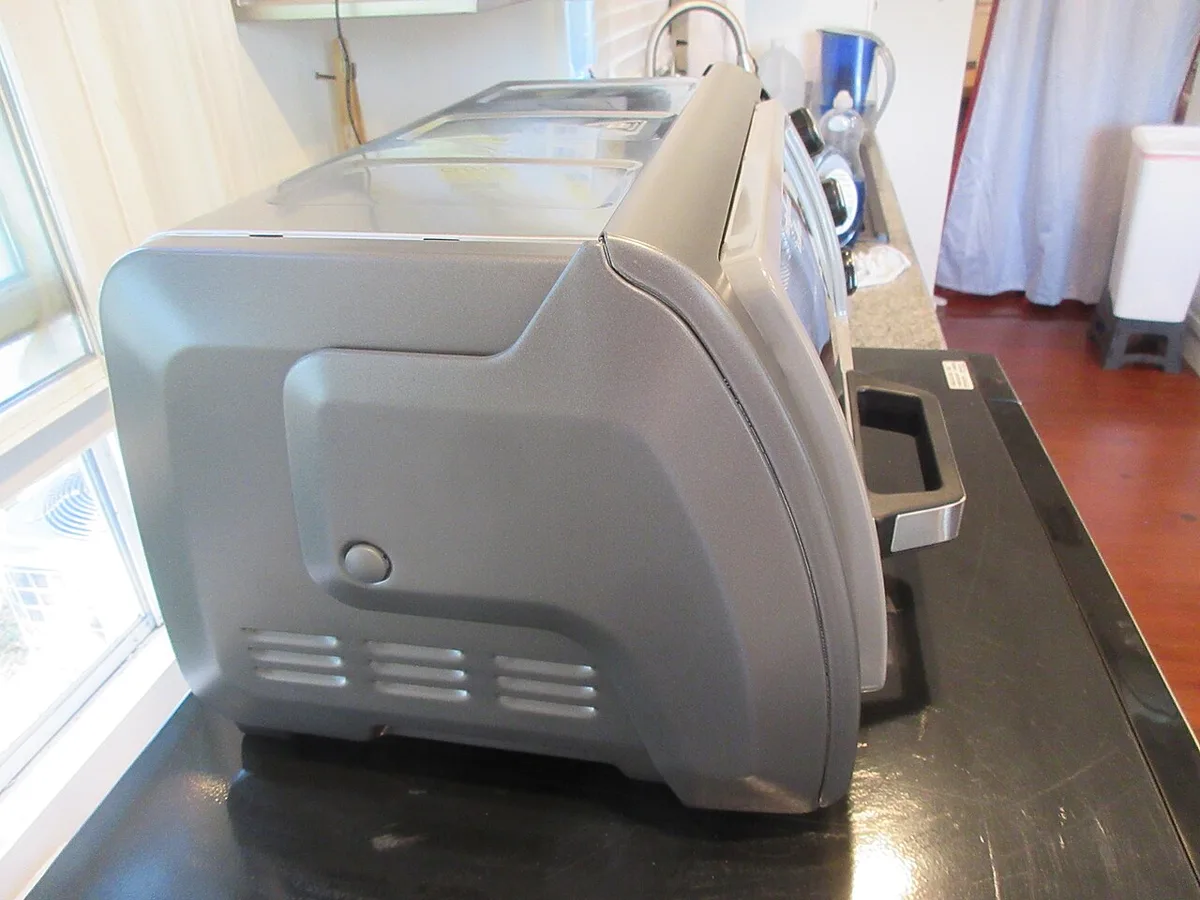
Image source: Wikimedia Commons / Infrogmation of New Orleans (CC BY-SA)
Why Sur La Table Air Fryers Deserve a Spot in Your Kitchen
Air fryers have earned their place on countertops everywhere, and Sur La Table's lineup brings the brand's reputation for quality kitchen tools into the air frying space. These units are built with home cooks who care about results in mind, not just convenience.
What sets a Sur La Table air fryer apart is the attention to build quality and usability. The baskets tend to have durable non-stick coatings, the controls are intuitive, and the compact footprint means it won't take over your entire counter. If you already trust Sur La Table for knives, pans, and prep tools, their air fryer fits right into that ecosystem.
Aggregate user reviews across Sur La Table air fryer models consistently highlight even cooking and easy cleanup as standout features. Many buyers report using theirs five to seven times per week, which says a lot about how practical these units are for real life. They're not single-use gadgets that collect dust after a month.
The other big draw is versatility. You're not limited to "fried" foods. These units roast, bake, reheat, and even dehydrate on some models.
That means one appliance handles weeknight dinners, party snacks, meal prep, and small-batch desserts. For anyone cooking for one to four people, it replaces a surprising amount of oven use.
How Air Frying Actually Works (And Why It's Different From Your Oven)
An air fryer is essentially a compact convection oven with a powerful fan. It circulates air at high speed around food, creating a crispy exterior through the Maillard reaction, the same browning process that makes seared steak and toasted bread taste so good. The difference is intensity and proximity.
In a conventional oven, hot air moves slowly and surrounds a large cavity. In an air fryer, the fan pushes air rapidly across a small chamber, and the heating element sits close to the food. This concentrated airflow removes moisture from the food's surface faster, which is what gives you that crunch without a bath of oil.
Here's the practical impact. A recipe that takes 35 to 40 minutes in a 400°F oven might finish in 18 to 22 minutes in an air fryer. Foods that steam in a regular oven, like breaded chicken or potato wedges, actually crisp up because the moving air keeps the surface dry.
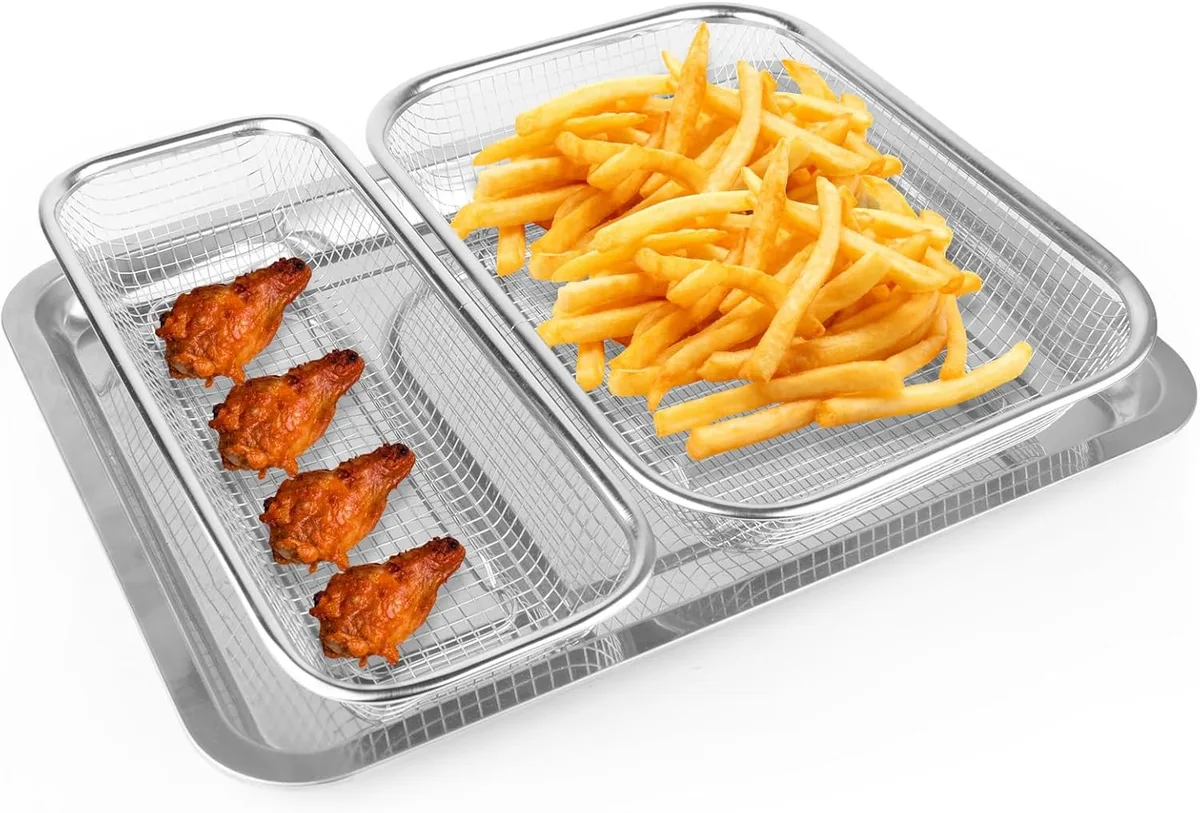
Image source: Bing (Web (fair-use with source credit))
The single most important technique is arranging food in a single layer with space between pieces. Overcrowding blocks airflow and leads to uneven cooking, some pieces burnt, others soggy. If you're cooking for more than two people, work in batches.
It takes an extra few minutes, but the results are dramatically better.
Preheating matters too. Most Sur La Table air fryers reach temperature in three to five minutes. Skipping this step means food sits in lukewarm air while the unit ramps up, which affects texture.
Just set it, wait for the indicator, and load your food.
Understanding Your Sur La Table Air Fryer: Key Features That Matter for Cooking
Not all air fryers are created equal, and knowing what your specific Sur La Table model offers helps you get the best results. Here are the features that directly affect how your recipes turn out.
Temperature range is the big one. Most Sur La Table air fryers operate between 180°F and 400°F. Lower temperatures work for dehydrating fruit or keeping food warm, while 375°F to 400°F is the sweet spot for crispy proteins and vegetables.
Having precise control matters because a 25-degree difference can be the line between golden and burnt.
Basket capacity determines how much you can cook at once. Countertop models typically range from 2 to 6 quarts. A 2 to 3 quart unit is fine for one or two servings, while a 5 to 6 quart basket handles family-sized batches.
Overfilling any size basket defeats the purpose, so match your batch size to your capacity.
Digital controls versus manual dials affect consistency. Digital panels let you set exact temperatures and times, which is helpful when following specific recipes. Manual dials work fine too, but you'll rely more on experience and checking food as it cooks.
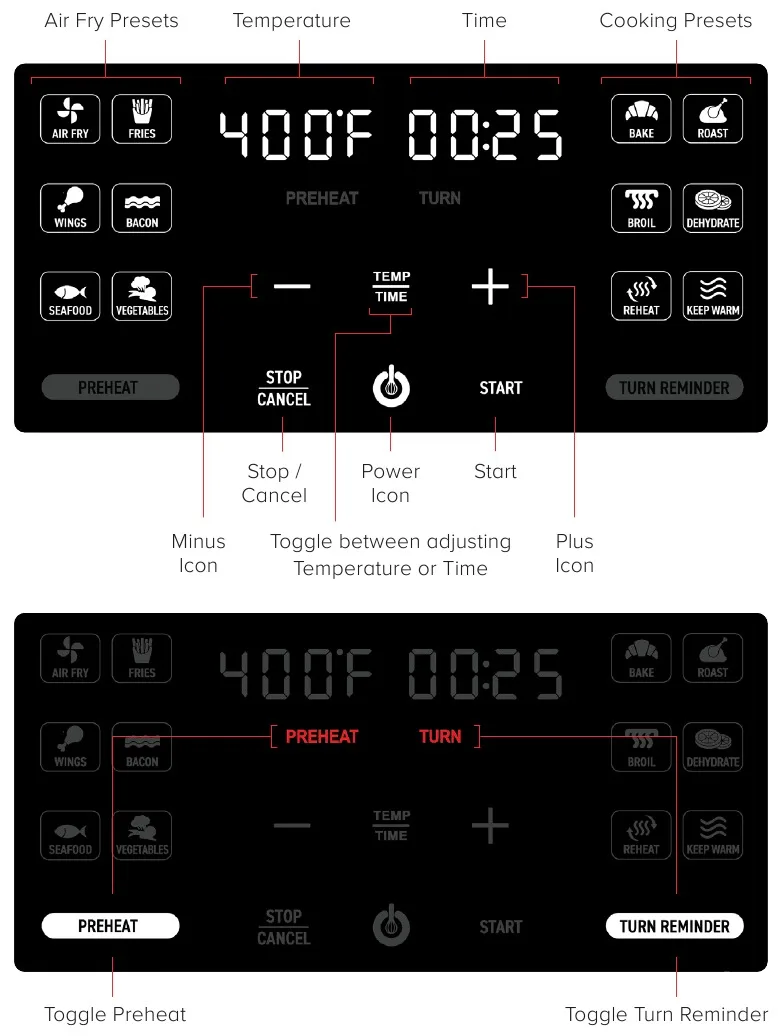
Image source: Bing (Web (fair-use with source credit))
Wattage influences how fast the unit heats and recovers temperature when you add food. Most countertop air fryers run between 1,400 and 1,700 watts. Higher wattage means faster preheat and better recovery, which matters when you're cooking dense items like chicken breasts or thick-cut potatoes.
Here's a quick spec overview of what to expect from a typical Sur La Table countertop air fryer:
| Feature | Typical Spec |
|---|---|
| Temperature Range | 180°F to 400°F |
| Basket Capacity | 2 to 6 quarts |
| Wattage | 1,400 to 1,700W |
| Preheat Time | 3 to 5 minutes |
| Timer | Up to 60 minutes |
| Controls | Digital or manual |
| Auto Shut-Off | Yes |
| Dishwasher-Safe Parts | Basket and tray |
Some models include preset cooking modes for fries, chicken, fish, and baking. These presets are a decent starting point, but they're not always accurate for every food. Use them as a baseline and adjust based on what you see and how your specific unit runs.
If you're looking at larger capacity options for batch cooking or family meals, our guide to the best 8 qt air fryer for frozen foods covers models that handle bigger loads without sacrificing crispiness.
The Best Foods to Cook in a Sur La Table Air Fryer
This is where things get fun. Almost anything you'd bake, roast, or fry can go in an air fryer, but some categories genuinely shine. Here's what works best and why.
Crispy Classics: Fries, Wings, and Fried Favorites
This is what air fryers were born for. French fries, chicken wings, mozzarella sticks, onion rings, and jalapeño poppers all come out with a crunchy exterior and tender interior using a fraction of the oil.
For homemade fries, toss cut potatoes with one tablespoon of oil and a pinch of salt per serving. Cook at 400°F for 15 to 18 minutes, shaking the basket halfway. The result rivals a deep fryer without the oil disposal problem.
Chicken wings are arguably the air fryer's signature dish. Pat them dry, season generously, and cook at 400°F for 22 to 25 minutes, flipping once at the halfway mark. The skin gets shatteringly crispy while the meat stays juicy.
Toss them in sauce after cooking so the coating stays crisp.

Image source: Openverse / lanclave
For a full walkthrough on nailing wings every time, check out our air fryer BBQ chicken legs recipe, which covers seasoning, timing, and sauce technique in detail.
Roasted Vegetables That Actually Taste Good
If you've ever been disappointed by steamed-tasting roasted broccoli, the air fryer will change your mind. The intense circulating air caramelizes edges and creates charred bits that taste like they came from a restaurant kitchen.
Broccoli, Brussels sprouts, asparagus, zucchini, bell peppers, and cauliflower all work beautifully. Toss vegetables with one to two teaspoons of oil, salt, and pepper. Cook at 375°F to 400°F for 8 to 14 minutes depending on the vegetable and how small you cut it.
Brussels sprouts deserve special mention. Halve them, toss with oil and a splash of balsamic vinegar, and air fry at 375°F for 12 to 15 minutes. The outer leaves get crispy while the centers stay tender.
It's the preparation that converts even Brussels sprouts skeptics.
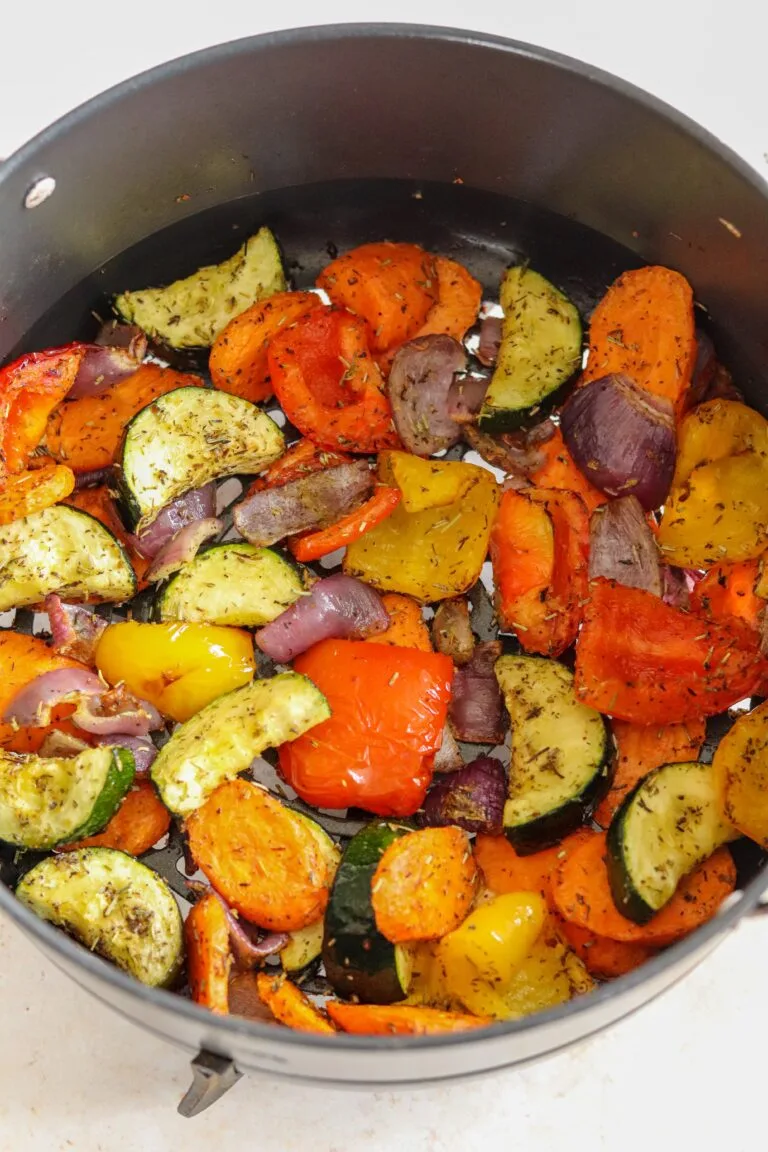
Image source: Bing (Web (fair-use with source credit))
For a cheesy twist on roasted veggies, our air fryer asparagus recipe with parmesan is a quick side dish that's ready in under 10 minutes.
Proteins: Chicken, Fish, Steak, and More
Air fryers handle proteins well as long as you account for thickness and density. Thin-cut chicken breasts, salmon fillets, shrimp, and pork chops cook quickly and stay moist because the circulating air seals the exterior fast.
For salmon, cook skin-side down at 375°F for 8 to 12 minutes depending on thickness. The skin crisps up beautifully while the flesh stays flaky. For chicken breasts, pound them to an even thickness or butterfly them, then cook at 375°F for 12 to 15 minutes until the internal temperature reaches 165°F per USDA Food Safety and Inspection Service guidelines.
Steak works surprisingly well in an air fryer. A one-inch thick ribeye cooked at 400°F for 10 to 12 minutes gives you a solid crust and medium-rare center. Let it rest for five minutes before slicing, just as you would with any cooking method.
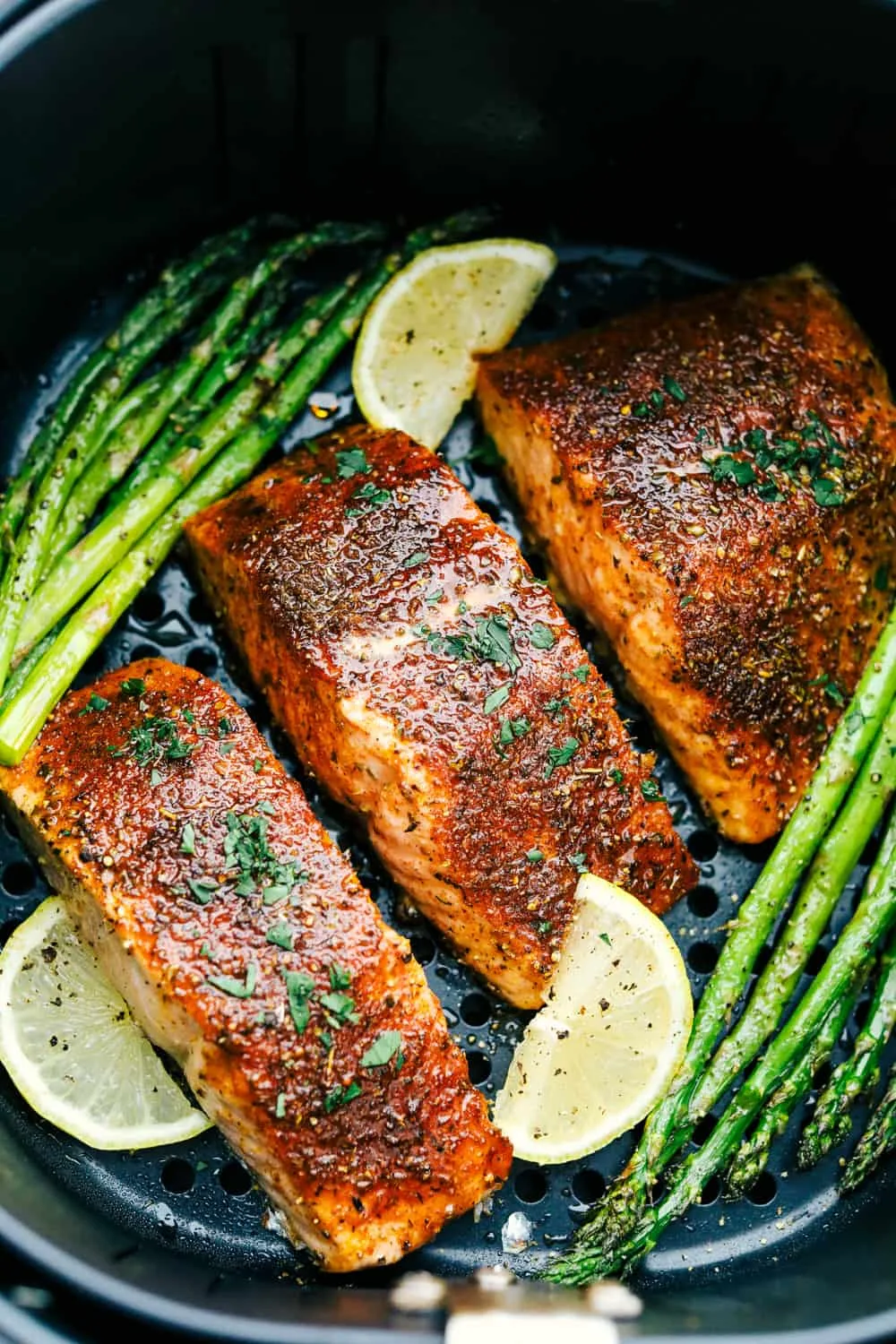
Image source: Bing (Web (fair-use with source credit))
If you're wondering about cooking short ribs quickly, our article on what is the best cooking method for short ribs covers air fryer options alongside other approaches.
Quick Frozen Foods and Easy Weeknight Meals
This is where the air fryer earns its keep on busy nights. Frozen fries, chicken nuggets, fish sticks, egg rolls, and pizza rolls all cook faster and crispier in an air fryer than in a microwave or oven.
The general rule for frozen foods is to skip thawing and cook straight from frozen. Set the temperature 25 degrees lower than you would for fresh versions and add two to four minutes to the cook time. Shake or flip halfway through.
Frozen french fries are a perfect example. Spread them in a single layer, cook at 400°F for 12 to 16 minutes, and shake the basket at the halfway point. They come out golden and crispy, not soggy like microwave fries.
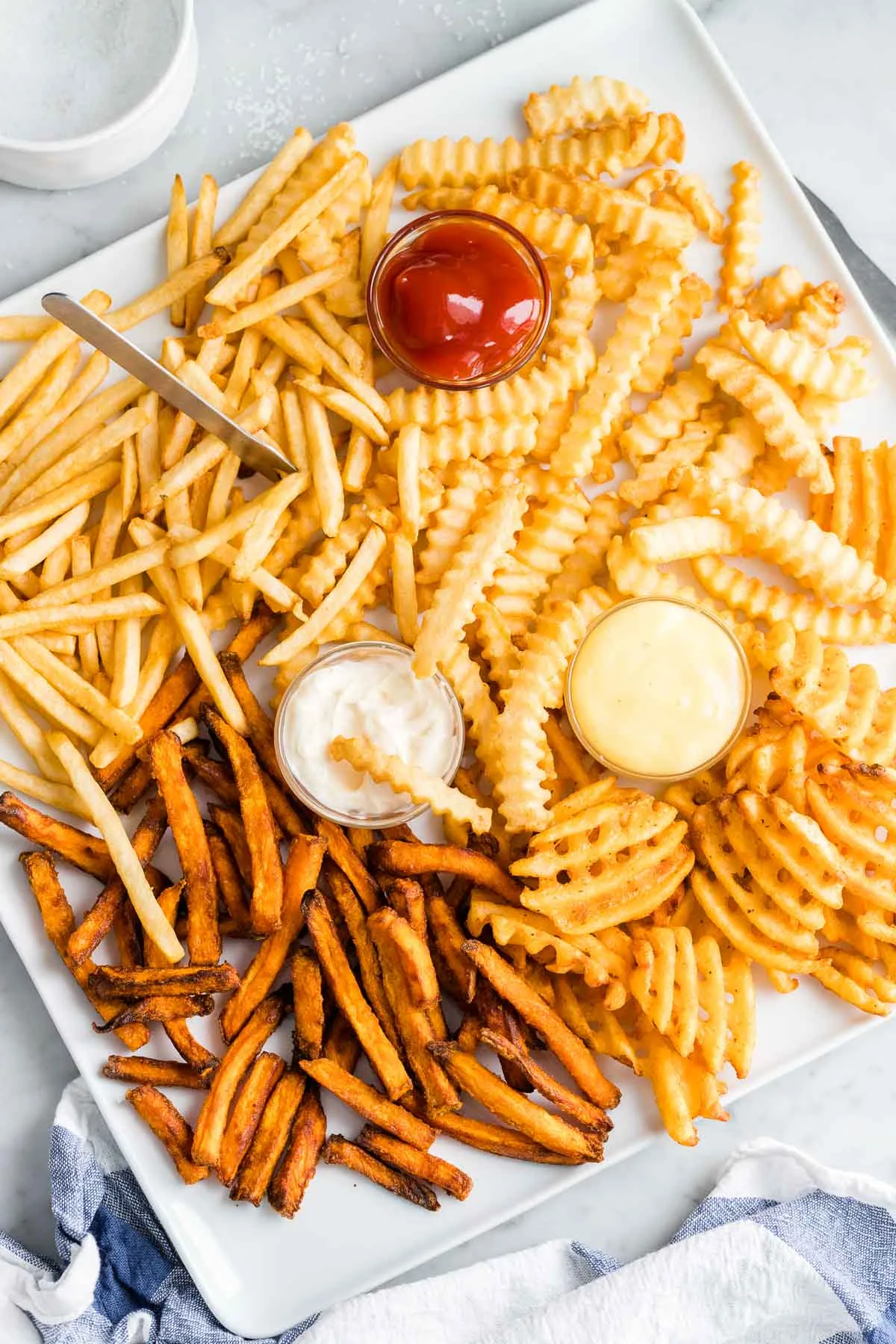
Image source: Bing (Web (fair-use with source credit))
For bratwurst lovers, our air fryer bratwurst recipes walk through timing and temperature for juicy, snap-worthy results straight from the package.
Small-Batch Baking and Unexpected Recipes
Most people don't think of air fryers as baking appliances, but they handle small-batch baked goods surprisingly well. Muffins, brownies, cookies, and even small loaves of banana bread cook in about 60 to 70 percent of the oven time.
Use oven-safe ramekins or silicone molds that fit inside the basket. Reduce the oven recipe temperature by 25°F and start checking for doneness about five minutes earlier than the original recipe suggests. The concentrated heat means baked goods cook faster and can dry out if you're not watching.
Our air fryer banana chips recipe is a great entry point into air fryer snacking. Thin-sliced bananas cooked at 300°F for 15 to 18 minutes turn into crispy, naturally sweet chips with no added sugar.
Sur La Table Air Fryer Temperature and Time Guide
Getting temperature and time right is the difference between perfectly crispy and disappointingly undercooked. This quick-reference guide covers the most common foods and the settings that work best in a Sur La Table air fryer.
| Food | Temperature | Time | Notes |
|---|---|---|---|
| French fries (fresh) | 400°F | 15 to 18 min | Shake halfway |
| French fries (frozen) | 400°F | 12 to 16 min | Single layer, shake halfway |
| Chicken wings | 400°F | 22 to 25 min | Flip at halfway point |
| Chicken breast (boneless) | 375°F | 12 to 15 min | Internal temp 165°F |
| Salmon fillet | 375°F | 8 to 12 min | Skin-side down |
| Brussels sprouts (halved) | 375°F | 12 to 15 min | Toss with oil first |
| Asparagus | 375°F | 7 to 10 min | Trim woody ends |
| Pork chops (1 inch) | 375°F | 12 to 15 min | Internal temp 145°F |
| Shrimp | 400°F | 6 to 8 min | Single layer |
| Bacon | 350°F | 8 to 12 min | Check early, varies by thickness |
| Mozzarella sticks (frozen) | 375°F | 6 to 8 min | Don't thaw first |
| Sweet potato wedges | 375°F | 15 to 18 min | Cut evenly for consistent results |
These times are for a standard countertop air fryer at the listed capacity. If your model runs hot or has a smaller basket, start checking two to three minutes early. Every unit is slightly different, and food size varies, so treat these as starting points rather than hard rules.
A kitchen thermometer is your best friend for proteins. The USDA Food Safety and Inspection Service recommends 165°F for poultry, 160°F for ground meats, 145°F for whole cuts of pork and fish. Checking internal temperature removes all guesswork.
How to Convert Any Oven Recipe for Your Air Fryer
You don't need to find air fryer-specific recipes for everything. Most oven recipes translate with two simple adjustments: lower the temperature by 25°F and reduce the cook time by about 20 to 25 percent.
Here's the logic. An air fryer's concentrated airflow transfers heat more efficiently than a conventional oven's still air. Food cooks faster at a lower temperature because the moving air constantly contacts the surface.
A recipe calling for 400°F for 30 minutes in an oven becomes 375°F for 22 to 24 minutes in an air fryer.
Start checking food at the 75 percent mark of the converted time. If a recipe says 20 minutes in the oven, that converts to roughly 15 minutes in the air fryer. Start peeking at 11 minutes.
You can always add time, but you can't un-burn something.
A few recipes don't translate well. Anything with a wet batter, like beer-battered fish or tempura, will drip and make a mess. Large roasts that fill the basket block airflow.
Delicate cakes can dry out before the center sets. Stick to foods with a relatively dry surface and you'll get great results.
For recipes that involve a lot of sauce or glaze, apply it in the last three to five minutes of cooking. Sugary sauces burn quickly at air fryer temperatures. Adding them late lets the flavor develop without charring.
Common Air Fryer Mistakes (And How to Avoid Every One)
Even experienced cooks make these errors when they first start air frying. Knowing what to watch for saves you from a few disappointing meals.
Overcrowding the basket is the number one mistake. Food needs space around it for air to circulate. When pieces touch or stack, the overlapping sections steam instead of crisp.
Cook in batches if you have to. Two small batches always beat one soggy large batch.
Skipping the preheat is the second most common error. A three to five minute preheat makes a real difference in texture. Food dropped into a cold basket sits in lukewarm air while the unit heats up, which leads to uneven cooking and less browning.
Using too much oil defeats the purpose. A light mist or half a teaspoon tossed with your food is all you need. Excess oil pools in the basket, creates smoke, and can damage the non-stick coating over time.
Aerosol cooking sprays are especially bad because many contain leaching agents that degrade non-stick surfaces.
Not shaking or flipping food means one side gets all the direct heat. Most recipes benefit from a shake or flip at the halfway point. This is especially important for small items like fries, vegetables, and nuggets.
Setting the temperature too high is tempting when you're in a rush, but it burns exteriors before interiors cook through. Dense foods like thick chicken breasts and whole potatoes need moderate heat and patience. 375°F is a safer default than 400°F for anything thicker than an inch.
Forgetting to check food early leads to overcooking. Air fryers vary by model and wattage. Start checking at 75 percent of the suggested time and adjust from there.
You'll learn your specific unit's tendencies within a few sessions.
Step-by-Step: Cooking Perfect Chicken Wings in a Sur La Table Air Fryer
Chicken wings are the air fryer's showpiece dish. Follow these steps and you'll get crispy skin and juicy meat every single time.
Step 1: Pat the wings completely dry. Moisture is the enemy of crispiness. Use paper towels and take your time. Dry wings = crispy wings.
This single step makes more difference than any seasoning.
Step 2: Season generously. Toss the wings with salt, pepper, garlic powder, and a tiny bit of baking powder per pound. The baking powder raises the skin's pH, which accelerates browning. It's a restaurant trick that works perfectly in an air fryer.
Step 3: Preheat the air fryer to 400°F. Wait for the full three to five minutes. Don't rush this.
Step 4: Arrange wings in a single layer. Leave space between each piece. If your basket is small, cook in two batches. Overlapping wings steam instead of crisp.
Step 5: Cook for 11 minutes, then flip. Use tongs and turn each wing. The bottom side should be starting to turn golden.
Step 6: Cook for another 11 to 14 minutes. Total cook time is 22 to 25 minutes. The wings are done when the skin is deep golden brown and the internal temperature reads 165°F.
Step 7: Sauce after cooking, not during. Toss in your favorite buffalo, BBQ, or garlic parmesan sauce right before serving. Adding sauce during cooking burns the sugars and makes the skin soggy.
This method works for drumettes, flats, or a mix of both. If you're cooking a large batch for a party, keep finished wings warm in a 200°F oven while you fry the next round.
Step-by-Step: Roasting Vegetables the Right Way
Air fryer roasted vegetables have caramelized edges and tender centers that oven roasting rarely achieves. Here's the method that works for almost any vegetable.
Step 1: Cut vegetables into uniform pieces. Size consistency is critical. If some pieces are twice the size of others, the small ones burn before the large ones soften. Aim for one to one-and-a-half inch pieces for most vegetables.
Step 2: Toss with oil and seasoning. One to two teaspoons of olive oil per serving is enough. Add salt, pepper, and any spices you like. Garlic powder, smoked paprika, and Italian seasoning are all solid choices.
The oil should barely coat the vegetables, not pool in the bowl.
Step 3: Preheat to 375°F. Vegetables do better at a slightly lower temperature than proteins. This gives the centers time to soften before the edges over-brown.
Step 4: Spread in a single layer. Again, no stacking. If you're doing a large quantity, roast in two batches. The extra five minutes are worth the texture improvement.
Step 5: Cook for 8 to 14 minutes depending on the vegetable. Softer vegetables like zucchini and asparagus take 8 to 10 minutes. Harder vegetables like potatoes, carrots, and sweet potatoes need 14 to 18 minutes. Shake the basket every four to five minutes for even browning.
Step 6: Check for doneness. Vegetables should be fork-tender with visible charred edges. If they're browning too fast but still firm inside, drop the temperature to 350°F and add three to five minutes.
Broccoli, cauliflower, bell peppers, zucchini, and cherry tomatoes are all excellent starting points. Root vegetables like parsnips and turnips work well too, just cut them smaller so they cook through.
Essential Accessories That Make Air Frying Easier
A few well-chosen accessories take your air fryer from good to genuinely versatile. You don't need to buy everything at once, but these are the ones that earn their keep.
Parchment liners are the single most useful add-on. Perforated liners sit in the basket and prevent food from sticking while still allowing airflow underneath. They also make cleanup almost instant.
Disposable versions cost pennies each, and reusable silicone options last for hundreds of uses.
A second rack layer effectively doubles your cooking capacity. Many Sur La Table air fryer models accommodate a metal rack that sits above the basket floor. This lets you cook two layers of smaller items like shrimp, veggies, or nuggets at the same time.
Just rotate the layers halfway through for even results.
Silicone-tipped tongs protect the non-stick coating when flipping food. Metal tongs scratch the surface over time, which leads to sticking and harder cleaning. A good pair costs under ten dollars and extends the life of your basket significantly.
An instant-read thermometer removes all guesswork from proteins. Air fryers vary in actual temperature versus displayed temperature, and food thickness varies too. Checking internal temperature is the only reliable way to confirm doneness.
The USDA recommends 165°F for poultry and 145°F for fish and whole cuts of pork.
Oven-safe ramekins and silicone molds open up baking possibilities. Muffins, individual frittatas, and small desserts all work in containers that fit inside the basket. Just make sure whatever you use is rated for at least 400°F.
How to Clean and Maintain Your Sur La Table Air Fryer
A clean air fryer performs better and lasts longer. Grease buildup affects airflow and can cause smoke during cooking. The good news is that cleanup is straightforward if you stay on top of it.
After each use, let the basket cool for five to ten minutes, then wash it with warm soapy water. Most Sur La Table baskets are dishwasher safe, but hand washing preserves the non-stick coating longer. Use a soft sponge, not steel wool or abrasive pads.
For stubborn residue, fill the basket with hot water and a drop of dish soap and let it soak for 15 to 20 minutes. A nylon brush handles anything that doesn't come off with a sponge. Avoid aerosol sprays near the unit since the propellants degrade non-stick surfaces over time.
Wipe down the interior and heating element area with a damp cloth after every few uses. Grease accumulates on the element and the walls above the basket. If you notice smoke during cooking, this is usually the cause.
A quick wipe prevents the buildup from becoming a recurring problem.
Check the power cord periodically for damage, and make sure the air intake vents on the bottom and back of the unit stay clear of debris. Blocked vents reduce airflow and can trigger the auto shut-off safety feature mid-cycle.
Safety Tips Every Air Fryer User Should Know
Air fryers are safe appliances when used correctly, but they do operate at high temperatures and draw significant power. A few basic precautions keep things running smoothly.
Never place the unit against the wall or directly under cabinets while operating. Sur La Table air fryers need several inches of clearance on all sides for proper ventilation. The exhaust vent releases hot air, and blocking it can damage the unit or surrounding surfaces.
Always use oven mitts when handling the basket. It reaches temperatures above 400°F during cooking and stays hot for several minutes after the cycle ends. The cool-touch handles on most models help, but the basket itself will burn bare skin instantly.
Keep the unit on a heat-resistant, level surface. Countertops are fine, but avoid placing it on plastic mats, towels, or anything that could melt or catch fire. The bottom of the unit gets warm during extended cook cycles.
Don't overfill the basket with oil. A light mist is all you need. Excess oil can drip onto the heating element and create smoke or, in rare cases, a small flare-up.
If smoke appears, pause the cycle, let the unit cool, and wipe out the interior.
Make sure the outlet you're using can handle the wattage. Most Sur La Table air fryers draw 1,400 to 1,700 watts, which is comparable to a microwave. Avoid plugging it into the same circuit as other high-draw appliances to prevent tripping a breaker.
Frequently Asked Questions
Can you put aluminum foil in a Sur La Table air fryer?
Yes, but with caveats. Aluminum foil can line the bottom of the basket or wrap food, but it must not block the air vents or cover the entire basket floor. Restricted airflow affects cooking performance and can trigger the auto shut-off.
Perforated parchment liners are generally a better option since they allow airflow while still catching drips.
Do you need to preheat a Sur La Table air fryer?
Preheating is recommended for most recipes. Three to five minutes at the target temperature ensures food starts cooking immediately, which improves browning and texture. Some models have a built-in preheat function.
If yours doesn't, simply set the temperature and let it run empty for a few minutes before loading food.
How much oil do you actually need for air frying?
Very little. Most recipes need one teaspoon or less of oil per serving. A light mist from a refillable oil sprayer is enough to promote crispiness.
The whole point of air frying is achieving fried texture with a fraction of the oil, so resist the urge to add more.
Can you cook raw meat in an air fryer?
Absolutely. Chicken, pork, beef, fish, and shrimp all cook well in an air fryer. The key is checking internal temperature with a thermometer to confirm safe doneness.
Poultry should reach 165°F, ground meats 160°F, and pork and fish 145°F per USDA Food Safety and Inspection Service guidelines.
Why is my air fryer smoking?
Smoke usually comes from excess grease buildup on the heating element or from using too much oil. High-fat foods like bacon and sausage are more prone to smoking. Clean the interior and heating area regularly, use minimal oil, and cook fatty items at slightly lower temperatures, around 350°F to 375°F.
How long do Sur La Table air fryers typically last?
Aggregate user reviews suggest a lifespan of three to five years with regular use and proper maintenance. The non-stick coating on the basket is usually the first thing to degrade. Hand washing and avoiding aerosol sprays extend the coating's life significantly.
Final Thoughts: Making the Most of Your Sur La Table Air Fryer
Sur La Table air fryers are solid, well-built appliances that deliver consistent results across a wide range of recipes. The key to success is understanding how the machine works, respecting the single-layer rule, and starting with proven temperature and time settings before experimenting.
Once you've got the basics down, you'll find yourself reaching for the air fryer more than the oven on most weeknights. It's faster, uses less energy, and cleanup is minimal. From crispy wings and roasted vegetables to quick frozen meals and small-batch baking, the range of what you can do is wider than most people expect.
Start with the recipes and techniques in this guide, adjust for your specific model, and you'll have a reliable go-to cooking method that genuinely makes everyday meals easier.