
A tandoori chicken air fryer recipe gives you deeply charred, smoky-spiced chicken in under 30 minutes of cook time, without lighting a grill or heating a traditional clay tandoor. The circulating hot air in an air fryer hits every surface of the chicken at once, which means you get crisp skin and caramelized edges that a standard oven simply can't match.
The key is a thick, full-fat yogurt marinade loaded with tandoori masala, Kashmiri red chili, and mustard oil, left to work its way into scored chicken for at least two hours or overnight. In our research across verified buyer feedback and manufacturer cooking guides, air fryer tandoori chicken consistently comes out juicier than oven-baked versions because the cook time is shorter and the heat is more concentrated. Let's walk through exactly how to nail it.
Quick Answer
A tandoori chicken air fryer recipe uses a yogurt-based marinade with tandoori masala, Kashmiri chili, and mustard oil. Marinate scored chicken for at least 2 hours or overnight. Cook at 375°F to 400°F (190°C to 200°C) for 20 to 30 minutes, flipping halfway, until the internal temperature hits 165°F (74°C).
Bone-in thighs give the best results because they stay moist under high heat. Finish with lemon juice, onion rings, and fresh cilantro.
Why Air Fryer Tandoori Chicken Rivals the Real Thing
Air fryers replicate the intense, circulating heat of a tandoor better than any other home appliance. A traditional tandoor runs at around 900°F (480°C), which is beyond any home oven. But the concentrated convection heat of an air fryer, typically operating between 350°F and 400°F with powerful fan circulation, creates the same kind of rapid surface browning and charring that defines great tandoori chicken.
The difference is in the crust. Oven-baked tandoori chicken often steams in its own marinade because the heat is less aggressive and the air doesn't circulate as forcefully. Air fryers solve that problem because hot air moves around every side of the chicken simultaneously, driving off moisture quickly and leaving behind a dark, caramelized exterior.
Verified buyer reviews across multiple air fryer brands consistently mention that tandoori chicken is one of the dishes that performs best in these machines.
There's also the time factor. A traditional tandoor needs significant preheating time. An oven takes 15 to 20 minutes just to come to temperature, then another 40 to 45 minutes to cook the chicken through.
An air fryer preheats in 3 to 5 minutes and finishes the entire job in roughly 25 minutes total. For weeknights or small-batch cooking, that efficiency is hard to beat.
One trade-off worth noting: you won't get genuine smoke flavor from an air fryer the way you would from charcoal-heat or a gas-fired tandoor. Adding a half teaspoon of smoked paprika to your marinade, or brushing the chicken with a tiny amount of melted ghee in the last few minutes of cooking, goes a long way toward bridging that gap.
Image source: Bing (Web (fair-use with source credit))
What You Need: Ingredients for Authentic Tandoori Flavor
Great tandoori chicken starts with the right marinade. Every spice in the mix has a specific job: color, heat, tang, depth, or tenderizing. Here's what you'll need for about 1.5 pounds (700 g) of chicken, enough to serve three to four people.
The Marinade Base
Full-fat plain yogurt (1 cup / 240 g). This is the foundation. Full-fat Greek yogurt or hung curd (yogurt strained of its whey) works best because the fat content keeps the chicken moist during the high-heat cook. Low-fat or non-fat yogurt breaks down under heat and can leave the surface dry and patched.
Ginger-garlic paste (1½ tablespoons). Fresh is best here. Grate equal parts raw ginger and peeled garlic on a microplane, or pound them together in a mortar. Pre-made paste from a jar works in a pinch, but the flavor is noticeably flatter.
Lemon juice (2 tablespoons). The acid helps tenderize the surface of the chicken and brightens every other flavor in the marinade. Fresh-squeezed makes a real difference.
Mustard oil (1½ tablespoons). Mustard oil is a key ingredient in traditional Punjabi-style tandoori chicken, adding a sharp, slightly pungent bite that you can't replicate with neutral vegetable oil. In the United States, look for brands labeled "for cooking" since the FDA regulates erucic acid levels in mustard oil sold for consumption. If you can't find it, substitute a mix of vegetable oil and a quarter teaspoon of prepared horseradish for a similar sharpness.
The Spice Mix
Here's the spice lineup that builds the classic tandoori flavor profile:
| Spice | Amount (per 1.5 lb chicken) | Role |
|---|---|---|
| Tandoori masala | 2 tablespoons | Base spice blend; provides warmth and complexity |
| Kashmiri red chili powder | 1 teaspoon | Deep red color with mild heat |
| Turmeric (haldi) | ½ teaspoon | Earthy base note; helps with browning |
| Cumin powder (jeera) | 1 teaspoon | Warm, slightly nutty depth |
| Coriander powder (dhania) | 1 teaspoon | Citrusy, floral undertone |
| Garam masala | ½ teaspoon | Sweet spice warmth added at the end |
| Chaat masala | ½ teaspoon | Tangy, slightly sour finish |
| Salt | 1½ teaspoons (adjust to taste) | Flavor enhancer throughout |
Red food coloring is traditional in some restaurant-style recipes. It's entirely optional and adds flavor only in people's expectations. If you want that classic deep-red look without it, a little extra Kashmiri chili powder does the job naturally.
The Chicken
Bone-in, skin-on chicken thighs are the single best cut for this recipe. They have enough fat to stay juicy through the high-heat cook, and the bone conducts heat gently into the center, reducing the risk of a dry interior. Drumsticks are a close second.
Boneless, skinless chicken breast can work, but it dries out faster. If that's what you're using, cut the cook time by about 4 to 5 minutes and reduce the temperature to 365°F (185°C).
You'll also want to score each piece with two or three deep cuts down to the bone. This lets the marinade penetrate past the surface, which is the difference between chicken that tastes seasoned on the outside and chicken that carries flavor all the way through.
If you're air frying for a crowd, a 9-quart air fryer for large batches is the kind of unit that lets you cook six to eight pieces in a single layer without crowding.
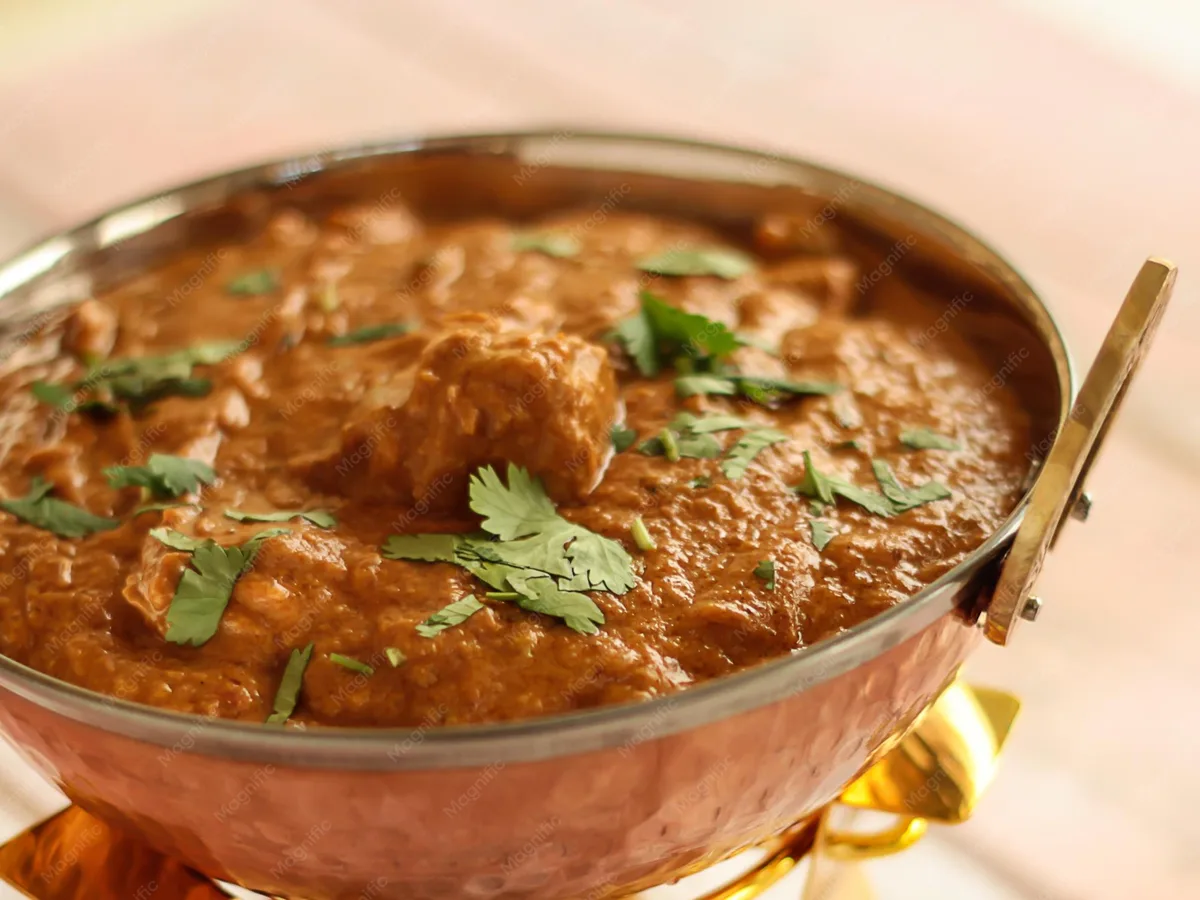
Image source: Bing (Web (fair-use with source credit))
How to Make the Perfect Tandoori Marinade (and Why Each Spice Matters)
Throwing spices into yogurt isn't hard. Getting the proportions and technique right is what separates a marinade that just coats the chicken from one that transforms it.
Start by whisking your yogurt until it's smooth and slightly loosened. If you're using Greek yogurt, it's already thick and ready to go. If you're using regular yogurt, strain it through a cheesecloth-lined sieve for 20 to 30 minutes to remove excess liquid.
A thin marinade slides off the chicken and pools at the bottom of the air fryer basket, which creates smoke and wasted flavor.
Add the ginger-garlic paste, lemon juice, mustard oil, and all the dry spices to the yogurt. Whisk everything together until the mixture is uniform and has a thick, rust-orange consistency. Taste it.
You should notice the tang of the yogurt and lemon first, the warmth of the cumin and coriander in the middle, and a slow, mild burn from the chili at the back. If it tastes flat, add a quarter teaspoon more salt. If it's too sharp, a pinch of sugar balances it.
The tandoori masala itself is worth attention. Store-bought blends from brands like MDH, Everest, or Badshah are convenient and consistent. But if you want to make your own, a basic blend includes coriander seeds, cumin seeds, black peppercorns, cloves, cinnamon, cardamom, dried red chilies, and a touch of mace or nutmeg, all dry-roasted and ground to a powder.
Homemade gives you control over the salt and heat levels, which matters when you're dialing in a recipe.
Let the marinade rest for 10 to 15 minutes after mixing. This gives the dried spices time to hydrate and bloom in the moisture of the yogurt, which develops a deeper, more rounded flavor than using it immediately.
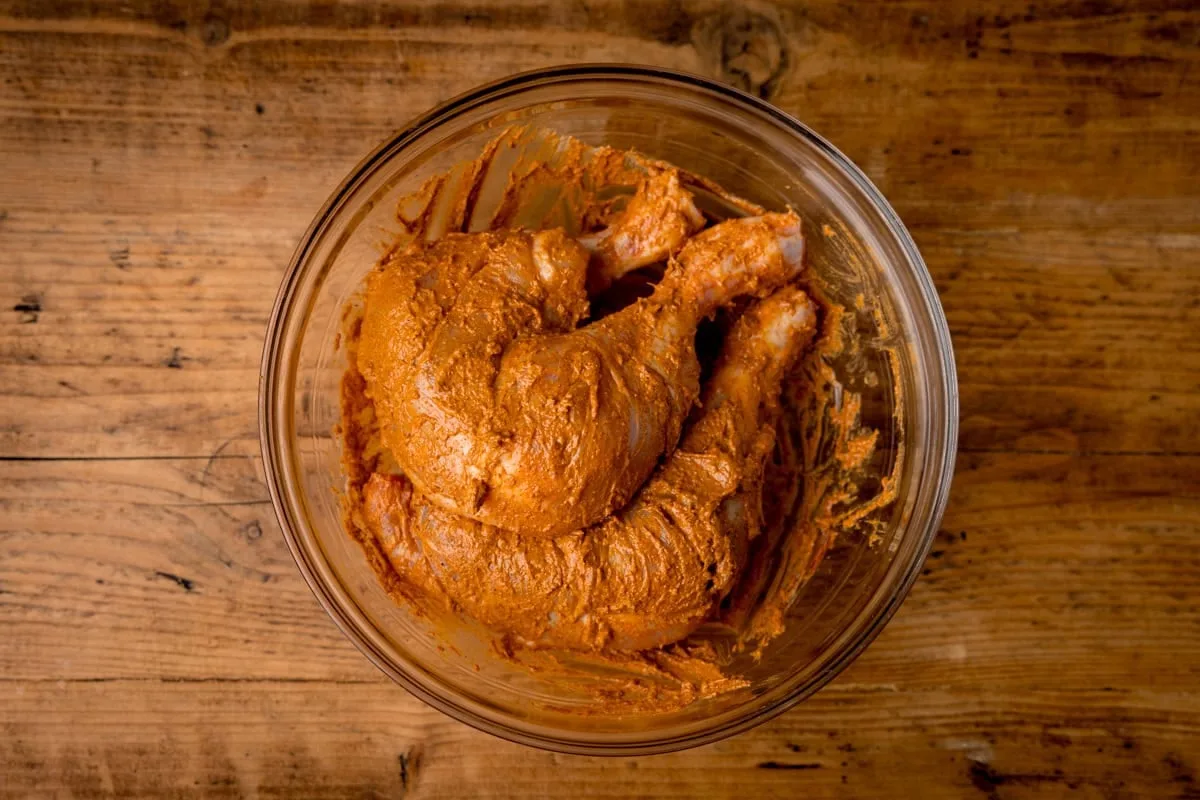
Image source: Bing (Web (fair-use with source credit))
Step-by-Step: Marinating Your Chicken the Right Way
Marination is where most of the flavor is built, and it's also where the most common mistakes happen. Here's the process that delivers the most consistent results.
Step 1: Prep the chicken. Pat each piece completely dry with paper towels. Any surface moisture prevents the yogurt marinade from adhering properly. Using a sharp knife, make two to three diagonal slits in each piece, cutting down to the bone.
These channels let the marinade reach the interior of the meat.
Step 2: Apply the marinade. Place the scored chicken in a large glass or stainless-steel bowl. Pour the marinade over it and use your hands to work it into every cut and crevice. Each piece should be coated in an even, thick layer of that rust-orange mixture.
Exposed dry spots will cook differently and taste bland compared to the rest.
Step 3: Refrigerate, covered. Seal the bowl with plastic wrap or transfer everything to a zip-top bag. Refrigerate for a minimum of 2 hours. Overnight, 8 to 12 hours, is significantly better.
The lactic acid in the yogurt is a mild tenderizer, and the spices need time to migrate past the surface. Chicken marinated for less than an hour will taste underwhelming.
Step 4: Bring to room temperature before cooking. Pull the chicken out of the fridge 15 to 20 minutes before you plan to air fry. Cold chicken going into a hot basket cooks unevenly. The outside charges while the inside stays underdone.
A common mistake is piling marinated chicken into a deep container where the bottom pieces get crushed and the top pieces dry out. Spread them in a single layer in a shallow dish, or if you're doubling the recipe, use two bowls.
If you're comparing air fryers for this kind of recipe, our analysis of whether the Instant Vortex air fryer is good is worth a read, since it handles marinated proteins particularly well.
Image source: Bing (Web (fair-use with source credit))
Step-by-Step: Cooking Tandoori Chicken in the Air Fryer
Now for the part that actually gets dinner on the table. The setup matters as much as the timing.
Step 1: Preheat the air fryer. Set it to 375°F (190°C) and let it run for 3 to 5 minutes. Preheating is not optional. A hot basket sears the surface of the chicken on contact, locking in juices and starting the charring process immediately.
If you skip this, the chicken steams for the first few minutes and the skin never crisps.
Step 2: Arrange the chicken in a single layer. Place the marinated pieces in the basket with at least an inch of space between them. Overcrowding is the single biggest cause of uneven cooking. Hot air needs to circulate around every side of each piece.
If your air fryer is on the smaller side, cook in two batches. The 8-quart models with dual baskets are ideal because you can run two batches simultaneously at different times.
Skin-side up for the first half of cooking. Don't line the basket with parchment paper unless it's perforated. Solid liners block airflow and the marinade won't drip away properly.
Step 3: Cook the first side. Air fry at 375°F (190°C) for 12 to 14 minutes for bone-in thighs and drumsticks. Boneless breast needs only 8 to 10 minutes at 365°F (185°C).
You'll see the marinade darken and the edges start to char. That's exactly what you want. The proteins in the yogurt and the natural sugars in the spices are caramelizing under the circulating heat.
Step 4: Flip and baste. Open the basket and carefully turn each piece with tongs. Brush or spoon a thin layer of mustard oil or melted butter over the newly exposed surface. Push the chicken back into an even layer.
Step 5: Cook the second side. Air fry for another 8 to 12 minutes at 375°F to 400°F (190°C to 200°C). If the edges aren't charred enough for your taste, bump it to 400°F for the last 3 to 4 minutes. Watch closely at this temperature to prevent burning.
Step 6: Check the internal temperature. This is non-negotiable for food safety. Insert an instant-read thermometer into the thickest part of the largest piece, avoiding the bone. The USDA Food Safety and Inspection Service specifies that poultry must reach an internal temperature of 165°F (74°C) to be safe to eat.
Pull the chicken at 160°F (71°C) if you prefer, as carryover cooking during the rest period will bring it up another 5 degrees.
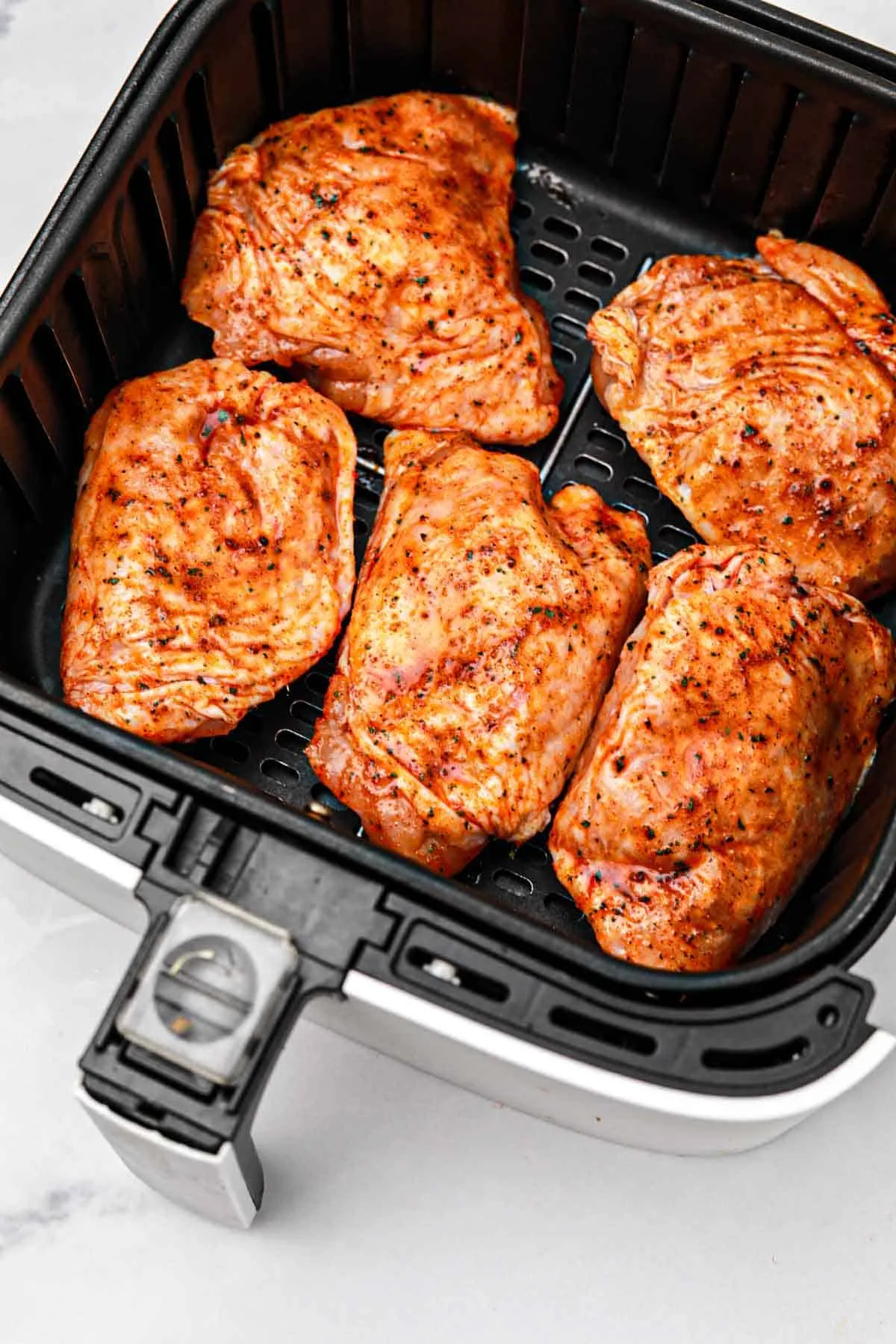
Image source: Bing (Web (fair-use with source credit))
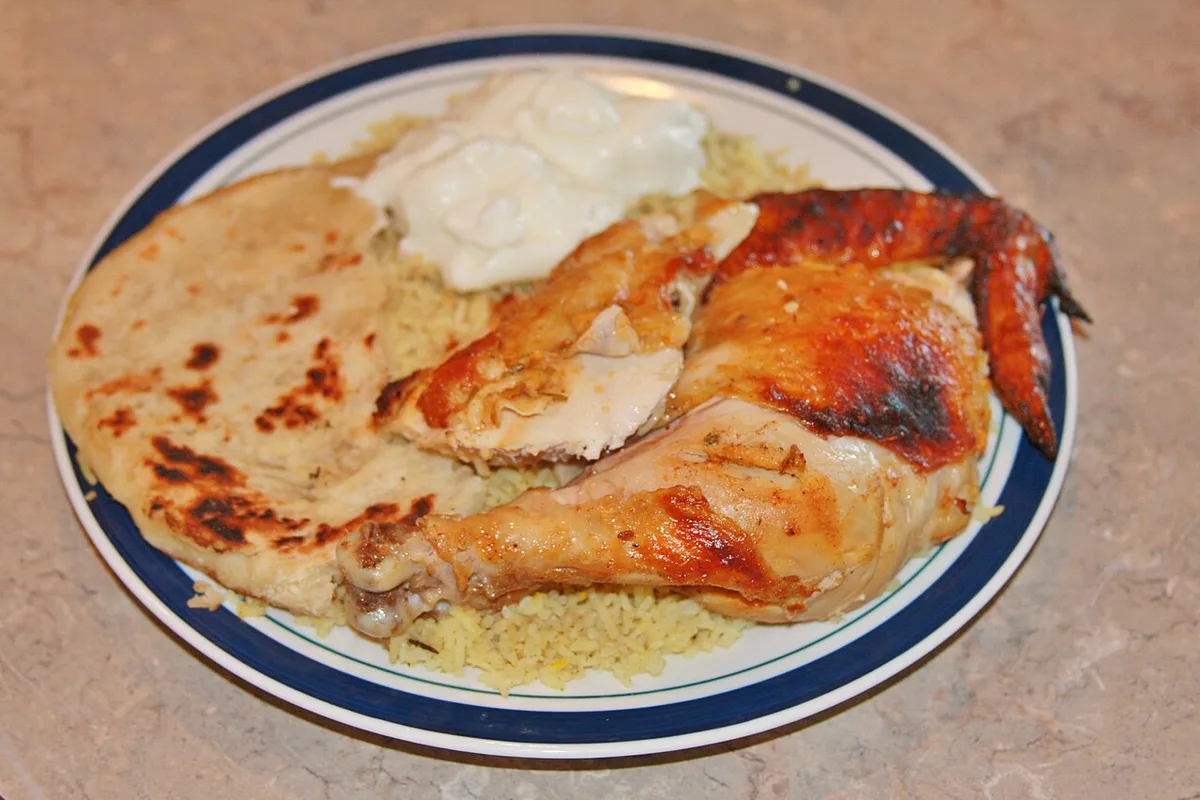
Image source: Wikimedia Commons / andrusdevelopment (CC BY)
How to Get Char, Smoke Flavor, and Crispy Skin Without a Tandoor
The air fryer does most of the heavy lifting, but a few deliberate moves push the results from "good" to "did you actually make this at home."
Crank the heat at the end. For the last 3 to 4 minutes of cooking, bump the temperature to 400°F (200°C). This is where the edges go from brown to properly charred, with dark, crispy spots that taste like they came out of a clay oven. Keep a close eye on it.
The line between charred and burnt is thin at this temperature.
Brush with ghee or butter mid-cook. When you flip the chicken at the halfway point, brush the newly exposed surface with melted ghee or unsalted butter. The milk solids in ghee brown rapidly under the circulating air, adding a richness and depth that plain oil can't match. This is the same principle behind butter-basting a steak, and it works just as well here.
Add smoked paprika to the marinade. A half teaspoon of smoked paprika (pimentón de la Vera, if you can find it) introduces a woodsmoke note that compensates for the lack of charcoal or wood fire. It won't fool anyone into thinking you used a tandoor, but it fills the gap convincingly.
Don't skip the resting period. Pull the chicken when it hits 160°F (71°C) and let it sit for 3 to 5 minutes on a cutting board or plate. The internal temperature will carry over to 165°F (74°C), and the juices will redistribute through the meat. Cutting into it immediately releases all that moisture onto the plate.
One more trick: if your air fryer has a broil or max-crisp function, use it for the final 2 minutes. These settings push the heating element to its highest output and move the food closest to it, which is the closest you'll get to the direct radiant heat of a tandoor's walls.
Bone-In Thighs vs Boneless Breast: Which Cut Works Best
Bone-in, skin-on thighs are the best cut for air fryer tandoori chicken. They stay moist under high heat, the bone conducts warmth gently into the center, and the skin crisps up beautifully. Drumsticks are a close second and cook at the same temperature and timing.
Boneless, skinless breast is the riskiest option. It has very little fat, so it dries out fast in the aggressive heat of an air fryer. If you prefer breast meat, reduce the temperature to 365°F (185°C) and pull it at 155°F (68°C) internal temp.
The carryover will bring it to the safe 165°F (74°C) during the rest.
Here's a quick comparison:
| Cut | Best Temp | Cook Time | Risk of Drying Out |
|---|---|---|---|
| Bone-in thighs (skin-on) | 375°F–400°F | 20–26 min | Low |
| Drumsticks (bone-in) | 375°F–400°F | 22–28 min | Low |
| Boneless thighs | 375°F | 16–20 min | Medium |
| Boneless breast | 365°F | 14–18 min | High |
If you're feeding a family and need volume, the best 8-quart air fryer for roasting chicken handles bone-in pieces in a single layer without crowding, which is the key to even browning.
Best Air Fryer Models and Settings for Tandoori Chicken
You don't need a premium unit for this recipe, but a few features make a real difference.
Basket size matters most. A 5-quart basket fits about 4 to 5 bone-in thighs in a single layer. Anything smaller and you're cooking in batches, which adds 20 minutes to your total time. For families of four or more, an 8-quart or 9-quart model is the practical choice.
Convection power and max temperature. Look for a unit that hits at least 400°F (200°C) and has a strong fan. The Instant Vortex series and Ninja Foodi dual-basket models both perform well here. The dual-basket design is especially useful if you're cooking chicken in one basket and vegetables or naan in the other at the same time.
Ease of cleaning. Yogurt-based marinades drip and caramelize on the basket surface. Models with dishwasher-safe baskets save real effort. Our research on whether the Instant Vortex air fryer is dishwasher safe is worth checking if cleanup is a deciding factor for you.
Temperature accuracy. Not all air fryers hit their stated temperature. In aggregate user reviews, units from Instant Pot, Ninja, and Philips tend to run within 10°F of their set point. If yours runs hot, reduce the temperature by 10°F and add a minute or two.
If it runs cool, do the opposite.
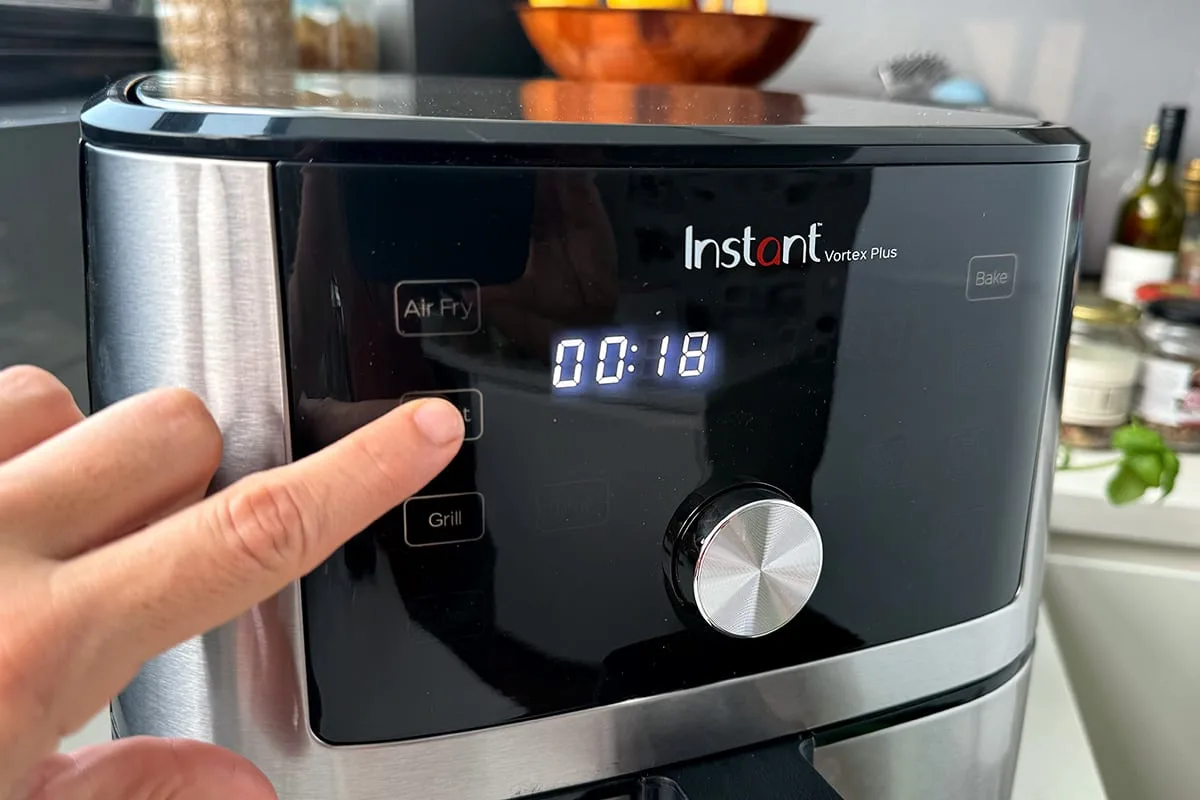
Image source: Bing (Web (fair-use with source credit))
The 7 Biggest Mistakes That Ruin Air Fryer Tandoori Chicken
1. Skipping the marination time. Less than two hours and the flavors barely penetrate the surface. Overnight is the standard for a reason.
2. Using low-fat yogurt. It breaks down under high heat and leaves the chicken dry and patched. Full-fat Greek yogurt or hung curd is the way to go.
3. Overcrowding the basket. Stacking pieces or leaving no gaps between them traps steam and prevents charring. Single layer only.
Cook in batches if needed.
4. Not preheating. A cold basket means the chicken steams for the first few minutes instead of searing. Three to five minutes of preheat makes a noticeable difference.
5. Skipping the flip. The bottom side cooks differently from the top in most air fryer models. Flipping halfway ensures even browning and char on both sides.
6. No thermometer. Guessing doneness is how you end up with raw centers or dried-out meat. An instant-read thermometer costs under $15 and removes all the guesswork.
7. Shaking off the marinade. Some recipes tell you to remove excess marinade before cooking. Don't.
A thick, even coating on the chicken is what creates the signature charred crust. Let the excess drip off naturally for a few seconds before loading the basket.
Serving Ideas: Sides, Chutneys, and How to Plate It
Tandoori chicken is the star, but the right sides turn it into a full meal.
Mint chutney is the classic pairing. Blend fresh mint, cilantro, green chili, lemon juice, and a pinch of salt until smooth. It cuts through the richness of the yogurt marinade and the char on the chicken.
Lachha pyaz, thinly sliced onion rings dressed with lemon juice, chaat masala, and a few drops of mustard oil, adds crunch and sharpness. It's the simplest side and one of the best.
Naan or roti rounds out the plate. Warm them in the air fryer for 2 minutes at 350°F (175°C) while the chicken rests. Brush with melted butter or ghee right after they come out.
Steamed basmati rice or a simple cucumber-mint raita works if you want something cooling alongside the heat of the spices.
For plating, arrange the chicken on a flat plate or wooden board. Squeeze fresh lemon over the top, scatter onion rings and fresh cilantro leaves around the edges, and serve the chutney in a small bowl on the side. It looks like it came from a restaurant, and it takes about 30 seconds to assemble.
If you're planning a bigger spread, our air fryer BBQ chicken legs recipe is another crowd-pleaser that uses a similar air fryer technique with a different flavor profile.
Nutritional Breakdown and How It Compares to Traditional Tandoori
Air fryer tandoori chicken is one of the leanest ways to enjoy this dish. A single bone-in thigh with skin, cooked in the air fryer using the recipe above, comes in at roughly 250 to 300 calories. About 60% of those calories come from protein, with the rest split between the yogurt marinade fat and the skin.
Compare that to chicken tikka butter chicken from a typical restaurant, which can run 450 to 550 calories per serving once you account for the cream-based sauce and the oil used in pan-frying. Even traditional tandoor-cooked chicken from a dhaba in Punjab often gets basted with generous amounts of ghee during and after cooking, pushing the calorie count higher.
The protein content holds up well. A 150 g serving of air fryer tandoori thigh delivers roughly 28 to 32 g of protein, depending on the exact cut. The yogurt marinade also contributes small amounts of calcium and probiotics, although some of the probiotic cultures are reduced by the high cooking temperature.
The recipe is naturally gluten-free as long as your store-bought tandoori masala doesn't contain wheat-based fillers. It's also keto-friendly at roughly 2 to 4 g of carbs per serving, all from the yogurt and spices.
Meal Prep and Storage: Make It Ahead Without Losing Quality
Tandoori chicken is one of the best air fryer recipes for meal prep because it reheats without turning to jerky. Cook a full batch on Sunday, portion it out, and you've got protein ready for lunches and dinners all week.
Store cooked pieces in airtight containers in the refrigerator for up to 4 days. Keep the chicken in larger sections rather than shredding it. Whole pieces hold moisture better when reheated.
To reheat, pop the chicken back in the air fryer at 350°F (175°C) for 4 to 5 minutes. This is better than a microwave, which steams the surface and softens the charred crust. The air fryer restores the crispness on the outside while warming the interior evenly.
You can freeze cooked tandoori chicken for up to 2 months. Thaw it overnight in the fridge before reheating. The texture is slightly less juicy than fresh, but still far better than most frozen meals.
For the marinate-ahead approach, you can prep and freeze raw marinated chicken in zip-top bags for up to 3 months. Thaw in the fridge for 12 to 18 hours before cooking. The yogurt marinade actually protects the chicken from freezer burn better than bare chicken does.
Pro Tips from Someone Who Makes This Every Week
A few things that aren't in most recipes but make a real difference after you've made this a dozen times.
Double the marinade and save half. Before adding raw chicken, set aside a quarter cup of plain marinade (no chicken contact). After cooking, warm it in a small saucepan for 2 minutes to make it food-safe, then drizzle it over the finished chicken. It adds a fresh, tangy layer that intensifies the flavor.
Use a light oil spray on the basket. Even with a non-stick air fryer, the sugary spices in the marinade can stick and tear the skin. A quick spritz of cooking spray before loading the chicken prevents this.
Add a pinch of kasuri methi. Dried fenugreek leaves, crushed between your palms and sprinkled into the marinade, add a subtle maple-like warmth that's common in restaurant tandoori but almost never appears in home recipes. It's available at any Indian grocery store.
Cook at 385°F instead of 375°F if your air fryer runs cool. Many budget models read 10 to 15 degrees below their actual temperature. If your chicken is coming out pale and under-charred, bump the temp up rather than adding time.
Frequently Asked Questions About Tandoori Chicken in the Air Fryer
Can I make tandoori chicken in the air fryer without yogurt?
Yogurt is the traditional marinade base and does three things at once: tenderizes, carries spices, and creates the charred crust. You can substitute coconut cream for a dairy-free version, but the flavor and texture will be different. The coconut fat won't caramelize the same way, so expect a softer exterior.
How long does tandoori chicken take in the air fryer?
Bone-in thighs and drumsticks take 20 to 26 minutes at 375°F to 400°F, flipped halfway. Boneless breast takes 14 to 18 minutes at 365°F. Always verify with a thermometer.
The USDA recommends poultry reach an internal temperature of 165°F (74°C).
Do I need to use mustard oil?
Mustard oil gives tandoori chicken its authentic sharp, pungent bite. If you can't find it, use vegetable oil plus a quarter teaspoon of prepared horseradish or a teaspoon of mustard powder mixed into the marinade. It won't be identical, but it's close.
Can I air fry tandoori chicken from frozen?
Yes, but add 6 to 8 minutes to the cook time and expect less charring. The surface moisture from freezing prevents the marinade from caramelizing as effectively. For best results, thaw in the fridge overnight first.
What air fryer size do I need for tandoori chicken?
A 5-quart air fryer fits 4 to 5 bone-in pieces in a single layer, enough for two to three servings. For families of four or more, an 8-quart or 9-quart model lets you cook a full batch without overcrowding. Our guide to the best 9-quart air fryer for big families covers the top options as of 2026.
Is air fryer tandoori chicken healthy?
It's one of the healthier ways to enjoy this dish. The air fryer uses little to no added oil compared to pan-frying or deep-frying. A single bone-in thigh runs about 250 to 300 calories with high protein and minimal carbs.
It's naturally gluten-free and keto-friendly.