
A yogurt bagel recipe air fryer approach gives you golden, protein-packed bagels in roughly 25 minutes with no yeast, no boiling, and no special skills. You mix two core ingredients, shape the rings, and let the air fryer do the rest.
The viral 2-ingredient bagel trend took off around 2021, and aggregate user reviews consistently show the air fryer method is faster than oven-baking and far more beginner-friendly than traditional boil-and-bake. The catch is that air fryers vary wildly in heat distribution, so getting the temperature and timing right is what separates a perfect bagel from a burnt hockey puck. Let's walk through everything you need to get this right the first time.
Quick Answer
A yogurt bagel recipe air fryer uses self-rising flour and Greek yogurt as the two base ingredients. Shape the dough into rings and air fry at 330°F to 360°F for 8 to 14 minutes. The result is a higher-protein bagel with no yeast and no boiling step required.
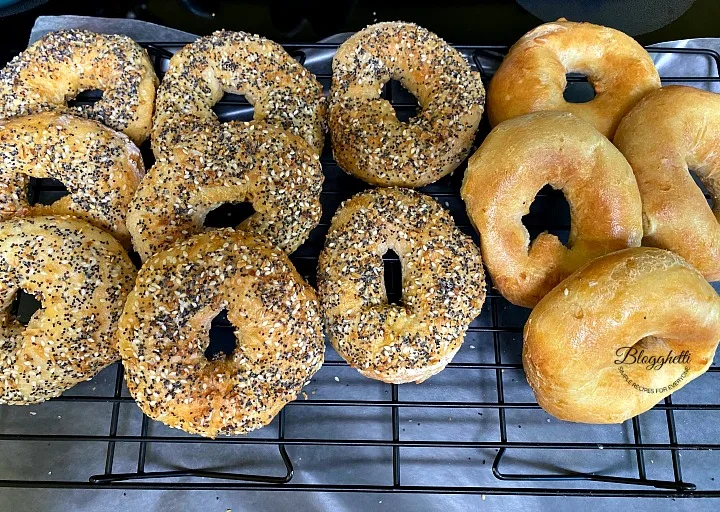
Why Yogurt Bagels in the Air Fryer Are Worth Your Time
Yogurt bagels are a chemically leavened bread, meaning they rely on the baking powder already mixed into self-rising flour rather than yeast for their rise. That eliminates the entire proofing process. No waiting for dough to double in size, no punching it down, no second rise.
You mix, shape, and cook.
The air fryer accelerates this further. Its compact chamber heats up fast and circulates air aggressively, which means you get a crisp, browned exterior in roughly 10 minutes. A conventional oven typically needs 18 to 22 minutes for the same result.
If you're working with a smaller countertop model like a Best 8 Qt Air Fryer Easy To Clean, you'll appreciate that there's no need to heat up a full-sized oven just for four bagels.
Per USDA FoodData Central nutritional data for plain Greek yogurt, each homemade yogurt bagel delivers roughly 10 to 14 grams of protein. That's noticeably more than a standard store-bought bagel, which typically sits around 8 to 9 grams. You're also looking at 140 to 170 calories per bagel versus 250 to 300-plus at most bakeries.
The ingredient list is about as short as it gets. Self-rising flour, Greek yogurt, and optionally salt. That's it.
No yeast packets to expire, no malt syrup for boiling water, no specialty equipment.
What Makes a Yogurt Bagel Different From a Regular Bagel
A traditional bagel is a yeast-leavened bread that gets boiled in malted water before baking. That boiling step is what gives a classic bagel its dense, chewy crust and tight crumb. A yogurt bagel skips all of that.
There's no yeast, no proofing, no boiling water, and no malt syrup.
Instead, the structure comes from the protein in Greek yogurt and the chemical leavening in self-rising flour. The result is lighter and less dense than a traditional bagel, closer to a quick bread or a scone in texture. It's not going to replicate a New York-style bagel.
It's its own thing, and it's genuinely good on its own terms.
The tang from the yogurt also gives these bagels a subtle flavor that plain flour-and-water doughs don't have. That tang pairs well with savory toppings like everything seasoning or cream cheese, but it works with sweet options too. Think cinnamon-sugar or a thin spread of honey butter.
The One Mistake That Ruins Most Air Fryer Yogurt Bagels
Getting the dough moisture wrong is the single biggest failure point across hundreds of user reviews and recipe forums. Too wet and your bagels spread into flat discs. Too dry and they crack during shaping and come out dense as a brick.
The target consistency is tacky but not sticky. When you press a finger into the dough, it should spring back slowly without leaving a wet residue on your fingertip. If your hands are covered in sticky paste after mixing, you need more flour.
If the dough feels crumbly and won't hold together, your yogurt may have been too thin or you need an extra tablespoon.
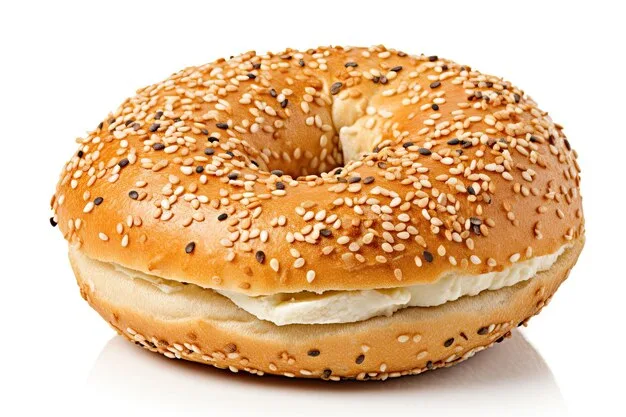
Here's what causes moisture problems most often:
- Using regular yogurt instead of Greek yogurt. Regular plain yogurt contains significantly more whey. That excess liquid throws off the entire ratio and makes the dough nearly impossible to shape.
- Cold yogurt straight from the fridge. Cold yogurt doesn't incorporate evenly into the flour. It creates stiff pockets and wet pockets in the same batch. Let it sit at room temperature for 15 to 20 minutes before mixing.
- Not accounting for flour humidity. If you live in a humid climate, your flour may already contain more moisture than average. Start with slightly less yogurt and add it gradually.
- Skipping the kneading step. Two to five minutes of kneading on a lightly floured surface isn't optional. It develops just enough structure so the dough holds its bagel shape instead of sagging flat in the air fryer basket.
The fix is simple once you know what to look for. Add flour one tablespoon at a time if the dough is too wet. Add yogurt by the teaspoon if it's too dry.
The dough should feel like a soft earlobe, a comparison that sounds odd but works every time as a tactile reference point.
The Exact Recipe: Ingredients, Ratios, and Substitutions
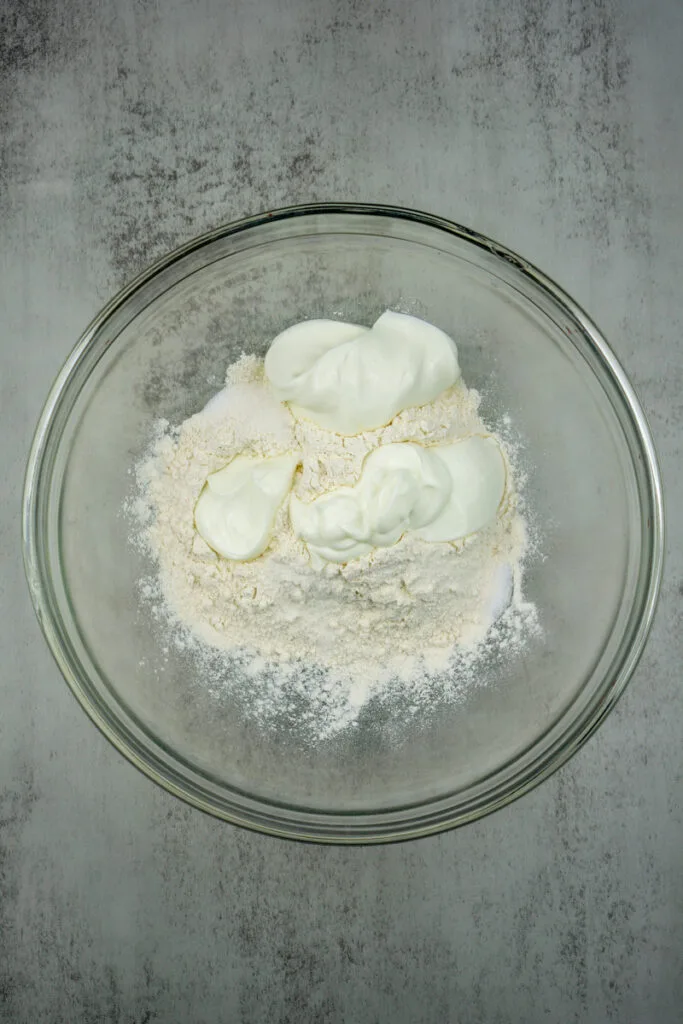
The canonical ratio is one cup of self-rising flour to one cup of plain full-fat Greek yogurt. That yields approximately four standard-sized bagels at roughly 2 ounces of dough each. Full-fat yogurt produces the most tender result because the fat coats the flour proteins and limits gluten development.
Core Ingredients
| Ingredient | Amount | Role |
|---|---|---|
| Self-rising flour | 1 cup (120g) | Structure and leavening |
| Plain Greek yogurt (full-fat) | 1 cup (240g) | Moisture, protein, tang |
| Salt | ¼ teaspoon (optional) | Flavor enhancement |
Substitutions That Actually Work
- No self-rising flour? Make your own. Combine 1 cup all-purpose flour, 1.5 teaspoons baking powder, and ½ teaspoon salt. Mix thoroughly before adding the yogurt.
- Low-fat Greek yogurt. It works but produces a slightly drier, less tender bagel. Add an extra tablespoon of yogurt to compensate.
- Lactose intolerant? Lactose-free Greek yogurt performs nearly identically in terms of texture and moisture.
- Gluten-free. A 1:1 gluten-free self-rising flour blend can substitute directly. Expect a slightly more crumbly texture and less rise. King Arthur Baking Company's gluten-free blends are among the most consistent in testing.
Substitutions to Avoid
- Plant-based yogurt (coconut, oat, almond). These lack the protein structure that gives yogurt bagels their chew. The result tends to be gummy or crumbly.
- Flavored yogurt (vanilla, strawberry). Added sugars burn at air fryer temperatures, and the artificial flavors clash with savory toppings.
- Regular non-Greek yogurt. Too much whey. Your dough will be a sticky mess.
Optional Flavor Add-Ins
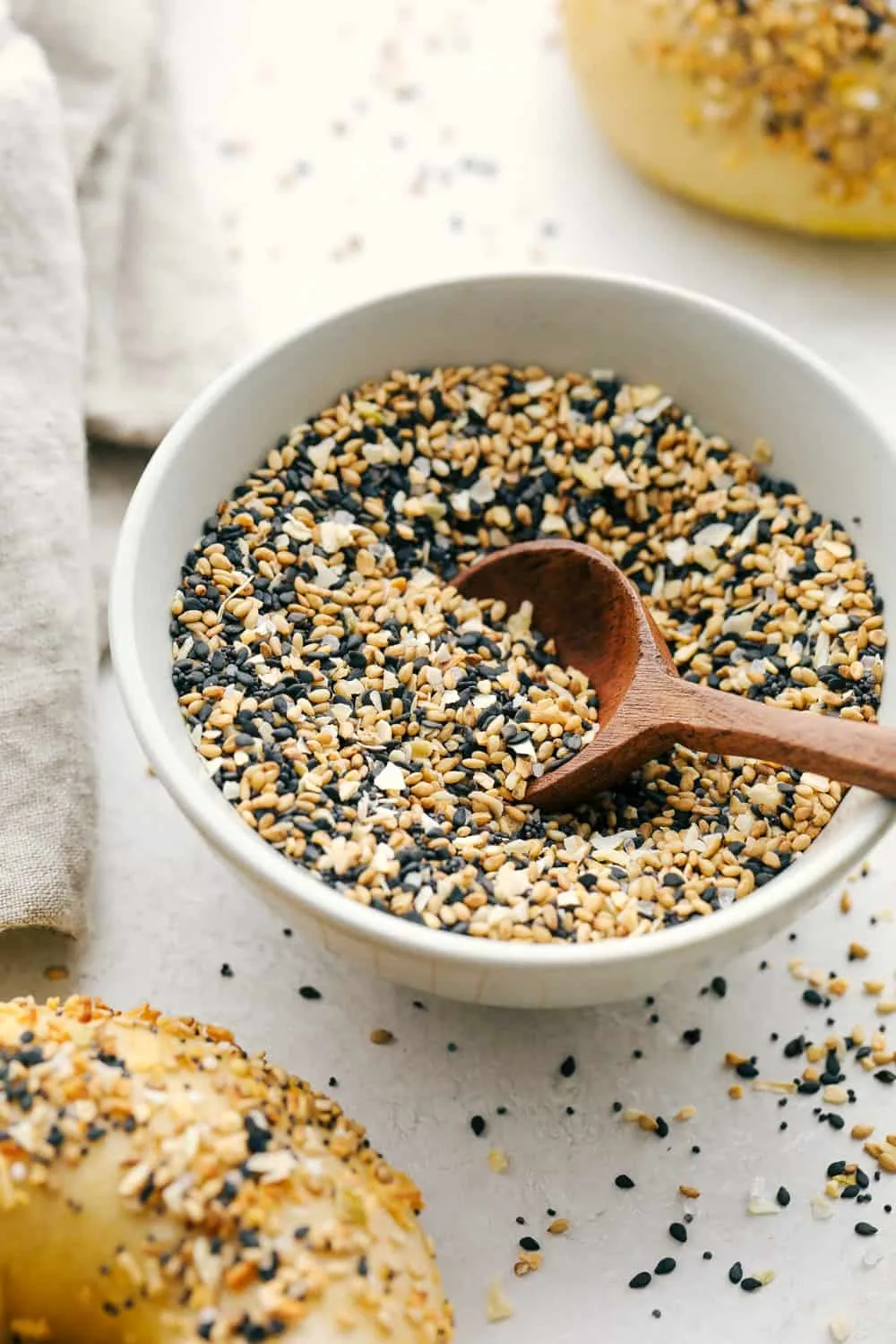
- 1 tablespoon everything bagel seasoning (applied after egg wash)
- 1 teaspoon garlic powder or onion powder (mixed into dry flour)
- 1 tablespoon cinnamon + 2 tablespoons sugar (for a sweet version)
- 1 tablespoon dried herbs like rosemary or thyme
- 2 tablespoons shredded cheddar and diced jalapeño for a savory kick
Step-by-Step: How to Make Yogurt Bagels in the Air Fryer
The entire process from mixing bowl to finished bagel takes about 25 minutes. Most of that is active prep time, which means you're not standing around waiting for dough to rise.
Step 1: Mix the Dough
Combine 1 cup self-rising flour and 1 cup Greek yogurt in a bowl. Stir with a fork or spatula until a shaggy dough forms. It will look rough and uneven at first.
That's normal.
Step 2: Knead
Turn the dough out onto a lightly floured surface. Knead for 2 to 5 minutes until the surface becomes smooth and the dough holds together without cracking. If it sticks to your hands, dust with a small amount of flour.
If it crumbles, wet your hands slightly and continue kneading.
Step 3: Divide and Shape
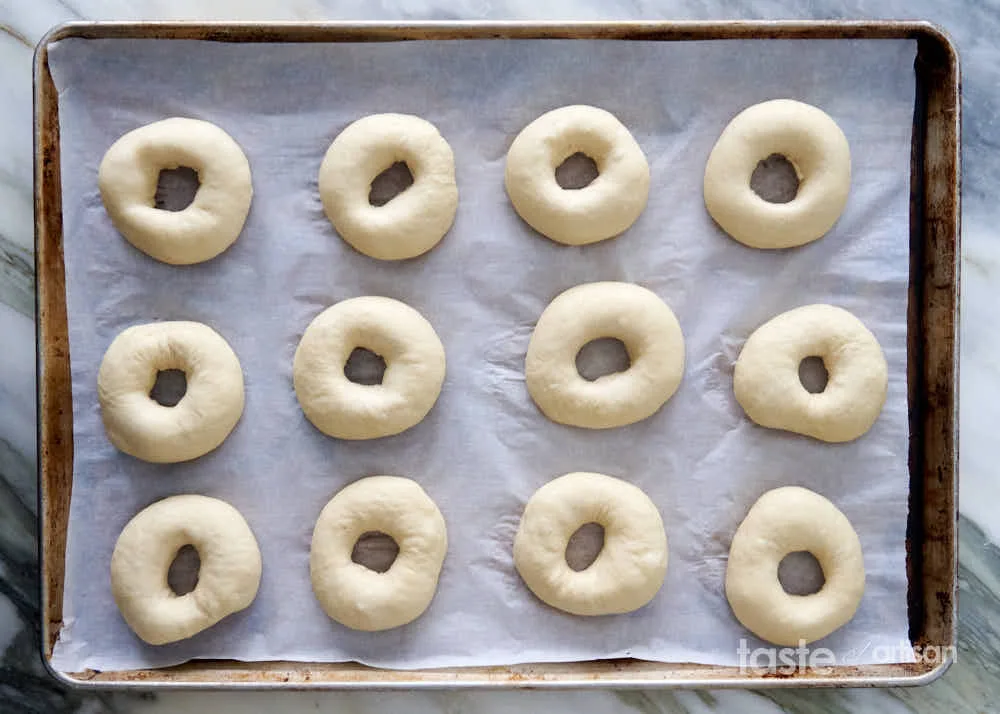
Cut the dough into 4 equal pieces. Roll each piece into a rope about 6 to 8 inches long and roughly ¾ inch thick. Form a ring by wrapping the rope around your fingers, overlapping the ends by about 1 inch, and pinching firmly to seal.
Place your thumb and index finger through the center and gently stretch the hole to about 1.5 to 2 inches wide.
Step 4: Prepare the Air Fryer
Preheat your air fryer to 350°F for 2 to 3 minutes. Line the basket with perforated parchment paper or lightly grease the basket with oil spray. The parchment makes cleanup easier and prevents sticking, especially important since these bagels have no oil in the dough itself.
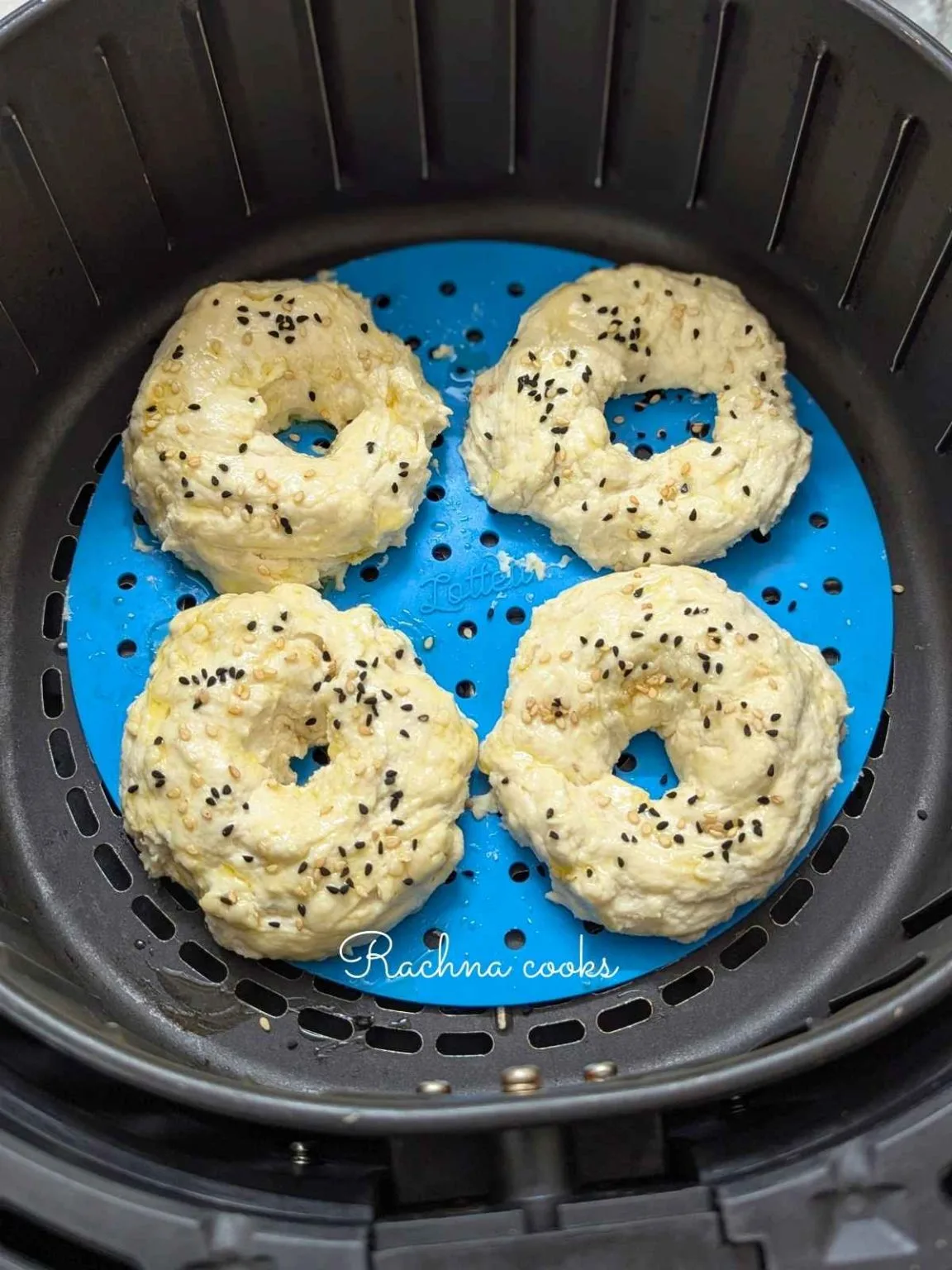
Step 5: Add Egg Wash and Seasoning (Optional)
Beat 1 egg with 1 tablespoon of water. Brush the top and sides of each bagel lightly. This creates a shiny, golden crust.
Sprinkle with everything bagel seasoning, sesame seeds, poppy seeds, or any topping you prefer.
Step 6: Air Fry
Place bagels in the basket with at least 1 inch of space between each one. Air fry at 350°F for 10 to 12 minutes, flipping at the 5 to 6 minute mark. The bagels are done when they're deep golden brown on both sides and sound hollow when tapped on the bottom.
Step 7: Cool
Transfer to a wire cooling rack for at least 3 to 5 minutes before slicing. Cutting too early releases steam and makes the interior gummy.
If you're working with a larger model like the Best 9 Qt Air Fryer For Large Batches, you can fit 5 to 6 bagels in a single batch. Smaller 3 to 4 quart models typically max out at 2 to 3 bagels. Either way, don't let them touch each other.
Air circulation is what creates even browning, and overcrowding blocks it.
Air Fryer Temperature and Timing — What Actually Works Across Brands
This is where most recipes fall apart. Every air fryer brand runs differently. A Cosori 5.8Qt and a Ninja Foodi can differ by 20 to 30 degrees at the same dial setting.
That's the difference between golden and charred.
Here's the temperature and timing breakdown that works across most models:
| Temperature | Time | Best For | Notes |
|---|---|---|---|
| 330°F (165°C) | 12 to 15 min | Thicker bagels, first attempt | Lowest burn risk. Best for learning your machine. |
| 350°F (177°C) | 10 to 12 min | Standard recipe | Most reliable across brands. Recommended starting point. |
| 360°F (182°C) | 8 to 10 min | Thinner bagels, crispier crust | Faster but requires close monitoring. |
| 400°F (204°C) | 6 to 8 min | Experienced users only | High burn risk. Not recommended for this recipe. |
Always flip at the halfway mark. The heating element in most air fryers is on the top, so the bottom side cooks slower. Flipping evens this out.
If your air fryer doesn't have a preheat function, run it empty at your target temperature for 2 minutes before loading the bagels. That small step makes a noticeable difference in how evenly they cook.
For the Is Instant Vortex Air Fryer Good question many readers ask, the Instant Vortex runs slightly cooler than stated at the lower end of its range. Start at 350°F and add 2 minutes if the bagels look pale at the 10-minute mark.
How to Keep the Center Hole From Closing During Cooking
The center hole closing shut is the number one complaint in every yogurt bagel recipe thread. It happens because the dough relaxes as it heats, and the gluten (even in small amounts) pulls the ring closed.
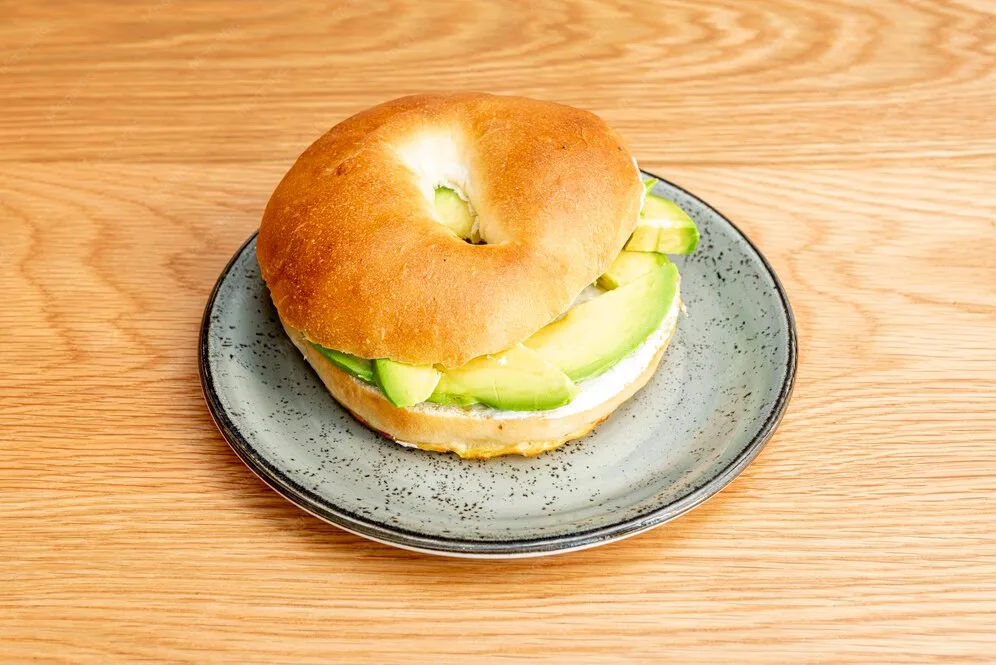
The solution is counterintuitive. You make the hole much wider than you think it needs to be. Aim for 1.5 to 2 inches in diameter before cooking.
It will shrink to roughly half that size as the dough sets. If you start with a 1-inch hole, it will seal completely.
A few more tips that help:
- Pinch the ends together firmly. A weak seal at the seam can also cause the hole to collapse. Press the overlapping ends together and roll them flat so the joint is the same thickness as the rest of the ring.
- Don't overfill the basket. If bagels are pressed against each other or against the basket wall, the dough spreads outward instead of upward, which flattens the ring.
- Chill shaped bagels for 10 minutes before cooking. Pop them in the fridge or freezer briefly. Cold dough holds its shape longer in the heat, giving the exterior time to set before the interior expands.
- Use the parchment round method. Perforated parchment holds the bagel in place and prevents the sides from spreading. Cut a circle of parchment slightly larger than the bagel and place the shaped dough on it.
Flavor Variations: Savory, Sweet, and Everything In Between
The base dough is neutral enough to go in any direction. Here are the variations that work best in the air fryer:
Savory Options
- Everything bagel. The classic. Brush with egg wash, coat generously with everything seasoning. The seeds toast beautifully in the air fryer.
- Garlic parmesan. Mix ½ teaspoon garlic powder into the flour. After egg wash, sprinkle grated parmesan on top. The cheese crisps up in the air fryer basket.
- Jalapeño cheddar. Fold diced pickled jalapeños and shredded sharp cheddar into the dough before shaping. About 2 tablespoons of each per batch of four bagels.
- Rosemary sea salt. Add 1 tablespoon chopped fresh rosemary to the flour. After egg wash, sprinkle flaky sea salt on top.
Sweet Options
- Cinnamon sugar. Mix 1 tablespoon cinnamon with 3 tablespoons sugar. Coat the bagel after egg wash while still warm so it sticks.
- Blueberry. Fold ¼ cup fresh blueberries into the dough gently. Don't overmix or the dough turns purple and wet.
- Honey bran. Replace 2 tablespoons of flour with wheat bran. After cooking, drizzle with honey while warm.
Pro tip: Sweet versions burn faster because of the sugar content. Drop the temperature by 10 to 15 degrees and check 2 minutes earlier than the standard timing.
Air Fryer vs. Oven vs. Traditional Boil-and-Bake: Which Method Wins?
Each method produces a different result. Here's how they compare:
| Factor | Air Fryer | Conventional Oven | Traditional Boil-and-Bake |
|---|---|---|---|
| Total time | 20 to 25 min | 30 to 35 min | 1.5 to 2 hours (including rise) |
| Exterior texture | Crisp, slightly dry | Even, moderate crust | Chewy, thick crust |
| Interior texture | Soft, slightly dense | Fluffy, even crumb | Dense, chewy, tight crumb |
| Batch size | 2 to 6 bagels | 6 to 8 bagels | 6 to 8 bagels |
| Energy use | ~0.8 kWh | ~2.5 kWh | ~3.0 kWh |
| Skill level | Beginner | Beginner to intermediate | Intermediate to advanced |
| Protein per bagel | 10 to 14g | 10 to 14g | 8 to 9g |
The air fryer wins on speed and convenience. The oven wins on batch size and evenness. Traditional boil-and-bake wins on authentic bagel texture, but it's a completely different product from a yogurt bagel.
Comparing them is like comparing a quick bread to a yeast bread. They're related but not the same thing.
If you want the fastest path to a good breakfast bagel, the air fryer is the clear winner. If you're making bagels for a crowd, the oven handles more at once. If you want a true New York-style bagel, neither of these methods will get you there.
You need yeast, boiling water, and a very hot oven for that.
Common Problems and How to Fix Them
Bagels are burnt on the outside but raw inside.
Your air fryer runs hot, or the bagels were too close to the heating element. Drop the temperature by 20 degrees next time and check at the 8-minute mark. If your model has a rotating basket, use it.
Bagels came out flat and dense.
The dough was too wet, or you didn't knead it enough. Next time, add 1 to 2 tablespoons of flour and knead for a full 5 minutes. Also check that your self-rising flour is fresh.
Expired leavening is a common culprit.
Bagels stick to the basket.
Use perforated parchment rounds or spray the basket with oil before placing the dough. Don't skip this step. These bagels have zero oil in the dough, so they're more prone to sticking than traditional recipes.
The dough is too sticky to shape.
Dust your hands and the surface with flour. Work quickly. If it's still unmanageable, the yogurt was too wet.
Add flour one tablespoon at a time during mixing next time.
Bagels taste too tangy or eggy.
Use a lighter hand with the egg wash. A thin coat is all you need. For the tang, try a milder Greek yogurt or add 1 teaspoon of honey to the dough to balance the flavor.
How to Store, Reheat, and Meal Prep Yogurt Bagels
Yogurt bagels are best eaten the day you make them, but they store well if you do it right.
Room temperature storage: Place cooled bagels in an airtight container or zip-lock bag. They'll stay fresh for 2 to 3 days. Don't refrigerate them.
The fridge accelerates staling in breads like these.
Freezing: Slice the bagels in half before freezing. Wrap each half tightly in plastic wrap, then place in a freezer bag. They keep for up to 3 months.
Reheating: The air fryer is actually the best tool for reheating. Run them at 300°F for 2 to 3 minutes. They come back to life almost as well as fresh.
A toaster works too, but watch the setting. These brown faster than store-bought bagels because of the yogurt sugars.
Meal prep tip: Make a double batch on Sunday. You get 8 bagels for the week. They toast well, they hold up to cream cheese and toppings, and they're sturdy enough to toss in a bag for on-the-go breakfasts.
Nutritional Breakdown: How Yogurt Bagels Compare to Store-Bought
Here's how a homemade yogurt bagel stacks up against common alternatives:
| Bagel Type | Calories | Protein | Carbs | Fat |
|---|---|---|---|---|
| Homemade yogurt bagel | 140 to 170 | 10 to 14g | 24 to 30g | 0.5 to 2g |
| Plain store-bought bagel | 250 to 290 | 8 to 9g | 48 to 55g | 1.5 to 3g |
| Einstein Bros plain bagel | 270 | 10g | 53g | 2g |
| Traditional NYC bagel | 280 to 320 | 9 to 11g | 55 to 65g | 1 to 2g |
The yogurt bagel wins on protein and calorie efficiency. It's roughly half the calories of a store-bought bagel with nearly double the protein. The trade-off is size.
A yogurt bagel is smaller, about 3 inches in diameter versus 4 to 5 inches for a standard bagel.
If you're tracking macros or just want a lighter breakfast that still feels like a bagel, this recipe delivers. Pair it with cream cheese and smoked salmon for a protein-rich meal that hits 25 to 30 grams of protein total.
Frequently Asked Questions
Can I use regular yogurt instead of Greek yogurt?
You can, but the results won't be as good. Regular yogurt has more whey, which makes the dough too wet to shape properly. If regular yogurt is all you have, strain it through cheesecloth or a coffee filter for 30 minutes to remove some of the liquid before using.
Do I need to preheat my air fryer?
Yes. Preheating for 2 to 3 minutes at your target temperature ensures the bagels start cooking at the right heat level immediately. Skipping this step leads to uneven cooking and pale, soft exteriors.
Can I make these without self-rising flour?
Absolutely. Mix 1 cup all-purpose flour with 1.5 teaspoons baking powder and ½ teaspoon salt. That's your homemade self-rising flour.
It performs identically in this recipe.
Why did my bagels turn out dense and heavy?
The most common causes are expired self-rising flour, over-kneading the dough, or cooking at too low a temperature. Check your flour's freshness date, knead for no more than 5 minutes, and make sure your air fryer is properly preheated.
How many bagels fit in a standard air fryer?
A 5.8-quart basket fits 3 to 4 bagels comfortably. A 9-quart model handles 5 to 6. The key is spacing.
Each bagel needs at least 1 inch of clearance on all sides for proper air circulation.
Are yogurt bagels keto-friendly?
No. Self-rising flour is wheat-based and high in carbohydrates. Each yogurt bagel contains 24 to 30 grams of carbs.
For a keto alternative, look into fathead dough recipes that use mozzarella and cream cheese as the base instead.
Final Verdict: Should You Make Yogurt Bagels in the Air Fryer?
Yes, if you want a fast, high-protein breakfast that requires almost no skill or equipment. A yogurt bagel recipe air fryer method delivers genuinely good bagels in under half an hour. They're lighter and more protein-dense than store-bought, endlessly customizable, and the air fryer makes the whole process faster than any other cooking method.
They won't replace a proper bakery bagel. Nothing will. But that's not the point.
This is the recipe you make on a Tuesday morning when you want something warm and satisfying without the fuss. As of 2026, the 2-ingredient yogurt bagel trend has stuck around for good reason. It works, it's easy, and it's worth keeping in your rotation.