
A good ninja air fryer salmon recipe gives you crispy skin, a moist center, and a full meal in under 15 minutes, without heating up your whole kitchen. The trick is getting the temperature, timing, and prep right the first time so you're not guessing on the second.
In our research, aggregate user reviews across Ninja's AF101, AF161 Max XL, and Foodi Dual Zone models show that 400°F for 8 to 12 minutes is the sweet spot for a 1-inch skin-on fillet, with the USDA recommending an internal temperature of 145°F for safe consumption. The difference between perfect and overcooked salmon is often just 2 minutes, so understanding your specific model and cut matters more than following a generic recipe. Here's how to nail it every time.
Quick Answer
A ninja air fryer salmon recipe calls for 400°F and 8 to 12 minutes for a 1-inch fillet. Pat the salmon dry, season it, and place it skin-side down in the basket. The USDA recommends cooking fish to an internal temperature of 145°F.
Let it rest 2 minutes before serving.
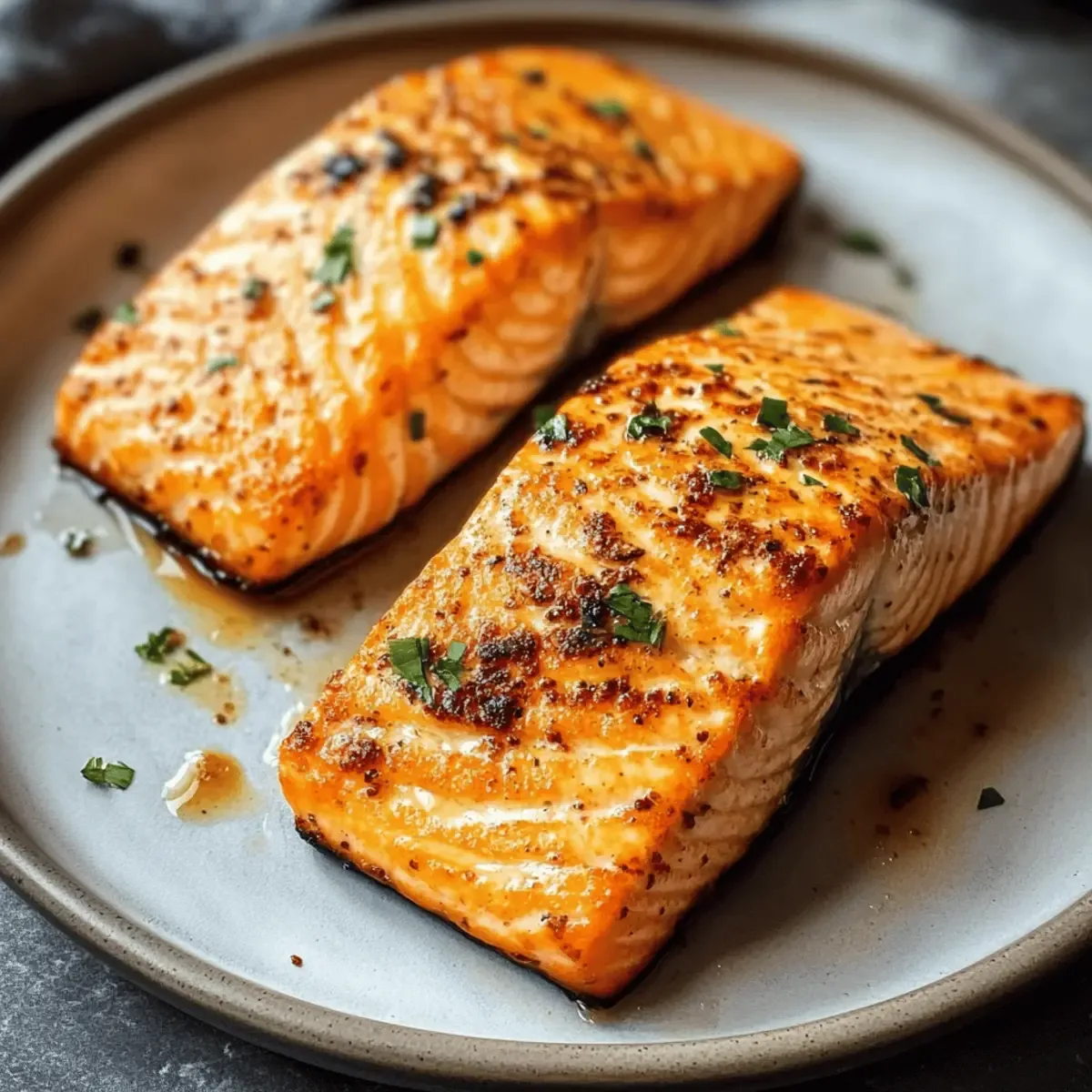
Image source: Bing (Web (fair-use with source credit))
How to Cook Perfect Salmon in a Ninja Air Fryer
Air fryer salmon cooks faster than almost any other method, and the circulating hot air gives you a crisp exterior that's hard to get in a standard oven. The key variables are fillet thickness, starting temperature (fresh vs. frozen), and your specific Ninja model's wattage.
A 1-inch center-cut fillet at 400°F takes roughly 8 to 10 minutes in most Ninja air fryers. Thicker cuts, around 1.5 inches, can push to 12 to 14 minutes. The Ninja Foodi Max XL and models with a Max Crisp function run slightly hotter, so you may want to drop to 380°F and add a minute or two.
Here's what makes the process work. The high heat rapidly evaporates surface moisture, which is why patting the salmon dry is non-negotiable. The circulating air hits the top and bottom of the fillet evenly, so you don't need to flip it halfway through.
And because the basket is smaller than an oven cavity, the heat is more concentrated, which means faster cook times but a narrower window between done and dried out.
If you're new to air fryer fish, our guide on air fryer tuna recipes covers similar timing principles that apply across lean and fatty fish alike.
The Best Temperature and Time for Ninja Air Fryer Salmon
The right temperature depends on your texture preference and the model you're using. Here's a breakdown that covers the most common scenarios.
| Scenario | Temperature | Time | Notes |
|---|---|---|---|
| 1-inch skin-on fillet, fresh | 400°F | 8–10 min | Skin-side down, no flip |
| 1-inch skinless fillet, fresh | 380°F | 7–9 min | Lightly oil the basket |
| 1.5-inch skin-on fillet, fresh | 400°F | 12–14 min | Check temp at 12 min |
| 1-inch fillet, frozen (no thaw) | 400°F | 14–16 min | Add 50% more time |
| Max Crisp models (450°F capable) | 380°F | 7–9 min | Lower temp compensates for higher max |
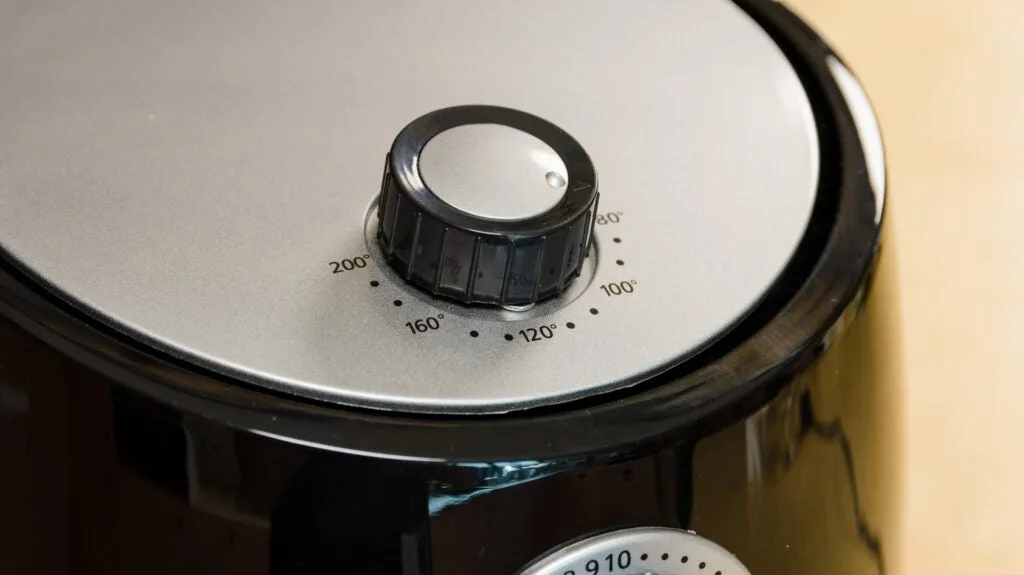
Image source: Bing (Web (fair-use with source credit))
Preheating is optional with most Ninja air fryers since they come up to temperature in about 2 minutes. If you do preheat, run the empty basket at your target temperature for 3 minutes before adding the salmon. This gives you a more consistent start, especially for skin-on fillets where that initial blast of heat is what crisps the skin.
One thing that trips people up is overcrowding. The Ninja AF101 has a 4-quart basket, which fits two standard fillets comfortably. The AF161 Max XL handles three to four.
If the fillets overlap or touch, airflow gets blocked and you'll end up with uneven cooking. Give each piece at least an inch of space on all sides.
What Makes Air Fryer Salmon Different from Oven or Pan Cooking
Air frying uses rapid convection, a method where a fan circulates superheated air around the food at high speed. This creates a Maillard reaction on the salmon's surface faster than a conventional oven can, which is why you get that golden crust in under 10 minutes.
In a standard oven set to 400°F, a salmon fillet takes 15 to 20 minutes to cook through. The air fryer cuts that by roughly half because the smaller chamber and forced air circulation transfer heat more efficiently. You also use significantly less oil.
A pan-seared salmon might need a tablespoon or more of butter or oil to prevent sticking. In the air fryer, a light mist from an oil sprayer is enough.
The trade-off is capacity. An oven sheet pan holds six to eight fillets at once. Most Ninja air fryers max out at two to four, depending on the model.
If you're cooking for a crowd, you'll need to work in batches. For weeknight dinners or meal prep, the speed advantage more than makes up for it.
Flavor-wise, air fryer salmon tastes closest to oven-roasted but with a slightly drier, crispier exterior. It doesn't get the deep char of a grill or the buttery richness of a pan sear. If you want that caramelized glaze finish, brush on your sauce during the last 2 minutes of cooking so the sugar doesn't burn.
For a comparison of how other proteins behave in the air fryer, check out our New York strip air fryer recipe, which uses similar high-heat, short-time principles.
Choosing the Right Salmon Cut for Your Air Fryer
Not all salmon fillets are created equal, and the cut you pick directly affects how the recipe turns out. The two biggest factors are thickness and whether the skin is on or off.
Center-cut fillets are the best choice for air frying. They're uniform in thickness, usually around 1 to 1.25 inches, which means they cook evenly. Tail-end pieces taper thin and will overcook at the narrow end before the thick part is done.
If you only have tail-end fillets, fold the thin tip under itself to create an even thickness, or reduce the cook time by 2 minutes.
Skin-on fillets are strongly recommended for air frying. The skin acts as a natural barrier between the fish and the basket, which dramatically reduces sticking. It also crisps up beautifully at 400°F, giving you that restaurant-quality texture.
Skinless fillets work, but you'll need to oil the basket lightly and handle them more carefully when removing.
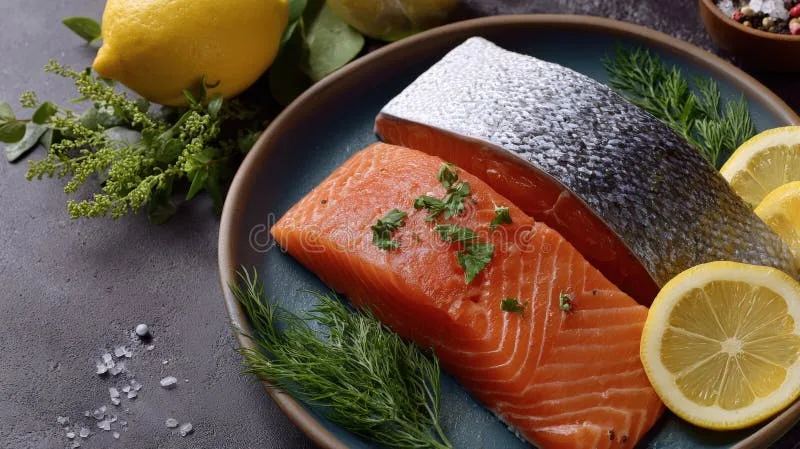
Image source: Bing (Web (fair-use with source credit))
Atlantic salmon is the most widely available in US grocery stores and has a higher fat content, which makes it more forgiving in the air fryer. Wild-caught varieties like Sockeye and Coho are leaner and can dry out faster, so drop the temperature to 380°F and check for doneness a minute or two earlier.
Fresh vs. previously frozen is another consideration. Fresh salmon has a firmer texture and less excess moisture, which helps with crisping. Previously frozen salmon works fine, but pat it extra dry since freezing breaks down cell structure and releases more water during cooking.
If you're buying specifically for air fryer cooking, look for fillets that are at least 1 inch thick and no longer than 6 inches so they fit flat in the basket without curling up the sides.
Step-by-Step: Ninja Air Fryer Salmon Recipe
This recipe is built for a standard Ninja Air Fryer (AF101 or AF161) using a 1-inch skin-on Atlantic salmon fillet. Adjust times for your specific model using the table above.
What you'll need:
- 1 salmon fillet (6 to 8 oz, skin-on, 1 inch thick)
- 1 teaspoon olive oil or avocado oil
- 1/2 teaspoon kosher salt
- 1/4 teaspoon black pepper
- 1/4 teaspoon garlic powder (optional)
- Lemon wedges for serving
Step 1: Pat the salmon dry.
Remove the fillet from its packaging and place it on a layer of paper towels. Press another sheet on top and gently pat until the surface is as dry as possible. This is the single most important step.
Moisture on the surface creates steam instead of browning, and you'll end up with pale, soft skin instead of a crisp one.
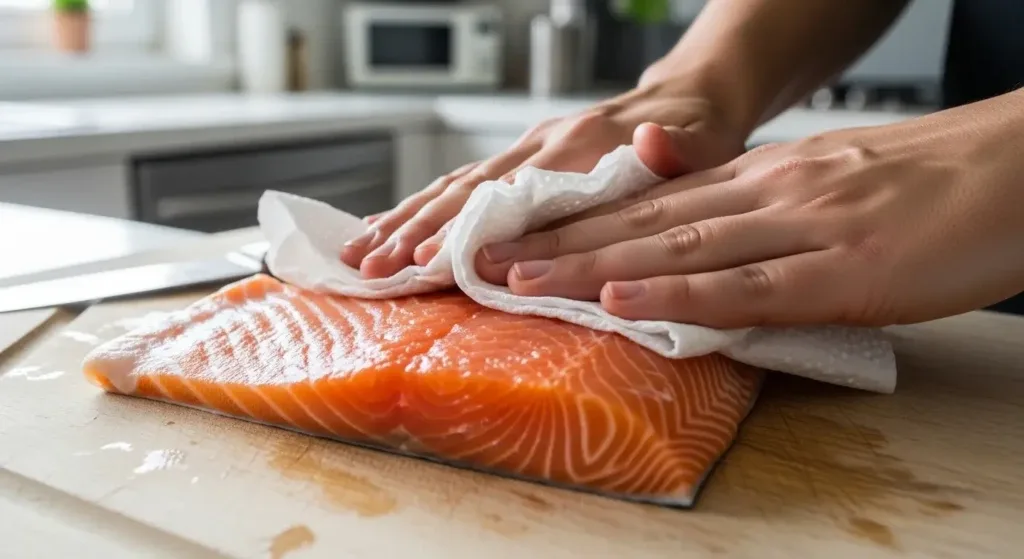
Image source: Bing (Web (fair-use with source credit))
Step 2: Season the salmon.
Brush or rub a thin layer of oil over the top and sides of the fillet. Sprinkle salt, pepper, and garlic powder evenly across the flesh side. Don't go heavy on the salt.
A 6-ounce fillet only needs about 1/2 teaspoon of kosher salt to taste seasoned without being overpowering.
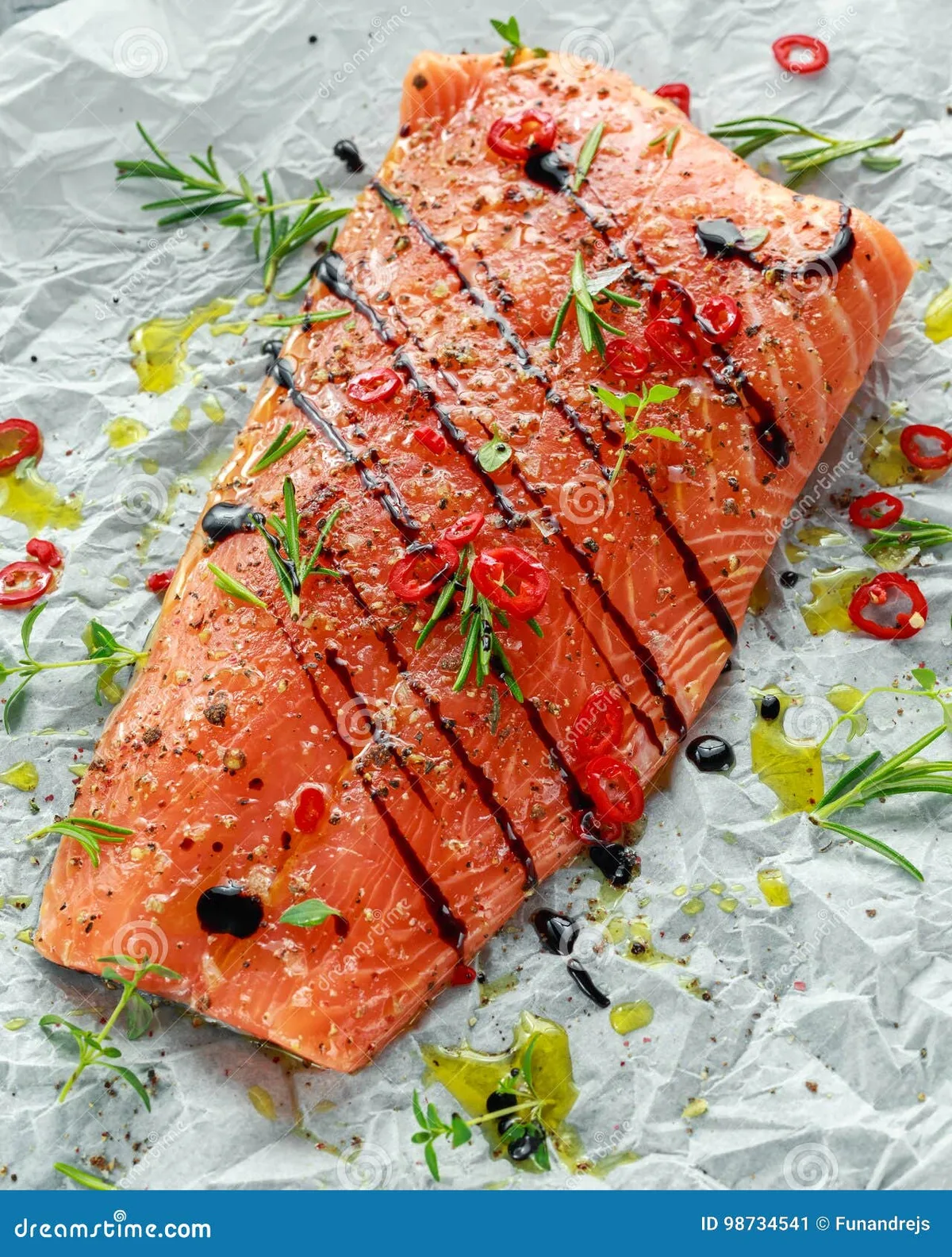
Image source: Bing (Web (fair-use with source credit))
Step 3: Preheat the air fryer (optional).
Set your Ninja air fryer to 400°F and let it run empty for 3 minutes. This step isn't required, but it gives you a more consistent cook, especially if you're using a model that takes a while to stabilize at temperature.
Step 4: Place salmon in the basket.
Set the fillet skin-side down in the center of the air fryer basket. Make sure it's lying flat and not curled up the sides. If you're cooking two fillets, leave at least an inch between them for airflow.
Step 5: Cook at 400°F for 8 to 10 minutes.
Set the timer for 8 minutes first. Check the salmon at that point. The flesh should be opaque and flake easily when pressed with a fork.
If it still looks translucent in the thickest part, add 1 to 2 more minutes. Do not flip the fillet during cooking.
Step 6: Check the internal temperature.
Insert a food thermometer into the thickest part of the fillet. The USDA recommends 145°F for fish. If you prefer medium-rare texture and are using sushi-grade salmon, 125°F to 130°F is safe to eat, per FDA guidelines on previously frozen fish.
Step 7: Rest and serve.
Let the salmon sit in the basket or on a plate for 2 minutes before serving. The residual heat will carry the internal temperature up another 3 to 5 degrees, and the juices will redistribute so the fish stays moist. Squeeze fresh lemon over the top and serve immediately.
This same basic method works for other fish too. If you want to try a different species, our air fryer swai fish recipes walk through adjustments for thinner, milder fillets that need a slightly different approach.
How to Get Crispy Skin Without Sticking
Crispy skin comes down to three things: dryness, oil, and placement. Miss any one of those and you'll end up with skin that tears off in the basket or stays rubbery.
Start by patting the fillet bone-dry on both sides. Then place it skin-side down in the basket. The skin touching the hot metal is what crisps it up, the same way skin hits a hot cast iron pan.
Brush a thin layer of avocado oil on the flesh side only. You don't need to oil the skin side if your basket is ceramic-coated and in good condition.
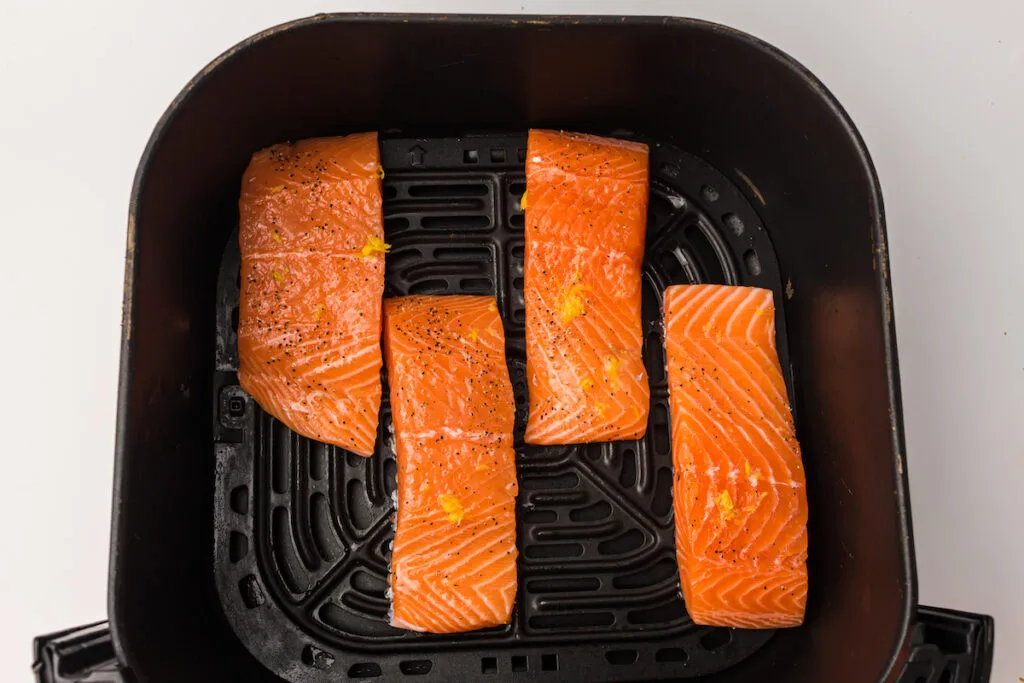
Image source: Bing (Web (fair-use with source credit))
Don't move the fish during cooking. Aggregate user reviews across Ninja models consistently say that lifting the fillet too early tears the skin. Let the full cook time run, then slide a thin spatula under the fillet and lift in one motion.
If it resists, give it another minute. Fully crisped skin releases on its own.
For extra insurance, you can lay a small piece of parchment paper cut to fit the basket under the fillet. Parchment with perforation holes is ideal since it lets air circulate. Avoid wax paper or non-perforated liners, both of which block airflow and defeat the purpose of air frying.
If you're cooking skinless fillets, the sticking risk goes up. Lightly oil the basket with a paper towel dipped in avocado oil before placing the fish down. Don't use aerosol cooking sprays on the basket's ceramic coating.
The propellants degrade non-stick surfaces over time, per Ninja's own care documentation.
Cooking Salmon from Frozen in a Ninja Air Fryer
You don't need to thaw salmon before air frying. It goes straight from freezer to basket, and honestly it's one of the best reasons to use an air fryer for fish. The trick is adding time and lowering the heat slightly so the outside doesn't dry out before the center thaws.
Set the air fryer to 380°F instead of 400°F. Cook for 14 to 16 minutes for a standard 1-inch frozen fillet. The lower temperature gives the interior time to catch up.
Check at 14 minutes with a thermometer inserted into the thickest part.
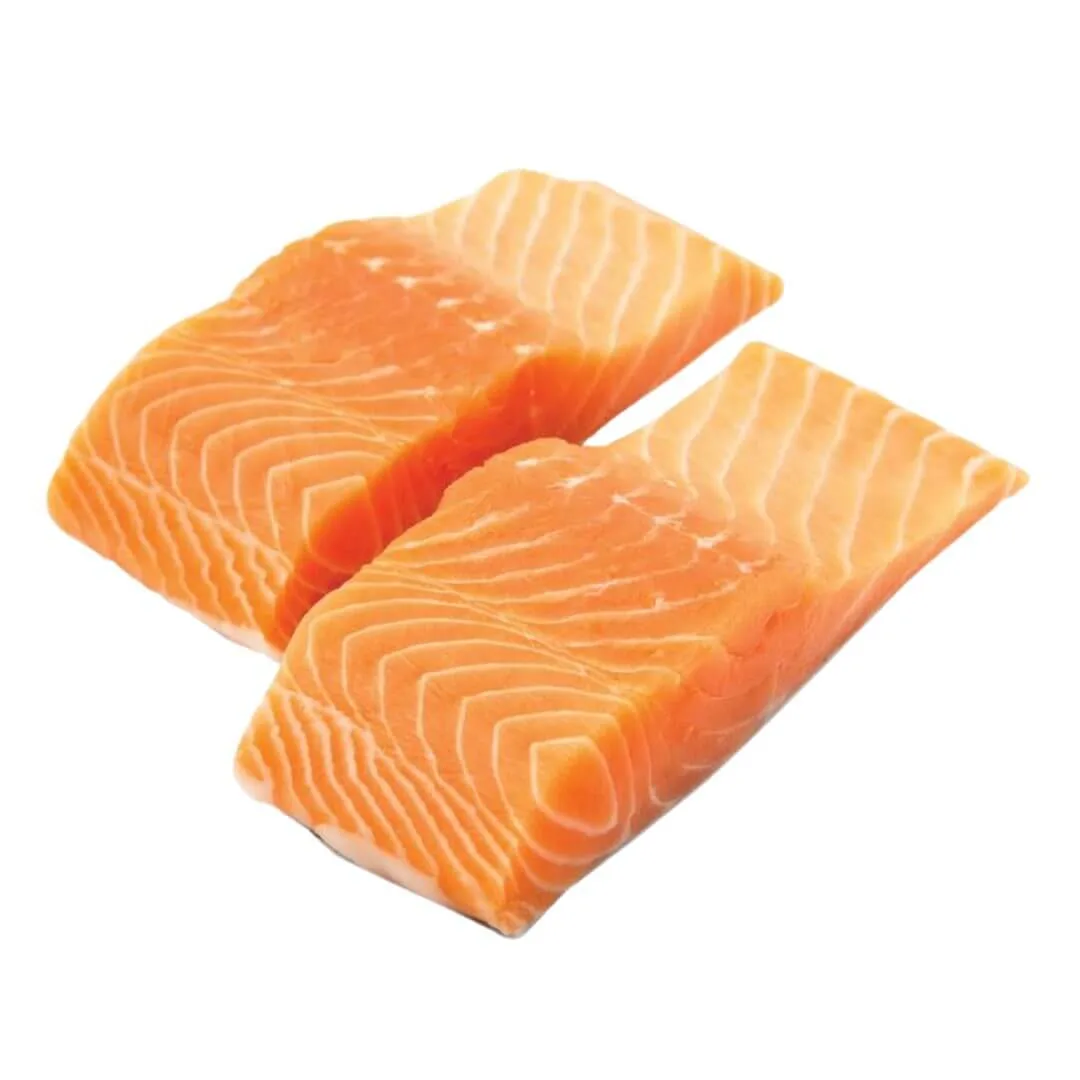
Image source: Bing (Web (fair-use with source credit))
Season the salmon after it goes in, not before. Salt on frozen flesh just draws out surface moisture as it thaws, which makes everything soggier. Instead, run the first 5 minutes to start defrosting, then pause and quickly season the top side.
Resume cooking for another 9 to 11 minutes.
The texture of frozen-then-air-fried salmon is slightly less creamy than fresh, but for meal prep and weeknight cooking it's a practical trade-off. If you're prepping meals in bulk, our kid friendly air fryer recipes include more make-ahead ideas that follow the same freezer-to-basket workflow.
Glazes, Marinades, and Seasonings That Actually Work
Simple seasoning wins. Salt, pepper, garlic powder, and a squeeze of lemon handle 90% of weeknight salmon dinners. But if you want to build flavor with a glaze or marinade, there are a few rules specific to air frying.
Sugar-based glazes burn fast at 400°F. Teriyaki, honey garlic, and sweet chili sauces all caramelize aggressively in the air fryer's intense heat. Apply them only during the last 2 minutes of cooking.
Earlier than that and the sugars blacken before the fish is done.
Oil-based marinades work throughout the cook time. A mix of olive oil, minced garlic, lemon zest, and fresh dill can go on the fillet before it hits the basket. The oil coating protects the flesh from drying and the herbs toast gently in the circulating air.
Marinate salmon for no more than 30 minutes. Acidic ingredients like lemon juice or vinegar start denaturing the protein surface with prolonged contact, which gives the exterior a mushy texture. A 15 to 20 minute marinade is the sweet spot.
Dry rubs are the most air fryer friendly option. Cajun seasoning, everything bagel spice, Old Bay, or a simple smoked paprika and brown sugar mix all work because there's no moisture to create steam. Pat the rub on dry flesh and cook as normal.
The spices toast and form a flavor crust that's hard to get any other way.
Common Mistakes That Ruin Air Fryer Salmon
Overcooking is by far the most common problem. Salmon goes from perfectly cooked to dry and chalky in about 90 seconds at 400°F. The difference between 135°F and 150°F internal temperature is the difference between silky and sawdust.
Use a thermometer. Set a timer. Don't trust the clock blindly.
Skipping the pat-dry step is the second biggest mistake. Wet salmon steams instead of roasting. You'll pull it out and the skin will be pale, the flesh will be bland, and the whole thing will taste like a microwave meal.
Always dry it thoroughly.
Overcrowding the basket is the third. Stacking fillets or cramming too many into a single basket blocks airflow. The salmon on top cooks normally but the bottom pieces get steamed by trapped moisture.
Cook in batches if you need more than two fillets.
Using aerosol spray oils directly on the basket is a slow-motion mistake. The chemical propellants break down the ceramic non-stick coating after repeated use, which leads to more sticking over time. Use a refillable oil mister instead.
They cost a few dollars and protect your basket for the long run.
Not resting the fish after cooking is the last one. Two minutes on a plate lets the internal temperature equalize and the juices settle. Cut into it immediately and you'll watch all the moisture run out onto the plate.
If you've run into similar timing issues with other proteins, our grouper recipes air fryer guide covers how lean white fish behaves differently, which helps build intuition for doneness cues across species.
How to Tell When Salmon Is Done Without Overcooking It
The most reliable method is a food thermometer. Insert it into the thickest part of the fillet at a slight angle. The USDA recommends 145°F for cooked fish.
If you're working with sushi-grade salmon that's been previously frozen (which kills parasites per FDA guidelines), 125°F to 130°F gives you a medium-rare texture that's silky and moist.
Without a thermometer, use the flake test. Press the top of the fillet gently with a fork at the thickest point. If the flesh separates into clean, slightly translucent flakes, it's done.
If it resists and feels dense, give it another minute. If the flakes are completely opaque and crumbly, you've gone too far.
Visual cues help too. Raw salmon is glossy and translucent. Cooked salmon turns matte and opaque from the edges inward.
When the center loses that wet, shiny look, you're close. A slight translucency in the very center is fine. Carryover heat will finish it during the rest period.
Cooked salmon also firms up noticeably when pressed. Raw flesh feels soft and gives easily. Done flesh springs back slightly under gentle pressure.
It's a subtle difference but once you've felt it a few times, you'll recognize it instantly.
Tips for Different Ninja Models (Foodi, Air Fryer, Max XL)
Not all Ninja air fryers behave the same, and the model you own affects cook time and temperature more than most recipes account for.
The Ninja AF101 (4 qt, 1,500W) runs true to the standard times in this recipe. It's the baseline. The AF161 Max XL (5.5 qt, 1,750W) heats faster and holds temperature more aggressively, so drop to 380°F and shave 1 minute off the cook time.
The Ninja Foodi Dual Zone (AF300/AF400) lets you cook salmon in one basket and a side in the other, which is where it really shines for full meals.
Models with the Max Crisp function reach 450°F. That's too hot for salmon. Stick to 380°F on those units.
The extra wattage means the fish cooks faster even at the lower setting.
If you're using a Ninja Foodi pressure cooker with an air fry lid, the air fry function runs slightly cooler than a standalone unit. Add 1 to 2 minutes to every timing recommendation here. The lid design restricts airflow compared to a pull-out basket model.
For side dishes that pair well in a dual-zone setup, our gold potato recipes air fryer guide covers timing that syncs up with salmon so both finish at the same time.
Storing, Reheating, and Meal Prepping Air Fryer Salmon
Cooked salmon keeps well if you handle it right. Let it cool to room temperature, then refrigerate in an airtight container within 2 hours of cooking. It stays good for 3 to 4 days.
Reheat gently. The microwave is the fastest option but it dries out the edges. A better method is 2 to 3 minutes in the air fryer at 300°F.
The circulating air warms the fish evenly without cooking it further. You can also eat it cold over salads or grain bowls, which is honestly how most meal prep salmon ends up getting eaten anyway.
For batch cooking, air fry multiple fillets and let them cool before stacking with parchment between layers. Reheat only what you need each day. Repeated reheating degrades the texture fast.
If you're building a weekly rotation, our chicken shawarma recipe air fryer is another high-protein option that stores and reheats just as well, giving you variety without extra effort.
Air Fryer Salmon vs. Other Cooking Methods
Each method has a strength. The air fryer's is speed and convenience.
Pan-searing gives you the best crust. A hot cast iron skillet with butter produces a deep golden sear that the air fryer can't quite match. But it requires attention, creates splatter, and takes about the same total time when you factor in preheating the pan.
Oven baking is the best for cooking large batches. A sheet pan holds six to eight fillets at once. The trade-off is 15 to 20 minutes of cook time and a heated kitchen.
Grilling adds smoke flavor that no indoor method can replicate. But it's weather dependent, requires more cleanup, and the fish can stick to grates if you're not careful.
The air fryer sits in the middle. Faster than the oven, less hands-on than the pan, and usable year-round regardless of weather. For a single fillet on a Tuesday night, it's the most practical option by a wide margin.
Frequently Asked Questions
Can I cook salmon without oil in the air fryer?
Yes, but the skin is more likely to stick. A light coating of oil on the basket or the flesh side prevents tearing. Skin-on fillets need less oil than skinless since the skin acts as a natural barrier.
Do I need to flip salmon in the air fryer?
No. Place it skin-side down and leave it alone. The circulating air cooks the top and bottom evenly.
Flipping increases the chance of the skin tearing or the fillet falling apart.
What size salmon fillet fits in a Ninja air fryer?
The AF101 basket fits fillets up to about 6 inches long. The AF161 Max XL handles pieces up to 8 inches. If your fillet is longer, cut it in half and place both pieces side by side with space between them.
Is air fryer salmon healthy?
Salmon is one of the best protein sources regardless of cooking method. A 6-ounce fillet delivers about 34g of protein and 2.2g of omega-3 fatty acids, per USDA FoodData Central. Air frying uses less oil than pan-frying, which reduces added fat without sacrificing texture.
Can I use the Ninja Foodi pressure cooker lid to air fry salmon?
You can use the air fry lid, but expect slightly longer cook times. The lid design doesn't circulate air as efficiently as a pull-out basket. Add 1 to 2 minutes and check with a thermometer.
How do I clean fish smell from the air fryer basket?
Wash the basket and crisper plate with warm soapy water immediately after cooking. For lingering odor, wipe the basket with a cloth dampened with white vinegar or run a halved lemon through a 3-minute air fry cycle. Avoid aerosol sprays, which damage the coating over time.
Final Tips for Consistently Perfect Results
A few things that make the difference between good and great air fryer salmon.
Invest in an instant-read thermometer. It removes all the guesswork and pays for itself the first time it saves a fillet from overcooking. You can find reliable ones for under $15.
Always pat the fish dry. Every single time. It's the step most people skip and the one that matters most for texture.
Don't walk away during the last 2 minutes. That's when salmon goes from perfect to overdone. Watch it, check it, and pull it the second it hits your target temperature.
Once you've got the basic method dialed in, experiment with flavors. The technique stays the same whether you're doing lemon herb, Cajun blackened, or teriyaki glaze. Master the process first, then make it your own.