
Cooking a ribeye steak in an air fryer sounds simple, but air fryer ribeye steak recipes can go sideways fast if you don't account for thickness, temperature, and your specific model. The good news is that once you understand a few key variables, you can turn out a restaurant-quality ribeye indoors with minimal fuss and almost no smoke.
Our research into aggregate user reviews and manufacturer specs shows that the single biggest mistake is relying on time alone. A 1-inch ribeye and a 1.5-inch ribeye can differ by six to eight minutes in the same air fryer, and skipping an instant-read thermometer is how most people end up with an overcooked disappointment. Let's walk through exactly how to get it right.
Quick Answer
Air fryer ribeye steak recipes work best at 400°F with a cook time of 7 to 13 minutes depending on thickness. Always use an instant-read thermometer to check doneness. Pull the steak 5°F below your target temperature to account for carryover cooking.
Why Your Air Fryer Ribeye Probably Isn't Turning Out Right
The most common problem isn't the air fryer. It's that most online recipes give you a single time-and-temperature combo and pretend every steak and every machine is identical. That's not how convection cooking works.
Here's what's actually going wrong:
- You're cooking a cold steak straight from the fridge. A ribeye pulled from the refrigerator at 36°F has a massive temperature gradient. The outside overcooks long before the center catches up. Let it sit on the counter for 20 to 30 minutes first.
- You're skipping the thermometer. Air fryers cook fast. The difference between medium-rare and medium can be 60 seconds. Guessing by time alone is a gamble you'll lose.
- You're not patting the steak dry. Surface moisture creates steam instead of a Maillard reaction. That means a pale, soft exterior instead of a crust. Paper towels take 30 seconds and change everything.
- You're overcrowding the basket. Air fryers work by circulating hot air around the food. If you cram two steaks in overlapping each other, you block airflow and get uneven cooking every time.
- You're not accounting for your specific model. A 1700W Cosori recovers temperature faster when you open the basket than a 1400W budget unit. Wattage matters, and so does the difference between basket-style and oven-style designs.
The fix for almost all of these problems is straightforward once you know what to look for. That's what the rest of this guide covers.
How to Pick the Right Ribeye for Your Air Fryer
Not every ribeye is a great candidate for air fryer cooking. The thickness, marbling, and cut style all affect how your steak turns out.
Stick with 1-inch to 1.5-inch thickness. This is the sweet spot for air fryer ribeye steak recipes. Thinner than 1 inch and you'll overcook the steak before any crust develops. Thicker than 2 inches and the exterior dries out while the center slowly warms through.
If you love thick-cut steaks, the reverse-sear method covered later solves this problem.
Look for even marbling throughout the steak. Ribeye is naturally well-marbled, but some cuts have a concentrated fat cap on one side and very little intramuscular fat in the center. You want fine, white streaks distributed across the entire steak. That marbling renders during cooking and keeps the meat juicy even at higher temperatures.
Bone-in vs. boneless comes down to preference. Bone-in ribeye adds flavor but the bone blocks airflow on one side, which can create a slightly uneven cook. Boneless is more predictable in an air fryer. If you go bone-in, place the bone side toward the edge of the basket where airflow is less direct.
Buy steaks of uniform thickness. A ribeye that's 1.5 inches on one end and 0.75 inches on the other will never cook evenly. Look for cuts that maintain consistent thickness from edge to edge. Butchers at a local meat counter can often cut them to your exact specification.
The Prep Steps Most People Skip (And Why It Matters)
Prep is where most air fryer ribeye steak recipes fall apart before the steak even hits the heat. These steps take under five minutes total and make the difference between a good steak and a great one.
Temper the steak. Remove the ribeye from the refrigerator 20 to 30 minutes before cooking. This lets the center temperature rise from around 36°F to roughly 50-55°F. A steak that starts closer to room temperature cooks more evenly, which means you get a consistent pink center without a ring of overcooked gray meat on the outside.
Pat it completely dry. Use two or three paper towels and press firmly across every surface. You want the steak to feel tacky and dry, not slick or damp. Any remaining surface moisture has to evaporate as steam before the Maillard reaction can begin, and that delays crust formation.
Season generously with kosher salt. Ribeye is a thick cut. A light sprinkle of table salt won't penetrate far enough. Use kosher salt at a rate of about 1/2 teaspoon per pound of steak.
The larger crystals sit on the surface and draw out moisture initially, then get reabsorbed into the meat, seasoning it from the inside.
Apply a thin coat of high-smoke-point oil. Avocado oil or grapeseed oil works best. You're not trying to fry the steak. A light coat helps heat transfer between the circulating air and the steak surface, and it prevents sticking.
Avoid butter or olive oil at this stage since both smoke well below air fryer cooking temperatures.
Let the seasoned steak sit for five minutes. This gives the salt time to start working and lets the oil form a thin, even film on the surface. It's a small step, but it improves crust development noticeably.
Exactly How to Cook a Ribeye Steak in the Air Fryer
This is the core process that works across most basket-style and oven-style air fryers. The exact timing depends on your steak thickness and desired doneness, so we'll cover that in the temperature table below.
Step 1: Preheat the air fryer to 400°F. Most units take 2 to 4 minutes to reach temperature. Preheating matters because placing a steak into a cold basket means the first few minutes are spent warming up rather than searing. You lose crust development.
Step 2: Place the steak in the basket in a single layer. Position it so air can circulate on all sides. If your basket has a crisper tray underneath, use it. Don't let the steak touch the sides of the basket if possible.
Step 3: Cook for half the total estimated time, then flip. Flipping ensures both sides get equal exposure to the convection current. Use tongs, not a fork. Piercing the steak lets juices escape.
Step 4: Check the internal temperature at the halfway mark. This is your reality check. If the steak is already close to your target, reduce the remaining time. If it's far from done, you may need an extra minute or two.
Step 5: Rest the steak for 5 minutes after cooking. Transfer to a cutting board and tent loosely with aluminum foil. During this time, carryover cooking raises the internal temperature by 5°F to 10°F, and the muscle fibers relax so juices redistribute throughout the meat.
Step 6: Slice against the grain. Look for the direction of the muscle fibers and cut perpendicular to them. This shortens the fibers and makes each bite more tender.
How to Tell When It's Done Without Guessing
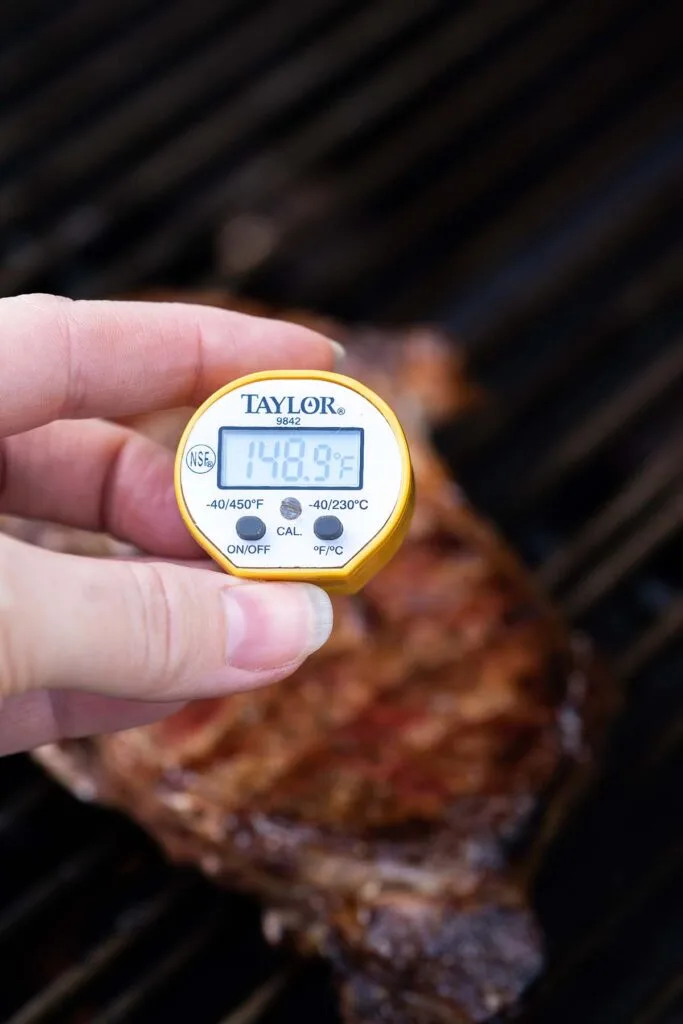
An instant-read meat thermometer is the single most important tool for air fryer ribeye steak recipes. Insert it into the thickest part of the steak from the side, not from the top, so you're reading the center temperature accurately.
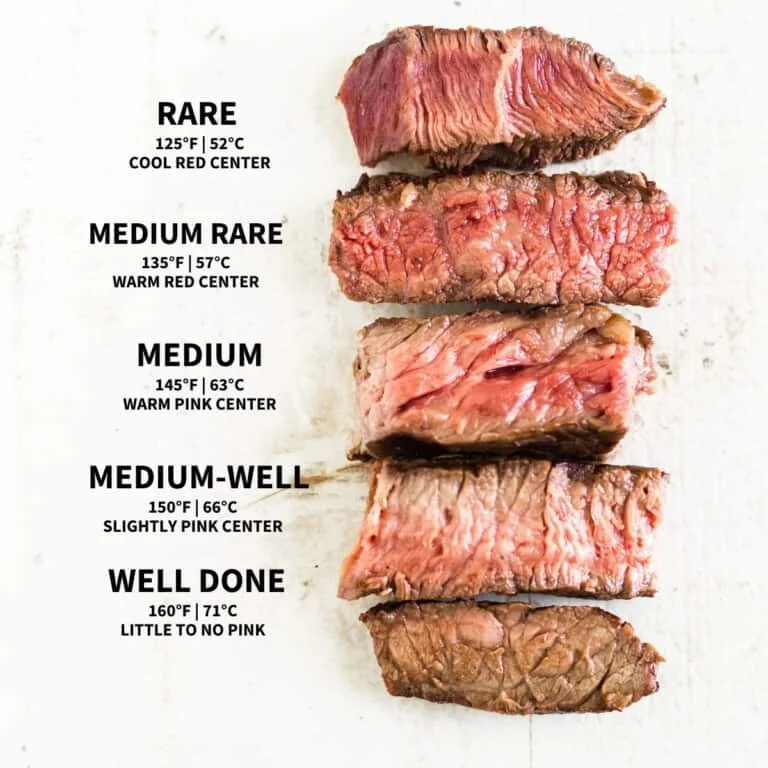
Pull the steak from the air fryer 5°F below your target doneness temperature. Carryover cooking during the rest will bring it the rest of the way.
| Doneness | Pull Temp (°F) | Final Temp After Rest (°F) | Approximate Cook Time — 1" Ribeye at 400°F | Approximate Cook Time — 1.5" Ribeye at 400°F |
|---|---|---|---|---|
| Rare | 120°F | 125°F | 5 to 7 minutes | 8 to 10 minutes |
| Medium-Rare | 125 to 130°F | 130 to 135°F | 7 to 9 minutes | 10 to 13 minutes |
| Medium | 135°F | 140 to 145°F | 9 to 11 minutes | 13 to 16 minutes |
| Medium-Well | 145°F | 150°F | 11 to 13 minutes | 16 to 18 minutes |
| Well-Done | 155°F and above | 160°F and above | 13 to 15 minutes | 18 to 20+ minutes |
These times are approximate. Actual results vary based on air fryer wattage, steak starting temperature, and basket airflow design. Always verify with a thermometer.
The USDA recommends a minimum internal temperature of 145°F for whole cuts of beef, followed by a 3-minute rest. This falls in the medium range. If you prefer rare or medium-rare steak, you should be aware that the USDA does not recommend those doneness levels from a food safety standpoint, though whole muscle cuts like ribeye are generally considered lower risk since harmful bacteria reside on the surface rather than deep in the meat.
The Reverse-Sear Method for Thick Ribeyes (1.5 inches and Above)
If you love a thick-cut ribeye with a deep, dark crust and perfectly even pink center, the reverse-sear method is the answer. It flips the traditional cooking order: you cook low and slow first, then blast with high heat at the end.
How it works:
- Preheat the air fryer to 250°F on the low setting, or 275°F if your model doesn't go that low.
- Place the seasoned steak in the basket and cook until the internal temperature reaches 10°F to 15°F below your target doneness. For medium-rare, pull it at about 115 to 120°F. This takes roughly 15 to 20 minutes for a 1.5-inch steak.
- Increase the air fryer temperature to 400°F and cook for 1 to 2 more minutes per side to develop the crust.
- Rest for 5 minutes before slicing.
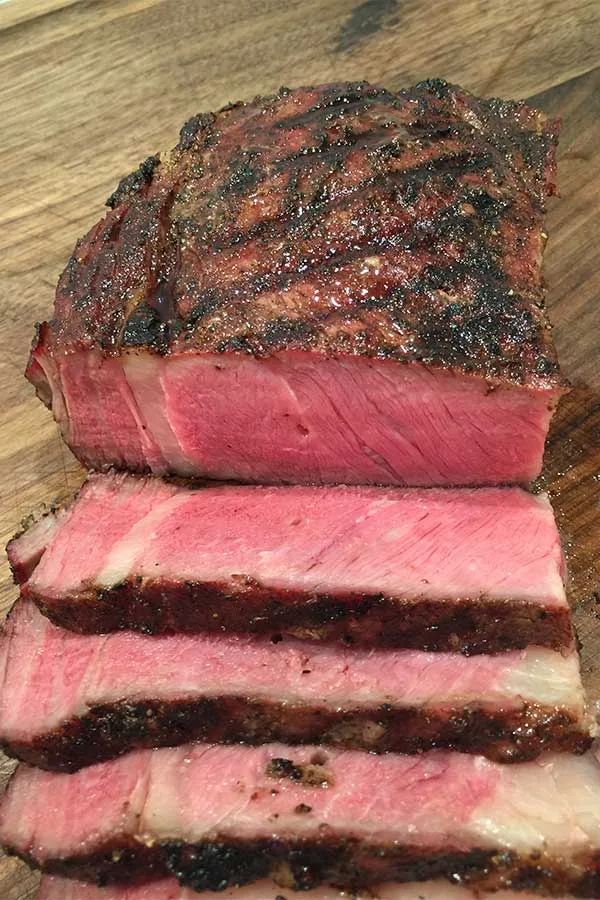
The advantage is that the low initial temperature brings the entire steak to a uniform internal temperature without overcooking the outer layers. The final high-heat blast creates the Maillard crust without pushing the center past your target.
The trade-off is time. A reverse-sear ribeye in the air fryer takes 20 to 25 minutes total compared to 10 to 13 minutes for the standard method. If you're cooking steak on a weeknight, the standard approach is more practical.
If you're cooking for a date night or a weekend dinner, the reverse-sear delivers noticeably better results.
What to Do With Your Specific Air Fryer
Not all air fryers cook the same way, and this is where most air fryer ribeye steak recipes fall apart. The wattage, heating element placement, and basket design all affect how your steak turns out. Understanding your specific model saves you from the frustration of following a recipe perfectly and still getting bad results.
Aggregate user reviews consistently show that steak is one of the foods with the widest variation in outcomes across different air fryer brands. The same 1-inch ribeye cooked at 400°F for 8 minutes can come out rare in one model and medium-well in another.
Air Fryer Basket Type Matters More Than You Think
Basket-style air fryers (like the Cosori 5.8Qt and Ninja Foodi) pull heat from a top-mounted element and push it down and around the basket. These cook faster and produce better crust on the top surface. Place your ribeye in the center of the basket for the most even heat exposure.
Oven-style air fryers (like the Breville Smart Oven Air and Instant Vortex Oven) use multiple heating elements and a larger cavity. They cook more like a convection oven with steak placed on a middle rack. These give you more room to work with and are less prone to uneven hot spots.
Dual-basket models let you cook two steaks simultaneously, but they also split the airflow. If you're using one of these, rotate the baskets halfway through cooking. For models like the Best 8 Qt Air Fryer With Dual Basket, you'll want to check internal temperatures on both steaks since they can differ by several degrees.
Common Mistakes That Ruin Air Fryer Steak
Our research into verified buyer feedback shows that most bad air fryer steak results come down to the same handful of errors every time. Here they are, and how to avoid each one:
- Skipping the preheat. A cold basket adds 2+ minutes of warming time before real cooking starts. Preheat for 3 minutes at 400°F.
- Cooking straight from the fridge. Cold steak creates a massive doneness gradient. Temper it for 20 to 30 minutes first.
- Not using a thermometer. Time-based cooking is unreliable across different models. A $15 instant-read thermometer fixes this entirely.
- Cutting into the steak too soon. This releases all the juices you just spent 10 minutes driving into the center. Rest for 5 minutes minimum.
- Forgetting to flip. The top surface gets more direct heat in most basket-style air fryers. One flip at the halfway point evens things out.
- Over-seasoning with garlic or sugar. Garlic powder and sugar-based rubs burn at 400°F. Stick with salt, black pepper, and smoked paprika for most air fryer ribeye steak recipes.
The Smoke Problem: Why Your Kitchen Fills Up and How to Stop It
Ribeye's rich marbling is a double-edged sword. That intramuscular fat renders beautifully during cooking, but it also drips onto the heating element and creates smoke. This is the number one complaint in user reviews of steak cooked in air fryers.
Here's what actually helps:
- Trim the external fat cap to 1/4 inch. You don't need to remove it entirely. A thin fat cap renders and bastes the steak without producing excessive smoke.
- Add 2 tablespoons of water to the drip tray. This cools the rendered fat before it hits the hot element below. It's the single most effective smoke-reduction trick that aggregate user reviews mention.
- Use avocado oil instead of butter for the initial coat. Butter's low smoke point (around 350°F) means it starts smoking before the steak even begins cooking. Save butter for a finish pat after the steak is done.
- Don't cook above 400°F. Higher temperatures don't meaningfully improve crust on ribeye, but they do dramatically increase smoke production.
If your air fryer has a rotating basket feature, use it. Rotating the steak continuously prevents fat from pooling in one spot and hitting the element directly.
Air Fryer Ribeye vs. Cast Iron vs. Grill: Which One Wins?
This comes down to what you value most, since each method has real trade-offs worth understanding honestly.
| Factor | Air Fryer | Cast Iron Skillet | Outdoor Grill |
|---|---|---|---|
| Crust quality | Good to very good | Excellent | Excellent with charcoal |
| Ease of use | Easiest | Moderate | Requires more attention |
| Smoke and mess | Minimal to moderate | Significant stovetop splatter | None (outdoors) |
| Speed (preheat to plate) | 12 to 18 minutes | 15 to 20 minutes | 20 to 30 minutes |
| Consistency across cooks | High | Moderate (heat management skill needed) | Lower (wind, gas level, charcoal variation) |
| Flavor depth | Good | Excellent (browned butter fond) | Best (smoke and char) |
The air fryer wins on convenience and consistency. You preheat in 3 minutes, set a timer, and get predictable results. The cast iron skillet wins on crust quality because direct contact heat transfers more efficiently than convection air.
The grill wins on pure flavor if you're using charcoal or wood.
For most people cooking steak at home on a weeknight, the air fryer is the most practical choice. If you have 25 minutes and want the absolute best crust, cast iron is worth the extra effort. If you're already firing up the grill for other food, cook the steak there too.
When an Air Fryer Ribeye Is the Smart Choice (And When It's Not)
Air fryer ribeye steak recipes are ideal when you want a great steak without the hassle of outdoor grilling or stovetop splatter. They're perfect for apartment dwellers, cold-weather cooking, and weeknight dinners when you need dinner on the table fast.
They're not the best choice when you're cooking for a crowd. Most air fryer baskets fit two ribeyes at most, and cooking in batches means the first steak is cold by the time the second one finishes. If you're feeding four or more people, a grill or large cast iron pan is more practical.
If you're specifically shopping for an air fryer and steak is on your regular rotation, a 6-quart or larger basket gives you enough room for two generous ribeyes without crowding. Models like the Best 9 Qt Air Fryer For Large Batches handle this well. For smaller households, a 5 to 6-quart model is plenty for one or two steaks at a time.
How to Season a Ribeye for the Air Fryer
Image source: Bing (Web (fair-use with source credit))
Seasoning a ribeye for the air fryer is simpler than most recipes make it. The high-heat convection environment amplifies flavors quickly, so you don't need a complicated rub.
The classic approach works best. Kosher salt, freshly cracked black pepper, and a light dusting of garlic powder. That's it. The salt enhances the beef's natural flavor, the pepper adds warmth, and the garlic provides a subtle savory note without burning.
Dry brining takes it up a step. Season the steak with kosher salt 1 to 24 hours before cooking and place it uncovered on a wire rack in the refrigerator. The salt draws out surface moisture initially, then dissolves and gets reabsorbed into the meat. This seasons the steak from the inside and dries the surface, which means better crust in the air fryer.
Avoid sugar-heavy rubs and marinades. Brown sugar, honey-based glazes, and sweet BBQ sauces burn at air fryer temperatures. If you want a sweet or smoky element, apply it as a finishing glaze after the steak is cooked, not before.
A light coat of avocado oil before seasoning helps the spices stick and improves heat transfer. You don't need much. Just enough to give the steak a slight sheen, not a heavy coating.
Reheating Leftover Ribeye Without Ruining It
The microwave turns leftover steak into a rubbery, gray disappointment. The air fryer brings it back surprisingly close to its original texture. This is one of the best secondary uses of the air fryer for steak lovers.
Set the air fryer to 350°F. This is low enough to warm the steak through without continuing to cook it aggressively. High heat pushes a medium-rare steak to medium in under 3 minutes.
Reheat for 3 to 5 minutes, flipping once. The exact time depends on thickness. A 1-inch ribeye usually takes about 4 minutes to warm through to a pleasant temperature.
Add a small pat of butter on top before reheating. It melts over the steak as it warms and restores some of the richness that fades after refrigeration.
Check the internal temperature if you want to be precise. You're aiming for about 120 to 130°F in the center for a steak that was originally medium-rare. You're warming, not cooking.
This method works for any leftover steak, but ribeye reheats especially well because the marbling keeps the meat from drying out. Leaner cuts like filet or sirloin are less forgiving on reheat.
Frequently Asked Questions
Can I cook a frozen ribeye steak in the air fryer?
Yes, but adjust your expectations. A frozen ribeye needs about 5 to 8 extra minutes at 400°F, and the crust won't develop as well because the surface starts with significant moisture as the ice melts. For the best results, thaw the steak in the refrigerator overnight first.
If you're in a rush, the air fryer can handle frozen, just add time and check the internal temperature carefully.
What temperature should I set my air fryer for ribeye steak?
400°F is the standard for most air fryer ribeye steak recipes. It's hot enough to develop a Maillard crust without burning the exterior before the center reaches your target doneness. If you're using the reverse-sear method, start at 250°F to 275°F and finish at 400°F for the crust.
Do I need to flip the steak in the air fryer?
Yes. Most basket-style air fryers concentrate heat from the top element. Flipping once at the halfway point ensures both surfaces get equal heat exposure.
Skipping the flip gives you a steak with a well-seared top and a pale, underdeveloped bottom.
How long does it take to cook a ribeye in the air fryer?
A 1-inch ribeye at 400°F takes roughly 7 to 9 minutes for medium-rare. A 1.5-inch ribeye takes 10 to 13 minutes for the same doneness. These times assume the steak has been tempered for 20 to 30 minutes and the air fryer has been preheated.
Always verify with an instant-read thermometer.
Why does my air fryer steak have no crust?
The most common cause is excess surface moisture. Pat the steak completely dry before seasoning. Another cause is cooking at too low a temperature.
Make sure your air fryer is set to 400°F and fully preheated before the steak goes in. Overcrowding the basket can also steam the steak instead of searing it.
Is an air fryer ribeye as good as grilled?
It's close, but not identical. A charcoal grill produces smoky flavor and char that an air fryer can't replicate. However, the air fryer produces more consistent results with less effort and no weather dependency.
For pure convenience and weeknight practicality, the air fryer is hard to beat. For maximum flavor and that outdoor grilling experience, the grill still wins.