
There's something deeply satisfying about cracking open an air fryer basket and finding perfectly golden potstickers inside with crispy bottoms, tender wrappers, and a warm, aromatic bite of thyme running through every piece. If you've ever stood over a splattering stovetry pan juggling the delicate steam-and-fry technique or surrendered to limp, microwaved dumplings, an air fryer potstickers thyme recipe is about to change your weeknight dinner game. The air fryer delivers the crunch that makes potstickers worth eating, without the mess, and a little fresh or dried thyme pushes the flavor beyond what any frozen bag promises on its own.
In our research across aggregate user reviews and manufacturer cooking guides, most standard-size frozen potstickers land in the sweet spot between 375°F and 400°F for 10 to 12 minutes in a typical 4 to 5-quart air fryer, which is the basket size most home cooks own as of 2026. Thyme, either folded into the filling or dusted over the wrappers before the heat hits, holds its earthy warmth beautifully at those temperatures without turning bitter, and the result is a batch of dumplings that taste like someone actually put thought into them, even when you started with a ten-dollar bag from the freezer aisle. Let's walk through exactly how to get there.
Making Crispy Air Fryer Potstickers With Thyme — From Frozen to Golden in Minutes
Air fryer potstickers go from freezer to plate faster than almost any other cooking method, and the thyme addition takes no extra time at all if you're using the sprinkle-on approach. The basic playbook is simple: no thaw needed, a light coat of oil, the right temperature, and a halfway flip. The details underneath that simplicity are what separate a batch you'd happily serve guests from one that ends up chewy and forgettable.
Here's the starting framework most frozen potstickers respond well to:
- Preheat your air fryer to 380°F for 3 to 5 minutes. Most modern units beep or display a ready light, and this step matters more than people think. A hot basket from the get-go is what gives you that signature crispy bottom.
- Take the potstickers straight from the freezer. Don't thaw them. Thawing introduces surface moisture, which leads to steaming and soggy wrappers.
- Lightly oil the wristers. Use a pump mister with a high-smoke-point oil like avocado or peanut oil. One to two seconds of spray per potsticker is enough. Tossing them in a bowl with a teaspoon of oil works too.
- Add thyme now if you're going the sprinkle route. Pinch fresh thyme leaves between your fingers to crush them slightly, which releases the essential oils, and drop them over the oiled potstickers. For dried thyme, a light, even dusting does the job.
- Arrange in a single layer with the flat bottom side down. Leave at least a quarter inch between each potsticker so air can circulate.
- Cook 5 to 6 minutes, then flip each one with tongs. Cook another 4 to 5 minutes until the wrappers are evenly golden and the filling is hot all the way through.
The whole process runs about 10 to 11 minutes. Pork and chicken fillings should reach an internal temperature of 165°F per USDA food safety guidelines, and if you have a quick-read thermometer, it takes two seconds to check one from the center of the batch.
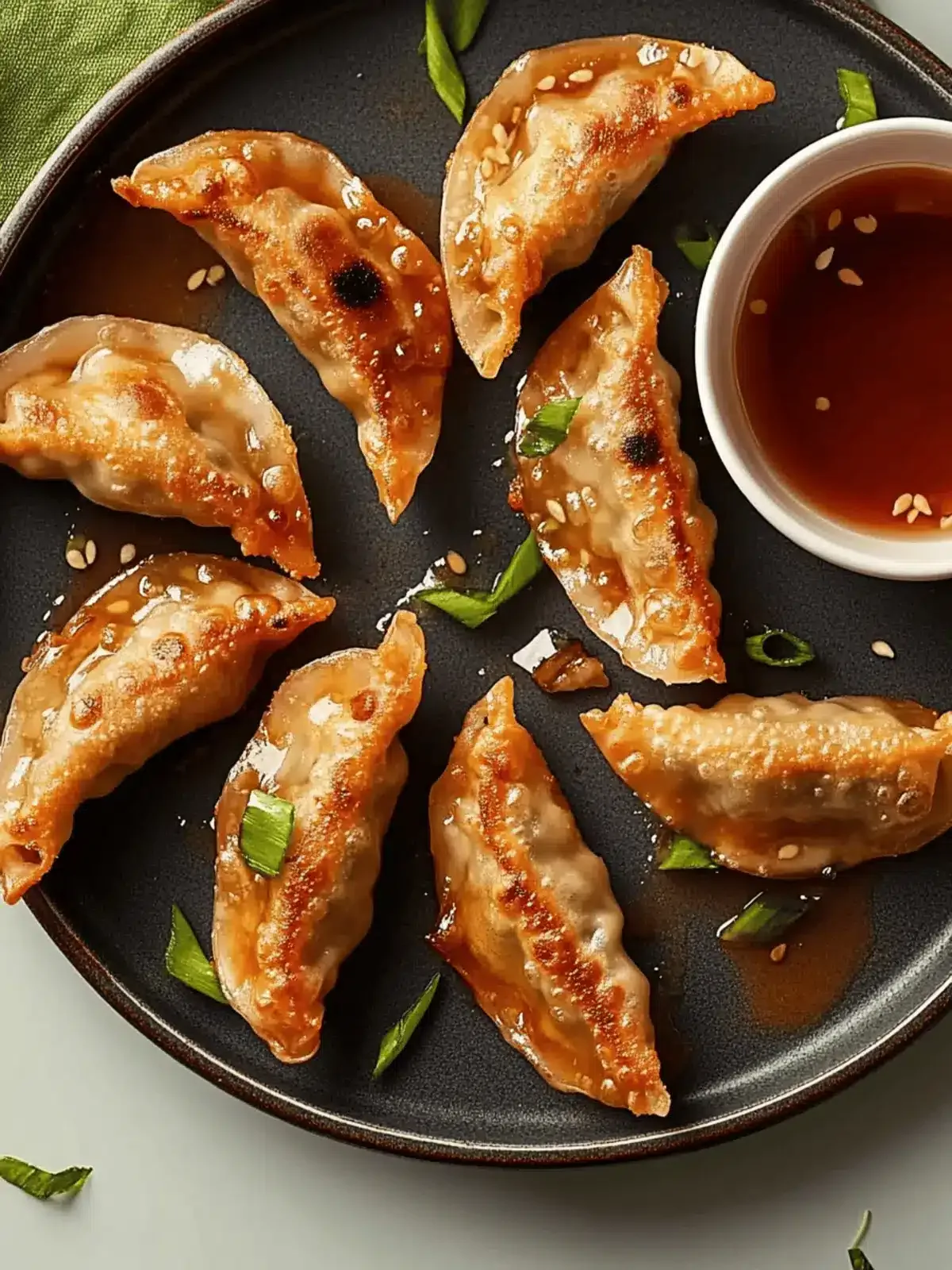
If you're working with homemade potstickers where you've mixed thyme directly into the filling, the timing stays roughly the same, but homemade versions sometimes have slightly thinner wrappers that brown faster. Drop the temperature by 5°F and watch the last two minutes closely.
Why Your Air Fryer Is the Best Way to Cook Potstickers
"The air fryer delivers restaurant-quality potstickers with roughly 80 percent less oil than deep frying, and it's significantly faster than the traditional stovetry pan-fry-and-steam method."
Traditional potsticker technique involves pan-frying in oil until the bottoms brown, adding water, covering with a lid to steam the tops, then removing the lid to re-crisp the bottoms. It works, but it demands attention at every stage, fills the kitchen with oil vapor, and can go wrong fast if the heat is too aggressive or the water ratio is off. The air fryer skips all of that.
Here's what makes it the stronger method for most home cooks:
Consistent, even heat circulation. A forced-air system surrounds each potsticker with hot air from all sides, which means you get browning on the sides and top, not just the bottom. The flip at the halfway point evens out the base crispiness so every surface has texture.
Minimal oil, maximum crunch. You're working with one to two teaspoons of oil for a full batch of ten to sixteen potstickers, compared to the half-cup or more that a stovetry pan needs. Per USDA FoodData Central nutritional data, this drops the fat content per potsticker by several grams without sacrificing the crispy mouthfeel.
Hands-off and splatter-free. Once the basket closes, you're not standing over heat. Set the timer, flip once, and the air fryer does the rest. No oil popping onto your forearms, no greasy stovetry to scrub afterward.
For people cooking in small kitchens, dorm rooms, or travel setups where a full stovetry isn't practical, this matters. A compact air fryer for apartment living often becomes the single most-used appliance for exactly this kind of hands-off cooking.
The one trade-off: you lose the lacy, connected crust called "wings" that you get from the cornstarch-slurry stovetry method in some Chinese potsticker styles. If that delicate, web-like crispy skirt is what you're after, the stovetry still wins. For everyone else who just wants crunchy, golden potstickers fast, the air fryer takes the crown.
The Thyme Factor — Why This Herb Works So Well With Dumplings
Thyme is an aromatic herb from the genus Thymus, and the two varieties most common in cooking, English thyme (Thymus vulgaris) and French thyme, carry a warm, slightly floral earthiness that plays exceptionally well against the savory-sweet profile of most potsticker fillings. It's not the herb most people reach for when they think of Asian dumplings, but that's exactly what makes it interesting.
Thymol, the primary essential oil in thyme, is heat-stable enough to survive the air fryer's temperatures without breaking down or turning bitter, unlike softer herbs such as basil or cilantro that wilt and lose their character above 350°F. That thermal resilience is a key reason thyme works in this recipe when other herbs wouldn't.
Here's how thyme interacts with the most common potsticker fillings:
| Filling Base | Thyme Pairing Effect |
|---|---|
| Pork | Complements the natural richness; warmth cuts through fat |
| Chicken | Adds depth that plain chicken filling often lacks |
| Shrimp | Subtle floral note lifts the sweetness of shrimp |
| Vegetable (cabbage, mushroom, tofu) | Earthiness mirrors mushroom and cabbage flavors, rounding out the mix |
| Beef | Works well in small amounts; use dried thyme for a more concentrated hit |
In our research, the ratio that keeps thyme present without dominating is roughly one tablespoon of fresh thyme leaves, or one teaspoon dried, per quarter-pound of filling. For frozen store-bought potstickers where you can't alter the filling, rubbing fresh thyme leaves between your palms and sprinkling them over the oiled wrappers before they go into the basket introduces the aroma without changing the original dumpling flavor profile.
Thyme and ginger also pair naturally, if your filling already includes or calls for ginger. The combination echoes the warm-spiced backbone of a lot of Western and Eastern comfort cooking alike. A tiny pinch of fresh thyme minced into a soy-vinegar dipping sauce ties the whole plate together, and we'll get to that in the sauce section below.
What You'll Need — Ingredients and Equipment
Most of what you need is already in your kitchen. The nice thing about an air fryer potstickers thyme recipe is that it doesn't demand specialty gear or hard-to-find ingredients. Here's the checklist.
Ingredients:
- One package of potstickers or gyoza (frozen, refrigerated, or homemade, 12 to 20 count for a standard batch)
- High-smoke-point cooking oil: avocado oil (520°F smoke point), peanut oil (450°F), or refined sesame oil
- Fresh thyme sprigs (one small package, roughly 2 to 3 tablespoons of picked leaves) or dried thyme from a spice jar
- Kosher salt and white pepper (optional, for dusting after cooking)
Equipment:
- Air fryer, any basket-style or oven-style unit from 3.5 quarts and up
- Pump-style oil mister (aerosol cooking sprays with lecithin propellants degrade non-stick coatings over time )
- Silicone-tipped tongs for flipping (metal tongs can puncture delicate wrappers)
- Perforated parchment air fryer liners (optional, but they prevent sticking and make cleanup far easier)
If you're making homemade potstickers from scratch, you'll also want round dumpling wrappers from the refrigerated or freezer section of an Asian grocery store, a small bowl of water for sealing the edges, and a clean surface for pleating. The filling itself is straightforward: ground pork or chicken, minced cabbage or napa cabbage, grated ginger, a splash of soy sauce, sesame oil, and your fresh thyme folded in at the end.
One common mistake worth flagging here: don't use extra virgin olive oil for this. Its smoke point sits around 375°F, right at the edge of your cooking temperature, which means it can smoke and add a bitter flavor before the potstickers are done. Avocado or your generic refined vegetable oil is the safer play.
If storage or reheating is part of your plan, having a few air fryer parchment liners on hand is worth it. They keep the basket clean and make the reheating process noticeably less fussy, especially if you're cooking frozen snacks in a larger 6-quart air fryer where food contact with the basket grid is more extensive.
Step-by-Step: Air Frying Potstickers With Thyme From Frozen
"Every air fryer runs a little differently, so treat the first batch as a test and adjust timing by a minute or two for your specific unit."
This is the version most readers are here for: you've got a bag of frozen potstickers, an air fryer, and a sprig of thyme. Here's exactly what to do.
Prep (2 to 3 minutes)
- Set your air fryer to 380°F and let it preheat for 3 to 5 minutes. Many units display a preheat or ready indicator.
- While it heats, remove the potstickers from the freezer. Keep them frozen, don't thaw.
- Lightly spray or brush each potsticker with oil on all sides, focusing on the flat bottom half, which makes direct contact with the basket grid.
- Pick the leaves off 4 to 5 fresh thyme sprigs, pinch them between your fingers to bruise and release the oils, and distribute them evenly over the tops and sides of the oiled potstickers. A little goes a long way.
Cook (Flip Method, Recommended)
- Place potstickers in the basket, flat side down, in a single layer with space between each one. Do not stack or overlap.
- If using a perforated parchment liner, lay it in the basket first and place the potstickers on top.
- Cook at 380°F for 6 minutes.
- Open the basket and flip each potsticker with silicone tongs. The bottoms should already be starting to turn golden.
- Cook for another 4 to 5 minutes at 380°F.
- Check for doneness: wrappers should be evenly light to medium golden brown, no pale or translucent spots, and the filling should feel firm when gently squeezed. If in doubt, cut one open to verify the center is hot.
No-Flip Method
Some air fryer oven models with top-down heating distribute heat well enough that a flip isn't strictly necessary. If you're using one of those, cook at 375°F for 11 to 12 minutes straight. The bottoms won't get quite as crispy, but the difference is small.
Finishing
- Let the potstickers rest in the basket for 60 seconds after the timer ends. carryover heat continues crisping the bottoms slightly.
- Transfer to a plate and finish with a tiny pinch of flaky salt or a light dusting of white pepper.
- Scatter a few fresh thyme leaves over the top for presentation if you're serving immediately.
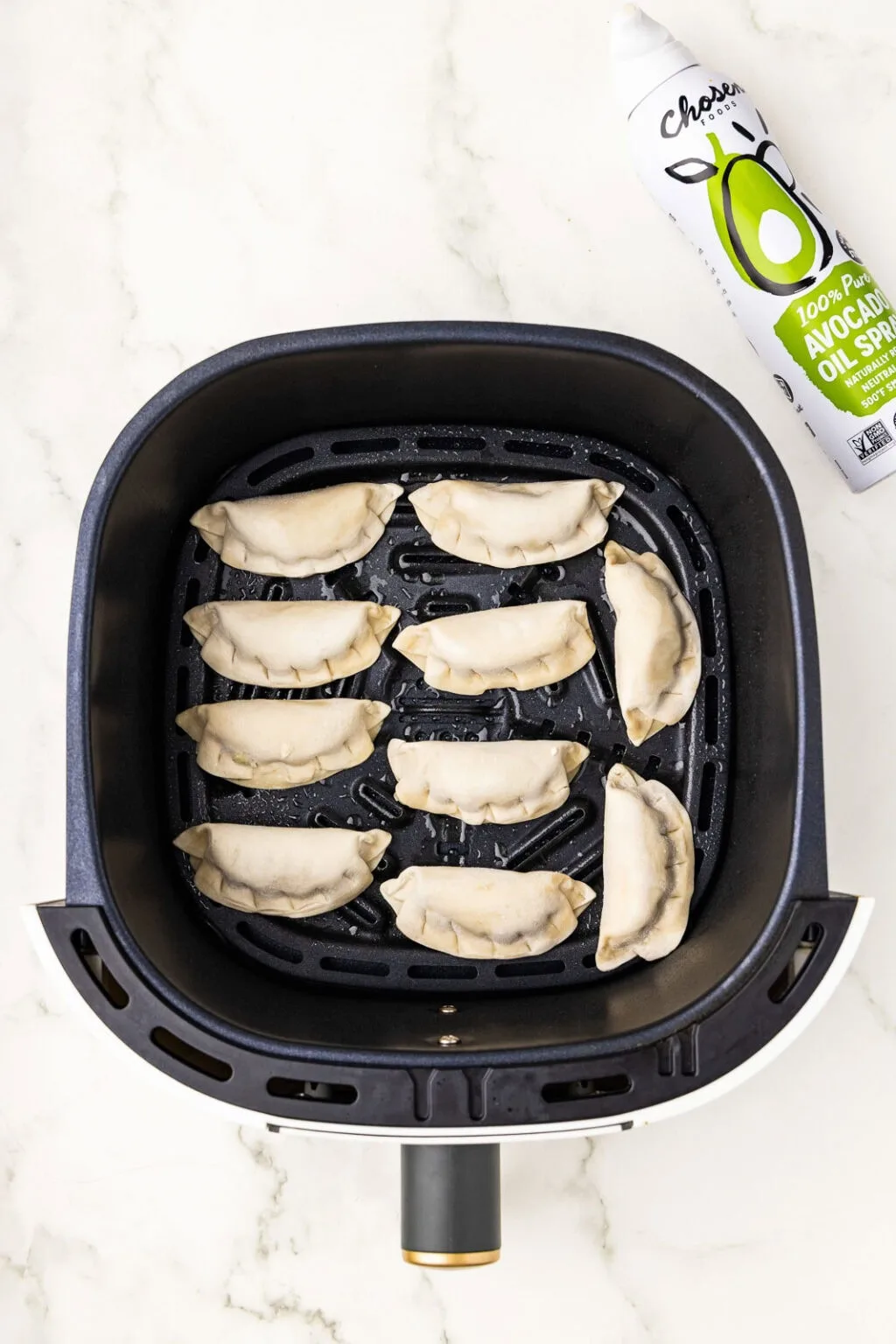
Total time from freezer to plate: roughly 13 to 15 minutes including preheat. That's faster than ordering delivery in most areas.
If you're scaling up for a crowd, repeat in batches rather than cramming extra potstickers into a single layer. Overcrowding is the number one reason air fryer potstickers come out steamed and soft instead of crispy, and we'll cover batch strategy in more detail later in the article. For now, if you're cooking for more than four people, plan on two runs and keep the first batch warm in a low oven at 200°F while the second batch cooks.
Step-by-Step: Air Frying Homemade Thyme Potstickers
Homemade potstickers take more effort upfront, but you control every variable, and that's where thyme really gets to shine. You can fold it directly into the filling, adjust the salt level, and make the wrappers as thin or thick as you like. The air fryer step itself is almost identical to the frozen version, with one key difference: homemade potstickers don't have that frozen-solid buffer, so they cook slightly faster and need a watchful eye toward the end.
Making the Thyme Filling
A solid starting ratio for about 30 potstickers:
- 1 lb ground pork, chicken, or a 50/50 blend
- 2 cups finely shredded napa cabbage, squeezed dry (moisture is the enemy of crispy)
- 3 green onions, minced
- 1 tablespoon fresh grated ginger
- 2 cloves garlic, minced
- 1 tablespoon soy sauce
- 1 teaspoon toasted sesame oil
- 1 tablespoon fresh thyme leaves, finely chopped (or 1 teaspoon dried)
- 1 teaspoon white pepper
Mix everything in a bowl until just combined. Don't overwork the meat or the filling turns dense and rubbery. A quick test is to microwave a small spoonful for 20 seconds and taste for seasoning before you commit to wrapping the whole batch.
Wrapping
Place about one rounded teaspoon of filling in the center of each wrapper. Dip your finger in water and moisten the top half of the wrapper edge. Fold in half and pleat one side, pressing firmly to seal. A good seal matters more in the air fryer than in steaming because any gap lets filling leak out and burn onto the basket.
Set finished potstickers on a parchment-lined tray with space between them. If you're not cooking them right away, cover with a damp towel and refrigerate for up to 4 hours, or freeze on the tray and transfer to a bag once solid.
Cooking Homemade Potstickers in the Air Fryer
- Preheat to 375°F, slightly lower than the frozen version, because homemade wrappers are often thinner and brown faster.
- Oil the wristers lightly, same spray or brush method.
- Cook for 5 minutes, flip, then cook another 4 minutes.
- Check at the 9-minute mark. If the wrappers are golden and the filling feels firm, they're done. If the browning is ahead of the filling firmness, drop the temperature to 360°F and give them one more minute.
Homemade potstickers tend to have a more delicate, almost silky wrapper compared to store-bought, and the thyme flavor comes through more clearly because it's distributed throughout the filling rather than sitting on the surface. That's the payoff for the extra 20 minutes of prep.
Temperature and Timing Guide — Every Major Air Fryer Size
No two air fryers behave exactly the same. A compact 3.5-quart unit runs hotter and faster than a spacious 8-quart oven model, and dual-basket systems like the Ninja Foodi have their own quirks. The table below gives you a reliable starting point for each common size, and you can fine-tune from there based on your first batch.
| Air Fryer Size | Potstickers Per Batch | Temperature | Flip Time | Total Time |
|---|---|---|---|---|
| 2 to 3 qt (compact) | 6 to 10 | 375°F | 5 min | 9 to 11 min |
| 4 to 5 qt (medium) | 10 to 16 | 380°F | 6 min | 10 to 12 min |
| 6 to 8 qt (large) | 16 to 24 | 380°F | 6 min | 10 to 12 min |
| Dual-basket (per basket) | 12 to 20 | 380°F | 5 to 6 min | 10 to 11 min |
A few things to keep in mind. Smaller baskets concentrate heat, which means faster browning but also a higher risk of burning if you walk away. Larger baskets give you more room for airflow, which produces more even results, but the preheat time may be slightly longer.
If your air fryer doesn't have a preheat function, just add 1 minute to the first side's cook time. And if you're running a second batch right after the first, the basket is already hot, so shave 1 minute off the total time for the subsequent run.
Altitude also plays a role. At elevations above 5,000 feet, air is thinner and moisture evaporates faster, which can dry out wrappers before the filling is fully cooked. Drop the temperature by 10°F and add a minute if you're cooking at high elevation.
Getting the Signature Crispy Bottom Without Overcrowding
The crispy bottom is the whole reason potstickers exist. It's what separates them from steamed dumplings, and it's the texture most people are chasing when they reach for the air fryer instead of the microwave. Overcrowding the basket is the single fastest way to lose it.
When potstickers are packed too tightly, steam gets trapped between them. That steam softens the wrappers from all sides, and instead of a dry, golden crunch, you get a uniformly soft, almost gummy texture. The fix is simple: give each potsticker breathing room.
The spacing rule: leave at least a quarter inch between each potsticker and the sides of the basket. If you can fit 12 comfortably but you're trying to squeeze in 18, do two batches. The extra 10 minutes are worth it.
Here's what proper spacing looks like in practice:
- 3.5-quart basket: 6 to 8 potstickers max
- 5-quart basket: 10 to 14 potstickers max
- 6 to 8-quart basket: 16 to 20 potstickers max
If you're using a perforated parchment liner, the holes allow air to circulate through the bottom, which helps the flat side crisp even with slightly tighter spacing. Without a liner, the basket grid itself provides some airflow, but only if the potstickers aren't covering every square inch of it.
Another trick: after the flip, if the bottoms still look pale, give them an extra minute with the original bottom side facing down. The second half of cooking is where the real crisping happens because the filling has started releasing heat inward, and the wrapper has dried enough to go from soft to crunchy.
One more thing. Don't open the basket more than necessary during cooking. Every time you pull it out, the temperature drops by 15 to 25°F and takes a minute to recover. One flip at the halfway point is all you need.
Resist the urge to peek at 3 minutes.
How to Incorporate Thyme at Every Stage
Thyme is versatile enough to show up at multiple points in this recipe, and each method gives you a slightly different result. You don't have to pick just one, but understanding what each approach does helps you decide how bold you want the thyme flavor to be.
In the Folding (Homemade Only)
This is the most integrated approach. Chopped fresh thyme leaves mixed directly into the raw filling distribute the herb flavor evenly through every bite. The heat of the air fryer gently cooks the thyme from the inside, which mellows its sharpness and lets the earthy, slightly floral notes blend with the ginger, garlic, and soy in the filling.
Use 1 tablespoon of fresh thyme leaves per pound of filling. Any more and it starts to dominate. Dried thyme works here too, but reduce to 1 teaspoon because the concentrated flavor is more assertive.
On the Wristers (Frozen or Homemade)
Rubbing fresh thyme leaves between your palms bruises the cell walls and releases the essential oils right where the heat will hit them. Sprinkle the crushed leaves over the oiled potstickers just before they go into the basket. This method gives you a more pronounced, aromatic thyme hit on the surface, which is especially nice if you're using plain frozen potstickers that don't have much seasoning to begin with.
For dried thyme, a light, even dusting works. Don't pile it on. Dried herbs are more concentrated and can taste dusty or bitter if you use too much.
In the Oil
Steep 4 to 5 fresh thyme sprigs in 2 tablespoons of warm oil for 10 minutes, then strain and use that oil to brush or spray onto the potstickers. This infuses the fat with thyme flavor, which then coats every surface of the wrapper as it crisps. It's a subtle, background-level thyme presence that ties everything together without announcing itself.
This method works especially well with avocado or peanut oil, both of which are neutral enough to let the thyme come through.
In the Dipping Sauce
We'll cover specific sauce recipes in the next section, but adding minced fresh thyme to your dipping sauce is arguably the most impactful method of all. The thyme hits your palate immediately, before you even bite into the potsticker, and it frames the entire eating experience. A small amount, half a teaspoon of minced leaves mixed into a soy-vinegar base, is all you need.
As a Finishing Garnish
A few whole fresh thyme sprigs scattered over the finished plate add visual appeal and a burst of fresh aroma when someone reaches for a potsticker. It's purely cosmetic in terms of flavor, but presentation matters, especially if you're serving these to guests.
Our recommendation for most cooks: if you're using frozen potstickers, go with the on-the-wrapper method plus thyme in the dipping sauce. If you're making homemade, fold it into the filling and finish with a garnish. That gives you layered thyme flavor without any single note overwhelming the dumpling itself.
Thyme-Forward Dipping Sauces That Actually Complement the Dumplings
A good dipping sauce can make or break the potsticker experience. Too much of the wrong thing and you hide the thyme and the filling both. Too little and the sauce feels like an afterthought. Below are three sauces built around thyme that each bring something different to the table, and all of them come together in under five minutes.
Classic Thyme Soy Sauce
This is the one to start with if you're not sure what you want. It's a riff on the standard soy-vinegar potsticker dip, with thyme added as a fresh herbal layer.
- 3 tablespoons low-sodium soy sauce
- 1 tablespoon rice vinegar
- 1 teaspoon toasted sesame oil
- 1 teaspoon fresh thyme leaves, finely minced
- 1 teaspoon honey or light brown sugar
- 1 small clove garlic, grated
- Pinch of red pepper flakes (optional)
Stir everything together and let it sit for at least 10 minutes before serving so the thyme infuses into the liquid. The honey balances the salt from the soy, and the garlic adds depth without competing with the thyme. This sauce works with any filling type.
Thyme Chili Oil Sauce
If you like heat, this one delivers. It pairs especially well with pork and chicken potstickers.
- 2 tablespoons chili oil (with the sediment at the bottom of the jar)
- 1 tablespoon soy sauce
- 1 teaspoon rice vinegar
- 1 teaspoon fresh thyme leaves
- 1 teaspoon toasted sesame seeds
- Half a teaspoon grated ginger
The chili oil brings the heat and the sesame seeds add a nutty crunch that echoes the crispy potsticker bottom. The thyme cuts through the richness of the oil and keeps the sauce from feeling one-note.
Creamy Thyme Mayo Dip
This is the wildcard option and it's surprisingly good. The richness of the mayo coats your palate and carries the thyme flavor in a completely different direction.
- 3 tablespoons Japanese mayo (Kewpie) or regular mayonnaise
- 1 teaspoon soy sauce
- 1 teaspoon fresh thyme leaves, minced
- 1 teaspoon lime juice
- Half a teaspoon garlic powder
Whisk it all together and refrigerate until serving. The lime juice keeps it bright, and the Kewpie mayo adds a subtle tanginess that regular mayo doesn't have. This dip works best with vegetable and shrimp potstickers, where it won't overpower the lighter filling.
A universal tip: make your sauce before you start cooking the potstickers. Sauces always taste better after sitting for a few minutes, and you don't want to be scrambling to mix something while the potstickers are perfectly hot in the basket.
Frozen vs. Fresh vs. Homemade — Which Works Best in an Air Fryer
All three options work in the air fryer, but they behave differently enough that it's worth knowing what you're getting into before you commit.
Frozen
The most popular and convenient choice. Frozen potstickers are par-cooked at the factory, which means the filling is already partially done before they hit your air fryer. That built-in head start makes timing forgiving: you're really just crisping the wrapper and heating the center through.
Wrapper thickness: usually medium, sometimes slightly thick, which means they hold up well to air frying without tearing.
Filling moisture: factory-controlled, so you get consistent results bag to bag.
Best for: weeknight dinners, quick snacks, and anyone who values convenience over customization.
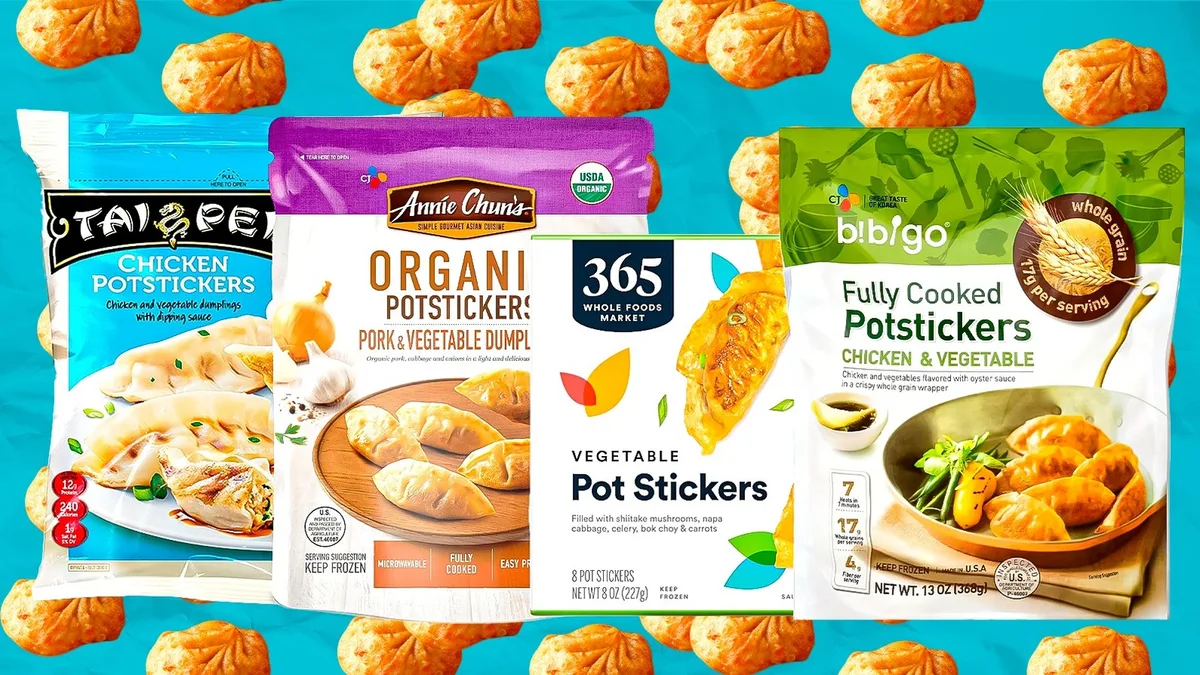
Major brands available in the US include Trader Joe's chicken cilantro gyoza (widely regarded as one of the best-value frozen dumplings), Bibigo Korean mandu, and PF Chang's pork potstickers. Trader Joe's versions tend to have thinner wrappers that crisp up especially well at 380°F.
Fresh (Refrigerated)
You'll find these at Asian grocery stores like H Mart and 99 Ranch, usually in the refrigerated section near the tofu and fresh noodles. They're raw, not par-cooked, so they need slightly more time in the air fryer and more careful temperature management.
Wrapper thickness: often thinner and more delicate than frozen versions.
Filling moisture: higher than frozen, which can lead to soggy wrappers if the temperature is too low.
Best for: cooks who have access to an Asian market and want a step up in texture and flavor from the typical freezer-aisle bag.
Cook fresh potstickers at 370°F for 9 to 11 minutes with a flip at 5 minutes. Watch the last two minutes closely because thin wrappers go from golden to burnt quickly.
Homemade
The most labor-intensive option, but also the most rewarding. You control the filling, the seasoning, the wrapper thickness, and the size. This is where thyme really gets to be the star because you can fold it directly into the mixture rather than relying on surface seasoning alone.
Wrapper thickness: up to you. Store-bought wrappers are consistent, but you can roll your own from flour and water if you want an ultra-thin, delicate result.
Filling moisture: you manage it, which means you can squeeze every drop of water out of the cabbage and keep things dry enough to crisp properly.
Best for: weekend cooking projects, dinner parties, anyone who wants full control over the flavor profile.
The air fryer time for homemade potstickers lands around 375°F for 9 to 10 minutes with a flip. Thinner wrappers may finish closer to 8 minutes, so check early on your first batch.
| Factor | Frozen | Fresh (Refrigerated) | Homemade |
|---|---|---|---|
| Prep time | Zero | Zero | 20 to 40 minutes |
| Cook time | 10 to 12 min | 9 to 11 min | 8 to 10 min |
| Temperature | 380°F | 370°F | 375°F |
| Thyme integration | Surface only | Surface only | In filling and surface |
| Consistency | Very high | Moderate | Depends on skill |
| Cost per batch | $3 to $8 | $4 to $7 | $5 to $10 |
If you're just getting started with air fryer potstickers, frozen is the way to go. Once you've nailed the timing and figured out how your specific unit behaves, experimenting with fresh or homemade versions is the natural next step.
Common Mistakes That Ruin Air Fryer Potstickers (And How to Fix Them)
"The most common reason air fryer potstickers turn out soggy is overcrowding the basket. Give each dumpling space and the forced air can actually do its job."
Here are the mistakes we see most often, along with what to do differently.
1. Not Preheating
If you toss potstickers into a cold basket, the first two to three minutes are spent just bringing the unit up to temperature. During that time, the wrappers soften without crisping, and you lose the window for the best texture. Always preheat for 3 to 5 minutes.
2. Skipping the Oil
Air fryers use hot air, not fat, to create crisping. But you still need a thin layer of oil on the wrapper surface for actual browning to happen. Without it, you get dry, pale potstickers with a papery texture instead of a golden, crunchy shell. A quick coat from a pump mister solves this entirely.
3. Overcrowding the Basket
Already covered in detail above, but it bears repeating: potstickers need space. When they're touching each other, steam gets trapped and the wrappers go soft. Cook in batches if you have to. The extra few minutes are worth the texture payoff.
4. Using the Wrong Oil
Extra virgin olive oil has a smoke point around 375°F, which puts it right at the edge of your cooking temperature. It can smoke, bitter, and leave an off-flavor on the delicate wrappers. Use avocado oil, peanut oil, or a neutral refined vegetable oil instead. Sesame oil is great as a flavor addition in the filling or sauce, but not as the primary cooking oil because of its lower smoke point.
5. Oversaucing the Filling in Homemade Versions
If you're making your own filling and it's too wet, no amount of air frying will save the wrapper. Excess moisture from cabbage, mushrooms, or overly loose meat turns the dumplings soggy from the inside out. Always squeeze your shredded vegetables dry in a clean kitchen towel before mixing them into the filling.
6. Opening the Basket Too Often
Every time you pull the basket out, the internal temperature drops by 15 to 25°F and takes about a minute to recover. Opening at the halfway mark to flip is fine. Opening every two minutes to check progress is not. Trust the timer.
7. Wrong Temperature for the Model
Some air fryers, particularly compact models under 3.5 quarts, run hot at their dial settings. If your potstickers are browning too fast on the outside while the center is still cold, drop the temperature by 10°F and add a minute. Conversely, if everything is coming out pale after the full cook time, bump it up by 10°F.
Quick troubleshooting reference:
| Problem | Likely Cause | Fix |
|---|---|---|
| Soggy, steamed wrappers | Overcrowding or no preheat | Space them out, always preheat |
| Burnt outside, cold inside | Temperature too high | Drop 10°F, add 1 minute |
| Dry, papery wrappers | No oil applied | Lightly spray or brush with oil before cooking |
| Stuck to the basket | No oil, no liner | Use oil + parchment liner |
| Filling leaks out during cooking | Wrappers not sealed properly | Press edges firmly, use water to seal |
Air Fryer Potstickers vs. Pan-Fry, Deep Fry, and Oven Bake
Each cooking method produces a noticeably different result, and understanding the trade-offs helps you pick the right one for the situation.
Air Fryer vs. Pan-Fry and Steam (Traditional Method)
The classic stovetry technique gives you three textures in one pot: a deeply browned, almost caramelized bottom, a tender steamed top, and a juicy filling. It's the gold standard for a reason. But it demands constant attention, the oil splatters everywhere, and the timing of the water addition and lid removal is a skill that takes practice.
The air fryer sacrifices that ultra-crispy bottom crust in exchange for a much simpler process and even browning on all sides. You also get a significant reduction in oil. For weeknights when you don't want to babysit a pan, the air fryer wins on convenience and still delivers solid results.
Air Fryer vs. Deep Fryer
Deep frying submerges the potstickers completely in hot oil, which produces an evenly crispy, almost blistered wrapper all the way around. The texture is unmatched. But you're using 2 to 4 cups of oil per batch, the cleanup is considerable, and the calorie difference is significant. Per USDA FoodData Central, a deep-fried potsticker absorbs roughly 3 to 5 grams more fat per piece than an air-fried one.
The air fryer gets you about 75 to 80 percent of the crunch with a fraction of the oil. If you're cooking regularly and watching your fat intake, that trade-off makes sense.
Air Fryer vs. Oven Bake
Oven baking is the most hands-off method after the air fryer, but it's also the slowest and least crispy. A standard home oven at 400°F takes 15 to 18 minutes to bake potstickers, and the wrappers come out more dried-out than crispy unless you broil for the last two minutes, which requires watching closely to avoid burning.
Air fryers concentrate heat more efficiently because the fan is smaller and closer to the food. That focused airflow produces faster, more even crisping than an oven's convection system can achieve in the same time frame.
| Method | Time | Oil Needed | Crispiness | Hands-On Effort |
|---|---|---|---|---|
| Air fryer | 10 to 12 min | 1 to 2 tsp | High, all sides | Low |
| Pan-fry and steam | 8 to 10 min | 2 to 3 tbsp | Very high on bottom only | High |
| Deep fry | 3 to 5 min | 2 to 4 cups | Very high, all sides | Moderate |
| Oven bake | 15 to 18 min | 1 to 2 tbsp | Moderate | Low |
If you're feeding a crowd and want the absolute best texture, deep frying still wins. For everyday cooking where convenience and health matter, the air fryer is the strongest all-around choice. And if you want that traditional lacy-bottom crust, nothing replaces the stovetry.
Batch Cooking for Parties, Meal Prep, and Game Day
Potstickers are one of the best crowd foods you can make in an air fryer, but scaling up requires a little planning. You can't just double the batch and expect the same results. Here's how to handle larger quantities without losing quality or spending the entire party standing at the appliance.
For Parties and Game Day
The key is staggering your batches and keeping finished potstickers warm without drying them out. Set your oven to its lowest setting, usually around 170°F to 200°F, and place a wire rack inside a sheet tray. As each batch comes out of the air fryer, move them to the oven. They'll hold well for 20 to 30 minutes without losing much crispiness.
A rough timeline for serving 40 potstickers to a group:
- Batch 1: start at minute 0, done by minute 12, move to oven
- Batch 2: start at minute 12, done by minute 24, move to oven
- Batch 3: start at minute 24, done by minute 36
Total time from first potsticker in to last potsticker out: about 36 minutes. That's fast enough that you won't miss the game, and your guests will get hot, crispy dumplings throughout.
Set out two or three dipping sauces in small bowls so people can choose their own adventure. The thyme soy sauce and the chili oil version together cover both the mild and spicy camps.
For Meal Prep
Air fryer potsticker meal prep works well if you plan for the reheating step. Cook your full batch, let them cool to room temperature, and store in a single layer in an airtight container in the fridge for up to 3 days. Don't stack them while they're still warm or the wrappers will stick together and tear.
When you're ready to eat, pop them back in the air fryer at 350°F for 3 to 4 minutes. They won't be quite as crispy as fresh, but they'll be significantly better than microwaved leftovers. The microwave steams them into a soft, gummy state. The air fryer actually re-crisps the wrapper.
For freezing cooked potstickers, spread them on a parchment-lined tray in a single layer, freeze until solid, then transfer to a zip-top bag. They'll keep for up to 2 months. Reheat from frozen at 360°F for 5 to 6 minutes.
Scaling Chart
| Number of Guests | Potstickers Needed (approx.) | Batches in 5-qt Air Fryer | Total Cook Time |
|---|---|---|---|
| 2 to 3 | 12 to 18 | 1 | 10 to 12 min |
| 4 to 6 | 24 to 36 | 2 to 3 | 24 to 36 min |
| 8 to 10 | 40 to 50 | 3 to 5 | 36 to 60 min |
If you're regularly cooking for groups of six or more, a larger air fryer makes a real difference. A 6-quart model designed for families of four handles bigger batches with less total run time, which means less waiting and more consistent results across the full serving.
Storage, Reheating, and Leftover Tips
Cooked potstickers keep well if you store them right, and reheating them properly is the difference between a satisfying leftover meal and a soggy disappointment.
Fridge Storage
Let cooked potstickers cool completely before refrigerating. If you put them in a container while still hot, condensation builds up and the wrappers go soft. Store in a single layer if possible, with parchment paper between layers if you need to stack. They'll keep for 3 to 4 days in the refrigerator.
Freezer Storage
For longer storage, freeze cooked potstickers on a sheet tray in a single layer until solid, about 2 hours, then transfer to a freezer bag with as much air pressed out as possible. They'll keep for up to 2 months. Label the bag with the date so you know when to use them by.
Reheating Methods Compared
| Method | Time | Crispiness Result | Best For |
|---|---|---|---|
| Air fryer at 350°F | 3 to 4 min | High, close to fresh | Best overall |
| Air fryer from frozen at 360°F | 5 to 6 min | Moderate to high | Frozen leftovers |
| Oven at 375°F on wire rack | 6 to 8 min | Moderate | Larger quantities |
| Microwave | 1 to 2 min | Low, soft and steamed | Speed only, not quality |
The air fryer is the clear winner for reheating. The forced air re-crisps the wrapper in a way that no other method can match. The oven is a decent second choice if you're reheating a large quantity that won't fit in the air fryer basket at once. The microwave should be your last resort, useful only when you're in a genuine rush and don't care about texture.
A Note on Food Safety
Per USDA guidelines, reheated leftovers should reach an internal temperature of 165°F to be considered safe to eat. This takes about 3 to 4 minutes in a preheated air fryer at 350°F for refrigerated potstickers, and 5 to 6 minutes for frozen ones. If you're unsure, a quick-read thermometer takes the guesswork out.
Don't reheat potstickers more than once. Each reheating cycle dries out the filling further and degrades the wrapper texture. Reheat only what you plan to eat in that sitting.
Nutrition, Calories, and the Health Angle
Air fryer potstickers are a noticeably lighter option than their deep-fried counterparts, and the numbers back it up. Here's what a typical serving looks like, based on USDA FoodData Central nutritional data for common ingredients.
Calorie Breakdown (Approximate, Per 6-Potsticker Serving)
| Component | Frozen Pork Potstickers (Air Fried) | Frozen Pork Potstickers (Deep Fried) |
|---|---|---|
| Calories | 180 to 220 | 260 to 320 |
| Total Fat | 6 to 9 g | 12 to 18 g |
| Saturated Fat | 2 to 3 g | 4 to 6 g |
| Protein | 8 to 11 g | 8 to 11 g |
| Carbohydrates | 22 to 28 g | 22 to 28 g |
| Sodium | 380 to 520 mg | 380 to 520 mg |
The calorie difference comes almost entirely from the oil. Air frying uses 1 to 2 teaspoons of oil per batch, while deep frying requires the potstickers to absorb oil from a full pot. That translates to roughly 6 to 9 grams of fat per serving instead of 12 to 18 grams.
The protein and carb counts stay about the same regardless of cooking method because the filling and wrapper don't change. Sodium is driven by the soy sauce and seasoning in the filling, which varies more by brand than by cooking method.
Where Thyme Fits In
Thyme itself is nutritionally minimal in the quantities used in this recipe. A tablespoon of fresh thyme leaves adds roughly 3 calories and trace amounts of vitamin C, vitamin A, and iron. The real health relevance of thyme is more about what it replaces: by adding flavor through an herb rather than extra salt, oil, or a heavy sauce, you keep the overall sodium and fat numbers in check without sacrificing taste.
A 2011 review published in the Journal of Medicinal Food examined thymol, the primary bioactive compound in thyme, and noted its antimicrobial and antioxidant properties. The amounts you'd consume in a potsticker serving are small, but the compound is present and active, which is a nice bonus on top of the flavor.
Making This Recipe Even Lighter
A few simple swaps can bring the calorie count down further:
- Use chicken or vegetable potstickers instead of pork. Chicken fillings typically run 20 to 30 calories less per serving.
- Skip the creamy mayo dipping sauce and stick with the soy-vinegar-thyme version, which adds roughly 15 calories per tablespoon compared to 90 for the mayo-based dip.
- Use a light hand with the oil mister. One quick pass per potsticker is enough. Over-saturating adds calories without improving crispiness.
If you're tracking macros or following a specific dietary plan, air frying is one of the healthier cooking methods available for foods that are traditionally deep-fried, and potstickers are a perfect example of where that advantage shows up clearly in the numbers.
Air Fryer Potstickers With Thyme FAQ
Can I use dried thyme instead of fresh?
Yes. Dried thyme is more concentrated, so use one-third the amount you'd use for fresh. One teaspoon of dried thyme replaces roughly one tablespoon of fresh leaves. Dried thyme works best when mixed into the oil or sprinkled on the wristers before cooking.
It doesn't have the same bright, floral top note as fresh, but the earthy warmth comes through well.
Do I need to thaw frozen potstickers before air frying?
No. Cook them straight from the freezer. Thawing adds surface moisture, which works against the crispy texture you're after. Just add 1 to 2 minutes to the cook time if the potstickers are particularly large or if your air fryer runs on the cooler side.
What temperature should I set my air fryer to?
380°F is the sweet spot for most frozen potstickers in a standard 4 to 5-quart air fryer. Drop to 375°F for homemade versions with thinner wrappers, or 370°F for fresh refrigerated potstickers. If your unit runs hot based on experience, subtract 10°F.
How do I keep potstickers from sticking to the basket?
Two things: oil and spacing. Lightly spray or brush the wristers with oil before they go in, and use a perforated parchment liner if your basket's non-stick coating is worn or if you're cooking a sticky brand. Also make sure the basket is fully preheated before loading the potstickers in.
Can I cook other dumplings this way?
Absolutely. Gyoza, mandu, wontons, and even soup dumplings (with slightly adjusted timing) all work in the air fryer. The same temperature and flip principles apply. Wontons tend to be smaller and thinner, so reduce the cook time by 2 to 3 minutes and check early.
How many potstickers fit in my air fryer?
It depends on basket size and potsticker size. A 3.5-quart basket fits 6 to 10 standard potstickers. A 5-quart fits 10 to 16. A 6 to 8-quart handles 16 to 24.
The rule of thumb is single layer, no touching, with at least a quarter inch of space around each one.
Is air fryer food actually healthier than deep fried?
In terms of fat and calorie content, yes. Air frying uses 70 to 80 percent less oil than deep frying, which directly reduces the fat absorbed by the food. The cooking method doesn't change the protein, carb, or micronutrient content of the ingredients themselves, but the significant oil reduction makes a measurable difference per serving.
What other herbs work well on potstickers?
Chives and scallions are the classic choices and pair naturally with any Asian-style filling. Cilantro works if you like its bright, polarizing flavor. Rosemary can work in small amounts with pork or beef fillings but is stronger than thyme, so use it sparingly. Basil is better suited to Thai-style dumplings and doesn't hold up as well under high heat.
Expert Tips and Final Thoughts
After working through every variable, from air fryer model to thyme variety to wrapper thickness, a few clear patterns emerge. These are the things that consistently separate a good batch from a great one.
Invest in a pump oil mister. Aerosol cooking sprays with lecithin propellants slowly eat away at non-stick coatings, and a ten-dollar refillable mister gives you better control over how much oil lands on each potsticker. This one upgrade improves every air fryer recipe you'll ever make, not just potstickers.
Always do a test batch. Cook four or five potstickers first before committing to a full batch. This tells you exactly how your specific air fryer handles the temperature and timing, and you can adjust before you've committed twenty dumplings to a too-hot or too-cool basket.
Don't sleep on the sauce. The thyme soy dipping sauce takes 2 minutes to make and elevates the entire eating experience. A plain potsticker is fine. A plain potsticker with a well-made sauce is memorable.
Batch size matters more than speed. It's tempting to cram as many potstickers into the basket as possible to save time. Resist that urge. Two properly spaced batches will always outperform one overcrowded one. The texture difference is that significant.
Thyme is forgiving. Unlike delicate herbs that burn or wilt under high heat, thyme holds its flavor and aroma through the full air fryer cook cycle. Whether you add it to the filling, the oil, the wristers, or the sauce, it comes through warm and earthy. That reliability makes it one of the best herbs for this kind of cooking.
The air fryer potstickers thyme recipe is one of those rare combinations that's both easy and impressive. It takes a familiar frozen food and makes it taste like someone put real thought into dinner. The thyme adds just enough complexity to make people ask what's different, and the air fryer does the heavy lifting on texture without any of the stovetry hassle. Once you've dialed in the timing for your specific unit, it becomes a repeatable weeknight staple that takes less time than waiting for a delivery driver to show up.