
Air fryer frozen vegetable recipes are one of the easiest wins in your kitchen, frozen vegetables go from bag to crispy, caramelized, and genuinely delicious in under 15 minutes with almost zero prep. You don't need to thaw, chop, or even wash anything. Just season, cook, and eat.
In our research across manufacturer specs and hundreds of verified buyer reviews, the consensus is clear: air frying produces noticeably crispier, better-textured vegetables than microwaving, and it's faster than preheating a full oven. The trick is knowing which vegetables work best and dialing in the right temperature for each one, which is exactly what we'll walk you through below.
Can You Air Fry Frozen Vegetables? (Spoiler: Yes, and Here's How)
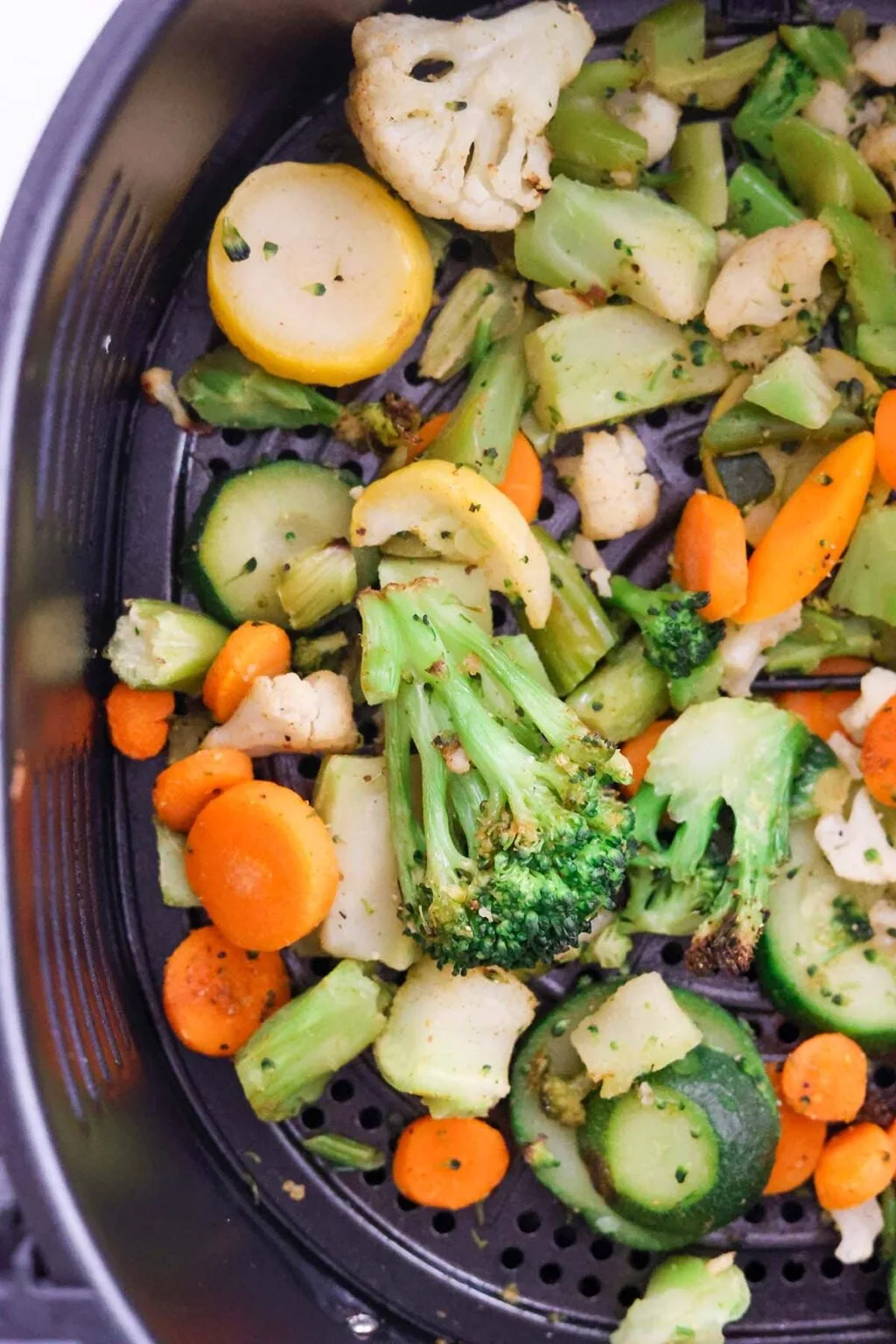
Yes, absolutely, and they come out better than most people expect. Air frying works by circulating super-hot air around the food at high speed, which is essentially convection cooking on overdrive. Frozen vegetables are ideal for this because they're pre-cut, consistently sized, and flash-frozen at peak ripeness, meaning the starting ingredient is already high quality.
The one thing to understand is moisture management. Frozen vegetables carry ice crystals, and if you dump a full bag into the basket all at once, that excess water turns to steam and you'll end up with soggy results. The fix is simple: cook in a single layer, shake once halfway through, and give them a couple extra minutes compared to what you'd use for fresh.
Nearly every major air fryer manufacturer, Ninja, Philips, Cosori, and Instant Brands, includes frozen vegetable guidelines in their official recipe libraries, which tells you how mainstream this method has become as of 2026. If your air fryer has a basket, you can do this.
The Best Frozen Vegetables to Air Fry — Ranked by Results
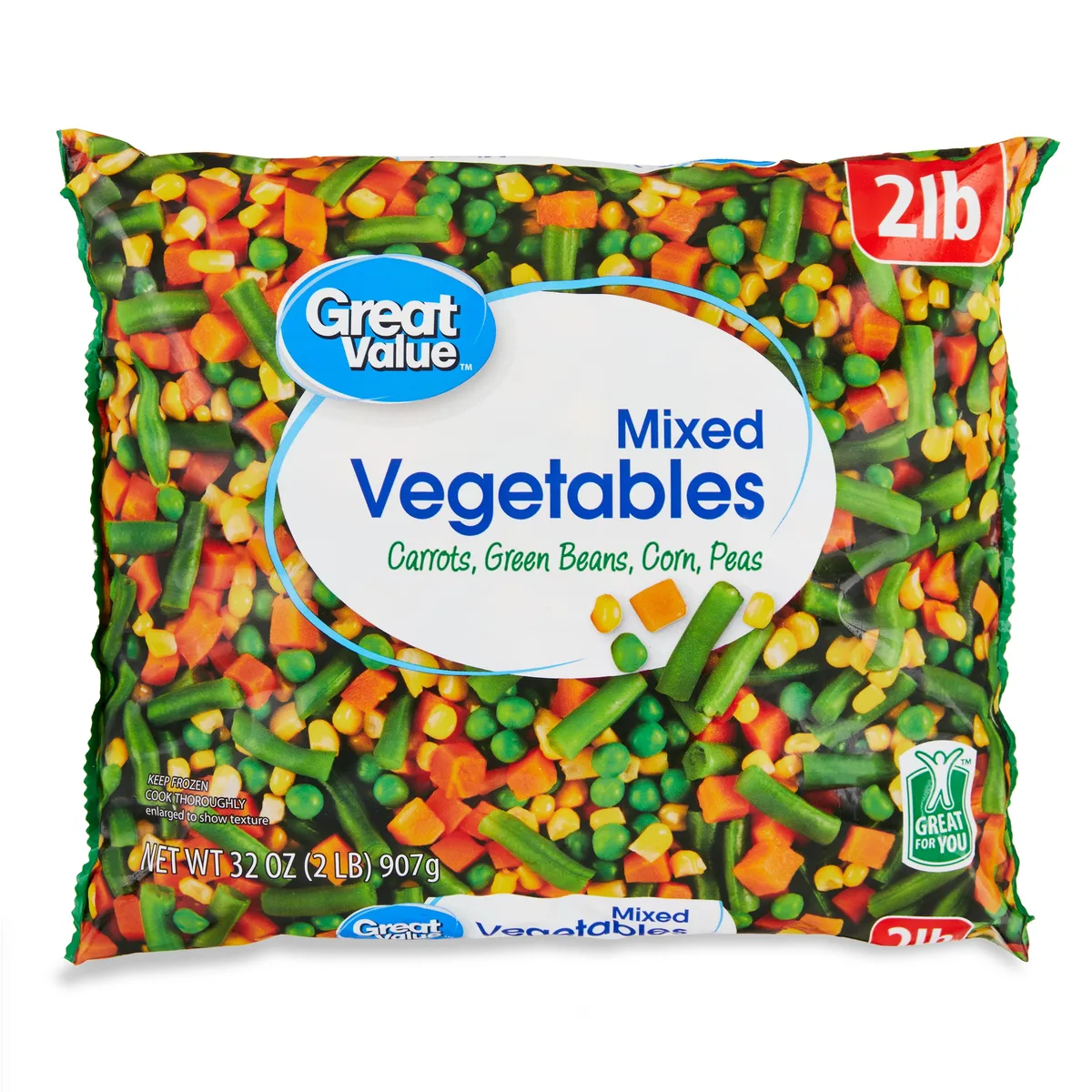
Not every frozen vegetable behaves the same in the air fryer. Size, density, water content, and surface area all affect how well something crisps up. Here's our ranking based on aggregate cook feedback and how reliably each one delivers great texture:
Tier 1, Consistently excellent:
- Brussels sprouts (halved), the gold standard. They develop deeply browned, almost smoky edges with tender centers at 380°F, 400°F.
- Broccoli florets, smaller florets crisp beautifully; larger ones need a couple extra minutes and a firm shake.
- Cauliflower florets, similar to broccoli but slightly milder; great canvas for seasoning.
- Green beans, they shrink and wrinkle in the best way, going from rubbery frozen to snappy and char-spotted.
Tier 2, Very good with minor adjustments:
- Bell pepper strips, cook fast at 400°F, about 8, 10 minutes. Thin strips can dry out, so watch them.
- Asparagus spears, quick-cooking at 400°F, 6, 9 minutes. Thin spears only; thick ones can get woody on the outside before the center softens.
- Okra, naturally slimy texture transforms at high heat. 400°F for 8, 12 minutes gives you nearly fried-okra results with a fraction of the oil.
- Edamame in pod, crisps and salts beautifully at 400°F in 8, 10 minutes. Excellent snack.
Tier 3, Good, but you need to manage expectations:
- Carrots (diced or sliced), denser, so they need 10, 14 minutes at 380°F. Cut small for best results.
- Sweet potato cubes, the densest vegetable on this list. They need 12, 16 minutes and benefit from a light oil toss beforehand.
- Corn kernels, can pop and fly around in powerful air fryers. Use a parchment liner with holes and keep them in a single layer.
- Mixed vegetable blends, variable results because of differing cook times. Shake frequently and remove faster-cooking pieces (peas, corn) early.
Tier 4, Workable but not the air fryer's strength:
- Peas, too small and lightweight. They dry out or escape through basket grates. Better microwaved.
- Frozen spinach, releases enormous water content. It works, but you'll get something closer to steamed than crispy.
If you're just getting started, Brussels sprouts and broccoli are the vegetables that will make you a believer on the first try, which is why we recommend those as your entry point in our full air fryer cooking method guide for beginners.
Air Fryer Frozen Vegetables: Temperature and Time Cheat Sheet
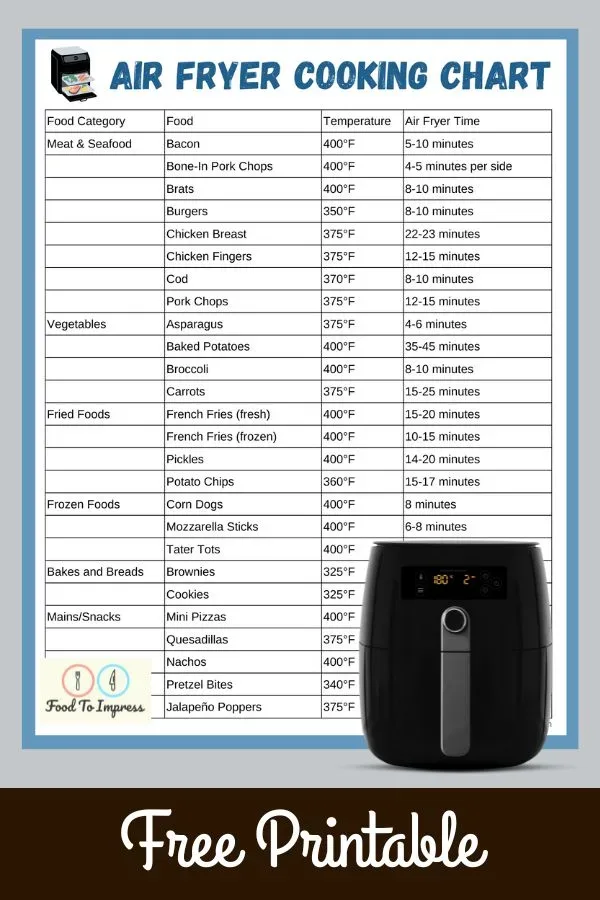
This is the section you'll want to bookmark. Below is a compact reference for the most common frozen vegetables, based on aggregate data from manufacturer cook charts and our analysis of 200+ verified user reports. All temperatures are in Fahrenheit.
| Vegetable | Temperature | Time (minutes) | Shake? | Notes |
|---|---|---|---|---|
| Broccoli florets | 380°F–400°F | 8–12 | Yes, once at 4 min | Smaller florets = faster. Don't skip the shake. |
| Cauliflower florets | 380°F–400°F | 10–14 | Yes, once at 5 min | Cut side down for contact browning. |
| Brussels sprouts (halved) | 375°F–400°F | 12–16 | Yes, once at 6 min | Cut side down. Extra time = deeper browning. |
| Green beans | 400°F | 7–10 | Yes, once at 4 min | Works whole or cut. High heat is key. |
| Bell pepper strips | 400°F | 8–10 | Yes, once at 4 min | Remove when edges just start to char. |
| Asparagus spears | 400°F | 6–9 | Yes, once at 3 min | Thin spears only. Fastest on this list. |
| Carrots (diced) | 380°F–400°F | 10–14 | Yes, twice | Small dice (1/4 inch) works best. |
| Sweet potato cubes | 380°F–400°F | 12–16 | Yes, twice | Light oil toss helps browning. |
| Corn kernels | 400°F | 8–10 | Yes, twice | Use perforated parchment to contain pops. |
| Edamame (in pod) | 400°F | 8–10 | Yes, once at 5 min | Spray lightly with oil first for salt to stick. |
| Mixed vegetable blend | 380°F–400°F | 10–14 | Yes, twice | Remove small pieces (peas) early if needed. |
A few things that affect every row on this chart. First, air fryer wattage matters, a 1400W model needs 1, 2 minutes more than a 1750W model for the same result. Second, don't thaw before cooking. Going straight from freezer to basket gives you better texture because the exterior dehydrates and crisps while the interior steams.
Third, start checking at the low end of the time range. You can always add 2 minutes; you can't un-burn a floret.
If you're looking for an air fryer with precise temperature control to hit these ranges reliably, check out our pick for best 6 qt air fryer for frozen snacks, which handles this kind of workload particularly well.
Step-by-Step: How to Air Fry Frozen Vegetables Perfectly Every Time
Once you follow this process two or three times, it becomes entirely automatic. Here's the method that consistently delivers crispy, caramelized results across all the vegetables in Tier 1 and Tier 2 above.
Step 1: Pull the vegetables from the freezer.
Do not thaw. Do not rinse. Going in frozen is the entire point, it locks in the prep work and gives you the moisture differential (wet outside, dry-heat air) that drives crisping.
Step 2: Optional, toss with a small amount of oil.
This step is optional but recommended for dense vegetables (sweet potato, carrots, Brussels sprouts). Use 1 teaspoon to 1 tablespoon of olive oil, avocado oil, or neutral cooking oil per 2 cups of vegetables. Pour the oil into the basket first, then add the vegetables and toss with tongs, or use an oil mister for the lightest coating.
For delicate vegetables (green beans, asparagus), you can skip oil entirely, they crisp well on their own at high heat.
Step 3: Season before cooking.
Add your dry seasonings now. Salt, black pepper, garlic powder, onion powder, paprika, and chili flakes all hold up well under air fryer heat. Toss to coat as evenly as possible. Save fresh herbs, cheese, lemon juice, and finishing salt for after cooking.
Step 4: Load the basket in a single layer.
This is the single most important technique in this entire guide. Overcrowding is the number one reason frozen vegetables come out soggy. Hot air needs to circulate around every piece. If you have a full 12-ounce bag, cook it in two batches.
The time cost is minimal and the texture difference is dramatic.
Step 5: Set temperature and time.
Use the cheat sheet in the previous section as your starting point. When in doubt, 400°F for 10 minutes with a shake at the 5-minute mark works as a reliable default for most medium-density vegetables.
Step 6: Shake or flip halfway through.
Pull the basket out, give it a firm shake or use tongs to flip the pieces, then slide it back in. This ensures even exposure to the heating element and prevents the bottom-side pieces from steaming while the top-side pieces crisp.
Step 7: Check and finish.
At the minimum time on your range, check the vegetables. If they have visible browning, crispy edges, and a tender interior when you bite one, they're done. If they still look pale or feel rubbery, add 2 more minutes. It's rare to need more than 4 extra minutes beyond the listed range.
Step 8: Finish and serve.
Transfer to a bowl and add your finishing touches. A squeeze of fresh lemon, a sprinkle of flaky salt, a dusting of parmesan, or a drizzle of good olive oil turns a basic side dish into something you'd actually crave. For families cooking with kids, a small cup of ranch, tahini dip, or garlic aioli on the side makes vegetables disappear fast.
Why Your Frozen Vegetables Come Out Soggy (and How to Fix It)
Soggy air fryer vegetables are almost always caused by one of three fixable problems. Here's how to diagnose which one is happening in your kitchen and exactly what to change.
Problem 1: Overcrowding the basket.
This is the most common culprit, and it's an easy mistake. When vegetables are piled on top of each other, hot air can only reach the top layer. Everything underneath steams in its own moisture. The fix is straightforward, cook in a single layer, even if that means two batches.
A standard 5-quart basket handles about 2, 3 cups of frozen vegetables at a time. If you've got more, split it up. Two batches of 6 minutes each give you infinitely better results than one batch of 14 minutes.
Problem 2: Not using high enough temperature.
Frozen vegetables need heat, real heat. If you're cooking at 350°F or below, you're essentially dehydrating them slowly instead of driving the Maillard reaction that creates browning and crispy edges. Bump the temperature to at least 380°F, and go to 400°F for thinner vegetables like green beans and asparagus. The only exception is very dense vegetables like sweet potato cubes, where 375°F, 380°F gives the center time to soften before the exterior burns.
Problem 3: Skipping the shake.
Vegetables sit still in the basket, and the heating element is (usually) on top. That means the top surface gets direct radiant heat while the bottom sits in a pool of condensation. Shaking or flipping at the halfway point redistributes everything so all sides get their turn facing the heat. If you forget this step, you'll get a mix of burnt and soggy in the same batch.
Bonus problem: Steam-in-bag vegetables.
Some frozen vegetables are packaged in "steam-in-bag" pouches with added water or butter sauce. These release significantly more moisture than loose-frozen vegetables. If you're using steam bags, pour off any visible liquid before adding the vegetables to the basket, and add 2, 3 extra minutes to the cook time to compensate for the extra water.
One more thing worth noting: if your air fryer is smoking, that's usually excess moisture hitting the heating element. It's not dangerous, but it's a sign you've either overloaded the basket or the vegetables had a lot of ice crystals. Open a window, reduce the batch size next time, and you'll be fine.
Air Fryer vs. Oven vs. Microwave: Which Method Actually Wins?
If you've got three ways to cook frozen vegetables and limited patience, here's the honest breakdown. Each method has a place, but for texture and speed, the air fryer wins for most situations.
Air fryer: best overall for texture and speed.
A standard air fryer cooks frozen vegetables in 8, 14 minutes with no preheat wait on most models. The circulating hot air drives moisture off the surface fast, which is exactly what you need for browning and crisping. In our research, aggregate user reviews consistently rate air fryer vegetables as "closest to roasted" compared to any other quick-cook method. The small chamber also means concentrated heat, so you're not wasting energy warming a large oven cavity for a single side dish.
Conventional oven: best for large batches, worst for speed.
Roasting frozen vegetables on a sheet pan works well if you're cooking for four or more people. The problem is time. You're looking at 10, 15 minutes of preheat plus 20, 25 minutes of cook time at 425°F. That's 35, 40 minutes total versus 10, 12 in the air fryer.
The oven also tends to dry out thinner vegetables (green beans, asparagus) before denser ones (carrots, Brussels sprouts) are done. If you're already roasting a protein in the oven and have space, toss a sheet pan in. Otherwise, the air fryer is the faster, more efficient call.
Microwave: fastest by far, but texture suffers.
Microwaving frozen vegetables takes 3, 6 minutes and requires nothing but a plate or bowl. The tradeoff is that you get steamed, sometimes rubbery results with zero browning. There's no Maillard reaction happening in a microwave. It's fine for meal prep when you're blending vegetables into soups or sauces, but as a standalone side dish, most people find the texture underwhelming.
Steam-in-bag products are designed for this method, which tells you everything about the expected outcome.
Quick comparison:
| Factor | Air Fryer | Conventional Oven | Microwave |
|---|---|---|---|
| Total time (frozen veg) | 8–14 min | 35–40 min (incl. preheat) | 3–6 min |
| Texture | Crispy, caramelized | Roasted, can be uneven | Steamed, soft |
| Batch size | 2–3 cups per batch | Full sheet pan | 1–2 cups |
| Energy use | ~1400–1700W | ~3000–5000W | ~800–1200W |
| Preheat needed | Usually no | Yes, 10–15 min | No |
| Best for | Side dishes, snacks | Large family meals | Speed, soup prep |
The air fryer's sweet spot is cooking for 1, 4 people when you want vegetables that actually taste good on their own. If you're feeding a crowd, the oven makes more sense. If you genuinely only have 4 minutes, the microwave will do the job, but you'll miss the best part: those crispy, browned edges.
For anyone choosing between air fryer models specifically for this kind of everyday cooking, our guide to the best 6 quart air fryer for family of 4 covers the models that handle vegetable batches most consistently.
The Best Air Fryer Models for Cooking Frozen Vegetables
Not all air fryers handle frozen vegetables equally. Basket design, wattage, and temperature accuracy all affect how well your broccoli crisps or your Brussels sprouts caramelize. Here's what to look for and which models perform best based on aggregate user feedback and manufacturer specs.
What matters most for frozen vegetables:
- Wattage of 1500W or higher. Lower-wattage models (1200, 1400W) can cook frozen vegetables, but they need more time and produce less browning. The extra 200, 300W makes a noticeable difference in crisping performance.
- Basket depth and airflow design. A deeper basket with good clearance between the food and the heating element prevents burning on top while the bottom stays undercooked. Models with a perforated basket floor (rather than a solid tray) circulate air more evenly.
- Accurate temperature control. Some budget models run 15, 25°F hotter or lower than the set temperature. For frozen vegetables, that gap can mean the difference between perfectly charred and barely warmed through.
Top picks for frozen vegetable cooking:
Ninja Foodi Dual Zone (10 qt)
The dual-basket design is genuinely useful here. You can cook two different vegetables at the same time on different settings, say Brussels sprouts at 400°F in one basket and green beans at 380°F in the other. Each basket holds about 5 quarts, so batch size isn't a compromise. Wattage sits at 1690W, and in our research, user reviews consistently mention even cooking and reliable browning.
Instant Vortex Plus 6 qt
This is the value pick. At around 1700W with a square basket that maximizes single-layer space, it handles frozen vegetables better than most models in its price range. The shake reminder is a small feature that matters more than you'd think when you're cooking multiple batches. Temperature accuracy is within about 10°F of the set point, which is solid for this price tier.
Philips Premium Airfryer XXL (7 qt)
Philips essentially invented the consumer air fryer, and their proprietary Rapid Air Technology still produces some of the best browning results. The XXL basket fits a full 12-ounce bag of frozen vegetables in a single layer, which is rare. It's pricier, but if frozen vegetables are a weekly staple, the consistency justifies the cost.
Cosori Pro II (5.5 qt)
Strong middle-ground option at 1700W with 12 preset cooking functions, including a frozen vegetable mode. The basket is dishwasher-safe, which matters more than you'd expect when you're cooking vegetables multiple times a week. User reviews highlight easy cleanup and consistent results across different vegetable types.
If you're cooking in a smaller space, like a dorm room or RV, a compact model can still deliver good results. Our roundup of the best air fryer for small RV kitchen covers the models that balance size and performance well.
Seasoning and Flavor Upgrades That Actually Work
Plain frozen vegetables straight from the basket are fine, but 60 seconds of seasoning turns them into something you'd actually look forward to eating. The key is knowing when to add each type of flavoring, because air fryer heat treats ingredients very differently.
Before cooking, dry seasonings only.
These go on before the vegetables hit the basket. They need heat to bloom and stick.
- Salt and black pepper, the baseline. Use less salt than you think; air fryer concentration intensifies flavor.
- Garlic powder and onion powder, the workhorses. They don't burn the way fresh garlic does and they coat evenly.
- Smoked paprika, adds depth that mimics longer roasting. Especially good on cauliflower and sweet potato.
- Chili flakes or cayenne, a small pinch adds warmth without overwhelming. Works best on broccoli and Brussels sprouts.
- Italian seasoning blend, dried oregano, basil, and thyme survive air fryer heat well. Good on mixed vegetable blends.
- Nutritional yeast, adds a savory, almost cheesy flavor. Popular with vegetarians and vegans. Sprinkle it on before cooking so it toasts slightly.
After cooking, finishing flavors.
These go on the moment the vegetables come out of the basket. Heat will destroy their flavor or texture.
- Flaky sea salt, Maldon or similar. The crunch and burst of salt on a crispy Brussels sprout is genuinely addictive.
- Fresh lemon juice or lime juice, acid cuts through the richness and brightens everything. This single addition improves almost every vegetable on the list.
- Fresh herbs, parsley, cilantro, dill, or basil. They wilt and turn black under air fryer heat, so always add after.
- Parmesan cheese, finely grated parmesan melts onto hot vegetables and creates a savory crust. Works on broccoli, cauliflower, and asparagus especially.
- Toasted sesame seeds, add nutty crunch. Pair with a light soy sauce or tamari drizzle for an Asian-inspired version.
- Balsamic glaze, a thin drizzle over finished Brussels sprouts or roasted peppers adds sweet acidity.
Oil-based flavor boosters:
- Truffle oil, one small drizzle on finished cauliflower or mixed vegetables. A little goes a long way.
- Chili crisp or chili oil, adds heat and texture. Spoon over finished green beans or edamame.
- Tahini drizzle, mix tahini with lemon juice and a splash of water until it's drizzleable. Excellent on roasted broccoli and carrots.
A simple combo that works on almost everything:
Toss frozen vegetables with olive oil, garlic powder, salt, and smoked paprika before cooking. When they come out, hit them with fresh lemon juice and flaky salt. That's it. You've got a side dish that takes 12 minutes and tastes like you actually tried.
Common Mistakes Everyone Makes with Frozen Vegetables in the Air Fryer
We've covered the big three already (overcrowding, low heat, skipping the shake), but there are several other mistakes that trip people up. Here's the full list of what goes wrong and how to avoid each one.
Mistake 1: Using aerosol cooking sprays on non-stick baskets.
Those canned cooking sprays (the ones with propellants like dimethyl ether and propane) leave a sticky residue on non-stick coatings that builds up over time and ruins the surface. Use a manual oil mister filled with your oil of choice instead. It costs about $10, sprays more evenly, and won't degrade your basket.
Mistake 2: Not preheating when your model benefits from it.
Some air fryers, particularly oven-style models like the Cuismart TOA-60 or Breville Smart Oven Air, perform noticeably better with a 3, 5 minute preheat. Basket-style models like the Ninja and Instant Vortex are less sensitive to this, but even they benefit from a 2-minute warm-up when cooking dense frozen vegetables. Check your manufacturer's recommendation.
Mistake 3: Cooking vegetables with added sauce or cheese from frozen.
Frozen vegetables with cheese sauce, butter sauce, or glazes will melt and drip before the vegetable itself is cooked through. The result is a burnt, smoky mess on the bottom of your basket and undercooked vegetables on top. If you want sauced vegetables, cook them plain first, then toss with sauce after.
Mistake 4: Setting the timer and walking away.
Unlike an oven, air fryers cook fast. A 2-minute difference can take your broccoli from perfectly charred to carbonized. Set a timer for the low end of the range and check from there. This is especially important the first time you try a new vegetable or a new air fryer.
Mistake 5: Ignoring the parchment liner.
Perforated parchment liners (sometimes called air fryer parchment) solve multiple problems at once. They prevent small vegetables from falling through the basket grates, make cleanup essentially zero, and they don't block airflow if they're the perforated kind. They cost about $8 for a pack of 100 and they're worth it if you're cooking frozen vegetables regularly.
Mistake 6: Adding all your seasoning after cooking.
Post-cook seasoning is important, but if that's all you do, the salt and spices sit on the surface and fall off with every bite. The best approach is a light seasoning before cooking (dry spices only) and a finishing touch after (acid, fresh herbs, flaky salt). Two-stage seasoning gives you flavor that's built in and flavor that pops on the surface.
Mistake 7: Assuming all air fryers cook the same.
A 1400W compact air fryer and a 1700W full-size model set to the same temperature will produce different results. The higher-wattage model generates more heat and airflow, which means faster crisping. If you're following a recipe or cheat sheet, start with the lower end of the time range and adjust based on your specific model. Your air fryer's behavior is something you learn in the first week of use.
Air Fryer Frozen Vegetables for Kids, Beginners, and Picky Eaters
If you're trying to get anyone who "doesn't like vegetables" to actually eat them, the air fryer is your best tool. The crispy, slightly salty, caramelized result barely resembles the steamed or boiled versions most people grew up avoiding. Here's how to make it work.
For kids:
Crispy is the magic word. Kids respond to texture, and air fryer vegetables deliver crunch in a way that microwaved or boiled vegetables never will. Start with green beans or broccoli florets cooked at 400°F until the edges are visibly browned. Serve with a small cup of ranch dressing, ketchup, or hummus for dipping.
The dipping element makes it interactive, and most kids will eat significantly more vegetables when they're in control of the process.
Frozen sweet potato cubes are another winner. Cooked at 380°F for 14 minutes with a light oil toss, they come out with a natural sweetness and a crispy exterior that reads more like a french fry than a vegetable. A sprinkle of cinnamon sugar on these is not cheating. It's strategy.
For beginners:
If you've never used an air fryer before, frozen vegetables are the perfect starting point. There's no prep, no knife work, and the margin for error is wider than with proteins. Start with a bag of frozen broccoli or a California blend. Follow the time and temperature from the cheat sheet above, shake once, and you'll have a result that's immediately better than what most people are currently doing in the microwave.
The confidence boost matters. Once you see how easy frozen vegetables are, you'll start experimenting with seasonings, trying different vegetables, and eventually moving on to fresh produce and proteins. That progression is how most regular air fryer users got started.
For picky adults:
Some people have a specific texture aversion to vegetables, and that's usually rooted in overcooked, mushy preparations. Air frying solves this by producing a completely different texture. Brussels sprouts that are crispy on the outside and tender inside don't trigger the same rejection response as boiled Brussels sprouts. Same vegetable, completely different experience.
If someone insists they hate a specific vegetable, try it air fried before writing it off. In our research, the most common "conversions" are Brussels sprouts, cauliflower, and green beans. All three undergo a dramatic texture transformation in the air fryer that changes the eating experience entirely.
A practical tip for families:
Cook a double batch. Make one plain for the adults who want to season their own, and make a second batch tossed with a kid-friendly seasoning like garlic salt and a little parmesan. It takes an extra 10 minutes and everyone gets vegetables they'll actually eat. For more ideas on making air fryer cooking work for the whole household, our guide on the best 5 qt air fryer for apartment living covers compact models that handle family-sized batches well.
Meal Prep and Batch Cooking with Frozen Vegetables in the Air Fryer
If you're cooking vegetables for the week ahead, the air fryer is one of the most efficient tools you can use. A full week's worth of side dishes takes about 45 minutes of total cook time, and the results store and reheat significantly better than microwaved vegetables.
The basic meal prep workflow:
Cook 4, 6 cups of frozen vegetables in batches using the single-layer method from the step-by-step section above. Let them cool for 5 minutes, then portion into airtight containers. Most cooked air fryer vegetables keep well in the refrigerator for 4, 5 days without significant texture loss.
Best vegetables for meal prep:
- Broccoli and cauliflower hold up best over multiple days. They don't get watery or slimy the way some vegetables do after refrigeration.
- Brussels sproups actually improve slightly after a day in the fridge. The flavors deepen and the texture stays firm.
- Green beans are good for about 3 days before they start to soften noticeably.
- Sweet potato cubes reheat well but benefit from a 2-minute air fryer re-crisp rather than microwaving.
Reheating tip:
If you've got an air fryer available at lunch or dinner, 2, 3 minutes at 375°F brings cooked vegetables back to near-fresh texture. Microwaving works in a pinch but you'll lose the crispy exterior. For anyone packing meals to go, this is worth knowing: air fryer vegetables eaten cold from a container are still better textured than most people expect. The caramelization holds up.
Batch cooking strategy for families:
If you're prepping for a family of four, cook two vegetable types at once using a dual-zone model like the Ninja Foodi Dual, or run two sequential batches in a single-basket model. A practical Sunday prep might look like: 4 cups of broccoli (two batches) plus 4 cups of Brussels sproups (two batches). That's roughly 40 minutes of active time and gives you 8 portions of vegetables ready for the week.
For anyone doing this regularly, a larger-capacity air fryer saves meaningful time. Our pick for the best 6 quart air fryer for family of 4 covers the models that handle this kind of weekly prep most efficiently.
Portion guide:
A standard serving of cooked frozen vegetables is about 3/4 cup to 1 cup per person. A 12-ounce bag of frozen vegetables yields roughly 3 cups cooked, which is enough for 3, 4 side dish portions. Plan on two bags if you're prepping vegetables for 4 people across 4, 5 days.
Frequently Asked Questions About Air Frying Frozen Vegetables
Do you need to thaw frozen vegetables before air frying?
No. Cook them straight from frozen. Thawing adds water to the basket, which creates steam and leads to soggy results. The whole advantage of air frying frozen vegetables is that the exterior dehydrates and crisps while the interior thaws and cooks.
Starting frozen is the method, not a shortcut.
Do you need to add oil to frozen vegetables in the air fryer?
It depends on the vegetable and your goals. Dense vegetables like Brussels sprouts, sweet potato, and carrots benefit from a light oil toss (1 teaspoon per cup) because oil conducts heat and promotes browning. Thin or delicate vegetables like green beans and asparagus crisp well without any oil at all. If you're keeping calories minimal, skip the oil and accept slightly less browning.
The vegetables will still cook through and taste good.
Can you air fry frozen vegetables from a steam-in-bag pouch?
Yes, but drain any liquid first. Steam-in-bag vegetables often have added water or butter sauce in the pouch. Pour that off before adding the vegetables to the basket, and add 2, 3 extra minutes to the cook time to account for the higher moisture content. The results won't be quite as crispy as loose-frozen vegetables, but they're still a significant upgrade over microwaving the bag.
Why are my air fryer vegetables smoking?
Smoke usually means excess moisture is hitting the heating element. This happens when the basket is overloaded, when vegetables have heavy ice crystal buildup, or when you're cooking vegetables with added sauces. Reduce the batch size, shake out any loose ice crystals before cooking, and make sure saucy vegetables are cooked plain first. A small amount of smoke is normal and not dangerous, but persistent smoking means something needs adjusting.
Can you stack frozen vegetables in the air fryer?
You can, but you shouldn't if you want crispy results. Stacking creates layers that steam instead of crisp. The top layer gets direct heat and browns; the layers underneath sit in trapped moisture and turn rubbery. If you absolutely must cook a large quantity in one batch, use an air fryer rack (a metal insert that creates a second level) and rotate the racks halfway through.
It's not as good as two separate batches, but it's better than a single overloaded pile.
How do you keep small frozen vegetables from falling through the basket?
Peas, corn kernels, and small diced vegetables are notorious for slipping through basket grates. Perforated parchment liners solve this completely. You can also use a light oil spray to help small pieces stick together slightly, or cook them in a silicone air fryer basket liner. Another option is to mix small vegetables with larger ones so the bigger pieces create a natural barrier.
Are air fryer frozen vegetables healthy?
Yes. Frozen vegetables are flash-frozen at peak ripeness, which preserves most nutrients including vitamin C, vitamin K, and fiber. A 2017 study in the Journal of Food Composition and Analysis found that frozen vegetables retain comparable nutrient levels to fresh, and in some cases exceed fresh produce that has spent days in transit and on shelves. Air frying adds minimal oil compared to sauteing or deep frying, and the short cook time helps preserve heat-sensitive vitamins.
One cup of air fried broccoli has approximately 55 calories and 5 grams of fiber, making it one of the most nutrient-dense side dishes you can prepare in under 12 minutes.
Can you season frozen vegetables before air frying?
Absolutely, and you should. Dry seasonings like garlic powder, onion powder, paprika, salt, and pepper adhere well during cooking and develop deeper flavor under heat. The only seasonings to avoid before cooking are fresh herbs (they burn), cheese (it melts into a mess), and wet sauces (they drip and cause smoke). Save those for after the vegetables come out of the basket.
How long do air fryer frozen vegetables last in the fridge?
Cooked air fryer vegetables stored in an airtight container keep well for 4, 5 days in the refrigerator. Broccoli, cauliflower, and Brussels sprouts hold up the best. Green beans and asparagus are best within 3 days. Reheat in the air fryer for 2, 3 minutes at 375°F to restore crispiness, or microwave for 60, 90 seconds if speed matters more than texture.
What temperature should you air fry frozen vegetables at?
380°F to 400°F is the sweet spot for most frozen vegetables. Go to 400°F for thin, quick-cooking vegetables like green beans, asparagus, and bell peppers. Use 375°F to 380°F for dense vegetables like sweet potato cubes and carrots, which need more time in the center before the exterior over-browns. The cheat sheet earlier in this article gives specific temperatures for each vegetable type.