
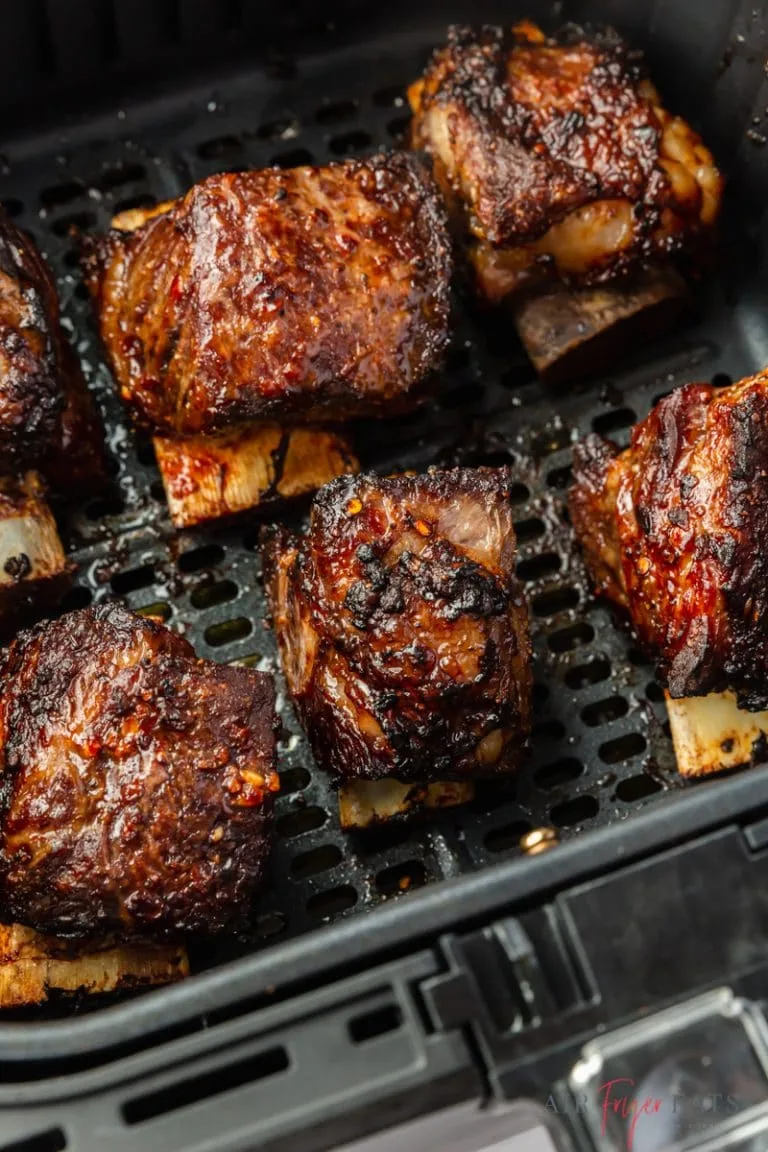
An air fryer beef short rib recipe gives you caramelized, restaurant-quality ribs in under 30 minutes, no smoker or grill required. The circulating hot air creates a crispy bark that rivals low-and-slow methods, and you'll keep more of the natural juices since the cook time is so much shorter. If you've been avoiding short ribs because they seem like a weekend-long project, the air fryer changes the equation entirely.
In our research, aggregate user reviews across major air fryer brands show that short ribs are one of the top-rated beef dishes for the appliance, with most cooks reporting the best results at 375°F to 400°F using flanken or English-cut bones. The key is picking the right cut for your air fryer's basket size and knowing exactly when to pull them. Let's break down which cut works best and why it matters more than you think.
Why Air Fryer Short Ribs Are Worth Making (And Why Most People Get Them Wrong)
Air fryer short ribs deliver a crispy, deeply browned exterior with a juicy interior in a fraction of the time oven roasting or smoking demands. The Maillard reaction, which is the chemical process that creates browned, flavorful crust on meat, happens fast in an air fryer because the concentrated circulating air hits the meat surface at high heat with almost no moisture barrier. That's the same reaction that makes seared steak taste incredible, and the air fryer triggers it without a cast iron pan.
Most people get air fryer short ribs wrong by treating them like chicken wings. They overcrowd the basket, skip the preheat, and never check internal temperature. The result is steamed, pale meat with no bark and uneven doneness. Short ribs need space around each piece for airflow, a screaming-hot basket at the start, and a reliable instant-read thermometer to nail the pull temperature.
Get those three things right and the rest is straightforward.
The other common mistake is choosing the wrong cut. Thick English-cut ribs and thin flanken ribs behave very differently in an air fryer, and a recipe written for one will fail with the other. Understanding the cut is the single biggest factor in whether your first batch is a win or a disappointment.
Which Short Rib Cut Works Best in an Air Fryer
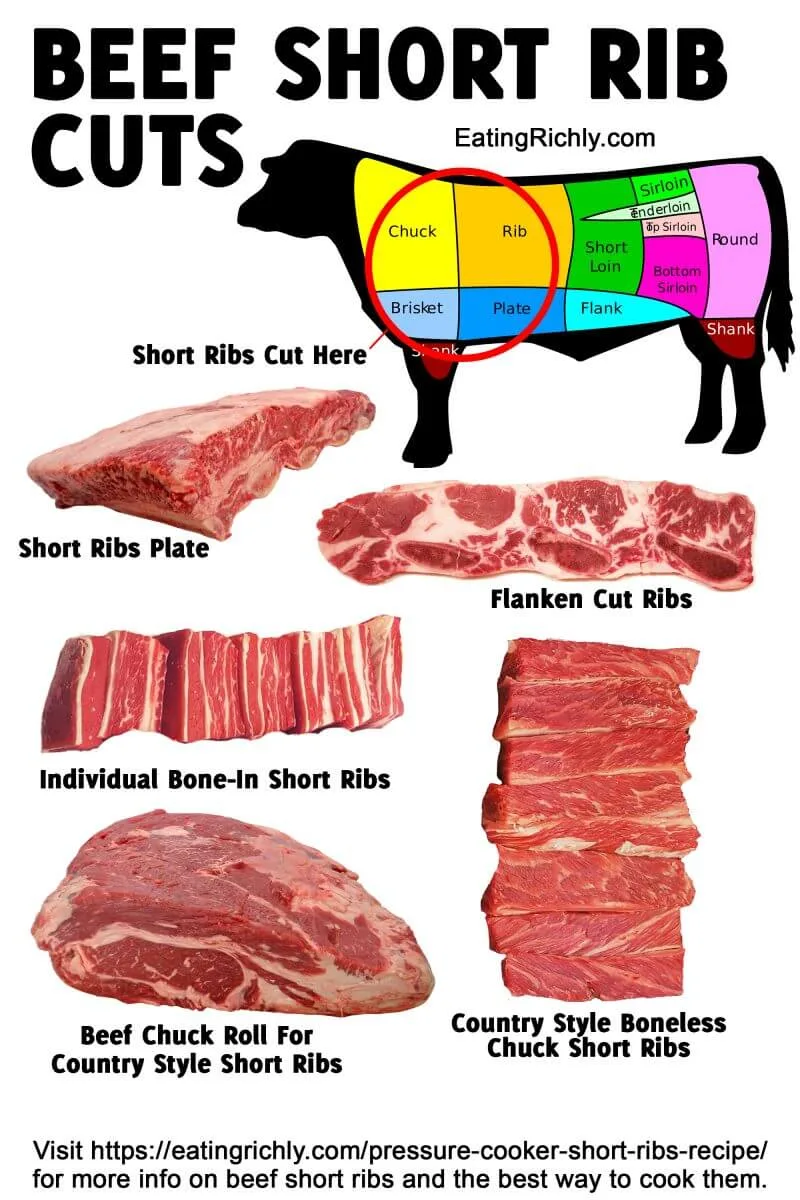
The cut you choose determines your cook time, temperature, and even whether the ribs fit in your basket. Here's how the three main types compare.
English-Cut Short Ribs (Bone-In, Thick)
English-cut ribs are single bones with a thick slab of meat attached, usually about 2 to 3 inches wide and 1.5 to 2 inches thick. They come from the chuck or plate primal and have plenty of marbling and connective tissue. In an air fryer, they need lower heat (375°F) and more time (25 to 30 minutes total) to render the fat and tenderize without drying out the exterior.
These are the best choice if you want a thick, steak-like bite with a bone to grip. They fit well in larger air fryer baskets (5.5 qt and up) but can be tight in compact models. If your air fryer is on the smaller side, you may only fit two or three pieces at a time.
Flanken-Cut Short Ribs (Thin, Cross-Cut)
Flanken ribs are sliced across the bone rack, giving you thin strips (about half an inch thick) with multiple small bones running through each piece. This is the cut used in Korean BBQ galbi, and it's the fastest-cooking option for an air fryer. At 400°F, flanken ribs are done in 8 to 10 minutes total.
The thin profile means more surface area for browning, so you get incredible crust in very little time. The tradeoff is less meat per piece and a higher risk of overcooking since the window between perfect and dry is narrow. Flanken ribs are ideal for weeknight dinners, meal prep, and anyone who wants bold flavor without a long cook.
Boneless Short Ribs
Boneless short ribs are chunks of meat cut from the chuck or plate, usually sold in 2-inch pieces. They cook faster than bone-in English cuts but slower than flanken, landing around 20 to 24 minutes at 375°F. The advantage is easy eating, no bones to navigate, and they take well to cubing for skewers or stir-fry after air frying.
The downside is that the bone adds flavor during cooking, so boneless ribs can taste slightly less rich. A good marinade or rub compensates for this. If you're cooking for kids or anyone who doesn't want to deal with bones, boneless is the practical pick.
| Cut | Thickness | Temp | Total Time | Best For |
|---|---|---|---|---|
| English-cut (bone-in) | 1.5–2 in | 375°F | 25–30 min | Steak-like texture, larger air fryers |
| Flanken-cut (thin) | 0.5–0.75 in | 400°F | 8–10 min | Fast weeknight meals, Korean-style |
| Boneless | ~2 in chunks | 375°F | 20–24 min | Easy eating, skewers, meal prep |
The Best Dry Rub and Marinade for Air Fryer Short Ribs
A good seasoning is what separates forgettable ribs from the kind you crave. Since air fryer cook times are short, you want bold flavors that don't need hours to penetrate. That means a well-balanced dry rub for quick cooks or a shorter marinade (2 to 4 hours) for deeper flavor.
The All-Purpose Dry Rub
This rub works on every cut and takes about 30 seconds to mix. The brown sugar aids caramelization, the smoked paprika adds depth, and the salt ratio is calibrated for beef.
- 2 tbsp brown sugar
- 1 tbsp kosher salt
- 1 tbsp smoked paprika
- 2 tsp black pepper
- 2 tsp garlic powder
- 1 tsp onion powder
- 1 tsp cumin
- 0.5 tsp cayenne pepper
Pat the ribs completely dry with paper towels first. This is non-negotiable, moisture on the surface prevents browning and creates steam instead of crust. Coat the ribs lightly with olive oil or avocado oil, then apply the rub generously on all sides. Let them sit for at least 30 minutes at room temperature, or refrigerate for up to 24 hours for deeper flavor penetration.
The Quick Marinade (Galbi-Inspired)
If you're using flanken-cut ribs, a Korean-style marinade adds sweetness, umami, and tenderizing acid in one step. This is the same flavor profile used in traditional galbi, adapted for the air fryer's shorter cook window.
- 0.5 cup soy sauce
- 3 tbsp brown sugar
- 2 tbsp sesame oil
- 3 cloves garlic, minced
- 1 tbsp rice vinegar
- 1 tsp black pepper
- 1 Asian pear or half a regular pear, grated (natural tenderizer)
- 1 tsp grated ginger
Combine everything and marinate the ribs for 2 to 4 hours in the fridge. Don't go longer than 8 hours, the acid in the vinegar and pear will start breaking down the meat texture too much. When you're ready to cook, pull the ribs out 20 minutes before air frying to take the chill off, and shake off excess marinade so it doesn't burn in the basket.
When to Use Rub vs. Marinade
Dry rubs are faster and create better surface crust since there's no added liquid. They're the right choice for English-cut ribs where you want a thick, bark-like exterior. Marinades work best for flanken cuts where the thin slices absorb liquid quickly and the sugars in the sauce caramelize into a sticky glaze during the short cook.
If you want to use a BBQ sauce or any sugar-heavy glaze, apply it only in the last 2 to 3 minutes of cooking. Sugar burns fast in an air fryer, and applying sauce too early is the number one cause of blackened, bitter ribs.
How to Cook Beef Short Ribs in an Air Fryer — Step by Step
This process works for all three cut types. The only variables are temperature and time, which we'll cover in the next section.
Step 1: Prep the Ribs
Trim any loose or hanging fat caps, but leave a thin layer intact. That fat renders during cooking and keeps the meat moist. Pat every surface dry with paper towels. Apply your chosen rub or pull the ribs from the marinade and let excess drip off.
Step 2: Preheat the Air Fryer
Set your air fryer to the target temperature (375°F for English-cut or boneless, 400°F for flanken) and let it run empty for 3 to 5 minutes. A preheated basket is critical. It triggers immediate browning when the meat hits the hot surface, similar to dropping a steak into a screaming-hot pan. Skipping the preheat is one of the most common reasons air fryer meat comes out pale and steamed.
Step 3: Arrange the Ribs
Place the ribs in a single layer with at least half an inch of space between each piece. Do not stack or overlap. Air fryers work by circulating hot air around the food, and blocked airflow means uneven cooking. If your basket is small, cook in batches.
It takes longer, but the results are dramatically better than a crowded single batch.
If your air fryer has a rack insert, use it. Elevating the ribs allows air to circulate underneath, which improves browning on the bottom side and prevents the meat from sitting in rendered fat.
Step 4: Cook and Flip
Start the timer for the first side. Halfway through the total cook time, open the basket and flip each piece with tongs. Don't use a fork, piercing the meat lets juices escape. For English-cut ribs, you may want to rotate them 180 degrees as well since most air fryers have a hotter zone near the back where the fan is.
Step 5: Check Internal Temperature
This is where most recipes fail people. They give you a time and hope for the best, but air fryer wattage varies significantly between models. A 1,400W unit runs cooler than a 1,800W unit, and the same recipe can be underdone in one and overcooked in the other.
Insert an instant-read thermometer into the thickest part of the meat, avoiding the bone. Here are the target temperatures:
- Medium-rare: 130°F to 135°F (best for well-marbled English-cut)
- Medium: 140°F to 145°F (the sweet spot for most people)
- Medium-well: 150°F to 155°F (flanken cuts can handle this since they're thin)
Pull the ribs at 5 degrees below your target. They'll carry over another 3 to 5 degrees while resting.
Step 6: Rest Before Serving
Transfer the ribs to a plate or cutting board and let them rest for 5 to 10 minutes. This isn't optional. Resting allows the muscle fibers to relax and reabsorb the juices that were driven to the center by the heat. Cut into a rib immediately and you'll watch all those juices run out onto the plate, leaving the meat drier than it should be.
Tent loosely with foil if you want to hold heat, but don't wrap it tight. The trapped steam will soften the crispy bark you just worked to build.
Cook Times and Temperatures for Every Cut
The table below gives you a reliable starting point. Always verify with a thermometer, but these times reflect what aggregate user reviews and manufacturer cooking guides report for standard air fryers in the 1,500W to 1,700W range.
| Cut | Air Fryer Temp | First Side | Second Side | Total Time | Target Internal Temp |
|---|---|---|---|---|---|
| Flanken (0.5 in) | 400°F | 4–5 min | 4–5 min | 8–10 min | 140–145°F (medium) |
| English-cut (1.5–2 in) | 375°F | 12–15 min | 12–15 min | 25–30 min | 135–145°F (med-rare to medium) |
| Boneless (2 in chunks) | 375°F | 10–12 min | 10–12 min | 20–24 min | 140–145°F (medium) |
If your air fryer runs at 1,400W, add 2 to 3 minutes per side. If it's 1,800W or higher, subtract 1 to 2 minutes. These are guidelines, not gospel. The thermometer is your final authority.
For English-cut ribs specifically, some cooks prefer starting at 400°F for the first 5 minutes to kickstart the crust, then dropping to 350°F for the remaining time. This two-stage approach gives you aggressive browning upfront without overcooking the interior. It's worth trying once you've got the basic method down.
One more thing worth noting. If you're cooking for a family and need to batch cook, keep finished ribs warm in an oven set to 200°F while the next round goes through the air fryer. Don't let them sit at room temperature for more than 20 minutes, the USDA recommends refrigerating cooked beef within 2 hours of cooking for food safety.
How to Get Crispy, Caramelized Bark Without Burning
The bark is everything. It's the difference between ribs that taste like they came from a smoker and ribs that taste like boiled beef. In an air fryer, you can get genuinely impressive crust, but the margin between perfect and burnt is thinner than you'd expect.
Start Dry, Stay Dry
Moisture is the enemy of browning. Every surface of the rib needs to be as dry as possible before it goes in the basket. Pat the meat with paper towels after seasoning, not just before. If you're using a marinade, pull the ribs out 15 minutes early and let the surface air-dry in the fridge.
The thin film of evaporation that forms on the outside is exactly what you want.
Oil helps too, but use it sparingly. A light coat of avocado oil (smoke point around 520°F) gives the rub something to cling to and conducts heat evenly. Too much oil pools in the basket, smokes, and creates a bitter flavor that coats the meat.
Preheat Like You Mean It
We covered this in the step-by-step, but it deserves repeating because it's the single most impactful thing you can do for bark. A cold basket means the meat sits in lukewarm air for the first few minutes, steaming instead of searing. By the time the air gets hot enough to brown, the surface has already dried out from the inside and won't caramelize properly.
Run the air fryer empty for a full 5 minutes at your target temperature. Some models beep when preheated, but the timer doesn't always account for the basket itself being hot. Give it the extra time.
Sugar Is Your Friend and Your Enemy
Brown sugar in a dry rub accelerates caramelization and gives the bark a deep, almost coffee-like richness. The problem is that sugar burns at around 350°F, and air fryer air temperatures exceed that easily. The trick is using just enough sugar to promote browning without coating the meat in a layer that turns black.
In our research, the sweet spot is 1 to 2 tablespoons of brown sugar per rack of ribs, mixed with enough salt and paprika to dilute the concentration on any single spot. If you're adding a glaze, wait until the last 2 to 3 minutes. Brush it on lightly, let it tack up for a minute, then pull the ribs. That's enough time for the sugars to caramelize without charring.
Don't Peek Too Often
Every time you open the basket, you lose about 25°F of heat and reset the browning clock. It takes 1 to 2 minutes for the air fryer to recover. If you're checking every 3 minutes out of curiosity, you're actively preventing the crust from forming.
Set your timer, walk away, and only open the basket at the flip. If you need to check temperature, do it at the flip or within 2 minutes of the expected finish time. The thermometer insertion takes 10 seconds. That's it.
The Biggest Mistakes People Make with Air Fryer Short Ribs
Most failures come down to a handful of repeatable errors. Here's what goes wrong and how to fix it.
Overcrowding the Basket
This is the number one complaint in aggregate user reviews. People try to fit 8 flanken ribs in a basket that comfortably holds 4. The overlapping pieces steam each other, the air can't circulate, and you end up with gray, rubbery meat that tastes like it was microwaved.
Cook in batches. Yes, it takes longer. No, it's not optional if you want good results. Leave at least half an inch between pieces.
If you can't fit all your ribs in a single layer with that spacing, split them into two rounds.
Skipping the Thermometer
Time-based recipes are a starting point, not a finish line. Air fryer wattage varies by as much as 400W between models, and that directly affects how much heat is actually hitting the meat. A recipe written for an 1,800W Ninja will undercook in a 1,400W budget unit.
An instant-read thermometer costs $10 to $15 and removes all the guesswork. Insert it into the thickest part of the meat, wait for the reading, and pull when you're 5 degrees below your target. There's no reason to guess when a tool this cheap gives you a definitive answer.
Cooking Straight from the Fridge
Cold meat cooks unevenly. The exterior hits the target temperature while the center is still climbing, which means you either overcook the outside or undercook the inside. Pull your ribs out of the fridge 15 to 20 minutes before cooking. They don't need to reach full room temperature, just take the deep chill off.
This also applies to marinated ribs. If they've been sitting in the fridge for hours in a cold marinade, that liquid is near 35°F. It'll drop your air fryer's basket temperature the moment it goes in.
Applying Glaze Too Early
BBQ sauce, teriyaki, honey garlic, any sugar-heavy glaze will burn if it's exposed to 400°F air for more than 3 to 4 minutes. The sugars carbonize fast, and once that happens, there's no saving it. The bitter, acrid taste penetrates the meat.
Cook the ribs completely first. Pull them out, brush on the glaze, and return them to the air fryer for 2 minutes max. Some people prefer glazing under a broiler for 60 seconds instead, which gives you more control. Either way, the glaze goes on at the end, never the beginning.
Not Resting the Meat
Cutting into a rib the second it comes out of the basket is tempting, but you'll lose a noticeable amount of juice. The muscle fibers are contracted from the heat, and they need time to relax. Five minutes is the minimum. Ten is better for thick English-cut ribs.
Resting also lets the internal temperature equalize. The outside of the rib is hotter than the center when it comes out. During the rest, that heat migrates inward and the temperature evens out, giving you consistent doneness from edge to center.
Air Fryer Short Ribs vs. Oven, Smoker, and Grill — Which Is Best?
Each method has a legitimate case. The right choice depends on your priorities: time, flavor, texture, or convenience.
Air Fryer
Best for speed and convenience. You get a solid crust and juicy interior in 10 to 30 minutes depending on the cut. The flavor won't match a smoker, but it's significantly better than oven roasting for most people because the concentrated airflow creates better browning. Cleanup is easier than any other method since the basket is non-stick and compact.
The limitation is capacity. Most air fryers handle 2 to 4 servings at a time. If you're cooking for a crowd, you'll be running multiple batches.
Oven
The oven is the most forgiving method and the best for large batches. You can fit a full sheet pan of ribs with no crowding. The downside is time and energy. Oven-roasted short ribs typically need 2 to 3 hours at 300°F to get tender, and the crust is softer than what an air fryer or grill produces unless you finish under the broiler.
If you're making 20 ribs for a party, use the oven. If you're making 4 ribs for dinner tonight, the air fryer wins.
Smoker
Smoker ribs have a depth of flavor that no other method replicates. The combination of low heat, long cook time, and wood smoke creates a bark and tenderness that's in a different category entirely. The tradeoff is time and equipment. You need 4 to 6 hours minimum, a smoker or pellet grill, and some experience managing temperature and smoke levels.
For special occasions or when flavor is the only thing that matters, the smoker is unbeatable. For a Tuesday night, it's not practical.
Grill
Charcoal and gas grills give you direct flame char and high heat, which creates excellent crust and those coveted grill marks. The challenge with short ribs on a grill is controlling the heat. Fat dripping onto flare-ups can char the outside before the inside is done. Indirect heat setup works but requires attention and a two-zone fire.
Grill ribs are great when you're already outside cooking other things. Starting a grill just for ribs is more effort than most weeknights call for.
| Method | Time | Capacity | Bark Quality | Smoke Flavor | Best For |
|---|---|---|---|---|---|
| Air Fryer | 10–30 min | 2–4 servings | Very good | None (add liquid smoke) | Weeknights, small batches |
| Oven | 2–3 hrs | 10+ servings | Moderate (broiler helps) | None | Large batches, meal prep |
| Smoker | 4–6 hrs | 6+ servings | Excellent | Outstanding | Special occasions, flavor-first cooks |
| Grill | 30–60 min | 4–8 servings | Excellent with char | Light (charcoal) | Outdoor cooking, mixed grilling sessions |
If you're looking for a middle ground, air fryer ribs finished with a quick pass under the broiler give you the best of both worlds. The air fryer handles the bulk of the cooking, and the broiler adds a final blast of top-down heat that deepens the crust in 60 to 90 seconds.
Korean-Style Air Fryer Short Ribs (Galbi-Inspired)
Korean galbi is one of the most popular ways to eat flanken-cut short ribs, and the air fryer handles it beautifully. The thin cuts absorb the marinade fast, the sugars caramelize quickly, and the whole cook takes under 10 minutes.
The Marinade
The galbi marinade relies on soy sauce for salt and umami, Asian pear for sweetness and tenderizing enzymes, and sesame oil for nutty depth. Here's the full mix:
- 0.5 cup soy sauce
- 3 tbsp brown sugar
- 2 tbsp sesame oil
- 4 cloves garlic, minced
- 1 tbsp rice vinegar
- 1 Asian pear, grated (or half a regular pear)
- 1 tsp freshly grated ginger
- 0.5 tsp black pepper
- 1 tbsp toasted sesame seeds (added after cooking)
Combine everything except the sesame seeds. Marinate the flanken ribs for 2 to 4 hours. The pear contains enzymes that break down protein, so don't exceed 8 hours or the texture turns mushy.
Cooking
Preheat the air fryer to 400°F. Shake excess marinade off the ribs and arrange them in a single layer. Cook for 4 to 5 minutes per side. The sugars in the marinade will darken fast, so keep an eye on them during the last minute.
You want deep mahogany, not black.
Pull the ribs at 140°F internal for medium. They'll carry over to around 145°F during the rest.
Serving
Transfer to a plate and sprinkle with toasted sesame seeds and sliced scallions. Serve with steamed rice, kimchi, and a side of ssamjang (Korean dipping sauce) if you want the full experience. The meat should be sticky, slightly charred at the edges, and tender enough to pull apart with chopsticks.
This is one of those dishes that looks and tastes like it took way more effort than it did. The air fryer does most of the work, and the marinade does the rest.
What to Serve with Air Fryer Short Ribs
Short ribs are rich and fatty, so the best sides cut through that heaviness with acid, crunch, or freshness. Here are the combinations that work best.
Starchy Sides
Steamed white rice is the classic pairing, especially with Korean-style ribs. It soaks up the juices and balances the salt. For English-cut ribs with a BBQ rub, creamy mashed potatoes or cheesy grits work well. The starch acts as a neutral base that lets the meat stay the star.
If you want something lighter, roasted sweet potatoes or a simple baked potato with sour cream and chives gives you the same comforting starch without being quite as heavy.
Fresh and Crunchy
A quick slaw with cabbage, carrots, rice vinegar, and a little sesame oil adds crunch and acid that cuts through the fat. For a more herb-forward option, a simple salad of mixed greens with a lemon vinaigrette or a cucumber salad with vinegar and chili flakes does the same job.
Kimchi is another excellent choice if you're going the Korean route. The fermented tang and spice complement the sweet-savory ribs perfectly.
Vegetables
Roasted broccoli, charred green beans, or grilled asparagus add color and a slight bitterness that balances the richness. If you're already running the air fryer, toss some vegetables in the basket during the resting period. The residual heat and rendered fat from the ribs will season them naturally.
For a low-carb option, sauteed spinach with garlic or roasted Brussels sprouts with balsamic glaze are both quick and pair well with any rub or marinade style.
Quick Side Ideas at a Glance
- Steamed jasmine rice
- Creamy mashed potatoes
- Vinegar slaw with cabbage and carrot
- Roasted broccoli with garlic
- Kimchi
- Cucumber salad with rice vinegar
- Charred green beans
- Baked sweet potato
The general rule is one starch, one fresh or crunchy element, and one vegetable. That gives you a balanced plate without turning dinner into a three-hour production.
How to Store, Reheat, and Meal Prep Leftover Short Ribs
Air fryer short ribs keep well if you handle them right. The key is cooling them fast and reheating gently so you don't turn yesterday's perfect rib into a dry, chewy disappointment.
Storing Leftovers
Let the ribs cool to room temperature within 30 minutes of cooking. Don't leave them sitting out for more than 2 hours total, the USDA recommends refrigerating cooked beef within 2 hours to keep it out of the danger zone between 40°F and 140°F where bacteria multiply fastest.
Transfer the ribs to an airtight container or wrap them tightly in foil. They'll keep in the fridge for 3 to 4 days. If you want to freeze them, wrap each piece individually in plastic wrap then place them in a freezer-safe bag. Frozen short ribs are good for up to 3 months, though the texture is best if you use them within 6 to 8 weeks.
Label the container with the date. It sounds fussy, but when you're digging through the fridge on a Wednesday night, you'll be glad you know which container holds the ribs from Saturday versus the ones from two weeks ago.
Reheating Without Drying Them Out
The microwave is the enemy of leftover ribs. It heats unevenly and sucks moisture out of the meat faster than any other method. You'll end up with one end scalding hot and the other still cold, and the whole thing will taste like it was steamed into submission.
The air fryer is actually your best reheating tool. Set it to 320°F and cook the ribs for 3 to 4 minutes per side. The circulating air warms the meat evenly and re-crisps the exterior without overcooking the interior. Pull them at 165°F internal, which is the USDA recommended reheating temperature for leftover meat.
If you don't want to fire up the air fryer, a conventional oven at 300°F for 10 to 15 minutes works too. Cover the ribs loosely with foil for the first half to trap steam and keep them moist, then remove the foil for the last few minutes to firm up the crust.
Meal Prep Strategy
Short ribs are one of the better beef cuts for meal prep because the fat content keeps them from drying out during storage. Cook a full batch on Sunday, portion them into containers with rice and vegetables, and you've got 3 to 4 ready-made lunches.
For the best results, undercook the ribs by about 3 degrees during the initial cook. When you reheat them later, they'll land right at the target temperature instead of overshooting into overcooked territory.
If you're prepping Korean-style flanken ribs, keep the glaze separate and add it during reheating. This prevents the sugars from breaking down and turning bitter during storage.
Expert Tips Most Recipes Leave Out
These are the details that separate a good batch of ribs from one that makes people ask for the recipe. None of them are complicated, but most published recipes skip them entirely.
Score the Fat Cap
English-cut ribs usually have a thick fat cap on one side. If you leave it intact, it won't render properly in the air fryer's short cook time, and you'll end up with a chewy, rubbery layer of unrendered fat. Use a sharp knife to score the fat in a crosshatch pattern, cutting about halfway through the fat layer without slicing into the meat. This gives the fat an escape route to render and crisp up instead of staying tough.
Add Liquid Smoke for Depth
Air fryers don't produce smoke, which is the biggest flavor gap compared to a smoker or grill. A few drops of liquid smoke in your marinade or rubbed onto the meat before cooking bridges that gap. Hickory and mesquite are the most common varieties. Use it sparingly, 1 to 2 teaspoons is enough for a full rack.
Too much tastes artificial and bitter.
Liquid smoke is made by condensing actual wood smoke into a concentrated liquid, so it's not the same as artificial smoke flavoring. You'll find it in most grocery stores near the BBQ sauces.
Use a Rack Insert If You Have One
Some air fryer models come with a secondary rack or multi-tier insert. These are underutilized. Placing ribs on the rack instead of the basket bottom allows air to circulate on all sides, which means more even browning and less flipping. It also keeps the meat out of the rendered fat pool at the bottom of the basket, which prevents the underside from getting soggy.
If your air fryer doesn't have a rack, a small wire cooling rack that fits inside the basket works as a makeshift elevated platform. Just make sure it's oven-safe and doesn't have a non-stick coating that could degrade at high heat.
Spritz Mid-Cook for Extra Crust
This is a trick borrowed from BBQ competition cooking. Fill a small spray bottle with avocado oil and give the ribs a light spritz when you flip them. The thin layer of oil increases surface contact with the hot air and accelerates browning. It also helps any remaining rub adhere to the meat instead of blowing off in the airflow.
Two or three quick sprays per side is all you need.
Let the Air Fryer Gang Up on the Smoke
Air fryers generate smoke when fat drips onto the heating element. If your kitchen smoke detector is sensitive, put a tablespoon of water in the bottom of the basket underneath the ribs (not on the ribs themselves). The water catches drips and reduces smoke without affecting the cook. It also makes cleanup easier since the rendered fat mixes with the water instead of baking onto the metal.
For air fryers with a removable bottom tray, you can also line it with a small piece of foil with a few holes poked in it. This catches the drips while still allowing airflow from below.
The Salt Timing Matters
If you're using a dry rub with salt, apply it no more than 2 hours before cooking for thin cuts like flanken ribs. Salt draws moisture to the surface through osmosis, and on thin meat, too much time means the salt reabsorbs that liquid along with some of the dissolved rub flavors. For thicker English-cut ribs, you can go up to 4 hours or even overnight since the salt has more meat to penetrate and won't oversaturate the surface.
Frequently Asked Questions
Can You Cook Frozen Short Ribs in an Air Fryer?
Yes, but the results won't match starting from thawed ribs. Frozen ribs need about 50% more cook time, and the exterior tends to overcook before the center thaws and reaches temperature. If you must cook from frozen, preheat the air fryer to 350°F, add 6 to 8 minutes of cook time, and check the internal temperature carefully. For the best texture, thaw the ribs in the fridge overnight before cooking.
What Size Air Fryer Do You Need for Short Ribs?
A 5.5 qt basket or larger is the sweet spot for English-cut ribs. It gives you enough room to fit 3 to 4 pieces in a single layer with proper spacing. For flanken ribs, even a 3.5 qt model works since the thin cuts lay flat and take up less vertical space. Oven-style air fryers with rack systems are even better since you can stack two levels and cook more at once.
If you're shopping specifically for meal prep and family cooking, our guide to the best 6 quart air fryer for family of 4 covers the models with the most usable capacity.
Do You Need to Flip Short Ribs in an Air Fryer?
For even browning on both sides, yes. Flanken ribs are thin enough that you might get away with a single side cook if you're in a rush, but the presentation and crust quality suffer. English-cut ribs absolutely need to be flipped since the thick meat cooks unevenly otherwise. Use tongs and flip once at the halfway point.
How Do You Know When Short Ribs Are Done Without a Thermometer?
You can't know for sure, and that's the honest answer. Visual cues like color and juice clarity give you rough estimates, but they're unreliable. A $12 instant-read thermometer removes all ambiguity. If you absolutely don't have one, press the meat with your finger.
Ribs at medium will feel similar to the fleshy part of your palm when you touch your thumb to your middle finger. It's imprecise, but it's better than guessing.
Can You Use BBQ Sauce in an Air Fryer?
You can, but timing matters. Apply BBQ sauce only in the last 2 to 3 minutes of cooking at a reduced temperature (350°F or lower). The high sugar content burns fast at 400°F and creates a bitter, carbonized layer. Another option is to glaze the ribs after cooking and pass them under a broiler for 30 to 60 seconds.
This gives you better control over the caramelization.
Are Air Fryer Short Ribs Healthy Compared to Other Methods?
Air fryer ribs use significantly less oil than deep frying and produce similar crust quality to oven roasting without the extended cook time. The fat content of the meat itself doesn't change based on cooking method, but since the air fryer cooks faster, less of the internal fat renders out. This means the ribs stay juicier but also retain slightly more saturated fat. From a practical standpoint, air frying is one of the healthier ways to prepare short ribs if you're watching added oils and cooking time.
For more on whether air-fried food is healthier overall, see our article on is food cooked in an air fryer healthier.
Final Thoughts — When to Use the Air Fryer and When to Skip It
The air fryer is the best tool for short ribs when you want great results fast and you're cooking for 1 to 4 people. It delivers solid bark, juicy interior, and bold flavor in under 30 minutes for most cuts. For weeknight dinners, small gatherings, and meal prep, it's hard to beat the combination of speed, convenience, and cleanup.
Skip the air fryer when you're cooking for a crowd, when smoke flavor is the priority, or when you're working with unusually thick English-cut ribs that need low and slow heat to break down connective tissue properly. A smoker or oven handles those situations better.
The flanken-cut ribs are where the air fryer truly shines. The thin profile, fast cook time, and massive surface area for browning make it a natural match. If you've never made short ribs before, start there. The Korean galbi marinade recipe above takes about 10 minutes of hands-on work and delivers results that look and taste far more impressive than the effort involved.
For anyone who travels or cooks in tight spaces, short ribs are also a great fit for portable air fryer setups. If you're curious about cooking on the road, our guide to the best air fryer for truck drivers on the road covers the compact models that handle ribs well in an RV, truck cab, or hotel room.
As of 2026, air fryer ownership is high enough that most households already have one sitting on the counter. Short ribs are the dish that turns it from a reheating gadget into a serious cooking tool. Give it a try this week.