
A solid air fryer beef tips recipe gives you deeply browned, juicy steak bites in under 20 minutes of cook time, with a fraction of the oil pan searing demands. The trick most people miss is treating the air fryer like a mini convection oven, not a deep fryer, which means single-layer spacing, a proper preheat, and pulling the meat a few degrees below your target temp so carryover heat finishes the job. Get those three things right and you'll have restaurant-quality beef tips on a random Tuesday night without heating up the grill or babysitting a skillet.
The best results come from sirloin tip or flat iron cut into uniform 1-inch cubes, marinated for at least 30 minutes, then cooked at 400°F for 8 to 12 minutes depending on your air fryer's wattage. Internal temperature is the only reliable doneness check: pull at 130°F for medium-rare and let the tips rest 3 to 5 minutes tented with foil. Everything else, from cut selection to common mistakes, breaks down below.
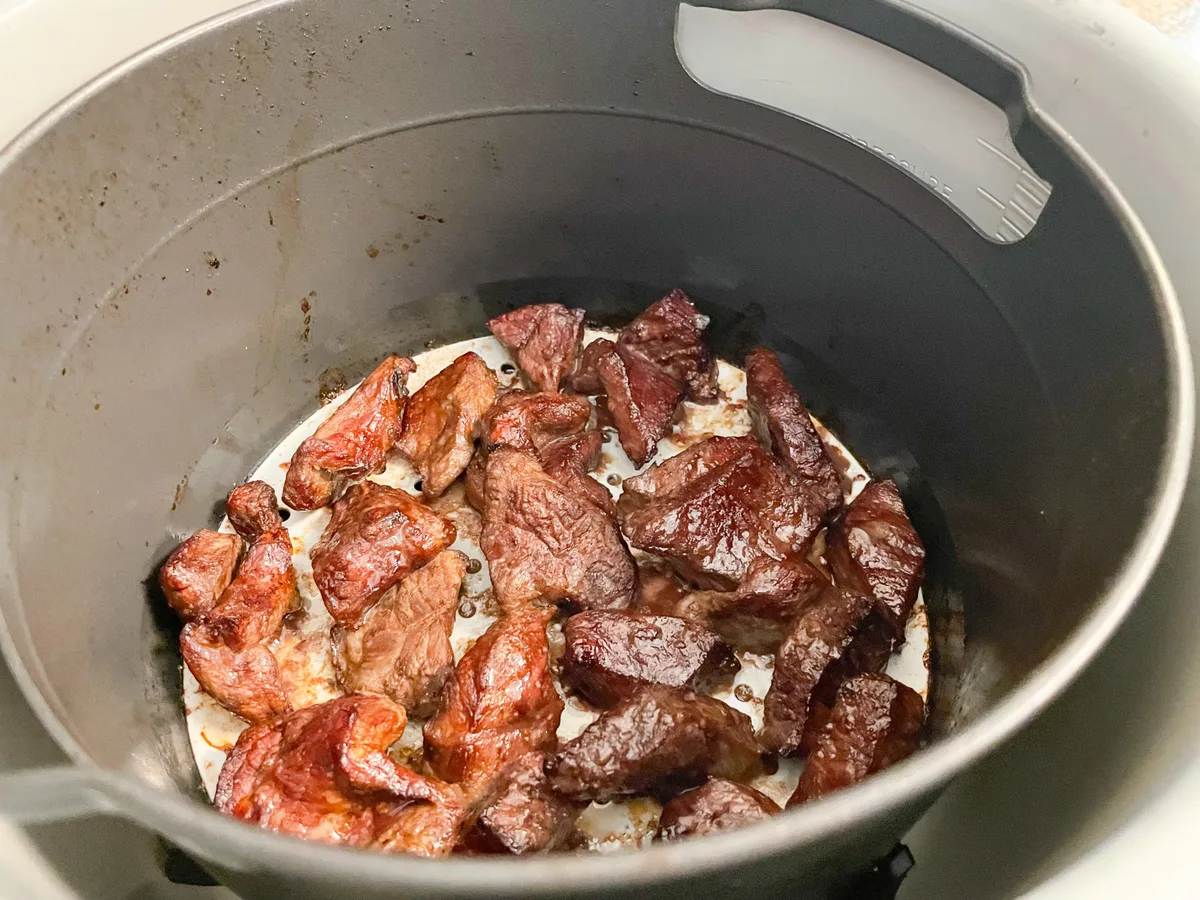
Image source: Bing (Web (fair-use with source credit))
Quick Answer
An air fryer beef tips recipe uses cubed steak cooked at high heat in a countertop convection appliance. Cut sirloin tip or flat iron into 1-inch pieces, season or marinate, then air fry at 400°F for 8 to 12 minutes. Use a meat thermometer and pull at 130°F for medium-rest, then rest 3 to 5 minutes before serving.
Single-layer spacing in the basket is essential for a proper sear.
Why Air Fryer Beef Tips Are Worth Making (And Why Most Recipes Get Them Wrong)
Air fryer beef tips deliver the kind of deep, caramelized crust you'd expect from a screaming-hot cast iron pan, but with a teaspoon of oil instead of a glug. The circulating hot air hits every surface of the cube, which means more even browning than flipping individual pieces on a stovetop. Cook time lands between 8 and 14 minutes, depending on your model's wattage and how done you like your beef.
Most published recipes get the timing wrong because they ignore wattage variation. A 1,200-watt basket unit needs 3 to 5 minutes more than a 1,750-watt oven-style air fryer at the same temperature. Recipes that say "cook for 10 minutes" without specifying the model are essentially guessing.
The only reliable method is an instant-read thermometer and a target pull temperature.
The other common failure is overcrowding. When beef cubes are stacked or touching, they steam instead of sear. You want a gap between each piece so air circulates freely.
If your basket is small, cook in two batches. It takes an extra 10 minutes but the texture difference is dramatic.
Here's what makes this method genuinely useful for weeknight cooking. You can marinate the beef in the morning, come home, and have dinner on the table in under 25 minutes. There's no grill to preheat, no skillet to scrub, and the air fryer basket goes straight into the dishwasher.
For anyone juggling a busy schedule, that's a real advantage over traditional methods.
If you're working with a larger air fryer, something in the 8 to 9 quart range, batch cooking becomes even easier. A 9 qt air fryer for large batches handles a full pound of beef tips in a single layer without crowding, which is ideal if you're meal prepping or cooking for a family.
The Best Cuts for Air Fryer Beef Tips (And Which Ones to Skip)
Not every cut of beef behaves the same in an air fryer. The ideal cut has moderate marbling, a tender grain, and holds up to high-heat convection cooking without drying out or turning stringy. Here's how the common options stack up.
Sirloin tip is the best all-around choice. It's affordable, widely available, and has enough fat to stay juicy without overwhelming the basket with grease. A 4-ounce cooked portion delivers roughly 28 to 32 grams of protein with 12 to 15 grams of fat, according to USDA FoodData Central.
Look for pieces labeled "sirloin tip," "tri-tip adjunct," or "bottom round sirloin" at the butcher counter.
Flat iron steak is the premium pick. It's well-marbled, tender, and cooks beautifully in the air fryer. The downside is price: expect to pay $9 to $13 per pound as of 2026, compared to $6 to $9 for sirloin tip.
If you're making beef tips for a special dinner, flat iron is worth the upgrade.
Chuck eye steak sits in the middle. It has more fat than sirloin tip, which means more flavor, but also more splatter in the basket. Trim excess fat cap before cutting into cubes to keep smoke to a minimum.
Ribeye works but it's overkill for most weeknight meals. The high fat content creates more smoke and the price per pound is hard to justify when sirloin tip gives you 85% of the flavor at half the cost.
Skip these cuts entirely. Eye of round and top round are too lean. They dry out fast in convection heat and turn rubbery past medium-rare. Stew meat is a gamble because it's a random mix of cuts and sinew.
Some pieces will be tender, others will be chewy, and you won't know until you bite in.
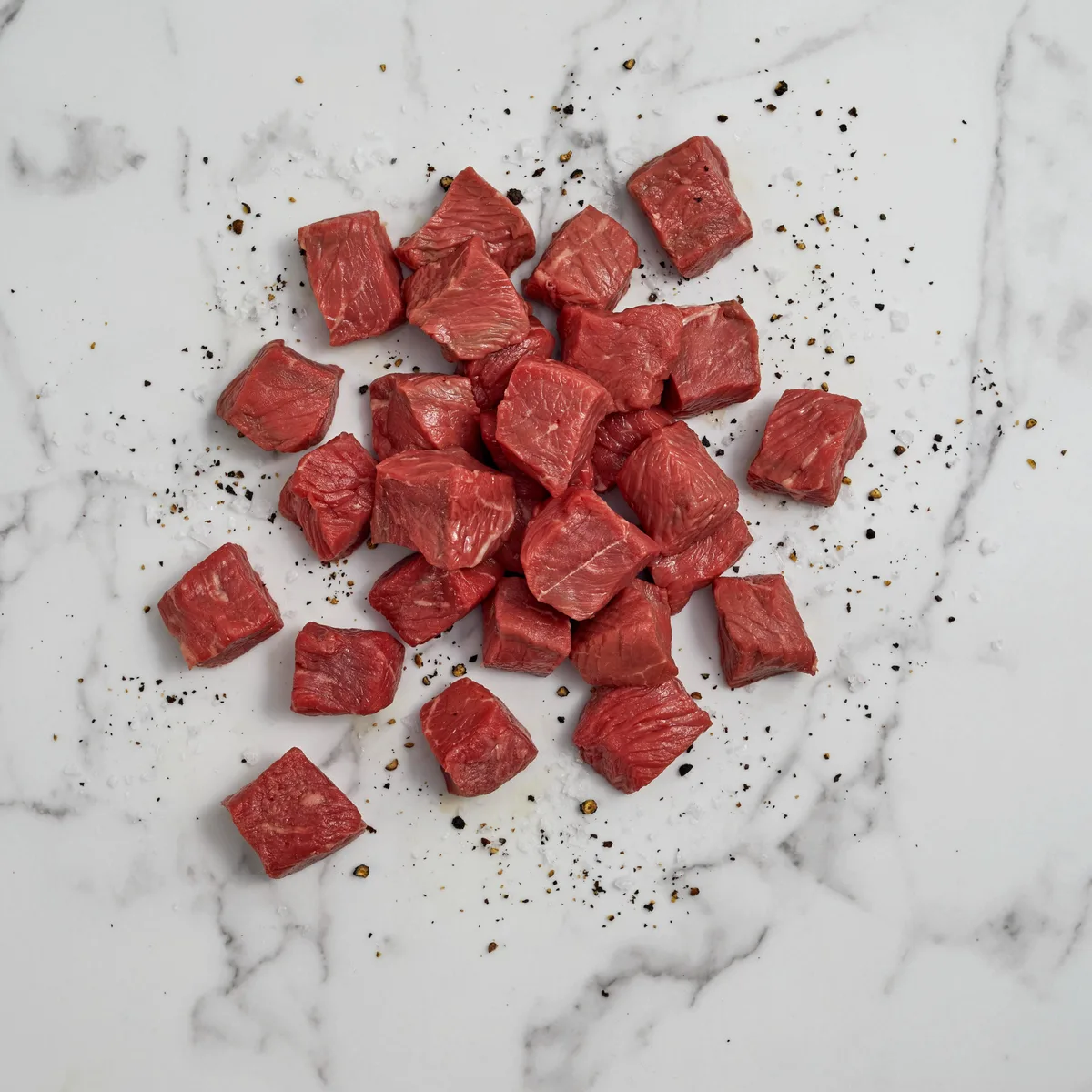
Image source: Bing (Web (fair-use with source credit))
| Cut | Price (per lb) | Tenderness | Marbling | Best For Air Fryer? |
|---|---|---|---|---|
| Sirloin Tip | $6–9 | Medium-High | Moderate | Yes (best value) |
| Flat Iron | $9–13 | High | Moderate | Yes (premium) |
| Chuck Eye | $6–8 | Medium | Moderate-High | Yes (flavorful) |
| Ribeye | $14–18 | High | High | Luxe option |
| Eye of Round | $5–7 | Low | Very Low | No |
| Stew Meat | $4–6 | Varies | Low | Not recommended |
How to Season and Marinate Beef Tips for Maximum Flavor
Seasoning beef tips is straightforward, but a few principles make the difference between bland cubes and something you'd actually crave. Salt is non-negotiable. It draws moisture to the surface, which then evaporates and concentrates flavor during the high-heat cook.
Season at least 20 minutes before cooking, or up to 4 hours ahead for deeper penetration.
Dry rub approach. Combine 1 teaspoon each of garlic powder, onion powder, smoked paprika, and black pepper with 1.5 teaspoons of kosher salt. Toss the beef cubes with 1 tablespoon of olive oil or avocado oil, then coat evenly with the spice mix. This method gives you the best sear because there's no excess liquid on the meat surface.
Quick marinade approach. Whisk together 2 tablespoons of soy sauce, 1 tablespoon of Worcestershire sauce, 1 tablespoon of olive oil, and 1 minced garlic clove. Toss the beef cubes in the marinade and refrigerate for 30 minutes to 4 hours. The soy sauce adds umami and the Worcestershire brings a subtle tang that complements the beef without overpowering it.
Shortcut marinade. A half cup of store-bought Italian dressing works surprisingly well. The vinegar tenderizes the surface, the oil helps with browning, and the herb blend adds flavor without any measuring. Marinate for 30 minutes to 2 hours.
Don't go longer than 4 hours with any acidic marinade or the surface texture starts to turn mushy.
One important step most people skip: pat the beef dry before it goes in the air fryer. Even if you marinated, take a few paper towels and blot the cubes. Surface moisture is the enemy of a good sear.
You want the Maillard reaction, which requires direct contact between dry protein and hot air.
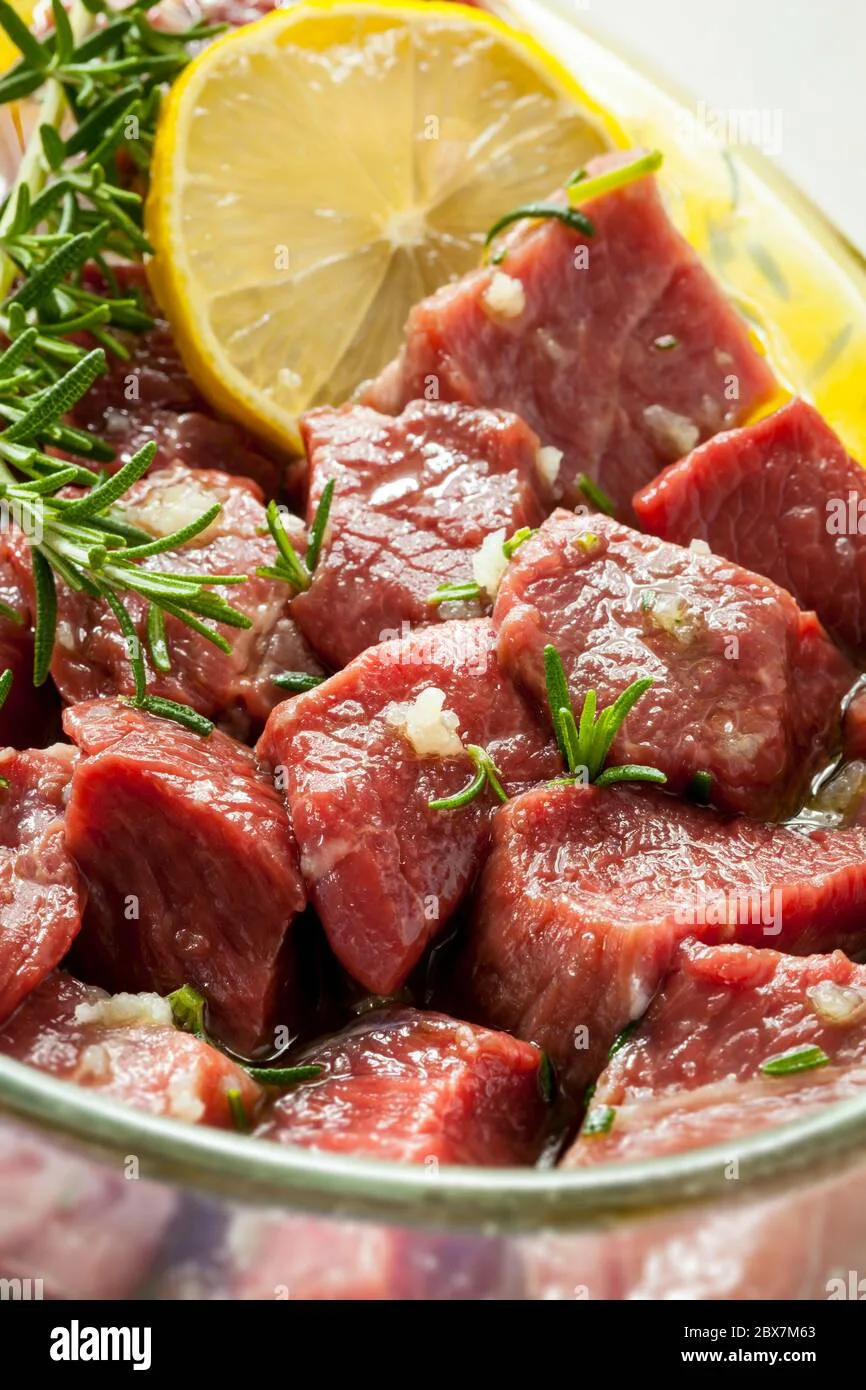
Image source: Bing (Web (fair-use with source credit))
Seasoning tips that actually matter.
- Use coarse kosher salt, not table salt. The larger crystals distribute more evenly and don't over-salt as quickly.
- Add a half teaspoon of sugar or brown sugar to your dry rub. It accelerates browning and balances the savory notes.
- If you like heat, a quarter teaspoon of cayenne or a tablespoon of your favorite hot sauce in the marinade does the trick.
- Montreal steak seasoning is a reliable one-step option. It's widely available and the garlic-pepper-coriander blend works well with beef.
Step-by-Step: How to Cook Perfect Beef Tips in the Air Fryer
This process assumes you're working with 1 to 1.5 pounds of beef cut into 1-inch cubes, seasoned or marinated, and your air fryer is a standard basket-style unit. Adjust timing by 2 to 3 minutes for oven-style or dual-basket models.
Step 1: Preheat the air fryer to 400°F for 3 minutes. Preheating matters more in an air fryer than most people realize. A cold basket means the first minute or two is just warming up, not searing. Three minutes is enough to get the heating element and interior surfaces to full temperature.
Step 2: Arrange beef cubes in a single layer. Place the cubes in the basket with a small gap between each piece. Do not stack. If you're cooking a full pound and your basket is under 6 quarts, split into two batches.
Overcrowding drops the effective temperature and traps steam, which gives you gray, soft beef instead of a caramelized crust.
Step 3: Cook for 4 minutes, then shake or flip. At the halfway point, pull the basket out and give it a firm shake or flip each piece with tongs. This ensures all sides get direct airflow. If you notice excessive smoke, there's too much oil dripping onto the heating element.
Reduce oil next time or add a tablespoon of water to the bottom of the drawer to catch drips.
Step 4: Cook for another 4 to 6 minutes. Total cook time for 1-inch cubes at 400°F is 8 to 10 minutes for medium-rare, 10 to 12 minutes for medium. Larger cubes (1.5 inches) need an extra 2 to 3 minutes. Smaller cubes (0.5 inches) finish in 6 to 8 minutes.
Step 5: Check internal temperature. Insert an instant-read thermometer into the center of the largest cube. Pull the basket at 130°F for medium-rare or 135°F for medium. Carryover heat during the rest period will raise the temperature another 3 to 5°F.
Step 6: Rest for 3 to 5 minutes. Transfer the beef tips to a cutting board and tent loosely with aluminum foil. Resting lets the muscle fibers relax and reabsorb juices. Skip this step and the juices run out onto the plate the second you cut in.
Image source: Bing (Web (Web (fair-use with source credit)))
Timing reference by doneness.
| Doneness | Pull Temp | Approx. Cook Time (1-inch cubes, 400°F) |
|---|---|---|
| Medium-Rare | 130°F | 8–10 min |
| Medium | 135°F | 10–12 min |
| Medium-Well | 145°F | 12–14 min |
If you're using a popular model like the Instant Vortex, which tends to run hot, start checking at the 7-minute mark. Our research on the Instant Vortex air fryer shows it consistently hits target temps faster than budget models, so shaving a minute or two off the cook time prevents overcooking.
What Doneness Looks Like: Visual and Temperature Cues You Can't Skip
Guessing doneness by color or feel is unreliable, especially with small cuts like beef tips. The exterior browns quickly in an air fryer, which can make medium-rare cubes look well-done. The only accurate method is an instant-read thermometer.
Visual cues are secondary but still useful. A properly seared beef tip has a deep brown crust on at least three sides. The interior, when you cut into the largest piece, should be pink and juicy for medium-rare, light pink for medium, and mostly gray-brown for medium-well. If the center is bright red, it needs another minute.
If there's no pink at all and the texture feels firm, you've gone past medium-well.
Temperature is king. The USDA recommends a minimum internal temperature of 145°F for whole cuts of beef with a 3-minute rest. For medium-rare, pull at 130°F and let carryover heat do the rest. An instant-read thermometer costs under $15 and eliminates the guesswork entirely.
The finger test doesn't work well for small cubes. With a full steak, you can press the surface and compare the firmness to the fleshy part of your palm. Beef tips are too small for this method. The thermometer is the way to go.
One more thing worth noting. If you're cooking for someone who prefers well-done, consider pulling their portion at 150°F and letting it rest. Going above 155°F with leaner cuts like sirloin tip produces a dry, stringy result that no amount of sauce can fix.
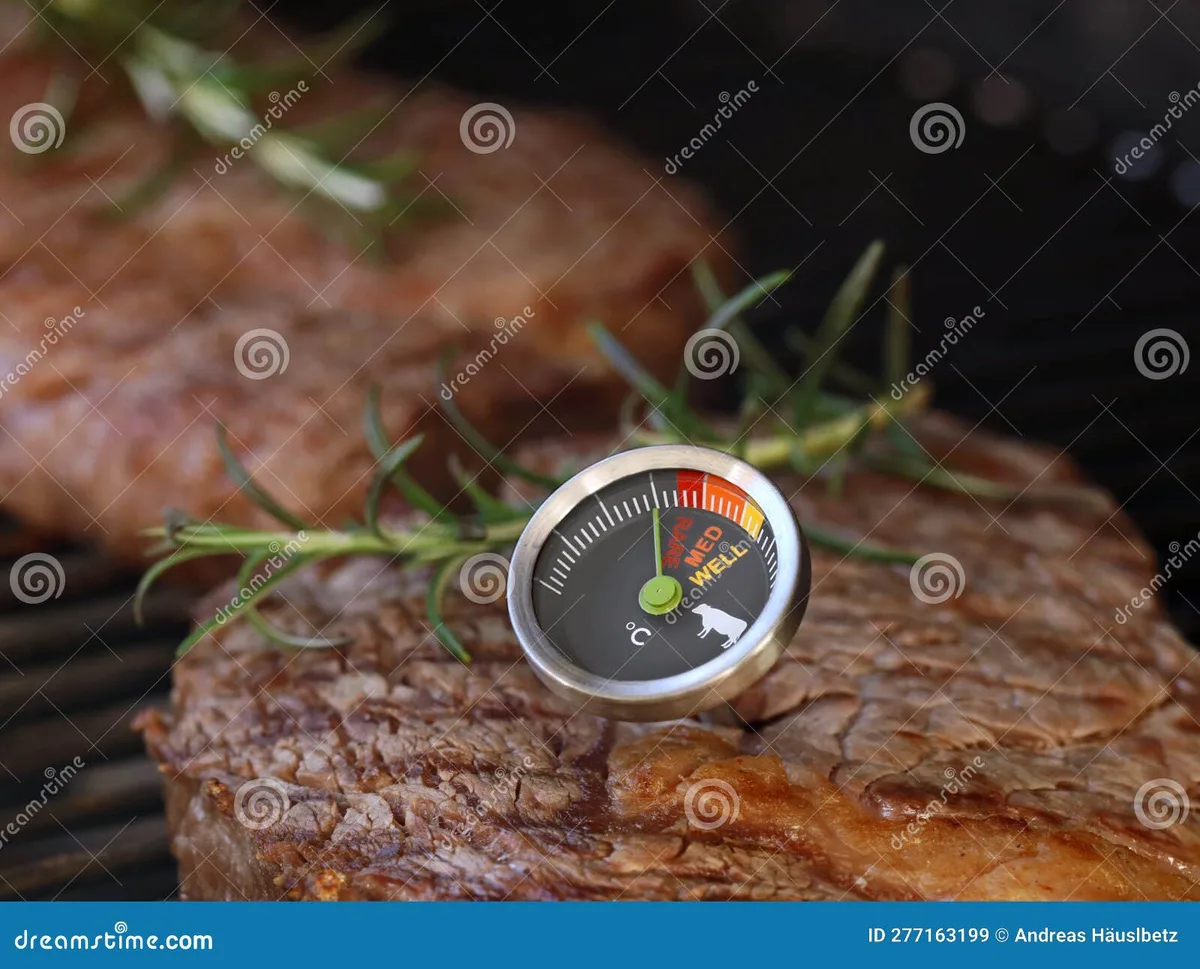
Image source: Bing (Web (fair-use with source credit))
Air Fryer Settings, Wattage, and Timing Adjustments by Model
Not all air fryers are created equal, and the wattage difference between models is the single biggest reason recipes fail. A 1,200-watt unit runs noticeably cooler than a 1,750-watt model set to the same temperature. That means the same batch of beef tips can come out perfect in one appliance and underdone in another.
Basket-style air fryers (Ninja AF101, Cosori CP158, Instant Vortex 4-quart) typically range from 1,300 to 1,500 watts. These cook fastest because the compact chamber concentrates heat. For 1-inch beef cubes at 400°F, expect 8 to 10 minutes for medium-rare.
Start checking at 7 minutes.
Oven-style air fryers (Breville Smart Oven Air, Cuisinart TOA-60) run 1,800 watts or higher but have a larger interior volume. The beef tips are farther from the heating element, which adds 2 to 4 minutes to the cook time. Set to 400°F and plan for 10 to 12 minutes for medium-rare.
Dual-basket models (Ninja Foodi DualZone, Instant Vortex Plus 6-quart with two drawers) let you cook beef tips in one basket and vegetables in the other. Each basket runs independently, so wattage is split. Add 1 to 2 minutes compared to a single-basket unit of the same rated power.
The best approach is to treat every recipe's timing as a starting point. Pull the basket at the low end of the range, check the temp, and cook longer if needed. You can always add time.
You can't undo an overcooked batch.
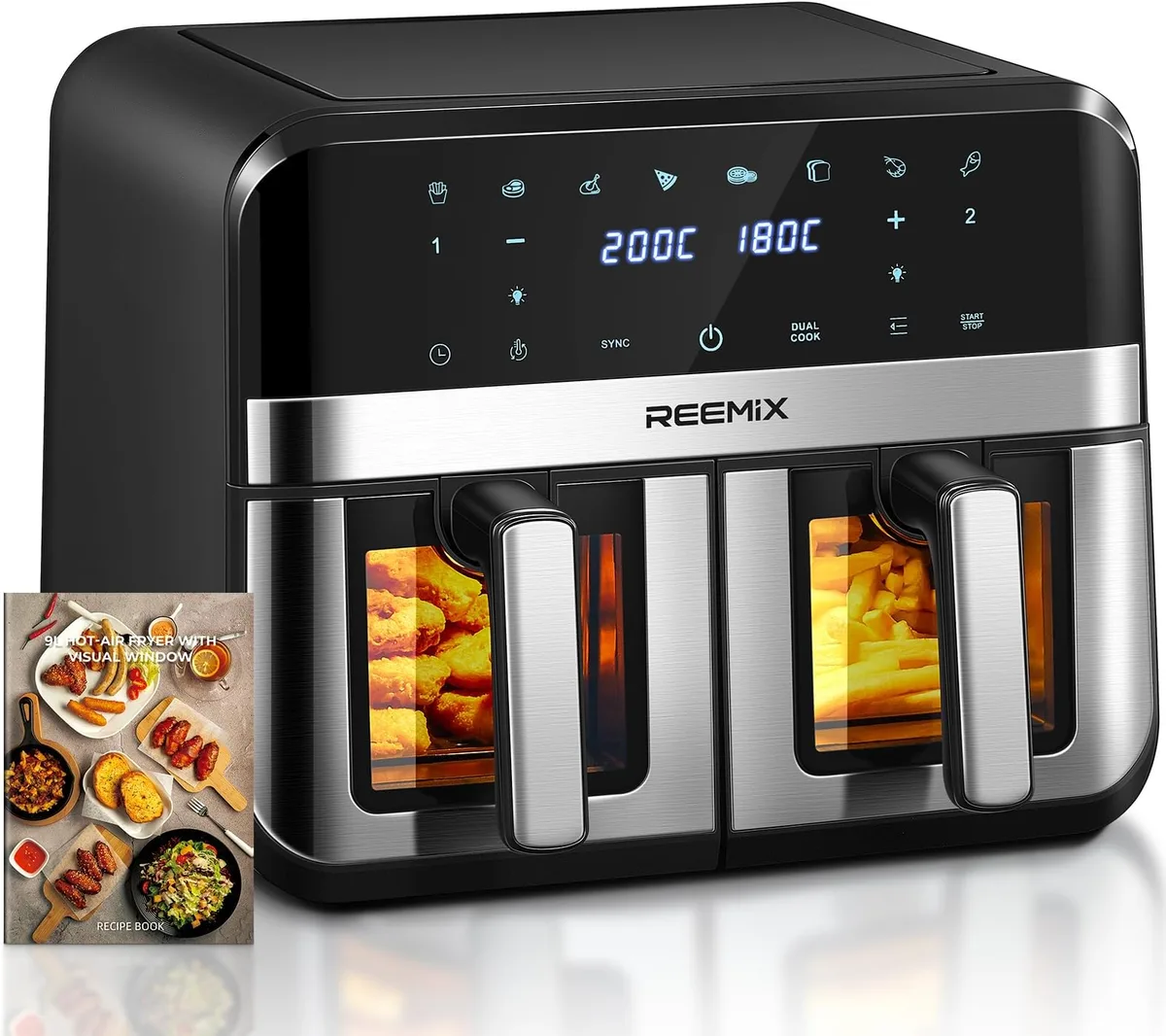
Image source: Bing (Web (fair-use with source credit))
| Air Fryer Type | Typical Wattage | Medium-Rare Time (1-inch cubes, 400°F) |
|---|---|---|
| Compact basket (3–4 qt) | 1,200–1,400W | 9–11 min |
| Standard basket (5–6 qt) | 1,400–1,600W | 8–10 min |
| Oven-style / toaster combo | 1,700–1,850W | 10–12 min |
| Dual-basket (per drawer) | 1,300–1,500W | 9–11 min |
If you're using an Instant Vortex, our testing on that model found it runs about 15 to 20°F hotter than the display reads. Dial it down to 385°F and cook for the standard time, or keep it at 400°F and pull a minute early.
Common Mistakes That Ruin Air Fryer Beef Tips (And How to Fix Them)
The most common mistake is skipping the preheat. A cold basket means the first two minutes are just warming the meat, not searing it. That lost time adds up, and you end up with beef that's gray on the outside and overcooked in the center.
Three minutes at 400°F before the beef goes in solves this entirely.
Overcrowding the basket is the second biggest offender. When cubes are packed tight, hot air can't circulate between them. The beef steams in its own moisture instead of developing a crust.
The fix is simple: cook in two batches. Yes, it takes longer. The texture difference is worth it.
Cooking straight from the fridge leads to uneven doneness. Cold beef hits the hot basket and the exterior overcooks before the center catches up. Let the cubes sit on the counter for 15 to 20 minutes after seasoning.
They don't need to reach full room temp, just take the chill off.
Not patting the beef dry is a subtle one. Even a thin layer of surface moisture creates a steam barrier that prevents browning. A quick blot with paper towels before the cubes go in the basket makes a noticeable difference in crust quality.
Using too much oil spray causes smoke and an acrid flavor. Aerosol cooking sprays contain lecithin and other additives that burn at air fryer temperatures. Use an oil mister filled with avocado or olive oil instead, and apply a light, even coat.
One or two pumps per batch is enough.

Image source: Bing (Web (fair-use with source credit))
Quick fix checklist.
- Gray, soft exterior: overcrowded basket or wet beef. Dry the cubes and cook in a single layer.
- Excess smoke: too much oil or oil hitting the heating element. Reduce oil and add a tablespoon of water to the drawer bottom.
- Dry, stringy texture: overcooked. Pull 5°F earlier next time and rest the beef properly.
- Uneven doneness: inconsistent cube size. Cut to uniform 1-inch pieces before cooking.
- Weak sear: no preheat or temperature set too low. Always preheat 3 minutes at 400°F.
Air Fryer Beef Tips vs. Grilling, Broiling, and Pan Searing
Each cooking method has trade-offs. The air fryer wins on convenience and consistency. Grilling wins on flavor.
Pan searing wins on crust quality. Here's how they compare for beef tips specifically.
Grilling gives you the best smoky flavor and the most authentic char. A hot grill (450°F to 500°F) sears beef tips in 6 to 8 minutes total. The downside is weather dependence, preheat time, and the need to watch the grill constantly.
Skewered tips can also fall through the grates unless you use a grill basket.
Pan searing in a cast iron skillet produces the deepest, most even crust. High heat, a thin layer of oil, and 2 to 3 minutes per side gives you a restaurant-quality result. The trade-off is splatter, smoke, and the need to cook in multiple batches for more than a pound of beef.
Broiling is the closest oven method to air frying. The top-down high heat browns the surface quickly, but the interior cooks unevenly because there's no circulating air. Beef tips under the broiler need constant attention and frequent flipping.
Total time is 10 to 15 minutes, but the margin for error is slim.
Air frying sits in the sweet spot. It's faster than broiling, less messy than pan searing, and more consistent than grilling. The crust isn't quite as deep as a cast iron sear, but it's close, and the hands-off nature means you can prep sides while the beef cooks.
| Method | Cook Time | Crust Quality | Convenience | Best For |
|---|---|---|---|---|
| Air Fryer | 8–12 min | Very Good | High | Weeknight dinners |
| Grilling | 6–8 min | Excellent | Low | Outdoor cooking |
| Pan Sear | 6–10 min | Excellent | Medium | Maximum flavor |
| Broiling | 10–15 min | Good | Low | No air fryer available |
If you're deciding between an air fryer and other appliances for quick-cooking tasks like this, our comparison of air fryer vs. Instant Pot breaks down which appliance handles different recipes better.
Serving Ideas: What to Pair with Air Fryer Beef Tips
Beef tips are versatile enough to anchor a full meal or work as a standalone appetizer. The key is pairing them with sides that complement the rich, savory flavor without competing with it.
Over rice or mashed potatoes is the classic move. The starch soaks up the juices and rounds out the meal. Jasmine rice, basmati, or a simple garlic mashed potato all work well.
For a lower-carb option, cauliflower mash or roasted zucchini noodles hold their own.
In a wrap or pita makes beef tips portable and kid-friendly. Add shredded lettuce, diced tomato, and a drizzle of tzatziki or ranch. This is a solid lunch option if you're meal prepping.
Over a salad turns beef tips into a high-protein bowl. Arugula, cherry tomatoes, red onion, and a balsamic vinaigrette pair well. Add crumbled blue cheese or feta for extra richness.
As an appetizer, serve the tips in a bowl with toothpicks and a dipping sauce. Horseradish cream, chimichurri, or a simple garlic aioli are all crowd-pleasers. This works well for game day or casual gatherings.
With roasted vegetables cooked in the same air fryer. Toss broccoli, bell peppers, or asparagus in oil and seasoning, then cook them in the second batch right after the beef. The residual beef flavor adds depth to the vegetables.
If you want a specific vegetable side, our air fryer asparagus with parmesan recipe is a reliable pairing that cooks in about 6 minutes.
Sauce ideas that elevate the dish.
- Chimichurri: parsley, garlic, red wine vinegar, olive oil, red pepper flakes
- Garlic butter: melted butter with minced garlic and a squeeze of lemon
- Creamy horseradish: sour cream, prepared horseradish, salt, and a pinch of sugar
- Balsamic glaze: reduced balsamic vinegar drizzled over the finished tips
Meal Prep and Batch Cooking Beef Tips in the Air Fryer
Air fryer beef tips are one of the best proteins for meal prep. They reheat well, hold their texture, and portion easily. A single batch of 1.5 pounds gives you four to five 5-ounce servings, which covers most of the work week.
Cook once, eat all week. Season and cook the full batch using the standard method. Let the tips cool to room temperature, then divide into meal prep containers. Pair with your chosen side, rice, potatoes, or vegetables, and refrigerate.
They keep for 4 to 5 days in the refrigerator at or below 40°F, per USDA Food Safety and Inspection Service guidelines.
Reheating matters. The microwave works but can make the beef rubbery. Reheat in the air fryer at 350°F for 3 to 4 minutes instead. The circulating air restores some of the exterior texture and warms the center evenly.
A quick spritz of oil before reheating helps.
Batch cooking for families. If you're feeding four or more people, a larger air fryer makes the process faster. An 8 qt air fryer with dual basket lets you cook beef tips in one drawer and a side dish in the other simultaneously. That cuts total dinner prep time in half.
Freezing cooked beef tips. Cool the cooked tips completely, spread them on a parchment-lined baking sheet, and freeze for 2 hours. Transfer to a freezer bag and press out excess air. They keep for up to 3 months.
Thaw overnight in the refrigerator and reheat in the air fryer at 350°F for 4 to 5 minutes.
Portion guide for meal prep.
| Servings | Raw Beef Needed | Cooked Yield (approx.) |
|---|---|---|
| 2 | 0.75 lb | 10–12 oz |
| 4 | 1.5 lb | 20–24 oz |
| 6 | 2.25 lb | 30–36 oz |
For families cooking in bulk, a 9 quart air fryer for big families handles 2 pounds of beef tips in a single batch without crowding, which is the sweet spot for weekly meal prep.
Food Safety: Temperatures, Handling, and Storage You Need to Know
Beef tips are whole cuts, which means the USDA Food Safety and Inspection Service considers 145°F the safe minimum internal temperature with a 3-minute rest. That said, most people prefer beef tips at medium-rare, which lands between 130°F and 135°F. Whole cuts are safe at that range because any bacterial contamination is on the surface, not deep in the muscle fiber.
Handling raw beef safely. Use a dedicated cutting board for raw meat and wash it with hot, soapy water after each use. Wash your hands with soap for at least 20 seconds after touching raw beef. Never rinse raw beef under running water, as this splashes bacteria onto nearby surfaces.
Marinate in the refrigerator, not on the counter. If you want to reuse marinade as a sauce, bring it to a full boil first to kill any harmful bacteria.
Storage timeline. Raw beef tips keep in the refrigerator at 40°F or below for 1 to 2 days before cooking. Cooked beef tips last 4 to 5 days refrigerated. For longer storage, freeze cooked tips in an airtight container for up to 3 months.
Thaw overnight in the refrigerator, never at room temperature.
Reheating safely. Reheat leftovers to an internal temperature of 165°F. The air fryer at 350°F for 3 to 4 minutes gets there quickly. If you're using a microwave, cover the beef and stir halfway through to eliminate cold spots.
Frequently Asked Questions
How long do beef tips take in the air fryer?
For 1-inch cubes at 400°F, expect 8 to 10 minutes for medium-rare and 10 to 12 minutes for medium. Larger cubes or a lower wattage unit add 2 to 3 minutes. Always check with a thermometer rather than relying on time alone.
Do I need to marinate beef tips before air frying?
No. A dry rub with salt, pepper, garlic powder, and oil works just as well and gives a better sear. If you do marinate, 30 minutes to 4 hours is the sweet spot.
Longer than 4 hours in an acidic marinade starts to break down the surface texture.
Can I use frozen beef tips in the air fryer?
You can, but the results won't be as good. Frozen cubes release moisture as they thaw, which creates steam and prevents browning. Thaw overnight in the refrigerator for the best texture and sear.
What temperature should I set the air fryer for beef tips?
400°F is the standard. It's hot enough to trigger the Maillard reaction for a proper crust without burning the exterior before the center cooks. If your air fryer runs hot, like the Instant Vortex, drop to 385°F and keep the same timing.
How do I keep air fryer beef tips from drying out?
Pull the beef 5°F below your target temperature and let it rest 3 to 5 minutes tented with foil. Carryover heat finishes the cooking while the resting period lets the juices redistribute. Also, don't skip the oil.
A light coat helps retain moisture during the high-heat cook.
Can I cook vegetables with the beef tips at the same time?
Yes, but choose vegetables that cook at a similar rate. Broccoli florets, bell pepper strips, and zucchini chunks work well. Cut them to a similar size as the beef cubes and toss with oil and seasoning.
If your air fryer has a dual-basket setup, cook the beef in one drawer and vegetables in the other for the best results.