
Good air fryer chicken recipes Indian-style come down to one thing. Matching the right marinade to the right cut so you get a crispy exterior without drying out the meat. When that balance clicks, you're looking at golden, spiced chicken with a fraction of the oil that traditional frying needs.
Aggregate user reviews across popular air fryer models show Indian chicken dishes consistently rank among the top-searched recipes, yet most guides skip the marinade science entirely. That's where things fall apart, literally, because not every spice blend survives 400°F of rapid air circulation the same way. Let's break down what actually works and what turns into a burnt, sticky mess.
Why Air Fryer Indian Chicken Deserves a Spot in Your Weekly Rotation
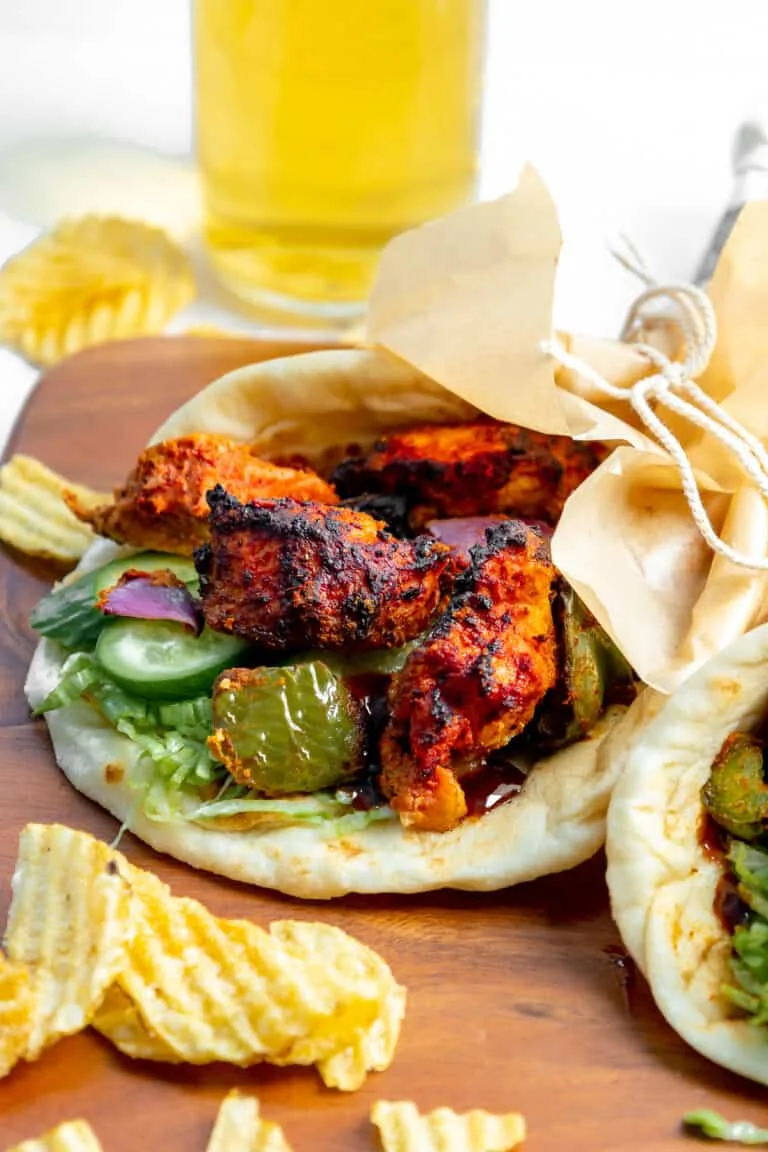
Indian chicken dishes rely on bold spice layers. The air fryer handles that better than most people expect, as long as you work with the appliance instead of against it.
The USDA recommends poultry reach an internal temperature of 165°F for safe consumption. Air fryers hit that mark reliably in 12 to 28 minutes depending on the cut, which is significantly faster than oven baking and uses 70 to 80% less oil than deep frying. For anyone managing fat intake or just tired of scrubbing oil splatter off the stovetop, that's a genuine weeknight advantage.
The real appeal is flavor concentration. Rapid air circulation caramelizes spice coatings quickly, giving you that dark, slightly charred edge you'd normally only get from a tandoor or a very hot grill. You won't replicate a clay oven exactly, but you'll get closer than a standard oven ever will.
If you're cooking for a family, a 9-quart air fryer handles a full batch of drumsticks or thighs in one round without crowding. That alone makes it worth the counter space.
The Biggest Mistakes People Make When Cooking Indian Chicken in an Air Fryer
Most failures come down to treating the air fryer like an oven. It's not. The intense airflow changes everything about how marinades behave, how moisture leaves the meat, and how sugars in spices caramelize or burn.
Here are the mistakes that show up again and again in verified buyer feedback and recipe forums.
Overloading the basket. This is the number one complaint. Chicken pieces need a single layer with airflow around each one. Stack them and you'll get steamed, unevenly cooked centers with soggy exteriors.
Cook in batches if you have to. It's worth the extra 15 minutes.
Using wet batters. Pakora-style batter, thick coconut milk dips, or runny marinades drip through the grate and burn at the bottom. They also block the airflow that makes an air fryer work. If you want a coating, it needs to be thick enough to cling.
Think paste, not liquid.
Skipping the preheat. A 3 to 5 minute preheat at 375°F gives the chicken a blast of consistent heat from the first second. Without it, the outside lags while the inside overcooks. Most modern air fryers have a preheat setting.
Use it.
Setting the temperature too high. Indian spice blends often contain sugar, jaggery, or tamarind. Above 400°F, those sugars scorch fast. Stick to 360°F to 390°F for most recipes.
You get better browning without the acrid burnt-spice taste.
Not checking the temperature early. Air fryers vary. A Cosori 5-quart runs slightly different than an Instant Vortex. Pull out the chicken 2 minutes before the recipe says and probe it.
If you hit 160°F, pull it. Carryover cooking gets you to 165°F during the rest.
How to Choose the Right Marinade for Air Fryer Chicken (And Which Ones Fail)
The marinade is everything in Indian cooking. It's where the flavor lives, and it's also where most air fryer attempts go wrong. Three main marinade styles work for Indian chicken in an air fryer, and each behaves differently under rapid convection heat.
Yogurt-Based Marinades — The Reliable All-Rounder
Yogurt-based marinades are the safest bet for air fryer Indian chicken. The thick dairy base clings to the meat, creates a barrier against the intense airflow, and browns beautifully without burning. This is the foundation of most tandoori and tikka recipes, and it translates perfectly to the air fryer.
A standard mix is thick plain yogurt with turmeric, Kashmiri red chili powder, garam masala, cumin, coriander, ginger-garlic paste, lemon juice, and salt. Marinate for at least 30 minutes at room temperature, or 4 to 12 hours in the refrigerator for deeper flavor penetration. The lactic acid in yogurt tenderizes the surface proteins, which helps the chicken stay juicy even under high heat.
One thing to watch. Don't use low-fat or Greek yogurt that's been thinned with water. The excess moisture will drip and smoke.
Full-fat, strained yogurt holds up best.
Dry Spice Rubs — Fast but Risky
Dry rubs are the quickest option. You coat the chicken in a mix of powdered spices, add a tiny bit of oil to help it stick, and cook. No marination time needed.
This works well for recipes like a simple masala chicken or a quick chili chicken preparation.
The risk is burning. Dry spices have no moisture buffer, so they go from perfectly browned to charred in under a minute at high heat. Keep the temperature at 375°F or below, and toss the chicken in just enough mustard oil or vegetable oil to create a thin film over the rub.
That oil layer protects the spices and helps them toast rather than burn.
Dry rubs work best on dark meat. Thighs and drumsticks have enough internal fat to stay moist while the surface spices toast. On breast meat, dry rubs tend to leave the interior stringy unless you brine the chicken first.
Coconut Milk & Cream Marinades — Rich but Tricky
Coconut milk marinades are common in South Indian and Goan recipes. They add incredible richness, but they're problematic in an air fryer. The thin liquid doesn't cling well, and the natural sugars in coconut milk caramelize and then burn quickly above 380°F.
If you want that coconut flavor, use coconut cream instead of milk. It's thicker, clings better, and burns at a higher temperature. Better yet, use a coconut cream base with a yogurt mix, half and half.
You get the richness without the burning risk.
Wet Batters & Battered Preparations — Just Don't
This needs to be said clearly. Air fryers and wet batters don't mix. If you're thinking pakora, chickpea flour fritters, or any kind of dipped-and-fried preparation, use a deep pan or a kadai.
The batter will drip, smoke, burn onto the heating element, and leave you with raw chicken inside a charred shell. Save the air fryer for marinated and dry-coated pieces only.
The Best Indian Air Fryer Chicken Recipes, Ranked by How Foolproof They Are
Not every Indian chicken recipe adapts well to the air fryer. These six are ranked from most forgiving to most demanding, based on how much margin for error you get with timing, temperature, and marinade consistency.
Tandoori-Style Chicken Tikka — The Best Starting Point
Chicken tikka is the ideal first recipe. Boneless thigh or breast cubes marinated in yogurt and spices, cooked at 375°F for 10 to 14 minutes, flipped once at the halfway mark. The yogurt marinade is forgiving, the small pieces cook evenly, and the visual cues are clear.
You're looking for dark edges and a slightly shrunk surface.
Cut your chicken into uniform 1.5-inch cubes. Any larger and the outside overcooks before the center hits 165°F. Any smaller and you get dry, rubbery pieces.
Thread them on skewers if you want the full tandoori look, but lay them flat in the basket for more even airflow.
Chicken 65 — The Crowd-Pleasing Spicy Option
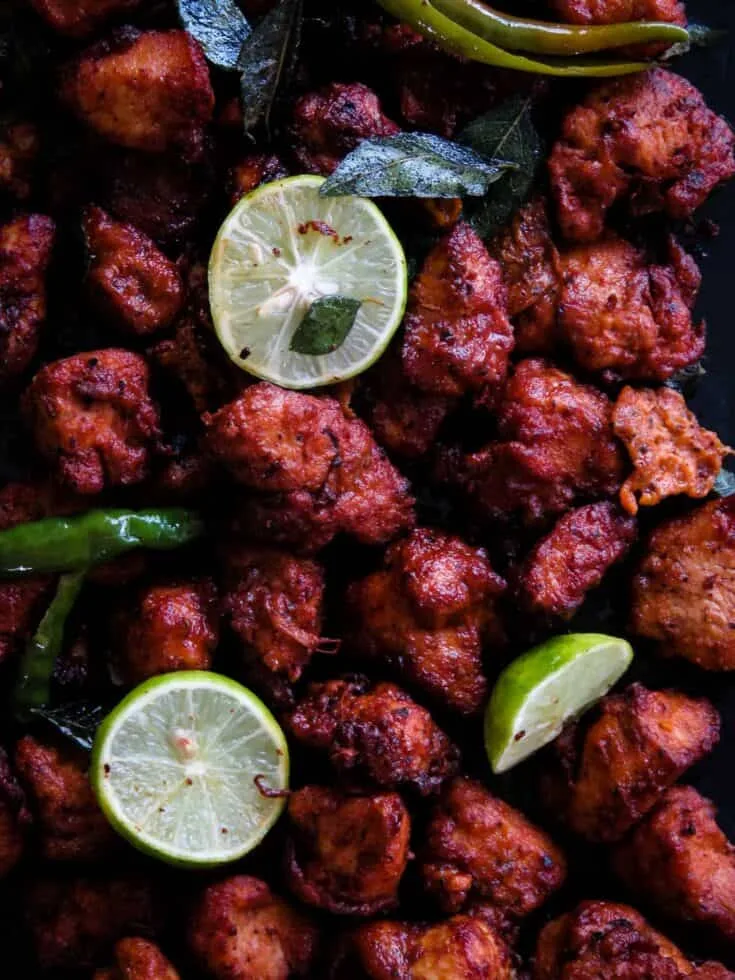
Chicken 65 is a Tamil Nadu classic that translates well to the air fryer with one adjustment. The signature red color comes from Kashmiri chili powder and food coloring, and the marinade includes curry leaves, ginger, garlic, and rice flour for crunch. Cook at 380°F for 14 to 18 minutes.
The rice flour in the coating is what makes this work. It absorbs surface moisture and creates a thin, crispy shell that holds up under airflow. Without it, the wet marinade leaves the chicken soggy.
Don't skip it.
Hariyali (Green Herb) Chicken — The Mild, Kid-Friendly Pick
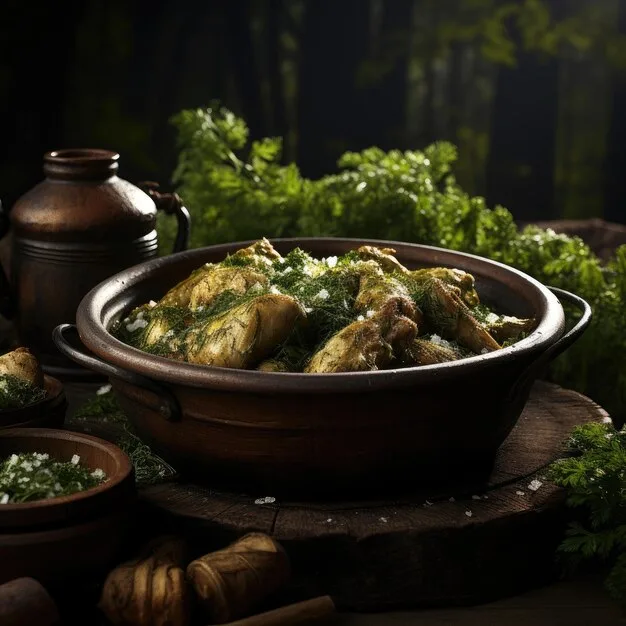
Hariyali chicken uses a green marinade of cilantro, mint, green chilies, and yogurt. It's milder than tandoori or Chicken 65, making it a solid choice for kids or anyone who doesn't want intense heat. Cook at 370°F for 12 to 16 minutes for boneless pieces.
The green herbs brown and darken during cooking, which looks less vibrant than the fresh marinade but tastes better. The gentle heat of 370°F preserves more of the herb flavor than higher temperatures. This is one recipe where lower heat genuinely improves the result.
Achari (Pickle-Spiced) Chicken — For Bold Flavor Lovers
Achari chicken uses pickle spices, fennel, nigella seeds, mustard, and raw mango or lemon for tang. It's a bold, sharp, intensely flavored preparation from Punjabi cuisine. The air fryer handles it well at 375°F for 15 to 18 minutes for bone-in pieces.
The key here is the mustard oil. It has a high smoke point and adds a pungent, authentic flavor that vegetable oil can't match. Marinate the chicken in mustard oil with the pickle spices for at least an hour.
The oil coating protects the surface and gives you that glossy, dark-red finish.
This recipe is not mild. If you're serving it to guests who aren't used to Indian pickle-level heat, cut the green chilies in half and skip the extra red chili powder. The fennel and nigella carry enough flavor on their own.
Chicken Lollipop — The Party Appetizer That Actually Works
Chicken lollipops are an Indo-Chinese staple. You cut the meat away from one end of a drumstick bone and push it down to create a "lollipop" shape. In the air fryer, they cook at 380°F for 16 to 20 minutes and come out with a crispy, gnarly exterior that looks impressive.
The trick is in the prep. You need to trim the bone clean and push the meat down firmly so it holds its shape during cooking. A sharp paring knife works best.
Marinate in a soy-chili-garlic-ginger mix, which is thinner than a yogurt marinade but clings well to the exposed meat.
These cook unevenly because the bone conducts heat differently than the meat. Start checking at 14 minutes. The meat end should hit 165°F while the bone end is hot to the touch.
They're worth the effort for a party spread.
Seekh Kebab — Ground Chicken, Big Flavor
Ground chicken seekh kebabs are less common than lamb versions, but they work beautifully in an air fryer. Season ground chicken with onion, green chili, garam masala, cilantro, mint, and a binding agent like breadcrumbs or gram flour. Shape into cylinders around skewers and cook at 370°F for 12 to 15 minutes.
The challenge is moisture. Ground chicken releases more liquid than whole cuts, so you need the binding agent to hold everything together. Gram flour (besan) is traditional and adds a nutty flavor.
Breadcrumbs work too and are easier to find. Don't skip either one or the kebabs will crack and fall apart in the basket.
Bone-In vs. Boneless: Which Cuts Work Best in an Air Fryer for Indian Recipes?
This is the first decision you need to make before anything else. Bone-in and boneless chicken behave very differently in an air fryer, and the right choice depends on what recipe you're making and how much time you have.
Bone-in thighs and drumsticks are the most forgiving cuts. The bone conducts heat slowly, which means the interior cooks gently while the exterior has time to brown and crisp. They're ideal for tandoori, achari, and hariyali preparations where you want deep spice penetration and juicy meat.
Expect 22 to 28 minutes at 380°F depending on size.
Boneless thighs are the best all-around choice for air fryer Indian chicken. They cook in 12 to 16 minutes at 375°F, stay moist even if you overshoot the temperature by a few degrees, and absorb marinades faster than bone-in cuts. Use these for tikka, seekh kebab filling, and any recipe where you want quick results without sacrificing texture.
Boneless breast is the riskiest option. It goes from perfectly cooked to dry and stringy in about 2 minutes. If you must use it, pound it to an even thickness, marinate in yogurt for at least 2 hours, and pull it at 160°F internal.
Carryover heat gets it to 165°F during the rest. Check early and often.
Wings and drumsticks are party-friendly and cook fast. Wings take 18 to 22 minutes at 400°F and come out crispy enough that you won't miss the deep fryer. Drumsticks need 20 to 25 minutes at 380°F.
Both benefit from a light oil spray before cooking to help the spices toast rather than burn.
If you're working with a larger appliance, an 8-quart air fryer with rotisserie gives you another option for whole chicken or leg quarters that doesn't rely on basket arrangement at all.
Temperature and Timing Guide for Every Popular Cut
Getting the temperature and timing right is where most people give up on air fryer Indian chicken. This table covers the most common cuts and their ideal settings.
| Cut | Temperature | Time | Internal Temp | Notes |
|---|---|---|---|---|
| Boneless breast cubes (tikka) | 375°F | 10 to 14 min | 165°F | Flip at 7 min |
| Boneless thigh pieces | 375°F | 12 to 16 min | 165°F | Flip at 6 min |
| Bone-in thighs | 380°F | 22 to 28 min | 175°F | Bone-in is more forgiving |
| Drumsticks | 380°F | 20 to 25 min | 175°F | Turn at 12 min |
| Wings | 400°F | 18 to 22 min | 175°F | Higher heat for crispiness |
| Seekh kebab (ground) | 370°F | 12 to 15 min | 165°F | Rotate at 6 min |
| Chicken lollipop | 380°F | 16 to 20 min | 175°F | Check meat end at 14 min |
A few things to keep in mind. These times assume a preheated air fryer and a single layer of chicken with space between pieces. If you're cooking in batches, the second batch may cook slightly faster because the appliance is already hot.
Always verify with a probe thermometer. The USDA's 165°F minimum for poultry is the hard floor, and for bone-in cuts, 175°F gives you a more tender result because the connective tissue breaks down better at that temperature.
If your air fryer runs smaller, like a 4 or 5-quart model, reduce the batch size rather than the temperature. Overcrowding drops the internal temperature by 15 to 25 degrees and creates cold spots where bacteria can survive. It's not worth the risk.
How to Get That Charred, Smoky Tandoor Flavor Without a Tandoor
The char on tandoori chicken comes from radiant heat hitting the surface at 800°F or higher. Your air fryer maxes out at 400°F. That gap is real, but you can close it enough to satisfy most people.
Use a cast iron or metal skewer inside the basket. Preheat it in the air fryer for 5 minutes before adding the chicken. The hot metal radiates extra heat into the contact points, creating darker sear marks that mimic tandoor char.
Finish with a smoke trick. After the chicken is cooked, place a small piece of charcoal in a heat-safe bowl, heat it with a torch or on the stovetop until it's red-hot, drop it into a small foil cup with a teaspoon of ghee, and place both inside the air fryer basket for 2 minutes with the appliance off but still hot. The ghee smokes and infuses the chicken with a tandoor-like aroma. This is a restaurant trick that works surprisingly well in a home setup.
Don't skip the oil spray. A light coat of oil on the surface of the chicken before cooking helps the spices brown and darken. Without it, the surface stays pale even when the inside is fully cooked. Use an oil sprayer, not an aerosol cooking spray, which can damage the non-stick coating on your basket over time.
Kashmiri red chili powder is your friend. It gives you that deep red-orange color without adding much heat. If your chicken looks pale when it's done, it's probably under-seasoned on the surface. Mix a teaspoon of Kashmiri chili into your marinade for color that looks as good as the chicken tastes.
Air Fryer Indian Chicken vs. Deep Frying vs. Oven Baking — An Honest Comparison
All three methods produce edible chicken. The differences show up in texture, oil absorption, cleanup time, and how close you get to restaurant-quality results.
Deep frying gives you the crispiest exterior and the most authentic Indian fried chicken texture. It also uses the most oil, takes the longest to clean up, and carries the highest risk of burns and splatter. If you're making Chicken 65 or lollipops for a special occasion, deep frying still wins for pure texture.
Oven baking is the most hands-off method. You can cook large batches on a sheet pan, and the results are consistent. But ovens take longer to preheat, cook slower, and rarely achieve the same level of surface crispiness that an air fryer manages.
For whole roasted chicken, the oven is still the better tool.
The air fryer sits in the sweet spot between the two. It's faster than oven baking, uses far less oil than deep frying, and produces a noticeably crispier surface than any standard oven. The tradeoff is smaller batch sizes and a learning curve with marinades.
Once you've dialed in your recipes, you'll probably stop deep frying Indian chicken altogether.
For anyone comparing appliances, it's worth understanding that an air fryer is not the same as an Instant Pot. They serve different purposes, and the air fryer is the clear winner when crispiness is the goal.
Meal Prep and Batch Cooking Tips for Air Fryer Indian Chicken
Indian chicken marinates well, which makes it ideal for meal prep. You can prep everything on Sunday and cook throughout the week.
Marinate in bulk, cook in batches. Portion your marinated chicken into single-meal bags or containers and refrigerate for up to 3 days, or freeze for up to 3 months. When you're ready to cook, thaw overnight in the refrigerator and air fry as usual. The flavor actually deepens over time.
Cook once, eat twice. Air fryer chicken reheats well in the same appliance. Set the reheat temperature to 350°F for 4 to 6 minutes. The exterior crisps back up while the interior stays moist.
This works especially well for tikka and seekh kebabs.
Use a dual-basket model if you cook large volumes often. An 8-quart dual-basket air fryer lets you cook two different recipes simultaneously, or cook a main and a side at the same time. That's a real time-saver for family meal prep.
Label your batches. This sounds obvious, but if you're freezing multiple marinade flavors, you'll forget which is which. Use masking tape and a marker. Write the recipe name and the date.
Future you will be grateful.
Frequently Asked Questions
Can I use frozen chicken in the air fryer for Indian recipes?
Yes, but add 5 to 8 minutes to the cooking time and make sure the internal temperature hits 165°F. Pat the surface dry before adding any spice rub, because frozen chicken releases moisture as it thaws and that moisture prevents browning. Marinating after thawing gives better flavor penetration.
Why does my chicken dry out in the air fryer?
The most common cause is cooking boneless breast meat at too high a temperature for too long. Switch to boneless thighs, reduce the temperature by 10 degrees, and pull the chicken at 160°F instead of waiting for 165°F. Carryover cooking handles the rest.
Do I need to flip the chicken halfway through cooking?
For even browning, yes. Flipping or shaking at the halfway point ensures both sides get direct airflow. If your air fryer has a rotating basket, you can skip the manual flip, but the results are usually better with one turn.
Can I use store-bought spice mixes like MDH or Everest for air fryer chicken?
Absolutely. Pre-made tandoori masala, chicken curry mix, and chilli chicken masala from brands like MDH or Everest work well. Just mix them with yogurt or oil to create a coating that clings to the chicken.
Dry powder alone will blow off in the airflow.
What size air fryer do I need for a family of four?
A 6 to 8-quart model handles a full meal for four without crowding. If you're cooking for a larger family or want to batch cook for the week, a 9-quart air fryer gives you enough capacity to cook 2 to 3 pounds of chicken in a single round.