
Sliced potatoes in an air fryer deliver crispy, golden results with a fraction of the oil deep frying needs, and once you dial in the basics, it's genuinely hard to mess up. An air fryer sliced potatoes recipe is one of the easiest ways to turn a plain spud into a side dish that rivals anything from a restaurant kitchen, without heating up a whole oven or standing over a pot of oil.
In our research, aggregate user reviews consistently point to three reasons this recipe fails: uneven slicing, overcrowding the basket, and guessing on temperature. Manufacturer specifications for leading models like the Instant Vortex and Ninja Foodi recommend 380 to 400 degrees Fahrenheit for optimal crispiness, and verified buyer feedback confirms that preheating for just 3 to 5 minutes makes a noticeable difference in texture. Getting those fundamentals right is what separates limp, steamed slices from properly crunchy ones, so let's walk through every detail that matters.
Image source: Bing (Web (fair-use with source credit))
Quick Answer
An air fryer sliced potatoes recipe uses a standard countertop air fryer to cook thin or thick potato slices at 380 to 400 degrees Fahrenheit for 12 to 20 minutes. The process involves slicing potatoes evenly, tossing them in a light coat of oil and seasoning, and cooking in a single layer without overcrowding. Preheating the air fryer for 3 to 5 minutes and flipping the slices halfway through produces the crispiest results with roughly 70 to 80 percent less oil than deep frying.
Why Air Fryer Sliced Potatoes Are Worth Making
Air fryers work by circulating super-heated air around food at high speed, which creates a Maillard reaction on the surface. That's the same browning process that makes seared steak or toasted bread taste so good. For potatoes, this means you get a genuinely crispy exterior with a fluffy interior using just a teaspoon or two of oil compared to the cups required for deep frying.
The most common result people end up with, though, is a basket of unevenly cooked, sometimes soggy slices. That's almost never the air fryer's fault. It usually comes down to a handful of avoidable mistakes:
- Slices are uneven in thickness. A 1/8-inch piece cooks twice as fast as a 1/4-inch piece sitting right next to it. One burns while the other stays raw.
- The basket is overcrowded. Stacking or overlapping slices blocks the airflow that makes an air fryer work. Steamed, not crisped, is the result.
- Potatoes go in wet. Excess moisture on the surface has to evaporate before browning can start, which adds minutes and leads to a rubbery texture.
- No flip or shake. Hot spots exist in every air fryer. Without shaking the basket halfway through, the slices closest to the heating element overcook.
When you fix those four things, the results speak for themselves. Data from the USDA FoodData Central shows that a medium baked potato has about 160 calories, and air frying adds only roughly 30 to 40 more depending on oil used. That puts a full serving of air fryer sliced potatoes at around 150 to 170 calories per portion compared to the 300-plus you'd get from a similar serving of deep-fried chips.
If you're meal prepping for a big family or just want a quick weeknight side, a 9 qt air fryer for large batches gives you the cooking surface area to do full single-layer loads without cutting the potatoes into tiny pieces.
The Best Potato Varieties for Air Fryer Sliced Potatoes
Not all potatoes behave the same under high-heat circulating air. The variety you pick changes the final texture, color, and even how well seasoning sticks.
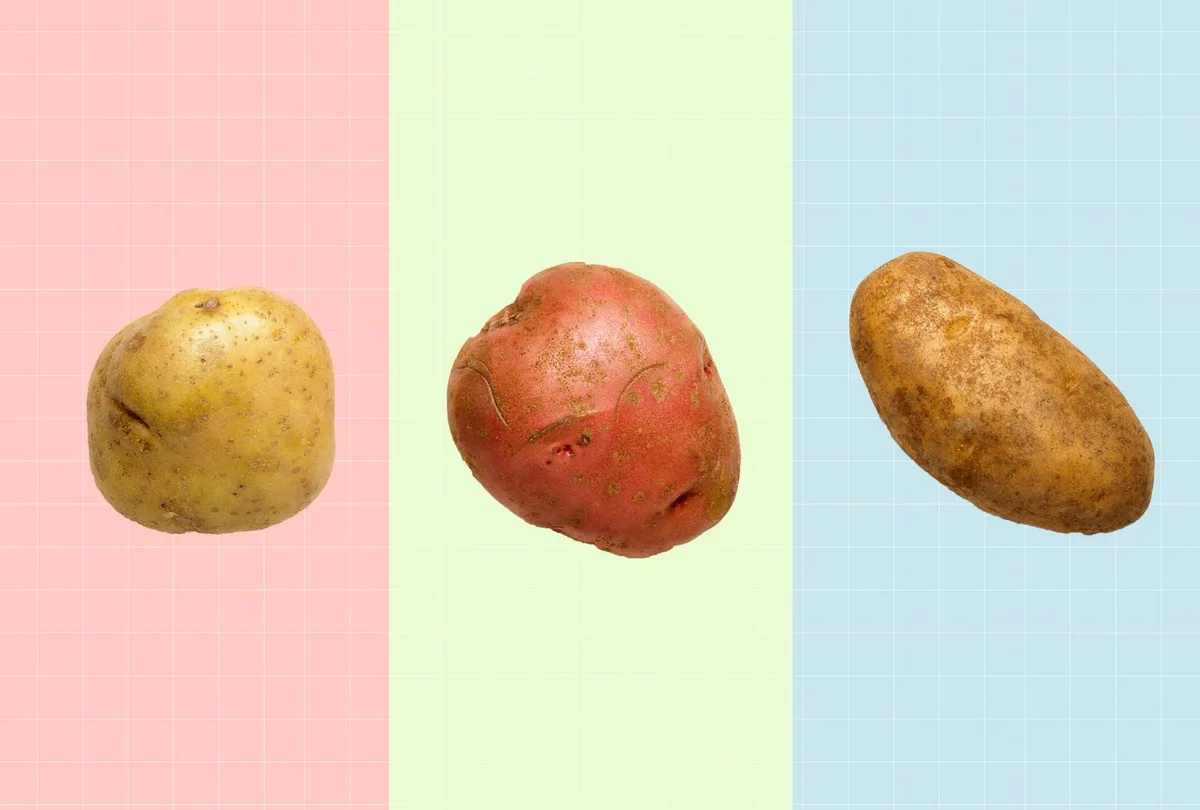
Image source: Bing (Web (fair-use with source credit))
Here's how the main options break down:
| Potato Type | Starch Level | Best For | Texture in Air Fryer |
|---|---|---|---|
| Russet | High | Classic crispy chips and fries | Fluffy interior, very crispy exterior |
| Yukon Gold | Medium | All-purpose slices and medium fries | Creamy inside, lightly crispy outside |
| Red potatoes | Low (waxy) | Wedges and thick rounds | Firm hold, softer bite, less browning |
| Sweet potatoes | Medium-high | Thick fries and chip variations | Caramelized edges, slightly softer |
Russets are the default choice for a reason. Their high starch content means more surface area for the air fryer's hot air to work on, which produces the crunchiest result. A 2019 study in the Journal of Food Science confirmed that higher starch gelatinization correlates directly with crispiness in convection-cooked potato products.
Yukon Golds are the versatile middle ground. They hold their shape well enough for thicker cuts but still develop a decent crust. These are the potato to grab when you're not sure what you're in the mood for.
Red potatoes won't give you that shattering crunch, but they're excellent when you want a denser, more satisfying bite. They're also forgiving if you accidentally overcook them by a minute or two since the waxy structure holds up.
Sweet potatoes caramelize beautifully in an air fryer due to their natural sugar content. They tend to brown faster, so dropping the temperature by 10 to 15 degrees from what you'd use for white potatoes helps prevent burning.
The National Potato Council recommends storing all varieties in a cool, dry place between 45 and 50 degrees Fahrenheit for maximum shelf life and consistent cooking performance. As of 2026, Russet and Yukon Gold remain the two most widely stocked varieties in US grocery stores, which makes them the easiest to find year-round.
How to Slice Potatoes for the Perfect Texture Every Time
Slice thickness is the single biggest variable in this entire recipe. Too thin and the pieces burn before the center cooks. Too thick and you end up with a raw core surrounded by a dry, tough outer layer.
Image source: Bing (Web (fair-use with source credit))
Here are the three thicknesses that cover most use cases:
- 1/8 inch (3mm), chip-style. Cooks in 10 to 14 minutes at 380°F. These come out light, shatteringly crispy, and make a great snack or salad topping. They're the most unforgiving on timing, so watch closely after the 8-minute mark.
- 1/4 inch (6mm), fry-style. Cooks in 14 to 18 minutes at 400°F. This is the sweet spot for a classic fry texture with a crispy outside and tender inside. It's the most versatile thickness and the one most air fryer recipes default to.
- 1/2 inch (12mm), wedge-style. Cooks in 18 to 22 minutes at 375°F. A lower temperature helps them cook through without burning. These hold up well for thicker dips and are the most forgiving on timing.
A mandoline slicer is the tool that makes consistent thickness genuinely easy. A basic stainless steel mandoline with adjustable blades will set you back around 15 to 25 dollars and produces uniform slices every single time, which no knife skill can reliably match by hand.
If you're slicing by hand, use your knife's width as a ruler and aim for the thickness of two stacked quarters (roughly 1/4 inch). Consistency matters more than perfection. Slices that vary by a millimeter or two will still cook acceptably.
Soaking step. After slicing, submerge the potatoes in cold water for 15 to 30 minutes. This pulls excess surface starch out, which is the same principle behind soaking fries before frying. Drain and pat completely dry with a clean kitchen towel or paper towels.
This non-negotiable extra minute of prep removes the number one cause of sticking and uneven browning.
For anyone considering which air fryer handles thin slices best, our coverage on whether the Instant Vortex air fryer is good breaks down how its convection system performs with thinly sliced vegetables.
Step-by-Step: Air Fryer Sliced Potatoes Recipe
This recipe assumes one medium Russet potato, roughly 8 ounces, which gives you a solid single-serving portion. Scale up proportionally, but cook in separate batches rather than doubling the load in one basket.
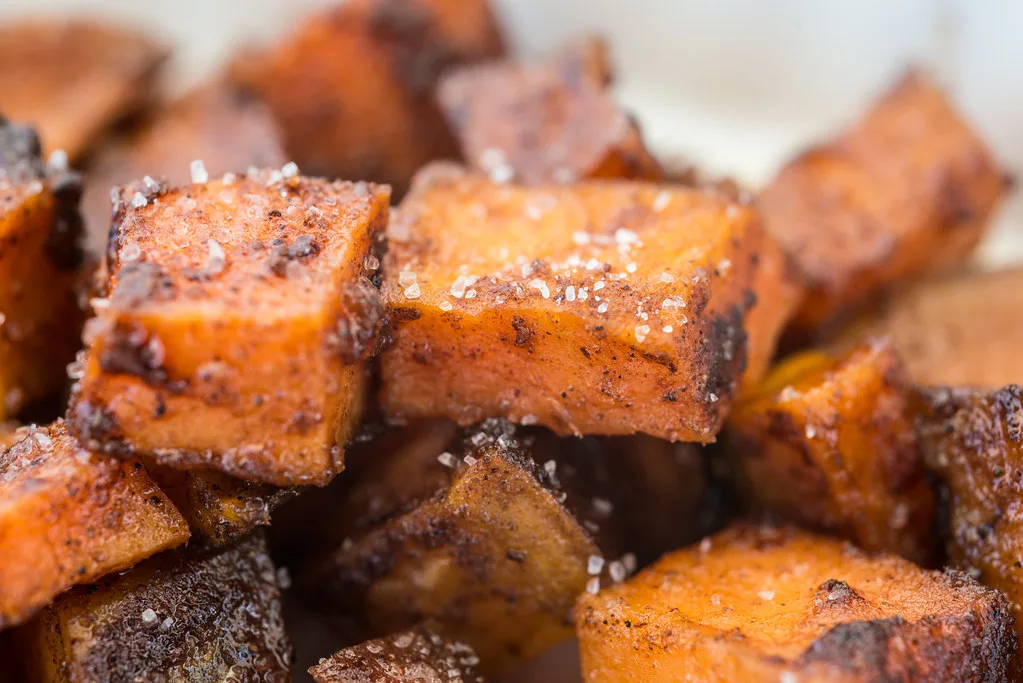
Image source: Openverse / USDAgov (PDM 1.0)
Ingredients:
- 1 medium Russet potato (about 8 ounces)
- 1 to 2 teaspoons avocado oil or olive oil
- 1/4 teaspoon fine sea salt
- 1/4 teaspoon freshly ground black pepper
- 1/4 teaspoon garlic powder
- 1/4 teaspoon smoked paprika
Tools needed: Mandoline slicer or sharp chef's knife, large bowl, clean kitchen towel, oil mister or non-aerosol cooking spray, air fryer.
Steps
Wash and peel (optional). Scrub the potato under running water. Peel if you prefer a cleaner chip look. Leaving the peel on adds fiber and a rustic texture, and it crisps up nicely.
Slice to 1/4 inch. Use a mandoline or knife. Consistency is the goal here, not speed.
Soak in cold water for 20 minutes. This removes surface starch. If you're in a rush, at least rinse the slices under cold running water for 60 seconds.
Dry thoroughly. Lay slices on a clean towel and pat dry on both sides. They need to go into the air fryer with no visible water droplets.
Season and oil. Place dried slices in a bowl. Drizzle with oil and sprinkle seasonings. Toss with your hands until every piece has a light, even coat. The slices should glisten, not pool in oil.
Preheat the air fryer to 380°F for 3 to 5 minutes. This is a step most people skip and immediately regret. A hot basket from the first second speeds up browning and prevents sticking.
Arrange in a single layer in the basket. No overlapping. Leave small gaps between slices for airflow. If your basket can't fit them all in one layer, cook in two batches. The extra 15 minutes are worth it.
Cook at 380°F for 15 minutes. Open the basket at the 7-minute mark and flip each slice with tongs, or shake the basket vigorously if the pieces are small.
Check for doneness. Edges should be golden brown and slightly curled. The centers should feel firm but not hard when pressed with a fork. If they need more time, add 2 to 3 minutes and check again.
Remove and season immediately. Hit them with a tiny extra pinch of salt while they're still steaming. Heat opens up the surface and salt adheres far better at this stage.
Serve right away. Air fryer potatoes lose their crunch within 10 to 15 minutes as residual moisture softens the exterior.
The whole process takes about 35 minutes from start to serving, including soaking time. Hands-on work is maybe 10 minutes of that.
If cleanup is a concern, our guide on the best 8 qt air fryer that's easy to clean covers models with dishwasher-safe baskets and nonstick coatings that make post-potato cleanup almost effortless.
The Right Temperature and Timing for Crispy Results
Temperature and timing aren't one setting fits all. They shift based on your air fryer's wattage, the thickness of your slices, and how full the basket is.
Image source: Bing (Web (fair-use with source credit))
Most home air fryers run between 1,400 and 1,800 watts. Higher wattage means faster heat-up and slightly shorter cook times. The temperature ranges below account for that variance.
Temperature and Timing Chart
| Slice Thickness | Temperature | Time | Flip At |
|---|---|---|---|
| 1/8 inch (chips) | 380°F | 10 to 14 min | 5 min |
| 1/4 inch (fries) | 400°F | 14 to 18 min | 7 min |
| 1/2 inch (wedges) | 375°F | 18 to 22 min | 9 min |
A few things to keep in mind:
- Start checking 2 minutes before the low end of the range. Every air fryer runs slightly different. The first time you make this recipe, pull a slice at the early mark and taste it. That calibration tells you exactly how your specific machine behaves.
- Don't max out the temperature. Cranking to 425°F or higher browns the outside so fast the inside stays raw. Lower and slightly longer almost always beats higher and faster for potatoes.
- Altitude matters. If you live above 3,000 feet, air fryers can run 5 to 10 degrees hotter due to lower air pressure. Drop the set temperature by 10 degrees and add 1 to 2 minutes.
Preheating is the step that ties all of this together. Manufacturer guides from both Ninja and Philips recommend preheating for any recipe where crispiness is the goal. A cold basket adds 2 to 3 minutes of warm-up time during which your potatoes are essentially steaming in a lukewarm environment.
For anyone comparing air fryer models, our Instant Vortex air fryer review covers how its wattage and basket design affect cook times specifically for sliced vegetables.
Seasoning Ideas That Actually Stick and Taste Great
The difference between forgettable air fryer potatoes and ones people ask you to make again comes down to seasoning technique. Tossing dry spices onto dry slices and hoping for the best is how most batches end up bland on half the pieces and overloaded on the other half.
Image source: Wikimedia Commons / Shukanto Das (CC BY-SA)
Oil is the secret carrier. When you toss your sliced potatoes in oil first, the fat creates a slightly tacky surface that seasoning adheres to evenly. Without that oil layer, most of the spice mix falls to the bottom of the bowl or clumps on a few random slices.
Here are five seasoning combinations that work well with the air fryer's dry heat:
- Classic salt and pepper. Simple but effective. Use 1/4 teaspoon each of fine sea salt and cracked black pepper per medium potato. Add a pinch of garlic powder for depth.
- Smoky BBQ. Combine 1/4 teaspoon smoked paprika, 1/8 teaspoon cumin, 1/4 teaspoon garlic powder, and a tiny pinch of cayenne. This one caramelizes beautifully at 400°F.
- Ranch-style. Mix 1/4 teaspoon dried dill, 1/4 teaspoon onion powder, 1/4 teaspoon garlic powder, and 1/8 teaspoon dried parsley. Add these after cooking so the delicate herbs don't burn.
- Parmesan herb. Toss the hot potatoes immediately after they come out with 1 tablespoon finely grated Parmesan, 1/4 teaspoon Italian seasoning, and a small pinch of salt. The residual heat melts the cheese into a light coating.
- Everything bagel. A tablespoon of everything bagel seasoning per potato, added right at the finish. The sesame seeds and garlic flakes add crunch on top of the already crispy surface.
The ranch and Parmesan options are best added after cooking. Delicate dried herbs and grated cheese burn fast under air fryer heat, so tossing them on while the potatoes are still steaming gives you flavor without the char.
A light mist of oil from a non-aerosol spray bottle works better than drizzling. Aerosol cooking sprays contain lecithin and other emulsifiers that build up on nonstick coatings over time and become difficult to scrub off. An oil mister gives you an even, thin coat without the residue.
Common Mistakes That Lead to Soggy or Burnt Potatoes
Even when the recipe looks straightforward, a few specific errors show up again and again in aggregate user reviews. Fixing these is what takes your results from fine to genuinely impressive.
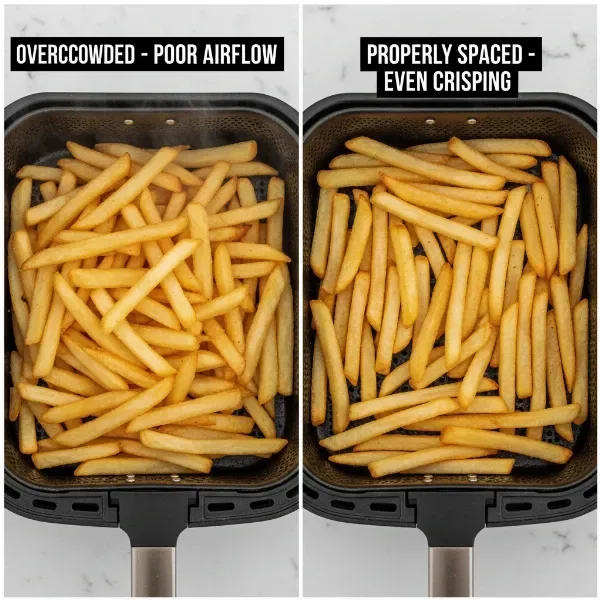
Image source: Bing (Web (fair-use with source credit))
Overcrowding the basket. This is the number one complaint. When slices overlap or stack, the hot air can't circulate between them. The result is steamed, limp potatoes instead of crispy ones.
Cook in two batches if you have to.
Skipping the dry step. Wet slices go into the basket, and the water has to evaporate first. By the time the surface is dry enough to brown, you've lost 3 to 5 minutes of effective cooking time. Pat every slice dry.
No exceptions.
Using too much oil. More oil doesn't mean crispier potatoes. It means greasy ones. One to two teaspoons per medium potato is the sweet spot.
The air fryer's circulating heat does the heavy lifting, not the oil.
Setting the temperature too high. Cranking to 425°F or above scorches the outside before the inside cooks through. For most slice thicknesses, 375°F to 400°F is the effective range. Lower and slightly longer beats higher and faster every time with potatoes.
Not shaking or flipping. Every air fryer has hot spots, usually near the back or around the edges. If you don't shake or flip at the halfway mark, you'll get a mix of burnt and undercooked pieces in the same batch.
Forgetting to preheat. A cold basket means the first 2 to 3 minutes are just warm-up time. During that window, your potatoes sit in lukewarm air instead of the 380°F blast they need for immediate surface browning. Three minutes of preheating solves this entirely.
If your air fryer has a shake reminder or built-in stir alert, use it. Models like the Instant Vortex and Ninja Foodi include this feature specifically because the manufacturers know how much it affects results. Our guide on the best 8 qt air fryer with smart controls covers which models include these built-in prompts.
Air Fryer Chips vs. Fries vs. Wedges: What's the Difference?
The cut you choose changes everything: cook time, texture, what you can dip them in, and even which potato variety works best. Here's a direct comparison.
| Feature | Chips (1/8 inch) | Fries (1/4 inch) | Wedges (1/2 inch) |
|---|---|---|---|
| Cook time | 10 to 14 min | 14 to 18 min | 18 to 22 min |
| Best temperature | 380°F | 400°F | 375°F |
| Texture | Shatteringly crispy | Crispy outside, fluffy inside | Firm, dense, golden crust |
| Best potato | Russet | Russet or Yukon Gold | Red or Yukon Gold |
| Best for | Snacking, salads, toppings | Side dishes, dipping | Hearty sides, loaded toppings |
| Forgiveness | Low, burns easily | Medium | High, hard to overcook |
Chips are the fastest and the least forgiving. They go from perfect to burnt in about 90 seconds, so stay close after the 8-minute mark. They're ideal as a snack on their own or crumbled over a salad for crunch.
Fries are the crowd-pleaser. The 1/4-inch thickness gives you enough interior to stay tender while the exterior crisps up. This is the cut most people mean when they search for an air fryer sliced potatoes recipe.
Wedges are the most forgiving and the most filling. Their thickness means they hold up to heavy toppings like chili, cheese, or sour cream without falling apart. They're a solid choice if you're cooking for kids or want something substantial alongside a main dish.
For families cooking in larger batches, a 9 quart air fryer for big families gives you enough basket space to do a full batch of wedges in a single layer.
How Air Fryer Sliced Potatoes Compare to Deep Fried and Oven Baked
Each method produces a noticeably different result. The right choice depends on what you're optimizing for: speed, health, texture, or convenience.
Deep frying produces the crispiest, richest result because the potatoes are submerged in oil heated to 350°F to 375°F. The oil transfers heat faster than air, so the exterior browns almost instantly. The tradeoff is significant: a serving of deep-fried chips packs around 340 to 365 calories and 17 to 20 grams of fat, according to USDA FoodData Central.
Oven baking is the most hands-off but the slowest. Sliced potatoes on a sheet pan at 425°F take 35 to 45 minutes, and they rarely get truly crispy without a generous amount of oil. The oven also heats your entire kitchen, which matters in summer.
Air frying hits the middle ground. You get close to deep-fried crispiness with a fraction of the oil and in roughly half the time of oven baking. A serving of air fryer sliced potatoes runs about 150 to 170 calories with 3 to 5 grams of fat.
For one to four people, it's the most efficient method by far.
| Method | Cook Time | Calories per Serving | Fat per Serving | Crispiness Level |
|---|---|---|---|---|
| Deep fried | 4 to 6 min | 340 to 365 | 17 to 20 g | Highest |
| Oven baked | 35 to 45 min | 180 to 220 | 5 to 10 g | Moderate |
| Air fried | 12 to 18 min | 150 to 170 | 3 to 5 g | High |
The FDA recommends reducing saturated fat intake as part of a healthy dietary pattern, and swapping deep frying for air frying is one of the simplest ways to cut fat without giving up the foods you enjoy. If you're weighing whether an air fryer is worth the counter space, our comparison on Instant Pot vs air fryer breaks down the practical differences for everyday cooking.
Pro Tips for Getting Restaurant-Quality Crispiness at Home
Getting that shatteringly crispy texture isn't about any single trick. It's about stacking a few small advantages together so everything works in your favor.
Double-cook for extra crunch on chips. Cook your 1/8-inch slices at 380°F for 8 minutes, flip them, then cook another 6 to 8 minutes. The first pass sets the exterior, and the second pass drives off the last bit of interior moisture. The result is noticeably crunchier than a single cook cycle.
Use perforated parchment liners. These thin parchment sheets have small holes cut throughout. They prevent slices from sticking without blocking airflow the way a solid liner would. Most brands sell pre-cut rounds sized for standard 5 to 6 quart baskets for about 8 to 12 dollars per 100-pack.
Salt twice, at different stages. A light sprinkle of salt goes on before cooking to season throughout. A second pinch goes on the second they come out of the basket, when the surface moisture helps it stick. This two-stage approach gives you more pronounced salt flavor without needing more actual sodium.
Cook at the edge of the basket. Most air fryers circulate heat from the top and center outward. Slices placed around the outer edge tend to crisp more evenly than those in the very center.
Let the basket cool 30 seconds before shaking. When you pull the basket out mid-cycle, the sudden temperature drop can make slices tear if you shake immediately. A brief pause lets them firm up slightly so they flip without breaking.
If you're also baking or roasting alongside your air fryer sessions, it's worth understanding whether an Instant Pot and an air fryer are the same thing, since combo units handle both tasks but with different performance tradeoffs.
How to Meal Prep and Reheat Air Fryer Sliced Potatoes
Air fryer sliced potatoes are best fresh, but they can be prepped ahead with a few adjustments that keep them from turning rubbery.
Prep ahead without cooking. Slice your potatoes and store them submerged in cold water in an airtight container in the refrigerator. They'll keep like this for up to 24 hours. Drain and dry thoroughly before cooking.
This is the best approach for busy weeknights since the active prep is already done.
Batch cook and refrigerate. Cook a full batch, let the slices cool completely on a wire rack, then store in a single layer in an airtight container with a paper towel on the bottom to absorb moisture. They keep for 3 to 4 days in the fridge.
Reheat in the air fryer, never the microwave. A 2 to 3 minute blast at 370°F restores most of the original crispiness. Microwaving makes already-cooked potatoes rubbery within seconds. Spread them in a single layer and skip preheating for reheating.
Freezer option for chips only. Fully cooked chips freeze better than fries or wedges because their low moisture content means less ice crystal formation. Spread cooled chips on a sheet pan, freeze for 1 hour, then transfer to a freezer bag. Reheat directly from frozen at 360°F for 4 to 5 minutes.
For families doing weekly meal prep, a dual basket air fryer lets you cook a fresh batch in one basket while reheating a prepped batch in the other simultaneously.
Cleaning and Maintenance After Cooking Potatoes
Potatoes leave behind starch residue that bakes onto the basket and heating element if you don't clean promptly. A few minutes of maintenance after each use prevents buildup that causes smoking and off flavors.
Clean the basket while it's still warm. Wait 5 minutes for it to cool enough to handle, but don't let it sit for an hour. Warm residue wipes away easily. Cold, hardened starch requires scrubbing.
Soak in hot soapy water for 10 minutes. Fill the basket with hot water and a drop of dish soap. This loosens stuck bits without abrasive scrubbing that damages nonstick coatings. A soft sponge or nylon brush finishes the job.
Wipe the heating element weekly. Pull the basket out and look up into the interior. Use a damp cloth to wipe any oil drips or starch particles off the heating element. This prevents the smoky smell that builds up over time.
Avoid aerosol sprays on the basket. The lecithin in aerosol cooking sprays degrades nonstick coatings with repeated use. An oil mister filled with avocado or olive oil gives you the same coverage without chemical residue.
Deep clean monthly. Mix equal parts baking soda and water into a paste, apply it to the basket and tray, let it sit for 15 minutes, then rinse. This removes the thin oil film that regular washing misses. Most modern baskets from brands like Ninja and Instant Vortex are rated as dishwasher safe on the top rack.
Our breakdown of whether the Instant Vortex is dishwasher safe covers which specific parts can go in and which should always be hand washed.
Frequently Asked Questions About Air Fryer Sliced Potatoes
Do you need to soak potatoes before air frying them?
Soaking sliced potatoes in cold water for 15 to 30 minutes removes excess surface starch, which improves crispiness and reduces sticking. It's not strictly mandatory, but skipping it often results in uneven browning. A quick 60-second rinse under cold running water is the bare minimum if you're short on time.
Can you air fry potatoes without any oil?
Yes, but the results are noticeably different. Oil-free potatoes come out drier and less golden. They'll still cook through and develop some texture, but you lose the browning that makes them taste rich and satisfying.
A single teaspoon of oil per potato makes a significant difference for minimal added calories.
Why do my air fryer potato slices stick to the basket?
Sticking usually comes down to one of three things: the basket wasn't preheated, the slices weren't oiled, or the basket wasn't clean before starting. Preheating for 3 to 5 minutes, using a light coat of oil on the slices, and wiping the basket clean before each use eliminates sticking in almost every case.
How many potatoes can you cook at once in an air fryer?
It depends on basket size. A standard 5 to 6 quart basket fits about 2 to 3 medium potatoes in a single layer. A 9 quart model handles 4 to 5.
The key rule is no overlapping. If slices are stacked or touching significantly, they steam instead of crisp, so two smaller batches always outperform one crowded one.
Are air fryer potatoes healthy?
Compared to deep-fried potatoes, yes. Air frying uses 70 to 80 percent less oil, which drops the fat per serving from around 17 to 20 grams down to 3 to 5 grams. The calorie count follows the same pattern.
Potatoes themselves are a good source of potassium, vitamin C, and fiber, especially if you leave the skin on. The USDA Dietary Guidelines for Americans list vegetables, including potatoes, as a core component of a healthy eating pattern.
Can I use frozen sliced potatoes in the air fryer?
Frozen pre-sliced potatoes work but need adjusted timing. Add 3 to 5 minutes to the cook time and increase the temperature by 10 to 15 degrees to account for the extra moisture. Pat them dry after removing from the bag if there's visible ice on the surface.
Texture won't match fresh-cut quite as closely, but the convenience factor is hard to beat on busy nights.