
If you've ever wanted a restaurant-quality seafood dinner without hovering over a smoking pan, an air fryer scallops recipe is about as close to a cheat code as it gets. Scallops are one of those ingredients that intimidate home cooks, but the air fryer takes most of the guesswork out. You get a gorgeous sear, minimal oil, and the whole thing is done in under 15 minutes.
The trick isn't the appliance. It's knowing what to look for at every stage, from picking the right scallops at the store to pulling them out at exactly the right moment. Get the prep wrong and you'll end up with rubber.
Get it right and you'll wonder why you ever ordered them at a restaurant. Let's walk through exactly how to do that.
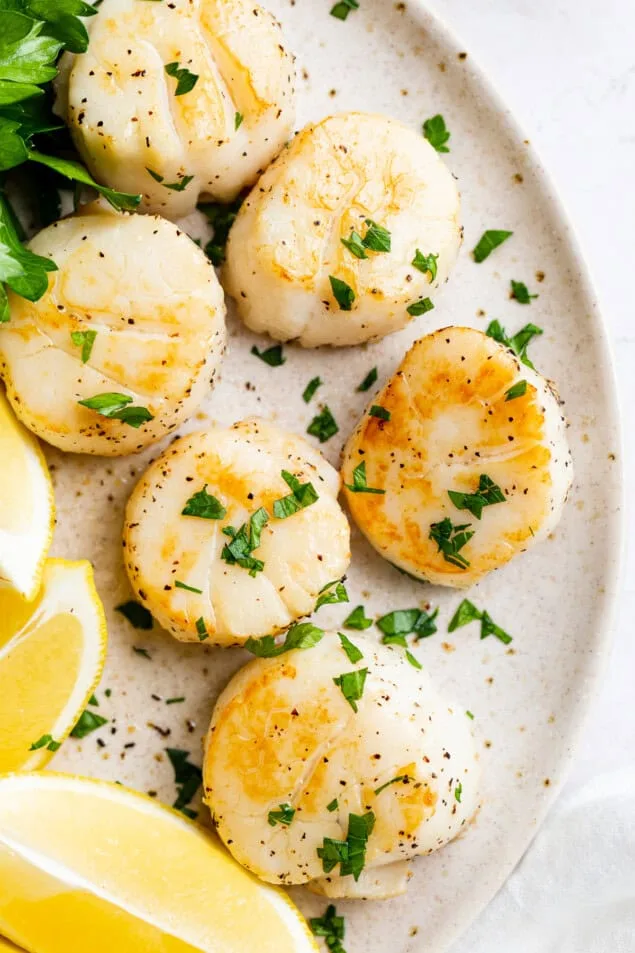
Quick Answer
An air fryer scallops recipe starts with dry-packed sea scallops, patted completely dry. Season simply with salt, pepper, and a light coat of high-smoke-point oil. Cook at 400°F (204°C) for 6 to 10 minutes, flipping once halfway through.
The scallops are done when the edges are opaque and the center is slightly translucent.
Why Air Fryer Scallops Are Worth Making (And Why Most People Get Them Wrong)
A perfect air fryer scallop has a caramelized golden-brown crust on the outside and a tender, almost buttery center. That's the goal. But most home cooks end up with pale, rubbery discs that taste like disappointment.
The problem almost always comes down to three things. Excess moisture on the surface prevents browning. Overcrowding the basket drops the temperature and steams the scallops instead of searing them.
And overcooking, even by a minute, turns them from silky to chewy.
The air fryer actually solves two of these problems better than a skillet. The circulating hot air wraps around each scallop evenly, so you get consistent browning without standing over the stove flipping each one individually. And because the cook time is short and the timer does the work, the window for overcooking shrinks considerably.
According to the FDA, shellfish like scallops are safe to eat when they reach an internal temperature of 145°F (63°C). But honestly, you don't need a thermometer for this. The visual cues are more reliable, and we'll cover those next.
If you've already got an air fryer sitting on your counter, scallops are one of the best proteins to try in it. They cook fast, they need very little oil, and the results look like you spent way more effort than you actually did. If you're working with a larger model, a 9 quart air fryer for big families gives you the space to cook a full pound without crowding.
What Makes the Perfect Air Fryer Scallops — Visual Cues You Need to Know
You can't judge a scallop by the timer alone. Different air fryers run at slightly different temperatures, and scallop sizes vary a lot. Your eyes and sense of touch are your best tools here.
Raw scallops look translucent and slightly glossy. They feel soft and almost slimy. Don't cook them at this stage expecting magic.
They need to be dry first.
Halfway through cooking, after the first flip, you'll start to see the edges turn opaque white. The top surface should be losing its shine and starting to look matte. This is a good sign that the Maillard reaction, the chemical process that creates browning, is underway.
Perfectly done scallops have a visible golden-brown crust on both cut sides. Hold one up and look at the side. The edges should be fully opaque, but the very center can still look just barely translucent.
That's the sweet spot. The exterior should feel firm but still have a little spring when you press it.
Overcooked scallops are uniformly white all the way through with no translucency left. They look smaller than when you started because they've squeezed out all their moisture. The texture is dense and rubbery.
There's no saving these, so pull them early.
The color progression from glossy-translucent to golden-brown-opaque is the entire story. If you see browning happening fast, your air fryer might run hot. If the scallops look pale after the full cook time, give them another minute or two.
Every model is slightly different, and after one batch you'll know exactly how yours behaves.
Choosing the Right Scallops: Sea vs. Bay, Fresh vs. Frozen, Dry-Packed vs. Wet-Packed
Not all scallops are created equal, and the ones you pick will make or break this recipe before you even turn on the air fryer.
Sea scallops are the large ones, about 1 to 1.5 inches across. These are what you want for air frying. Their size gives them enough mass to develop a crust before the interior overcooks.
They're usually sold in counts per pound. U10 means under 10 scallops per pound (extra large). U20 means under 20 per pound (medium-large).
Bay scallops are much smaller, roughly the size of a marble. They cook in about half the time and are harder to sear properly in an air fryer because they overdevelop before a crust forms. They're better suited for pasta dishes or stews where they're simmered in sauce.
Dry-packed scallops are the gold standard. They're shucked and packed without any preservatives or added liquid. Because there's no water or sodium tripolyphosphate solution soaked into them, they brown beautifully and taste clean and sweet.
Wet-packed scallops have been treated with a sodium tripolyphosphate (STPP) solution that helps them retain water. They look plumper and weigh more, but that extra moisture is the enemy of a good sear. They'll steam instead of brown and often taste slightly soapy.
Avoid these for air frying.
If you can only find frozen scallops, that works. Just thaw them properly. The safest method is overnight in the refrigerator.
If you're short on time, seal them in a zip-lock bag and submerge in cold water for 30 to 45 minutes. Never thaw at room temperature since it creates a bacterial risk.
When you're at the fish counter, give the scallops a smell test. They should smell slightly sweet and briny, like the ocean. Anything with a strong fishy or ammonia-like odor means they're past their prime.
Walk away.
Spend a little more per pound for dry-packed. You'll use less oil, get better browning, and the flavor will be noticeably cleaner. If you're comparing air fryers to handle a full batch, something like an 8 qt air fryer with smart controls lets you dial in the exact temperature these scallops need.
How to Prep Scallops for the Air Fryer So They Actually Sear
Prep is where most people cut corners, and it's exactly where this recipe lives or dies. Give yourself five minutes and follow each step.
Step 1: Remove the side muscle. Grab each scallop and feel along the side for a small, rectangular tab of tougher tissue. It peels off easily with your fingers. This muscle doesn't soften during cooking, so leaving it in means biting into a chewy piece in an otherwise tender bite.
It takes 10 seconds per scallop.
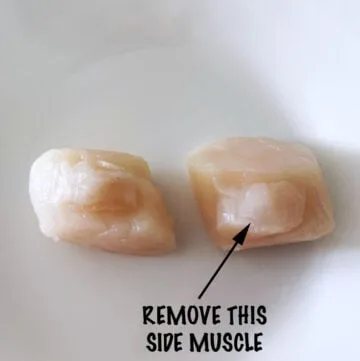
Step 2: Rinse briefly and pat aggressively dry. Give the scallops a quick rinse under cold water to remove any grit. Then lay them on a layer of paper towels and press another layer on top. Pat firmly.
Flip them and repeat. The surface needs to be as dry as you can possibly get it. Any surface moisture will create steam when the scallops hit the hot air, and steam is what prevents browning.
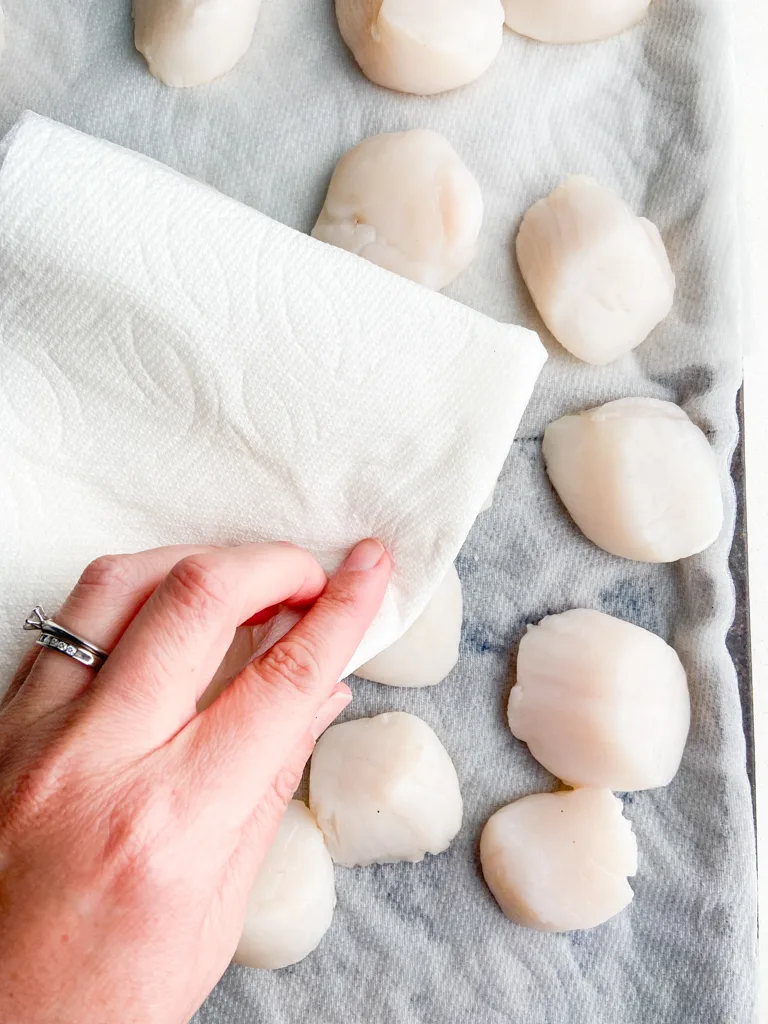
Step 3: Season lightly. Salt, pepper, and that's really all you need. If you want a little more flavor, a light sprinkle of garlic powder or smoked paprika works. Don't go heavy on the seasoning.
Scallops have a delicate, naturally sweet flavor that strong spices can overwhelm.
Step 4: Oil lightly. Brush or spray a thin coat of high-smoke-point oil on both sides. Avocado oil and grapeseed oil are ideal because they can handle the 400°F temperature without burning. One light spray per side is plenty since you're not deep frying here.
That's it. Four steps, five minutes, and then they're ready for the basket. Skipping the drying step is the single biggest mistake we see in failed air fryer scallop attempts.
Everything else flows from getting the surface bone-dry before cooking. If you're cooking scallops alongside other air fryer staples, you might also appreciate a model that's easy to clean since scallop residue can stick to the basket if you don't oil the grates lightly too.
Step-by-Step: Air Fryer Scallops Recipe From Start to Finish
Here's the full recipe with timing and temperatures that work across most standard air fryers as of 2026. Adjust by a minute or two based on your specific model and scallop size.
What You'll Need
- 1 lb (450 g) dry-packed sea scallops (U10 to U20)
- 1 tablespoon avocado oil or grapeseed oil
- 1/2 teaspoon fine sea salt
- 1/4 teaspoon freshly ground black pepper
- Optional: 1/4 teaspoon garlic powder or smoked paprika
- Lemon wedges for serving
Instructions
1. Preheat the air fryer to 400°F (204°C) for 3 minutes.
Preheating matters. A hot basket gives you instant contact heat the second the scallops go in, which is what starts the sear. Skipping preheat adds a minute of steaming before browning begins.
2. Prep the scallops while the air fryer heats.
Remove the side muscle from each scallop. Rinse under cold water and pat completely dry with paper towels. Season both sides with salt, pepper, and any optional spices.
Brush or spray lightly with oil on all sides.
3. Arrange scallops in a single layer in the air fryer basket.
Leave at least half an inch of space between each scallop. No touching. No stacking.
Air needs to circulate around each one. If your basket is small, cook in two batches. Overcrowding is the fastest way to get steamed, pale scallops.
4. Cook for 3 to 5 minutes, then flip each scallop.
Set the timer for a shorter window on your first batch until you learn how your particular air fryer runs. Flip each scallop individually. If you see good browning on the first side after just 3 minutes, your unit runs hot and you'll want to reduce the second side to 2 minutes.
5. Cook for another 2 to 4 minutes on the second side.
Watch closely during this phase. The scallops are done when both sides have a golden-brown crust and the edges are fully opaque with just a hint of translucency in the very center.
6. Remove immediately and rest for 1 minute.
Pull them out as soon as they hit that visual sweet spot. They'll carry over cook slightly from residual heat. Serve right away with lemon wedges, garlic butter, or over your favorite side.
Timing Reference by Scallop Size
| Scallop Size | Count Per Pound | Total Cook Time at 400°F | Flip At |
|---|---|---|---|
| Extra Large (U10) | Under 10 | 8–10 minutes | 5 minutes |
| Large (U15) | 10–20 | 7–9 minutes | 4 minutes |
| Medium (U20) | Under 20 | 6–8 minutes | 3–4 minutes |
| Small Bay | 50–70 | 4–5 minutes | 2 minutes |
These are starting points. Your air fryer may run a little hotter or cooler than the dial says. The first batch is your calibration run.
Take notes and adjust from there.
For anyone serving a crowd, a larger air fryer means fewer batches. If you're cooking for more than two people, consider whether a dual basket model makes sense so you can run two batches simultaneously.
Seasoning and Flavor Ideas — From Simple Lemon-Garlic to Crispy Parmesan Crust
Once you've nailed the basic recipe, it's easy to change the flavor profile. Scallops are a blank canvas that takes well to a huge range of seasonings and coatings.
Lemon-Garlic Butter (The Classic)
Melt 2 tablespoons of butter with 2 cloves of minced garlic. Squeeze in the juice of half a lemon. Spoon over the scallops the second they come out of the air fryer.
Simple, rich, and hard to argue with.
Smoked Paprika and Lime
Toss the raw scallops with 1/2 teaspoon of smoked paprika, a pinch of cayenne, and the zest of one lime before cooking. Finish with fresh lime juice after they come out. This gives you a smoky, slightly spicy kick that works great over rice or in tacos.
Crispy Parmesan Crust
Mix 1/4 cup of finely grated Parmesan with 1/4 cup of panko breadcrumbs and a pinch of Italian seasoning. After oiling the scallops, press the mixture onto the top side of each one. Cook crusted-side up for the first half, flip, then press more mixture onto the other side.
The air fryer crisps the coating beautifully without any deep frying.
Herb Butter Finish
Soften 3 tablespoons of butter and mix in 1 tablespoon of finely chopped mixed herbs. Parsley, chives, and tarragon work well. Add a small clove of minced garlic and a pinch of salt.
Top each hot scallop with a small pat of the compound butter and let it melt right on the plate.
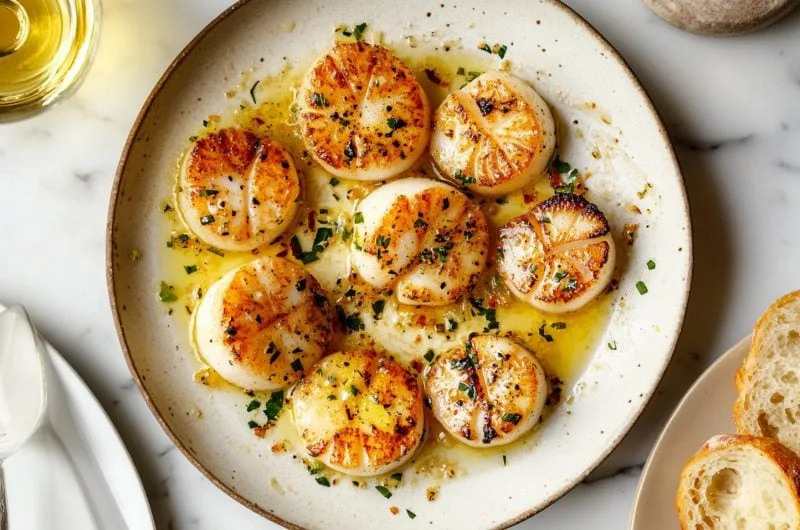
Whatever you go with, resist the urge to marinate scallops for a long time. Acid-based marinades, like lemon juice or vinegar, will start to denature the surface proteins within 15 to 20 minutes, giving the exterior a mushy, ceviche-like texture. If you want marinade flavor, keep it to 10 minutes max, or simply use the seasoning as a finishing sauce after cooking.
For those who love a good side dish alongside their seafood, the air fryer asparagus with parmesan cooks in about the same time as scallops, making it a natural pairing for a one-basket meal if you've got a large enough unit.
How to Tell When Scallops Are Done Without Cutting Into Them
The biggest fear with scallops is overcooking them. Cutting one open to check loses juices and ruins the presentation. Instead, use these non-invasive cues.
Press test. Gently press the side of a scallop with a fingertip or the back of a fork. A properly cooked scallop feels firm but still has a slight give, like pressing the pad of your thumb. If it feels hard and dense, it's overcooked.
If it feels soft and jiggly, it needs another minute.
Edge check. Look at the scallop from the side. The outer 3 to 4 millimeters should be fully opaque white. The very center can retain a faint translucency.
That's the window. Once the entire cross-section goes solid white with no translucency left, you've gone too far.
Timing as a guide, not a rule. For U15 sea scallops at 400°F, the sweet spot is typically 7 to 8 minutes total. But air fryers vary. Your first batch is always a test run.
Pull one scallop early, check it, and adjust the rest from there.
If you're using a model with a viewing window or interior light, like several Instant Vortex units, you can monitor browning without opening the basket. That helps a lot with timing consistency.
Common Mistakes That Ruin Air Fryer Scallops (And How to Fix Them)
Even experienced cooks hit these problems. Here's what goes wrong and how to correct it.
Skipping the dry step. Wet scallops steam instead of sear. If your scallops come out pale and rubbery, moisture was the culprit. Pat them dry twice if needed.
Let them sit on paper towels for a few minutes after patting.
Overcrowding the basket. Stacking or packing scallops too close drops the air temperature around each one. They end up poaching in their own moisture. Always cook in a single layer with space between each scallop.
Two batches are better than one crowded batch.
Using wet-packed scallops. No amount of drying fully removes the sodium tripolyphosphate solution these scallops absorb. They'll never brown the way dry-packed ones do. Check the label or ask your fishmonger before buying.
Not preheating. A cold basket means the first minute or two is just warming up, not searing. Preheat for 3 minutes at your target temperature. It makes a noticeable difference in crust development.
Cooking too long on the second side. The second side always cooks faster because the scallop is already hot throughout. Reduce the second-side time by about a minute compared to the first side.
Using too much oil. A heavy oil coating doesn't help browning. It just creates smoke and a greasy texture. One light spray or brush coat per side is all you need.
Air Fryer Scallops vs. Pan-Seared, Broiled, and Deep-Fried — Which Method Wins?
Each cooking method produces a different result. The best one depends on what you're after.
Air fryer gives you even browning with minimal oil and almost no hands-on time. The circulating hot air hits all sides, so you get a consistent crust without constant attention. The tradeoff is slightly less intense browning than a screaming-hot cast iron pan.
Best for weeknight dinners and cooks who want a set-and-forget approach.
Pan-searing in cast iron delivers the most aggressive, dark golden crust. A properly preheated skillet with a thin layer of oil creates the deepest Maillard reaction. But you need to watch closely, flip at the right moment, and deal with oil splatter.
Best for when presentation matters and you want that restaurant-quality dark sear.
Broiling is the fastest method, taking only 3 to 4 minutes. The intense top-down heat browns the surface quickly. The downside is uneven cooking through the thickness and a high risk of overcooking if you look away.
Best for thin scallops or when you're already using the oven.
Deep frying produces the crispiest exterior, especially with a breaded coating. But it requires a lot of oil, creates more mess, and adds significant calories. Best for special occasions when you want a crunchy, indulgent result.
| Method | Crust Quality | Oil Needed | Hands-On Time | Best For |
|---|---|---|---|---|
| Air fryer | Good, even | Minimal (1 tsp) | Low | Weeknight ease |
| Cast iron pan | Best, deepest | Moderate (1 tbsp) | High | Restaurant results |
| Broiler | Good, fast | Minimal | Medium | Speed |
| Deep fry | Crispiest | High (2+ cups) | Medium | Breaded indulgence |
For most home cooks, the air fryer hits the best balance of quality, convenience, and cleanup. If you're already using yours for proteins like air fryer BBQ chicken legs, adding scallops to your rotation is a natural next step.
What to Serve With Air Fryer Scallops for a Complete Meal
Scallops are rich and delicate, so the best sides are ones that complement without competing.
Over pasta or risotto. A simple lemon-butter linguine or a creamy parmesan risotto is the classic pairing. The starch soaks up the pan sauce and balances the scallops' sweetness.
Alongside roasted vegetables. Asparagus, broccolini, or green beans roasted in the air fryer while the scallops rest make a clean, colorful plate. The air fryer asparagus with parmesan pairs especially well since both cook in about the same time window.
On a salad. Slice cooked scallops and toss them over a bed of arugula with a light vinaigrette. The peppery greens cut through the richness nicely.
With rice or cauliflower rice. For a lower-carb option, serve scallops over cauliflower rice with a drizzle of garlic butter. It keeps the meal light but satisfying.
As an appetizer. Three to four scallops per person on a small plate with lemon wedges and a sprinkle of fresh herbs make an impressive starter for a dinner party.
If you're planning a full air fryer meal, a larger unit helps. A 9 qt air fryer for large batches lets you cook sides and protein simultaneously without juggling multiple rounds.
Tips for Frozen Scallops, Mixed Sizes, and Tricky Air Fryer Models
Real life doesn't always give you perfect scallops and a calibrated appliance. Here's how to handle the variables.
Frozen scallops. Thaw overnight in the fridge for best results. If you're in a rush, seal them in a bag and submerge in cold water for 30 to 45 minutes. After thawing, pat them even drier than fresh ones since they release more liquid.
Add an extra minute to the cook time to account for the lower starting temperature.
Mixed sizes in the same pound. If some scallops are noticeably larger than others, cook the big ones first. Pull the smaller ones out a minute early. Alternatively, group by size and cook in two separate batches.
Uniform sizing is one of the most underappreciated factors in even cooking.
Air fryers that run hot or cold. Most consumer air fryers have a temperature variance of plus or minus 15 to 25 degrees from the dial reading. Run a test batch and adjust. If your scallops are browning too fast, drop to 375°F.
If they're still pale at the recommended time, bump to 425°F.
Basket vs. tray style. Mesh baskets allow better airflow around the scallops but can leave marks. Solid perforated trays are easier to clean but may reduce browning on the bottom side. If your model uses a tray, flip the scallops a minute earlier to compensate.
No preheat function. If your air fryer doesn't have a dedicated preheat setting, just run it empty at your target temperature for 3 minutes. Same result, no special feature needed.
For anyone comparing appliances, understanding whether an Instant Vortex is a good air fryer for your kitchen can help set realistic expectations for how scallops and other proteins will perform in your specific model.
Storing, Reheating, and Food Safety Basics You Should Know
Cooked scallops keep for up to 2 days in an airtight container in the refrigerator. Reheat gently at 300°F in the air fryer for 2 to 3 minutes. Higher temperatures will toughen them fast.
According to the FDA, shellfish should be cooked to an internal temperature of 145°F (63°C) and refrigerated within 2 hours of cooking. Never leave cooked scallops at room temperature for longer than that window.
If you're cooking for someone with a shellfish allergy, keep scallops completely separate from other dishes during prep and cooking. Cross-contact with shared utensils or baskets can trigger a reaction.
Frequently Asked Questions
Can you cook frozen scallops in an air fryer without thawing?
You can, but the results won't be as good. Frozen scallops release a lot of water during cooking, which steams the surface instead of letting it brown. Thaw and dry them first for the best crust.
Do you have to flip scallops in the air fryer?
Yes. Flipping ensures even browning on both sides. The top side gets more direct heat from the element.
Without flipping, the bottom stays pale while the top overcooks.
What temperature should air fryer scallops be cooked at?
400°F (204°C) is the sweet spot for most sea scallops. Drop to 375°F for smaller bay scallops or if your air fryer runs hot.
How many scallops fit in an air fryer basket?
It depends on basket size, but a standard 5 to 6 quart basket fits about 8 to 10 sea scallops in a single layer. A dual basket model doubles that capacity if you're cooking for more than two people.
Why do my scallops taste rubbery?
Rubbery texture means they were overcooked. Scallops go from tender to tough in about a 2-minute window. Pull them when the center is still slightly translucent.
Residual heat will finish the job.
The Bottom Line — When to Pull Out the Air Fryer for Scallops
An air fryer scallops recipe is one of the easiest ways to get restaurant-quality seafood at home with minimal effort and cleanup. The key is simple: start with dry-packed scallops, pat them bone-dry, don't crowd the basket, and pull them just before you think they're done.
You don't need a high-end appliance to get great results. Even a basic 4 quart model handles a pound of scallops perfectly well in two batches. If you're in the market for something bigger, checking whether an Instant Vortex is dishwasher safe can make cleanup even easier after a rich, buttery scallop dinner.
The air fryer won't replace a screaming-hot cast iron pan for the absolute deepest sear. But for weeknight speed, consistent results, and almost zero mess, it's hard to beat. Make the recipe once, note how your specific model behaves, and you'll nail it every time after that.