
If you've ever pulled a tray of beautiful oven scones out of a hot kitchen and wished there were a faster way, an air fryer scones recipe might be exactly what you need. You get a crisp golden exterior and a soft, fluffy interior in about 10 minutes, without heating up the whole house.
In our research on air fryer baking, aggregate user reviews show that the biggest complaint isn't the taste. It's the learning curve. Air fryers push heat from the top down, which means scones can burn on top while staying raw underneath if you don't adjust the method.
Once you understand how to work with that directional heat, though, you'll probably never go back to the oven for small batches.
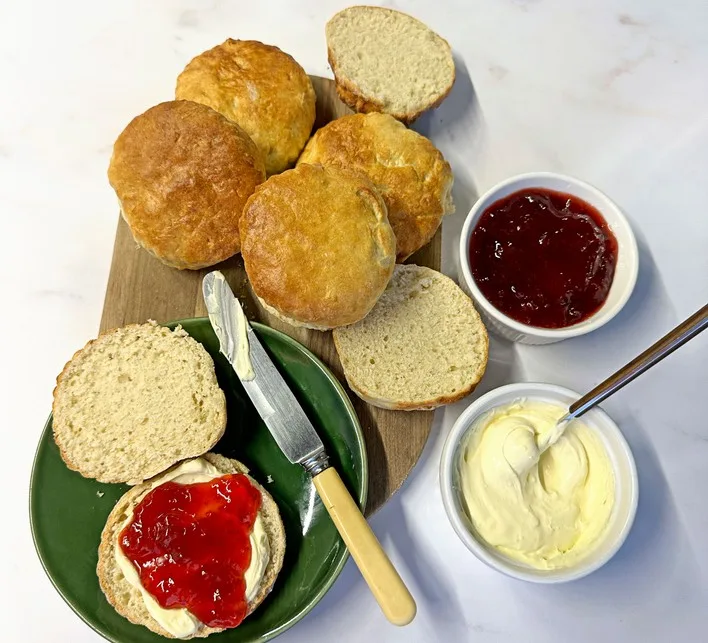
Quick Answer
An air fryer scones recipe takes about 10 minutes to cook at 350°F. You mix cold butter into flour and baking powder. Add buttermilk or cream, then cut shapes.
Place them in the basket with space between each one. The result is a crisp outside and tender middle.
Why Air Fryer Scones Turn Out Better Than You'd Expect
Air fryers aren't just for fries and chicken wings. They actually excel at baking scones when you understand how they work. The intense circulating hot air creates a crust that's hard to replicate in a standard oven, especially in such a short cook time.
The key difference is heat direction. A conventional oven surrounds your scones with ambient heat from all sides. An air fryer blasts hot air downward and circulates it rapidly around the basket.
This means the top and edges of your scones set and brown faster, which gives you that bakery-style crust.
Here's what makes air fryer scones genuinely worth making:
- Speed. Most batches cook in 8 to 12 minutes, compared to 15 to 20 minutes in a standard oven.
- Small-batch perfection. If you only need 4 scones instead of 12, there's no reason to fire up a full-size oven.
- Summer-friendly. An air fryer doesn't turn your kitchen into a sauna the way an oven does.
- Crisp exterior. The rapid air circulation creates a golden crust that many people actually prefer over oven-baked results.
The trade-off is that you need to pay attention to spacing, temperature, and timing more carefully than you would with an oven. Air fryers vary significantly between models, so your first batch is always a calibration run. Once you nail the settings for your specific unit, the results are remarkably consistent.
The One Thing That Makes or Breaks Air Fryer Scones
Moisture management is the single most important factor. Air fryers pull moisture out of food faster than ovens because of the constant high-velocity air circulation. If your dough is even slightly too dry, you'll end up with crumbly, tough scones that feel like they've been sitting out for two days.
The fix is simple. Increase the liquid in your dough by about 1 to 2 tablespoons compared to a standard oven recipe. The dough should feel slightly tacky when you turn it out onto the counter.
Not sticky, but definitely wetter than what you'd normally aim for.
Cold butter matters more here than in oven baking. When those little pockets of cold butter hit the hot air, they create steam that lifts the dough. If your butter softens too much before cooking, you lose that lift.
Keep everything cold, work quickly, and get the scones into the basket as soon as they're shaped.
The air fryer scone dough should look shaggy and slightly wet. If it looks smooth and dry, add another tablespoon of buttermilk.
What You Need Before You Start
Having everything ready before you mix the dough makes a real difference here. Scone dough comes together fast, and you don't want to be searching for a cutter while your butter softens on the counter.
Essential Ingredients
A basic air fryer scones recipe uses pantry staples you probably already have. Here's what you need for a batch of 6 to 8 scones:
| Ingredient | Amount | Notes |
|---|---|---|
| All-purpose flour | 2 cups (250g) | Spoon and level, don't scoop |
| Baking powder | 1 tablespoon | Check the expiration date |
| Salt | ½ teaspoon | Fine table salt |
| Sugar | 3 tablespoons | Adjust for sweet or savory |
| Cold unsalted butter | 6 tablespoons (85g) | Cut into small cubes, kept cold |
| Buttermilk or heavy cream | ¾ cup (180ml) | Cold, plus extra for brushing |
| Egg | 1 large | For binding and egg wash |
| Vanilla extract | 1 teaspoon | Optional, for sweet scones only |
Self-raising flour works as a substitute if you skip the baking powder and salt. Just make sure it's fresh. Stale leavening is the number one reason scones come out flat and dense, regardless of what appliance you bake in.
For add-ins, keep pieces small. Blueberries, chocolate chips, dried cranberries, or shredded cheddar all work well. Fold in about ½ cup total after the wet ingredients come together.
Overmixing at this stage will make your scones tough, so use a light hand.
Equipment and Air Fryer Considerations
Not all air fryers bake the same way. Basket-style models and oven-style models have different heat patterns, and knowing which one you have helps you adjust placement and timing accordingly.
Basket-style air fryers, including popular models from Ninja and Instant Brands, pull heat from above the basket. These work well for scones but require more attention to bottom browning. Placing a small wire rack insert in the basket can help lift the scones closer to the center of the airflow for more even results.
Oven-style air fryers have a front door and multiple racks. These distribute heat more evenly, similar to a small convection oven. They're more forgiving for baking but often have less usable space per rack than a basket-style unit.
You'll also want perforated parchment rounds designed for air fryers. You can also poke holes in regular parchment with a fork in a pinch. This lets air circulate underneath the scones while preventing sticking.
Solid parchment blocks airflow and causes the exact problem you're trying to avoid: raw bottoms with burnt tops.
Step-by-Step: Making Scones in the Air Fryer
This is where everything comes together. Follow these steps and you'll have golden, fluffy scones in under 20 minutes from start to finish.
Prepare the Air Fryer
Preheat your air fryer to 350°F for at least 3 minutes. Preheating matters more with scones than with most air fryer recipes because the initial blast of heat sets the structure of the dough. If you put scones into a cold air fryer, they'll spread and flatten before the crust has a chance to form.
If your air fryer doesn't have a built-in preheat function, just run it empty at the target temperature for 3 minutes. While it preheats, cut your parchment liner and set it aside. If you're not using parchment, lightly grease the basket with butter.
Avoid aerosol cooking sprays, as these can degrade the non-stick coating on most air fryer baskets over time.
Mix the Dough
Combine the flour, baking powder, salt, and sugar in a large bowl. Whisk them together briefly to distribute the leavening evenly. This step matters because baking powder that clumps in one spot will create uneven rise throughout the batch.
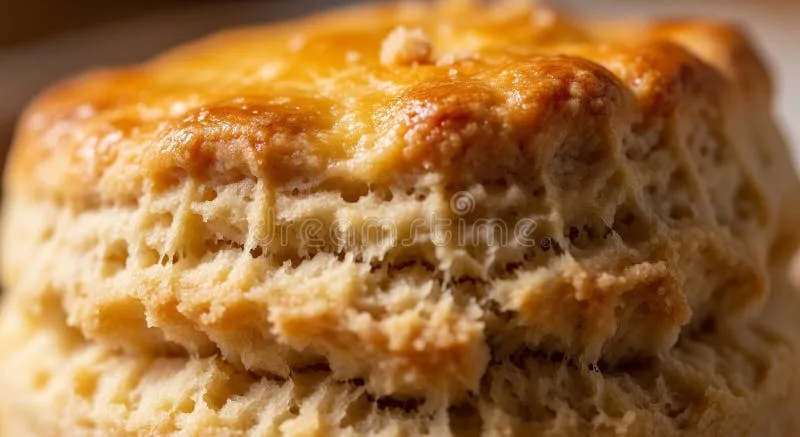
Add the cold butter cubes. Using your fingertips or a pastry cutter, work the butter into the flour until the mixture looks like coarse crumbs with some pea-sized pieces still visible. Those visible butter chunks are what create flaky layers during baking, so don't overwork the mixture.
In a separate small bowl, whisk together the buttermilk, egg, and vanilla. Pour this into the flour mixture all at once. Stir with a fork just until the dough starts to come together.
It should look shaggy and rough, not smooth. Overdeveloping the gluten at this stage leads to tough, bready scones instead of tender ones.
Shape and Cut
Turn the dough out onto a lightly floured surface. Gently pat it into a circle about ¾ inch thick. Do not knead it.
Do not roll it out with a rolling pin. The less you handle the dough, the lighter your scones will be.
Use a 2 to 2.5-inch round cutter to cut straight down without twisting. Twisting the cutter seals the edges and prevents the scones from rising properly. Push straight down, lift straight up, and place each scone on your prepared liner.
Gather the scraps gently, pat them together, and cut again. These second-batch scones won't be quite as tall as the first ones, but they'll still taste great.
Arrange in the Basket
Place the scones in the air fryer basket with at least 1 inch of space between each one. Air needs to circulate around every side for even cooking. If your basket is small, cook in two batches rather than crowding them.
Most basket-style air fryers comfortably hold 4 to 6 standard-size scones.
Crowded scones bake unevenly every time. The ones in the center get less airflow and end up pale and undercooked while the ones near the edges brown too fast. It's worth the extra 10 minutes to do two smaller batches.
Brush the tops with a little extra buttermilk or beaten egg. This gives you that deep golden color and a slightly shiny crust. An egg wash (one egg beaten with one tablespoon of water) produces a darker, richer browning than milk alone.
For the best shot at a glossy top, go with the egg wash.
Cook, Check, and Adjust
Set the temperature to 350°F and cook for 8 to 10 minutes. At the 6-minute mark, peek inside to check progress. The tops should be turning golden and the scones should have visibly risen.
Resist the urge to open the basket too early, since letting cold air in can cause the scones to collapse.
If the tops are browning too fast but the bottoms still look pale, lower the temperature to 325°F for the remaining time. This happens more often in basket-style air fryers where the heating element sits directly above the food.
The scones are done when the tops are deep golden brown and the sides feel firm to the touch. A toothpick inserted into the center should come out clean or with just a few moist crumbs. Let them cool in the basket for 2 minutes, then transfer to a wire rack.
They continue to set as they cool, so pulling them at the right moment is critical.
Your first batch always calibrates your air fryer. Note the time and temperature that worked, and use those same settings for every batch after. The Ninja Foodi and Instant Vortex lines both have slightly different heat profiles, so generic timing from a recipe won't always match your specific unit.
Common Mistakes (and How to Fix Them)
Most air fryer scone failures come down to a handful of predictable issues. Once you know what to look for, they're easy to avoid or correct mid-batch.
Burnt on Top, Raw on the Bottom
This is the number one complaint in air fryer baking reviews. The heating element sits above the food, so the top browns fast while the base stays undercooked. Lower your temperature by 25°F and add 2 minutes to the cook time.
This lets heat penetrate to the bottom before the top over-browns.
If your air fryer has a rack accessory, use it. Lifting the scones closer to the center of the airflow helps the bottoms catch more heat. You can also carefully flip the scones halfway through cooking, though this works best with slightly firmer doughs like cheddar scones.
Flat, Spread-Out Scones
Flat scones usually mean one of three things. Your butter was too warm, you overworked the dough, or your baking powder is expired. Cold butter and a light hand are non-negotiable.
And yes, expired baking powder is more common than you'd think. If yours has been open for more than 6 months, test it by mixing a teaspoon with hot water. It should bubble vigorously.
If not, replace it.
Dry or Crumbly Texture
The air fryer pulls moisture out of food fast. If your dough feels dry before it goes in the basket, the finished scones will be too. Add an extra tablespoon of buttermilk.
The dough should feel tacky, not crumbly.
Overcooking is the other culprit. Start checking at 6 minutes. Pull the scones when the tops are golden, not dark brown.
They carry over a bit of heat even after you take them out, so a scone that looks slightly underdone in the air fryer will often be perfect on the rack 2 minutes later.
Scones Sticking to the Basket
Always use a liner. Perforated parchment is ideal because it lets air circulate underneath while preventing the dough from gripping the basket floor. If you don't have parchment, a light coating of butter works in a pinch.
Let the scones cool for 2 minutes before trying to remove them. They release much more easily once the structure has set.
Air Fryer vs. Oven: Which Is Actually Better for Scones?
Neither is objectively better. They each do something well that the other can't quite match. The right choice depends on how many scones you're making and what texture you prefer.
Speed and Convenience
The air fryer wins on speed. A batch of 4 scones cooks in 8 to 10 minutes versus 15 to 20 minutes in a standard oven. Preheating takes 3 minutes instead of 10 to 15.
For a quick breakfast or a small batch of afternoon tea scones, the air fryer is the more practical choice.
If you're baking for a crowd, the oven still makes more sense. Most air fryer baskets can only fit 4 to 6 scones at a time. A standard baking sheet holds 12 or more.
Texture Differences
Here's where it gets interesting. Air fryer scones tend to have a crisper, darker crust with a slightly more compact crumb. Oven scones are softer all the way through with a more even rise.
If you like a contrast between a crunchy shell and a tender center, the air fryer delivers that naturally. If you want a uniformly soft, pillowy texture from edge to edge, the conventional oven is still your best bet.
| Factor | Air Fryer | Conventional Oven |
|---|---|---|
| Cook time | 8–10 minutes | 15–20 minutes |
| Preheat time | 3 minutes | 10–15 minutes |
| Batch size | 4–6 scones per basket | 12+ scones per sheet |
| Crust texture | Crisp, dark golden | Soft, pale golden |
| Interior texture | Tender, slightly compact | Soft, fluffy throughout |
| Best use case | Small batches, quick meals | Large batches, even texture |
When the Oven Still Wins
If you're making a double batch for a brunch gathering or holiday get-together, use the oven. If you're experimenting with a new recipe for the first time, the oven gives you more predictable, forgiving results. And if you're making very large or irregularly shaped scones, the oven's even heat distribution handles them better.
For everyday small-batch baking, though, the air fryer is faster, more energy-efficient, and produces excellent results once you dial in your settings.
Flavor Variations Worth Trying
Plain scones are perfectly good on their own. But the basic dough is a blank canvas, and once you've mastered the base recipe, these variations are worth rotating through.
Sweet Options
- Blueberry lemon: Fold in ½ cup fresh blueberries and the zest of one lemon. The citrus brightens the sweetness and keeps the flavor from being one-note.
- Chocolate chip: Use mini chocolate chips, about ½ cup. They distribute more evenly than standard-size chips and don't sink to the bottom during baking.
- Cinnamon sugar: Mix 2 tablespoons granulated sugar with 1 teaspoon ground cinnamon and sprinkle it over the tops before baking. The crust gets a crackly, spiced finish that reminds of a cinnamon roll.
- Cranberry orange: Dried cranberries and orange zest make a classic combination that works especially well drizzled with a simple glaze of powdered sugar and milk.
Savory Options
- Cheddar herb: Add ½ cup shredded sharp cheddar and 1 tablespoon fresh chopped chives or rosemary. These are perfect alongside a bowl of soup or as a savory breakfast option.
- Bacon scallion: Fold in ¼ cup cooked crumbled bacon and 2 tablespoons thinly sliced scallions. The saltiness of the bacon pairs well with the buttery scone base.
- Sun-dried tomato and parmesan: About ¼ cup chopped sun-dried tomatoes and ¼ cup grated Parmesan give these a rich, savory depth that works for brunch or lunch.
When adding wet ingredients like fresh fruit, reduce the buttermilk by 1 tablespoon to compensate for the extra moisture. This keeps the dough from getting too sticky to handle and prevents a soggy final texture.
Tips for Specific Air Fryer Models
Not all air fryers behave the same way, and knowing your model's quirks saves you from a failed first batch.
Basket-Style Air Fryers
These are the most common type on the market. The heating element sits above the basket, which means top-down heat is more intense than bottom heat. Keep scones centered in the basket, not pressed against the sides where hot spots can cause uneven browning.
If your basket has a removable mesh grate, place the parchment liner on top of it rather than directly on the floor. This creates a small air gap that helps the bottoms cook more evenly.
Oven-Style Air Fryers
Models with a front-opening door and multiple racks bake more like a small convection oven. Heat distribution is more even across the cooking chamber, so these are naturally more forgiving for baking projects. The trade-off is that these units are larger and take up more counter or storage space.
If you only bake scones occasionally, a basket-style model is more practical for everyday use.
Multi-Cookers with Air Fryer Lids
Multi-cookers with detachable air fryer lids are popular because they combine pressure cooking and air frying in one appliance. The air fryer function in these units is typically less powerful than a dedicated model. Expect cook times to run 2 to 3 minutes longer.
The lid also has a smaller heating element, so browning on top may be less intense.
For multi-cooker users, the convenience of having one appliance that does both jobs often outweighs the slight compromise in baking performance. Just adjust your expectations and timing accordingly. Start checking for doneness 2 minutes earlier than the recipe suggests to calibrate for your specific unit.
Storing and Reheating Your Scones
Scones are best eaten the same day they're baked. That doesn't mean you can't plan ahead and keep them on hand for the week.
Short-Term Storage
Let scones cool completely on a wire rack before storing. If you put them away while they're still warm, condensation builds up and makes the crust soggy. Once cooled, place them in an airtight container at room temperature.
They'll stay fresh for up to 2 days at room temperature. A paper towel on the bottom of the container helps absorb excess moisture. Swap it out if it feels damp after the first day.
Freezing and Reheating
Freeze scones in a single layer on a baking sheet first, then transfer them to a freezer bag once they're solid. This prevents them from sticking together in one big lump. They keep well frozen for up to 3 months.
Write the date and flavor on the bag so you don't have to guess later.
To reheat, place frozen scones directly into the air fryer at 300°F for 3 to 4 minutes. This restores the crisp exterior far better than a microwave, which tends to make scones rubbery and steamed. The air fryer brings back that just-baked texture in just a few minutes.
If you're reheating refrigerated scones instead of frozen ones, 2 minutes at 300°F is usually enough. You want them warm through with a crisp outside, not dried out.
Frequently Asked Questions
Can I use frozen blueberries in air fryer scones?
Yes, and you actually should. Frozen berries hold their shape better during mixing and don't bleed as much juice into the dough. Toss them in a tablespoon of flour before folding them in so they don't sink.
Don't thaw them first, since thawed berries release extra moisture that throws off the dough consistency.
Do I need to preheat my air fryer for scones?
Yes, preheating to 350°F for 3 minutes is important. Scones need that initial blast of consistent heat to set their structure and rise properly. Skipping the preheat step leads to uneven baking and a denser final texture.
Most modern air fryers have a built-in preheat function, or you can simply run the empty unit at the target temperature briefly before loading.
What temperature should I cook scones in an air fryer?
350°F is the sweet spot for most air fryer scones. This gives you a golden crust and a fully cooked interior without burning the tops. If your air fryer runs hot or you notice the tops browning too fast, drop to 325°F and add 2 extra minutes.
Every model is slightly different, so it may take one batch to figure out your ideal setting.
How do I keep scones from getting soggy in the air fryer?
Make sure you're using perforated parchment or a lined basket with airflow holes. Don't stack scones on top of each other or crowd them in the basket. Leave at least 1 inch of space between each one so hot air can circulate on all sides.
And don't store them in a sealed container until they're completely cooled, trapped steam is the fastest way to ruin a crisp crust.
How long do air fryer scones last?
Store them in an airtight container at room temperature and they'll stay fresh for up to 2 days. For longer storage, freeze them in a single layer first, then transfer to a freezer bag for up to 3 months. Reheat in the air fryer at 300°F for a few minutes to bring back that just-baked crispness.