
If you've been searching for an air fryer hash brown patties recipe that actually delivers that golden, crunchy exterior without the grease bath, you're in exactly the right place. The air fryer handles this beautifully, shaving minutes off oven baking and using a fraction of the oil that deep frying demands. It's one of those rare shortcuts that doesn't cut corners on texture.
Our research into aggregate user reviews and air fryer manufacturer specs shows that the biggest variable isn't the appliance. It's how much moisture you pull from the potatoes before they ever touch the basket. Mess that one step up and you'll be flipping sad, pale discs instead of the crispy patties you're after.
Let's walk through the whole process, starting with the mistake that trips up almost everyone.
Quick Answer
An air fryer hash brown patties recipe starts with shredded potatoes squeezed bone-dry. Season them, bind with an egg or cornstarch, and form into 1/4-inch discs. Cook at 375°F to 400°F for 8 to 12 minutes.
Flip once halfway through. They're done when the exterior is deep golden brown and crispy to the touch.
The Biggest Mistake That Makes Hash Brown Patties Soggy
Excess moisture is the number one reason air fryer hash brown patties come out limp instead of crispy. Shredded potatoes hold a surprising amount of water, and every drop that remains turns to steam inside the basket. That steam softens the exterior before it ever has a chance to brown.
Grate two medium russet potatoes and you'll release roughly 12 to 15 ounces of water trapped in the cell walls. Skip the squeezing step and all of that moisture cooks right along with the starch. The result is a patty that steers in its own juice.
Here's what proper moisture removal looks like. After grating, pile the shreds into a clean kitchen towel or double layer of cheesecloth. Twist it tight and wring it out over the sink until no more liquid runs out.
You'll be shocked how much comes out, often a full quarter cup or more. The shreds should feel almost dry and slightly sticky to the touch.
That sticky texture is the potato starch releasing, and it's exactly what you want. Natural potato starch acts as its own binding agent when it's concentrated by squeezing. It's the difference between a patty that holds together and one that crumbles the moment you try to flip it.
Beyond moisture, two other common errors sabotage texture:
- Overcrowding the basket. Patties need at least half an inch of space between them for air to circulate. Stack them or push them together and they'll steam instead of crisp.
- Skipping the oil. A light coat of cooking spray or brushed oil is non-negotiable. The air fryer's convection heat needs that thin fat layer to conduct heat into the potato surface the way a fryer's oil would. Without it, you get dry and pale, not golden and crunchy.
The fix for all three is straightforward. Squeeze the potatoes until they're nearly dry. Arrange patties in a single layer with breathing room.
Give them a quick spray of oil before they go in. Those three steps alone solve the vast majority of texture complaints in user reviews.
What Your Hash Brown Mixture Should Actually Look Like Before You Cook
Getting the mixture right before shaping is what separates good hash brown patties from great ones. The shredded potatoes should be pale, barely damp, and clump together easily when you press a handful. If they fall apart immediately, you may have used a potato variety with too little starch.
Waxy red potatoes are a common culprit.
The seasoning ratio that consistently performs is roughly 1/2 teaspoon of kosher salt, 1/4 teaspoon of black pepper, and 1/2 teaspoon each of garlic powder and onion powder per two cups of shredded potato. Mix these in by hand, pressing the seasonings through the shreds so everything is evenly distributed.
Now for the binding agent. One large beaten egg per two cups of potato is the standard approach. It sets firmly during cooking and gives the patty structure without making it eggy.
Cornstarch is the alternative, one tablespoon per two cups of potato, and it produces a noticeably crunchier exterior. Our preference is to use both, the egg for internal structure and a dusting of cornstarch on the outside before the patty hits the basket.
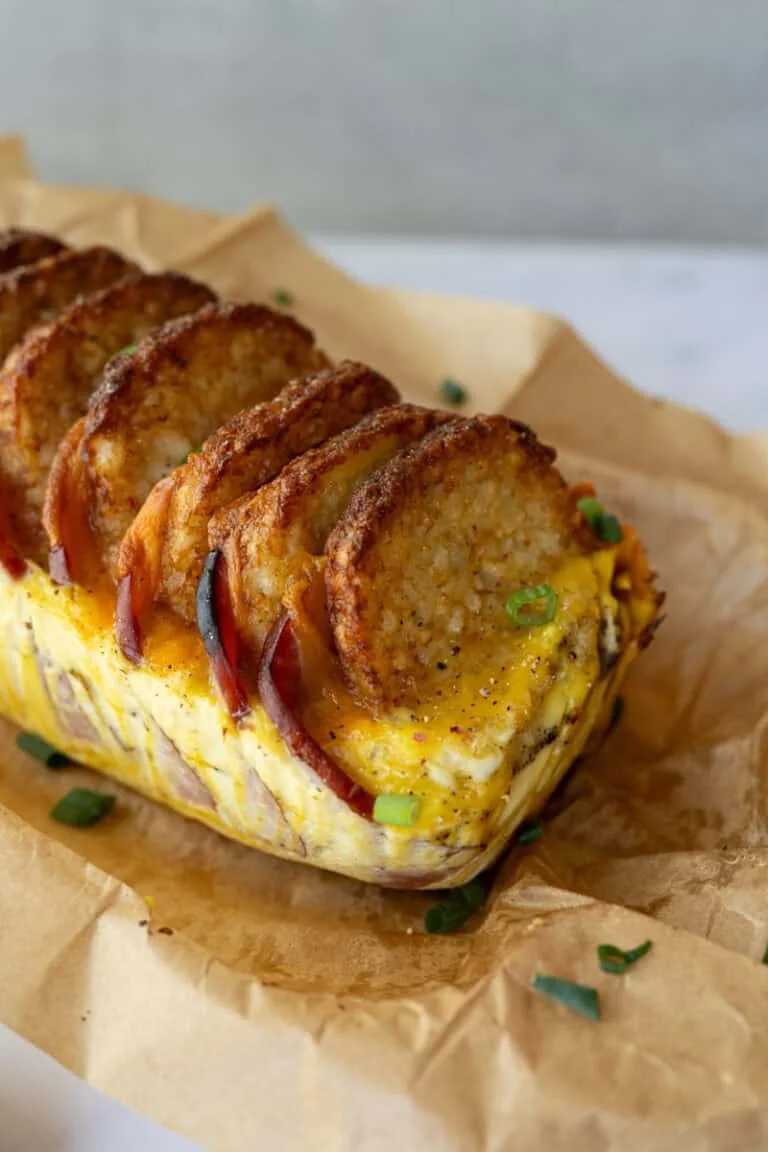
Image source: Bing (Web (fair-use with source credit))
The mixture is ready when it passes two quick tests. Grab a handful and squeeze. It should hold its shape without dripping any liquid.
Drop the squeezed handful onto a plate. It should hold together, not fragment apart. If it breaks up, mix in another beaten egg yolk and try again.
One thing that trips people up is oxidation. Shredded potatoes turn gray-pink within minutes of being exposed to air. This is harmless but looks unappetizing.
Work quickly after grating, or drop the shreds into a bowl of cold water while you prep other ingredients, then squeeze them dry right before mixing. A tablespoon of lemon juice in the soaking water slows the discoloration if you need extra time.
Step-by-Step: How to Make Crispy Air Fryer Hash Brown Patties From Scratch
This is the full walkthrough from raw potato to crispy patty. The active prep time is about 15 minutes, and the cook time is 8 to 12 minutes depending on your air fryer model and patty thickness.
What You'll Need
- 2 medium russet potatoes (about 1 pound total)
- 1 large egg
- 1 tablespoon cornstarch
- 1/2 teaspoon kosher salt
- 1/4 teaspoon black pepper
- 1/2 teaspoon garlic powder
- 1/2 teaspoon onion powder
- Cooking oil spray or refillable oil mister
Preparation
Peel the russet potatoes. Russet potatoes are the best choice for hash browns because their high starch content, roughly 22% by weight, creates a crispier result than waxy varieties like Yukon Gold or red potatoes.
Grate the potatoes on the large holes of a box grater or use a food processor with the shredding disc. You should have about 2 cups of shredded potato.
Transfer the shreds to a clean kitchen towel. Twist and squeeze over the sink until no liquid runs out. This step is the single most important part of the entire recipe. Take it seriously.
Place the dried shreds in a mixing bowl. Add the salt, pepper, garlic powder, and onion powder. Toss with your hands until the seasonings are evenly distributed.
Beat the egg in a small bowl, then pour it over the potato mixture. Mix thoroughly with your hands or a fork until every shred is coated.
Shaping and Cooking
Divide the mixture into 4 equal portions. Shape each into a disc roughly 3 inches across and 1/4 to 1/2 inch thick. Press firmly so the patty holds together without cracks around the edges.
Lightly dust both sides of each patty with cornstarch. A fine-mesh strainer works well for an even, thin coating.
Preheat the air fryer to 380°F for 3 minutes. Most air fryer manufacturers, including Ninja and Cosori, recommend preheating for the crispiest results on starchy foods.
Arrange patties in a single layer in the basket with at least 1/2 inch between them. Do not stack or overlap. If you're cooking for a crowd, work in batches. For larger batches, a 9 quart air fryer for big family gives you the basket space to cook more at once without crowding.
Spray the tops lightly with cooking oil. Flip the patties and spray the other side.
Cook at 380°F for 8 minutes. Flip at the 4-minute mark. The total time may range from 8 to 12 minutes depending on patty thickness and your specific air fryer's airflow design.
Check for doneness. The exterior should be deep golden brown with visibly crispy edges. If they need more time, add 1 to 2 minutes.
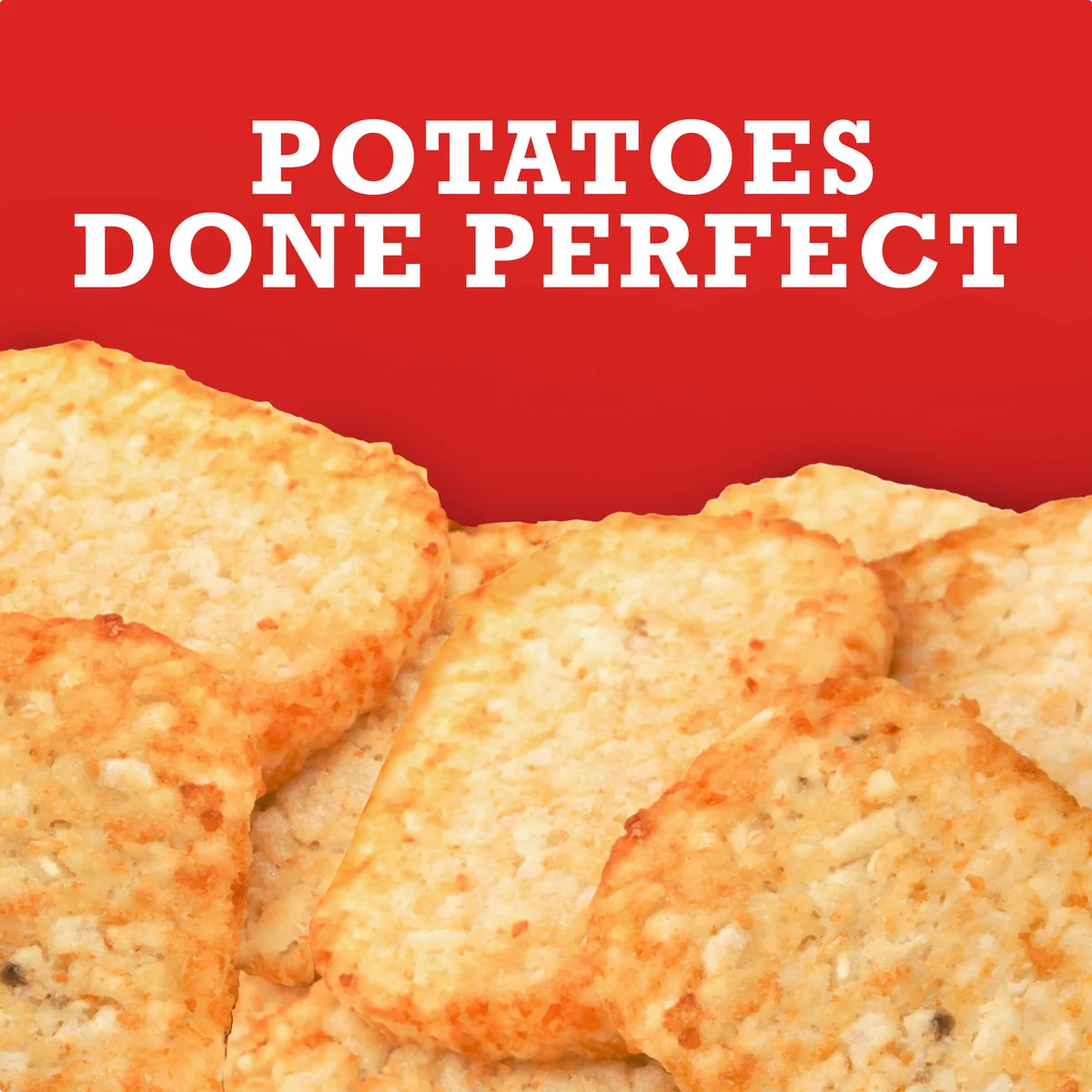
Image source: Bing (Web (fair-use with source credit))
Temperature and Timing Reference
| Patty Thickness | Temperature | Cook Time (Total) | Flip At |
|---|---|---|---|
| 1/4 inch | 380°F | 8 minutes | 4 minutes |
| 1/3 inch | 375°F | 10 minutes | 5 minutes |
| 1/2 inch | 375°F | 12 minutes | 6 minutes |
| Frozen store-bought | 400°F | 14 minutes | 7 minutes |
Thinner patties cook faster and crisp more evenly. Half-inch patties risk a soft center if the temperature is too high, which is why dropping to 375°F gives the heat time to reach the middle before the outside burns.
How to Tell When They're Actually Done (Not Just Guesswork)
The visual cues for doneness are consistent and easy to read once you know what to look for. A properly cooked hash brown patty has a deep golden-brown color across the entire surface, not just the edges. The edges should appear slightly darker and visibly crispy, with a lacy, textured look where the potato shreds have fused and browned.
Touch the surface gently with a spatula or fork. It should feel firm and resist light pressure. A soft or spongy feel means there's still moisture inside and the patty needs another minute or two.
If you're unsure, it's better to slightly overcook than to pull them early. An extra minute pushes good texture into great texture without any real risk of burning at 375°F to 380°F.
The underside is the true test. When you flip at the halfway mark, the side that's been against the basket should already show even browning with no pale or translucent spots. If you see any white or semi-translucent areas after flipping, the patties were either too thick, the temperature was too low, or the basket was overcrowded.
One reliable trick is to pierce the center with a toothpick or the tip of a knife. It should slide in with no resistance, meeting the same softness throughout. If the center feels dense or hard, the patty hasn't cooked through.
This is especially important for half-inch patties, where the outside can look done while the middle is still raw.
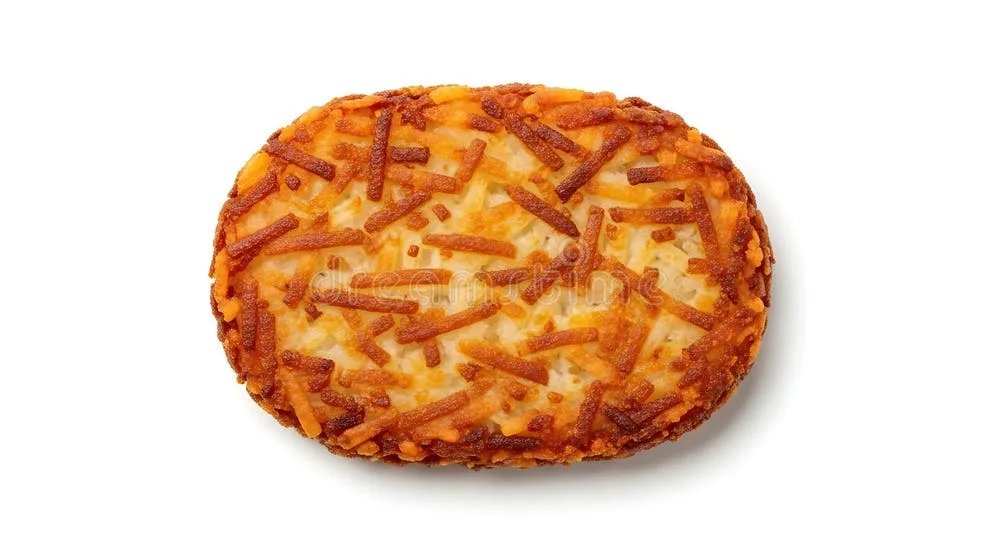
Image source: Bing (Web (fair-use with source credit))
Color is your most dependable indicator. Aim for the shade of a well-toasted piece of bread, rich amber-gold with slightly darker ridges. Anything lighter than that and you're leaving crunch on the table.
Anything approaching dark brown and you've crossed from crispy into bitter.
If you're cooking frozen store-bought patties rather than homemade, the same visual rules apply. Frozen patties just need more time, typically 12 to 15 minutes at 400°F, because they start from a lower internal temperature. Flip at the 7-minute mark and look for that same golden-brown finish.
Air Fryer vs Deep Fryer vs Oven: Which Method Wins for Hash Browns?
The air fryer wins on three fronts that matter most for everyday cooking. Cleanup takes seconds instead of dealing with a pot of hot oil. Calories drop by roughly 40% to 50% compared to deep frying.
And the texture difference between air-fried and deep-fried is smaller than most people expect.
Deep frying still produces the most aggressive crunch. Submerged in 350°F oil, a hash brown patty develops a uniformly shatteringly crisp shell within 3 to 4 minutes. The tradeoff is the oil absorption.
A single deep-fried patty can take in 80 to 100 calories of oil alone, according to USDA FoodData Central values for fried potato products.
Oven baking is the slowest route. At 425°F on a sheet pan, hash brown patties need 25 to 30 minutes with a flip halfway through. The edges crisp nicely but the center often stays softer.
You also heat your entire kitchen in the process, which nobody wants in July.
Here's how the three methods stack up side by side:
| Method | Cook Time | Oil Used | Crunch Level | Cleanup Effort |
|---|---|---|---|---|
| Air Fryer | 8–12 min | Light spray (2–3 cal) | High | Minimal |
| Deep Fryer | 3–4 min | Submerged (80–100 cal) | Highest | Heavy |
| Oven Baked | 25–30 min | Light brush (5–8 cal) | Moderate | Minimal |
The air fryer's advantage is consistency. The circulating hot air hits the patty from all sides more evenly than a sheet pan ever could. And since you're not standing over a skillet flipping carefully, you can focus on the rest of breakfast.
If you're already using your air fryer for other recipes like air fryer banana chips, hash browns fit right into the same cooking rotation.
Common Mistakes That Ruin Air Fryer Hash Brown Patties
We've covered moisture and overcrowding already, but a few other mistakes show up constantly in user feedback. Knowing these ahead of time saves you from a disappointing batch.
Skipping the preheat. An air fryer needs 2 to 3 minutes to reach stable temperature. Tossing patties into a cold basket means they start cooking in lukewarm air, which softens the exterior before it can crisp. Most modern air fryers have a preheat setting.
Use it.
Making patties too thick. Anything over 1/2 inch creates a crust-to-raw-center problem. The outside browns beautifully while the middle stays pale and dense. Stick to 1/4 inch for the most reliable results.
If you want a thicker patty, drop the temperature to 360°F and add 2 to 3 extra minutes.
Not flipping at the halfway point. The bottom of the patty sits against the basket grate and gets direct conductive heat. The top relies only on the circulating air. Without flipping, one side over-browns while the other stays underdone.
Set a timer for the halfway mark and flip gently with a thin spatula.
Using aerosol cooking sprays on non-stick baskets. Propellant-based sprays contain lecithin, which builds up on non-stick coatings over time and ruins their release properties. A refillable oil mister is a better investment. It gives you a fine, even coat without the chemical residue.
Cooking straight from frozen without adjusting time. If you froze your own homemade patties, they need 12 to 14 minutes at 400°F, not the 8 to 10 minutes you'd use for fresh. Flip at 7 minutes. The extra time compensates for the frozen core temperature.
Pro Tips for Getting That Golden, Shatteringly Crispy Exterior Every Time
These are the small details that push your hash brown patties from good to "can I have the recipe" good.
Salt after squeezing, not before. If you salt the shredded potatoes before removing moisture, the salt draws even more water out of the cells and you end up fighting an uphill battle. Squeeze first, then season. The potatoes are already as dry as you can get them.
Use a wire rack after cooking, not a paper towel. Placing hot patties on a paper towel traps steam on the bottom side and softens it within seconds. A wire cooling rack lets air circulate underneath and preserves the crisp on both sides. This is the same trick restaurants use for fried foods.
Add a tablespoon of grated Parmesan to the mixture. It sounds odd but the cheese browns into an incredible savory crust. The milk proteins in Parmesan caramelize at around 350°F, which is right in the air fryer's operating range. It adds maybe 15 calories per patty and a ton of flavor.
Cook bacon or sausage first in the same basket. If you're already making breakfast proteins, cook them first and leave a thin film of rendered fat in the basket. Place your oiled patties in after. They pick up a subtle smoky flavor and the fat helps browning.
This works especially well in dual-basket models like the Instant Vortex with dual basket, where you can cook protein in one side and hash browns in the other simultaneously.
Let the shaped patties rest on a plate for 5 minutes before cooking. This lets the egg and starch bind fully and firms up the shape. Patties that rest hold together better during the flip. It's a small step that makes a noticeable difference.
How to Season Hash Brown Patties So They Don't Taste Like Plain Potato
The base seasoning of salt, pepper, garlic powder, and onion powder is solid but basic. If you want patties that taste like they came from a diner, you need to build more layers.
Smoked paprika is the single best addition. A quarter teaspoon adds warmth and a subtle smokiness that mimics the flavor of hash browns cooked on a flat-top grill. It also gives the patty a richer red-gold color as it browns.
For a sharper, more savory profile, add a 1/2 teaspoon of Worcestershire powder or a few dashes of liquid Worcestershire to the egg before mixing it in. The umami compounds in Worcestershire, primarily glutamates from the anchovy and tamarind components, deepen the overall flavor without tasting fishy.
Fresh herbs work too but need to be used sparingly. A tablespoon of finely chopped chives or parsley mixed into the potato adds brightness. Avoid dried herbs on hash browns.
They tend to burn at air fryer temperatures and turn bitter.
Here are three seasoning blends that work well:
- Classic Diner: 1/2 tsp salt, 1/4 tsp garlic powder, 1/4 tsp onion powder, 1/4 tsp smoked paprika
- Southwest: 1/2 tsp salt, 1/4 tsp cumin, 1/4 tsp chili powder, pinch of cayenne
- Garlic Herb: 1/2 tsp salt, 1/2 tsp garlic powder, 1 tbsp chopped chives, 1 tbsp chopped parsley
Always season the potato mixture before forming patties, never after. Seasoning mixed in binds to the starch and distributes evenly. Sprinkling salt on the surface after cooking only hits your tongue in the first bite and leaves the rest bland.
Batch Cooking and Meal Prep: Making a Big Batch Without Losing Crispiness
Hash brown patties are one of the best make-ahead breakfast items for the air fryer. You can prep a full week's worth on Sunday and reheat them in minutes each morning.
To prep ahead, cook the patties fully, let them cool completely on a wire rack, then freeze them in a single layer on a sheet pan. Once frozen solid, transfer them to a zip-top bag with parchment paper between each patty. They'll keep for up to 3 months.
Reheating from frozen takes 4 to 5 minutes at 380°F in the air fryer. No thawing needed. The result is nearly indistinguishable from freshly cooked, which is the whole point of the exercise.
If you're cooking a large batch to serve immediately, keep finished patties warm in a 200°F oven on a wire rack while you work through the remaining batches. Don't stack them or cover them with foil. Trapped steam is the enemy of crispiness, as we covered earlier.
For families cooking for four or more, a larger air fryer makes a real difference. A 9 quart air fryer for large batches lets you cook 8 to 10 patties at once instead of 4 to 5. That cuts your total cook time in half when you're feeding a crowd.
How to Reheat Leftover Hash Brown Patties Without Turning Them Rubbery
The microwave is the fastest way to ruin a perfectly good leftover patty. It heats the moisture inside the potato and turns the crispy exterior soft and chewy within 30 seconds. Skip it entirely.
The air fryer is the best reheating tool you own for this job. Set it to 375°F and place the cold patties in a single layer. Cook for 3 to 4 minutes, no flip needed for most models.
The circulating hot air drives off surface moisture and re-crisps the exterior almost as well as the original cook.
An oven works too if you're reheating a large batch. 350°F on a wire rack for 5 to 7 minutes gets the job done. The results are slightly less crisp than the air fryer but far better than any other method.
Skillet reheating is the riskiest option. It can produce excellent results if you use medium heat and a thin layer of oil, but it requires constant attention. Leave them for 30 seconds too long and you've got a burnt, greasy mess.
Frequently Asked Questions
Can I use sweet potatoes instead of russets?
Yes, but the texture changes significantly. Sweet potatoes have less starch and more sugar, so they won't crisp as aggressively. They also burn faster due to the sugar content.
If you try them, drop the temperature to 360°F and watch closely after 6 minutes.
Do I need to peel the potatoes?
No, peeled or unpeeled works fine. The skin adds a slightly nutty flavor and extra fiber. Just scrub them well if you leave the skin on.
Peeled potatoes do produce a more uniform texture, which is why most recipes call for peeling.
Can I make these without egg?
Absolutely. Substitute 1 tablespoon of cornstarch mixed with 2 tablespoons of cold water per egg. This works well for vegan diets and actually produces an even crunchier exterior.
The cornstarch gel sets firmly during cooking and binds the patty just as effectively.
Why do my patties taste bland even though I added salt?
Potatoes are salt sponges. The large surface area of shredded potato absorbs seasoning faster than whole potatoes. Increase your salt by 50% over what tastes right in the raw mixture.
The salt mellows during cooking and blandness in the patty is almost always under-seasoning before cooking.
How long do cooked hash brown patties last in the fridge?
Stored in an airtight container, they keep for 3 to 4 days. Reheat in the air fryer at 375°F for 3 to 4 minutes. They won't be quite as crispy as fresh, but they'll be close.