
If you've ever craved that shatteringly crunchy, salty snap of real chicharrones but don't want to deal with a pot of boiling lard on the stove, an air fryer chicharrones recipe is about to become your new go-to. The air fryer renders pork fat fast, circulates heat evenly, and turns raw pork skin into golden, puffed cracklings in roughly 20 minutes. No deep fryer, no outdoor setup, no babysitting a splattering pan.
What makes this method stand out is how much control you get. Traditional deep frying can push 30 to 45 minutes of active cooking and requires careful oil temperature management. The air fryer cuts that time nearly in half and uses a fraction of the oil.
In our research, most home cooks report their first batch comes out crisp enough to rival a restaurant version. Let's walk through exactly how to pull that off.
Quick Answer
An air fryer chicharrones recipe uses convection heat to render pork skin into crispy, puffed cracklings. Score and dry the skin, then cook at 375°F to 400°F for 15 to 25 minutes. Shake the basket halfway through.
Season immediately after cooking while the rinds are still hot. The result is a crunchy, keto-friendly snack with far less oil than deep frying.
What Are Chicharrones and Why Make Them in an Air Fryer?
Chicharrones are fried pork rinds with roots across Latin American and Southern US cooking traditions. At their core, they're just pork skin that's been rendered until the fat melts away and the remaining tissue puffs into an airy, crispy chip. The name varies by region.
In Mexico and Colombia, they're chicharrones. In the American South, folks call them cracklings or pork rinds. In the UK, they go by pork scratchings.
The traditional method involves submerging strips of pork skin in hot lard at around 370°F for 20 to 30 minutes. It works beautifully, but it's messy, it smells up the whole house, and handling a large pot of boiling fat carries real burn risk. That's where the air fryer changes the game.
An air fryer is a countertop convection oven that circulates superheated air around food at high speed. It mimics the effect of deep frying by surrounding every surface of the pork skin with consistent, intense heat. The fat renders out and drips through the basket perforations, which means the skin essentially fries in its own rendered fat without sitting submerged in oil.
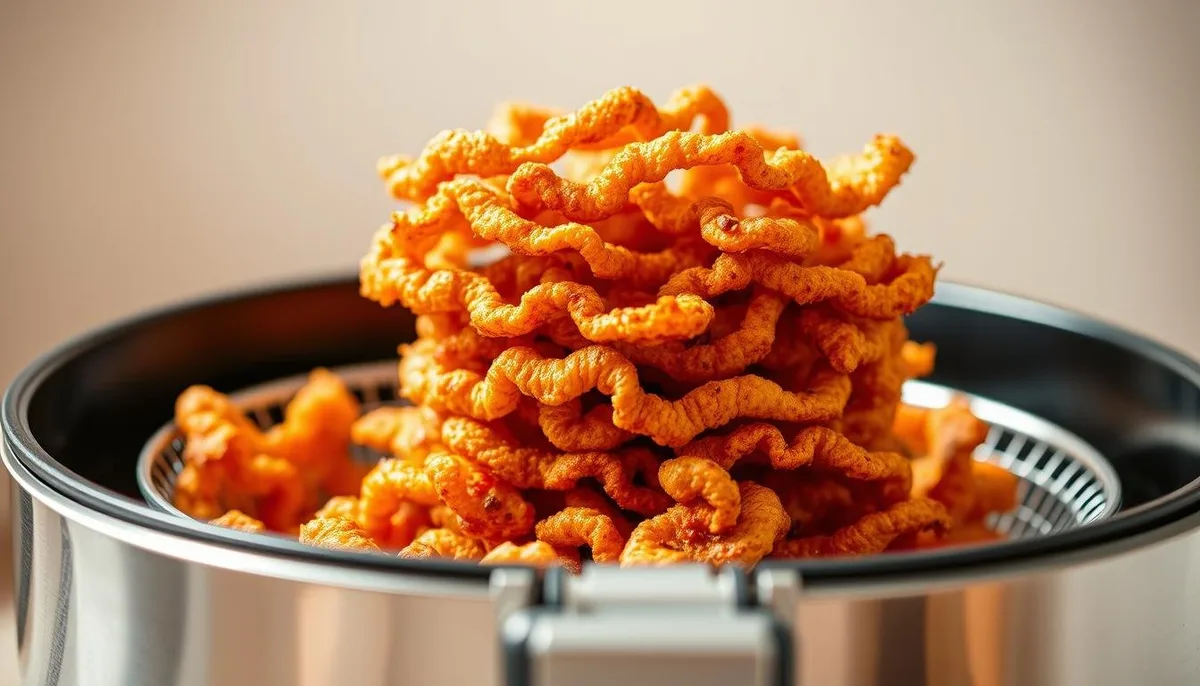
The practical benefits add up fast. You're looking at roughly 15 to 25 minutes of cook time versus 30 to 45 for deep frying. There's no quart of lard to dispose of afterward.
Cleanup is a quick wipe of the basket instead of scrubbing a Dutch oven. And for anyone cooking in an apartment or small kitchen without an outdoor setup, the air fryer keeps everything contained indoors.
From a dietary standpoint, air fryer chicharrones are naturally zero-carb and high in protein, which is why they've become a staple snack in keto and carnivore diet communities. A 1-ounce serving of plain pork rinds contains roughly 150 to 180 calories and about 17 grams of protein, according to USDA FoodData Central. That makes them one of the most satisfying low-carb snack options you can make at home.
The Secret to Perfect Air Fryer Chicharrones (It's All About the Prep)
Here's the thing most people get wrong: the air fryer is only half the equation. The real difference between rubbery, chewy disappointment and shatteringly crisp chicharrones happens before the skin ever touches the basket. Prep is everything.
Start with the Right Cut
You want pure pork skin with as little meat attached as possible. Pork belly skin and back fat skin are the two most common cuts. Belly skin tends to be a bit thicker and produces a slightly meatier, chewier result.
Back fat skin is thinner and puffs up lighter and crispier. Either works, but thinner skin will puff more dramatically and cook faster.
Ask your butcher for a piece that's been cleaned and de-haired. If you're buying from a grocery store meat counter, look for packages labeled "pork skin" or "pork rind" in the refrigerated section. Some stores stock it frozen.
Either way, you'll want about a pound of skin to start, which yields roughly 4 to 5 ounces of finished chicharrones after rendering.
Score the Skin
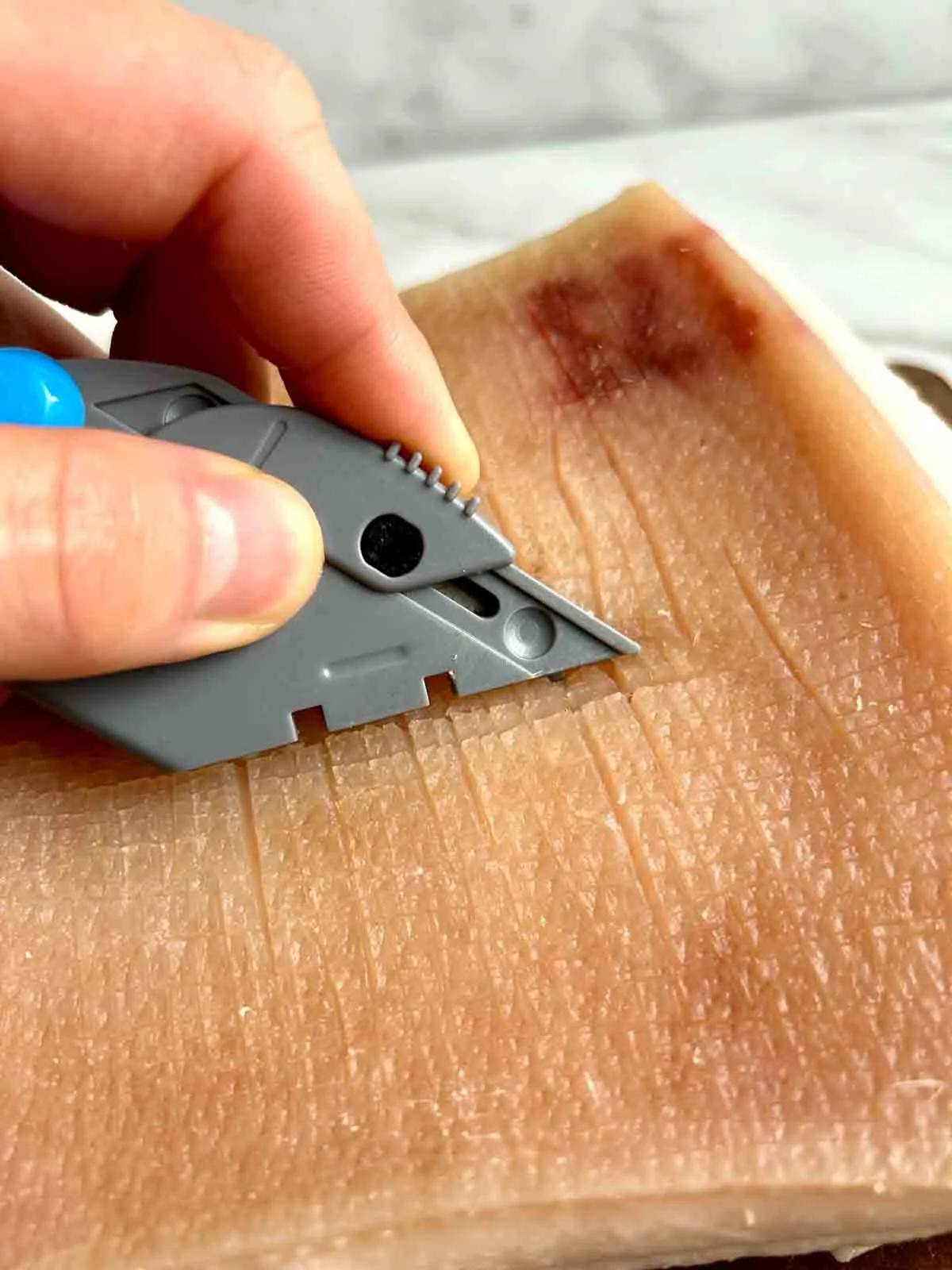
Once you have your skin, cut it into strips about 1 inch wide and 3 to 4 inches long. Then take a sharp knife or box cutter and score the fat side in a crosshatch pattern, cutting about halfway through the thickness. Don't cut all the way through to the skin layer.
Scoring does two things. It creates channels for fat to escape during rendering, which speeds up the process. It also gives the skin room to expand and puff instead of curling into a tight, dense piece.
Think of it like scoring a steak, except you're helping fat leave rather than helping flavor enter.
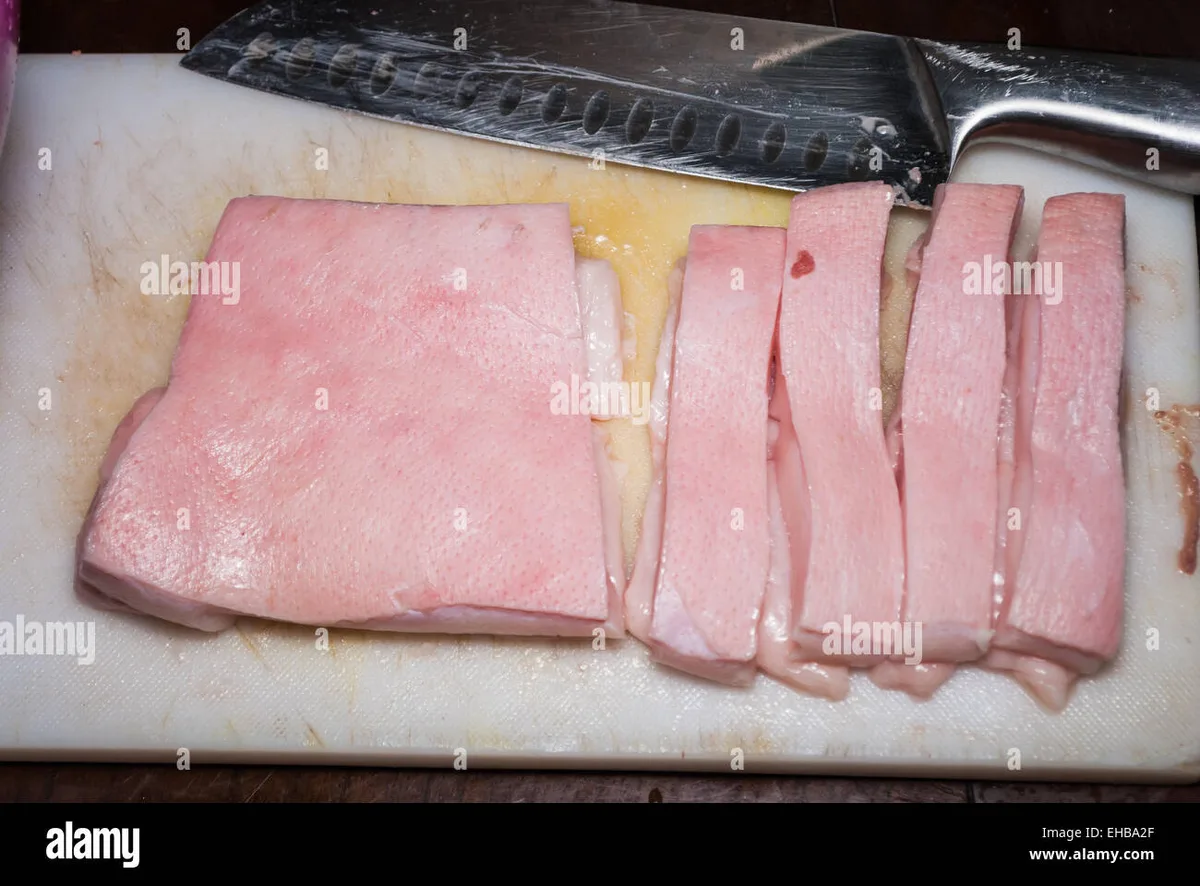
Dry the Skin Thoroughly
This is the step that separates good chicharrones from great ones. Surface moisture is the enemy of crispiness. Water on the skin creates steam, and steam prevents the Maillard reaction and fat rendering that produce that golden crunch.
Pat the scored strips dry with paper towels. Then lay them in a single layer on a wire rack set over a sheet pan and refrigerate them uncovered for at least 8 hours, ideally 12 to 24. The refrigerator's dry air circulation pulls moisture off the surface slowly and evenly.
You'll notice the skin looks matte and feels leathery when it's ready. That's exactly what you want.
If you're short on time, you can skip the overnight dry and just pat the skin as dry as possible. The results won't be quite as dramatic, but you'll still get a solid batch.
Optional: Parboil for Extra Tenderness
Some cooks like to parboil the skin for 30 to 60 minutes before air frying. This pre-renders some of the fat and produces a more tender, less chewy final texture. It's a technique borrowed from traditional Southern crackling recipes.
To parboil, place the scored skin in a pot of water, bring it to a gentle simmer, and cook for 30 to 60 minutes. Drain, pat dry, and then proceed with the refrigerator drying step. This adds time to the process but can make a noticeable difference, especially with thicker belly skin.
A Light Coat of Oil
You don't need much. A quick spritz of cooking oil from a spray bottle helps the skin crisp evenly and encourages browning. Use a neutral oil with a high smoke point like avocado oil or canola oil.
One or two sprays per strip is plenty. You're not trying to fry the skin in oil. You're just giving the heat something to work with on the surface.
If you want to keep things as lean as possible, you can skip this step entirely. The skin has enough internal fat to render and crisp on its own. The oil spray just speeds things up slightly.

Step-by-Step Air Fryer Chicharrones Recipe
Now that your skin is prepped and ready, here's the full cooking process from start to finish. Total active time is about 10 minutes. Total time including prep and drying is 12 to 24 hours.
Ingredients
- 1 pound raw pork skin, cleaned and de-haired
- 1/2 teaspoon fine salt (for pre-seasoning, optional)
- Cooking oil spray (avocado or canola)
- Fine salt and seasonings of choice (for finishing)
Equipment
- Air fryer (basket-style, 5-quart or larger recommended)
- Sharp knife or box cutter
- Wire rack and sheet pan
- Paper towels
- Spray bottle with cooking oil
- Tongs or heat-safe gloves
Instructions
Step 1: Prep the skin. Cut the pork skin into 1-inch by 3-inch strips. Score the fat side in a crosshatch pattern, cutting halfway through. Pat completely dry with paper towels.
Step 2: Dry the skin. Arrange strips in a single layer on a wire rack over a sheet pan. Refrigerate uncovered for 8 to 24 hours until the surface feels dry and leathery.
Step 3: Preheat the air fryer. Set your air fryer to 375°F and let it preheat for 3 to 5 minutes. Preheating ensures the skin hits high heat immediately, which jumpstarts the rendering process.
Step 4: Arrange in the basket. Place the dried skin strips in a single layer in the air fryer basket. Do not overlap. Overcrowding traps steam and leads to chewy, uneven results.
Work in batches if needed.
Step 5: First cook phase. Cook at 375°F for 10 minutes. During this phase, the fat begins to render and drip through the basket. You'll hear sizzling and see the skin start to shrink and change color.
Step 6: Shake and flip. Open the basket and shake it gently to redistribute the pieces. Flip any strips that look like they're cooking unevenly. If there's a lot of rendered fat pooling, you can carefully blot it with a paper towel.
Step 7: Second cook phase. Increase the temperature to 400°F and cook for another 5 to 10 minutes. This is where the magic happens. The skin should start to blister, puff, and turn golden.
Watch closely during this phase. The difference between perfectly puffed and burnt can be 2 to 3 minutes.
Step 8: Check for doneness. The chicharrones are done when they're uniformly golden, puffed up, and feel light and airy. They should make a hollow, crispy sound when you tap one. If any pieces are still pale or floppy, cook for another 2 to 3 minutes.
Step 9: Season immediately. Transfer the hot chicharrones to a paper towel-lined plate. Sprinkle with salt and any seasonings while they're still hot. The residual heat helps the seasoning stick and the last bit of fat carries the flavor into every crack and bubble.
Step 10: Cool and serve. Let them cool for 2 to 3 minutes. They'll crisp up even more as they sit. Serve as-is or with your favorite dipping sauce.
Temperature and Time Quick Reference
| Skin Thickness | Temperature | First Phase | Second Phase | Total Time |
|---|---|---|---|---|
| Thin (back fat skin) | 375°F then 400°F | 8 min | 5 to 8 min | 13 to 16 min |
| Medium (belly skin) | 375°F then 400°F | 10 min | 8 to 12 min | 18 to 22 min |
| Thick (parboiled belly) | 375°F then 400°F | 12 min | 10 to 15 min | 22 to 27 min |
These times are starting points. Every air fryer runs a little different. The visual cues matter more than the clock.
If you're working with a larger air fryer, something like a 9-quart model, you can fit more skin in a single batch without overcrowding. That's worth considering if you're cooking for a crowd or meal-prepping snacks for the week. Basket-style air fryers in the 8 to 9-quart range handle single-layer pork rinds particularly well because the wider basket gives each piece more airflow.
How to Know When Your Chicharrones Are Done (Visual Cues)
Timing alone won't save you here. The best way to nail perfect chicharrones is to learn what each stage looks like. Your eyes and ears are more reliable than any timer.
The Rendering Phase (First 8 to 10 Minutes)
During the first phase at 375°F, the skin will start to sizzle and shrink. You'll see fat dripping through the basket. The color will change from pale pinkish-white to a translucent, slightly golden tone.
The strips will flatten out and may curl at the edges.
This is normal. Don't panic if nothing looks "done" yet. The skin is losing moisture and rendering internal fat.
It needs this lower-temperature phase to cook through before the high-heat crisping begins.
The Puffing Phase (Last 5 to 10 Minutes)
Once you bump the temperature to 400°F, things move fast. The skin will start to blister and bubble. Small pockets of trapped steam push the tissue upward, creating the airy, puffed texture that makes chicharrones so satisfying.
You'll hear a change in the sizzling sound too. It goes from a wet, heavy sizzle to a lighter, drier crackle. That's the sound of moisture leaving and crispiness setting in.
The Finished Look
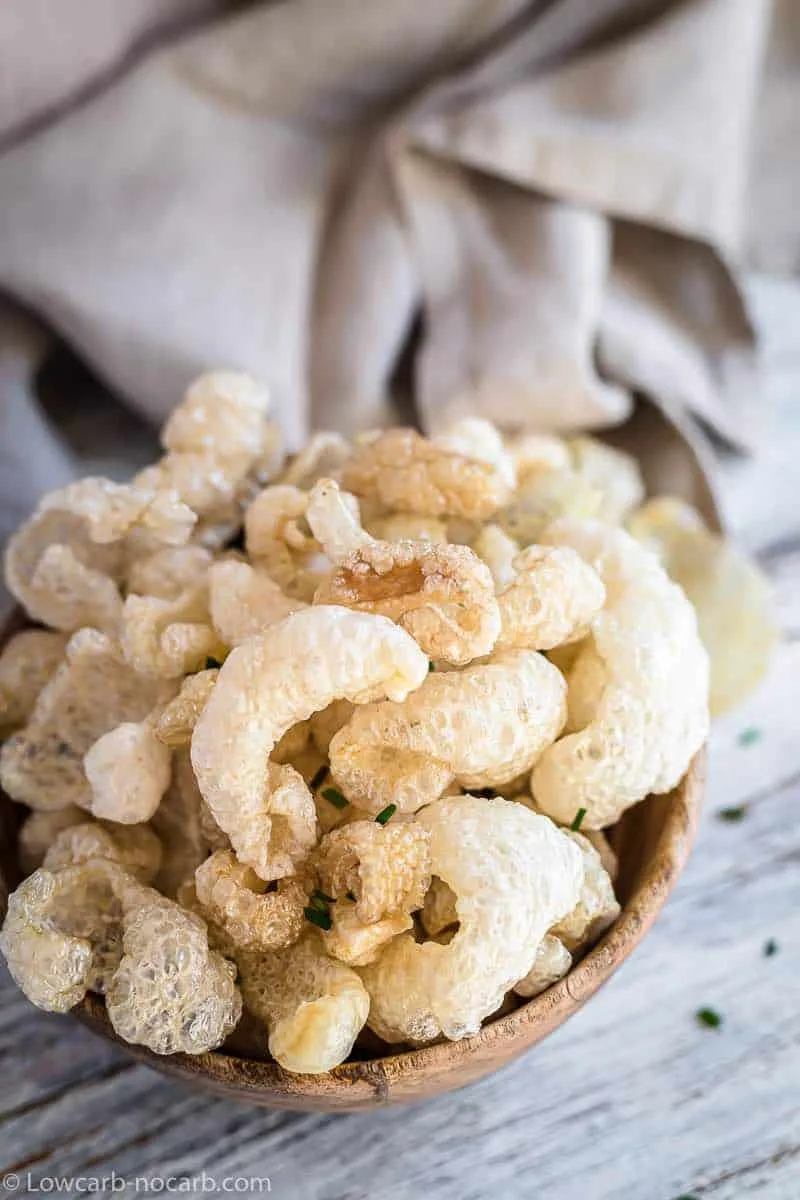
Perfectly done chicharrones are golden all over, with a mix of light and dark golden tones. They should look inflated, almost like tiny pillows. When you pick one up, it should feel surprisingly light for its size.
Tap it gently and it should make a hollow, crisp sound.
If the edges are dark golden but the center is still pale, the piece needs another minute or two. If the whole thing is deep brown or black, you've gone too far. Pull the batch immediately and adjust the time down for the next round.
Common Visual Mistakes
- Still flat and rubbery: Not enough drying time before cooking, or the temperature was too low. The skin needs that initial blast of high heat to puff.
- Puffed but chewy inside: The fat didn't fully render. This usually means the first phase was too short or the skin was too thick without parboiling.
- Burnt edges, raw center: Pieces were too close together in the basket, or the temperature jumped too high too fast. Keep the first phase at 375°F and don't skip it.
- Greasy or soggy: Too many pieces in the basket at once. Steam got trapped and the skin essentially poached instead of crisping. Work in smaller batches.
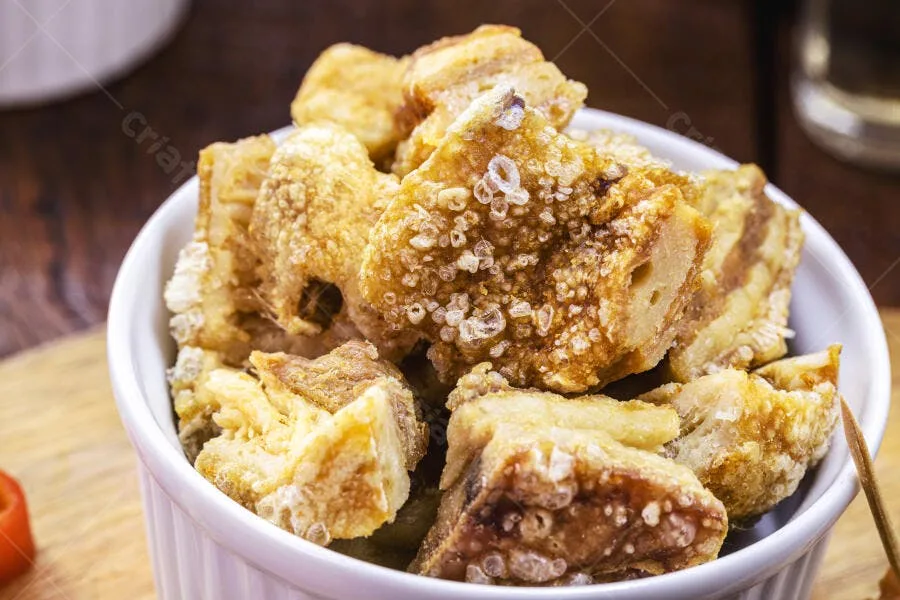
Learning these visual cues takes one or two batches. Your first run might not be perfect, and that's fine. By the second batch, you'll know exactly what to look for and your results will improve dramatically.
That's the beauty of this recipe. It's forgiving enough for beginners but rewards attention to detail with restaurant-quality results.
Seasoning Ideas Beyond Plain Salt
Plain salted chicharrones are fantastic on their own. But the real fun starts when you start playing with flavors. The hot, slightly fatty surface of freshly cooked chicharrones grabs onto seasonings incredibly well.
Here are some combinations that work beautifully.
Classic Lime and Chili
Squeeze fresh lime juice over the hot chicharrones and dust with chili powder or Tajín seasoning. The acid cuts through the fat and the chili adds a slow, warm burn. This is the most traditional Mexican street-style preparation and it's hard to beat.
Smoked Paprika and Garlic
Mix 1 teaspoon smoked paprika, 1/2 teaspoon garlic powder, and 1/4 teaspoon cayenne. Toss the hot chicharrones in the mix while they're still glistening with rendered fat. The smokiness pairs perfectly with the pork's natural richness.
Cajun Spice Blend
A store-bought or homemade Cajon seasoning (paprika, onion powder, garlic powder, black pepper, cayenne, oregano, thyme) gives the chicharrones a bold, peppery kick. This works especially well with thicker belly-skin chicharrones that have a bit more chew.
Everything Bagel Seasoning
It sounds unusual, but the sesame seeds, garlic, onion, and salt in everything bagel seasoning create an addictive savory crunch. Sprinkle it on right after cooking while the surface is still tacky.
Sweet and Spicy
Toss the hot chicharrones with a light dusting of brown sugar, cinnamon, and a pinch of cayenne. The sugar caramelizes slightly on the hot fat and creates a sweet-savory contrast that's surprisingly good.
Szechuan Pepper and Salt
Ground Szechuan peppercorns mixed with flaky salt create a numbing, tingling sensation that's completely different from standard chili heat. This is a great option if you want something unexpected.
The key is to season immediately after cooking. Wait too long and the surface fat cools and hardens, which means the seasoning just falls off. Get the spices on while the chicharrones are still hot and slightly greasy.
Air Fryer Chicharrones vs. Deep-Fried vs. Oven-Baked
Not every cooking method produces the same result. Here's how the three most common home approaches stack up.
Air Fryer
Best for: Speed, convenience, small batches, indoor cooking without heavy smoke.
The air fryer circulates hot air at high velocity around each piece of skin. Fat renders and drips away, leaving the tissue to crisp and puff. Cook times run 15 to 25 minutes.
The texture is light and crispy, though slightly less rich than deep-fried since less residual fat remains in the finished product.
Smoke can be an issue. Pork fat has a smoke point of roughly 370°F, and the second cooking phase runs at 400°F. Make sure your kitchen is ventilated.
Some air fryers handle this better than others. Models with strong exhaust vents and higher wattage tend to produce less lingering smoke.
Deep Frying
Best for: Traditional flavor, largest batches, the richest and most authentic texture.
Submerging pork skin in lard at 350°F to 375°F produces the gold standard. The surrounding fat conducts heat more efficiently than air, so the skin renders evenly and puffs dramatically. The finished chicharrones have a deeper, more unctuous flavor because some of the frying fat reabsorbs into the tissue.
The downsides are significant, though. You need 2 to 3 quarts of lard, which is expensive and tricky to dispose of safely. The process takes 30 to 45 minutes of active monitoring.
The smell permeates the entire house. And handling a large vessel of boiling fat carries genuine burn and fire risk.
Oven Baking
Best for: Hands-off cooking, large batches, cooks who don't own an air fryer.
Spread the skin on a wire rack set over a sheet pan and bake at 400°F to 425°F for 25 to 35 minutes. The oven's still air doesn't circulate as aggressively as an air fryer, so the results are slightly less uniform. Some pieces may puff beautifully while others stay flat.
The advantage is capacity. A full sheet pan holds more skin than most air fryer baskets. The disadvantage is time and energy.
The oven takes longer to preheat, runs longer during cooking, and heats up the whole kitchen in the process.
Side-by-Comparison
| Factor | Air Fryer | Deep Frying | Oven Baking |
|---|---|---|---|
| Cook time | 15 to 25 min | 30 to 45 min | 25 to 35 min |
| Oil needed | Light spray | 2 to 3 quarts lard | Light spray |
| Texture | Light, crispy | Rich, dense, ultra-crispy | Moderate, less uniform |
| Smoke/odor | Moderate | Heavy | Light |
| Cleanup | Easy | Difficult | Moderate |
| Batch size | Small to medium | Large | Large |
| Burn risk | Low | High | Low |
For most home cooks making chicharrones for the first time, the air fryer hits the best balance of speed, safety, and quality. If you're feeding a crowd or chasing the absolute most authentic texture, deep frying still wins. The oven is a solid fallback if that's all you have.
Common Mistakes That Lead to Rubbery or Burnt Chicharrones
Even with a solid recipe, a few missteps can ruin a batch. Here are the most common problems and how to fix them.
Skipping the Drying Step
This is the number one reason chicharrones come out chewy instead of crispy. If the skin still has surface moisture when it hits the hot basket, that water turns to steam. Steam softens the tissue and prevents the dry heat needed for puffing.
The fix is simple: dry the skin overnight in the refrigerator. If you're in a rush, at least pat it thoroughly with paper towels and let it air-dry on a rack for an hour at room temperature. It won't be as effective as the overnight method, but it's better than nothing.
Overcrowding the Basket
It's tempting to load the basket to capacity to save time. Don't. When pieces overlap or touch, steam gets trapped between them.
Instead of crisping, they essentially steam-cook and turn out rubbery and pale.
Always arrange the skin in a single layer with space between each piece. Work in two or three batches if necessary. The extra 10 minutes of batch cooking is worth it for the texture difference.
Skipping the Two-Phase Temperature
Some guides suggest just cranking the air fryer to 400°F and cooking straight through. That almost always burns the outside before the inside fully renders. The lower first phase at 375°F lets the fat melt out gradually.
The higher second phase then crisps and puffs the already-rendered tissue.
Stick with the two-phase approach. It adds a few minutes but produces dramatically better results.
Not Scoring the Skin
Unscored skin has nowhere for the fat to escape. It pools inside the tissue, creates uneven steam pockets, and results in a dense, chewy piece that never fully puffs. Always score in a crosshatch pattern before drying.
Cooking at the Wrong Temperature
Every air fryer runs slightly different. Some models run 10 to 15°F hotter than the set temperature. If your chicharrones are burning before they puff, drop the temperature by 10°F and add a couple of minutes.
If they're coming out pale and floppy, bump it up.
The visual cues described earlier are your best guide. Trust what you see and hear more than what the display says.
Using Skin with Too Much Meat Attached
Pork skin with a thick layer of meat still attached will never crisp the same way pure skin does. The meat stays chewy and moist while the skin around it dries out. If you end up with skin that has meat on it, trim off as much as possible before cooking.
Save the trimmings for another use, like adding to beans or stir-fries.
Best Air Fryer Models for Making Chicharrones
Not all air fryers handle pork skin equally. The key factors are wattage, basket size, and how well the unit manages smoke from rendered fat.
What to Look For
Wattage of 1500 or higher. Higher wattage means the air fryer can recover temperature faster when you open the basket to shake the pieces. It also maintains a more consistent heat during the high-temperature crisping phase. Models in the 1400 to 1800W range work well.
Basket capacity of 5 quarts or larger. Pork skin needs space. A cramped basket forces you to overcrowd, which leads to steaming. A 5-quart basket handles about 6 to 8 ounces of skin per batch in a single layer.
If you're cooking for a family or meal-prepping, an 8 or 9-quart model lets you do larger batches without sacrificing airflow.
Easy-to-clean basket and drip tray. Rendered pork fat is sticky and solidifies fast as it cools. A non-stick basket that's dishwasher safe makes cleanup far less painful. Some models have removable liners that catch the drippings, which is even better.
Strong exhaust ventilation. Since pork fat hits its smoke point around 370°F and you're cooking at 400°F during the crisping phase, good ventilation matters. Models with rear or top exhaust vents tend to produce less lingering smoke than those with minimal venting.
Features That Help
- Dual-zone or multi-layer racks let you cook more skin at once without stacking pieces on top of each other.
- Digital temperature control with 5°F increments gives you more precision than dial-based models.
- Preheat function ensures the basket is at full temperature before the skin goes in.
- Dishwasher-safe parts are almost essential given how much fat renders out during cooking.
If you're shopping specifically with chicharrones and similar high-fat snacks in mind, prioritize capacity and easy cleanup over fancy presets. The basic two-phase temperature method works on any air fryer. You just need enough space and enough power to execute it well.
How to Store Homemade Chicharrones
Homemade chicharrones don't last as long as the commercial versions, which are processed and packaged to extend shelf life. But with proper storage, you can keep them crispy for several days.
Room Temperature
Store cooled chicharrones in an airtight container or resealable bag at room temperature. They'll stay crispy for 3 to 5 days. Add a small food-safe silica gel packet to the container if you have one.
It absorbs ambient moisture and helps maintain crunch.
Refrigerated
For longer storage, refrigerate in an airtight container. They'll keep for up to 2 weeks. The texture may soften slightly.
To re-crisp, spread them on a sheet pan and bake at 350°F for 3 to 5 minutes, or pop them back in the air fryer at 375°F for 2 to 3 minutes.
Freezing
You can freeze chicharrones in a freezer-safe bag for up to 3 months. Let them come to room temperature before opening the bag to avoid condensation. Re-crisp in the air fryer or oven before serving.
Signs They've Gone Bad
Discard chicharrones if they develop a rancid or sour smell, show any signs of mold, or taste stale and off. Pork fat can oxidize over time, especially if the container isn't truly airtight. When in doubt, toss them and make a fresh batch.
The ingredients are inexpensive enough that it's not worth the risk.
Nutritional Snapshot: Are Air Fryer Chicharrones Actually Healthier?
Let's be honest: chicharrones are a fried pork product. They're not a health food. But the air fryer version does have some meaningful nutritional differences compared to deep-fried.
Calorie Comparison
According to USDA FoodData Central, 1 ounce of plain pork rinds contains approximately 150 to 180 calories and 8 to 10 grams of fat. Deep-fried versions can run higher, often 170 to 200 calories per ounce, because the skin absorbs additional frying fat during the process. Air fryer chicharrones fall on the lower end of that range since very little external oil is used.
Macronutrient Profile
Pork rinds are essentially pure protein and fat with zero carbohydrates. A 1-ounce serving provides roughly 17 grams of protein and 9 grams of fat. There's no sugar, no starch, and no fiber.
This macronutrient profile is why they're a staple in ketogenic and carnivore diets.
Sodium
This is where things get tricky. A 1-ounce serving of salted pork rinds can contain 200 to 500 milligrams of sodium, depending on how heavily they're seasoned. If you're watching sodium intake, go light on the post-cook seasoning and skip the pre-salt.
The Honest Take
Air fryer chicharrones are a lower-calorie, lower-fat alternative to deep-fried pork rinds. They're a satisfying, high-protein, zero-carb snack. But they're still calorie-dense and can be high in sodium.
Enjoy them as an occasional treat or a diet-friendly crunch substitute for chips, not as an everyday staple.
Troubleshooting: Why Didn't My Chicharrones Puff?
You followed the recipe, but the skin came out flat and chewy instead of puffed and crispy. Here's what likely went wrong and how to fix it next time.
Problem: Skin Stayed Flat and Rubbery
Most likely cause: Insufficient drying. Surface moisture turned to steam instead of allowing the tissue to crisp.
Fix: Extend the refrigerator drying time to a full 24 hours. Make sure the strips are spread in a single layer on a wire rack so air circulates on all sides. Pat them dry again with paper towels right before cooking.
Second possible cause: Temperature too low. If the air fryer never reached a high enough temperature, the fat rendered slowly but the tissue never got hot enough to puff.
Fix: Make sure you're preheating. Verify your air fryer's actual temperature with an oven thermometer if you suspect it runs cool. Bump the second phase to 405°F if your model allows it.
Problem: Puffed but Chewy Inside
Most likely cause: The fat didn't fully render before the skin puffed. The outside crisped while the inside was still full of unrendered fat.
Fix: Extend the first cooking phase at 375°F by 3 to 5 minutes. For thick skin, consider parboiling before drying. This pre-renders some of the internal fat so the air fryer can finish the job.
Problem: Burnt on the Outside, Raw in the Middle
Most likely cause: Temperature jumped too high too fast, or the pieces were too thick without parboiling.
Fix: Always use the two-phase method. Start at 375°F for the full first phase, then increase to 400°F. If your skin is thicker than 1/4 inch, parboil it for 30 to 60 minutes before the drying step.
Problem: Some Pieces Puffed, Others Didn't
Most likely cause: Uneven thickness. Thicker pieces need more time than thinner ones.
Fix: Try to cut the skin into uniform strips of the same thickness. If some pieces are done early, pull them out and let the rest continue cooking. It's better to pull pieces individually than to overcook the whole batch.
Problem: Excessive Smoke
Most likely cause: Rendered fat dripping onto the heating element or collecting in the bottom of the air fryer.
Fix: Make sure the drip tray is in place and not overflowing. Blot excess fat from the basket at the halfway point. Cook in a well-ventilated kitchen with a window open or a range hood running.
Some smoke is normal when rendering pork fat at 400°F, but excessive smoke means too much fat is pooling in the bottom of the unit.
Cleaning Your Air Fryer After Cooking Pork Skin
Rendered pork fat is one of the messier things you can cook in an air fryer. It's sticky when warm and rock-solid when cool. Cleaning promptly makes a huge difference.
Immediate Cleanup (While Everything Is Still Warm)
Remove the basket and drip tray as soon as the air fryer is cool enough to handle but still warm. The fat will be soft and easy to wipe out. Use paper towels to blot and wipe the interior surfaces.
Don't wait for everything to cool completely. Once pork fat solidifies, it's much harder to remove.
Washing the Basket and Tray
Wash the basket and drip tray in hot, soapy water. A non-scratch sponge works well for the non-stick surfaces. If fat has hardened, soak the parts in hot soapy water for 10 to 15 minutes before scrubbing.
Many air fryer baskets are dishwasher safe, which makes this step easier.
Wiping the Interior
Wipe the inside of the air fryer with a damp cloth or paper towel. Pay attention to the heating element area. Rendered fat that accumulates near the heating element can smoke during future cooks and create off-flavors.
Deep Clean (Monthly or As Needed)
If you make chicharrones regularly, give the air fryer a deep clean once a month. Remove all removable parts and wash them. Wipe the interior with a mixture of baking soda and water to cut through grease.
Rinse with a clean damp cloth and let everything air dry completely before reassembling.
Preventing Buildup
A silicone liner or perforated parchment liner in the basket catches most of the rendered fat and makes cleanup significantly easier. These are inexpensive and reusable. They won't affect the cooking results as long as they don't block too many of the air circulation holes.
Frequently Asked Questions
Can I make chicharrones in any air fryer?
Yes, any air fryer with a temperature range that reaches 400°F will work. Basket-style models are easier to shake and flip pieces in. Oven-style air fryers with racks work too, but you may need to rotate the racks halfway through for even cooking.
Smaller air fryers under 4 quarts will require more batches since you can't fit as much skin in a single layer.
Do I have to refrigerate the skin overnight?
No, but it helps a lot. The overnight dry in the refrigerator produces the crispiest results because it removes surface moisture slowly and evenly. If you skip it, pat the skin as dry as possible with paper towels and let it air-dry on a countertop rack for at least an hour.
The chicharrones will still work, just not quite as puffed.
Can I use frozen pork skin?
Yes. Thaw it completely in the refrigerator before cutting and scoring. Pat it very dry since frozen and thawed skin tends to have more surface moisture.
You may need to add 2 to 3 minutes to the first cooking phase to compensate.
Are air fryer chicharrones keto-friendly?
Absolutely. Pork rinds contain zero carbohydrates and are high in protein and fat. They're one of the most popular keto snack options.
Just watch the seasoning. Some spice blends contain added sugar or maltodextrin, which can add hidden carbs.
Why do my chicharrones taste greasy?
This usually means the fat didn't fully render or too many pieces were crowded into the basket. Make sure you're using the two-phase cooking method and working in small batches. Transfer the finished chicharrones to a paper towel-lined plate for a minute after cooking to blot excess surface fat.
Can I reuse the rendered pork fat?
Yes. Strain the drippings through a fine mesh sieve or cheesecloth into a glass jar. Refrigerated, rendered pork fat (lard) keeps for several months.
Use it for cooking eggs, frying vegetables, or making pie crust. It's a flavorful cooking fat that would otherwise go to waste.
How many chicharrones does 1 pound of skin make?
Expect roughly 4 to 5 ounces of finished chicharrones from 1 pound of raw skin. The weight loss comes from rendered fat and evaporated moisture. The exact yield depends on the thickness of the skin and how completely the fat renders.
Final Thoughts: Why This Recipe Deserves Regular Rotation
Once you've made your first successful batch, you'll understand why this recipe has such a following. The combination of minimal active cooking time, inexpensive ingredients, and a result that genuinely rivals restaurant-quality chicharrones is hard to beat. A pound of pork skin costs 2 to 5 dollars at most grocery stores and produces enough snack for several servings.
The air fryer method also scales well. Make a small batch for yourself on a weeknight or double it for game day. The two-phase cooking method works the same whether you're doing 4 ounces or 12.
Just keep the pieces in a single layer and work in rounds.
As of 2026, air fryer ownership continues to climb across US, UK, and Australian households, and recipes like this one show exactly why. They turn what used to be a messy, time-intensive project into something you can pull off on a random Tuesday night with almost no planning. If you've been curious about making chicharrones at home, this is the easiest entry point you'll find.