
Short ribs are one of those cuts that reward patience and punish shortcuts. Answering what is the best cooking method for short ribs depends on your time, equipment, and how you want the final texture to feel. Braising, smoking, sous vide, and pressure cooking all work, but each one produces a noticeably different result.
In our research, the USDA Food Safety and Inspection Service (FSIS) confirms that beef cuts like short ribs are safe at a minimum of 145 °F with a 3-minute rest, but collagen does not fully convert to gelatin until you hold the meat above 180 °F for an extended period. That gap between "safe" and "tender" is exactly why method matters so much. Let's break down every major approach so you can pick the right one for your kitchen.
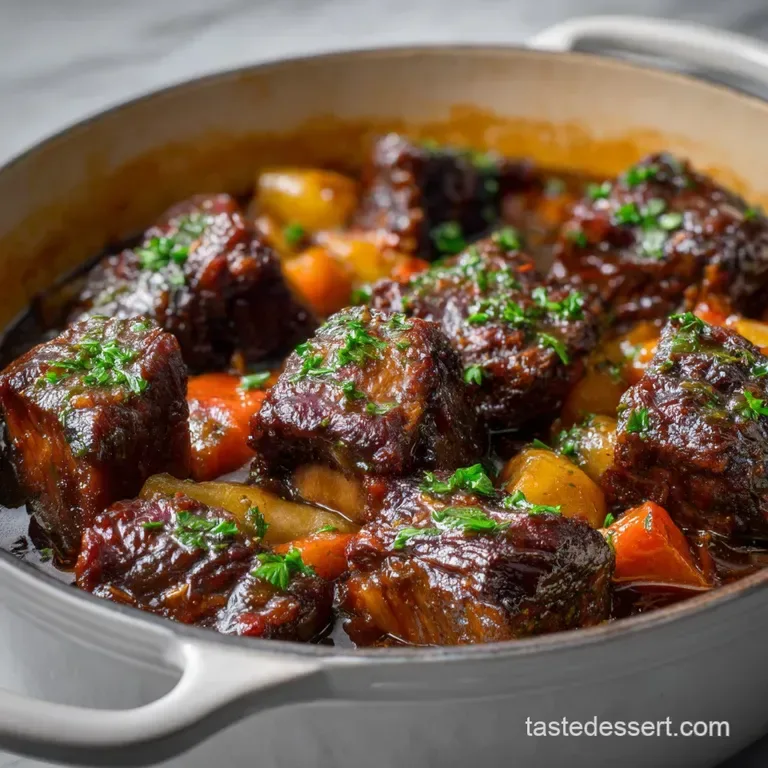
Image source: Bing (Web (fair-use with source credit))
Quick Answer
Braising is the best all-around cooking method for short ribs. It reliably breaks down collagen into gelatin, produces a rich sauce, and works in any oven with a heavy pot. Smoking is the top choice if you want deep barbecue flavor and bark.
Sous vide wins for precision and batch cooking. Pressure cooking is best for weeknights when you need tender ribs in under 90 minutes.
Why Short Ribs Deserve the Right Cooking Method
Short ribs are loaded with connective tissue and collagen. That collagen is what makes them incredible when cooked correctly and chewy or tough when you get it wrong. The cut comes from the chuck or plate section of the cow, and it is one of the most heavily worked muscle groups.
That means long, slow, moist heat is not optional. It is the whole point.
There are two main cuts you will see at the butcher. English-style short ribs are cut parallel to the bone, giving you a thick block with one or two bones running through. Flanken-style are cut across the bone into thin strips, usually about half an inch to an inch thick.
English-style cuts are ideal for braising and smoking. Flanken strips work better for quick grilling or broiling, which is a completely different conversation.
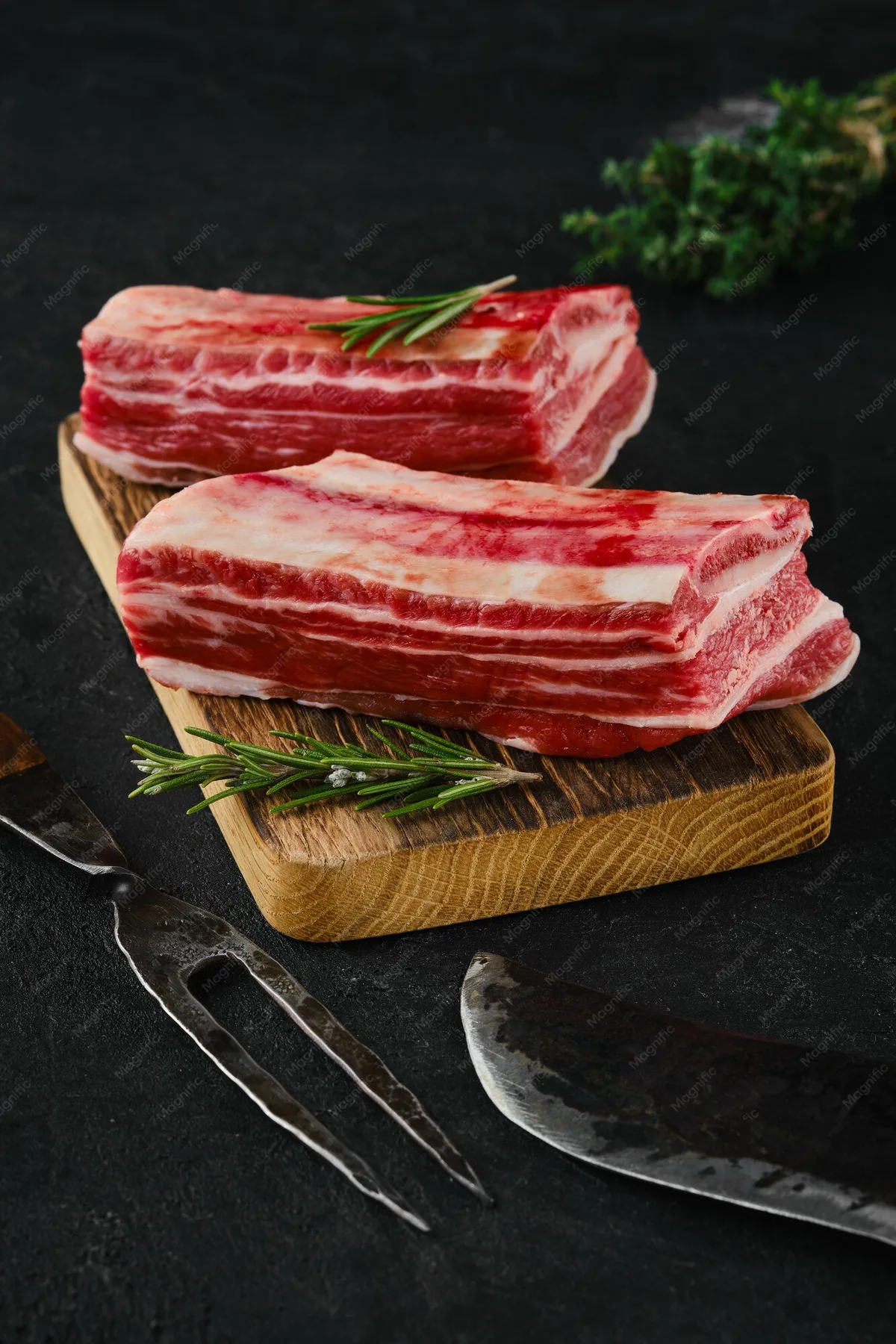
Image source: Bing (Web (fair-use with source credit))
The internal temperature target tells the story. USDA FSIS guidelines set the minimum safe temperature for whole beef cuts at 145 °F with a 3-minute rest. But collagen does not begin converting to gelatin until around 160 °F, and the conversion accelerates significantly above 180 °F.
Most braised or smoked short ribs are pulled between 195 °F and 203 °F. That range is what gives you the fall-apart, fork-tender texture people expect.
If you treat short ribs like a steak and grill them hot and fast, you will end up with something tough and disappointing. The method has to match the biology of the cut. That is why understanding your options matters before you season or fire up anything.
The Best Cooking Methods for Short Ribs Ranked
Every method below can produce excellent short ribs. The ranking here is based on overall reliability, flavor depth, texture quality, and how forgiving each method is for home cooks.
- Braising is the best overall. Consistent results, rich sauce, works with basic equipment.
- Smoking is the best for barbecue flavor. Requires more time and a smoker, but the bark and smoke ring are hard to beat.
- Sous vide is the best for precision. Holds exact temperature for hours, virtually eliminates overcooking.
- Pressure cooking is the best for speed. Cuts braising time by 70 percent, great for weeknights.
- Slow cooker is the most hands-off. Texture can be softer and less defined, but it works.
- Grilling (direct) is only suitable for thin flanken cuts. Not recommended for English-style short ribs.
If you are cooking English-style bone-in short ribs and want the most reliable result, braising is the method to start with. It is forgiving, it builds its own sauce, and it does not require specialty equipment. You just need a heavy pot and an oven.
For a full walkthrough of a related air-fried approach, our guide on beef short ribs in the air fryer covers a faster alternative for thinner cuts.
Braising: The Classic Approach
Braising is the gold standard for short ribs. It uses low, moist heat over a long period to slowly dissolve collagen into gelatin while the meat absorbs flavor from the braising liquid. The result is tender, saucy, and deeply savory.
How Braising Works
The process has three stages. First, you sear the ribs in a hot pan to build a dark crust through the Maillard reaction. Second, you add liquid and aromatics, cover the pot, and transfer it to a 325 °F oven.
Third, you cook until the meat is fork-tender, usually between 2.5 and 3.5 hours.
The braising liquid does double duty. It keeps the meat moist during the long cook, and it becomes your serving sauce after you reduce it. Common bases include beef stock, red wine, or a combination.
Mirepoix (onion, carrot, celery), garlic, and a herb sachet round out the flavor.
Step-by-Step Braising Method
- Pat the short ribs dry and season generously with salt and pepper. For best results, dry-brine uncovered in the fridge for 4 to 18 hours.
- Preheat your oven to 325 °F. Heat a Dutch oven over medium-high heat with a thin layer of oil.
- Sear the ribs on all sides until deeply browned, about 3 to 4 minutes per side. Work in batches to avoid crowding.
- Remove the ribs. Add diced onion, carrot, and celery. Cook until softened, about 5 minutes.
- Deglaze with red wine or stock, scraping up the fond from the bottom of the pot.
- Return the ribs to the pot. Add braising liquid until it comes two-thirds up the sides of the meat.
- Bring to a simmer, cover with a tight-fitting lid, and transfer to the oven.
- Braise for 2.5 to 3.5 hours, until a fork slides into the meat with almost no resistance.
- Remove the ribs. Strain and reduce the braising liquid into a sauce. Rest the meat for 20 to 30 minutes before serving.
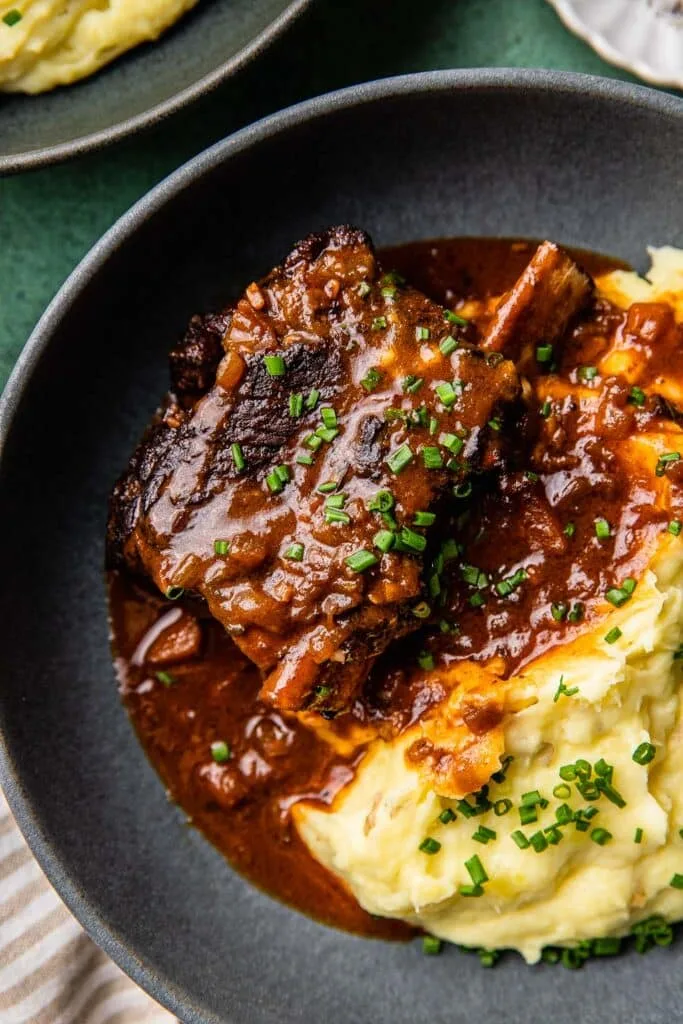
Image source: Bing (Web (fair-use with source credit))
Braising at a Glance
| Factor | Detail |
|---|---|
| Oven temperature | 325 °F |
| Cook time | 2.5 to 3.5 hours |
| Internal target | 195 to 203 °F |
| Equipment | Dutch oven or heavy braiser |
| Difficulty | Beginner-friendly |
Braising is forgiving because the liquid buffer prevents the meat from drying out. Even if you overshoot the time by 30 minutes, the ribs will still be tender. That margin of error makes it the best starting point for anyone cooking short ribs for the first time.
Smoking: Low and Slow for Deep Flavor
Smoking transforms short ribs into something closer to barbecue brisket. The low temperature, indirect heat, and wood smoke create a dark bark, a pink smoke ring, and a flavor profile that braising simply cannot replicate.
How Smoking Works
A smoker holds a steady low temperature, usually between 225 °F and 275 °F, while wood smoke circulates around the meat. The smoke deposits compounds like guaiacol and syringol onto the surface of the ribs, which creates the characteristic barbecue flavor. The low temperature gives collagen time to break down without the meat drying out, as long as you manage humidity and spritzing.
The smoke ring is a chemical reaction between nitric oxide in the smoke and myoglobin in the meat. It forms most actively below 225 °F and is purely cosmetic, but it is a visual hallmark of well-smoked meat.
Step-by-Step Smoking Method
- Trim excess fat and silver skin from the ribs. Apply a thin layer of mustard as a binder.
- Season with a dry rub. A simple mix of salt, black pepper, garlic powder, and paprika works well.
- Preheat your smoker to 250 °F. Use oak, hickory, or cherry wood for beef.
- Place the ribs bone-side down on the grate. Insert a probe thermometer into the thickest part.
- Smoke for 5 to 8 hours. Spritz with apple cider vinegar or beef broth every 45 to 60 minutes after the first 2 hours.
- Optional: wrap in butcher paper once the bark is set, usually around 160 °F internal. This is called the Texas crutch.
- Pull the ribs at 200 to 203 °F internal. Rest for 30 to 45 minutes before slicing.
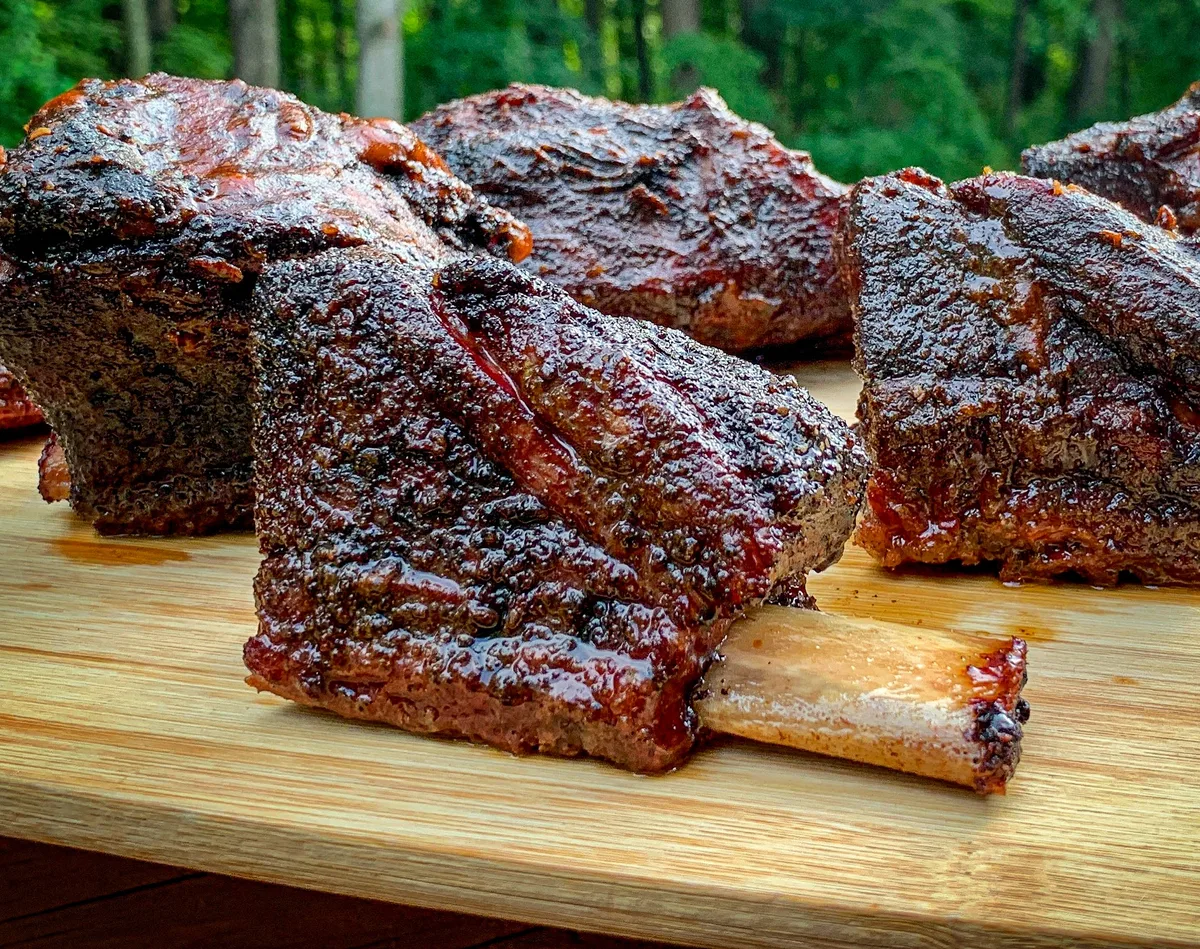
Image source: Bing (Web (fair-use with source credit))
Smoking at a Glance
| Factor | Detail |
|---|---|
| Smoker temperature | 225 to 275 °F (target 250 °F) |
| Cook time | 5 to 8 hours |
| Internal target | 200 to 203 °F |
| Wood types | Oak, hickory, cherry, pecan |
| Difficulty | Intermediate |
Smoking demands more attention than braising. You need to manage fuel, airflow, and temperature swings throughout the cook. Pellet smokers with digital controllers make this significantly easier.
Offset stick-burners give you more control but require constant monitoring.
If you enjoy the smoker and want to explore other proteins, our BBQ chicken air fryer recipes offer a faster way to get barbecue-style flavor indoors.
Sous Vide: Precision and Consistency
Sous vide is the method that removes guesswork entirely. You set a temperature, seal the ribs, and let a water bath hold that exact heat for hours. The result is a perfectly edge-to-edge tender product that you finish with a quick sear.
How Sous Vide Works
A sous vide circulator heats and circulates water in a container, holding the temperature within a fraction of a degree. The short ribs go into a vacuum-sealed bag with seasoning and sometimes a small amount of liquid. Because the water bath never exceeds your target temperature, the meat cannot overcook.
The extended time at temperature is what breaks down collagen.
Research published in the Journal of Food Science confirms that collagen hydrolysis in beef begins around 160 °F and proceeds steadily at 170 °F and above. Sous vide lets you hold at exactly 170 °F for 24 to 48 hours, which converts nearly all connective tissue to gelatin without any risk of drying out.
Step-by-Step Sous Vide Method
- Season the short ribs with salt, pepper, and any aromatics you like. Rosemary, thyme, and garlic work well.
- Vacuum-seal the ribs in a single layer. Use a double seal on each end to prevent leaks.
- Set your circulator to 170 °F for slice-ready texture or 185 °F for shred-ready. Submerge the bag.
- Cook for 24 hours at 185 °F or up to 48 hours at 170 °F. Both produce fully tenderized meat.
- Remove the bag. If batch cooking, shock in an ice bath for 10 minutes before refrigerating.
- Pat the ribs very dry with paper towels. Sear in a ripping-hot cast iron pan or with a torch for 45 to 90 seconds per side.
- Rest for 5 to 10 minutes before slicing.
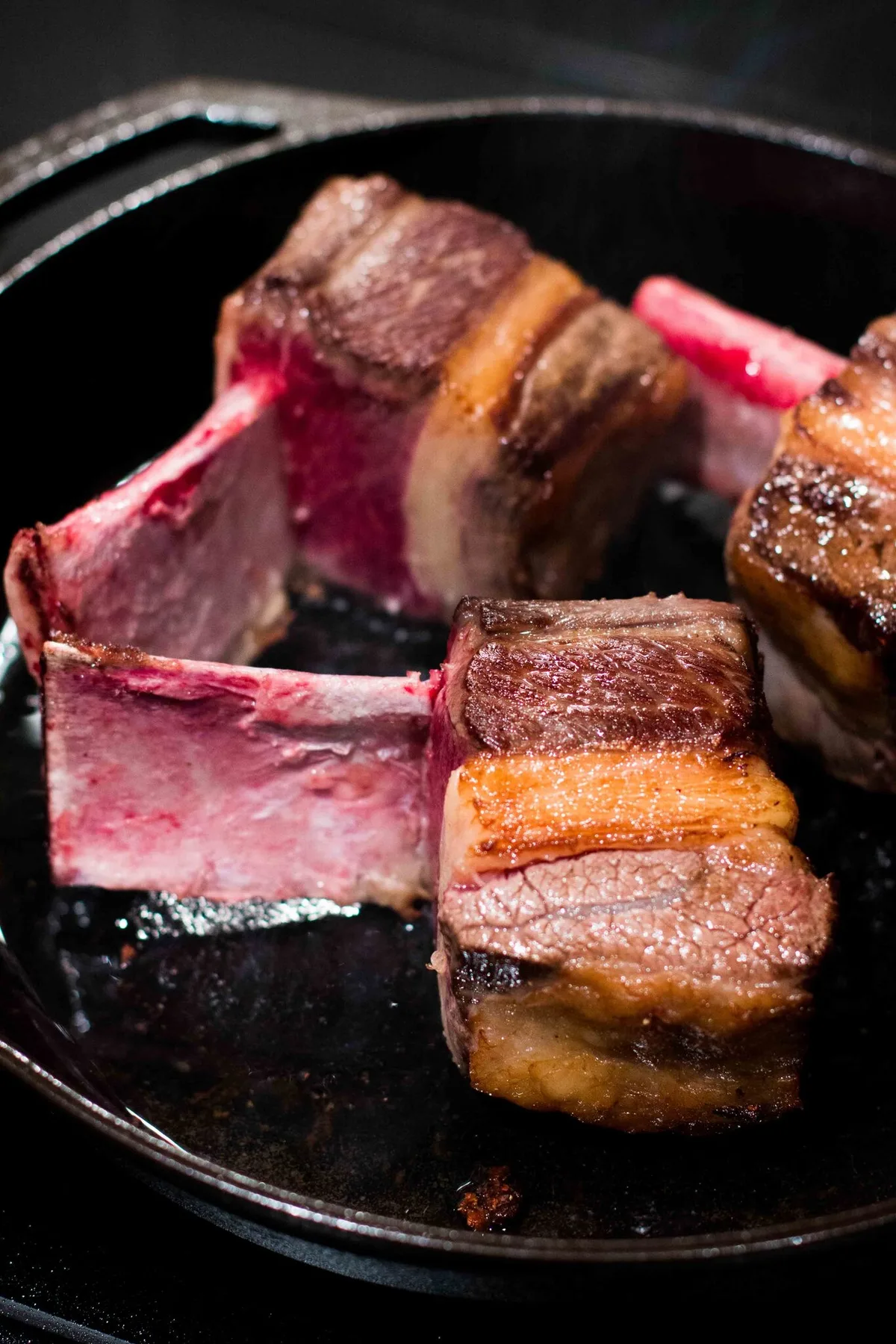
Image source: Bing (Web (fair-use with source credit))
Sous Vide at a Glance
| Factor | Detail |
|---|---|
| Water bath temperature | 170 to 185 °F |
| Cook time | 24 to 48 hours |
| Internal target | Same as water bath (precise) |
| Equipment | Sous vide circulator, vacuum sealer, container |
| Difficulty | Intermediate |
The tradeoff is time. Sous vide is not fast. But it is the most consistent method available, and it is virtually impossible to overcook the meat.
If you are meal prepping or cooking for a crowd, you can seal multiple bags and sear them to order.
One food safety note. The FDA Food Code defines the danger zone for bacterial growth as 40 °F to 140 °F. Sous vide cooking stays well above that range, but you should never hold sealed ribs at room temperature after cooking.
Chill them in an ice bath within 2 hours if you are not serving immediately.
Pressure Cooking Short Ribs: Weeknight Fast Lane
A pressure cooker, like the Instant Pot, is essentially a braise on high speed. The sealed environment raises the internal pressure, which raises the boiling point of the liquid and forces heat into the meat faster. What takes 3 hours in the oven takes about 45 minutes under pressure.
How Pressure Cooking Works
Under high pressure, the boiling point of water climbs from 212 °F to around 250 °F. That higher temperature accelerates the collagen-to-gelatin conversion dramatically. The ribs sit in a small amount of liquid, which creates steam and pressure inside the sealed pot.
The result is tender meat and a concentrated sauce in a fraction of the braising time.
Step-by-Step Pressure Cooker Method
- Season the short ribs generously. Use the Sauté function to sear all sides in batches with a little oil.
- Remove the ribs. Sauté diced onion and garlic in the pot for 2 to 3 minutes.
- Deglaze with beef stock or red wine, scraping up any browned bits.
- Return the ribs to the pot. Add 1 to 2 cups of braising liquid total.
- Lock the lid. Set to High Pressure for 45 minutes for bone-in ribs or 35 minutes for boneless.
- Let the pressure release naturally for 10 to 15 minutes, then quick-release the remainder.
- Remove the ribs. Switch back to Sauté and reduce the sauce for 5 to 10 minutes until it coats a spoon.
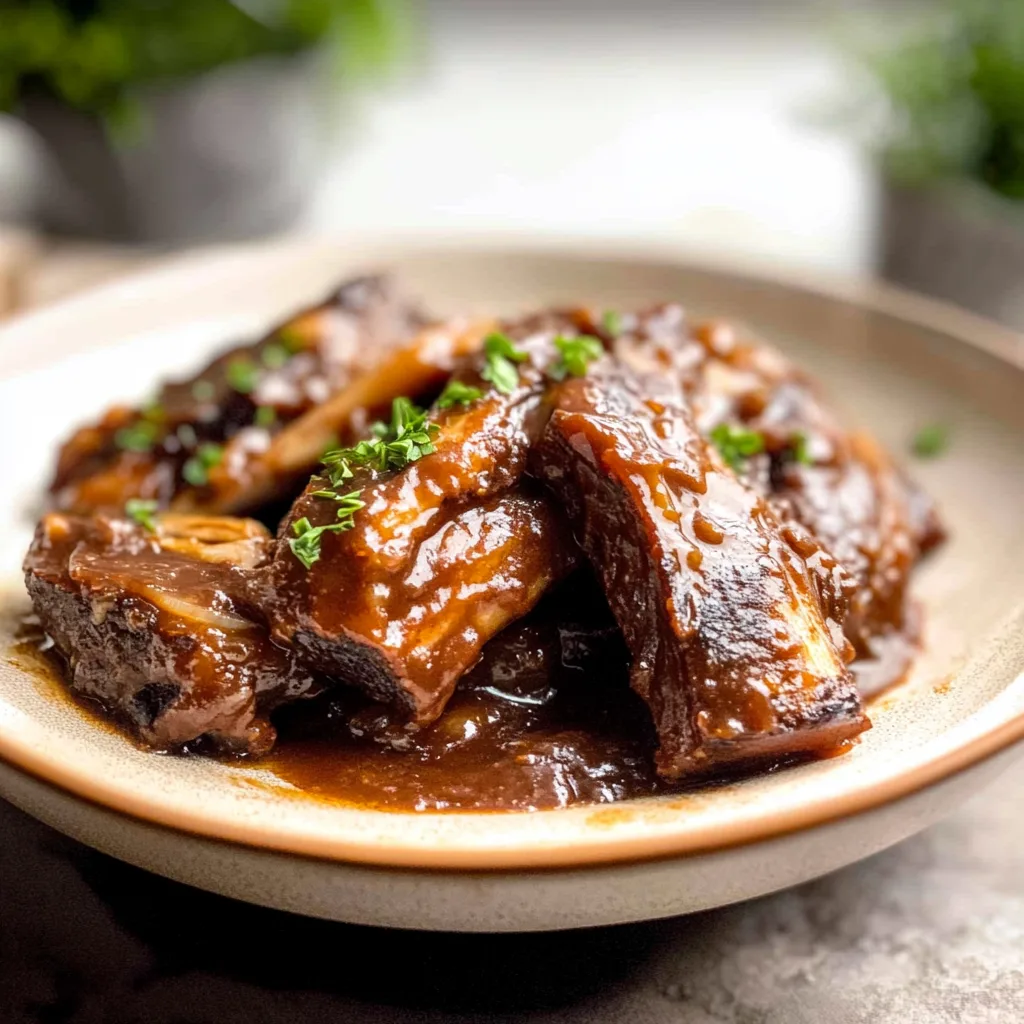
Image source: Bing (Web (fair-use with source credit))
Pressure Cooking at a Glance
| Factor | Detail |
|---|---|
| Pressure setting | High pressure |
| Cook time | 35 to 60 minutes plus release time |
| Internal target | 195 to 203 °F (achieved under pressure) |
| Equipment | Electric pressure cooker |
| Difficulty | Beginner-friendly |
The texture is slightly different from a traditional braise. The meat is tender but can be softer, almost spoon-tender, because the process is so aggressive. If you prefer a firmer bite that holds its shape when sliced, braising or sous vide will serve you better.
For a full comparison of pressure cooking versus air frying, our article on whether an Instant Pot is an air fryer breaks down the overlap between these appliances.
Which Method Wins? Side-by-Side Comparison
Every method has strengths. The right choice depends on your priorities. Here is how braising, smoking, sous vide, and pressure cooking stack up across the factors that matter most.
| Factor | Braising | Smoking | Sous Vide | Pressure Cooking |
|---|---|---|---|---|
| Flavor depth | Rich, savory, saucy | Smoky, bark, complex | Clean, pure beef | Rich, concentrated |
| Texture | Fork-tender, sliceable | Pull-apart, bark crust | Precise, edge-to-edge tender | Very soft, spoon-friendly |
| Total time | 3 to 4 hours | 5 to 8 hours | 24 to 48 hours | 1 to 1.5 hours |
| Active effort | Low after sear | Moderate to high | Very low | Very low |
| Equipment needed | Dutch oven | Smoker plus fuel | Circulator plus sealer | Pressure cooker |
| Forgiveness | High | Moderate | Very high | High |
| Best for | Weeknight dinner, sauce lovers | BBQ fans, weekend projects | Meal prep, precision seekers | Busy weeknights |
Image source: Bing (Web (fair-use with source credit))
If flavor is your top priority and you have the time, smoking produces the most complex result. If consistency matters most, sous vide is unmatched. For the best balance of flavor, texture, and effort, braising wins for most home cooks.
Pressure cooking is the clear choice when you are short on time but still want tender, saucy ribs.
How to Choose the Right Method for Your Situation
The best method is the one that fits your schedule, equipment, and the result you are after. Here is a quick decision framework.
Choose braising if: You want a reliable, one-pot meal with a built-in sauce. You have a Dutch oven and 3 to 4 hours. You are cooking for people who expect classic, comforting short ribs.
Choose smoking if: You own a smoker and want deep barbecue flavor. You have a free afternoon and enjoy the process. You want bark, smoke ring, and that unmistakable low-and-slow character.
Choose sous vide if: You want the most precise, repeatable result possible. You are meal prepping or cooking for a group. You do not mind planning a day or two ahead.
Choose pressure cooking if: You need dinner on the table in 90 minutes. You want tender, saucy ribs without the long wait. You already own an electric pressure cooker.
Choose grilling (direct) only if: You are working with thin flanken-cut strips, not English-style bone-in ribs. You want a quick char and are okay with a chewier texture.
If you are just getting started, braising is the safest bet. It teaches you how the cut behaves, it builds flavor naturally, and it does not require any specialty gear. Once you are comfortable, experiment with smoking or sous vide to see how different methods change the result.
For more air-fryer-friendly approaches to other cuts, check out our bone-in pork chop air fryer recipes or our guide to chicken shawarma in the air fryer.
Common Mistakes That Ruin Short Ribs
The biggest mistake is treating short ribs like a steak. They are not. They need time and moisture, not a quick grill.
Skipping the sear is another common error. That Maillard crust adds measurable flavor compounds and gives the braising liquid a deeper color and richness. Dry-brining for at least 4 hours, or overnight, also makes a noticeable difference in seasoning penetration.
Pulling the ribs too early is the fastest path to disappointment. An internal temperature below 190 °F means the collagen has not fully broken down. The meat will be safe to eat per USDA FSIS guidelines at 145 °F, but it will be chewy.
Wait for 195 °F to 203 °F and verify with a probe thermometer.
Over-smoking is a problem specific to the smoker. Too much wood or poor airflow creates creosote, which coats the meat in a bitter, acrid layer. Use a clean-burning fire and do not over-fuel the smoker.
Not reducing the braising liquid wastes all that built-up flavor. After you pull the ribs, strain the liquid and simmer it down by half. That concentration turns thin cooking juice into a glossy, restaurant-quality sauce.
Food Safety Rules You Should Never Skip
Short ribs are a TCS (time and temperature control for safety) food under the FDA Food Code. That means how you handle them from raw to table matters as much as the cooking method.
Always use separate cutting boards and utensils for raw meat and everything else. Wash your hands with soap and warm water for at least 20 seconds after handling raw ribs. Sanitize any surfaces the meat touched with a solution of 1 tablespoon of unscented bleach per gallon of water.
Refrigerate leftovers within 2 hours of cooking. If the ribs sat out at room temperature for more than 2 hours, discard them. The danger zone for bacterial growth is 40 °F to 140 °F, and bacteria can double in number every 20 minutes in that range.
Store leftovers in shallow containers in the fridge at 40 °F or below. Use within 3 to 4 days, or freeze for up to 3 months. Reheat leftovers to an internal temperature of 165 °F, as recommended by the USDA FSIS.
For sous vide specifically, never hold the ribs in the danger zone before cooking. Get them sealed and into the water bath promptly. If you are chilling cooked sous vide ribs, use an ice bath to bring the temperature down quickly before refrigerating.
In a foodborne illness emergency, contact Poison Control at 1-800-222-1222.
Expert Tips for Better Short Ribs Every Time
Buy bone-in English-style short ribs from a butcher when possible. The bone contributes gelatin and flavor that boneless cuts simply cannot match. Ask for ribs from the chuck section for the best marbling.
Score the meat side of each rib with a sharp knife before cooking. A shallow crosshatch pattern, about a quarter inch deep, lets seasoning and braising liquid penetrate further.
Rest the ribs after cooking, no matter which method you used. A 20 to 30 minute rest after braising lets the juices redistribute. Slicing too early releases those juices onto the cutting board instead of into the meat.
If you finish smoked or sous vide ribs with a sear, the surface must be bone-dry first. Pat every side thoroughly with paper towels. Moisture is the enemy of a good crust and will steam the meat instead of searing it.
Invest in a wireless probe thermometer. Monitoring internal temperature without opening the oven or smoker lid keeps the environment stable and takes the guesswork out of timing.
For a finishing glaze, mix equal parts soy sauce, brown sugar, and rice vinegar. Brush it on the ribs during the last 15 minutes of broiling or searing. The result is a sticky, caramelized crust that adds a layer of sweet-savory flavor.
Final Verdict: Best Method for Flavor, Texture, and Safety
Braising remains the best overall cooking method for short ribs in 2026. It delivers consistent, fork-tender meat with a rich sauce, requires only basic equipment, and has the widest margin for error. Whether you are a first-time cook or a seasoned cook, braising gives you the most reliable result.
Smoking is the top choice if barbecue flavor is your priority and you have the equipment and time. Sous vide is unmatched for precision and batch cooking. Pressure cooking wins for speed on busy weeknights.
All four methods are safe when you follow USDA FSIS temperature guidelines. The key is hitting that 195 °F to 203 °F internal range for full collagen breakdown, resting the meat before slicing, and handling raw and cooked ribs with proper food safety practices.
Start with braising. Master the sear, the low-and-slow oven time, and the sauce reduction. Once you have that foundation, branch out.
Short ribs reward experimentation, and every method teaches you something new about the cut.
Frequently Asked Questions
Can you cook short ribs in an air fryer?
An air fryer is not ideal for English-style bone-in short ribs. The hot circulating air dries out the surface before the connective tissue has time to break down. Thin flanken-style strips can work in an air fryer for a quick char, but the texture will be firmer than braised or smoked ribs.
How do you know when short ribs are done?
Short ribs are done when a fork or probe slides into the meat with almost no resistance. The internal temperature should read between 195 °F and 203 °F for fall-apart tenderness. A safe minimum is 145 °F per USDA FSIS guidelines, but that temperature will leave the collagen intact and the meat chewy.
Should you marinate short ribs before cooking?
A dry-brine of salt applied 4 to 18 hours before cooking is more effective than a wet marinate. Salt penetrates deeper and helps retain moisture. If you do use a wet marinate, limit it to 12 hours and pat the ribs very dry before searing to ensure proper browning.
What is the best wood for smoking short ribs?
Oak is the most popular choice for beef short ribs. It provides a strong, clean smoke flavor without overpowering the meat. Hickory works well too but can be bitter if overused.
Cherry and apple wood add a milder, slightly sweet note that complements beef nicely.
Can you overcook short ribs?
Yes, but the window is wider than most cuts. Braised or smoked ribs held at 200 °F to 205 °F will stay moist for quite some time because the rendered fat and gelatin keep the meat lubricated. If the internal temperature climbs above 210 °F, the muscle fibers start to squeeze out moisture and the texture becomes dry and stringy.
How long do leftover short ribs last?
Cooked short ribs last 3 to 4 days in the refrigerator at 40 °F or below. Freeze them in airtight containers for up to 3 months. Reheat leftovers to an internal temperature of 165 °F before serving, per USDA FSIS recommendations.