
If you've been eyeing those crispy, cheese-stuffed Korean corn dogs on social media and wondering if you can actually pull them off at home, a korean corn dog recipe air fryer method is the smartest way to do it. You get that shatteringly golden crust and gooey melted center without heating a whole pot of oil or dealing with the mess of deep frying. The air fryer's circulating hot air crisps the panko coating beautifully while the interior stays juicy and the cheese stretches just right.
The trick is in the batter consistency, the coating technique, and nailing the temperature. Get those three things right and you'll have street-food-quality corn dogs coming out of your kitchen on a weeknight. Let's break down exactly what makes Korean corn dogs different from the American fairground version you grew up with.
Quick Answer
A Korean corn dog recipe air fryer method uses a baking powder-leavened batter wrapped around a sausage and cheese skewer, coated in panko breadcrumbs or diced potato, and cooked in an air fryer at 350°F to 375°F for 8 to 12 minutes. The result is a crispy, golden exterior with a molten cheese interior, using a fraction of the oil required for deep frying. The air fryer's convection heat circulates evenly around the corn dog, producing a uniform crust that's difficult to achieve in a standard oven.
What Makes Korean Corn Dogs Different From Regular Corn Dogs
A Korean corn dog is not just a corn dog with a trendy label. The construction is fundamentally different from the American version, and understanding those differences is what makes or breaks your results in the air fryer.
An American corn dog uses a thick cornmeal-based batter, is almost always sausage-only, and gets dipped in a cornbread-style coating before deep frying. A Korean corn dog, by contrast, typically uses a lighter wheat-flour batter with a small amount of cornmeal, frequently combines sausage with mozzarella cheese in a half-and-half skewer, and gets rolled in panko breadcrumbs, crushed potato, or even diced potato cubes after battering. Many versions also include a layer of dangmyeon (Korean glass noodles) in the coating for extra crunch.
The sugar in the Korean coating is another key distinction. A small amount of sugar mixed into the panko or sprinkled on the batter before air frying promotes browning and caramelization, which is exactly what you want when you're not submerging the dog in 350°F oil. In an air fryer, that sugar helps bridge the color and flavor gap between air frying and deep frying.
The cheese component changes the cooking dynamics too. Low-moisture mozzarella has a predictable melt profile that goes stretchy and molten fast. That's an advantage in the air fryer, where cook times are shorter than deep frying.
But it also means you need to manage the heat carefully so the cheese doesn't blow out the side of the batter before the crust sets.
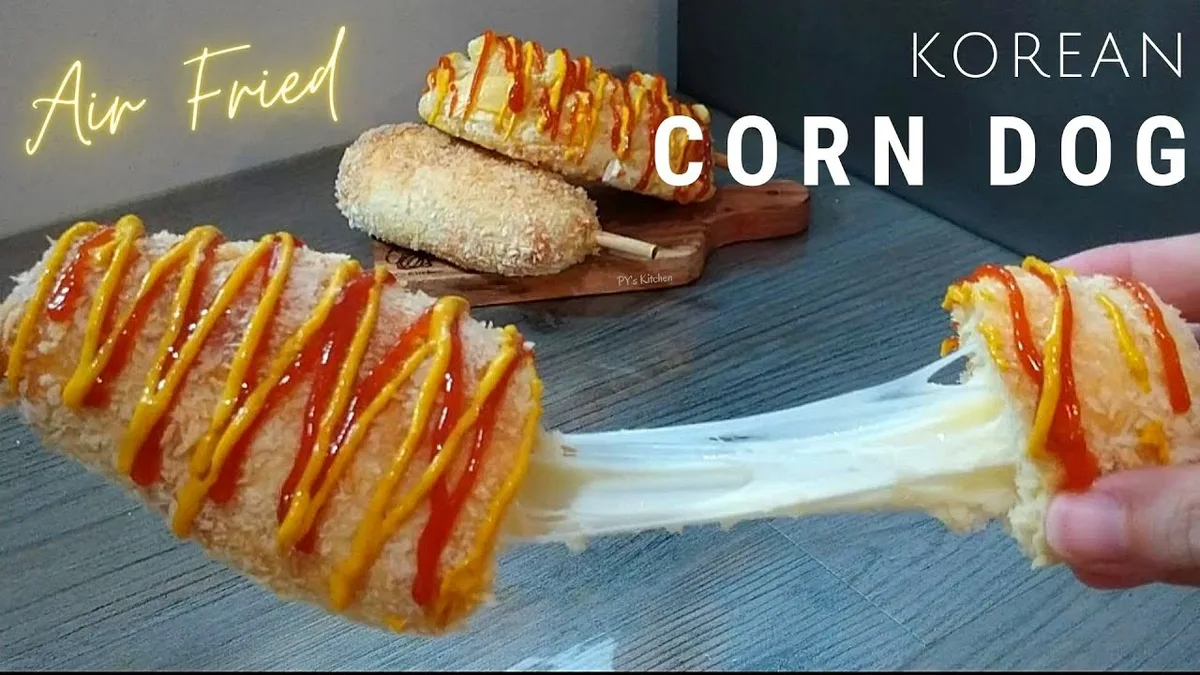
Image source: Bing (Web (fair-use with source credit))
Why Use an Air Fryer Instead of Deep Frying
Deep frying is the traditional method for Korean corn dogs, and it produces excellent results. But for most home cooks, it's impractical. You need a large pot, at least a quart of oil, a thermometer, and the patience to monitor temperature and deal with disposal afterward.
The air fryer eliminates almost all of that.
Here's the practical comparison:
| Factor | Deep Frying | Air Fryer |
|---|---|---|
| Oil required | 1 to 2 quarts (full submersion) | 1 to 2 sprays (light coating) |
| Cook time | 3 to 5 minutes | 8 to 12 minutes |
| Temperature monitoring | Constant (oil temp fluctuates) | Set and forget (digital control) |
| Cleanup | Oil disposal, pot scrubbing | Basket wipe or dishwasher |
| Safety risk | Hot oil splatter, burn hazard | Hot air, minimal splatter |
| Crispiness | Very high, uniform | High, slightly less uniform |
| Calorie difference | Higher (oil absorption) | Significantly lower |
The air fryer uses rapid convection heat to crisp the exterior. It won't produce an identical result to deep frying, but the difference is smaller than expected, especially with panko-coated items. The crust gets crunchy, the interior stays moist, and the cheese melts properly.
One thing the air fryer does better than deep frying: it's far more forgiving on timing. In a deep fryer, 30 seconds too long and your coating goes from golden to burnt. In the air fryer, the margin is wider, which makes this method ideal for beginners.
The main trade-off is batch size. Most standard air fryer baskets fit 3 to 4 corn dogs at a time with proper spacing. If you're making a dozen, you'll need to work in rounds and keep finished ones warm in a 200°F oven.
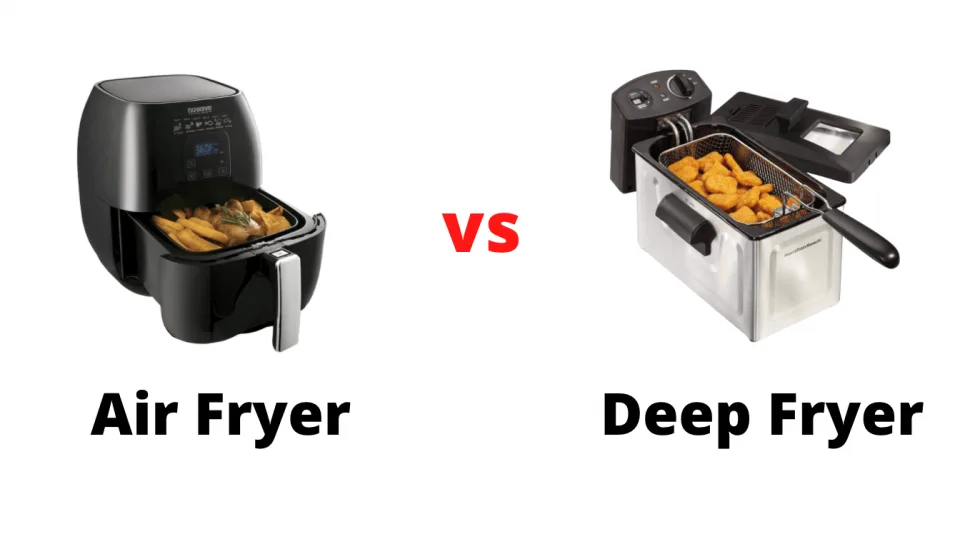
Image source: Bing (Web (fair-use with source credit))
Everything You Need: Ingredients and Equipment
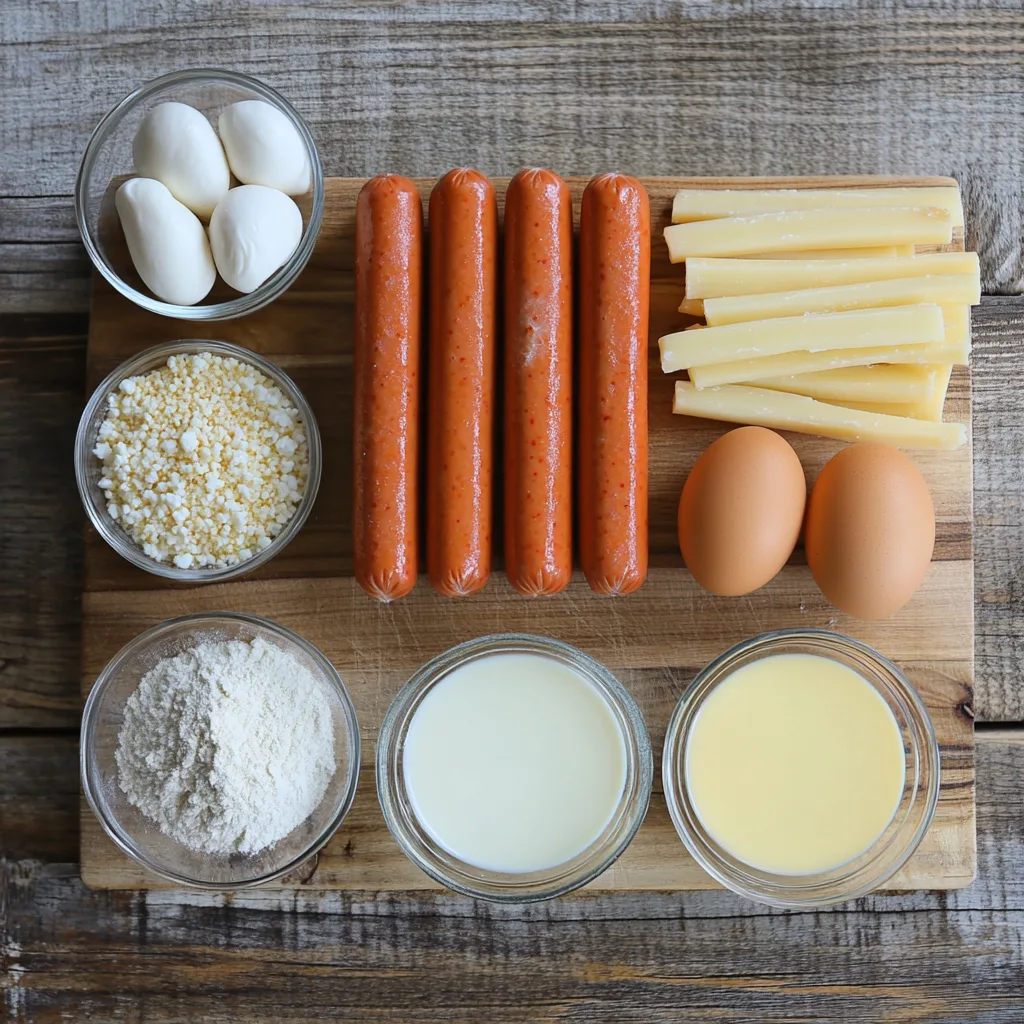
Image source: Bing (Web (fair-use with source credit))
Having everything prepped and within arm's reach before you start is half the battle. Korean corn dog assembly moves fast once the batter is ready, and you don't want to be digging through cabinets with sticky hands.
Ingredients
- Sausage or hot dog franks: 4 to 6 standard-sized dogs. Beef or pork works best. Precooked sausages also work since they just need heating through.
- Mozzarella cheese: Low-moisture mozzarella block, cut into sticks roughly matching the sausage length and width. String cheese works in a pinch but doesn't stretch as dramatically.
- Self-rising flour: 1 cup. If using all-purpose flour, add 1½ teaspoons baking powder and ¼ teaspoon salt per cup.
- Cornmeal: ⅓ cup, fine or medium grind.
- Egg: 1 large.
- Milk: ⅔ cup. Whole milk gives the best texture, but any kind works.
- Sugar: 1 tablespoon for the batter, plus 2 tablespoons mixed into the panko for coating.
- Salt: ½ teaspoon.
- Panko breadcrumbs: 1 to 2 cups. Japanese-style panko gives the crispiest, airiest crust.
- Optional coating: Diced potato cubes (¼-inch) or crushed cornflakes instead of panko.
- Optional: Dangmyeon (sweet potato starch noodles), cut into short lengths, for the coating.
Equipment
- Air fryer: Any standard basket-style or oven-style model works. A larger basket, 5 quarts or more, lets you cook more per batch.
- Wooden skewers or bamboo sticks: 6 to 8 inches long. Soak wooden skewers in water for 20 minutes if concerned about scorching, though this is rarely an issue in an air fryer.
- Shallow dishes: One for batter, one for panko coating. A tall, narrow container like a drinking glass works well for the batter dip.
- Parchment paper or silicone liner: Optional, for easier basket cleanup.
- Cooking oil spray: Avocado, canola, or vegetable oil in a spray bottle or aerosol can.
Quick-Reference Spec Table
| Item | Quantity | Notes |
|---|---|---|
| Sausage franks | 4 to 6 | Beef or pork, standard size |
| Mozzarella block | 4 to 6 sticks | Low-moisture, not fresh |
| Self-rising flour | 1 cup | Or AP flour + 1½ tsp baking powder |
| Cornmeal | ⅓ cup | Fine or medium grind |
| Egg | 1 large | Room temperature |
| Milk | ⅔ cup | Whole milk preferred |
| Sugar | 1 tbsp batter + 2 tbsp panko mix | Do not increase |
| Panko | 1 to 2 cups | Japanese-style |
| Oil spray | As needed | Avocado or canola |
How to Make the Perfect Batter (And Why Consistency Matters)
The batter is the structural foundation of your corn dog. Too thick and it globs on unevenly, creating bald spots where the coating won't stick. Too thin and it runs right off the skewer, leaving you with a naked sausage and a puddle in the bottom of the air fryer basket.
The target consistency: the batter should coat the back of a spoon in a thick, even layer and drip off slowly in a steady stream, not in clumps or a thin watery flow. Think pancake batter, maybe slightly thicker.
Batter Recipe
- Whisk together 1 cup self-rising flour, ⅓ cup cornmeal, 1 tablespoon sugar, and ½ teaspoon salt in a medium bowl.
- Create a well in the center. Add 1 egg and ⅔ cup milk.
- Whisk from the center outward, gradually incorporating the flour. Mix until just combined. A few small lumps are fine because overmixing develops gluten and makes the batter tough.
- Let the batter rest 5 to 10 minutes at room temperature. This allows the baking powder to activate and the cornmeal to hydrate, which improves coating consistency.
Adjusting Consistency
- Too thick: Add milk one tablespoon at a time, whisking after each addition, until it flows.
- Too thin: Add flour one tablespoon at a time. You can also refrigerate the batter for 10 minutes to let it firm up slightly.
The resting step matters more than most recipes let on. A rested batter clings to the skewer better because the starches have absorbed some of the liquid and the leavening has started creating tiny air pockets. Those air pockets are what give the coating its light, crispy texture in the air fryer rather than a dense, doughy shell.
Keep your batter at room temperature right up until you start skewering. Cold batter thickens and becomes harder to work with. If it starts to thicken as you work through a batch, give it a quick stir and add a splash of milk if needed.
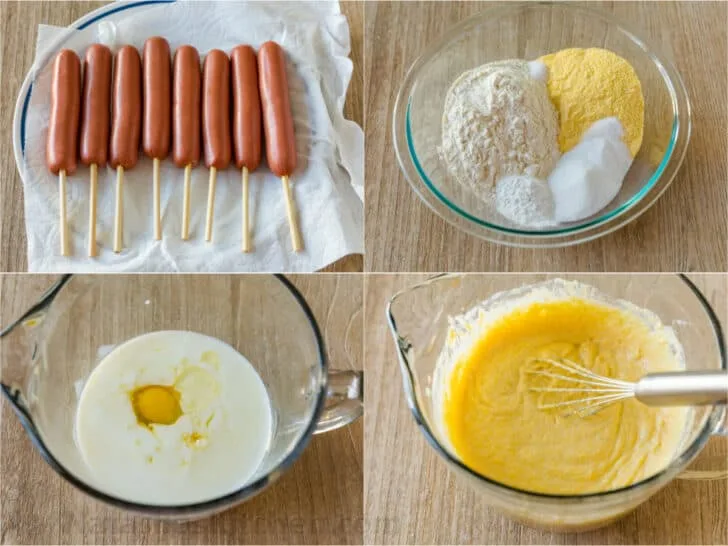
Image source: Bing (Web (fair-use with source credit))
Step-by-Step: Assembling Your Korean Corn Dogs
Assembly is where the visual magic happens. This stage looks intimidating in photos but is genuinely straightforward once you've done it once.
Prep the Skewers
- Pat sausages dry with paper towels. Moisture is the enemy of batter adhesion.
- Cut mozzarella into sticks roughly matching the sausage dimensions. For a half-and-half dog, cut the sausage lengthwise and pair each half with a mozzarella stick.
- Thread the sausage and cheese onto the skewer. Leave about an inch of stick exposed at the bottom for handling. The cheese should sit snug against the sausage with no large gaps.
Coat in Batter
- Pour batter into a tall, narrow container like a drinking glass. This makes it easier to fully submerge the skewer.
- Dip the skewer into the batter, rotating slowly to coat evenly. Let excess drip off for 3 to 4 seconds.
- If the coating looks thin or patchy, dip it again. Two thin coats outperform one thick, gloopy coat every time.
Apply the Outer Coating
- While the batter is still wet, roll the skewer in the panko-sugar mixture (1 to 2 cups panko mixed with 2 tablespoons sugar). Press gently to help the crumbs adhere. Rotate to cover all sides.
- For potato coating, press small diced potato cubes directly onto the wet batter. They stick on their own. This gives the classic Korean street food look.
- For dangmyeon coating, wrap cooked glass noodles around the battered skewer before rolling in panko. This adds a unique crunchy-chewy layer.
- Place the finished skewer on a parchment-lined tray and repeat with the rest.
Before They Go In the Air Fryer
- Let the coated skewers sit for 2 to 3 minutes. This brief rest allows the batter to set slightly and helps the coating adhere during cooking.
- Lightly spray the finished corn dogs with cooking oil. This is the single most important step for air fryer success. The oil spray promotes browning and gives the panko that deep golden color you'd normally get from oil submersion.
You're using maybe a teaspoon of oil total versus a quart for deep frying, but it makes all the difference. Don't skip it.
If you're making these for a gathering, assemble all the skewers ahead of time and refrigerate them on the tray for up to an hour before cooking. Just add an extra minute or two of cook time if they go into the air fryer cold.
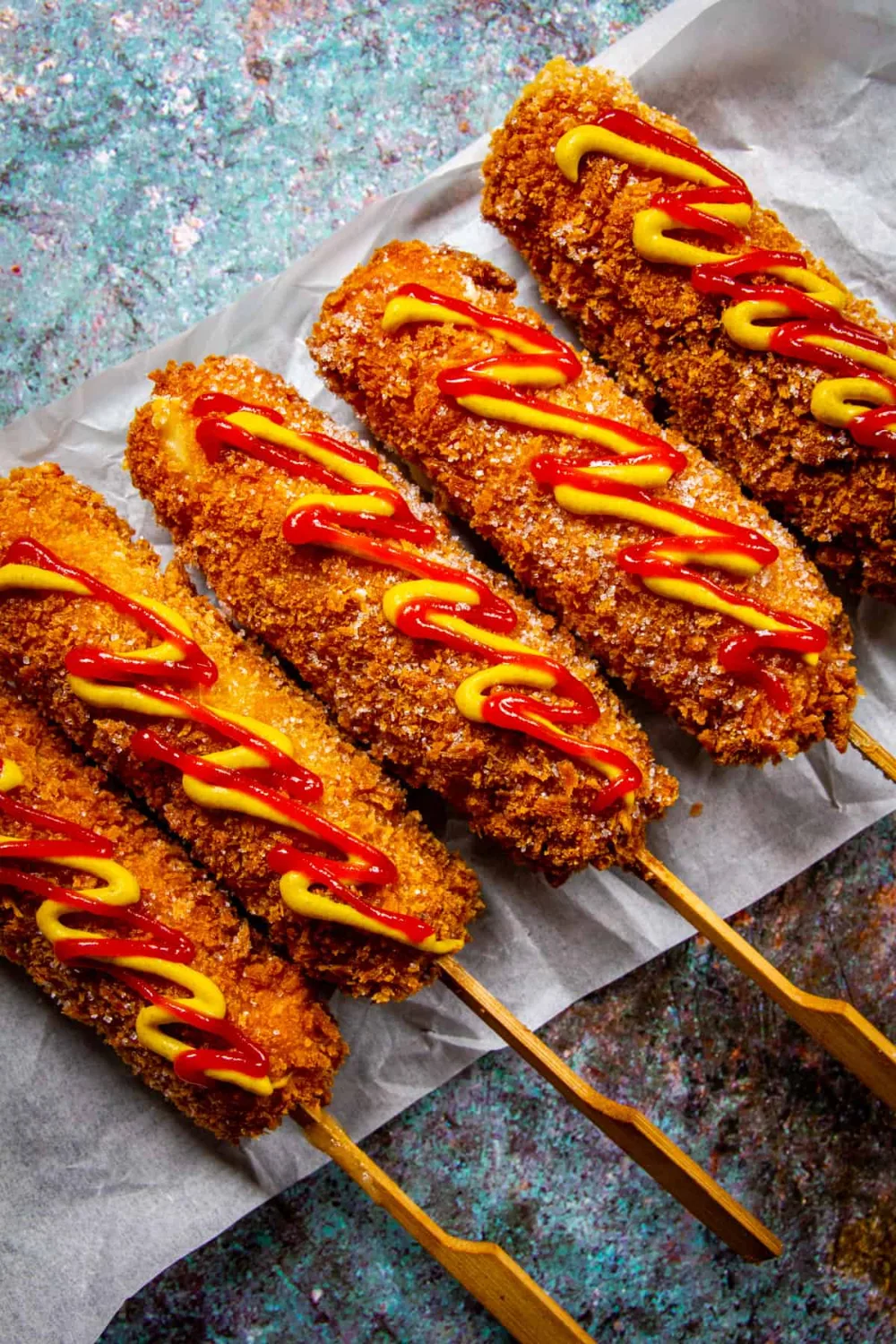
Image source: Bing (Web (fair-use with source credit))
Air Fryer Settings, Timing, and Temperature Guide
Temperature is the difference between a perfectly golden corn dog and one that's charred on the outside with cold cheese in the middle. The sweet spot for Korean corn dogs in an air fryer is 350°F to 375°F (175°C to 190°C). Most aggregate user reviews and recipe testing across air fryer communities converge on 360°F as the ideal setting.
Start cooking at 360°F for 6 minutes. Flip each skewer carefully using tongs. Cook another 4 to 6 minutes until the crust is deep golden brown all around.
Total cook time lands between 10 and 12 minutes for standard-sized dogs. Jumbo dogs or those with thick potato cube coatings may need an extra 2 minutes.
Preheating matters. Run your air fryer empty at your target temperature for 2 to 3 minutes before loading the basket. A preheated basket gives the batter an immediate blast of heat, which helps the coating set fast and prevents it from sliding or pooling at the bottom.
If your air fryer runs hot, some compact models overshoot their set temperature by 10 to 15°F, so start at 350°F and add time rather than pushing to 375°F. Burnt sugar in the panko coating goes from caramelized to bitter fast.
Cook Time Cheat Sheet
| Corn Dog Size | Temperature | First Side | Second Side | Total |
|---|---|---|---|---|
| Standard (regular hot dog) | 360°F / 182°C | 6 min | 4 to 5 min | 10 to 11 min |
| Jumbo (large sausage) | 360°F / 182°C | 7 min | 5 to 6 min | 12 to 13 min |
| Mini or bite-sized | 350°F / 175°C | 4 min | 3 min | 7 min |
| Cheese-heavy (mostly mozzarella) | 350°F / 175°C | 5 min | 4 min | 9 min |
The lower temperature for cheese-heavy dogs gives the interior more time to melt before the exterior over-browns. If you notice the crust going dark too quickly, tent loosely with foil for the remaining cook time.
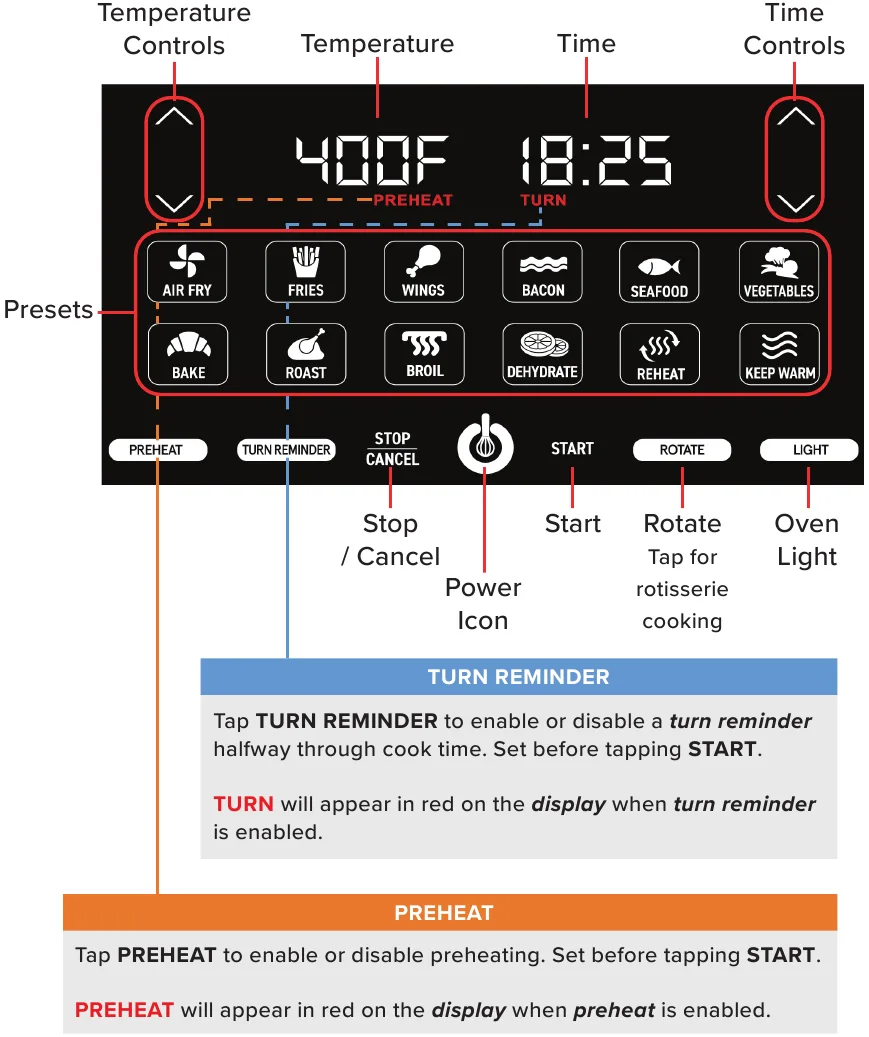
Image source: Bing (Web (fair-use with source credit))
How to Get That Crispy Golden Coating Every Time
The coating is what makes a Korean corn dog look and taste like a Korean corn dog. Three things have to happen: the batter sets into a firm shell, the panko toasts to a deep gold, and the sugar caramelizes without burning.
Spacing inside the basket comes first. Corn dogs need airflow on all sides. Leave at least an inch between each skewer and avoid touching the basket walls.
Overcrowding traps moisture and steam, which is the fastest route to a soggy crust. Three to four corn dogs per batch is the practical maximum for a standard 5-quart air fryer.
The oil spray after assembly can't be a light mist. Every exposed surface of the panko needs a visible coat of oil. The oil conducts heat directly into the breadcrumbs and kickstarts the Maillard reaction, which is responsible for browning and flavor.
Without enough oil, panko just dries out and goes pale and dusty.
Don't open the basket every minute to check. Each peek drops the internal temperature by 15 to 20°F and extends cook time. Trust the timer.
The corn dogs are done when the crust is evenly golden brown and the sausage feels firm when gently squeezed through a towel.
If your first batch comes out a little pale, bump the temperature up 10°F for the next round. Every air fryer model behaves slightly differently, and it often takes one test batch to dial in your machine's quirks.
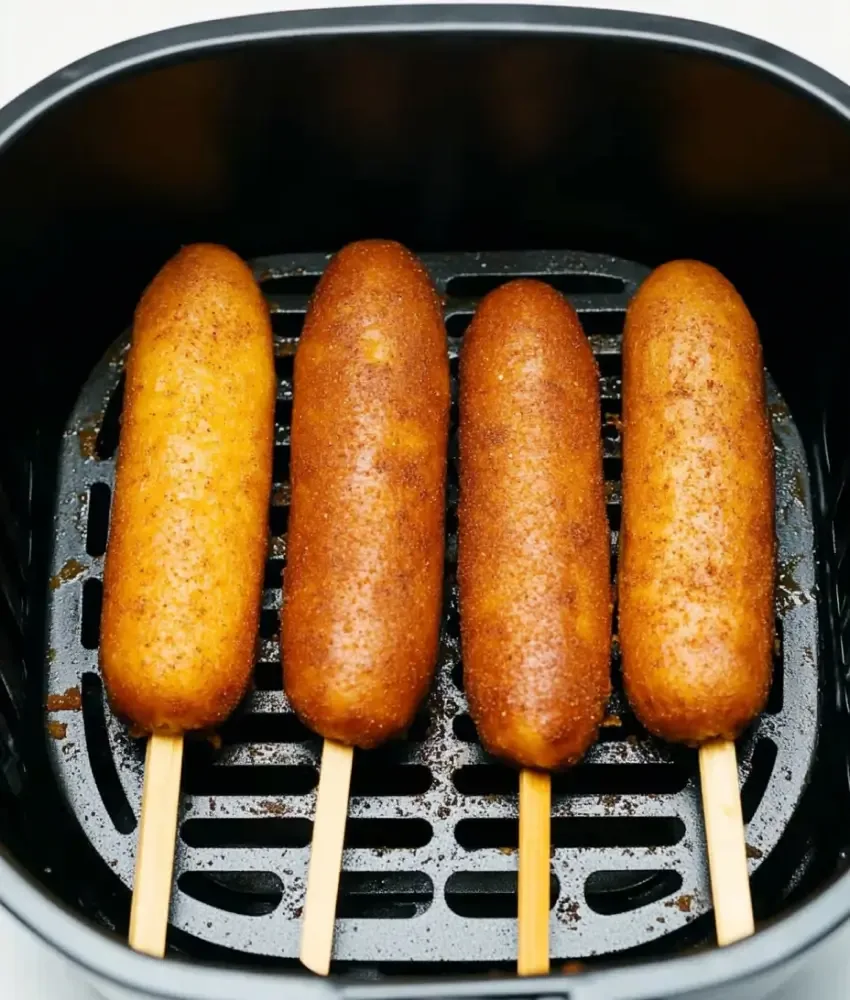
Image source: Bing (Web (fair-use with source credit))
Common Mistakes That Ruin Air Fryer Korean Corn Dogs
Even experienced home cooks hit the same handful of pitfalls with this recipe. Recognizing them before you start saves a lot of frustration.
Skipping the oil spray. This is the number one complaint in air fryer recipe forums for breaded foods. Dry panko in an air fryer comes out crunchy for about 30 seconds, then turns stale and chewy once it cools. A proper spray of oil transforms the texture completely.
Not drying the sausages. Wet sausage repels batter. The coating slides right off during cooking, leaving bald patches. Thirty seconds with a paper towel solves this.
Too much sugar in the coating. More sugar does not mean more browning. It means burning. Stick to 2 tablespoons per 1 to 2 cups of panko.
Overcrowding the basket. Steam from closely packed corn dogs prevents crisping. Smaller batches with room to breathe always outperform one overloaded run.
Opening the basket too often. Each interruption drops the temperature and adds cook time. Set your timer and resist the urge until it goes off.
Using wet or fresh mozzarella. Fresh mozzarella has a high moisture content. It releases water as it melts, which steams the batter from the inside and softens the coating. Low-moisture block mozzarella melts beautifully and stays contained.
Panko vs. Potato vs. Dangmyeon: Which Coating Works Best in an Air Fryer
All three coatings produce great results, but they behave differently in an air fryer. Your choice depends on the texture you're after.
Panko breadcrumbs are the most popular coating and the easiest to work with. They toast evenly, produce a uniform golden crust, and create the satisfying crunch most people expect. Panko has a larger surface area than regular breadcrumbs, which means more oil contact and better browning in the air fryer's dry heat environment.
Diced potato cubes give the corn dog its signature Korean street food look. The potato crisps into tiny golden nuggets that add a more substantial, chunky texture. The challenge in an air fryer is that smaller potato pieces can fall off if the batter layer is too thin.
Press them firmly onto the wet batter and make sure each cube has batter underneath it.
Dangmyeon (glass noodles) are the wildcard. These sweet potato starch noodles puff up dramatically when heated, creating a shatteringly crispy, almost honeycomb-like layer. They're harder to find outside Asian grocery stores, and wrapping them neatly around the skewer takes patience.
But the textural payoff is significant.
Coating Comparison
| Coating | Crispiness | Ease of Use | Availability | Air Fryer Performance |
|---|---|---|---|---|
| Panko | High, uniform | Very easy | Any grocery store | Excellent |
| Diced potato | High, textured | Moderate | Any grocery store | Very good |
| Dangmyeon | Very high, shattering | Difficult | Asian markets or online | Good (tricky to set) |
For air fryer beginners, start with panko. Once you've got the batter and timing down, experiment with potato cubes for variety. Dangmyeon is a weekend project for when you want to level up.
Cheese That Actually Stretches: Tips for the Perfect Melt
The cheese pull is the whole reason a lot of people make Korean corn dogs. Getting that Instagram-worthy stretch out of an air fryer takes a specific approach.
Use low-moisture mozzarella block cheese, not fresh mozzarella and not pre-shredded. Pre-shredded cheese is coated with anti-caking agents like cellulose that inhibit smooth melting. Fresh mozzarella releases too much water.
Low-moisture block mozzarella, cut into sticks and skewered alongside the sausage, melts into a smooth, stretchy consistency.
Freeze the cheese sticks for 15 to 20 minutes before skewering. Not solid, just firm. Cheese that goes into the air fryer cold takes a moment longer to start melting, which gives the batter shell time to set and hold everything in place.
If the cheese starts melting before the shell firms up, it can leak through cracks in the batter.
Inside the air fryer, the cheese begins melting around the 4 to 5 minute mark at 360°F. By the time the crust is golden at 10 to 12 minutes, the interior should be fully molten. Let the corn dog rest for 60 to 90 seconds after cooking.
This brief pause lets the cheese thicken slightly so it stretches when you pull rather than running everywhere.
If your cheese is still mostly solid after the full cook time, your air fryer may be running cool. Bump to 370°F on the next batch or add 2 minutes. If cheese is blowing out the sides, the temperature is too high or the cheese wasn't cold enough going in.
Serving Ideas and Dipping Sauces
Korean corn dogs are best served hot, within a few minutes of coming out of the air fryer. That's when the crust is at its crispiest and the cheese is at peak stretch.
Classic Korean street food stands serve these with just a squirt of mustard and ketchup. A few extra options round out the experience:
- Yellow mustard and ketchup: The classic combo. Simple and it works.
- Sweet chili sauce: Adds mild heat that complements the sugar in the coating.
- Honey butter: Melt equal parts butter and honey. This is the indulgent choice.
- Mayonnaise and gochujang: Mix Korean chili paste into mayo for a creamy, spicy dip.
For a party spread, slice the corn dogs in half on the bias and arrange them on a board with small bowls of each sauce. They disappear fast. If you're building a full snack table, these pair well with other air fryer appetizers for variety.
How to Adapt the Recipe for Dietary Restrictions
This recipe is fairly flexible. With a few swaps, most dietary needs are covered.
Gluten-free: Replace self-rising flour with a 1-to-1 gluten-free baking flour blend. Use gluten-free panko or crushed rice cereal for the coating. Target the same batter consistency described earlier.
Dairy-free: Swap mozzarella for a melting dairy-free cheese stick. Several brands melt reasonably well. Use oat or almond milk in the batter.
Vegetarian or vegan: Use plant-based sausage or veggie dogs with dairy-free cheese. The batter and coating stay the same.
Lower calorie: Use chicken or turkey franks instead of beef or pork. Stick with the oil spray. A light coat keeps calories minimal compared to deep frying.
Substitution Quick Reference
| Dietary Need | Flour Swap | Cheese Swap | Coating Swap |
|---|---|---|---|
| Gluten-free | 1-to-1 GF blend | No change | GF panko or rice cereal |
| Dairy-free | No change | Dairy-free cheese sticks | No change |
| Vegan | No change | Dairy-free cheese | No change |
| Lower calorie | No change | Low-fat mozzarella | No change |
Troubleshooting: What Went Wrong and How to Fix It
Most issues come down to a handful of recurring problems. Here's the quick diagnosis and fix.
Batter sliding off. The sausage was wet or the batter was too thin. Dry the dogs thoroughly next time and thicken the batter with an extra tablespoon of flour.
Panko coating falling off. The batter skin didn't form before rolling. Let the battered skewer sit for 60 seconds before coating, or give it a second dip in batter.
Pale, soft crust. Not enough oil spray, or temperature was too low. Spray more generously and bump to 370°F.
Burnt coating, raw inside. Temperature too high. Drop to 350°F and add 2 to 3 minutes.
Cheese leaking out. Cheese wasn't cold enough going in, or the batter had cracks. Freeze cheese for 15 minutes before assembly and make sure the batter coat is even with no thin spots.
Soggy bottom. The corn dog was sitting directly on the basket surface with no airflow underneath. Elevate slightly using a small wire rack cut to fit, or flip an extra time during cooking.
Frequently Asked Questions
Can I make Korean corn dogs in the air fryer without cheese?
Absolutely. Use a full sausage skewer and skip the cheese entirely. Cook at the same temperature but reduce time by about a minute since there's less interior mass to heat through.
Do I need to preheat the air fryer for Korean corn dogs?
Yes. A 2 to 3 minute preheat at your target temperature ensures the batter sets fast and the coating starts browning immediately. This makes a noticeable difference in final texture.
Can I prep the corn dogs ahead and cook them later?
Assembled raw corn dogs can be refrigerated on a tray for up to 2 hours before cooking. Add 1 to 2 minutes to the cook time if going in cold. Don't freeze them raw because the batter weeps and the coating gets soggy after thawing.
What size air fryer do I need?
A 5-quart basket or larger is ideal. It fits 3 to 4 standard corn dogs with proper spacing. Smaller air fryers, 3 to 4 quarts, can manage 2 at a time, which works but slows down batch cooking.
As of 2026, most mid-range air fryers hit the 5 to 6 quart range, which is more than enough for this recipe.
Why won't my cheese stretch?
Low-moisture mozzarella block is the key. Pre-shredded cheese is coated with anti-caking agents that block melting. Fresh mozzarella has too much water.
Cut a solid block into sticks, freeze briefly for 15 minutes, and let the cooked corn dog rest 60 to 90 seconds before pulling.
How do I store leftover Korean corn dogs?
Refrigerate in an airtight container for up to 2 days. Reheat in the air fryer at 340°F for 4 to 5 minutes to re-crisp the coating. The microwave works in a pinch but the crust will go soft.