
An air fryer turkey leg recipe gives you the crispy, smoky, state-fair-style drumsticks you crave without heating up the whole kitchen or deep-frying in a vat of oil. The circulating hot air renders the fat under the skin and creates a shatteringly crisp exterior while keeping the meat inside juicy and pull-apart tender. It is one of those rare weeknight dinners that feels like a treat but takes less than an hour start to finish.
Aggregate user reviews across major air fryer brands consistently report that turkey legs come out crispier in an air fryer than in a conventional oven, with roughly half the cook time of traditional roasting. The USDA Food Safety and Inspection Service (FSIS) recommends cooking all poultry to a minimum internal temperature of 165°F (74°C), and an air fryer hits that target reliably when you use a meat thermometer. If you have been wondering whether turkey legs actually work in an air fryer, the short answer is yes, and the results are surprisingly good. Let us walk through everything you need to get started.
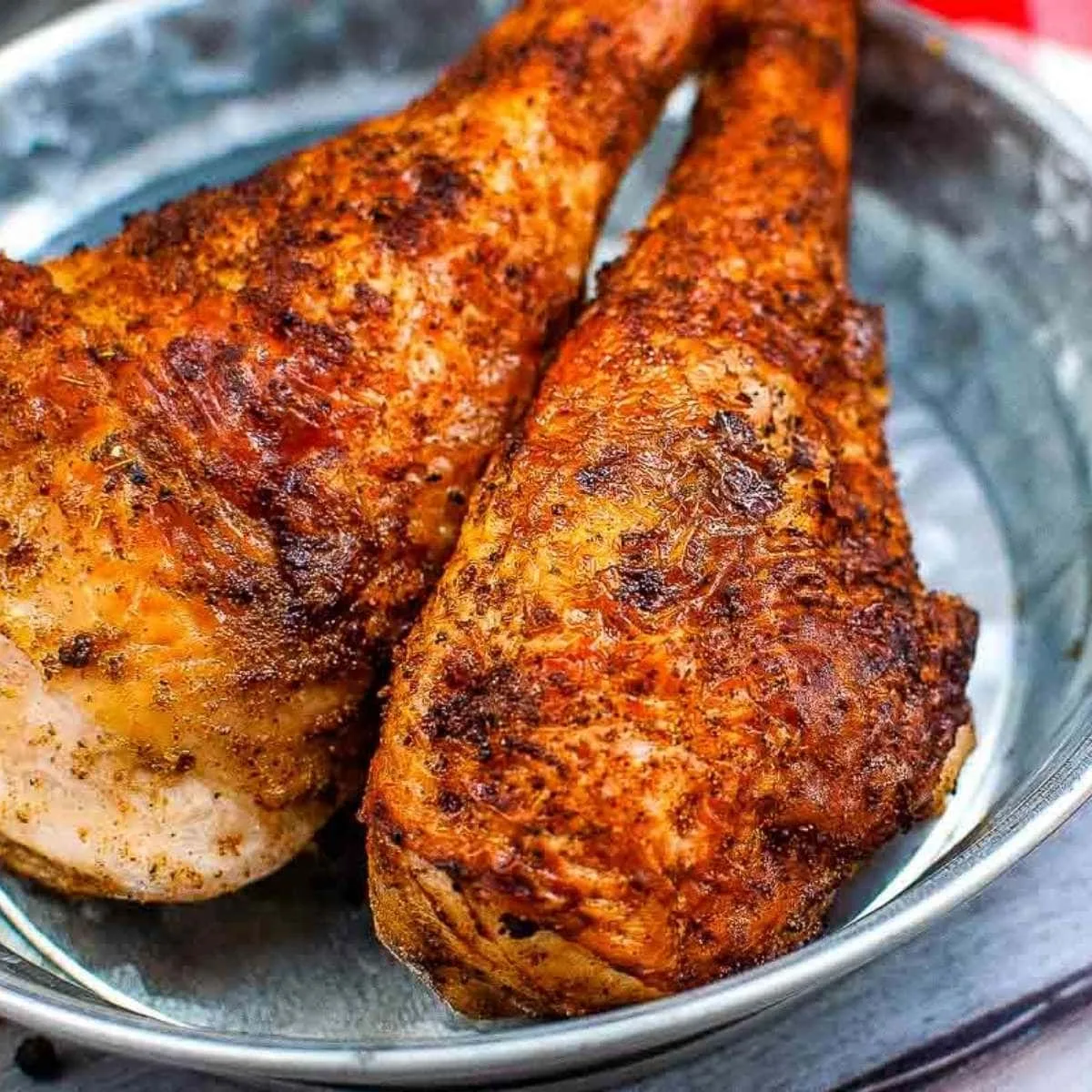
What You Need Before You Start
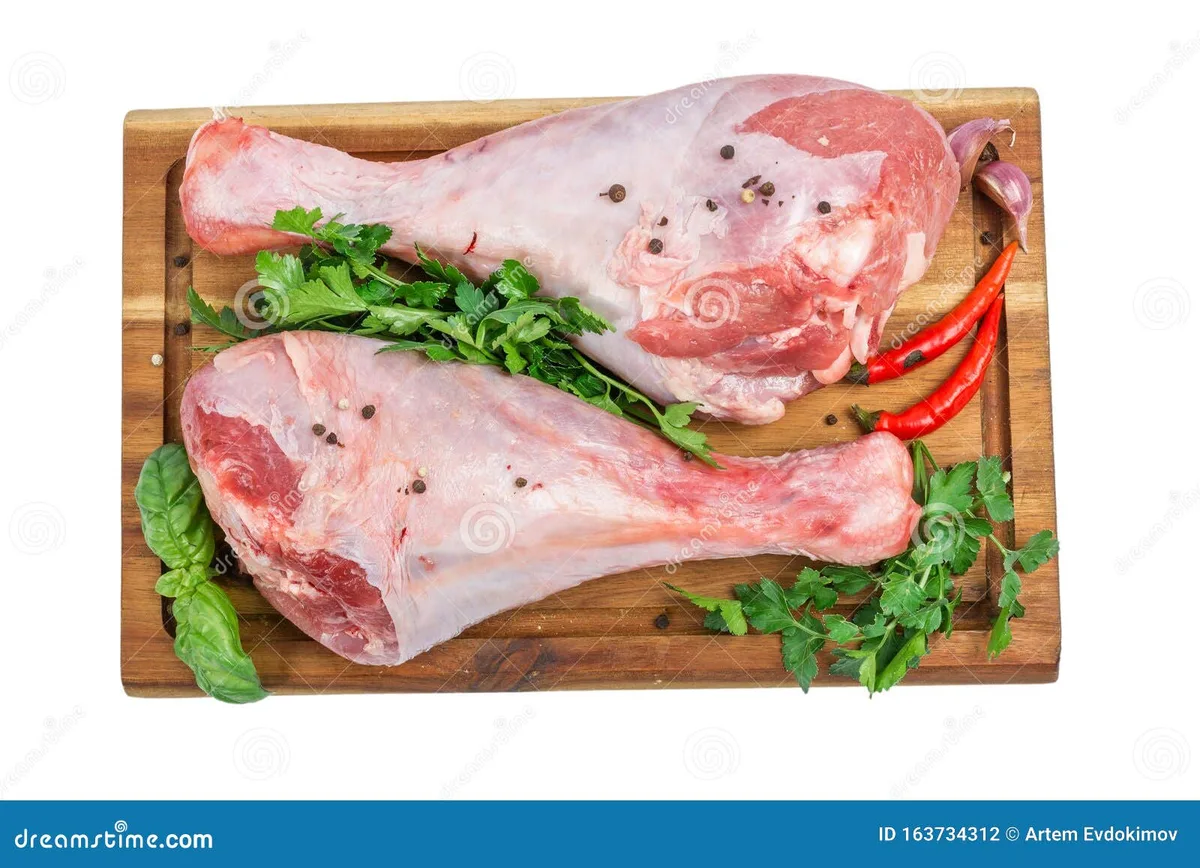
The ingredient list for air fryer turkey legs is short, and most of it is probably already in your pantry. The real key is starting with the right size drumsticks and an air fryer large enough to fit them without crowding.
Here is what you will need:
- Turkey drumsticks (bone-in, skin-on): Look for legs weighing between 1 and 2 pounds each. Most grocery stores carry them fresh or frozen in packs of two to four. If you are feeding a family of four, a 6-quart air fryer gives you enough room to cook all four legs in a single layer.
- Cooking oil: Just 1 to 2 tablespoons of a neutral oil with a high smoke point, like avocado or vegetable oil. That is a fraction of what deep frying requires.
- Salt and black pepper: The foundation of any good seasoning.
- Spices for the dry rub: Smoked paprika, garlic powder, onion powder, cayenne pepper, and dried thyme make a classic blend. We will cover seasoning options in detail in the next section.
- Meat thermometer: This is non-negotiable. A digital instant-read thermometer is the only reliable way to confirm your turkey legs have reached the USDA-recommended 165°F (74°C) internal temperature. Guessing based on time alone leads to dry or undercooked meat.
- Air fryer: Any standard basket-style or oven-style air fryer works. Models from brands like Ninja, Cosori, and Philips all handle turkey legs well, as long as the basket is at least 5 to 6 quarts.
If your turkey legs are frozen, plan ahead. The USDA recommends thawing them in the refrigerator for 24 to 48 hours before cooking. Thawing on the countertop is not safe because the outer layers can enter the danger zone (40°F to 140°F) while the center is still frozen.
How to Season Turkey Legs for the Air Fryer
Seasoning is where you can really make this recipe your own. A good dry rub clings to the skin and forms a flavorful crust as the turkey cooks, while a wet marinade penetrates deeper into the meat. Both approaches work well in an air fryer.
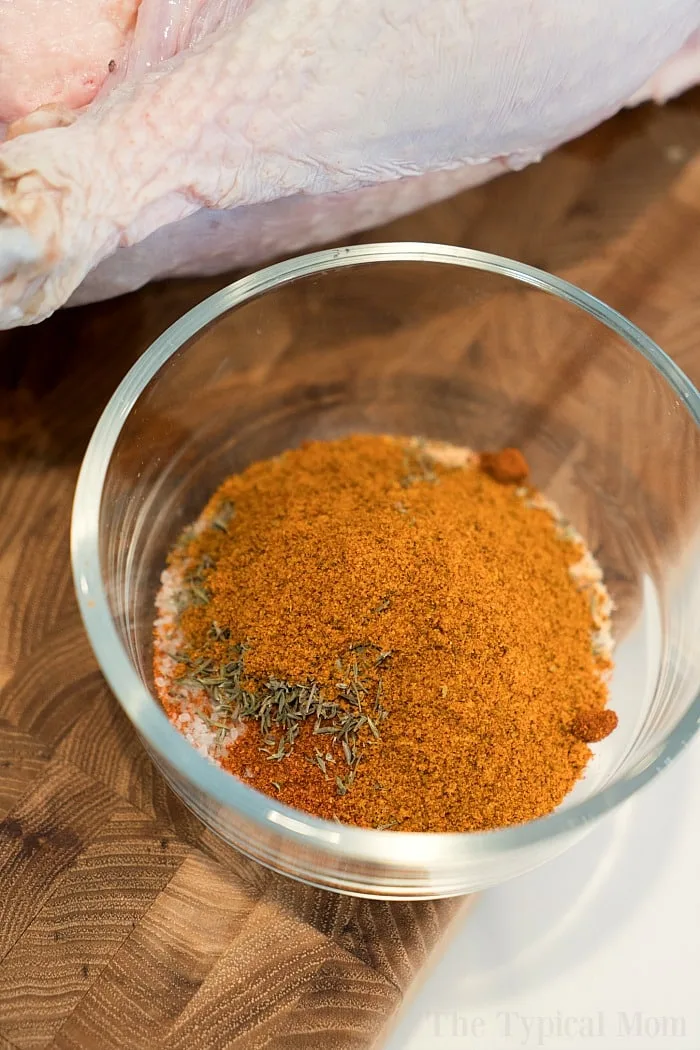
Dry rub method (recommended for crispy skin): Pat the turkey legs completely dry with paper towels. This step matters because moisture on the surface prevents the skin from crisping up. Mix 1 tablespoon of smoked paprika, 1 teaspoon each of garlic powder, onion powder, and black pepper, half a teaspoon of cayenne, and 1 teaspoon of kosher salt. Rub the spice mixture all over the turkey legs, getting it into every crevice.
Let them sit uncovered in the fridge for at least 30 minutes, or up to overnight. The salt draws out a little moisture, which then dissolves the spices and forms a paste that sticks to the skin.
Wet marinade method (best for deeper flavor): Combine a quarter cup of olive oil, 2 tablespoons of soy sauce, 1 tablespoon of apple cider vinegar, 3 minced garlic cloves, and your preferred spices in a large zip-top bag. Add the turkey legs and marinate in the refrigerator for 2 to 12 hours. Before cooking, remove the legs from the marinade and pat them dry. Excess liquid in the air fryer creates steam, which works against the crispiness you are after.
Brining (optional but effective): If you have the time, brining turkey legs in a solution of 4 cups of water, a quarter cup of kosher salt, and 2 tablespoons of sugar for 4 to 12 hours adds moisture and seasons the meat from the inside out. Rinse and pat dry before applying your dry rub.
Whichever method you choose, the goal is the same: a well-seasoned surface that will crisp up beautifully under the air fryer's rapid convection heat.
Step-by-Step: Air Fryer Turkey Leg Recipe
This is the core of the recipe. Follow these steps and you will end up with golden, crispy turkey legs that are cooked through and full of flavor. The total cook time is 35 to 45 minutes, depending on the size of your drumsticks and your specific air fryer model.
Prepping the Turkey Legs
Take your seasoned or marinated turkey legs out of the fridge 15 to 20 minutes before cooking so they come closer to room temperature. This helps them cook more evenly. Pat them dry one final time with paper towels. Lightly brush or spray the skin with a thin coat of oil.
This helps the seasoning stick and promotes browning through the Maillard reaction, which is the chemical process that creates that golden, flavorful crust on cooked meat.
Preheat your air fryer to 375°F (190°C) for 3 to 5 minutes. Preheating matters because it ensures the cooking process starts immediately, which helps the skin crisp from the first minute rather than steaming.
Setting the Right Temperature and Time
Place the turkey legs in the air fryer basket in a single layer, leaving space between each leg for air to circulate. Overcrowding is the number one mistake people make. If the legs are touching, the trapped moisture turns to steam and you end up with rubbery skin instead of crispy skin.
Cook at 375°F (190°C) for 20 minutes. Then flip each leg and cook for another 15 to 20 minutes. The total cook time for most turkey drumsticks falls between 35 and 45 minutes. Larger legs, closer to 2 pounds, may need the full 45 minutes or even an extra 5 minutes.
If the skin is not as crispy as you want it after the initial cook time, bump the temperature up to 400°F (200°C) and cook for an additional 3 to 5 minutes. Watch it closely at this stage because the difference between perfectly crisp and burnt happens fast.
How to Know When They're Done
Time is a guideline, but temperature is the truth. Insert a digital instant-read thermometer into the thickest part of the leg, avoiding the bone. The USDA FSIS safe minimum internal temperature for poultry is 165°F (74°C). Many experienced cooks pull turkey legs at 170°F to 175°F because the slightly higher temperature helps break down the connective tissue in the leg, making the meat more tender and easier to pull off the bone.
Once the legs hit your target temperature, transfer them to a cutting board and let them rest for 5 to 10 minutes. Resting allows the muscle fibers to relax and reabsorb some of the juices. If you cut into them right away, those juices run out onto the board and the meat ends up drier.
Here is a quick reference table for the key numbers:
| Step | Temperature | Time |
|---|---|---|
| Preheat air fryer | 375°F (190°C) | 3–5 minutes |
| First cook (skin side up) | 375°F (190°C) | 20 minutes |
| Flip and continue cooking | 375°F (190°C) | 15–20 minutes |
| Optional crisp finish | 400°F (200°C) | 3–5 minutes |
| Rest before serving | Room temperature | 5–10 minutes |
| Target internal temperature | 165°F–175°F (74°C–79°C) | Check with thermometer |
Common Mistakes That Ruin Air Fryer Turkey Legs
Even a straightforward recipe can go wrong if you skip a few key steps. Here are the most common mistakes we see in user reviews and recipe feedback, and how to avoid them.
- Skipping the meat thermometer. Relying on cook time alone is risky because turkey leg sizes vary. A leg that looks golden on the outside can still be undercooked near the bone. A thermometer removes all the guesswork.
- Overcrowding the basket. Air fryers work by circulating hot air around the food. If the legs are stacked or touching, the air cannot reach all surfaces evenly. Cook in batches if you need to.
- Not patting the legs dry. Moisture is the enemy of crispy skin. Whether you use a dry rub or a marinade, always pat the surface dry before the legs go into the air fryer.
- Cooking straight from frozen. While some air fryer recipes work with frozen ingredients, turkey legs are too thick to cook evenly from frozen. The outside burns before the inside reaches a safe temperature. Always thaw first.
- Using too much oil. A light brush or spray is all you need. Excess oil drips into the bottom of the air fryer and creates smoke without improving crispiness.
- Ignoring carryover cooking. The internal temperature of the meat continues to rise by 5 to 10 degrees after you pull it out of the air fryer. If you wait until it reads 175°F on the thermometer, it may hit 180°F or more by the time you eat it, which can dry out the meat. Pull at 165°F to 170°F and let resting do the rest.
- Forgetting to flip. The side facing the heating element cooks faster. Flipping halfway through ensures even browning on all sides.
Avoiding these mistakes is what separates a good air fryer turkey leg from a great one. The technique is simple, but the details matter.
Air Fryer vs. Oven vs. Deep Fryer: Which Is Best for Turkey Legs?
Each cooking method produces a noticeably different result, and the best choice depends on what you value most: speed, texture, convenience, or that classic fairground flavor. Here is how they stack up.
Air fryer is the sweet spot for most home cooks. It delivers crispy skin in 35 to 45 minutes with just a tablespoon or two of oil. The rapid air circulation renders the fat under the skin efficiently, giving you a texture that is close to deep-fried without the mess or the calories. It also does not heat up your kitchen the way a full-size oven does, which matters a lot in summer.
Conventional oven roasting takes significantly longer, usually 1.5 to 2 hours at 350°F (175°C) for turkey legs of average size. The skin tends to come out softer unless you crank the heat at the end or finish under a broiler. The advantage is capacity. You can fit a whole tray of legs at once, which is helpful for large gatherings.
But you are trading time and texture for volume.
Deep frying produces the most indulgent result, with an evenly crunchy crust and rich flavor from the oil. However, it requires several quarts of oil, careful temperature monitoring, and a safe outdoor setup. The calorie count goes up substantially, and the cleanup is considerable. For most weeknight cooks, the air fryer gets you 85 percent of the way there with a fraction of the effort.
Here is a quick comparison:
| Method | Cook Time | Oil Needed | Skin Texture | Best For |
|---|---|---|---|---|
| Air fryer | 35–45 min | 1–2 tbsp | Crispy, golden | Weeknight dinners, small batches |
| Oven roast | 90–120 min | 1–2 tbsp (brushed) | Soft to moderate | Large batches, hands-off cooking |
| Deep fry | 12–15 min | Several quarts | Very crunchy, rich | Special occasions, outdoor cooking |
If you are cooking for one to four people and want crispy skin without the wait, the air fryer wins. If you are feeding a crowd and do not mind softer skin, the oven is more practical. Deep frying is a treat, but it is hard to justify the setup and cleanup for a regular meal.
How to Get Crispy Skin Without Drying Out the Meat
This is the question that comes up most often in user reviews and recipe comments. Turkey legs have a lot of connective tissue and fat, which means they can handle higher heat than breast meat. But the skin and the meat do not always crisp and tender at the same rate. Here is how to get both right.
Start with dry skin. We mentioned this in the seasoning section, but it bears repeating. Any moisture on the surface of the turkey leg turns to steam in the air fryer, and steam softens the skin. Pat the legs thoroughly with paper towels before seasoning and again before they go into the basket.
Use a light coat of oil. Brushing the skin with a thin layer of avocado or vegetable oil helps conduct heat evenly and promotes browning. Too much oil pools in the bottom of the basket and creates smoke, so stick to about half a teaspoon per leg.
Do not skip the flip. The heating element in most basket-style air fryers is on the top. The side facing up gets more direct heat and browns faster. Flipping halfway through ensures the underside crisps up instead of staying pale and chewy.
Finish high if needed. If the skin looks golden but not quite crackly after the main cook time, increase the temperature to 400°F (200°C) for the last 3 to 5 minutes. This final blast of heat drives off any remaining surface moisture and tightens the skin. Watch it closely because it can go from perfect to burnt in under two minutes.
Let the legs carryover cook. Pull the turkey legs at 165°F to 170°F internal temperature and let them rest for 5 to 10 minutes. The residual heat continues to cook the meat gently while the skin firms up as it cools slightly. Cutting into them too early releases the juices and leaves the meat drier than it needs to be.
The fat cap under turkey leg skin is your ally here. As it renders during cooking, it essentially self-bastes the meat from below while the air fryer crisps the exterior. That is the same principle that makes air fryer bacon so effective, and it works just as well on larger cuts like turkey legs.
Flavor Variations to Try
Once you have the basic technique down, it is easy to swap in different seasonings and glazes. Here are four variations that cover a range of flavor profiles. Each one starts with the same base method: pat dry, season, air fry at 375°F for 35 to 45 minutes, and check for 165°F internal temperature.
Classic Smoky BBQ
Mix 1 tablespoon of smoked paprika, 1 teaspoon of brown sugar, 1 teaspoon of garlic powder, half a teaspoon of black pepper, and 1 teaspoon of kosher salt. Rub it on the turkey legs and let them sit for at least 30 minutes. During the last 5 minutes of cooking, brush on a thin layer of your favorite BBQ sauce. The sugar in the sauce caramelizes under the high heat and creates a sticky, smoky glaze.
Do not add the sauce too early, or the sugar will burn before the meat is done.
Cajun-Spiced
Combine 1 tablespoon of paprika, 1 teaspoon each of garlic powder, onion powder, dried oregano, and dried thyme, half a teaspoon of cayenne pepper, and 1 teaspoon each of salt and black pepper. This blend leans on the bold, peppery flavors of Louisiana-style seasoning. For extra depth, add a pinch of ground cumin and a dash of liquid smoke to the rub. Serve with a squeeze of fresh lemon juice to cut through the heat.
Honey Garlic Glaze
Whisk together 2 tablespoons of honey, 1 tablespoon of soy sauce, 2 minced garlic cloves, and a teaspoon of rice vinegar. Brush this glaze on the turkey legs during the last 5 to 8 minutes of cooking. The honey adds sweetness and helps the skin develop a deep amber color, while the soy sauce contributes umami and salt. If you like a little heat, add a quarter teaspoon of red pepper flakes to the glaze.
Herb and Butter
Melt 2 tablespoons of unsalted butter and mix it with 1 tablespoon of chopped fresh rosemary, 1 tablespoon of chopped fresh thyme, 2 minced garlic cloves, and a pinch of salt. Brush this mixture over the turkey legs halfway through cooking and again when you pull them out. The butter adds richness and helps the herbs cling to the skin. This variation is simple but tastes like a holiday roast in a fraction of the time.
Each of these variations works with the same air fryer method. The key is timing any sugar-based or butter-based additions for the final minutes so they enhance the flavor without burning.
Serving Suggestions and Side Dishes
Turkey legs are hearty enough to be the centerpiece of a meal, but they pair well with a range of sides. Since the air fryer is already out and hot, it makes sense to use it for the sides too.
Air fryer roasted vegetables are the easiest companion. Toss broccoli florets, Brussels sprouts, or sweet potato cubes with a little oil, salt, and pepper, and cook them in the basket alongside or after the turkey legs. Most vegetables take 10 to 15 minutes at 375°F (190°C), so you can time them to finish around the same time as the meat.
Classic coleslaw provides a cool, crunchy contrast to the rich, savory turkey. A simple mix of shredded cabbage, carrots, apple cider vinegar, a touch of sugar, and mayo takes about 10 minutes to throw together while the legs are in the air fryer.
Corn on the cob works well too. You can air fry whole ears of corn at 400°F (200°C) for 10 to 12 minutes, turning once. Brush with butter and sprinkle with smoked paprika for a side that echoes the seasoning on the turkey legs.
Mashed potatoes or mac and cheese round out the meal if you want something more substantial. These do not need the air fryer, but they are classic pairings that balance the bold flavors of seasoned turkey.
For a complete game day spread, pair the turkey legs with air fried pickles, a platter of raw vegetables with ranch dip, and a cold drink. It is the kind of meal that feels indulgent but comes together with minimal effort.
Storing and Reheating Leftover Turkey Legs
Air fryer turkey legs keep well, and reheating them properly makes a big difference in texture. The goal is to warm the meat without drying it out or turning the skin soggy.
Storing: Let the cooked turkey legs cool to room temperature, then place them in an airtight container. They will keep in the refrigerator for 3 to 4 days. For longer storage, wrap each leg tightly in plastic wrap and then in aluminum foil before freezing. Frozen turkey legs are best used within 2 to 3 months for optimal flavor and texture.
Reheating in the air fryer (recommended): Preheat the air fryer to 350°F (175°C). Place the leftover turkey legs in the basket in a single layer and cook for 5 to 8 minutes, turning once, until the internal temperature reaches 165°F (74°C) again. This method restores some of the crispiness to the skin, which is something a microwave cannot do.
Reheating in the oven: Place the legs on a wire rack set over a baking sheet and bake at 325°F (163°C) for 10 to 15 minutes. The wire rack allows air to circulate underneath, which helps the skin stay crisp rather than steaming on a flat surface.
Microwave (last resort): If you are in a hurry, microwave the turkey leg on a microwave-safe plate covered with a damp paper towel. Heat in 30-second intervals until warm. The skin will be soft, but the meat will still taste good. Finish with a quick 2-minute blast in the air fryer if you want to revive the texture.
One thing to avoid is reheating turkey legs straight from the fridge without letting them sit out for a few minutes. Cold meat takes longer to heat through, and the extended cook time can dry out the exterior before the center is warm.
Frequently Asked Questions
Can you cook turkey legs from frozen in an air fryer?
You can, but the results are inconsistent. Turkey legs are thick, and the outside will overcook and dry out before the center reaches a safe temperature. The USDA recommends thawing poultry in the refrigerator for 24 to 48 hours before cooking. If you are short on time, use the cold water thawing method: submerge the sealed turkey legs in cold water, changing the water every 30 minutes.
A 1-pound leg thaws in about an hour this way. Never thaw turkey on the counter at room temperature.
How long do turkey legs take in the air fryer?
Most turkey drumsticks take 35 to 45 minutes at 375°F (190°C), flipped halfway through. The exact time depends on the weight of the leg and your specific air fryer model. Always verify doneness with a meat thermometer rather than relying on time alone. The target internal temperature is 165°F (74°C) per USDA FSIS guidelines, though many cooks prefer pulling at 170°F for more tender meat.
Do you need to preheat the air fryer for turkey legs?
Yes. Preheating for 3 to 5 minutes at 375°F (190°C) ensures the cooking process starts immediately. Without preheating, the turkey legs spend the first few minutes warming up the basket instead of browning, which can lead to softer skin and less even cooking. Most modern air fryers from brands like Ninja and Cosori have a preheat setting, or you can simply run the empty basket for a few minutes.
What size air fryer do you need for turkey legs?
A minimum of 5 to 6 quarts is recommended. Turkey legs are bulky, and you need enough space to arrange them in a single layer without touching. A 6-quart air fryer comfortably fits three to four drumsticks. If you are working with a smaller unit, cook in batches rather than overcrowding the basket.
Overcrowding blocks airflow and results in uneven cooking and soggy skin.
Is air fried turkey healthier than deep fried turkey?
Air fried turkey legs contain significantly less fat than their deep-fried counterparts. A skin-on air fried turkey leg has roughly 12 to 18 grams of fat, while a deep-fried version can have 25 to 35 grams or more, depending on the oil and batter used. The air fryer achieves a similar crispy texture using only 1 to 2 tablespoons of oil compared to several quarts for deep frying. Calorie counts follow the same pattern, with air fried legs coming in around 250 to 350 calories per leg versus 400 to 500 for deep fried.
Can you use chicken drumstick seasoning on turkey legs?
Absolutely. Turkey legs and chicken drumsticks respond well to the same spice blends, rubs, and marinades. The main difference is cook time. Turkey legs are larger and denser, so they need roughly 10 to 15 minutes longer than chicken drumsticks at the same temperature.
If you have a favorite chicken seasoning, use it on turkey legs and simply extend the cook time and verify the internal temperature with a thermometer.
Why are my turkey legs smoking in the air fryer?
Smoking usually means excess fat is dripping onto the heating element or the bottom of the basket. Turkey legs have a generous fat cap, and some smoke is normal, especially toward the end of the cook time. To reduce it, trim any loose or excess fat from the legs before seasoning. You can also add a tablespoon of water to the bottom of the basket beneath the drip tray to cool the drippings and reduce smoke.
Make sure your air fryer is on a heat-resistant surface with adequate ventilation around the exhaust vent.
Can you reheat turkey legs in the air fryer?
Yes, and it is the best method for restoring crispy skin. Preheat the air fryer to 350°F (175°C) and cook the leftover legs for 5 to 8 minutes, turning once, until the internal temperature reaches 165°F (74°C). The air flow re-crisps the skin in a way that a microwave cannot. For more on this, see the storing and reheating section above.
Final Thoughts
An air fryer turkey leg recipe is one of those dishes that punches well above its effort level. You get crispy, golden skin, juicy pulled meat, and bold flavor in under an hour, without heating up the kitchen or dealing with a pot of hot oil. The technique is forgiving once you understand the basics: pat the skin dry, do not overcrowd the basket, flip halfway through, and always check the internal temperature with a thermometer.
The air fryer has earned its spot as a go-to tool for poultry, and turkey legs are a perfect example of why. They cook faster than in a conventional oven, come out crispier, and require a fraction of the oil compared to deep frying. Whether you are making a weeknight dinner for two or prepping game day snacks for a crowd, this method delivers consistent results.
If you are new to air fryer cooking, turkey legs are a great place to start. They are affordable, widely available, and hard to mess up as long as you follow the temperature guidelines. Once you have the basic recipe down, the flavor variations are endless. Smoky BBQ, Cajun spice, honey garlic, or classic herb and butter, each one feels like a different meal built on the same simple foundation.
The bottom line is this: if you have an air fryer and a pack of turkey drumsticks, you are 45 minutes away from one of the most satisfying homemade meals you can make. Give it a try this week and see how close you can get to that state fair flavor without leaving your kitchen.