
Figuring out how long to cook bacon in an air fryer for depends on three things most people overlook: the thickness of your slices, how crispy you want them, and the wattage of your specific model. Get those right and you'll have perfectly cooked bacon in under 12 minutes, with almost none of the splatter mess you get from a skillet. The air fryer renders fat efficiently, drains it away from the bacon, and delivers a more consistent result than most stovetop methods.
In our research across manufacturer specs and aggregate user reviews, the sweet spot for regular-cut bacon lands at 375°F for 7 to 10 minutes, while thick-cut needs 9 to 12 minutes at a slightly lower 350 to 375°F. Philips, Ninja, and Cosori all publish similar ranges in their official cooking charts, and verified buyer feedback consistently confirms these windows. The real trick is understanding how your bacon type and texture preference shift those numbers, so let's break it down.
Quick Answer: Air Fryer Bacon Times at a Glance
Regular-cut bacon cooks in 7 to 10 minutes at 375°F. Thick-cut bacon needs 9 to 12 minutes at 350 to 375°F. Thin-cut finishes in 5 to 8 minutes at 375 to 400°F.
Here is a fast reference table to get you cooking right away. These ranges assume a standard 1,400 to 1,700 watt basket-style air fryer with bacon arranged in a single layer.
| Bacon Type | Temperature | Chewy | Crispy |
|---|---|---|---|
| Thin-cut | 375 to 400°F | 5 to 6 min | 7 to 8 min |
| Regular-cut | 375°F | 7 to 8 min | 9 to 10 min |
| Thick-cut | 350 to 375°F | 9 to 10 min | 11 to 12 min |
| Turkey bacon | 375°F | 7 to 8 min | 9 to 10 min |
Start checking your bacon at the low end of each range. You can always add a minute, but you cannot un-burn a slice. If your air fryer runs on the lower wattage end, around 1,400W, add 1 to 2 minutes to every range above. Oven-style air fryers with a larger cavity may also need slightly more time since the heat density is lower than a compact basket model.
How Bacon Type Changes Your Cook Time
The single biggest factor that changes your cook time is slice thickness. A regular-cut slice is roughly 1/16 inch thick, while thick-cut runs closer to 1/8 inch. That doubling of thickness means the center of the slice needs significantly more time to render fat and crisp through.
Thin-cut bacon is the wildcard. It cooks fast and goes from perfect to burnt in under a minute, so you need to watch it closely. Turkey bacon behaves similarly to regular-cut in terms of timing but has less fat content, which means it can dry out faster if you overshoot the window.
Your best move is to identify which type you have before you set the timer. Once you know the thickness, the temperature and time become predictable.
Regular-Cut Bacon
Regular-cut is the most common type sold in US grocery stores and the baseline most air fryer recipes are built around. At 375°F, expect 7 to 8 minutes for a chewy result and 9 to 10 minutes for crispy. Flip each slice at the halfway mark for even browning on both sides.
If you are cooking more than 4 to 6 slices, work in batches. Overlapping slices in the basket leads to uneven cooking, with the overlapped sections staying pale and rubbery. A standard 5-quart basket fits about 5 to 6 regular-cut slices in a single layer.
Thick-Cut Bacon
Thick-cut bacon needs a lower temperature and more time. Set your air fryer to 350 to 375°F and plan on 9 to 10 minutes for chewy or 11 to 12 minutes for crispy. The extra thickness means the fat renders more slowly, and cranking the heat to compensate will burn the exterior before the center catches up.
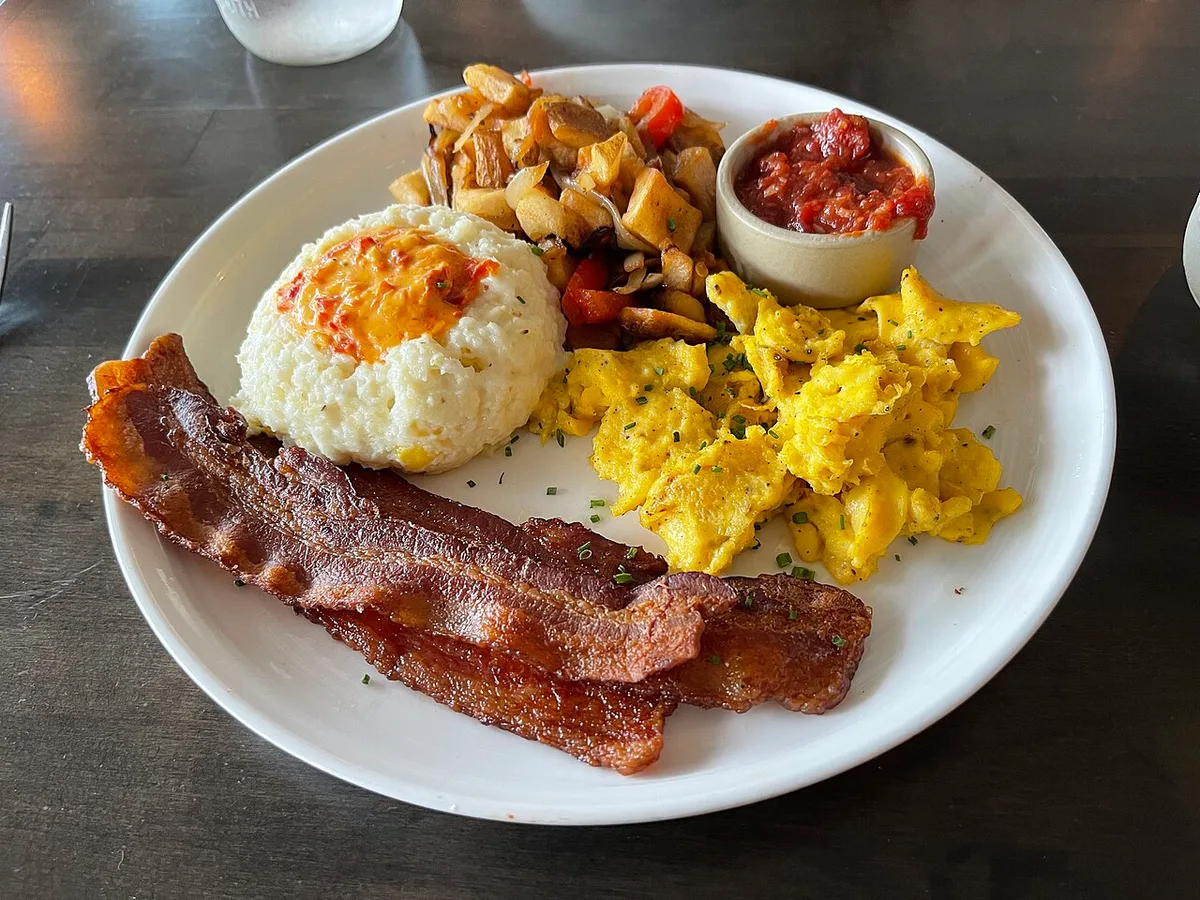
If you prefer your thick-cut extra crispy, do not raise the temperature. Instead, add 2 minutes to the cook time and let the bacon rest on a paper towel for 60 seconds after removing it from the basket. Carryover heat will continue firming up the slices.
Thin-Cut Bacon
Thin-cut is the fastest option and the easiest to mess up. At 375 to 400°F, it is done in 5 to 8 minutes depending on your texture preference. Start checking at 5 minutes. The margin between "perfectly crispy" and "charcoal" is roughly 60 to 90 seconds with thin slices.
Because thin-cut has less mass, it also produces less rendered grease. This means less smoke, but it also means the slices can dry out and become brittle rather than crispy-chewy. If that happens, drop the temperature to 350°F and add a minute.
Turkey Bacon
Turkey bacon cooks on a similar timeline to regular-cut, 7 to 10 minutes at 375°F, but the lower fat content changes the result. It crisps faster because there is less moisture to evaporate, but it also has less natural browning. Many people find turkey bacon benefits from the full 10 minutes at 375°F to develop any real texture.
Turkey bacon is also more prone to sticking to the basket. A light coat of cooking spray on the basket before loading the slices helps prevent tearing when you flip them.
Step-by-Step: How to Cook Bacon in an Air Fryer
The basic process is simple: arrange, set temp, cook, flip, check, and drain. The details in each step are what separate good bacon from great bacon.
Follow this workflow regardless of which bacon type you are cooking. Adjust the temperature and time based on the tables above, but the process itself stays the same.
Preheat or Skip It?
This is one of the most debated steps, and the answer depends on your air fryer. Basket-style models from Ninja and Cosori heat up in under 2 minutes, so preheating is optional. If you do preheat, run the empty basket at your target temperature for 3 minutes before loading the bacon.
Oven-style air fryers with a larger cavity benefit more from preheating since they take longer to reach target temperature. For those models, preheat at 375°F for 3 to 5 minutes.
Skipping preheating adds roughly 1 minute to the total cook time. It does not ruin anything, so do not stress if your model does not have a dedicated preheat function.
Arranging Bacon in the Basket
Lay slices in a single layer across the basket floor. A slight overlap of about 1/4 inch on the edges is fine for regular-cut bacon. Do not stack slices on top of each other. Stacked bacon steams instead of crisps, and you will end up with pale, rubbery sections.
For a standard 5-quart basket, 5 to 6 regular-cut slices or 3 to 4 thick-cut slices fit comfortably. If you need more, cook in sequential batches. The basket reheats almost instantly between runs, so the second batch will not need extra time.
Setting the Right Temperature
375°F is the default for most bacon types. Drop to 350°F for thick-cut to give the center time to render without burning the exterior. Push to 400°F only for thin-cut if you want maximum crisp and are watching it closely.
Do not exceed 400°F for any bacon type. Rendered pork fat has a smoke point of approximately 370°F, and cooking above that threshold in a confined basket-style air fryer generates significant smoke. If your kitchen smoke alarm is sensitive, 375°F is the safer ceiling.
When to Flip
Flip every slice at the halfway point of your total cook time. For regular-cut at 375°F, that means flipping at 4 minutes into an 8 to 10 minute run. Use tongs rather than a fork, since fork punctures release moisture and fat onto the basket, which causes flare-ups and smoke.
Flipping ensures both sides brown evenly. If you skip this step, the side facing down in the basket will crisp more than the top side, and you will get inconsistent texture across each slice.
How to Tell It's Done
Look for deep golden-brown edges and a uniform color across the slice. The bacon should feel firm but not brittle when you lift it with tongs. If the center of the slice still looks pale or translucent, it needs another minute.
Remember that bacon continues to firm up after you pull it from the basket. The carryover cooking effect means a slice that looks "just barely done" in the air fryer will be perfect 60 seconds later on the plate. Pull it a few seconds early rather than pushing it a few seconds late.
Temperature Guide: What Works Best and Why
Temperature matters more than time. Set the right temp and the time almost takes care of itself.
The goal with air fryer bacon is to render the fat slowly enough that the meat cooks through before the exterior burns. Higher temperatures speed things up but narrow the window between "done" and "ruined." Lower temperatures give you more control and a wider margin for error.
350°F — Best for Thick-Cut
At 350°F, thick-cut bacon gets the time it needs to render internal fat without charring the surface. Expect 10 to 12 minutes for a crispy result. This is also the best temperature if you are cooking bacon in an oven-style air fryer, since the larger cavity circulates heat less intensely than a compact basket.
If your thick-cut bacon is coming out chewy at 350°F after 12 minutes, your air fryer may run cool. Bump to 375°F and check at 9 minutes instead.
375°F — The Sweet Spot for Most Bacon
375°F is the default recommended by Philips, Ninja, and Cosori in their official cooking guides. It balances speed and control for regular-cut and turkey bacon. At this temperature, you get good browning, consistent rendering, and a cook time that stays under 10 minutes for most slice thicknesses.
This is the temperature to start with if you are unsure. You can adjust up or down on your next batch based on how the first one turns out.
400°F — Fast and Crispy (With a Catch)
400°F will get you crispy bacon in the shortest time, but it comes with real trade-offs. The rendered fat hits its smoke point quickly, which means more smoke from the air fryer vent. The window between done and burnt shrinks to about 60 seconds, especially with thin-cut.
Only use 400°F if you are cooking thin-cut bacon and you are standing nearby to check it at the 5-minute mark. For any other thickness, the risk outweighs the speed gain.
How to Get Crispy vs. Chewy Bacon
The difference between crispy and chewy comes down to two variables: time and temperature. Add minutes for crispy. Pull early for chewy.
Once you have your bacon type and air fryer dialed in, hitting your preferred texture is a matter of fine-tuning within the ranges already covered. The good news is you do not need a separate method or special technique. You just need to know which end of the time window to aim for.
For Crispy Bacon
Crispy bacon needs the full cook time at the recommended temperature, sometimes with an extra minute tacked on. For regular-cut at 375°F, that means running the full 9 to 10 minutes. For thick-cut at 350°F, push to 12 minutes.
Pull the bacon when the edges are deep golden-brown and the centers have lost all translucency. Transfer immediately to a paper towel and let it sit for 60 seconds. The residual heat finishes the crisping process, and the paper towel absorbs surface grease that would otherwise make the bacon feel slick rather than crunchy.
If your bacon is consistently coming out less crispy than you want, your air fryer may run slightly cool. Add 25°F to the temperature or extend the cook time by 2 minutes and re-evaluate.
For Chewy Bacon
Chewy bacon is pulled early, before the edges fully crisp. For regular-cut at 375°F, that means 7 to 8 minutes instead of 9 to 10. The slices will still be pliable when you lift them with tongs, and the centers will have a slight give rather than a snap.
Chewy bacon is the better choice if you are chopping it for salads, wrapping it around other ingredients, or using it in recipes where fully crispy bacon would crumble. It also has a richer, more pronounced pork flavor since less fat has been rendered out.
For Extra-Crispy "Cracker" Bacon
If you want bacon that shatters when you bite it, you need to lower the temperature and extend the time. Set your air fryer to 325°F and cook regular-cut bacon for 13 to 15 minutes. The slow render drives off more moisture without burning the exterior.
This method produces bacon that is brittle and almost chip-like. It works best with regular-cut slices. Thick-cut at this temperature and time can over-render and taste dry rather than crispy. Flip at the halfway point and check every 2 minutes after the 12-minute mark.
Air Fryer Bacon vs. Other Cooking Methods
Air fryer bacon is faster than oven baking and cleaner than a skillet, but each method has a situation where it wins.
No single cooking method is perfect for every scenario. Here is how air fryer bacon stacks up against the three most common alternatives, based on aggregate user feedback and manufacturer performance data.
Air Fryer vs. Stovetop Skillet
A skillet gives you the most control over individual slices, but it comes with splatter, constant flipping, and standing over a hot stove for 10 to 15 minutes. The air fryer is hands-off after you load the basket, and the enclosed space contains almost all of the grease splatter.
Skillet bacon does develop a slightly deeper sear on the contact side, which some people prefer. If that Maillard browning is your priority, the skillet still has an edge. For everyday cooking, the air fryer wins on convenience and cleanup.
Air Fryer vs. Oven Baking
Oven baking is the best method for cooking large quantities. A full sheet pan holds 12 to 18 slices in a single layer, while a standard air fryer basket maxes out at 5 to 6. If you are cooking bacon for a crowd, the oven is more practical.
The air fryer beats the oven on speed. Preheating a conventional oven takes 10 to 15 minutes, and the total cook time at 400°F runs 15 to 20 minutes. The air fryer is at temperature in under 3 minutes and finishes regular-cut bacon in 7 to 10. For a quick breakfast for one or two people, the air fryer is the faster option by a wide margin.
Air Fryer vs. Microwave
Microwave bacon is the fastest method at 3 to 6 minutes, but the results are inconsistent. Slices cook unevenly, edges burn while centers stay rubbery, and the texture is closer to leather than crispy bacon. The air fryer produces noticeably better texture in only 2 to 4 additional minutes.
Microwave bacon does have one advantage: it is the easiest method for cooking 1 or 2 slices when you do not want to bother with any appliance setup. For anything beyond that, the air fryer is worth the extra few minutes.
| Method | Time | Capacity | Cleanup | Texture Quality |
|---|---|---|---|---|
| Air fryer | 7 to 12 min | 5 to 6 slices | Easy | High |
| Skillet | 10 to 15 min | 4 to 8 slices | Messy | High |
| Oven | 15 to 20 min | 12 to 18 slices | Medium | High |
| Microwave | 3 to 6 min | 1 to 4 slices | Easy | Low |
Common Mistakes That Ruin Air Fryer Bacon
Most air fryer bacon problems come from one of five mistakes. Fix these and your results improve immediately.
Even with the right time and temperature, a few common errors can turn perfect bacon into a smoky, uneven, or rubbery mess. Here is what goes wrong most often and how to correct it.
Overcrowding the Basket
This is the number one mistake. When slices overlap or pile up, the overlapping sections steam instead of crisp. The result is bacon that is burnt on the exposed edges and pale and chewy where slices touch.
Stick to a single layer with no more than slight edge overlap. If you need to cook more, run a second batch. The basket reheats in seconds, so the second run takes the same amount of time as the first.
Skipping the Flip
The bottom of each slice gets more direct heat from the air fryer's convection element. If you do not flip at the halfway point, one side will be overdone while the other stays undercooked. Set a mental reminder or use your phone's timer for the midpoint.
Setting the Temperature Too High
Cranking the air fryer to 400°F or above for regular or thick-cut bacon burns the exterior before the interior renders. The rendered fat also hits its smoke point, which triggers your smoke alarm and leaves a burnt taste on the bacon.
Stay at 375°F for regular-cut and 350 to 375°F for thick-cut. Only use 400°F for thin-cut, and even then, watch it closely after the 5-minute mark.
Not Blotting After Cooking
Bacon straight from the air fryer has a layer of hot rendered fat on the surface. If you do not blot it on a paper towel within 15 seconds of pulling it from the basket, that fat re-absorbs slightly and the bacon feels greasy instead of crispy.
Keep a folded paper towel on the counter before you start cooking. Transfer bacon directly from the basket to the towel and let it sit for 30 to 60 seconds.
Forgetting About Carryover Cooking
Bacon continues to cook after you remove it from the basket. The internal heat keeps driving off moisture and firming up the texture. If you wait until the bacon looks perfectly crispy in the basket, it will be overdone by the time you eat it.
Pull the bacon when it is a shade lighter than your target. Let it rest on the paper towel for 60 seconds. It will finish crisping on its own.
Troubleshooting: Why Your Bacon Didn't Turn Out Right
Every air fryer bacon problem has a specific cause and a specific fix. Here is how to diagnose and correct the most common issues.
If your bacon is not turning out the way you want, one of these five issues is almost always the culprit. Match your result to the problem below and apply the fix on your next batch.
Bacon Is Too Chewy
Chewy bacon means it did not cook long enough or the temperature was too low. Add 2 minutes to your cook time on the next batch. If that does not help, raise the temperature by 25°F.
Also check your slice thickness. If you are using thick-cut but following regular-cut times, the center of the slice will not have enough time to render and firm up. Use the thick-cut ranges from the table above.
Bacon Burned Before It Crisped
This happens when the temperature is too high for the slice thickness. Drop the temperature by 25°F and add 2 minutes to the cook time. The lower heat gives the interior time to catch up without charring the outside.
If burning happens consistently, your air fryer may run hot. An inexpensive oven thermometer placed inside the basket can verify whether the actual temperature matches the display. Some budget models vary by 15 to 25°F from the set point.
Bacon Stuck to the Basket
Sticking is most common with turkey bacon and thin-cut slices, which have less fat to naturally release and lubricate the basket surface. Lightly spray the basket with cooking spray before loading the slices.
For regular and thick-cut bacon, sticking usually means the basket was not clean from a previous use. Residue from earlier cooking cycles creates hot spots that bond with the meat. Clean the basket thoroughly between uses.
Too Much Smoke
Smoke means the rendered fat has exceeded its smoke point of approximately 370°F. Lower the temperature to 350°F and make sure you are not overfilling the basket. Excess grease that drips below the basket grate can smoke when it contacts the heating element.
If smoke persists, place a slice of bread or a small piece of parchment paper at the bottom of the basket beneath the grate to catch drips. Some air fryer manufacturers also sell drip trays designed for this purpose.
Uneven Results Across Slices
Uneven cooking is almost always an arrangement problem. Slices that are bunched toward the center of the basket cook faster than those near the edges because of airflow patterns. Spread slices evenly with consistent spacing.
If your air fryer has hot spots, rotate the basket 180 degrees at the halfway point in addition to flipping the slices. This compensates for uneven heat distribution, which is common in single-element basket models.
Tips From Someone Who's Cooked a Lot of Air Fryer Bacon
These are the small adjustments that make a noticeable difference. None of them are complicated, but most people do not think to try them.
After reviewing hundreds of user reports and cross-referencing manufacturer recommendations, a few patterns stand out. These tips address the issues that come up repeatedly and the tweaks that consistently improve results.
Use a Lower Temp for Thick-Cut
This is worth repeating because it is the most common thick-cut mistake. At 375°F, the outside of a thick slice chars before the fat in the center renders. Drop to 350°F and give it the full 11 to 12 minutes. The result is evenly cooked bacon with no raw center and no burnt edges.
If you are cooking a brand of thick-cut that is particularly heavily marbled, 350°F is even more important. The extra intramuscular fat needs time to render, and high heat just seals the outside and traps it in.
Save the Rendered Grease
The fat that collects below the basket grate is clean, flavorful, and useful. Let it cool for 5 minutes, then carefully pour it through a fine mesh strainer into a glass jar. Store it in the refrigerator where it keeps for up to 3 months.
Use it for frying eggs, sauteing vegetables, or adding flavor to roasted potatoes. It is significantly better than the grease you collect from a skillet because the air fryer's even heat renders it more completely without burning.
Cook in Batches for a Crowd
If you are cooking bacon for more than two people, plan on multiple batches. A standard 5-quart basket fits 5 to 6 regular-cut slices. For a family of four, that is typically two runs.
The good news is that the second batch cooks just as fast as the first. The basket is already at temperature, and the heating element recovers in under 30 seconds. Start the second batch as soon as you pull the first, and you will have 10 to 12 slices ready within about 20 minutes total.
Line the Basket for Easy Cleanup
Silicone air fryer liners with perforated bottoms are inexpensive and they cut cleanup time dramatically. The liner catches drips and prevents bacon from sticking to the basket wires. Most are dishwasher safe and reusable for hundreds of cycles.
Parchment paper liners designed for air fryers work too, but make sure they have perforations. A solid sheet of parchment blocks airflow and defeats the purpose of the air fryer's convection design. Never let parchment extend above the basket rim where it could contact the heating element.
Adjust for Your Air Fryer's Wattage
Air fryer wattage ranges from about 1,200W on compact models to 1,800W on larger units. Lower wattage means less heat intensity, which means longer cook times. If you are using a 1,200 to 1,400W model, add 1 to 2 minutes to every time range in this article.
The wattage rating is usually printed on a label on the bottom of the unit or listed in the user manual. If you cannot find it, assume the lower end of the wattage range and start checking your bacon at the low end of the time window.
Cleaning Up After Air Fryer Bacon
Cleanup takes about 5 minutes if you do it right. Letting grease sit overnight turns it into a 20-minute scrub.
Air fryer bacon produces less mess than a skillet, but the basket and drip tray still need attention after every cook. Here is the fastest way to get everything clean without damaging the non-stick coating.
Cleaning the Basket
Let the basket cool for 5 to 10 minutes after cooking. It does not need to be cold, just cool enough to handle safely. Remove the basket from the unit and discard any large pieces of stuck-on bacon.
Fill the basket with hot water and a few drops of dish soap. Let it soak for 5 to 10 minutes. The warm water softens the rendered grease and makes it easy to wipe away with a soft sponge or cloth. Avoid abrasive scrubbers on non-stick surfaces, as they create micro-scratches that cause future sticking.
For stubborn residue, sprinkle a small amount of baking soda on the sponge and gently scrub. Baking soda is mildly abrasive enough to lift grease without damaging the coating.
Dealing With Smoke Residue
If your bacon produced smoke, the interior of the air fryer housing may have a thin film of grease on the heating element and surrounding surfaces. Wipe these areas with a damp cloth after the unit has fully cooled. Do not spray water directly onto the heating element.
A monthly deep clean of the interior prevents buildup that causes persistent smoke on future cooks. Unplug the unit, remove the basket and drip tray, and wipe the interior with a cloth dampened with warm soapy water.
Preventing Future Buildup
The easiest way to keep your air fryer clean is to address grease before it bakes on. After every bacon cook, soak the basket while you eat. Five minutes of soaking prevents the hardened residue that requires scrubbing later.
If you cook bacon frequently, consider dedicating one silicone liner to bacon use only. It catches the majority of drips and can be rinsed and reused immediately.
Safety Tips You Shouldn't Skip
Air fryer bacon is straightforward, but rendered pork fat at high heat deserves basic respect. These are the safety points that matter.
The USDA Food Safety and Inspection Service recommends cooking pork to a minimum internal temperature of 145°F followed by a 3-minute rest. Air fryer bacon cooked at 350°F or above easily exceeds this threshold, so food safety is not a concern as long as you are using the temperatures in this guide.
Grease Disposal
Never pour rendered bacon grease down the drain. It solidifies in pipes and causes blockages. Let it cool to a safe temperature, then pour it into a sealed container and dispose of it in the trash, or save it for cooking as described above.
If grease has pooled in the drip tray below the basket, wait at least 10 minutes after cooking before removing the tray. Hot grease can splash and cause burns.
Handling Hot Components
The basket, the drip tray, and the bacon itself will be at temperatures above 300°F when the cook cycle ends. Always use tongs or oven mitts when removing the basket. Do not touch the basket wires or the interior of the air fryer housing until the unit has cooled.
Place the hot basket on a heat-resistant surface, not directly on a plastic or laminate countertop. The bottom of the basket can retain enough heat to damage some surfaces.
Ventilation
Even at the recommended temperatures, some smoke is normal, especially with fatty cuts. Run your air fryer near a window or under a range hood if possible. If your kitchen has a sensitive smoke detector, position the air fryer away from the detector or use a small fan to direct smoke toward a vent.
If heavy smoke pours from the air fryer vent during cooking, the temperature is too high or the basket is overfilled with grease. Stop the cook cycle, let the unit cool, and reduce the temperature by 25°F on the next batch.
Frequently Asked Questions
Can you cook bacon in an air fryer without preheating?
Yes. Preheating is optional for most basket-style air fryers. Skipping it adds roughly 1 minute to the total cook time. Oven-style air fryers with larger cavities benefit more from a 3 to 5 minute preheat.
How many slices of bacon fit in an air fryer?
A standard 5-quart basket fits 5 to 6 regular-cut slices or 3 to 4 thick-cut slices in a single layer. Do not stack slices. If you need more, cook in sequential batches.
Why does my air fryer bacon smoke so much?
Smoke usually means the temperature is too high or the rendered fat is dripping onto the heating element. Lower the temperature to 350°F and make sure the basket is not overloaded. A drip tray or a slice of bread at the bottom of the basket can catch excess grease.
Is air fryer bacon healthier than pan-fried?
Air fryer bacon drains fat away from the slices as it renders, collecting it below the basket grate. Pan-fried bacon sits in its own rendered fat for the entire cook time. The air fryer method results in slightly less fat absorbed back into the bacon, though the difference is modest.
Can you cook frozen bacon in an air fryer?
Yes, but add 3 to 4 minutes to the cook time and separate the slices as soon as they are thawed enough to handle, usually around the 3-minute mark. Stacked frozen slices will steam rather than crisp. For best results, thaw bacon in the refrigerator overnight before air frying.
What is the best air fryer for cooking bacon?
Any basket-style or oven-style air fryer with a temperature range of 300 to 400°F will cook bacon well. Models with a non-stick basket and a removable drip tray are the easiest to clean after bacon cooks. If you are shopping for an air fryer specifically for versatility with proteins and batch cooking, our guide to the best large capacity air fryer toaster oven covers models that handle both small and large bacon runs efficiently.
Do you need to flip bacon in the air fryer?
Yes. Flipping at the halfway point ensures both sides brown evenly. The bottom of each slice receives more direct heat from the convection element, so skipping the flip leads to uneven texture.
How do you keep bacon from sticking to the air fryer basket?
Lightly spray the basket with cooking spray before loading the slices. For turkey bacon and thin-cut, this is especially important since these types have less natural fat to prevent sticking. Keeping the basket clean between uses also helps, since residue from previous cooks creates hot spots that bond with fresh bacon.