
While both convection bake and air fryers use circulating hot air to cook food, they are not the same. An air fryer uses a more intense, focused stream of hot air in a smaller chamber, leading to faster cooking and crispier results, akin to deep frying. Convection bake, found in many ovens, circulates hot air more gently across a larger space, promoting even cooking and browning, ideal for baking and roasting. Understanding these differences helps you choose the right appliance for your culinary needs.
Have you ever stood in front of your oven, debating whether to hit the “convection bake” button, or wondered if your shiny new air fryer could achieve the same results as your oven’s fan-assisted mode? It’s a common kitchen conundrum! Both technologies promise faster, more even cooking and delightfully crispy food, but are they truly interchangeable?
The truth is, while convection bake and air fryers share a fundamental principle – the circulation of hot air – they are not the same. They operate with distinct differences in intensity, airflow, and purpose, leading to varied cooking outcomes. This guide will demystify these cooking methods, highlighting their unique characteristics, explaining how to get the most out of each, and helping you decide when to use which.
By the end of this guide, you’ll have a clear understanding of:
- The core principles behind convection baking and air frying.
- The key differences in their design and how they impact cooking.
- Which cooking tasks each method excels at.
- Practical tips for using both effectively.
- How to adapt recipes between the two.
Let’s dive in and become masters of hot air cooking!
Key Takeaways
- Similarities: Both convection bake and air fryers utilize circulating hot air for cooking, promoting faster and more even results than traditional methods.
- Key Difference in Airflow: Air fryers use a powerful, concentrated fan to blast hot air directly at food, creating a rapid “frying” effect. Convection bake in ovens uses a fan to circulate air more broadly for even cooking and browning.
- Speed and Crispiness: Air fryers typically cook faster and produce a crispier exterior due to the intense airflow and smaller cooking space.
- Capacity and Versatility: Ovens with convection bake have a larger capacity and are generally more versatile for baking, roasting, and cooking multiple dishes at once. Air fryers are best for smaller batches and achieving fried-like textures.
- Temperature Considerations: Air fryers often require lower temperatures than their convection bake counterparts for similar results due to their intense heat concentration.
- Ideal Uses: Convection bake excels at baking, roasting larger items, and even browning. Air fryers are perfect for “frying” snacks, reheating leftovers to crispy perfection, and cooking smaller portions quickly.
Understanding the Basics: Hot Air is Key
Before we compare them directly, let’s establish what makes them tick. Both convection bake and air fryers rely on the power of hot air circulation.
Convection Bake: The Oven’s Smart Fan
A standard oven heats food primarily through radiant heat from heating elements. When you engage the “convection bake” setting, you activate a fan, usually located in the back of the oven. This fan circulates the hot air generated by the heating elements throughout the oven cavity.
This constant movement of hot air does a few crucial things:
- Even Heating: It prevents hot spots and cold spots, ensuring your food cooks more uniformly.
- Faster Cooking: The circulating air transfers heat to the food more efficiently, often reducing cooking times by up to 25%.
- Better Browning: The consistent exposure to hot air leads to more even browning and crispier exteriors, especially for roasted meats and baked goods.
Think of it as a gentle, pervasive breeze of heat that envelops your food. It’s an enhancement to traditional baking and roasting.
Air Fryer: The High-Powered Mini-Oven
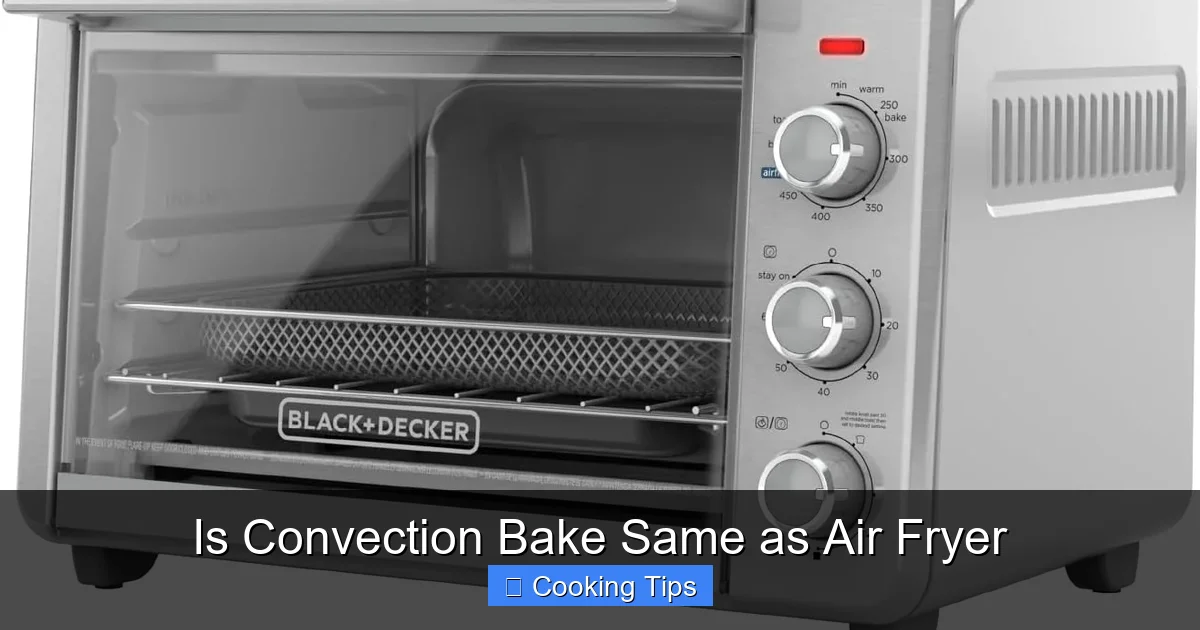
An air fryer, despite its name, is essentially a compact countertop convection oven. Its design, however, is optimized for a much more intense and focused cooking experience. The heating element is typically located at the top, and a powerful fan directly above it blasts superheated air downwards at high speed.
This concentrated blast of hot air creates a powerful convection effect, similar to a jet engine blowing hot air onto your food. This intense airflow is what gives air-fried food its signature crispiness. The smaller cooking chamber also means the hot air is in close proximity to the food, further enhancing the cooking speed and crisping power.
The Crucial Differences: What Sets Them Apart?
Visual guide about Is Convection Bake Same as Air Fryer
Image source: m.media-amazon.com
While both use fans, the devil is in the details – specifically, the intensity of the airflow, the size of the cooking chamber, and the primary purpose they were designed for.
1. Airflow Intensity and Direction
Air Fryer: High-Speed Blasting
The defining feature of an air fryer is its powerful fan. It’s designed to create a vortex of intensely hot air that circulates rapidly around the food. This high-speed, often downward-directed, airflow is what mimics the effect of deep-frying. It blasts moisture off the surface of the food, leading to rapid crisping and a crunchy texture. It’s an aggressive form of convection.
Convection Bake: Gentle Circulation
In an oven’s convection bake mode, the fan’s purpose is to ensure even distribution of heat. The airflow is generally gentler and more dispersed. While it accelerates cooking and improves browning compared to traditional bake, it doesn’t create the same rapid, intense blast as an air fryer. The air circulates more broadly, allowing for more even cooking across a larger surface area.
2. Cooking Chamber Size and Design
Air Fryer: Compact and Focused
Air fryers are typically small, with a basket or tray designed to hold food in a single layer. This compact design means the hot air has very little space to travel before hitting the food, maximizing its efficiency and intensity. It’s designed for smaller portions and specific textures. For example, you can achieve wonderfully crispy results when learning how to cook a crab cake in the air fryer.
Convection Bake: Spacious and Versatile
Ovens with convection bake offer a much larger cooking volume. This allows for cooking larger items, multiple dishes simultaneously, and for the air to circulate more freely around larger roasts or baked goods. The spaciousness means the heat is less concentrated, making it ideal for baking cakes where a delicate crumb is desired, or roasting a whole chicken.
3. Temperature and Cooking Times
Air Fryer: Often Lower Temperatures, Faster Times
Because of the intense and concentrated heat, you often need to use slightly lower temperatures in an air fryer compared to what you might use in a conventional oven for the same food. For instance, if a recipe calls for 400°F (200°C) in a regular oven, you might find 375°F (190°C) works perfectly in an air fryer. The cooking times are also significantly shorter. Imagine cooking bone-in chicken breast in the air fryer; it’s remarkably quick!
Convection Bake: Closer to Traditional Temps, Slightly Faster
Convection bake typically uses similar temperatures to traditional baking, though you might adjust them down by 25°F (about 15°C) if the recipe doesn’t specify convection. Cooking times are reduced by about 15-25%, but generally not as dramatically as with an air fryer.
4. Primary Cooking Purpose
Air Fryer: Mimicking Frying and Quick Snacks
The air fryer’s main game is achieving that sought-after crispy, “fried” texture without the oil. It excels at cooking frozen snacks, reheating leftovers (hello, crispy pizza crust!), making fries, chicken wings, and achieving browning on smaller items. Think of cooking BBQ ribs in air fryer for a tender interior and slightly crisped exterior.
Convection Bake: Even Roasting and Baking
Convection bake is designed to enhance traditional oven tasks. It’s fantastic for roasting vegetables, meats, and poultry, ensuring even cooking and browning. It’s also excellent for baking pies, cookies, and bread, where consistent heat distribution is key to a perfect rise and texture. It can also be used for dishes like a hearty pot pie. You can even explore how to cook a pot pie in an air fryer, but a convection oven offers more space for a larger pie.
When to Use Which: Making the Right Choice
Visual guide about Is Convection Bake Same as Air Fryer
Image source: i-wholesale.com.au
Now that we understand the differences, let’s look at practical applications.
Choose Convection Bake When You Need:
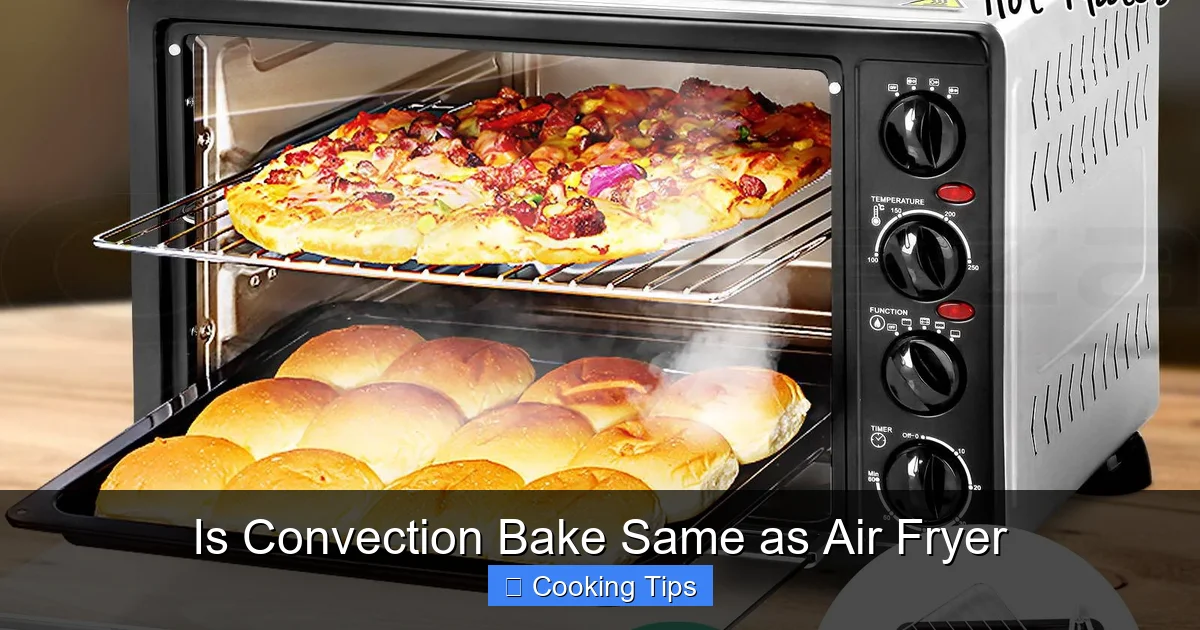
- Large Batch Cooking: Roasting a whole chicken, cooking multiple trays of vegetables, or baking a cake. The larger oven cavity is essential.
- Even Browning and Roasting: For a perfectly roasted turkey or succulent pork tenderloin, convection bake ensures even browning all around.
- Delicate Baking: For cakes, soufflés, or delicate pastries where consistent, gentle heat is paramount to prevent drying out or collapsing.
- Cooking Multiple Items: If you need to cook dinner and dessert simultaneously, the spaciousness of an oven is unbeatable.
- Recipes Specifically for Oven Convection: Some recipes are designed with the gentle, even heat of convection bake in mind.
Choose Air Fryer When You Need:
- Maximum Crispiness: For achieving a deep-fried texture on foods like french fries, onion rings, chicken wings, or even reheating leftovers to make them crispy again.
- Quick Cooking of Small Batches: Cooking a small portion of fries, reheating a couple of chicken nuggets, or making a quick snack like roasted chickpeas.
- “Frying” Foods with Less Oil: From cooking a brat in an air fryer to making crispy kale chips, it’s your go-to for less-oily fried goodness.
- Reheating Leftovers: Air fryers are phenomenal for reviving sad, soggy leftovers, bringing back their crispness.
- Specific “Fried” Texture: If a recipe emphasizes a crunchy coating or a very crisp exterior, the air fryer is the best tool.
Practical Tips for Convection Bake and Air Fryer Success
Visual guide about Is Convection Bake Same as Air Fryer
Image source: images-na.ssl-images-amazon.com
Mastering these methods involves a few smart techniques.
Tips for Convection Bake:
- Adjust Recipes: If a recipe doesn’t specify convection, you might reduce the temperature by 25°F (15°C) or reduce the cooking time by 10-15%.
- Don’t Overcrowd: Even with a fan, allow space between items on baking sheets or roasting pans for air to circulate freely.
- Rotate Pans: For very large items or multiple trays, you may still need to rotate them halfway through cooking for ultimate evenness.
- Consider Your Oven: Some ovens have multiple convection settings (e.g., convection roast, convection bake). “Convection bake” is generally for baking and roasting.
Tips for Air Fryer:
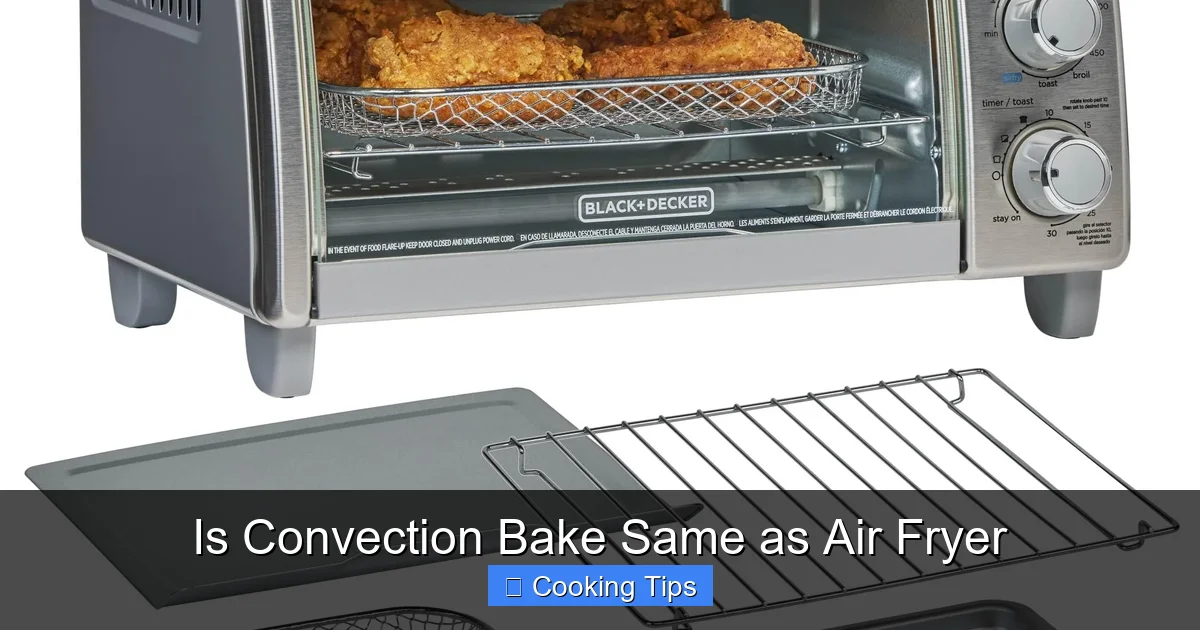
- Single Layer Cooking: For the crispiest results, always cook food in a single layer, ensuring air can reach all surfaces. Don’t stack food.
- Shake or Flip: For items like fries or wings, shake the basket halfway through cooking. For larger items, flip them over.
- Preheating is Key: Just like an oven, preheating your air fryer for 3-5 minutes helps ensure even cooking from the start.
- Don’t Overfill: Overfilling the basket will steam the food rather than crisp it. Cook in batches if necessary.
- Monitor Closely: Because they cook so fast, check your food frequently to prevent overcooking.
- Use a Little Oil: While it’s an “air fryer,” a light mist or toss with oil (1-2 teaspoons) helps enhance browning and crispiness for many foods.
Can You Adapt Recipes?
Yes, with some understanding!
If you have an air fryer and a recipe meant for convection bake, you’ll likely need to:
- Halve the Cooking Time: Start checking for doneness much earlier than the recipe suggests.
- Lower the Temperature: Reduce the oven temperature by 25-50°F (15-30°C).
- Cook in Batches: The smaller capacity of an air fryer means you’ll have to cook in multiple batches.
- Focus on Texture: It will excel at crisping the exterior, but achieving the same internal texture of a large baked item might be challenging. For instance, trying to bake a whole loaf of bread might yield a very crisp crust but potentially a denser interior compared to an oven. However, you can find great recipes for bread air fryer recipe for smaller loaves or rolls.
If you have a convection oven and a recipe meant for an air fryer, you can often:
- Use the Convection Bake Setting: This will help mimic the circulating hot air.
- Increase Temperature Slightly: You might need to increase the temperature by 15-25°F (8-15°C) to compensate for the less intense airflow.
- Extend Cooking Time: It will likely take longer than in an air fryer.
- Adjust Expectations for Crispiness: You might not achieve the same level of intense crispiness as a dedicated air fryer, but you’ll get a good result.
Conclusion: Two Great Tools, Different Jobs
So, is convection bake the same as an air fryer? No, they are not identical. While both harness the power of circulating hot air, their design, intensity, and intended use set them apart.
Your oven’s convection bake setting is a versatile workhorse for larger roasts, delicate bakes, and cooking multiple dishes evenly. The air fryer, on the other hand, is your specialist for achieving rapid crisping, mimicking frying, and quickly preparing smaller portions.
Understanding these nuances allows you to leverage the strengths of each appliance, leading to better cooking results, more delicious food, and a more enjoyable time in the kitchen. So next time you’re deciding which button to press, you’ll know exactly why one will give you the perfect roast, and the other, the ultimate crispy fries! Embrace the power of hot air, and happy cooking!