
Are you curious about the materials used in your air fryer? This guide dives into whether antimony is a component of air fryers. We’ll explore the typical materials used, safety regulations, and why you generally don’t need to worry about antimony in your kitchen appliance. Understand the construction of your air fryer and gain peace of mind about your healthy cooking habits.
Is Antimony Used in Air Fryers? Understanding Your Kitchen Appliance Materials
Welcome to our guide on air fryer materials! You’re likely here because you’re interested in healthy cooking and want to ensure your appliances are safe. One question that might pop into your mind is, “Is antimony used in air fryers?” It’s a great question to ask, especially as we become more conscious about what goes into our food and our homes.
In this comprehensive guide, we’ll break down the materials commonly found in air fryers. We’ll explain what antimony is, where it’s typically used, and why you can generally feel confident that it’s not a component of your air fryer’s cooking surfaces. By the end of this article, you’ll have a clear understanding of your air fryer’s construction and the safety standards that govern it. Let’s get started!
Key Takeaways
- Antimony is not a commonly used material in the construction of air fryer baskets or heating elements.
- Air fryer components are typically made from food-grade stainless steel, aluminum, or BPA-free plastics.
- Safety standards and regulations ensure that materials in contact with food are non-toxic and safe for cooking.
- Antimony is primarily used in flame retardants and alloys, not typically in direct food contact applications within kitchen appliances.
- Focus on reputable brands and look for certifications like FDA or UL to ensure safety and quality.
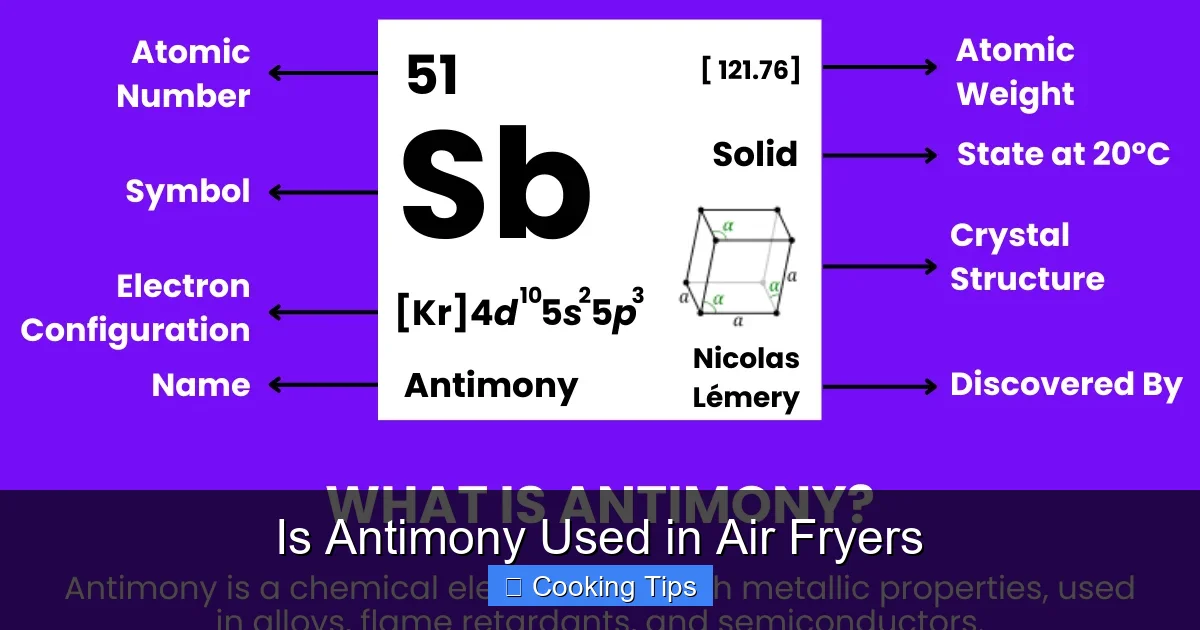
What Is Antimony?
Before we dive into air fryers, it’s important to understand what antimony is. Antimony is a metalloid element, meaning it has properties of both metals and nonmetals. It’s often found in nature as a silvery-white, brittle solid.
Where is Antimony Typically Used?
Antimony itself isn’t usually found in its pure form in consumer products. Instead, it’s often used in its compounds. The most common application for antimony is as a flame retardant. It’s added to plastics, textiles, and electronics to make them less flammable. This is a crucial safety feature in many everyday items.
Antimony compounds are also used in:
- Batteries (lead-acid batteries)
- Alloys (like pewter and solder)
- Ceramics and glass manufacturing
- Semiconductors
As you can see, its applications are quite varied, but its use as a flame retardant is a significant one. This might be why some people wonder about its presence in appliances like air fryers, which have heating elements and electrical components.
What Are Air Fryers Made Of?
Visual guide about Is Antimony Used in Air Fryers
Image source: mychemicalfreehouse.net
Now, let’s shift our focus to the materials that actually make up your air fryer. The primary goal for manufacturers is to create an appliance that is durable, easy to clean, and, most importantly, safe for cooking food.
The Basket and Interior Surfaces
The part of the air fryer that comes into direct contact with your food is typically the basket and any interior racks or trays. These are almost universally made from:
Food-Grade Stainless Steel
Stainless steel is a popular choice for many kitchen appliances because it’s durable, non-reactive, and easy to clean. It’s also resistant to corrosion and rust, which is important for longevity. Many high-quality air fryer baskets are made entirely of stainless steel.
Non-Stick Coatings (often Ceramic or PTFE-based)
Many air fryer baskets are coated with a non-stick material to make cooking and cleaning easier. These coatings are typically applied over an aluminum or stainless steel base.
- Ceramic coatings: These are often marketed as a more natural and PFOA/PTFE-free option. They are durable and offer good non-stick properties.
- PTFE-based coatings (like Teflon): These are very effective non-stick materials. Modern PTFE coatings used in cookware are generally considered safe when used according to manufacturer instructions and not overheated to extreme temperatures that can degrade the coating.
The aluminum or stainless steel base provides the structural integrity, while the non-stick coating ensures your food doesn’t stick.
BPA-Free Plastics
Some parts of the air fryer, particularly the exterior housing, control panel, and certain internal components that don’t touch food, might be made from BPA-free plastics. These are chosen for their durability, heat resistance, and safety.
The Heating Element and Exterior
The heating element itself is usually made of nichrome wire, a combination of nickel and chromium, which is excellent for resisting oxidation at high temperatures. The exterior of the air fryer is often made from heat-resistant, durable plastics.
Why Antimony Isn’t Typically Found in Air Fryer Food-Contact Surfaces
Visual guide about Is Antimony Used in Air Fryers
Image source: scienceinfo.com
The key reason antimony isn’t a concern for the parts of your air fryer that touch food is its intended use and safety regulations.
Intended Use and Safety Standards
Antimony’s primary role as a flame retardant means it’s incorporated into materials to prevent fires, often in electrical insulation or housing. While this is a safety feature, it’s not related to the direct cooking surface.
When it comes to food-contact materials, regulatory bodies worldwide have strict guidelines. In the United States, the Food and Drug Administration (FDA) sets standards for materials that come into contact with food. These standards ensure that any materials used do not leach harmful substances into the food or alter its taste or appearance.
The materials commonly used in air fryer baskets and trays—food-grade stainless steel, aluminum, and safe non-stick coatings—are all approved for direct food contact. Antimony, in its typical compound forms, is not generally approved for such direct contact in kitchenware due to potential toxicity if ingested.
Leaching Concerns
Even if antimony were present in trace amounts in the alloys or plastics used, the concern would be whether it could leach into the food. Modern manufacturing processes and material selection for food-contact items are designed to minimize or eliminate the possibility of such leaching.
How to Ensure Your Air Fryer is Safe
Visual guide about Is Antimony Used in Air Fryers
Image source: images.examples.com
While you can be very confident that antimony isn’t a part of your air fryer’s cooking surfaces, it’s always good practice to be an informed consumer. Here are some tips to ensure your air fryer is safe and reliable:
1. Choose Reputable Brands
When purchasing an air fryer, opt for well-known brands that have a track record for quality and safety. Brands that invest in research and development are more likely to adhere to strict manufacturing and safety standards.
2. Look for Certifications
Many air fryers come with certifications from organizations like UL (Underwriters Laboratories) or ETL. These certifications indicate that the product has been tested and meets specific safety requirements. While these don’t specifically test for antimony in food-contact parts, they ensure the overall electrical and material safety of the appliance. Look for FDA-approved materials where applicable, especially for non-stick coatings.
3. Read Product Descriptions and Manuals
Manufacturers are usually transparent about the materials used in their products. Read the product description before buying and consult the user manual that comes with your air fryer. These documents will often detail the materials used for the basket, interior, and housing.
4. Understand Non-Stick Coatings
If your air fryer has a non-stick coating, be aware of its type. If you’re concerned about PTFE, look for ceramic or other PFOA/PTFE-free alternatives. Proper care of these coatings, such as avoiding abrasive cleaners and metal utensils, will help maintain their integrity and safety. For example, if you’re cooking something like crab cakes, a good non-stick surface is essential.
5. Avoid Damaged Appliances
If the non-stick coating on your air fryer basket is peeling, chipped, or significantly scratched, it’s time to consider replacing the basket or the appliance. Damaged coatings can potentially release particles or become less effective. This is true whether you are cooking simple hot dogs or more complex dishes like a pot pie.
Troubleshooting: What If I Have Concerns?
If you have specific concerns about the materials in your air fryer after reading this guide, here’s how to proceed:
Check Your User Manual
The first step is always to consult your air fryer’s user manual. It’s a wealth of information regarding the appliance’s components and care.
Contact the Manufacturer
If the manual doesn’t provide sufficient detail, don’t hesitate to contact the manufacturer’s customer support. They can provide specific information about the materials used in their products.
Review Online Product Specifications
Manufacturers often have detailed product specifications available on their websites. You can usually find information about the materials used in the construction of the air fryer basket and other parts.
Conclusion: Peace of Mind for Your Air Frying Adventures
So, to answer the question directly: Is antimony used in air fryers? Generally, no, not in the parts that come into contact with your food. Antimony’s primary use is as a flame retardant, and the food-contact surfaces of air fryers are made from safe, food-grade materials like stainless steel, aluminum, and approved non-stick coatings.
The stringent safety regulations in place for kitchen appliances, particularly those used for cooking, ensure that manufacturers select materials that are non-toxic and suitable for direct food contact. By choosing reputable brands, looking for safety certifications, and understanding the materials involved, you can continue to enjoy the convenience and health benefits of air frying with confidence. Whether you’re cooking up some bone-in chicken breast or experimenting with vegetables like an eggplant, your air fryer is designed with your health and safety in mind.
Happy air frying!