
Are you wondering if an air fryer is like a pressure cooker? This guide breaks down the fundamental differences and surprising similarities between these two popular kitchen appliances. Learn about their unique cooking mechanisms, the types of dishes each excels at, and how to decide which appliance might be the right fit for your culinary adventures.
Is an Air Fryer Like a Pressure Cooker?
In today’s busy kitchens, appliances that promise faster, more convenient cooking are always a welcome addition. Two of the most popular kitchen gadgets making waves are the air fryer and the pressure cooker. You might be wondering, “Is an air fryer like a pressure cooker?” On the surface, they both seem to revolutionize how we cook, often promising quicker meal preparation. However, digging a little deeper reveals that while both are fantastic for transforming your cooking, they operate on entirely different principles and excel at very different tasks.
This guide is here to demystify these two powerhouses. We’ll explore what each appliance is, how it works, and what makes them unique. By the end, you’ll have a clear understanding of their differences, their surprising similarities, and how to choose which one, or perhaps both, might be your next kitchen essential.
Key Takeaways
- Air fryers use hot air circulation to crisp food, mimicking deep-frying without excessive oil.
- Pressure cookers use steam and high pressure to cook food quickly, ideal for tenderizing and infusing flavors.
- Both appliances can speed up cooking times compared to conventional ovens, but their methods are distinct.
- Air fryers are best for achieving crispy textures on foods like fries, chicken wings, and vegetables.
- Pressure cookers are ideal for moist, tender results in dishes like stews, beans, and tough cuts of meat.
- While some multi-cookers combine functions, a standalone air fryer and a standalone pressure cooker are very different.
- Choosing between them depends on your desired cooking outcome: crispy and fast or tender and moist.
Understanding the Air Fryer: The Crispy Creator
An air fryer is essentially a compact, countertop convection oven. Its primary function is to circulate hot air at high speed around your food. This rapid air movement creates a “frying” effect, delivering crispy, golden-brown results that are remarkably similar to deep-fried foods, but with significantly less oil.
How an Air Fryer Works
The magic of an air fryer lies in its design and mechanism:
- Heating Element: At the top of the air fryer, there’s a heating element, similar to what you’d find in an oven.
- Fan: A powerful fan is positioned near the heating element. This fan is crucial as it blows the hot air down and around the food.
- Air Circulation: The hot air is forced into the cooking basket, creating a vortex of rapidly moving hot air. This constant circulation ensures that the food is exposed to heat from all sides.
- Crisping Action: This intense, circulating hot air quickly dehydrates the surface of the food, resulting in a crispy exterior. It’s this process that gives foods like French fries, chicken wings, and even vegetables their satisfying crunch.
- Minimal Oil: While not entirely oil-free, air frying requires only a light mist or a tablespoon of oil to achieve delicious crispiness. This makes it a healthier alternative to traditional deep-frying.
What Air Fryers Excel At
Air fryers are perfect for:
- Crisping and Browning: Achieving a golden-brown, crispy texture on foods. Think of making crispy chicken wings, perfectly roasted vegetables, or delicious French fries.
- Reheating Leftovers: Revitalizing foods that have gone soggy in the microwave or oven. Reheating pizza or fried chicken in an air fryer brings back its original crispiness.
- Quick Snacks: Fast and easy preparation of snacks like mozzarella sticks, onion rings, and spring rolls.
- Smaller Portions: Ideal for individuals or small families, as many air fryers have a limited basket size.
For example, if you’re looking to prepare a crispy snack, you might consider something like air fryer crab cakes or Tyson chicken nuggets. The air fryer is your go-to for these delightful crunchy outcomes.
Understanding the Pressure Cooker: The Tenderizing Titan
A pressure cooker operates on a completely different principle. Instead of circulating hot air, it uses steam and pressure to cook food rapidly. The sealed environment allows the liquid inside to reach temperatures far above boiling point, dramatically reducing cooking times for foods that typically take a long time to become tender.
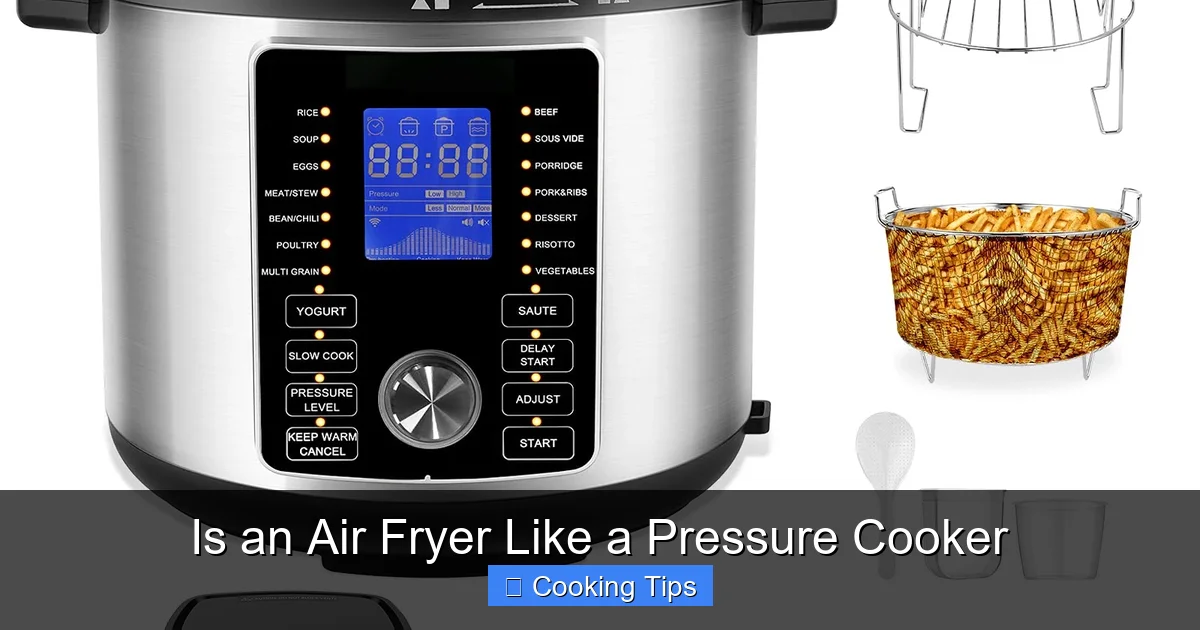
Visual guide about Is an Air Fryer Like a Pressure Cooker
Image source: m.media-amazon.com
How a Pressure Cooker Works
The science behind a pressure cooker is quite fascinating:
- Liquid Base: You always need a certain amount of liquid (water, broth, etc.) at the bottom of the pressure cooker pot.
- Sealed Lid: The pot has a lid that locks tightly, creating a sealed chamber.
- Steam Build-up: As the liquid heats up, it turns into steam. In a sealed pot, this steam cannot escape.
- Pressure Increase: As more steam is generated and trapped, the pressure inside the pot increases significantly.
- Higher Cooking Temperature: Water typically boils at 212°F (100°C) at sea level. However, in a pressure cooker, the increased pressure raises the boiling point of water to around 240-250°F (115-121°C).
- Faster Cooking: This higher cooking temperature, combined with the steam’s ability to penetrate food, cooks ingredients much faster than conventional methods.
- Pressure Release: Once cooking is complete, the pressure needs to be released safely, either naturally over time, through a quick release valve, or by manual intervention, depending on the model.
What Pressure Cookers Excel At
Pressure cookers are ideal for:
- Tenderizing Tough Meats: They can turn tough cuts of meat into melt-in-your-mouth deliciousness in a fraction of the usual time. Think of pot roasts or beef stew.
- Cooking Dried Beans and Grains: Cooking dried beans, lentils, and grains from scratch becomes incredibly fast and easy.
- Soups and Stews: Infusing deep flavors into broths and stews, creating rich and hearty meals quickly.
- Moist Cooking: They are excellent for dishes where you want a moist, tender outcome, rather than a crispy one.
For instance, if you are looking to cook something like a roast or prepare hearty beef short ribs, a pressure cooker is a fantastic tool for achieving incredibly tender results.
Key Differences: Air Fryer vs. Pressure Cooker
Now that we understand each appliance individually, let’s highlight their core differences:
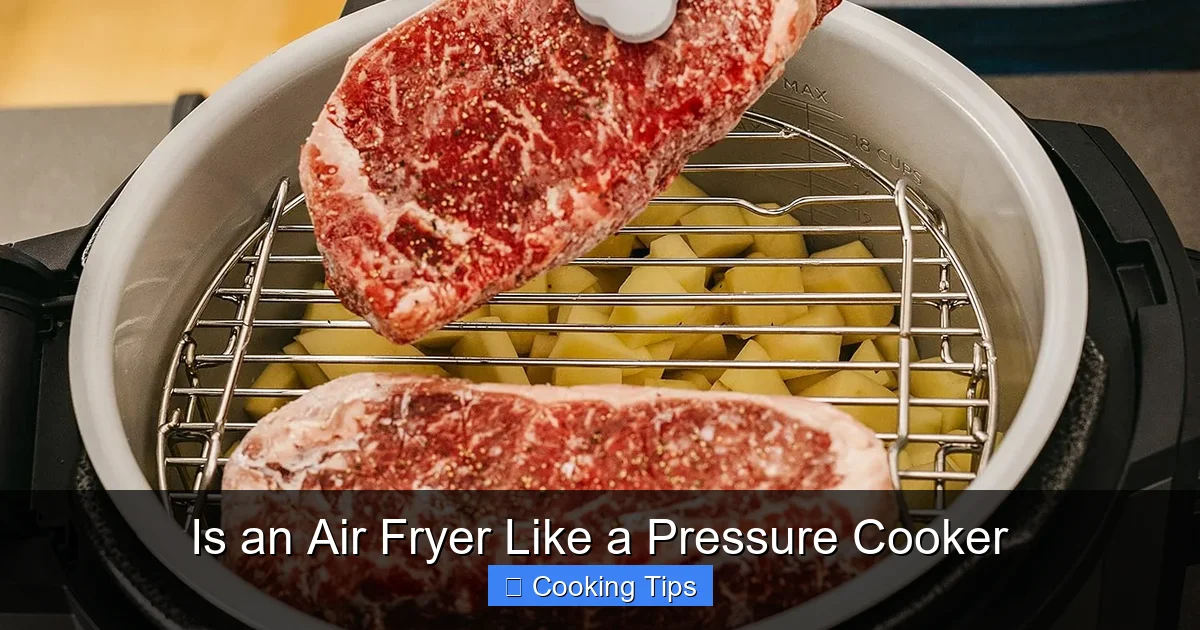
Visual guide about Is an Air Fryer Like a Pressure Cooker
Image source: images-na.ssl-images-amazon.com
1. Cooking Mechanism
- Air Fryer: Uses rapid circulation of hot air.
- Pressure Cooker: Uses steam and high pressure.
2. Primary Outcome
- Air Fryer: Crispy, browned, and dehydrated exterior.
- Pressure Cooker: Moist, tender, and infused flavors.
3. Liquid Requirement
- Air Fryer: Requires little to no added liquid (sometimes a spray of oil).
- Pressure Cooker: Requires a minimum amount of liquid to generate steam.
4. Texture Emphasis
- Air Fryer: Focuses on creating crispiness and a “fried” texture.
- Pressure Cooker: Focuses on breaking down tough fibers and creating tenderness.
5. Speed
- Both are faster than conventional ovens for their respective tasks. However, pressure cookers often achieve more dramatic time savings for long-cooking items like stews and tough meats. Air fryers are excellent for fast cooking of smaller items and reheating.
Surprising Similarities: Where They Overlap
Despite their fundamental differences, air fryers and pressure cookers do share some common ground:
Visual guide about Is an Air Fryer Like a Pressure Cooker
Image source: frugalhotspot.com
1. Speed of Cooking
Both appliances are designed to speed up the cooking process. While the reasons for this speed differ (hot air vs. pressure), the end result for the home cook is often less time spent in the kitchen.
2. Energy Efficiency
Because they cook faster and are often smaller than a full-sized oven, both air fryers and pressure cookers can be more energy-efficient for smaller batches of food.
3. Healthier Alternatives
Air fryers offer a healthier way to achieve crispy textures without deep-frying. Pressure cookers can help retain more nutrients in food due to shorter cooking times and less need for added fats.
4. Convenience
Both appliances are generally user-friendly and can simplify meal preparation. Many modern pressure cookers are electric and programmable, much like air fryers.
5. Multi-Functionality (Sometimes)
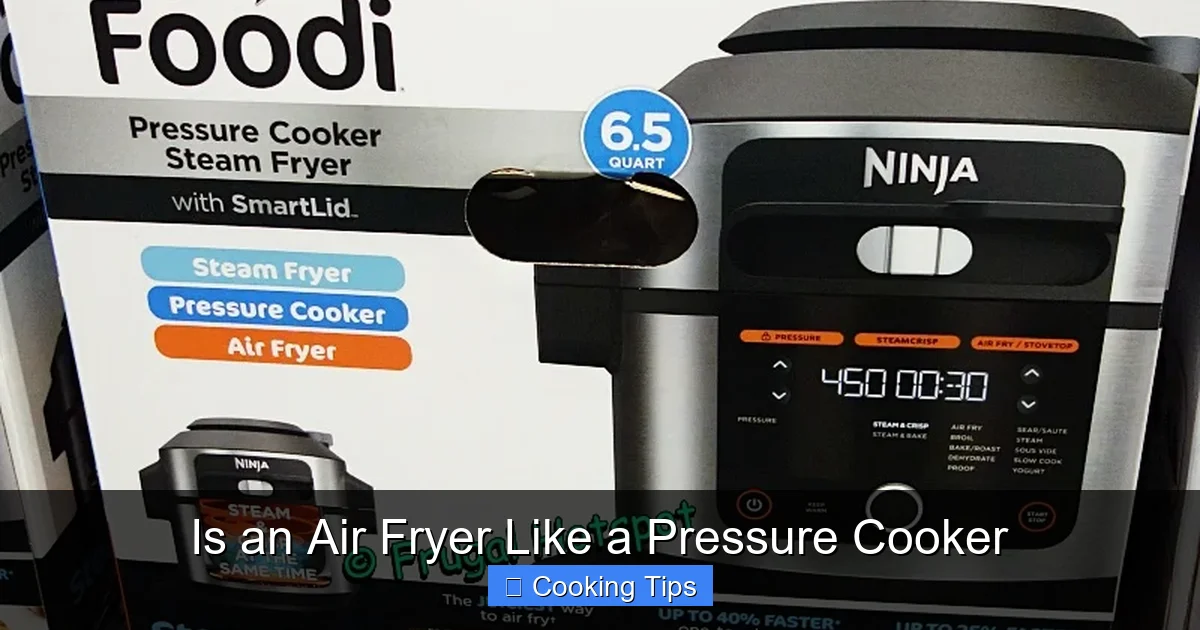
This is where things can get a little blurry. Many modern kitchen appliances are “multi-cookers” that combine several functions. You can find multi-cookers that include both an air fryer lid and a pressure cooker function (like the Instant Pot Duo Crisp). However, a dedicated, standalone air fryer is different from a dedicated, standalone pressure cooker. If you have a multi-cooker, it’s important to understand which lid or function you are using, as they perform distinct tasks.
Which Appliance is Right for You?
The choice between an air fryer and a pressure cooker, or whether you need one, both, or a multi-cooker, depends entirely on your cooking goals and your dietary preferences:
Choose an Air Fryer If:
- You love crispy textures – think fries, chicken wings, and anything you want to get golden and crunchy.
- You want a healthier alternative to deep-frying.
- You frequently cook smaller portions or single servings.
- You want to reheat leftovers and bring back their crispiness.
- You enjoy making quick snacks and appetizers.
- You’re interested in simple cooking methods for items like brats or biscuits.
Choose a Pressure Cooker If:
- You frequently cook large cuts of meat that you want to make tender.
- You want to save significant time on cooking dried beans, grains, or stews.
- You prefer moist, hearty dishes like soups and chili.
- You often cook for a larger family and need to prepare dishes that typically take hours.
- You are looking to make tougher ingredients palatable and delicious.
Consider a Multi-Cooker If:
- You have limited counter space and want to consolidate appliances.
- You want the flexibility to pressure cook one day and air fry the next.
- You are willing to learn how to use different lids or functions for different cooking styles.
It’s worth noting that you can prepare many items in an air fryer that are traditionally cooked in a pressure cooker, and vice-versa, but the results will be very different. For example, you can cook a roast in an air fryer, but it will likely be more “roasted” than fall-apart tender. Similarly, you can cook chicken wings in a pressure cooker, but they will be steamed and moist, not crispy.
Troubleshooting Common Misconceptions
It’s easy to get confused, especially with the rise of multi-cookers. Here are a few points to clarify:
- “Can my air fryer pressure cook?” No, a standard air fryer cannot pressure cook. It lacks the sealed environment and pressure-building capabilities.
- “Can my pressure cooker air fry?” Only if it’s a specific multi-cooker model designed with an air fryer function and a separate air fryer lid. A traditional pressure cooker cannot air fry.
- “Do they cook the same way?” Absolutely not. Their fundamental cooking mechanisms are diametrically opposed.
Conclusion: Different Tools for Different Deliciousness
So, to answer the question directly: no, an air fryer is not like a pressure cooker. They are distinct appliances with unique strengths and applications in the kitchen. An air fryer is your champion for achieving crispy, golden textures with minimal oil, while a pressure cooker is your powerhouse for tenderizing meats and speeding up the cooking of moist, flavorful dishes.
Understanding these differences empowers you to make informed decisions about which appliance best suits your culinary needs. Whether you’re craving perfectly crisp fries, a fall-apart tender stew, or both, the right tool can make all the difference. Many home cooks find that having both appliances (or a versatile multi-cooker) allows for a wider range of delicious possibilities in their kitchen.