
Wondering if an air fryer is just a small convection oven? The answer is a resounding yes! Both appliances use a fan to circulate hot air for cooking. This guide breaks down the similarities and differences, helping you understand how your air fryer achieves that perfect crispiness. Get ready to unlock the full potential of your kitchen gadget!
Is an Air Fryer a Small Convection Oven?
You’ve likely seen them everywhere – sleek, countertop gadgets promising crispy fries and perfectly roasted chicken with less oil. Air fryers have taken the culinary world by storm. But if you’ve ever wondered, “Is an air fryer a small convection oven?” you’re not alone. The short answer is a resounding “yes!” Both appliances rely on a core cooking technology that’s surprisingly similar. However, there are nuances that make each unique.
In this guide, we’re going to dive deep into this question. We’ll explore the science behind both air fryers and convection ovens, highlight their similarities and differences, and explain how understanding this relationship can help you become a more versatile and skilled cook. Whether you’re a seasoned chef or just starting out, grasping this concept will unlock new possibilities in your kitchen.
Key Takeaways
- Air fryers and convection ovens share the fundamental principle of using a fan to circulate hot air. This rapid, even heating is what creates crispy exteriors and moist interiors.
- While similar, air fryers typically have a more compact design and a more powerful, focused fan, leading to faster cooking times and exceptional crispiness.
- The primary function of an air fryer is to mimic deep-frying results with significantly less oil, a feat achieved through its concentrated hot air circulation.
- Convection ovens, being larger, offer more versatility in cooking capacity and can handle a wider range of dishes, including larger roasts and multiple trays of food.
- Understanding their shared technology allows you to apply convection oven cooking principles to your air fryer, and vice versa, expanding your culinary repertoire.
Understanding the Core Technology: Hot Air Circulation
At the heart of both air fryers and convection ovens lies the principle of convective heat transfer. Think of it as a super-powered fan blowing hot air all around your food. This is very different from a traditional oven, which relies more on radiant heat (heat waves) bouncing off the oven walls.
How Convection Ovens Work
A traditional oven heats up, and then the heat radiates from the heating elements to cook your food. This can sometimes lead to uneven cooking, with hot spots and cooler spots. A convection oven takes this a step further. It adds a fan, usually located at the back of the oven cavity. This fan actively circulates the hot air throughout the oven.
This constant movement of hot air does a few wonderful things:
- Even Cooking: The circulating air ensures that all sides of your food are exposed to the same temperature, leading to more consistent results.
- Faster Cooking: Because the heat is being constantly moved around and reaching your food more efficiently, convection ovens typically cook food faster than conventional ovens. This can be anywhere from 10% to 25% faster.
- Crispier Results: The moving hot air helps to evaporate moisture from the surface of your food, leading to a delightfully crispy exterior. This is especially noticeable with roasted vegetables, baked goods, and meats.
How Air Fryers Work
Now, let’s talk about the air fryer. Imagine taking the convection concept and shrinking it down into a compact countertop appliance. That’s essentially what an air fryer is. It also uses a heating element (usually at the top) and a powerful fan. This fan is designed to circulate extremely hot air at high speeds within the smaller cooking chamber of the air fryer.
The key difference here is the intensity and focus of the air circulation. Because the chamber is so much smaller than a full-sized oven, the hot air can be directed with much more force and precision. This is what gives air-fried food its signature crispiness, often rivaling that of deep-fried items, but with a fraction of the oil.
Similarities: Where Air Fryers and Convection Ovens Meet
Given their shared reliance on hot air circulation, it’s no surprise that air fryers and convection ovens have a lot in common. Understanding these overlaps can help you adapt recipes and cooking methods between the two appliances.
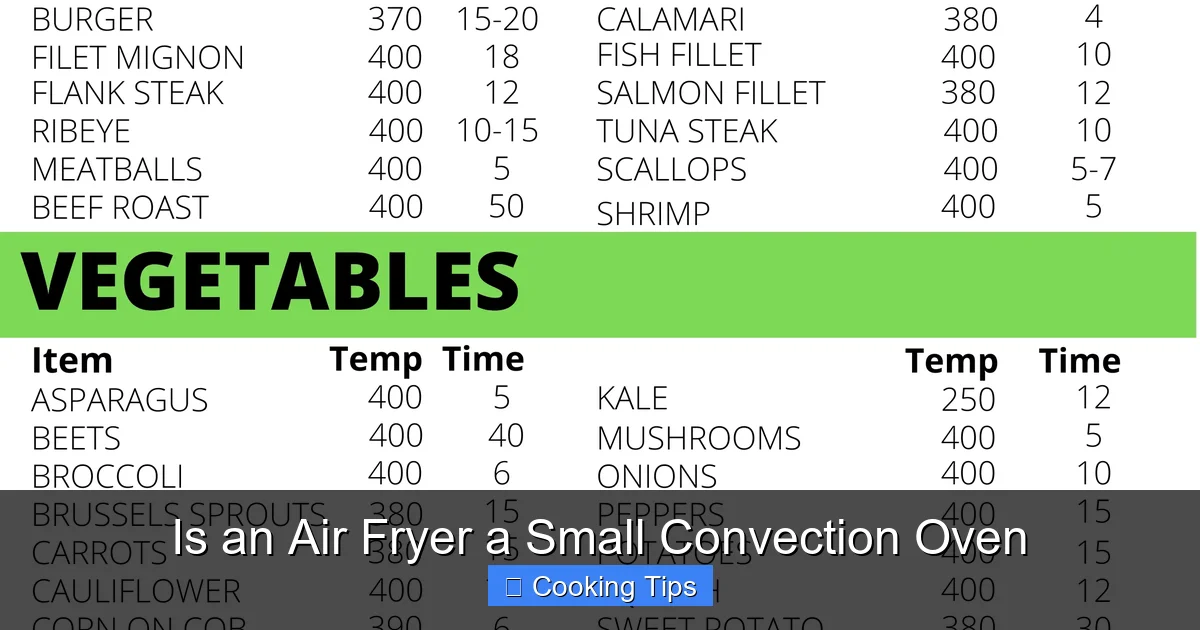
Visual guide about Is an Air Fryer a Small Convection Oven
Image source: foodlovinfamily.com
1. The Cooking Method: Convection
This is the most significant similarity. Both appliances are, in essence, convection cookers. They both use a fan to move hot air. This means that the fundamental way they cook food – by surrounding it with heated, moving air – is identical. If a recipe calls for “convection bake” or “convection roast,” you can often achieve very similar results in your air fryer, with adjustments for time and temperature.
2. Crispy Texture
Both technologies excel at producing crispy food. The rapid movement of hot air around the food’s surface helps to dehydrate it quickly, creating that satisfying crunch. Whether it’s perfectly roasted chicken skin, crispy Brussels sprouts, or golden-brown fries, both appliances are champions of texture.
3. Reduced Oil Needs
While a convection oven can be used with or without oil, its convection function inherently allows for less oil than traditional baking to achieve similar browning and crispiness. Air fryers, on the other hand, are specifically designed to produce “fried” textures with minimal oil. You can achieve a delicious crisp on items like chicken wings or french fries with just a tablespoon or two of oil, or sometimes none at all.
4. Faster Cooking Times
As mentioned, the efficiency of convective heat transfer means that both air fryers and convection ovens generally cook food faster than their conventional counterparts. The air fryer’s compact size and powerful, focused fan often make it even faster than a convection oven for smaller portions.
Differences: What Sets Them Apart
While the core technology is the same, the design and intended use of air fryers and convection ovens lead to several key differences.
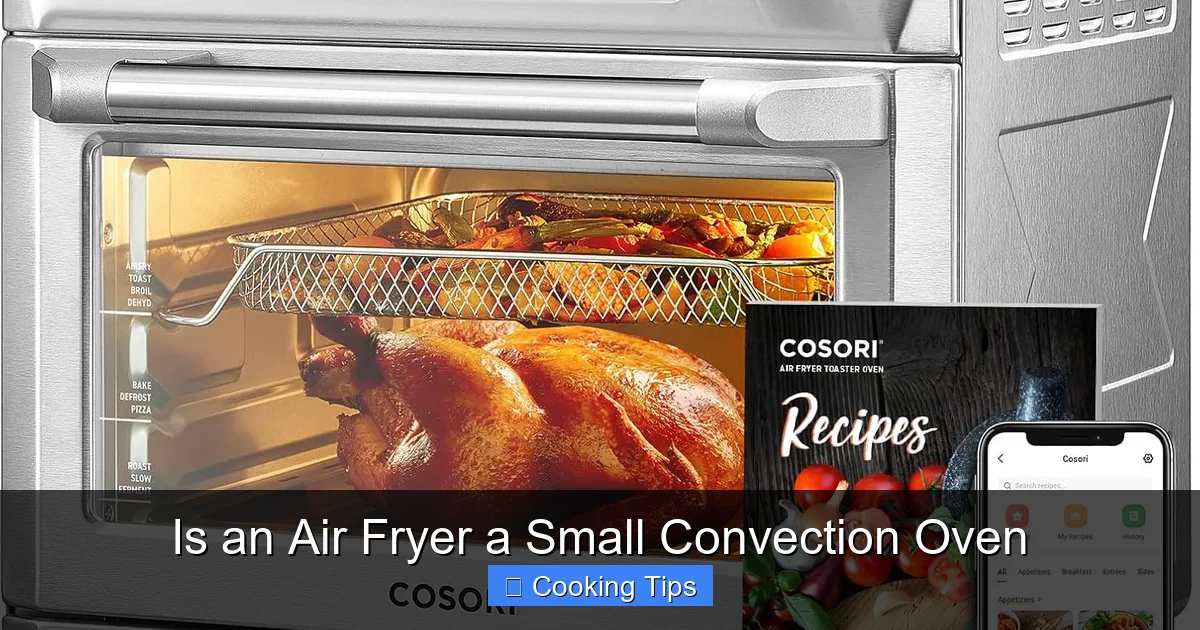
Visual guide about Is an Air Fryer a Small Convection Oven
Image source: images-cdn.ubuy.co.in
1. Size and Capacity
This is perhaps the most obvious distinction. Convection ovens are typically full-sized kitchen appliances, integrated into your range or as standalone units. They offer a large cooking capacity, allowing you to roast a whole turkey, bake multiple trays of cookies, or cook a large casserole. Air fryers, conversely, are designed to be compact countertop appliances. Their capacity is much smaller, usually suitable for 1-4 people, depending on the model. You might be able to cook a whole chicken in some larger air fryers, but generally, they are for smaller batches.
2. Fan Power and Airflow
Air fryers often have a more powerful and focused fan relative to their cooking chamber size. This creates a more intense and rapid circulation of air, which is crucial for achieving that deep-fried crispiness quickly. A convection oven’s fan is effective but usually operates within a much larger space, so the air movement might feel less aggressive.
3. Temperature and Time Precision
Due to their smaller size and more direct airflow, air fryers can sometimes be more precise with achieving very high temperatures for quick crisping. However, many modern convection ovens also offer excellent temperature control. Because of the airflow intensity, air fryers often cook much faster, so you’ll need to adjust cooking times significantly when converting recipes from a convection oven.
4. Versatility and Functionality
A full-sized convection oven offers a wider range of cooking functions beyond just baking and roasting. It can typically handle broiling, dehydrating, and sometimes even proofing dough. While some air fryers offer limited presets for different food types (like fries or chicken), they are primarily designed for air frying. However, some newer air fryers are marketed as “air fryer toaster ovens,” which bridge this gap by offering multiple functionalities.
5. Energy Efficiency
For small-batch cooking, an air fryer is generally more energy-efficient than preheating and running a large convection oven. It heats up much faster and uses less overall energy. However, for cooking larger quantities, a convection oven would be more efficient as it can cook more at once.
How Understanding This Connection Helps You
Knowing that your air fryer is essentially a mini convection oven is a game-changer for your cooking. It empowers you to:
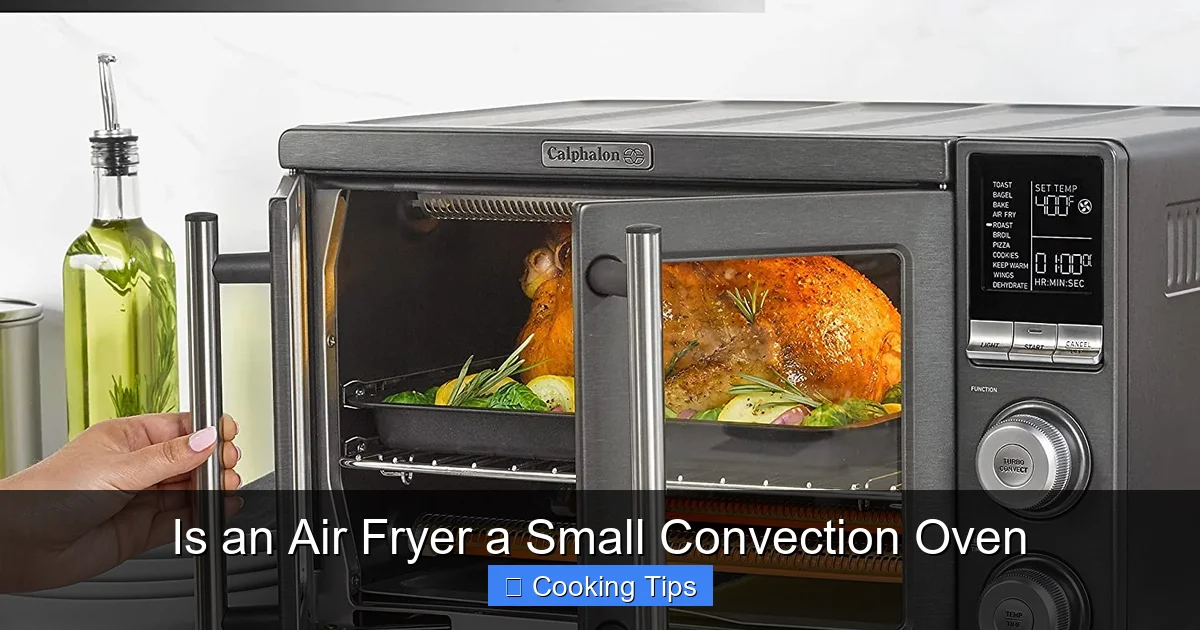
Visual guide about Is an Air Fryer a Small Convection Oven
Image source: smarthomedvce.com
1. Adapt Recipes
If you find a delicious recipe for roasted vegetables or a marinated pork tenderloin that calls for a convection oven, you can confidently adapt it for your air fryer. Just remember to reduce the cooking time and potentially the temperature slightly. For instance, if a recipe for marinated pork tenderloin suggests 400°F for 25 minutes in a convection oven, you might start with 375°F for 15-20 minutes in your air fryer, checking for doneness.
2. Experiment with New Foods
Don’t be afraid to try cooking things you wouldn’t normally associate with an air fryer. Just like a convection oven, it can brown, crisp, and roast. You can make fantastic biscuits, reheat leftovers to their former crispy glory, or even bake small cakes. The principle is the same: hot air circulates to cook evenly and create texture.
3. Understand Cooking Principles
By understanding convection, you gain a deeper insight into why certain cooking methods work. You’ll better understand the role of airflow in achieving crispiness and how to adjust for different food types and thicknesses.
4. Optimize Your Cooking
If you have both appliances, you can choose the best tool for the job. Need to cook a quick batch of fries for two? The air fryer is perfect. Roasting a whole chicken for a family dinner or baking a tray of cookies? The convection oven is your go-to.
Practical Tips for Using Your “Small Convection Oven”
To get the most out of your air fryer, think of it as your personal, powerful convection cooker. Here are some tips:
1. Don’t Overcrowd the Basket
This is crucial for achieving crispiness. Just like in a convection oven, if you pile too much food in, the hot air can’t circulate properly. You’ll end up with steamed, soggy food instead of crispy perfection. Cook in batches if necessary. This is especially important when cooking items like frozen burgers or chicken nuggets.
2. Shake or Flip Food Midway
To ensure even cooking and maximum crispiness on all sides, shake the basket or flip larger items halfway through the cooking time. This is similar to how you might rotate pans in a convection oven.
3. Use a Little Oil (When Needed)
While air fryers reduce oil usage, a light coating of oil (a spray or brushed on) can help ingredients crisp up beautifully. This is particularly true for vegetables or proteins that might otherwise dry out. For example, when making air fryer vegetables, a little olive oil makes a big difference.
4. Preheat Your Air Fryer
Just like preheating a conventional or convection oven, preheating your air fryer for a few minutes (usually 3-5) ensures that your food starts cooking immediately at the optimal temperature. This leads to better texture and browning.
5. Adjust Temperatures and Times
When converting recipes from a convection oven, always start with a lower temperature and shorter cooking time. You can always add more time if needed, but you can’t un-cook something that’s burnt. For example, if you’re trying to cook a steak, a convection oven might have a longer, slightly lower temperature cook time than an air fryer, which excels at searing quickly.
6. Clean Regularly
Grease and food particles can build up, affecting performance and causing smoke. Cleaning the basket and interior regularly ensures your air fryer continues to operate efficiently and safely, just like maintaining any other kitchen appliance.
Can You Cook Everything in an Air Fryer Like a Convection Oven?
While the principles are similar, there are some limitations. Extremely wet batters might not work as well, as the intense hot air could blow them off the food before they set. Large items that would fit easily in a convection oven might not fit in an air fryer. Also, delicate items that require very gentle heat might be better suited to a traditional oven.
However, for most everyday cooking – from crispy frozen burgers and savory hot dogs to reheating leftovers like pizza or pot pies – the air fryer performs wonderfully as a small, efficient convection oven.
Conclusion
So, is an air fryer a small convection oven? The answer is a definitive yes. It harnesses the same powerful technology of circulating hot air to cook your food efficiently, evenly, and with that desirable crispy finish. The primary differences lie in its compact size, more intense airflow, and its specific design focus on mimicking the results of deep-frying with less oil.
By understanding this fundamental connection, you can unlock a whole new world of culinary possibilities. You can confidently adapt recipes, experiment with new dishes, and optimize your cooking for both speed and deliciousness. So, the next time you reach for your air fryer, remember that you’re not just using a trendy gadget; you’re wielding a highly efficient, miniature convection oven right on your countertop!