Many people wonder if their air fryer is just a small convection oven. While they share similarities in using circulating hot air for cooking, there are key distinctions in their design and performance. This guide dives deep into the functionalities of both, helping you understand their unique capabilities. Understand the technology behind each and learn how to use them effectively for delicious results.
Is Air Fryer The Same As Convection Cooking?
The kitchen appliance world is full of exciting gadgets, and two that often get mentioned together are air fryers and convection ovens. You might be wondering, “Is an air fryer just a tiny convection oven?” It’s a great question! Both use circulating hot air to cook food, giving you that desirable crispy texture without deep frying. However, they aren’t exactly the same. Understanding the differences and similarities can help you make the most of your kitchen tools and achieve perfect results every time.
In this comprehensive guide, we’ll break down the technology behind air frying and convection cooking. We’ll explore how they work, what makes them unique, and when to choose one over the other. By the end, you’ll have a clear understanding of whether your air fryer is truly a convection cooker and how to leverage their distinct advantages for your culinary adventures.
Key Takeaways
- Air Fryers and Convection Ovens Both Use Hot Air: The core principle for both cooking methods is circulating hot air to cook food, resulting in crispier exteriors and even cooking.
- Size and Airflow Differ Significantly: Air fryers are compact, with more concentrated and rapid airflow. Convection ovens are larger, with broader air circulation, making them suitable for bigger batches.
- Heating Elements and Fan Placement Vary: Air fryers typically have a heating element and fan at the top, creating intense, direct heat. Convection ovens often have heating elements at the top and bottom, with a fan in the back for more diffused airflow.
- Cooking Performance is Not Identical: Due to their design differences, air fryers excel at achieving super-crispy results on smaller portions, while convection ovens are better for roasting larger items and baking.
- Versatility of Convection Ovens: Convection ovens offer more cooking functions beyond just circulating air, often including traditional bake and broil settings.
- Ease of Use and Cleanup: Air fryers are generally simpler to operate and clean for everyday tasks, making them a convenient choice for quick meals.
Understanding the Core Principle: Circulating Hot Air
At their heart, both air fryers and convection ovens rely on the same fundamental cooking principle: forced convection. This means they use a fan to circulate hot air rapidly around your food. This constant movement of hot air has several key benefits:
- Even Cooking: The circulating air ensures that all sides of your food are exposed to heat, leading to more uniform cooking compared to traditional ovens where hot spots can be an issue.
- Crispier Textures: The intense, dry heat helps to evaporate moisture from the surface of your food, resulting in a delightfully crispy exterior, much like deep frying but with significantly less oil.
- Faster Cooking Times: The efficient heat transfer from circulating air generally means that food cooks faster in both air fryers and convection ovens compared to conventional ovens.
This shared reliance on hot air circulation is why many people associate the two. However, the devil is in the details, and these details significantly impact performance and application.
Air Fryer: The Compact Powerhouse
An air fryer is essentially a countertop appliance designed to mimic the results of deep frying using a high-speed fan and a heating element. Think of it as a compact, specialized convection oven.
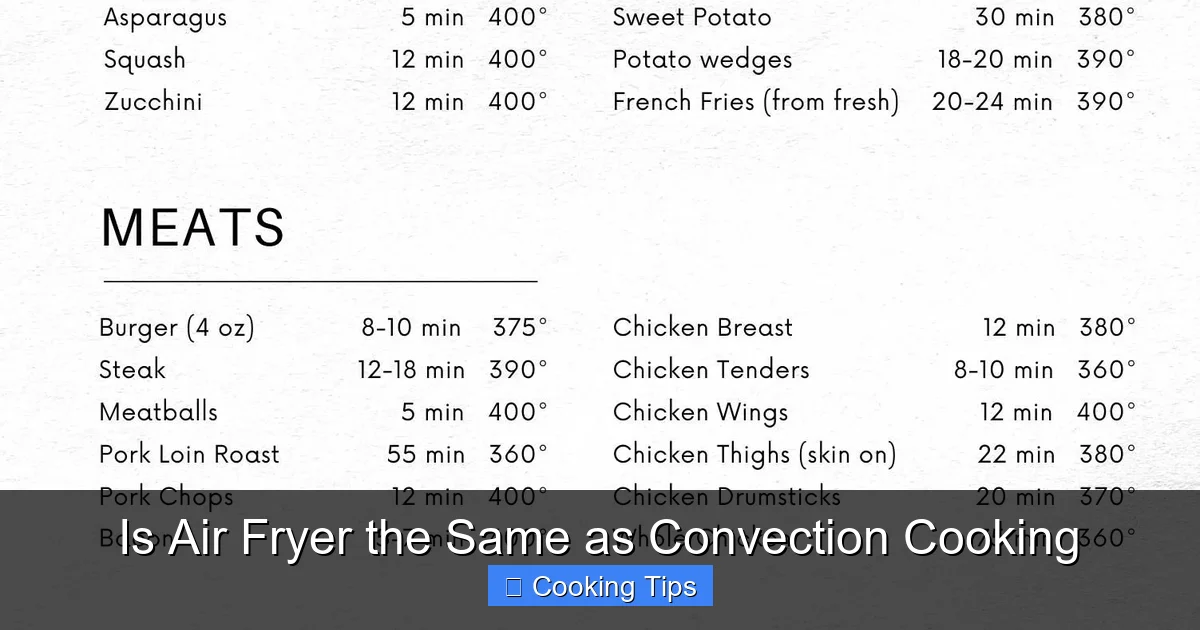
Visual guide about Is Air Fryer the Same as Convection Cooking
Image source: i.pinimg.com
How an Air Fryer Works
Air fryers typically feature a heating element located at the top of the unit, directly above the cooking basket. A powerful fan, also positioned at the top, blows this hot air downwards and around the food in the basket. This creates a vortex of extremely hot air that envelops the food, cooking it quickly and efficiently.
Key characteristics of air fryer design:
- Compact Size: Air fryers are small and designed to sit on your countertop. This portability and small footprint make them ideal for individuals or small families.
- Intense, Direct Airflow: The design prioritizes a very concentrated and fast blast of hot air directly onto the food. This is crucial for achieving that signature crispiness.
- Basket Design: Most air fryers use a perforated basket. This allows the hot air to circulate freely around all sides of the food, ensuring it cooks evenly and gets crispy.
- Single Heating Element (Usually Top): While some models might have elements elsewhere, the primary heat source is typically at the top, contributing to the intense direct heat.
What Air Fryers Excel At
Because of their compact size and powerful, focused airflow, air fryers are fantastic for:
- “Frying” Smaller Portions: They are perfect for making things like french fries, chicken wings, onion rings, and other appetizers incredibly crispy with minimal oil. For example, learning how to make waffle fries in the air fryer is a common and successful use case.
- Reheating Leftovers: Air fryers are superior to microwaves for reheating fried foods, bringing back that original crispiness.
- Quick Snacks: Cooking frozen snacks like mozzarella sticks or spring rolls becomes a breeze. You can even cook things like hot dogs quickly and efficiently.
- Smaller Roasts and Proteins: While not ideal for large cuts, they can cook smaller items like pork steaks or cornish hens to perfection.
The intense airflow means you often need to shake the basket halfway through cooking or flip items to ensure even crisping.
Convection Oven: The Versatile Workhorse
A convection oven, often found as a feature in larger ovens or as a separate countertop appliance (a toaster oven style), also uses a fan to circulate hot air. However, their design and purpose are generally broader than that of an air fryer.
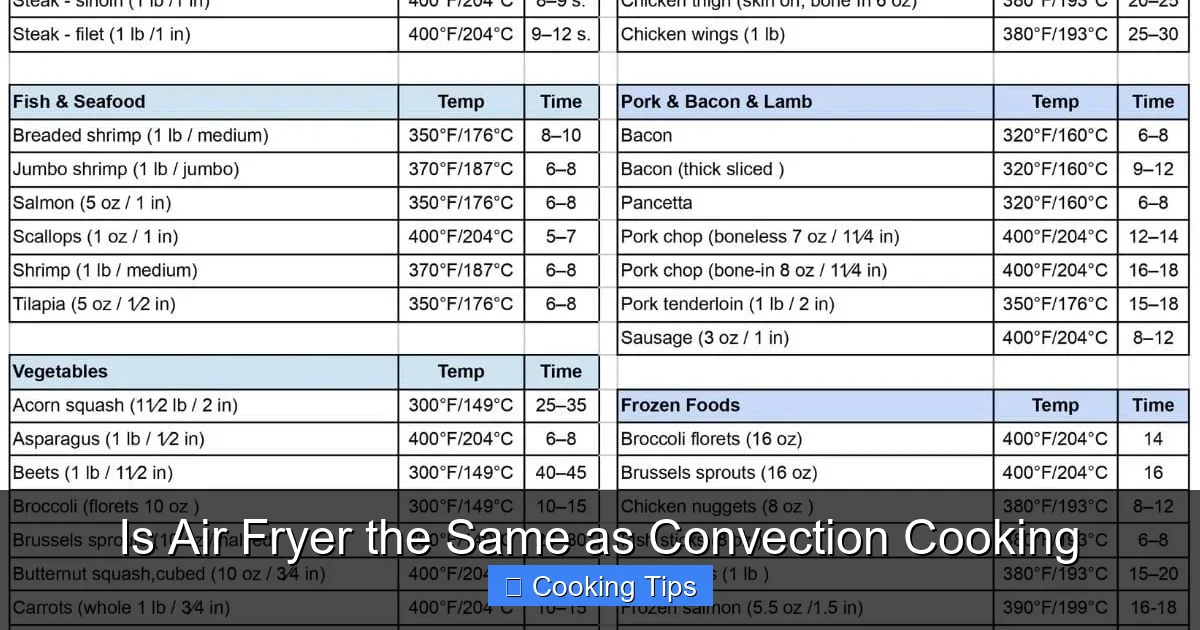
Visual guide about Is Air Fryer the Same as Convection Cooking
Image source: iheartumami.com
How a Convection Oven Works
Convection ovens have a fan, usually located at the back of the oven cavity, which blows air over a heating element (often at the back, and sometimes also at the top and bottom). This circulated hot air then heats the oven cavity and your food.
Key characteristics of convection oven design:
- Larger Capacity: Convection ovens are significantly larger than air fryers, allowing you to cook bigger meals, multiple dishes, or larger cuts of meat.
- Broader, More Diffused Airflow: While still circulating air, the airflow is generally less intense and more spread out across the larger cavity. This is better for baking and roasting larger items.
- Multiple Heating Elements: Most convection ovens have heating elements at the top, bottom, and sometimes the back, providing more versatile heat distribution.
- Traditional Oven Functions: Beyond convection, they usually retain traditional bake, broil, and roast settings, offering greater culinary flexibility.
What Convection Ovens Excel At
The larger size and more diffused airflow make convection ovens ideal for:
- Roasting Large Meats: They are excellent for roasting whole chickens, large cuts of beef like a beef roast, or pork shoulders.
- Baking: The even heat distribution is fantastic for baking cakes, cookies, and bread, ensuring consistent browning and perfect texture. You can even bake cakes in some models.
- Cooking Multiple Dishes: The larger capacity allows you to cook more food at once, which is great for family meals or entertaining guests.
- Broiling: Many convection ovens also offer a strong broil function, useful for browning tops of dishes or cooking thinner cuts of meat.
While a convection oven can achieve crispiness, it might not reach the same level of intense crispiness that an air fryer can for smaller, breaded items due to the less concentrated airflow.
Key Differences Summarized
Let’s put the differences side-by-side to make it crystal clear:
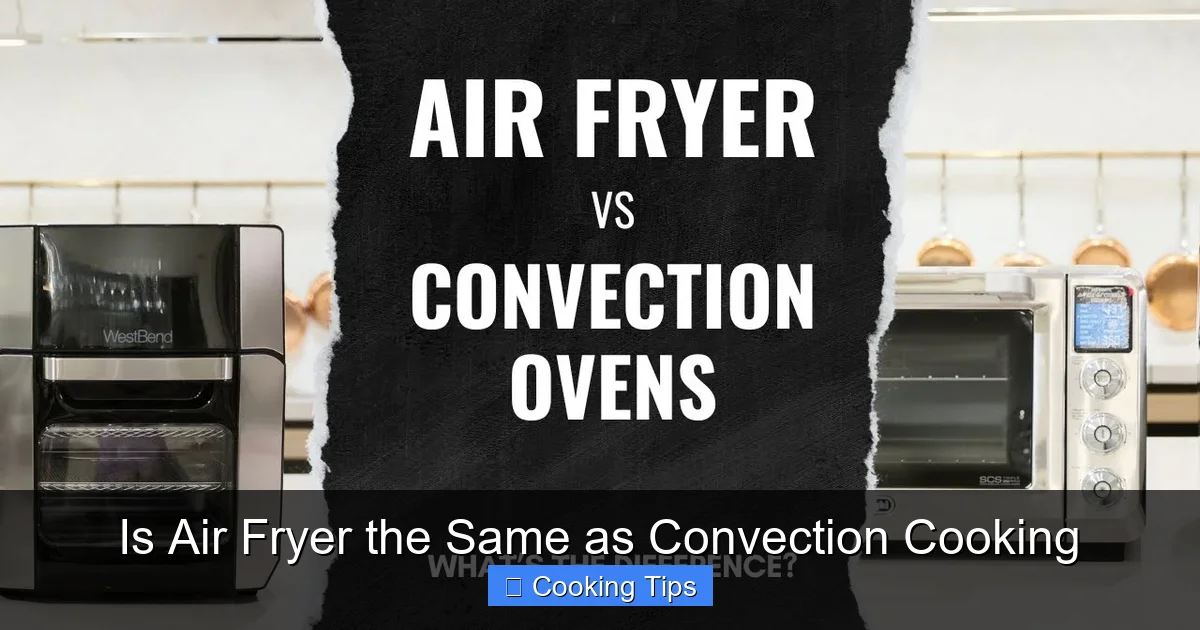
Visual guide about Is Air Fryer the Same as Convection Cooking
Image source: i.ytimg.com
| Feature | Air Fryer | Convection Oven |
|---|---|---|
| Size | Compact, countertop appliance | Larger, can be built-in or countertop (toaster oven style) |
| Airflow Intensity | High, concentrated, rapid | Moderate, diffused, spread out |
| Primary Heating Source | Usually top-mounted heating element | Top, bottom, and sometimes rear heating elements |
| Fan Placement | Typically at the top | Typically at the back |
| Best For | Crispy “fried” foods, small batches, reheating | Roasting larger items, baking, cooking multiple dishes |
| Cooking Speed (for similar food types) | Generally faster due to concentrated heat | Faster than conventional ovens, but potentially slower than air fryers for small items. |
| Versatility | More specialized for “frying” results | More versatile, handles baking, roasting, broiling |
Can You Use Your Air Fryer as a Convection Oven?
Yes, in a way! Because an air fryer uses circulating hot air, it performs convection cooking. However, it’s a highly *specialized* form of convection cooking. If you have an air fryer, you are already experiencing convection in action.
Here’s how to think about it:
- Air Fryer = Specialized Convection: It’s like comparing a sports car to a family sedan. Both are cars, but they are designed for different primary purposes. The air fryer is optimized for intense, rapid, crispy results on smaller items.
- Convection Oven = General Purpose Convection: A convection oven uses convection for a broader range of tasks, from gently baking a delicate cake to roasting a large turkey.
So, while your air fryer *is* a convection cooker, it’s not a direct replacement for a full-sized convection oven if you need to cook large meals or bake bread regularly. Conversely, if you’re looking for that crispy, fried-like texture on smaller items, an air fryer will often outperform a standard convection oven due to its focused design.
When to Choose Which Appliance
Deciding between using your air fryer or your convection oven depends entirely on what you’re cooking:
Use Your Air Fryer For:
- Achieving that ultimate crispiness on foods like crab cakes or chicken wings.
- Quickly cooking small portions of vegetables or snacks.
- Reheating pizza, fries, or fried chicken to restore crispiness.
- Making things like quesadillas with perfectly browned exteriors.
- Experimenting with smaller meat cuts that benefit from rapid cooking, such as marinated pork tenderloin.
Use Your Convection Oven For:
- Roasting larger cuts of meat, like a bone-in chicken breast or a full roast.
- Baking cakes, cookies, pies, or bread where even, gentle heat is essential.
- Cooking multiple dishes simultaneously for a larger meal.
- Broiling steaks or vegetables.
- Recipes that call for a more traditional oven environment but can benefit from the even heat of convection, like pot pies.
Practical Tips for Using Both
To get the best results, remember these tips:
For Air Fryers:
- Don’t Overcrowd: This is the cardinal rule. Food needs space for the hot air to circulate. Cook in batches if necessary.
- Shake or Flip: For most items, you’ll need to shake the basket or flip the food halfway through cooking to ensure even crispiness.
- Use a Little Oil: While an air fryer uses less oil than deep frying, a light spray or toss of oil can enhance crispiness and flavor.
- Experiment with Time and Temperature: Air fryer recipes are a great starting point, but small adjustments might be needed based on your specific model.
For Convection Ovens:
- Adjust Temperature: Many recommend reducing the temperature by about 25°F (15°C) compared to a standard recipe when using convection.
- Reduce Cooking Time: Food typically cooks faster, so start checking for doneness earlier than a conventional recipe suggests.
- Consider Placement: For baking, placing items in the center rack usually provides the most even results.
- Use for Roasting: Convection is a game-changer for roasting meats, providing a beautiful, even crust. Trying to cook BBQ ribs in a convection oven can yield tender results with a nice exterior.
Troubleshooting Common Issues
Even with the best appliances, you might run into a few snags.
Issue: Food is not crispy enough in the air fryer.
Solutions:
- Ensure you are not overcrowding the basket.
- Make sure you are shaking the basket or flipping the food halfway through.
- Increase the cooking temperature slightly for the last few minutes.
- Pat your food dry before cooking, especially if it’s fresh or frozen. Excess moisture hinders crisping.
Issue: Food is drying out in the convection oven.
Solutions:
- You might have the temperature too high or the cooking time too long.
- Consider using a lower temperature and cooking for a slightly longer duration.
- For roasting, use a meat thermometer to avoid overcooking.
- For baked goods, ensure your recipe is suited for convection or adjust accordingly.
Issue: My air fryer is too small for what I want to cook.
Solution: This is where your convection oven shines. For larger items or multiple servings, a convection oven is the better choice. For example, cooking frozen burgers might be done quickly in an air fryer, but a larger batch would be better suited for a convection oven. Some people opt for larger, oven-style air fryers or air fryer toaster ovens that offer more space. You can explore options by looking at how to pick the best air fryer to find one that suits your needs.
Conclusion: Not the Same, But Both Great!
So, to directly answer the question: Is an air fryer the same as convection cooking? No, they are not exactly the same, but an air fryer uses the principles of convection cooking in a highly optimized way. Think of convection as the category of cooking, and air fryers and convection ovens as specific tools within that category, each designed with different strengths and purposes.
Your air fryer is a fantastic appliance for achieving crispy, “fried” textures on smaller portions quickly and with less oil. It’s a specialist. Your convection oven is a more versatile workhorse, capable of handling larger roasts, delicate bakes, and family-sized meals. It’s a generalist that uses convection to its advantage.
By understanding these differences, you can confidently choose the right appliance for your culinary task, ensuring delicious and perfectly cooked results every time. Embrace the power of circulating hot air, whether it’s from your compact air fryer or your versatile convection oven!