Many people wonder if an air fryer is the same as a convection oven. While they both use hot air circulation for cooking, there are key differences in size, design, and intensity. This guide will break down these similarities and differences, helping you understand how each appliance works and which might be best for your kitchen needs.
Is Air Fryer Same As Convection
Are you curious about that new air fryer buzzing around your kitchen or wondering if your trusty convection oven can do the same magical crisping? It’s a common question: “Is an air fryer the same as a convection oven?” While they share a fundamental cooking principle, understanding their nuances will help you get the most out of your kitchen appliances.
This guide is here to clear the air! We’ll dive deep into the similarities and differences between air fryers and convection ovens. You’ll learn exactly how each one works, what they’re best suited for, and how you can sometimes use them interchangeably. By the end, you’ll be a pro at choosing the right appliance for your culinary adventures.
Key Takeaways
- Air fryers and convection ovens both use fans to circulate hot air, which is the core principle behind their cooking abilities.
- The primary difference lies in size and intensity. Air fryers are smaller, more compact appliances with a more concentrated and powerful hot air stream.
- Convection ovens are larger, often full-sized ovens, that use a fan to achieve even cooking and browning, but typically with less intensity than an air fryer.
- Air fryers excel at “frying” foods with less oil, creating crispy textures quickly due to their focused airflow.
- Convection ovens are more versatile for larger batch cooking, roasting, baking, and achieving a golden-brown finish on various dishes.
- You can often achieve similar results to an air fryer in a convection oven by using specific settings and techniques, though it might take longer or require different placement.
Understanding the Core Technology: Hot Air Circulation
At its heart, both an air fryer and a convection oven rely on the same cooking science: the rapid circulation of hot air. This is what creates that delightful crispy exterior on your food, similar to deep-frying, but with significantly less oil.
How Convection Ovens Work
A traditional oven heats food primarily through radiant heat – think of the coils glowing red hot and warming your food. A convection oven adds a fan, usually at the back of the oven cavity. This fan actively moves the hot air around the food. This constant movement of air ensures that heat is distributed more evenly and efficiently. It helps to:
- Cook food faster: The moving hot air transfers heat more effectively than still air.
- Brown food more evenly: No more flipping half your cookies to get them all golden brown! The consistent airflow prevents hot spots.
- Crisp up the exterior: The dry, circulating hot air helps to evaporate moisture from the food’s surface, leading to a crispier finish.
Many modern ovens come with a “convection” setting, which activates this fan. You’ll often see options like “convection bake,” “convection roast,” or “true convection” (which might have an additional heating element around the fan for even better results).
How Air Fryers Work
An air fryer is essentially a compact, high-powered countertop convection oven. It has a heating element, typically at the top, and a strong, high-speed fan positioned directly above it. This fan forces hot air downwards at a very rapid pace, creating a concentrated vortex of hot air around the food placed in a perforated basket or tray. This intense, focused airflow is what gives air fryers their signature “frying” ability. The key features are:
- Compact size: Designed to cook smaller portions quickly.
- Powerful, fast fan: This is crucial for achieving that super crispy texture.
- Proximity to heating element: Food is closer to the heat source and the intense airflow.
Because of their design, air fryers are incredibly efficient at creating a crispy, browned exterior, much like deep-fried foods, but with minimal or no oil. This makes them a popular choice for health-conscious cooks.
Key Differences: Size, Intensity, and Purpose
While both appliances use hot air, the differences in their design lead to distinct advantages and uses.
Size Matters: Capacity and Batch Cooking
This is perhaps the most obvious difference. Air fryers are typically much smaller than convection ovens. They are designed for single servings or small family portions. You might cook a batch of fries for two, a couple of chicken wings, or a single piece of fish. Their small size also means they preheat very quickly.
Visual guide about Is Air Fryer Same as Convection
Image source: i.pinimg.com
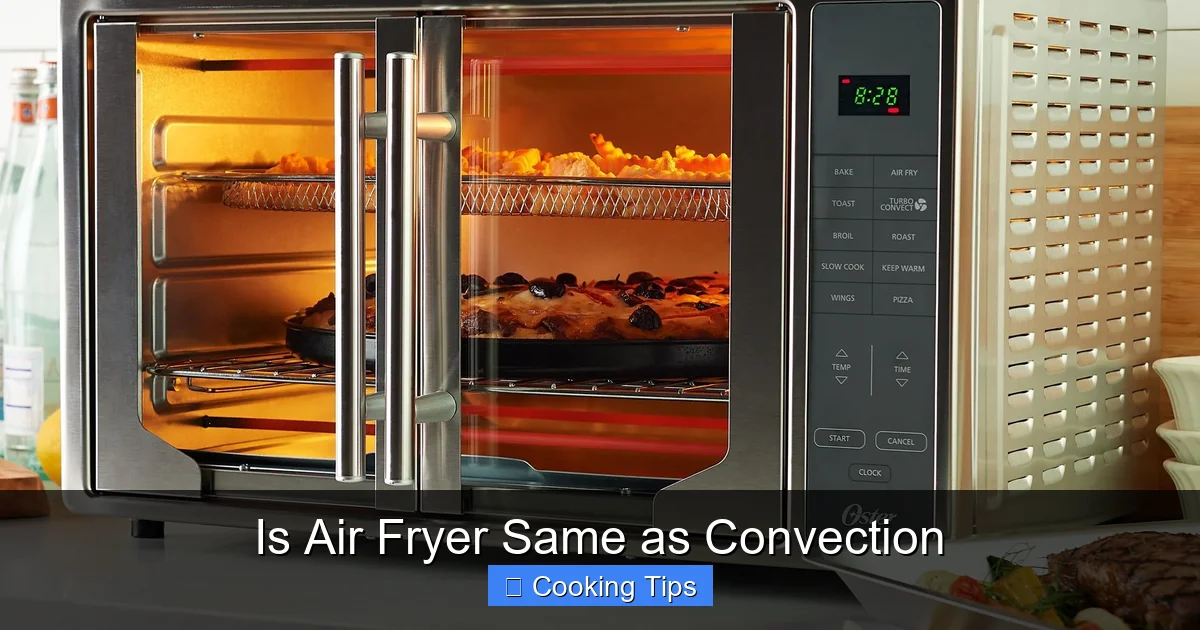
Convection ovens, on the other hand, are much larger. They can be standalone countertop appliances (often called toaster oven-style air fryers, which blur the lines a bit!) or full-sized ranges/wall ovens. This larger capacity allows you to cook for a crowd, roast a whole chicken, or bake multiple items at once. However, due to their size, they take longer to preheat.
Intensity of Airflow: The “Frying” Effect
The defining characteristic of an air fryer is the intensity of its airflow. The fan is engineered to create a very fast and concentrated stream of hot air. This high-velocity airflow is what mimics the crisping effect of deep frying. It blasts moisture away from the food’s surface rapidly, resulting in a satisfying crunch. This is why recipes for things like crab cakes or brats often turn out exceptionally well and quickly in an air fryer.
While convection ovens do circulate air, the fan speed and concentration are generally less intense. The airflow is designed for even cooking and browning across a larger space, not for the rapid, intense “frying” effect that air fryers achieve. You can get crispy results, but it’s usually a more gradual process.
Cooking Applications: What They Excel At
Air Fryers are perfect for:
- “Frying” foods with little to no oil (fries, chicken wings, onion rings).
- Reheating leftovers to restore crispiness (pizza, fried chicken).
- Quickly cooking small portions of vegetables, meats, and seafood.
- Toasting nuts or bread.
- Making crispy snacks.
They are fantastic for when you want that “fried” texture without the mess and extra fat. For instance, cooking chicken wings or bite-size potatoes in an air fryer yields fantastic crispy results in a fraction of the time it might take in a conventional oven.
Convection Ovens are ideal for:
- Roasting larger cuts of meat or whole poultry.
- Baking multiple batches of cookies or pastries evenly.
- Cooking casseroles and other dishes where even browning is desired.
- Dehydrating foods (on some models).
- Broiling and general oven tasks where consistent heat is beneficial.
Their versatility makes them a staple in most kitchens. They handle everything from a simple roast to a delicate cake with the help of the convection setting.
Can You Use Them Interchangeably?
The short answer is: sometimes, with adjustments. Because air fryers are essentially super-powered mini convection ovens, you can often achieve similar results in a convection oven, and vice versa, though not always perfectly.
Using a Convection Oven Like an Air Fryer
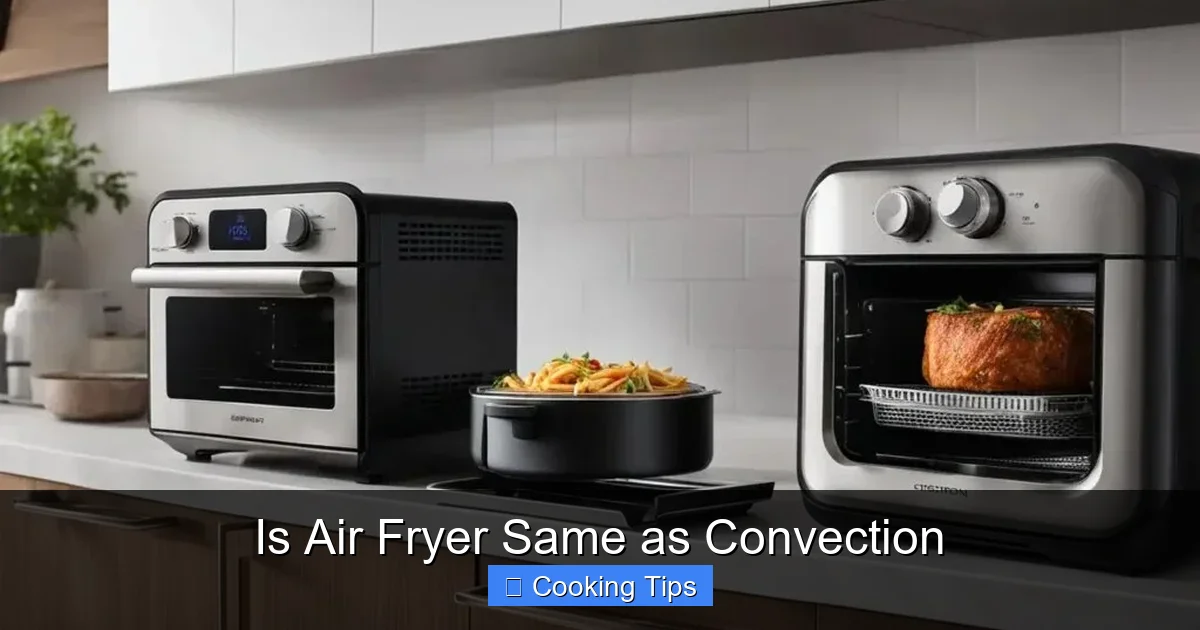
If you don’t have an air fryer but want to achieve a similar crispy texture, your convection oven is your best bet. Here’s how:
Visual guide about Is Air Fryer Same as Convection
Image source: airfryeraid.com
Adjusting Temperature and Time
Generally, you’ll want to reduce the temperature by about 25°F (15°C) when using your convection oven for recipes designed for an air fryer. This is because convection ovens can sometimes cook more intensely than expected, even without the “air fry” specific settings. You might also need to increase the cooking time slightly, as the airflow might not be as concentrated.
Basket vs. Baking Sheet
Air fryers use perforated baskets to allow air to circulate all around the food. In a convection oven, you’ll typically use a baking sheet. For maximum crispiness, try to:
- Use a single layer: Don’t overcrowd the baking sheet. Food needs space for the hot air to reach all surfaces.
- Use a perforated pan or wire rack: If you have a perforated pizza pan or a baking rack that fits on a sheet pan, this can help air circulate from underneath, mimicking an air fryer basket.
- Flip food halfway: This is often more crucial in a convection oven than in an air fryer to ensure even crisping on all sides.
For example, if you’re looking to make crispy fries, you can absolutely do it in a convection oven. Just spread them in a single layer on a baking sheet, use the convection setting, and be prepared to flip them halfway through. You might find beef skewers also benefit from this approach for even charring.
Using an Air Fryer Like a Convection Oven
This is where things can get tricky. Because air fryers are small and their airflow is so intense, they can sometimes dry out or overcook delicate items meant for a larger convection oven. However, for smaller batches or specific items, it can work:
For Roasting and Baking
You can definitely roast vegetables, cook small cuts of meat, or even bake certain items in an air fryer. For instance, you might be able to cook a single pork tenderloin or a few chicken thighs. You’ll generally use the same temperature as a conventional oven recipe, but the cooking time will be significantly shorter due to the intense airflow and proximity to the heating element. Keep a close eye on your food!
Baking Challenges
Baking cakes, cookies, or bread in an air fryer can be challenging. The intense top-down heat and airflow can lead to uneven baking, with the top browning or burning before the inside is cooked. You might need to:
- Use smaller baking pans: Pans that fit inside your air fryer basket.
- Lower the temperature: Often by 25°F (15°C) compared to conventional oven recipes.
- Use parchment paper: To protect the top of baked goods from direct heat.
- Consider air fryer baking pans: Specific accessories are available.
It’s often easier to achieve a good bake in a convection oven. For items like biscuits, you might get a crispier bottom in an air fryer, but the top might not be as soft as you’d like.
Practical Tips for Both Appliances
No matter which appliance you’re using, a few tips can elevate your cooking.
Preheating is Key
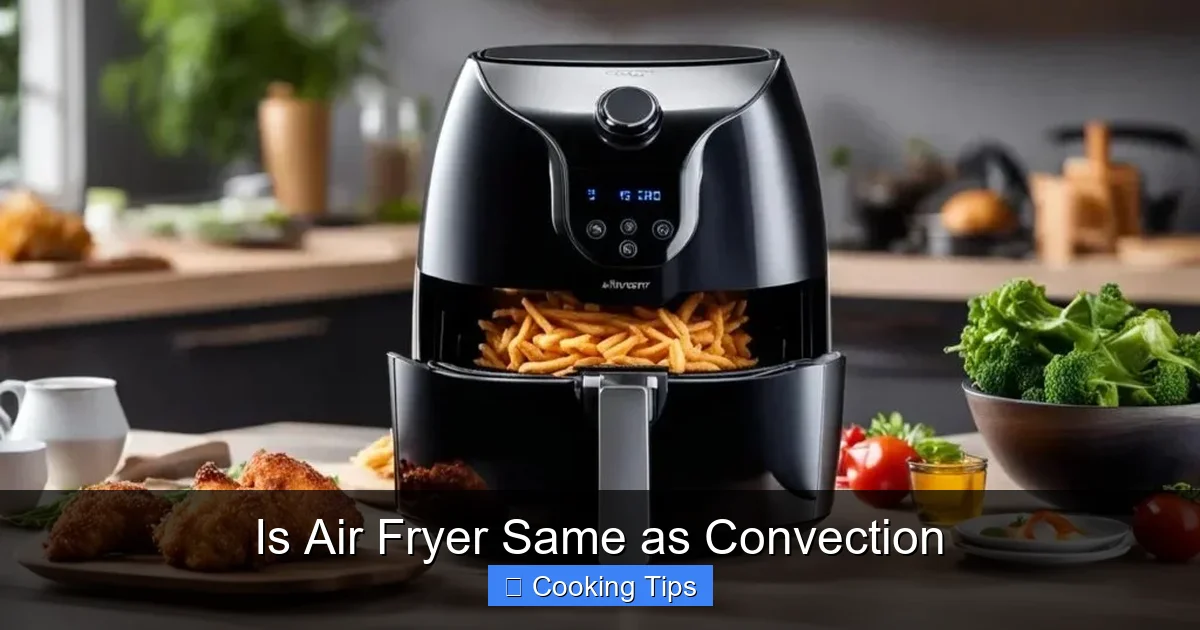
Both air fryers and convection ovens benefit from preheating. For air fryers, preheating for 3-5 minutes is usually sufficient. For convection ovens, follow the manufacturer’s instructions, but a good 10-15 minutes is often recommended.
Visual guide about Is Air Fryer Same as Convection
Image source: airfryeraid.com
Don’t Overcrowd
This is the golden rule for both. Whether it’s fries in an air fryer basket or chicken pieces on a convection oven tray, giving food space allows the hot air to circulate effectively. Overcrowding leads to steaming instead of crisping, resulting in soggy food.
Use the Right Accessories
For air fryers, use the provided basket or trays. You can buy accessories like racks or silicone liners, but ensure they don’t obstruct airflow. For convection ovens, baking sheets, roasting pans, and oven-safe bowls are standard. Specialty perforated pans can enhance crisping.
Experiment and Observe
Every appliance is slightly different. The best way to master them is to cook, watch, and learn. For example, cooking bacon might require different timing in a Ninja air fryer versus an Instant Pot model. Pay attention to how your food is cooking and adjust time and temperature as needed.
Troubleshooting Common Issues
Even with the best intentions, you might encounter a few snags.
Food is too dry
In Air Fryer: You might be cooking for too long or at too high a temperature. Try reducing the time or temperature by 5-10 degrees. For some items, like pot pies (though often better in a conventional oven), ensure they have enough moisture before air frying.
In Convection Oven: Ensure you aren’t over-roasting or baking at too high a temperature. Covering food during part of the cooking process can help retain moisture.
Food is not crispy
In Air Fryer: Likely overcrowding or not enough cooking time. Ensure food is in a single layer and try increasing the time slightly.
In Convection Oven: Make sure you’re using the convection setting and not just a standard bake. Ensure good air circulation around the food. Sometimes, a light toss with oil can help achieve crispiness.
Uneven Cooking
In Air Fryer: This can happen if the basket is too full. Try cooking in smaller batches. Also, remember that the heat is most intense at the top; some models have features to help circulate air more evenly.
In Convection Oven: While convection ovens are designed for even cooking, if you’re baking items that are very close together, they might still cook unevenly. Rotating pans halfway through can help.
Conclusion: Two Different Tools, Shared Principles
So, is an air fryer the same as a convection oven? No, not exactly. They are not identical twins, but rather close cousins with distinct personalities and strengths. Both rely on the power of hot air circulation to deliver deliciously crispy food, but the air fryer does it with a more concentrated, high-speed blast in a compact space, making it ideal for quick “frying” and reheating. The convection oven, in its larger form, offers more versatility for batch cooking, roasting, and baking with its gentler, more widespread hot air distribution.
Understanding these differences allows you to leverage the best of both worlds. You can use your convection oven to mimic air fryer results with a few adjustments, and you can certainly use your air fryer for many roasting and baking tasks. Whichever appliance you have, or if you have both, you’re equipped with powerful tools to create healthier, tastier meals. Happy cooking!