This guide explores whether an air fryer is more energy efficient than a conventional oven. We’ll delve into the factors that influence energy consumption for both appliances, helping you make informed decisions for your kitchen. Understand the differences in preheating times, cooking temperatures, and overall wattage to determine which appliance is the better choice for your specific cooking needs and energy-saving goals.
Are you wondering if your trendy air fryer is a more energy-efficient choice than your trusty oven? It’s a question many home cooks are asking as they look for ways to save money on their electricity bills and reduce their environmental impact. The answer isn’t a simple yes or no; it depends on several factors.
In this guide, we’ll break down the energy consumption of both air fryers and conventional ovens. We’ll explore what makes each appliance use electricity, how their designs impact efficiency, and when you can expect to see savings by choosing one over the other. By the end, you’ll have a clear understanding of which appliance to reach for to cook your meals more efficiently.
Key Takeaways
- Smaller Footprint, Faster Cooking: Air fryers generally use less energy because they are smaller and cook food faster. They require less time to preheat and reach desired temperatures quickly.
- Wattage vs. Oven Power: While air fryers have a high wattage, they run for shorter durations, often resulting in lower overall energy consumption for typical cooking tasks compared to a full-sized oven.
- Best for Small Portions: Air fryers excel at cooking small to medium portions of food efficiently. For larger meals or baking, a conventional oven might still be the more practical choice.
- Preheating is Key: The time an appliance spends preheating significantly impacts energy use. Air fryers typically preheat much faster than ovens, contributing to their energy efficiency.
- Type of Food Matters: Foods that benefit from quick, hot air circulation, like fries or chicken wings, are ideal for air fryers and showcase their energy-saving potential.
Understanding Appliance Energy Consumption
Before we dive into a direct comparison, let’s understand what makes kitchen appliances use energy. The primary culprit is electricity, which powers the heating elements and fans within these devices.
Wattage: This is a measure of how much power an appliance uses at any given moment. A higher wattage means it’s drawing more electricity. However, wattage alone doesn’t tell the whole story of energy efficiency.
Usage Time: How long an appliance is running is just as crucial as its wattage. An appliance with a high wattage that runs for a short time might use less total energy than a lower-wattage appliance that runs for an extended period. This is where the preheating phase and cooking duration come into play.
Type of Heating: Ovens typically use radiant heat and convection, while air fryers rely heavily on rapid, circulating hot air. This difference in heating methods affects how quickly food cooks and, consequently, how long the appliance needs to be on.
Air Fryer vs. Oven: The Energy Showdown
Let’s pit these two kitchen workhorses against each other in a battle for energy efficiency.
Preheating Power
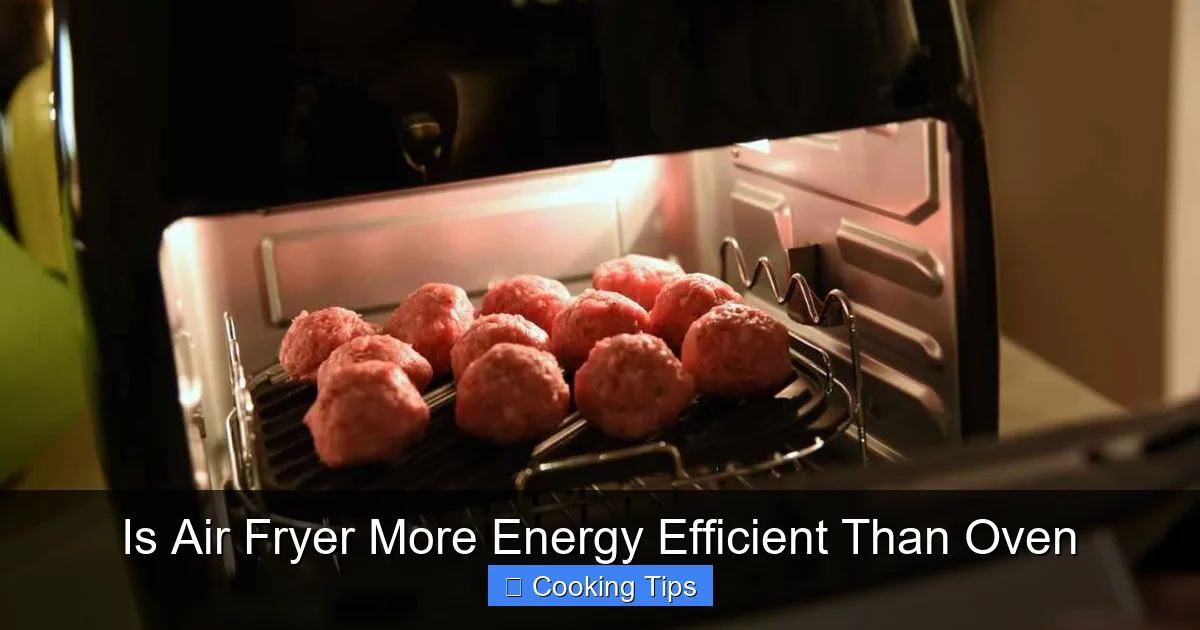
One of the most significant differences lies in preheating. Conventional ovens, especially larger ones, can take a considerable amount of time to reach their set temperatures – often 10-20 minutes or even longer. During this entire preheating phase, the oven is actively consuming electricity without actually cooking your food.
Visual guide about Is Air Fryer More Energy Efficient Than Oven
Image source: sust-it.net
Air fryers, on the other hand, are known for their rapid preheating capabilities. Due to their smaller size and more concentrated heating elements, most air fryers can reach their desired temperature in as little as 2-5 minutes. This dramatically reduces the energy wasted before cooking even begins.
Example: Imagine you’re cooking a batch of fries. Your oven might take 15 minutes to preheat and another 20 minutes to cook. That’s 35 minutes of energy use. An air fryer might preheat in 3 minutes and cook the same fries in 12 minutes, totaling only 15 minutes of energy use.
Cooking Time and Temperature
Air fryers generally cook food faster than conventional ovens, even when accounting for preheating. This is because they circulate hot air at very high speeds, creating a more intense cooking environment. This intense circulation means food often cooks in about 20% less time than it would in a standard oven.
While air fryers often operate at similar temperatures to ovens (sometimes even hotter), the shorter cooking time can offset the wattage difference. For instance, a typical air fryer might have a wattage of 1500 watts, while a full-sized oven can range from 2000 to 5000 watts or more. However, if the air fryer cooks the food in half the time, it could still use less total energy.
Consider this: If you’re making some crispy boneless chicken wings, an air fryer can deliver that perfect crunch in about 15-20 minutes, whereas an oven might take 30-40 minutes. This shorter cooking duration directly translates to less energy consumed.
Portion Size Matters
This is a crucial factor. Air fryers are designed for smaller portions. They excel at cooking food for one to four people. If you’re cooking a large meal for a family gathering or preparing multiple dishes simultaneously, you’ll likely need to use your oven.
When you’re cooking a small batch of food in a large oven, you’re essentially heating a much larger space than necessary. This means the oven has to work harder and consume more energy to reach and maintain the desired temperature, even if the food cooks quickly.
Think about it: Cooking a single bratwurst or a couple of Bubba Burgers in a full-sized oven is like using a sledgehammer to crack a nut. It’s inefficient. An air fryer, with its compact design, is perfectly suited for these smaller tasks.
Energy Efficiency Comparisons
Studies and real-world tests have shown that for small to medium-sized portions of food, air fryers are generally more energy-efficient than conventional ovens. The combination of faster preheating and shorter cooking times often results in a lower overall energy draw.
Some estimates suggest that an air fryer can be up to 50-75% more energy-efficient than a conventional oven for cooking smaller items like fries, chicken tenders, or vegetables.
However, it’s important to note that this efficiency advantage diminishes or disappears when you’re cooking large quantities. If you’re baking a cake or roasting a whole chicken, the oven’s larger capacity and more even heating might make it the more practical, and sometimes even more energy-efficient, choice if it can cook the entire item at once.
When is an Air Fryer More Energy Efficient?
Based on the above, let’s pinpoint the scenarios where your air fryer shines in terms of energy efficiency:
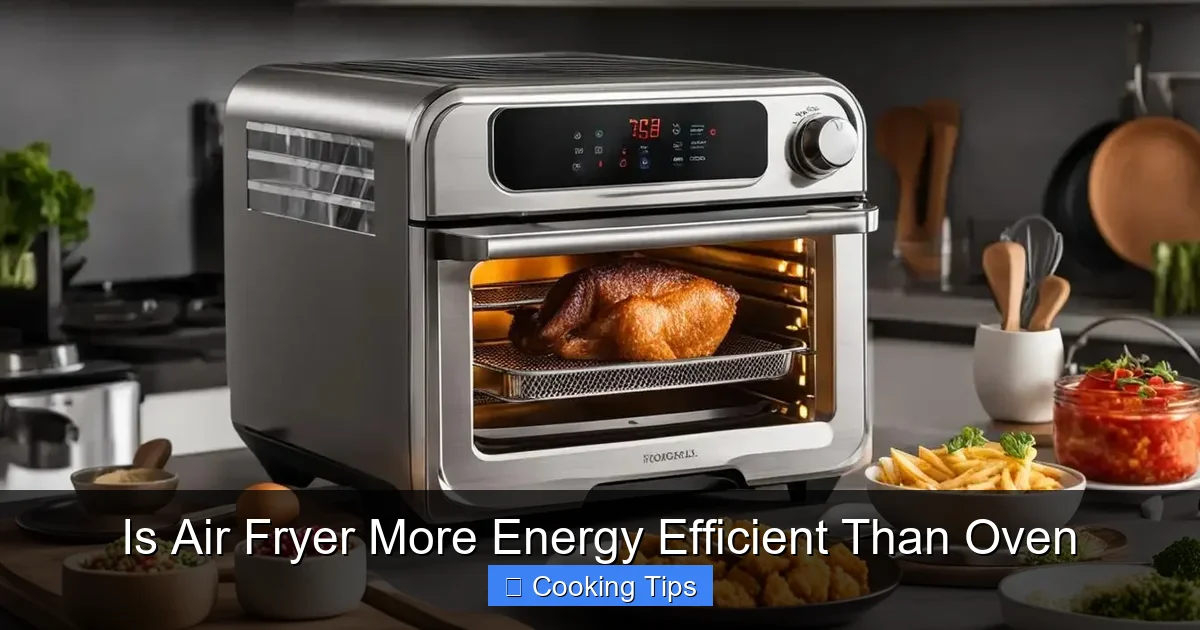
1. Small Portion Cooking: For meals serving 1-4 people, especially items that benefit from crisping and quick cooking.
Visual guide about Is Air Fryer More Energy Efficient Than Oven
Image source: airfryeraid.com
- Reheating leftovers
- Cooking frozen snacks (fries, nuggets, spring rolls)
- Roasting small batches of vegetables
- Cooking individual servings of proteins (e.g., steaks, salmon fillets, bone-in chicken breasts)
- Making appetizers like crab cakes or quesadillas.
2. Quick Cooking Tasks: When you need to cook something fast and don’t want to wait for a large oven to heat up.
- Making a quick breakfast like omelettes or eggs.
- Toasting or crisping up bread or small pastries.
- Cooking items that require high heat for a short duration.
3. Reheating Food: Air fryers are excellent for reheating leftovers, bringing back crispiness that microwaves can’t achieve, and they do it much faster and with less energy than heating up a whole oven.
When Might an Oven Be More Energy Efficient (or Practical)?
Despite the air fryer’s advantages, there are times when your oven is the better choice:
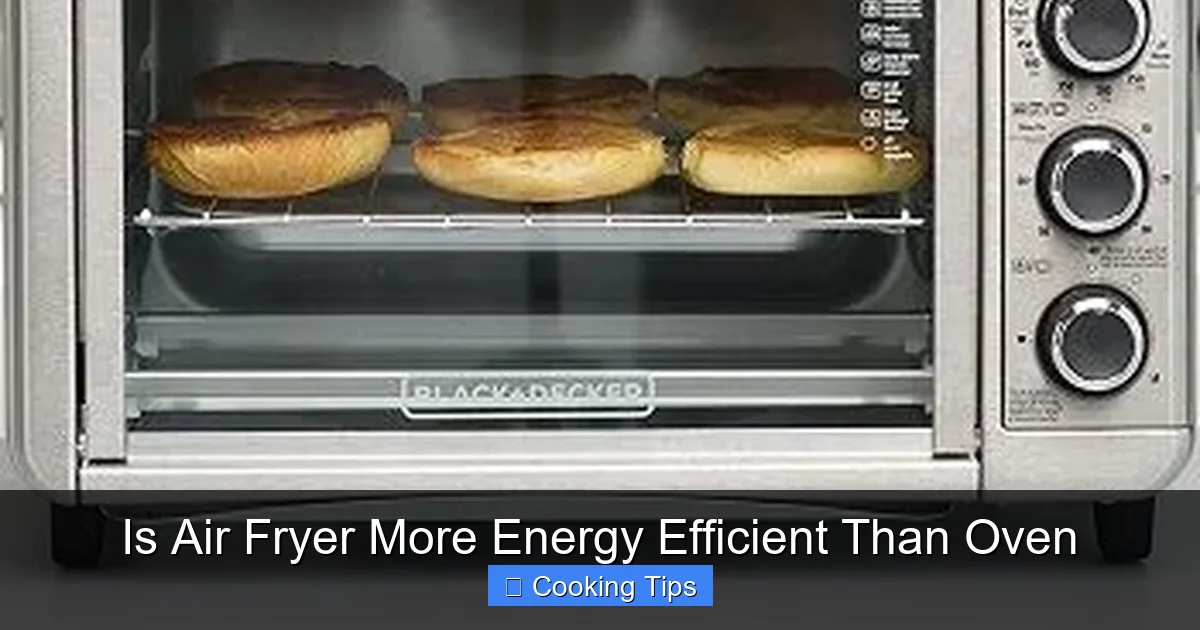
1. Large Batch Cooking: If you’re cooking for a large family, hosting a party, or meal prepping for the week, the oven’s capacity is unbeatable. Trying to cook a large amount of food in an air fryer would require multiple batches, potentially negating any energy savings.
Visual guide about Is Air Fryer More Energy Efficient Than Oven
Image source: newtoasteroven.com
2. Baking and Roasting Large Items: For items like whole roasts, large cakes, pies, or multiple loaves of bread, the oven’s even heating and ample space are essential. Trying to bake a loaf of bread in an air fryer is generally not recommended.
3. Simultaneous Cooking: If you need to cook multiple different dishes at varying temperatures, a conventional oven (or multiple ovens) might be more practical. While some air fryer toaster ovens offer multi-rack capabilities, a full oven provides more flexibility.
4. Uniform Browning and Baking: For delicate baked goods where even heat distribution is critical, a well-calibrated oven often performs better. While air fryers excel at crisping, they can sometimes overcook edges of certain items if not managed carefully.
Tips for Maximizing Energy Efficiency with Your Appliances
Regardless of which appliance you choose, you can employ these strategies to use less energy:
For Air Fryers:
- Don’t Overcrowd: Cook food in a single layer for even cooking and optimal crispiness. Overcrowding means longer cooking times and more energy used.
- Shake or Flip: Midway through cooking, shake the basket or flip the food for uniform browning. This ensures all sides cook efficiently.
- Clean Regularly: A clean air fryer heats more effectively. Food debris can insulate the heating element and fan, reducing efficiency.
- Use the Right Size: Choose an air fryer size appropriate for your typical cooking needs. A smaller unit uses less energy for smaller tasks.
For Ovens:
- Minimize Door Opening: Every time you open the oven door, you lose significant heat, requiring the oven to work harder to reheat. Use the oven light to check on food.
- Utilize Convection: If your oven has a convection setting, use it. The fan circulates hot air, allowing for faster cooking at slightly lower temperatures, saving energy.
- Cook Multiple Items: When using the oven, try to cook as much as you can at once. If you’re baking two beef short ribs, consider if you can add another dish or side that requires a similar temperature.
- Turn Off Early: For dishes that don’t require precise finishing heat, turn off the oven 5-10 minutes before the recommended cooking time and let the residual heat finish the job.
- Consider a Toaster Oven/Air Fryer Combo: For smaller tasks, a countertop oven or an air fryer toaster oven can be more energy-efficient than a full-sized oven.
Wattage vs. Energy Consumption: A Deeper Look
It’s easy to get caught up in wattage numbers. A 1500-watt air fryer seems like it uses more energy than a 3000-watt oven. However, remember that total energy consumed is wattage multiplied by time (Energy = Power x Time).
Let’s illustrate:
* Scenario A: Air Fryer
* Wattage: 1500 watts
* Preheating time: 3 minutes
* Cooking time: 12 minutes
* Total time: 15 minutes
* Total Energy (Watt-minutes): 1500 watts * 15 minutes = 22,500 watt-minutes
* Scenario B: Oven
* Wattage: 3000 watts
* Preheating time: 15 minutes
* Cooking time: 20 minutes
* Total time: 35 minutes
* Total Energy (Watt-minutes): 3000 watts * 35 minutes = 105,000 watt-minutes
In this simplified example, the air fryer uses significantly less total energy (22,500 vs. 105,000 watt-minutes) despite its potentially lower wattage, because it runs for a much shorter period. This is the core reason behind its energy efficiency for smaller tasks.
Conclusion: Making the Smart Choice
So, is an air fryer more energy efficient than an oven? Generally, yes, for small to medium portions and quick cooking tasks. The rapid preheating and shorter cooking times of an air fryer make it a more economical choice for everyday meals for individuals or small families.
However, the oven remains indispensable for larger meals, baking, and when cooking multiple items simultaneously. The key is to use the right tool for the job. By understanding the strengths of each appliance and employing energy-saving practices, you can cook delicious meals while keeping your energy bills in check. Think of them as a team – your air fryer for speed and efficiency on smaller tasks, and your oven for capacity and versatility on larger culinary adventures.
For specific cooking inspiration, you can explore how to cook various items like pork steaks or even beef cheeks in your air fryer, taking advantage of its energy-saving potential for these smaller, flavorful dishes.