Wondering if your air fryer hikes up your electricity bill? This guide breaks down air fryer energy consumption, comparing it to traditional ovens and offering practical tips to maximize efficiency. You’ll learn how air fryers can be surprisingly energy-efficient, potentially saving you money on your electricity costs.
Is Air Fryer Cost Electricity
Are you curious about whether your trendy air fryer is quietly adding a significant amount to your monthly electricity bill? You’re not alone! Many people are embracing air fryers for their convenience and the promise of healthier, crispier food. But the question of their energy consumption is a common one. In this comprehensive guide, we’ll dive deep into the topic of “Is air fryer cost electricity?” We’ll explore how much electricity these appliances use, compare them to your trusty oven, and give you practical tips to make your air frying as energy-efficient as possible. By the end, you’ll have a clear understanding of your air fryer’s energy footprint and how to manage it.
Key Takeaways
- Air fryers are generally more energy-efficient than conventional ovens for smaller portions due to their smaller size and faster cooking times.
- The primary factor influencing electricity cost is the wattage of the air fryer and how long it’s in use.
- Preheating an air fryer typically uses less energy than preheating a large oven.
- Using your air fryer for specific tasks, like cooking frozen snacks or reheating leftovers, can be more economical than using a full-sized oven.
- Simple habits like not overcrowding the basket and cleaning your air fryer regularly can contribute to its energy efficiency.
- While air fryers use electricity, their cost-effectiveness often comes from their speed and ability to use less oil, leading to savings in other areas.
Understanding Air Fryer Electricity Consumption
At its core, an air fryer is a small, powerful convection oven. It works by circulating hot air at high speed around your food. This process requires electricity to power the heating element and the fan. The amount of electricity your air fryer consumes depends on several key factors:
How Much Electricity Does an Air Fryer Use?
Visual guide about Is Air Fryer Cost Electricity
Image source: airfryermom.com
This is the million-dollar question, and the answer isn’t a single number. It’s a mix of wattage, cooking time, and what you’re cooking.
Wattage: The Powerhouse
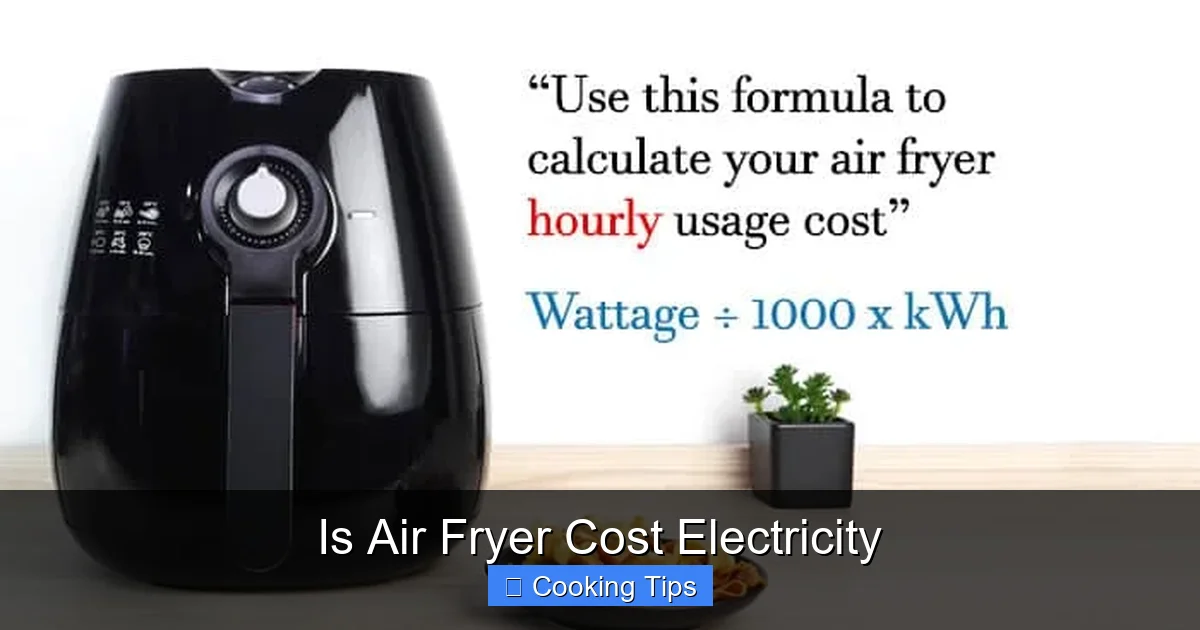
The most direct measure of an appliance’s electricity use is its wattage. Air fryers typically range from 800 to 1800 watts. A higher wattage means the appliance has more power and can heat up faster. However, it also means it draws more electricity when it’s actively heating.
Think of it like this:
* A 1000-watt air fryer uses 1 kilowatt-hour (kWh) of electricity for every hour it runs at full power.
* A 1500-watt air fryer uses 1.5 kWh of electricity for every hour it runs at full power.
To calculate the cost, you need to know your local electricity rate (usually per kWh). For example, if electricity costs $0.15 per kWh and your 1500-watt air fryer runs for 30 minutes (0.5 hours) at full power, the cost would be: 1.5 kW * 0.5 hours * $0.15/kWh = $0.1125.
Cooking Time: Duration Matters
The longer your air fryer runs, the more electricity it uses. This is where air fryers often shine. Because they cook food faster than a traditional oven, the total electricity consumed for a meal can be less. For instance, cooking chicken wings in an air fryer might take 20-25 minutes, while using an oven might require 40-50 minutes (including preheating).
Temperature: The Heat Factor
Higher cooking temperatures naturally require more energy to maintain. Most air fryers operate between 350°F and 400°F (175°C to 200°C). While you can adjust the temperature, the difference in energy use between, say, 375°F and 400°F might be minimal for shorter cooking times.
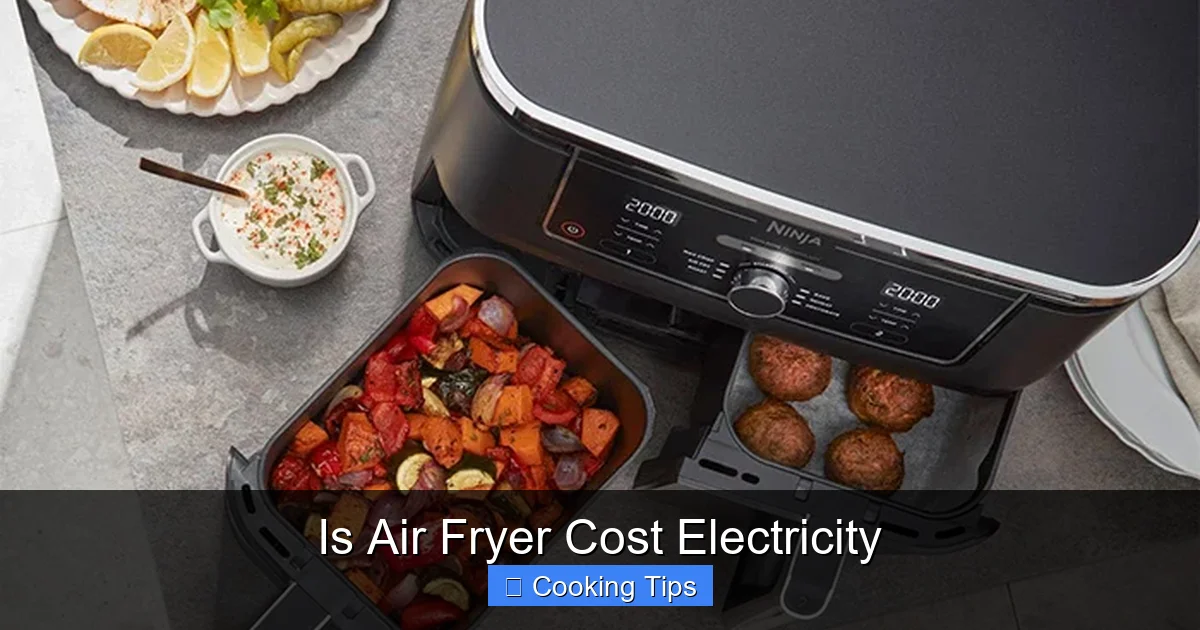
Comparing Air Fryers to Traditional Ovens
Visual guide about Is Air Fryer Cost Electricity
Image source: powercostcalculator.co.uk
This is where the “cost electricity” debate gets interesting. Many people assume bigger appliances use more energy, but it’s not always that simple.
Size Matters: The Oven’s Drawback
A standard oven has a much larger space to heat. Even if its wattage is higher overall, it needs to heat a significantly larger volume of air. This can make it less efficient for cooking small portions of food. Imagine heating up a massive room just to warm your hands – it’s overkill!
Efficiency in Action: When Air Fryers Win
For many common cooking tasks, air fryers are more energy-efficient than conventional ovens:
* **Small Portions:** If you’re cooking a meal for one or two, an air fryer is almost always more efficient. It heats up quickly and cooks smaller amounts of food faster.
* **Snacks and Reheating:** Frozen snacks like fries, nuggets, or spring rolls cook beautifully in an air fryer and are often faster and more energy-efficient than using a large oven. Reheating leftovers is also a breeze and uses less energy than firing up the main oven.
* **Speed:** The rapid circulation of hot air means less time plugged in. This translates to lower energy consumption for the same cooking outcome.
When Ovens Might Be Better
However, there are scenarios where a traditional oven might be more energy-efficient:
* **Large Batches:** If you’re cooking a large roast, multiple trays of cookies, or a big Thanksgiving dinner, a full-sized oven is designed for that scale. Running an air fryer multiple times for a large meal would likely consume more energy. For example, if you’re thinking about how to cook a roast in the air fryer versus a large oven, the oven might be more suitable for a truly large cut.
* **Low-Temperature, Long-Cooks:** For recipes requiring very low temperatures for extended periods (like slow roasting or certain types of baking), a conventional oven might maintain a more stable temperature with less energy fluctuation than some air fryers.
Calculating Your Air Fryer’s Cost
Visual guide about Is Air Fryer Cost Electricity
Image source: afresherhome.com
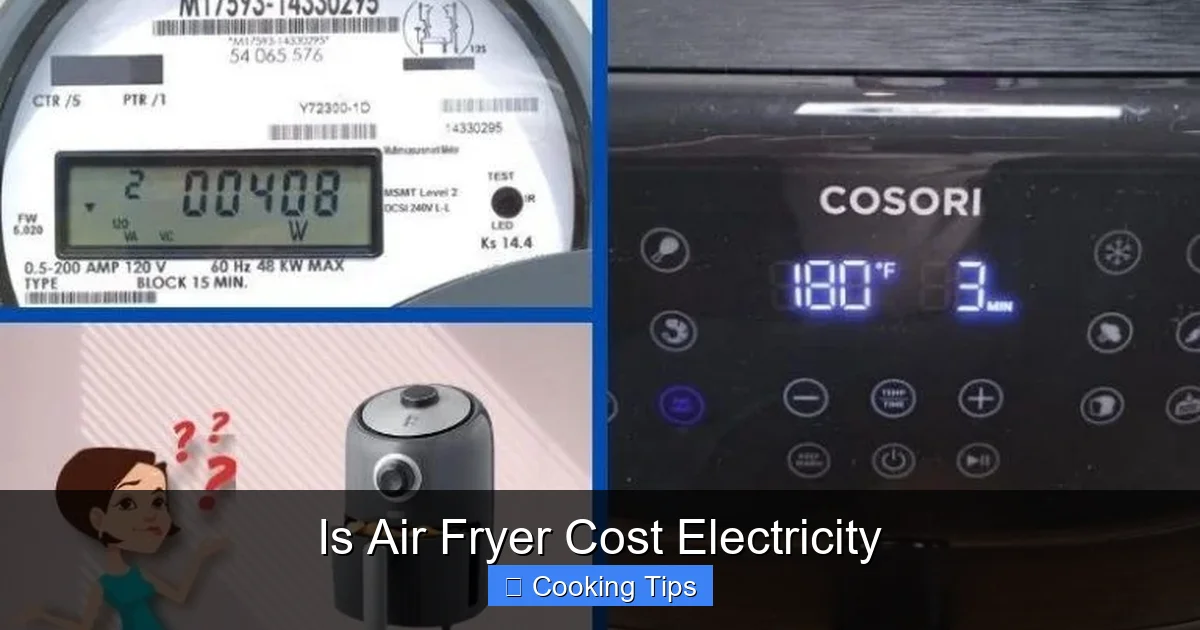
To truly answer “Is air fryer cost electricity” for *your* household, you need to do a little math.
Step 1: Find Your Air Fryer’s Wattage
Look for a label on the back or bottom of your air fryer. It should list the wattage (W) or amperage (A) and voltage (V). If you have amperage and voltage, you can calculate wattage: Watts = Amps × Volts.
Step 2: Determine Your Electricity Rate
Check your electricity bill. You’ll usually find a price per kilowatt-hour (kWh). It might look something like $0.12/kWh or $0.18/kWh.
Step 3: Estimate Your Cooking Time
Be realistic about how long you typically use your air fryer per cooking session and how many times a week you use it.
Step 4: Calculate Daily/Weekly/Monthly Usage
* **Convert wattage to kilowatts:** Divide your air fryer’s wattage by 1000 (e.g., 1500 watts / 1000 = 1.5 kW).
* **Calculate daily kWh usage:** Kilowatts × Hours used per day.
* **Calculate daily cost:** Daily kWh usage × Your electricity rate per kWh.
* **Extrapolate to weekly and monthly costs.**
Example Calculation:
* Air Fryer Wattage: 1500W (1.5 kW)
* Daily Use: 30 minutes (0.5 hours)
* Electricity Rate: $0.15/kWh
Daily kWh usage = 1.5 kW * 0.5 hours = 0.75 kWh
Daily Cost = 0.75 kWh * $0.15/kWh = $0.1125
Monthly Cost (assuming 30 days) = $0.1125 * 30 = $3.38
This example shows that for moderate use, the cost is quite low!
Tips to Maximize Air Fryer Energy Efficiency
Now that you understand the factors, here’s how to keep your air fryer’s electricity cost in check.
1. Don’t Overcrowd the Basket
This is crucial for both cooking performance and efficiency. When you pack the basket too full, hot air can’t circulate properly. This leads to uneven cooking, forcing you to cook for longer periods or run multiple batches. This means more electricity used.
* **Practical Tip:** Cook in batches if necessary. For many recipes, like how to cook bone-in chicken wings in air fryer, achieving a crispy result requires space for air to move around each wing.
2. Preheat Wisely
Most air fryer recipes call for preheating. While this does use a small amount of electricity, it helps ensure your food cooks evenly and quickly from the moment it goes in. If your air fryer has a short preheat time (e.g., 3-5 minutes), it’s generally worth it. If you’re cooking something that takes a very short time, like reheating pizza, you might be able to skip preheating.
3. Clean Your Air Fryer Regularly
A dirty air fryer can be less efficient. Food debris can insulate the heating element or block air vents, making it work harder. Cleaning the basket and interior regularly ensures optimal airflow and heat distribution.
4. Choose the Right Size for the Job
If you often cook for one or two people, a smaller air fryer might be more energy-efficient than a large one, as it has less space to heat. Conversely, if you frequently cook for a crowd, a larger model might save you from running multiple cooking cycles.
5. Consider What You’re Cooking
Air fryers excel at certain foods. Opt for it when:
* Cooking frozen appetizers (like how to cook anytizers in air fryer).
* Making crispy fries or vegetables.
* Reheating leftovers.
* Cooking small portions of proteins like how to cook a crab cake in the air fryer or how to cook a hot dog in the air fryer.
6. Match the Recipe to the Appliance
For large roasts or complex baked goods that require consistent, even heat over a long period, a conventional oven might be the better choice. Attempting to cook a large beef roast air fryer recipe might not yield the best results and could be less efficient than your oven.
7. Use Lids or Covers When Appropriate
If you’re cooking something that might splatter or could benefit from retaining moisture (like some vegetables or meats), using a lid or foil (ensure it doesn’t block vents) can help cook food faster and more efficiently.
Troubleshooting: Is My Air Fryer Using Too Much Electricity?
If you suspect your air fryer is consuming more electricity than it should, consider these points:
* **Is it old or damaged?** Like any appliance, an older air fryer might lose some efficiency over time. Check for any visible damage to the cord or heating element.
* **Are you using it for tasks it’s not designed for?** Trying to bake a large cake in a small air fryer might lead to longer cooking times and less consistent results, thus using more energy.
* **Is your electricity bill genuinely higher?** Sometimes, an increase in your bill might be due to other appliances, changes in usage patterns, or seasonal rate adjustments by your utility company.
Conclusion: Is Air Fryer Cost Electricity a Concern?
So, is air fryer cost electricity a major concern? For most households, the answer is a resounding **no**. While air fryers do consume electricity, they are generally quite energy-efficient, especially when compared to conventional ovens for smaller cooking tasks. Their speed, ability to cook without much oil, and effectiveness for common foods make them a cost-effective appliance in the long run.
By understanding how your air fryer works and implementing a few simple energy-saving tips, you can enjoy all the benefits of air-fried foods without worrying about a sky-high electricity bill. Remember, it’s about using the right appliance for the right job and practicing smart cooking habits. Happy air frying!