While both conventional ovens and air fryers cook food with heat, they achieve vastly different results due to their core mechanisms. Conventional ovens use radiant and convection heat to cook evenly over a larger space, ideal for baking and roasting. Air fryers, on the other hand, are essentially small, powerful convection ovens that circulate hot air at high speeds, mimicking deep frying for crispy textures. Understanding these differences helps you choose the right appliance for your culinary needs.
You might be wondering, “Is a conventional oven the same as an air fryer?” It’s a common question, especially as air fryers have become so popular. While both appliances use heat to cook food, they operate quite differently and produce distinct results. Understanding these differences is key to choosing the right tool for your cooking task and achieving the best possible outcome in your kitchen.
In this comprehensive guide, we’ll dive deep into what makes a conventional oven and an air fryer unique. We’ll explore their heating mechanisms, cooking environments, the types of food they are best suited for, and when you might want to reach for one over the other. By the end, you’ll have a clear picture of how these two popular kitchen appliances work and how to maximize their potential.
Key Takeaways
- Heating Method: Conventional ovens primarily use radiant heat with optional convection fans, while air fryers rely heavily on rapid, high-speed convection fan circulation.
- Cooking Environment: Conventional ovens have a larger, more stable cooking chamber, whereas air fryers have a smaller, more enclosed space that intensifies the hot air flow.
- Texture and Browning: Air fryers excel at creating crispy, “fried” textures due to their intense hot air circulation, while conventional ovens are better for even baking and slower roasting.
- Cooking Speed: Air fryers generally cook food faster than conventional ovens due to their smaller size and more concentrated heat.
- Ideal Uses: Conventional ovens are best for baking, large roasts, and dishes requiring gentle, even heat. Air fryers are perfect for achieving crispy snacks, reheating leftovers, and small-batch cooking.
- Energy Efficiency: For small portions, an air fryer is often more energy-efficient than preheating and running a large conventional oven.
Understanding Conventional Ovens
Let’s start with the familiar workhorse of most kitchens: the conventional oven. These appliances have been around for decades and are known for their versatility.
How Conventional Ovens Work
Conventional ovens typically use two primary methods of heat transfer: conduction and radiation. The heating elements, usually located at the bottom and sometimes the top of the oven cavity, generate heat.
- Radiant Heat: This is the direct heat emitted from the heating elements. It cooks food from the outside in.
- Convection Heat (Optional): Many modern conventional ovens also have a convection fan. This fan circulates the hot air within the oven cavity. This results in more even cooking and can speed up cooking times compared to ovens without a fan. However, the primary heat source is still radiant heat from the elements.
The cooking chamber in a conventional oven is relatively large and designed to accommodate various dish sizes and cooking methods, from delicate cakes to large roasts.
What Conventional Ovens Are Best For
Conventional ovens are masters of many culinary arts:
- Baking: This is where conventional ovens truly shine. The consistent, even heat is perfect for cakes, cookies, bread, pastries, and quiches, allowing them to rise properly and bake through without burning the exterior. For instance, baking a cake evenly requires gentle, consistent heat, something a conventional oven excels at. You can even find recipes for baking cakes in an air fryer, but the results might differ.
- Roasting: Large cuts of meat, poultry, and vegetables benefit from the steady, enveloping heat of a conventional oven. It allows for slow, even cooking that tenderizes meat and caramelizes vegetables beautifully.
- Broiling: When the top heating element is used intensely, it provides a high-heat direct sear, similar to grilling, perfect for finishing dishes or browning the tops of casseroles.
- Slow Cooking: For dishes that require long, low-temperature cooking, a conventional oven provides the necessary stability.
Understanding Air Fryers
Now, let’s turn our attention to the popular air fryer. While it might look like a compact oven, its cooking method is distinct.

Visual guide about Is a Conventional Oven the Same as an Air Fryer
Image source: airfryeraid.com
How Air Fryers Work
An air fryer is essentially a small, high-powered convection oven. Its core design revolves around rapid air circulation.
- High-Speed Convection: The main heating element in an air fryer is typically located at the top. A powerful fan then circulates this hot air at an extremely high speed around the food. This intense, rapid movement of hot air is what creates the “fried” effect.
- Small Cooking Chamber: The compact size of the air fryer basket or tray means the hot air has less space to travel, allowing it to envelop the food more directly and intensely.
This concentrated blast of hot air is what differentiates an air fryer from a conventional oven’s convection setting. It’s designed to mimic the results of deep frying – crispiness and browning – without submerging food in oil.
What Air Fryers Are Best For
Air fryers are fantastic for specific cooking tasks:
- Crisping and Browning: This is the air fryer’s superpower. Foods that you want to be golden brown and crispy, like french fries, onion rings, chicken wings, and mozzarella sticks, come out wonderfully in an air fryer. For example, you can achieve perfectly crispy waffle fries.
- Reheating Leftovers: Tired of soggy pizza or limp fries from the microwave? An air fryer can revive them, restoring their crispiness in minutes.
- Cooking Small Batches: For individuals or small families, an air fryer is often more energy-efficient than preheating a large conventional oven. Cooking a couple of chicken tenders or a single bratwurst is quick and easy.
- Quick Snacks: Many frozen snacks, from chicken nuggets to spring rolls, cook up perfectly in an air fryer, often much faster than in a conventional oven. Making Tyson chicken nuggets is a popular use.
- Certain Meats and Vegetables: Air fryers can cook items like pork steaks, porterhouse steaks, and vegetables, often resulting in a slightly more browned and tender exterior than oven-roasting. You can also make delicious vegetables.
Direct Comparison: Conventional Oven vs. Air Fryer
Now that we understand each appliance individually, let’s break down their key differences:

Visual guide about Is a Conventional Oven the Same as an Air Fryer
Image source: airfryeraid.com
Heating Mechanism
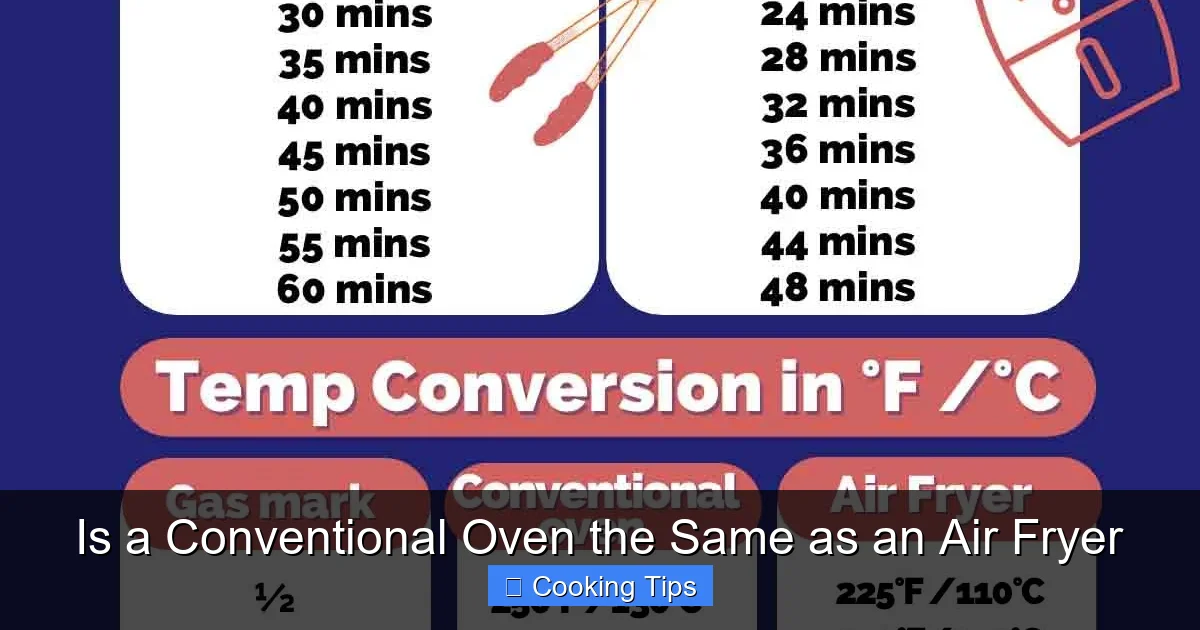
This is the most significant difference. A conventional oven relies more on ambient heat and radiation, even with convection. An air fryer’s defining feature is its aggressively fast and powerful convection fan that blasts food with hot air.
Visual guide about Is a Conventional Oven the Same as an Air Fryer
Image source: i.pinimg.com
Cooking Chamber Size and Airflow
Conventional ovens are large with more diffused airflow. Air fryers are small with concentrated, high-speed airflow. This difference is crucial for how quickly and evenly food cooks.
Texture and Browning Results
Air fryers excel at producing crispy, “fried” textures because the rapid air circulation dehydrates the surface of the food quickly while browning it. Conventional ovens, especially without a strong convection fan, tend to produce more evenly cooked and moist results, ideal for baking. While a conventional oven can brown food, it’s a different kind of browning than the crispiness an air fryer achieves.
Cooking Speed
Due to their smaller size and intense heat circulation, air fryers typically cook food much faster than conventional ovens. This is especially true for smaller items or when compared to preheating a large oven for a small dish.
Energy Efficiency
For small portions or quick reheating, an air fryer uses less energy than preheating and running a full-sized conventional oven. However, for large meals or complex baking projects, the conventional oven remains the more practical and efficient choice.
Versatility
Conventional ovens are generally more versatile for a wider range of cooking techniques, particularly baking and large-scale roasting. Air fryers are specialists, excelling at achieving crispy textures but may not be ideal for delicate baked goods or large roasts.
When to Use Which Appliance
Making the right choice depends on what you’re cooking:
Choose Your Conventional Oven For:
- Baking cakes, cookies, bread, pies: The consistent, gentle heat is essential for proper rising and even cooking.
- Roasting large meats and whole poultry: The spacious interior and even heat distribution are ideal.
- Cooking casseroles and gratins: These often require even heating over a longer period.
- Preparing dishes for a crowd: The larger capacity is a clear advantage.
- Slow cooking: The stable temperature control is crucial for long, slow cooking processes.
Choose Your Air Fryer For:
- Achieving crispy snacks: French fries, onion rings, chicken wings, mozzarella sticks. You can even make chicken strips or chicken tenders extra crispy.
- Reheating fried or crispy leftovers: Revive pizza, fried chicken, or fries to their former glory.
- Cooking small batches of protein: A single hot dog, a couple of chicken thighs, or a small fish fillet.
- Quickly cooking frozen appetizers: Most frozen convenience foods are designed for quick, crispy results in an air fryer.
- Roasting small amounts of vegetables: For a quick side dish with some char.
- Making crispy bacon: Many find air frying is the easiest way to cook bacon.
Can You Use an Air Fryer Like a Conventional Oven?
Yes, to some extent, but with limitations. You can roast vegetables, cook small chicken pieces, or even heat up leftovers in an air fryer. However, you won’t achieve the same results as a conventional oven for baking or large roasts.
For example, while you can cook a pot pie in an air fryer, the crust might get very crisp on top before the filling is thoroughly heated, or the pastry might not bake as evenly as in a conventional oven. Similarly, attempting to bake a delicate loaf of bread might result in an overly browned crust and an undercooked interior due to the intense, direct heat.
Can You Use a Conventional Oven Like an Air Fryer?
Yes, if your conventional oven has a convection setting, it can mimic some of the functions of an air fryer, especially for roasting and browning. The convection fan circulates hot air, which helps create crispier exteriors than a standard oven. However, a conventional oven’s convection fan is generally not as powerful or as fast as the fan in an air fryer, and the larger cooking space means the hot air is more diffused.
To get closer to air fryer results in a conventional oven, you can:
- Use the convection setting if available.
- Place food on a single layer on a baking sheet or in a shallow pan to allow air to circulate freely.
- Ensure the oven rack is positioned to allow good airflow around the food.
- You may need to increase the temperature or cooking time slightly compared to an air fryer.
Troubleshooting Common Issues
When using either appliance, you might encounter some hiccups:
Conventional Oven Issues:
- Uneven Baking: This can happen if the oven isn’t heating evenly. Ensure the door seal is intact and try rotating your food halfway through cooking. For significant issues, consider an oven thermometer to check accuracy.
- Burning on Top, Undercooked Inside: This often points to the heat being too high or too close to the top element. Adjust rack position or temperature.
Air Fryer Issues:
- Food Not Crispy Enough: Ensure the food is in a single layer and not overcrowded. Patting food dry before cooking can also help. Increase the temperature or cooking time.
- Uneven Cooking: Shake the basket or turn the food halfway through cooking. Ensure the air fryer is not overloaded.
- Burning on One Side: This could be due to inconsistent air circulation. Try repositioning food or shaking the basket more frequently.
Conclusion
So, to answer the question directly: no, a conventional oven is not the same as an air fryer. They are distinct appliances with different core functionalities, even though both use heat. The conventional oven is your versatile workhorse for baking, roasting, and larger meals, offering stable and even heat. The air fryer is a specialized appliance that excels at creating crispy, “fried” textures quickly, making it perfect for snacks, reheating, and small-batch cooking.
Understanding their strengths allows you to leverage each appliance to its fullest potential in your kitchen. While an oven with a convection setting can offer some of the benefits of an air fryer, and an air fryer can handle some oven-like tasks, they are not interchangeable. By choosing the right appliance for the job, you’ll consistently achieve delicious results and make the most of your cooking time.