The confusion between convection ovens and air fryers is understandable, as both use circulating hot air for cooking. However, they are distinct appliances with different designs and primary functions. This guide clarifies their similarities, differences, and how to choose the right one for your kitchen needs. Learn to cook smarter with a clear understanding of these versatile cooking tools.
Are you scratching your head, wondering if your new air fryer is just a fancy name for a small convection oven? It’s a common question, and the answer isn’t a simple yes or no. While they share a core cooking principle, there are key distinctions that make each appliance shine in different culinary situations.
In this comprehensive guide, we’ll dive deep into the world of convection ovens and air fryers. You’ll learn what makes them tick, how they are similar, how they differ, and ultimately, how to decide which one (or both!) is the right fit for your kitchen. Get ready to cook smarter and achieve delicious results!
Key Takeaways
- Convection ovens and air fryers both use a fan to circulate hot air, which speeds up cooking and promotes crisping.
- Air fryers are essentially small, high-powered convection ovens designed for faster, more efficient crisping of smaller portions.
- Convection ovens are larger, more versatile appliances suitable for baking, roasting, broiling, and cooking larger quantities of food.
- Air fryers excel at creating crispy textures similar to deep-frying with less oil, making them ideal for snacks and small meals.
- Convection ovens offer more precise temperature control and even cooking for a wider range of dishes, including delicate baked goods.
- The main differences lie in size, power, and intended use, with air fryers being specialized for rapid crisping and convection ovens for general cooking.
- Choosing between them depends on your kitchen space, cooking habits, and desired results, with many kitchens benefiting from having both.
Understanding the Core Technology: How They Cook
Before we break down the differences, let’s talk about what they have in common. Both convection ovens and air fryers rely on a fundamental cooking method: circulating hot air.
The Magic of Convection
A standard oven heats food using radiant heat from heating elements. It’s like standing next to a warm fire. Convection cooking adds another layer of efficiency.
* How it Works: A convection oven has a fan, usually located at the back of the oven cavity. This fan blows hot air around the food. Think of it like a gentle, consistent breeze that surrounds everything.
* The Benefits: This constant circulation of hot air does a few great things:
* Faster Cooking: The moving air transfers heat more efficiently, so food cooks more quickly than in a traditional oven.
* Even Cooking: The circulating air eliminates hot spots, meaning your food cooks more evenly all around. No more rotating pans halfway through!
* Crispier Results: The dry, moving air helps to evaporate moisture from the surface of the food, leading to a beautifully browned and crispy exterior. This is especially noticeable with things like roasted vegetables or baked goods.
The Air Fryer’s Approach
An air fryer operates on the very same principle of convection. It uses a heating element (usually at the top) and a powerful fan to blast hot air around the food placed in its basket or tray.
* The Key Difference: Size and Power: The primary distinction is that an air fryer is essentially a compact, high-powered convection oven. Its chamber is much smaller than a full-sized oven, and its fan is often more vigorous and positioned closer to the food.
* The Goal: Rapid Crisping: This concentrated blast of hot air in a smaller space is designed to mimic the results of deep-frying, but with significantly less oil. The rapid air movement quickly dehydrates the exterior of the food, creating that satisfying crunch.
So, while the *mechanism* is similar, the *application* and *scale* are where the divergence begins.
Convection Oven vs. Air Fryer: The Key Differences
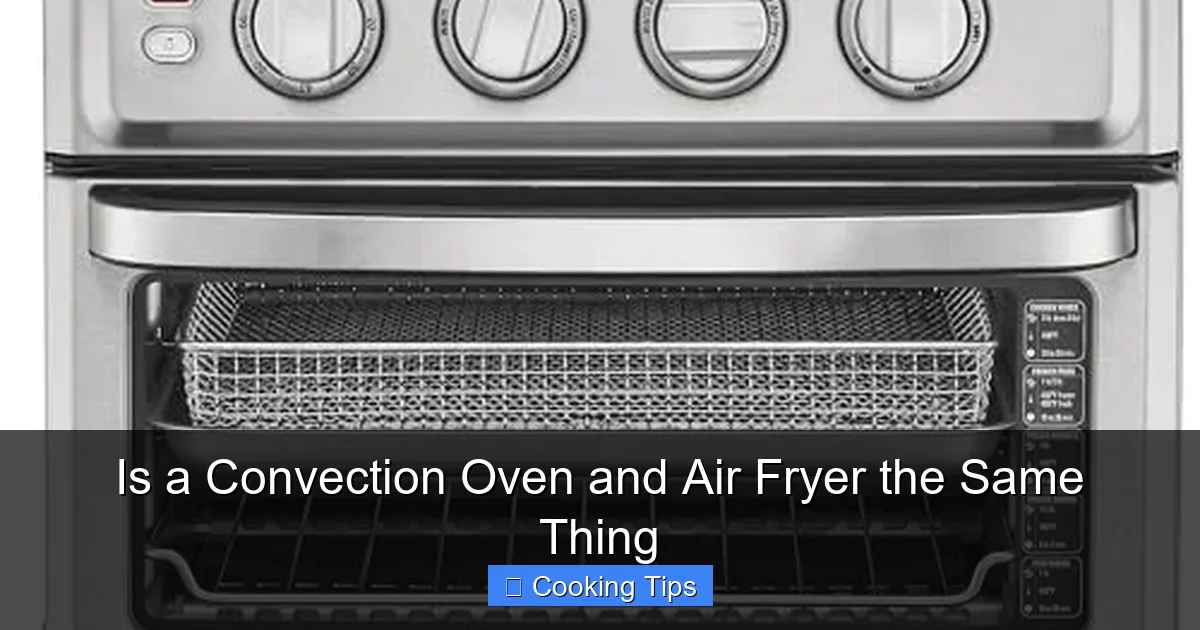
Visual guide about Is a Convection Oven and Air Fryer the Same Thing
Image source: m.media-amazon.com
Now that we understand the shared foundation, let’s explore the features that set these appliances apart.
Difference 1: Size and Capacity

Visual guide about Is a Convection Oven and Air Fryer the Same Thing
Image source: airfryeraid.com
This is perhaps the most obvious difference.
* Convection Ovens: These are full-sized kitchen appliances, built into your range or as a standalone wall unit. They offer ample space, allowing you to cook large roasts, multiple trays of cookies, or a whole turkey. You can easily cook for a crowd or prepare a week’s worth of meals at once.
* Air Fryers: Air fryers are countertop appliances that come in various sizes, but even the largest models are significantly smaller than a convection oven. They typically have a basket or a tray system designed for single layers of food, or small stacks. This makes them ideal for cooking for one or two people, or for preparing small batches of snacks. Think of them as specialized, high-performance cooking pods.
Difference 2: Heating Element and Fan Power

Visual guide about Is a Convection Oven and Air Fryer the Same Thing
Image source: c8.alamy.com
While both use fans, the intensity and placement can differ.
* Convection Ovens: Typically have heating elements at both the top and bottom, plus the convection fan. The fan provides a steady, consistent airflow.
* Air Fryers: Usually have a heating element at the top, directly above the food, and a very powerful fan positioned to force hot air downwards and around the food with extreme velocity. This intense, focused airflow is what allows them to achieve such rapid crisping. This powerful fan is what makes air fryers so good at creating that crispy texture, similar to how we’d aim to get crispy skin on a Cornish hen in a traditional oven.
Difference 3: Cooking Speed and Efficiency
The size and fan power directly impact cooking times.
* Convection Ovens: Are faster than traditional ovens due to the circulating air, often reducing cooking times by 10-25%. However, their larger volume means they take longer to preheat.
* Air Fryers: Are incredibly fast. Their compact size means they preheat in minutes (sometimes even seconds), and the powerful fan cooks food much quicker than a convection oven, often by 30-50% or more. This makes them perfect for busy weeknights when you need a meal on the table fast.
Difference 4: Versatility and Best Uses
Each appliance has its strengths.
* Convection Ovens: Are the workhorses of the kitchen. Their versatility is unmatched. They are excellent for:
* Baking: Cakes, bread, pastries – the even heat is crucial for delicate baked goods. You can even [how to cook a cake in the air fryer] if it’s a small one, but a convection oven offers more space and control for larger cakes.
* Roasting: Large cuts of meat, whole chickens, and vegetables benefit from the even cooking and browning.
* Broiling: Many convection ovens also have a broil function for quick searing and browning.
* Cooking Large Quantities: Preparing meals for a family or entertaining guests.
* **Air Fryers:** Are specialists in achieving that signature crispy texture. They excel at:
* “Frying” Snacks: French fries, onion rings, chicken wings, mozzarella sticks – anything you want to be incredibly crispy with minimal oil. This is where the air fryer truly shines, making foods like [how to make waffle fries in the air fryer] incredibly easy and delicious.
* **Reheating Leftovers: Say goodbye to soggy pizza! An air fryer can revive leftovers, making them crispy again.
* **Cooking Small Portions: Perfect for single servings or quick snacks. You can easily cook things like [how to cook a hot dog in the air fryer] or [how to cook a brat in an air fryer] in mere minutes.
* **Quick Meals: From frozen items to simple proteins, they are ideal for fast meal preparation. For example, cooking [how to cook a frozen burger in the air fryer] is a breeze.
Difference 5: Temperature Control and Precision
When it comes to delicate cooking, there can be a difference.
* Convection Ovens: Generally offer a wider range of temperatures and more precise control, especially higher-end models. The larger cavity can sometimes lead to slight temperature fluctuations compared to the very contained environment of an air fryer. However, for tasks like baking, where subtle temperature shifts can affect the outcome, a well-calibrated convection oven is often preferred.
* Air Fryers: Are designed for high-heat, fast cooking. While they have temperature settings, the intense airflow can sometimes be a bit too aggressive for very delicate items, potentially causing them to dry out or burn quickly if not monitored. For recipes requiring precise, lower temperatures over longer periods, a traditional or convection oven might offer better results.
Difference 6: Cleaning and Maintenance
This is a practical consideration for any kitchen appliance.
* Convection Ovens: Cleaning a full-sized oven can be a significant task. While many have self-cleaning features, regular manual cleaning of racks, interior surfaces, and the fan area is still necessary.
* Air Fryers: Are generally much easier to clean. The removable baskets and trays are often dishwasher-safe or can be wiped down quickly with soap and water. Their smaller size makes the entire cleaning process much faster and less daunting.
When to Use Which: Practical Scenarios
Let’s put this knowledge into action with some common cooking scenarios.
Scenario 1: Roasting a Whole Chicken for a Family Dinner
* Best Choice: Convection Oven
* Reasoning: You need the space to fit the entire chicken comfortably, ensuring it cooks evenly without touching the sides. The convection feature will help crisp the skin all around, and the larger capacity means you can also roast vegetables alongside it. While some very large air fryers can cook a small chicken, a full-sized convection oven is the more practical and reliable choice for a whole bird.
Scenario 2: Making Crispy Sweet Potato Fries for a Snack
* Best Choice: Air Fryer
* Reasoning: The air fryer is designed for this! Its powerful fan and compact space will blast the fries with hot air, creating a wonderfully crispy exterior with minimal oil. A convection oven could do it, but it would take longer, might not achieve the same level of crispiness, and you’d be using much more energy for a small batch.
Scenario 3: Baking a Batch of Chocolate Chip Cookies for a Party
* Best Choice: Convection Oven
* Reasoning: Baking requires precise temperature control and even heat distribution to ensure cookies don’t spread too much or burn on the edges. A convection oven’s larger capacity allows you to bake multiple trays at once, and its more refined temperature management is better suited for delicate baked goods. While you can [how to cook a biscuit in an air fryer] for a quick treat, a full batch of cookies is best left to the oven.
Scenario 4: Reheating Leftover Pizza
* Best Choice: Air Fryer
* Reasoning: Microwaves make pizza soggy. A convection oven can work, but it takes longer to preheat. An air fryer will reheat your pizza quickly, restoring the crispiness of the crust and melting the cheese perfectly, giving you that “fresh from the oven” feel.
Scenario 5: Cooking a Small Portion of Salmon for One
* Best Choice: Air Fryer (or Convection Oven)
* Reasoning: Both can work well here. An air fryer will cook it quickly and give the salmon a nice, slightly crispy exterior. A convection oven would also cook it evenly. If you’re short on time or want a bit more crispiness, the air fryer is great. If you’re already using the convection oven for something else, it’s a perfectly viable option. For example, you could easily cook [how to cook a marinated pork tenderloin in air fryer] or a single salmon fillet with great results.
Can You Use an Air Fryer as a Convection Oven, or Vice Versa?
This is where the lines can blur, but it’s important to understand the limitations.
* Can an Air Fryer Act Like a Convection Oven?
* For small items and tasks that benefit from quick, high-heat circulation, yes, it can perform similarly. However, it lacks the capacity and often the nuanced temperature control for baking large items or delicate pastries. You wouldn’t typically bake a layered cake in an air fryer.
* Can a Convection Oven Act Like an Air Fryer?
* A convection oven *does* have the convection feature, so it’s already circulating hot air. However, it lacks the intense, focused airflow and compact design of a true air fryer. While it can crisp up foods, it generally won’t achieve the same rapid, deep-fried-like crispiness that an air fryer is known for, especially for smaller batches.
Troubleshooting Common Issues
Even with the best appliances, things can go awry. Here are a few common issues and how to address them.
Issue: Food is Burning on the Outside, Undercooked Inside
* **Likely Cause:** Temperature is too high, or cooking time is too long. The powerful airflow in air fryers can sometimes lead to over-browning.
* **Solution:**
* Lower the temperature by 10-25 degrees Fahrenheit.
* Reduce the cooking time.
* Shake the basket more frequently in an air fryer to ensure even exposure.
* Ensure food isn’t overcrowded in the basket or tray, as this restricts airflow.
* For convection ovens, ensure you’re not placing food too close to the heating element or fan.
Issue: Food is Not Crispy Enough
* **Likely Cause:** Insufficient air circulation, too much moisture, or not enough heat.
* **Solution:**
* Ensure you’re not overcrowding the air fryer basket. Cook in batches if necessary.
* Pat food dry before cooking, especially for items like potatoes or chicken.
* Increase the cooking temperature slightly.
* Ensure the air fryer fan is functioning correctly.
* For convection ovens, make sure the fan is on and circulating air properly.
Issue: Uneven Cooking
* **Likely Cause:** Poor air circulation, food items too large or thick, or inconsistent heat.
* **Solution:**
* Shake or flip food halfway through cooking.
* Cut food into uniform sizes.
* Ensure food is in a single layer as much as possible.
* Check your convection oven’s fan and heating elements for any issues.
Conclusion: Two Great Appliances, Different Jobs
So, to answer the initial question: Is a convection oven and an air fryer the same thing? **No, they are not the same thing, although they share a core cooking technology.**
Think of it this way: an air fryer is a highly specialized, compact, and powerful convection oven. A convection oven is a larger, more versatile, general-purpose cooking appliance that includes convection technology.
* **Choose an Air Fryer if:** You primarily want to achieve crispy, “fried” textures with less oil, you often cook for one or two people, you have limited counter space, and you value speed and efficiency for snacks and small meals.
* **Choose a Convection Oven if:** You need to cook for a family or group, you bake frequently, you roast large items, you want a versatile appliance for all your cooking needs, or you have dedicated kitchen space.
Many modern kitchens benefit from having both! An air fryer can be a fantastic supplement to a convection oven, allowing you to quickly whip up crispy appetizers or side dishes without heating up the entire oven. Understanding their individual strengths will empower you to make the best choice for your culinary adventures, ensuring delicious and perfectly cooked meals every time.