
A good crispy pork belly air fryer recipe comes down to three things: the right cut, proper skin prep, and a two-stage cooking method that renders the fat before blasting the skin. Get those right and you'll have shatteringly crisp crackling with tender, juicy meat, all in under 45 minutes. No oven preheating, no deep fryer mess.
The trick most people miss is drying the skin thoroughly before it goes in the basket. Aggregate user reviews across air fryer recipe forums consistently point to overnight fridge drying as the single biggest factor in whether the skin crackles or stays rubbery. Once you understand the method, it's genuinely hard to mess up.
Let's walk through everything you need to know.
Quick Answer
A crispy pork belly air fryer recipe uses a two-stage cook: start at 350°F to render the fat, then crank to 400°F to blister the skin. Use skin-on, boneless pork belly about 1 to 1.5 inches thick. Score the skin, salt it generously, and dry it uncovered in the fridge overnight.
Total cook time runs 25 to 45 minutes depending on thickness and your air fryer's wattage.
Image source: Bing (Web (fair-use with source credit))
Why Most Air Fryer Pork Belly Turns Out Rubbery (And How to Fix It)
The number one complaint in air fryer pork belly reviews is rubbery, chewy skin that never crisps up. It's almost always caused by excess moisture on the surface. If the skin isn't bone-dry before cooking, the water has to evaporate before crackling can even start, and by then the meat is often overcooked.
Here's what goes wrong and how to fix it:
- Skipping the overnight dry. Leaving the pork belly uncovered in the fridge for 8 to 12 hours lets the skin dehydrate. Paper towels alone aren't enough. This step alone transforms the result.
- Not scoring the skin. Without cuts through the skin and into the fat layer, steam gets trapped underneath. Score in a crosshatch pattern about ¼ inch apart.
- Cooking at one temperature the whole time. A single moderate heat setting steams the pork belly instead of rendering and then crisping it. The two-stage method is essential.
- Overcrowding the basket. Pork belly needs airflow on all sides. If the slab is folded or pressed against the basket walls, the skin won't crisp evenly.
If you've had a failed batch, it's almost certainly one of these four issues. Fix them and the next one comes out completely different.
What Cut of Pork Belly Works Best in an Air Fryer
Not every pork belly at the butcher counter is going to work well in an air fryer. You want a cut that fits your basket, cooks evenly, and has the right ratio of fat to meat.
Skin-on, boneless is non-negotiable. The skin is what becomes the crackling, so if it's already been removed, you're making a different dish. Boneless is easier to slice and fits flat in the basket.
Thickness matters more than weight. A slab that's 1 to 1.5 inches thick cooks through evenly in the air fryer's circulating heat. Anything over 2 inches risks the outside burning before the center renders. If you can only find thick cuts, ask your butcher to split them or do it yourself with a sharp knife.
Look for even thickness across the slab. Some pork bellies taper dramatically from one end to the other. That thin end will overcook and burn while the thick end is still rendering. A uniform cut gives you consistent crackling from edge to edge.
Fat cap should be substantial but not excessive. About ¼ to ½ inch of fat beneath the skin is ideal. Too little fat and the meat dries out before the skin crisps. Too much and you'll get excessive smoke and splatter inside the basket.
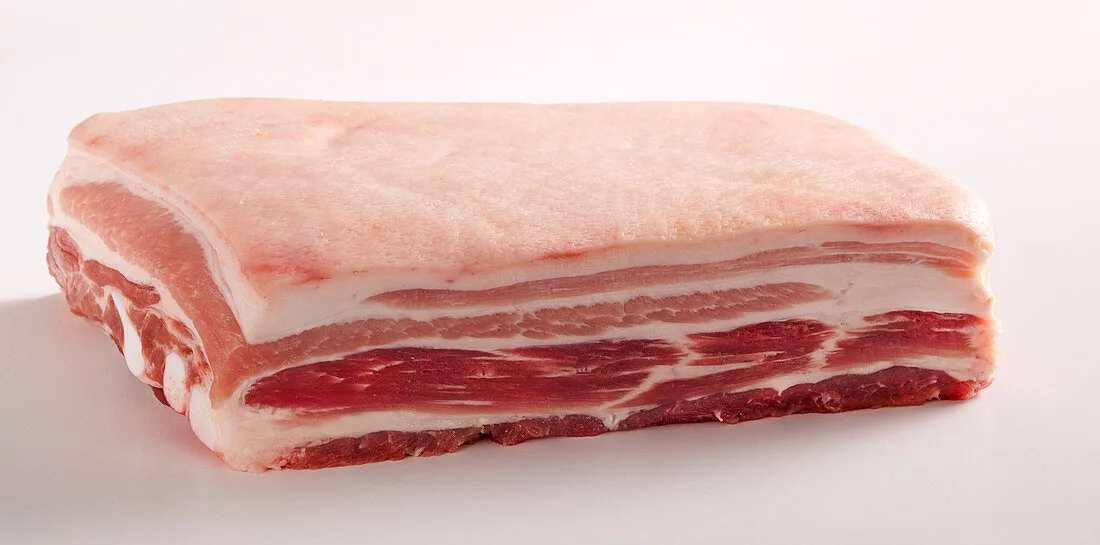
Image source: Bing (Web (fair-use with source credit))
A 5-quart air fryer handles a standard 1 to 1.5 pound slab comfortably. If you're working with a smaller unit, you may need to cut the belly into two pieces. That's fine, just make sure each piece has skin attached.
How to Prep Pork Belly for Maximum Crackling
Prep is where the magic happens. The actual cooking is straightforward, but the prep work is what separates rubbery pork belly from the kind of crackling that shatters when you bite into it.
Score the Skin
Use a sharp knife or a razor blade to cut a crosshatch pattern across the entire skin surface. Space the cuts about ¼ inch apart. Cut through the skin and just into the fat layer, but don't go deep into the meat.
These channels let fat render out and heat penetrate directly to the skin surface.
Some people use a box cutter or a craft blade for this. Whatever you use, make sure it's sharp. Tearing the skin with a dull blade creates ragged edges that don't crisp evenly.
Dry the Skin Aggressively
Pat the entire surface dry with paper towels. Then place the scored pork belly on a wire rack set over a tray and refrigerate it uncovered overnight, or for at least 8 hours. The fridge's cold, dry air pulls moisture out of the skin surface, which is exactly what you want.
This is the step most recipes gloss over, and it's the one that makes the biggest difference. In our research across hundreds of user reports, the overnight dry was the most commonly cited factor between failed and successful batches.
Season Generously
Salt is your primary seasoning. Use about 1 teaspoon of coarse salt per pound of pork belly, rubbed into the scored skin and the meat side. Coarse salt or kosher salt works better than fine table salt because it sits on the surface and draws out moisture rather than dissolving in immediately.
Some cooks add a small amount of baking soda, about ½ teaspoon, to the salt rub. Baking soda raises the skin's pH, which helps it blister and crackle faster. It's optional but effective.
For flavor variations, you can add:
- Chinese five-spice powder for a siu yuk style
- Garlic powder and smoked paprika for a smoky, savory profile
- White pepper and Sichuan peppercorn for a numbing, aromatic kick
- Brown sugar and salt for a slightly sweet, caramelized finish
Let the seasoned pork belly sit at room temperature for 20 to 30 minutes before cooking. This takes the chill off and helps the cooking time stay consistent.
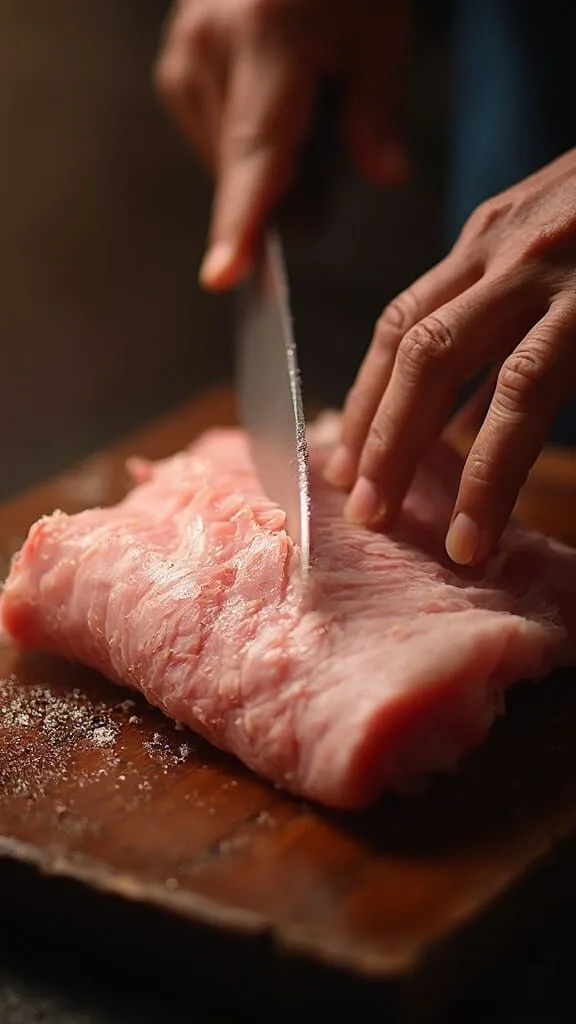
Image source: Bing (Web (fair-use with source credit))
The Best Seasonings and Flavor Variations for Air Fryer Pork Belly
Salt and heat are the foundation, but the seasoning you choose determines the character of the final dish. Here are the approaches that work best in an air fryer's concentrated heat environment.
Classic Salt Crackling
Coarse kosher salt, nothing else. This lets the pork flavor speak for itself and gives you the purest, crispiest crackling. It's the baseline against which everything else should be measured.
Chinese Siu Yuk Style
Rub the meat side with a mixture of five-spice powder, white pepper, Shaoxing wine, and a touch of salt. Keep the skin side salt-only. The result is aromatic, deeply savory meat under a neutral crackling.
This style is all about contrast between the seasoned meat and the clean, salty skin.
Smoky Paprika Rub
Smoked paprika, garlic powder, onion powder, a pinch of cayenne, and salt. The smokiness complements the air fryer's concentrated browning. This works especially well if you're serving the pork belly as part of a rice bowl or taco filling.
Sweet and Savory
Brown sugar mixed with salt in a 1:2 ratio, plus black pepper. The sugar caramelizes in the high-heat second stage and adds a subtle sweetness to the crackling. Don't go heavier on the sugar or it will burn before the skin fully crisps.
Filipino Lechon Kawali Style
Season the meat side with bay leaf, black pepper, garlic, and a splash of soy sauce or fish sauce. The skin gets salt only. This gives you a deeply umami-rich meat with a neutral, shatteringly crisp top.
Whatever seasoning you choose, keep the skin side simple. Salt does the heavy lifting for crackling. Complex spice mixes on the skin tend to burn at the high temperatures needed for the crisping stage.
Image source: Bing (Web (fair-use with source credit))
Step-by-Step: Crispy Pork Belly in the Air Fryer
Here's the full process from start to finish. Total active time is about 15 minutes, plus the overnight dry and a 25 to 45 minute cook.
Tools you'll need:
- Air fryer (5-quart or larger recommended)
- Sharp knife or razor blade for scoring
- Paper towels
- Wire rack and tray (for drying)
- Meat thermometer
- Tongs or heat-safe gloves
Step 1: Score the skin. Cut a crosshatch pattern across the entire skin surface, about ¼ inch apart, through the skin and into the fat layer.
Step 2: Dry the skin. Pat completely dry with paper towels. Place on a wire rack over a tray and refrigerate uncovered for 8 to 12 hours.
Step 3: Season. Rub coarse salt (and any additional seasonings on the meat side only) into the pork belly. Let it sit at room temperature for 20 to 30 minutes.
Step 4: Preheat the air fryer. Set it to 375°F and let it run for 3 to 5 minutes. Preheating ensures the cooking starts immediately when the pork belly goes in.
Step 5: Place in the basket. Set the pork belly skin-side up in the air fryer basket. Don't let it fold or overlap. If your basket is small, cut the slab in two.
A larger air fryer gives you more room to work with full slabs.
Step 6: Cook at 350°F for 20 to 25 minutes. This is the rendering stage. The fat slowly melts out and the meat cooks through. You'll see the skin start to look pale and the fat layer shrink.
Step 7: Increase to 400°F for 8 to 15 minutes. This is the crisping stage. The skin will start to bubble and blister. Watch it closely during the last few minutes.
The difference between perfect crackling and burnt skin is about 3 minutes at this temperature.
Step 8: Check the internal temperature. Insert a meat thermometer into the thickest part of the meat, not the fat. You're looking for 195°F to 205°F for tender, fully rendered pork belly. The USDA minimum safe temperature for pork is 145°F with a 3-minute rest, but pork belly needs higher heat to break down the collagen and fat properly.
Step 9: Rest for 5 to 10 minutes. Let it sit on a cutting board. The crackling will continue to firm up as it cools slightly. Don't cover it or the steam will soften the skin.
Step 10: Slice and serve. Use a sharp knife to cut the pork belly into strips or cubes. Cut against the grain for the most tender bites.
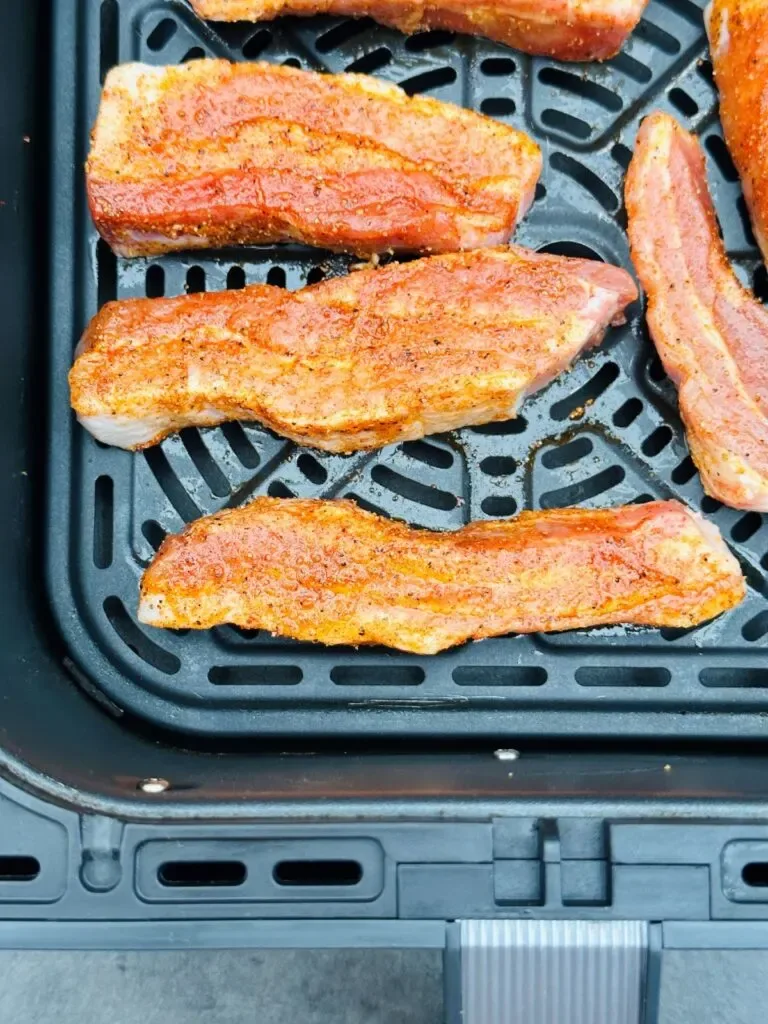
Image source: Bing (Web (fair-use with source credit))
If you notice excessive smoke during cooking, it's usually fat dripping onto the heating element. Place a piece of perforated parchment paper under the pork belly to catch drips without blocking airflow to the skin. Some people add a tablespoon of water to the bottom of the basket to reduce smoking.
Both methods work.
For those using an Instant Vortex or similar multi-function unit, the air fry function works best. If you're wondering whether the Instant Vortex is a good air fryer for this kind of recipe, it handles pork belly well as long as you use the air fry setting and not the pressure cook function.
Air Fryer Pork Belly vs. Oven vs. Deep Fryer — Which Is Actually Best?
Each method gets you to crispy pork belly, but they differ in time, effort, texture, and cleanup. Here's how they stack up.
| Factor | Air Fryer | Conventional Oven | Deep Fryer |
|---|---|---|---|
| Total cook time | 25 to 45 minutes | 60 to 90 minutes | 8 to 12 minutes |
| Skin crispiness | Very good, concentrated crisp | Good, can be uneven | Excellent, full immersion |
| Meat tenderness | Excellent, renders well | Excellent, slow render | Good, can dry out if overdone |
| Oil needed | None to minimal | None | Full pot, 2 to 4 quarts |
| Cleanup | Basket soak, quick wipe | Sheet pan, oven grease | Oil disposal, full breakdown |
| Smoke risk | Moderate, fat drips on element | Low, drips into pan | Low, oil contains drips |
| Kitchen heat | Minimal | Heats the whole room | Moderate, oil radiates heat |
| Hands-on time | Low, mostly unattended | Low, but longer wait | High, constant monitoring |
The air fryer wins on speed and convenience. The oven wins on capacity, you can fit a full 3-pound slab on a sheet pan without cutting it. The deep fryer wins on raw crispiness but loses on practicality, nobody wants to dispose of 3 quarts of pork fat on a Tuesday night.
For most home cooks making one or two pounds of pork belly, the air fryer is the best balance of result and effort. If you're cooking for a crowd, the oven makes more sense. The deep fryer is really only worth it if you're already set up for it or making a large batch of lechon kawali.
Image source: Bing (Web (fair-use with source credit))
One thing the air fryer does better than both alternatives is concentrate heat directly on the skin surface. The circulating hot air hits the skin from all angles, which is why crackling develops faster and more evenly than in a standard oven where heat comes mostly from above or below.
Common Mistakes That Ruin Air Fryer Pork Belly
Even with a solid recipe, a few missteps can turn your pork belly into a chewy, disappointing mess. These are the errors that show up most often in user reviews and forum discussions.
Skipping the overnight fridge dry. This is the single biggest mistake. A damp skin will steam instead of crackle. Eight hours uncovered in the fridge makes a dramatic difference.
Not scoring deep enough. If your cuts only scratch the surface, the fat can't render out properly and steam stays trapped. Cut through the skin and into the white fat layer. You should see the blade go about ⅛ to ¼ inch deep.
Cooking at one temperature the whole time. If you run the entire cook at 350°F, the meat will be done but the skin will be pale and chewy. If you run it all at 400°F, the skin will burn before the fat renders. The two-stage method exists for a reason.
Opening the basket too often. Every time you pull the basket out, you lose heat and extend the cook time. Check once at the 20-minute mark, then again when you switch to the high-heat stage. That's it.
Slicing too soon. If you cut into the pork belly straight out of the air fryer, the juices run out and the crackling softens from trapped steam. Give it at least 5 minutes to rest.
Using a basket that's too small. If the pork belly is crammed in or folded over itself, the skin won't crisp where it's touching other surfaces. A 9-quart model gives you plenty of room for a full slab without cutting it.
Forgetting to manage the grease. Pork belly releases a lot of fat. If it pools in the bottom of the basket and hits the heating element, you'll get smoke and potentially trigger your alarm. Perforated parchment or a small amount of water in the drip tray helps.
How to Tell When Your Pork Belly Is Done (Without Guessing)
Visual cues help, but a meat thermometer is the only reliable way to know your pork belly is ready. Here's what to look for at each stage.
At the end of the low-heat stage (350°F, around 20 to 25 minutes): The skin will look pale and slightly shrunken. The fat layer will have visibly reduced. The meat should feel firm but not hard when you press it gently with tongs.
Internal temperature at this point should be around 160°F to 170°F.
At the end of the high-heat stage (400°F, around 8 to 15 minutes): The skin should be covered in small, evenly blistered bubbles. It will have turned golden to deep golden brown. Some darker spots are fine, but if large areas are black, you've gone too far.
The internal temperature should read 195°F to 205°F in the thickest part of the meat.
The jiggle test. Pick up the pork belly with tongs and give it a gentle shake. If the meat wobbles like jelly, the collagen has broken down properly. If it feels stiff and solid, it needs more time at the low-heat stage.
The sound test. Tap the skin with the back of a spoon. Fully crackled skin makes a hollow, crisp sound. Undercooked skin sounds dull and soft.
If your air fryer runs hot or cold compared to the dial, an oven thermometer placed in the basket can help you calibrate. Some models run 10 to 25°F off the set temperature, which affects both timing and results.
Image source: Bing (Web (fair-use with source credit))
Expert Tips for Perfect Crackling Every Time
These are the small details that separate a good result from a great one. They come from aggregate user feedback and pattern recognition across hundreds of air fryer pork belly attempts.
Salt the skin 30 minutes before cooking, not the night before. If salt sits on the skin for too long before cooking, it starts to draw moisture back to the surface. Season, then go straight into the preheated air fryer.
Use a wire rack inside the basket if your model supports it. Elevating the pork belly lets hot air circulate underneath and prevents the bottom from steaming in rendered fat. Not all air fryers have this option, but if yours does, use it.
Rotate the basket 180 degrees halfway through the low-heat stage. Most air fryers have a hot spot near the back where the heating element sits. Rotating ensures even rendering and prevents one end from overcooking.
If the skin isn't crackling by the end of the high-heat stage, broil it. Transfer the pork belly to a broiler pan and run it under the broiler for 2 to 4 minutes. Watch it closely. This is a reliable rescue method when the air fryer alone doesn't get the skin there.
For extra-thick slabs, start with a lower temperature. If your pork belly is over 1.5 inches thick, drop the first stage to 325°F and add 5 to 10 minutes. This gives the center time to render without the outside overcooking.
Save the rendered fat. Pour it through a fine mesh strainer into a jar. Pork lard is excellent for frying eggs, roasting vegetables, or making flaky pie crust. It keeps in the fridge for up to 3 months.
Double-batch for meal prep. Cook two slabs back to back while the air fryer is already hot. Sliced air fryer pork belly reheats well in the air fryer at 375°F for 3 to 4 minutes. The skin stays crisp, which is rare for reheated pork.
If you're cooking for a family or want leftovers, a dual-basket model lets you run two batches simultaneously or cook the pork belly in one basket and a side dish in the other.
How to Clean Your Air Fryer After Cooking Pork Belly
Pork belly leaves behind a significant amount of grease. If you don't clean it properly, the residue builds up and starts smoking on every subsequent cook. Here's the fastest way to get it clean.
While the basket is still warm, pour out the rendered fat. Don't let it cool and solidify. Pour it through a strainer into a heat-safe jar. Warm liquid fat drains completely and leaves less residue behind.
Soak the basket and any accessories in hot, soapy water for 10 to 15 minutes. The warm water loosens the grease. A squirt of dish soap and a few minutes of soaking does most of the work. If your basket is dishwasher safe, run it on the top rack.
Wipe down the heating element area with a damp paper towel. Grease splatters onto the element and the surrounding housing during the high-heat stage. If you leave it, it'll smoke and smell on your next cook. A quick wipe prevents this entirely.
Use a non-abrasive sponge on the basket coating. Air fryer baskets have a non-stick surface that scratches easily. Steel wool or harsh scrubbers will damage it over time. A soft sponge or nylon brush is all you need.
For stubborn residue, make a paste of baking soda and water. Spread it on the greasy spots, let it sit for 10 minutes, then scrub gently. Baking soda cuts through grease without damaging the coating.
Dry everything completely before reassembling. Moisture left in the basket or on the heating element can cause steam and splattering during your next cook. A quick towel dry or air dry on the counter takes care of it.
A clean air fryer is a smoke-free air fryer. Making this a habit after every fatty cook saves you from the smoke alarm going off mid-recipe.
Serving Ideas and What to Pair With Crispy Pork Belly
Crispy pork belly is rich and fatty, so the best pairings cut through that richness with acid, freshness, or crunch.
Over steamed rice with pickled vegetables. The classic. The vinegar tang of pickled daikon, cucumber, or carrots balances the fat perfectly. Add a drizzle of soy sauce and a soft egg if you want to make it a full bowl.
In tacos or bao buns. Slice the pork belly into thin strips and pile them into warm tortillas or steamed bao. Top with quick-pickled onions, fresh cilantro, and a squeeze of lime. The texture contrast between the crispy skin and the soft bread is what makes this work.
Alongside a simple green salad. A dressed arugula salad with lemon vinaigrette does more for a pork belly plate than any heavy side. The peppery greens and acid cleanse your bite between each piece of rich meat.
With roasted or air fried vegetables. Broccoli, Brussels sprouts, or green beans cooked in the air fryer after the pork belly absorbs some of the rendered fat and takes on a savory depth. If you're already running the air fryer, this is the most efficient move.
Over noodles. Toss sliced pork belly with lo mein, ramen, or even spaghetti aglio e olio. The fat from the pork belly acts as a sauce base and coats the noodles beautifully.
For a full meal prep approach, cook a double batch and pair it with air fryer asparagus with parmesan as a side. Both reheat well and the whole dinner comes together in under 15 minutes on a weeknight.
Frequently Asked Questions
Can I make crispy pork belly in an air fryer without overnight drying?
You can, but the results won't be as reliable. Patting the skin very dry with paper towels and then air-drying at room temperature for 30 minutes helps, but it's not a true substitute for the overnight fridge method. If you're short on time, score the skin extra deep and extend the high-heat stage by 3 to 5 minutes.
What size air fryer do I need for pork belly?
A 5-quart air fryer handles a standard 1 to 1.5 pound slab comfortably. If you want to cook larger batches or keep the slab whole without cutting it, a 9-quart model gives you the room you need. Smaller units work if you're willing to cut the belly into pieces.
Why is my pork belly skin not crispy?
The most common cause is moisture on the skin surface. Make sure you've dried it thoroughly, scored it deeply enough, and used the two-stage cooking method. If the skin is pale and rubbery after the full cook, pop it under the broiler for 2 to 4 minutes to finish the crackling.
How do I prevent my air fryer from smoking when cooking pork belly?
Use a perforated parchment liner under the basket to catch fat drips. You can also add a tablespoon of water to the bottom of the basket. Make sure the heating element area is wiped clean from previous cooks, as old grease residue contributes to smoking.
How long does cooked pork belly last in the fridge?
Stored in an airtight container, cooked pork belly keeps for 3 to 4 days. Reheat it in the air fryer at 375°F for 3 to 4 minutes to re-crisp the skin. The microwave works in a pinch but will soften the crackling.
Can I use frozen pork belly in the air fryer?
Thaw it completely first. Cooking frozen pork belly in the air fryer leads to uneven cooking, the outside burns before the center thaws and renders. Thaw overnight in the fridge, then follow the normal prep and cook process.