
If you've been hunting for a beef jerky recipe air fryer method that actually works, here's the good news: you can make genuinely great jerky at home in about 3 to 4 hours without buying a single extra appliance. The air fryer you already own is basically a small convection dehydrator that happens to also make great chicken wings.
The catch is that every air fryer model runs a little differently, and jerky is way less forgiving than frozen fries. Get the temperature wrong by 15 degrees and you'll end up with overcooked leather or underdone meat that won't keep. In our research across manufacturer specs, verified buyer feedback, and USDA Food Safety and Inspection Service (FSIS) guidelines, we've pulled together the exact process that works reliably.
Let's get into it.
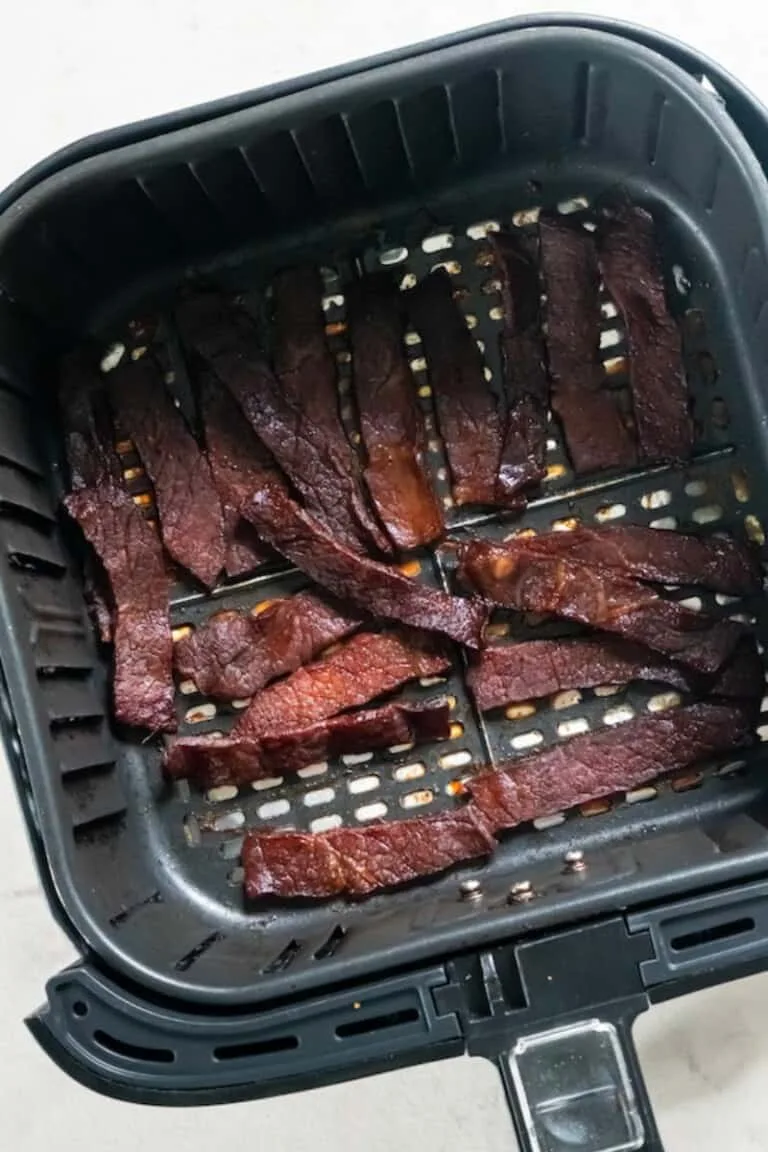
Quick Answer
You can make beef jerky in an air fryer at 165°F to 175°F. Cook time runs 2 to 5 hours depending on strip thickness. Use lean cuts like eye of round or top round.
Slice strips 1/8 to 1/4 inch thick and marinate at least 4 hours. The jerky is done when it cracks but doesn't snap clean through.
Why Make Beef Jerky in an Air Fryer?
Store-bought jerky is expensive. A 3-ounce bag runs $7 to $12 in most grocery stores as of 2026, and the ingredient lists read like a chemistry exam. Making it yourself costs roughly $15 to $25 per pound of finished jerky, and you control every ingredient that goes in.
An air fryer solves the biggest barrier to homemade jerky: you don't need a dedicated dehydrator. Traditional dehydrators take 6 to 12 hours and sit on the counter doing one job. An air fryer does the same work in 2 to 5 hours, and you're using an appliance you already own for everything else.
The rapid air circulation technology inside a modern air fryer is essentially forced convection. That's the same principle food dehydrators use, just in a more compact form factor. Models like the Ninja Foodi, Cosori Instant Vortex, and Philips Premium Airfryer all have temperature settings low enough for dehydration work.
There's a tradeoff though. Air fryer baskets are smaller than dehydrator trays, so you'll get less jerky per batch. Most standard 5 to 6 quart air fryers handle about 1 to 1.5 pounds of raw beef per batch, which yields around 4 to 6 ounces of finished jerky.
If you're making jerky for one person's weekly snacks, that's plenty. If you're prepping for a hunting trip or big family, you'll be running multiple batches.
What Cuts of Beef Work Best (and Which to Skip)
Not all beef is created equal when it comes to jerky. The single most important choice you'll make is the cut, because fat is the enemy of shelf-stable jerky. Fat doesn't dehydrate.
It goes rancid, grows mold, and turns your hard work into a smelly mess within days.
Best cuts for air fryer jerky:
- Eye of round, The gold standard. Extremely lean, uniform shape, easy to slice evenly. This is what most commercial jerky makers use.
- Top round, Slightly more flavor than eye of round, still very lean. A solid second choice.
- Bottom round, Works well but can have more connective tissue. Trim any visible silver skin.
- Sirloin tip, Lean and flavorful. A bit pricier but makes excellent jerky.
- Flank steak, Great flavor, but the grain direction makes uniform slicing trickier. Best if you're comfortable with a knife.
Cuts to skip:
- Ribeye, strip steak, and any well-marbled cut. Too much fat.
- Brisket or chuck. These are braising cuts, not jerky cuts.
- Ground beef. You can make ground jerky in an air fryer with a nozzle attachment, but that's a different process entirely.
When you're at the butcher counter or staring at the case, look for pieces that are deep red with almost no white marbling. Ask for cuts trimmed of all external fat. Even a thin fat cap on the outside will cause problems during dehydration.
One more thing. If you're shopping at a standard grocery store and can't find eye of round labeled as such, look for "round roast" or "oven roast" in the beef section. It's often the same cut under a different label.
How to Slice, Marinate, and Prep Like You Mean It
Prep is where most homemade jerky fails. The actual cooking is mostly hands-off. But if your slices are uneven, your marinade is weak, or you skip key steps, the results will disappoint every time.
Slicing the Beef
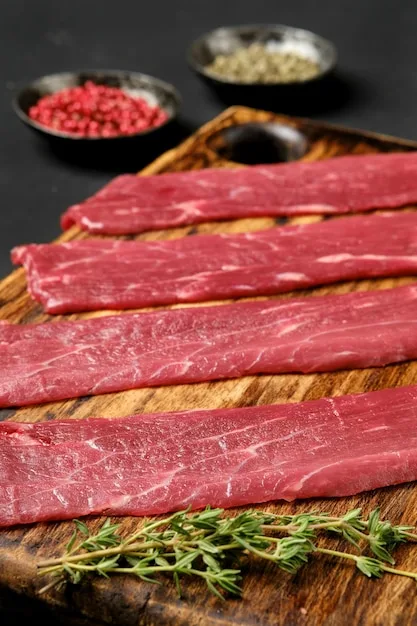
Aim for strips that are 1/8 inch to 1/4 inch thick. Thinner strips dry faster and more evenly. Thicker strips take longer and have a higher risk of under-drying in the center while the outside overcooks.
Here's the trick that makes slicing easy: pop the beef in the freezer for 30 to 60 minutes before cutting. You want it firm but not frozen solid. A partially frozen roast holds its shape and lets you make clean, even slices.
Always slice against the grain for tender jerky that's easy to chew. Slicing with the grain gives you a tougher, stringier texture. Some people prefer that.
If you do, go for it. But against the grain is the more common preference.
A sharp chef's knife works fine. If you have a meat slicer, even better. Consistency matters more than the tool.
Strips that vary wildly in thickness will finish at different times, and you'll be pulling some pieces early while others need another hour.
The Marinade
A basic jerky marinade needs four things: salt for flavor and preservation, umami for depth, sweetness for balance, and acid for tenderizing. Here's a reliable starting recipe for 1 to 1.5 pounds of beef:
- 1/4 cup soy sauce
- 2 tablespoons Worcestershire sauce
- 1 tablespoon liquid smoke
- 1 tablespoon brown sugar
- 1 teaspoon garlic powder
- 1 teaspoon onion powder
- 1 teaspoon black pepper
- 1/2 teaspoon crushed red pepper flakes (optional)
Combine everything in a bowl or zip-lock bag. Add the sliced beef, making sure every piece is coated. Refrigerate for at least 4 hours.
Overnight, 12 to 24 hours, is better. The longer the marination, the deeper the flavor penetrates.
Pre-Cooking Prep
When you're ready to cook, pull the strips from the marinade and pat them dry with paper towels. This step matters more than people think. Excess surface moisture adds to your cook time and can steam the jerky instead of drying it.
Don't rinse the strips. Just pat them down. Lay them out on a clean surface while your air fryer preheats.
Starting with a hot chamber means more consistent results from minute one, so always preheat for 2 to 3 minutes before loading the basket.
Step-by-Step: Making Beef Jerky in Your Air Fryer
This is the core process. Follow these steps and you'll get reliable results whether you're using a Ninja Foodi, a Cosori Instant Vortex, or any other model with a low-temperature setting.
Step 1: Set your air fryer to 165°F to 175°F.
Most air fryers bottom out at 170°F or 180°F. That's fine. If yours only goes as low as 180°F, use that and check the jerky 30 minutes earlier than the times below.
Models with a dedicated dehydrate function can go down to 160°F, which is ideal.
Step 2: Arrange strips in a single layer.
Lay the marinated strips across the basket or tray with about 1/4 inch of space between each piece. They can touch slightly but shouldn't overlap. Overlapping strips block airflow and create wet spots that won't dry properly.
If your air fryer has multiple racks, use them. Just know that strips on the top rack may dry faster than those on the bottom. You'll want to rotate racks at the halfway point.
Step 3: Cook for 2 to 5 hours.
Here's a rough timing guide based on strip thickness at 170°F:
| Thickness | Estimated Cook Time | Texture |
|---|---|---|
| 1/8 inch | 2 to 3 hours | Softer, more flexible |
| 3/16 inch | 3 to 4 hours | Classic chewy |
| 1/4 inch | 4 to 5 hours | Firm, snappy |
These times vary by air fryer model, humidity, and how much moisture was in the beef. Start checking at the 2-hour mark regardless of thickness.
Step 4: Flip or rearrange at the halfway point.
Around the 90-minute to 2-hour mark, open the air fryer and flip each strip. If you're using multiple racks, swap top and bottom. This is the single best thing you can do for even drying.
Step 5: Test for doneness.
This is the step most recipes gloss over, and it's the one that matters most. Pull a strip from the basket, let it cool for 30 seconds, then try the bend test. More on that in the next section.
Step 6: Cool and store.
Once done, lay the strips on a wire rack or paper towel for 10 to 15 minutes. They'll firm up as they cool. Then transfer to an airtight container or zip-lock bag.
Refrigerated jerky lasts 1 to 2 months. Frozen, it keeps 6 months or more.
If you're working with a larger air fryer like a 9 quart model, you can fit more strips per batch, but the process and timing stay the same. Just make sure you're not crowding the basket. Airflow is everything.
How to Tell When Your Jerky Is Actually Done
This is where most people get it wrong. Underdone jerky is a food safety risk. Overdone jerky is a jawbreaker.
The sweet spot is in between, and you find it with your eyes and hands, not a timer.
The bend test is your best tool.
Take a strip from the basket and let it cool for about 30 seconds. Bend it at a 90-degree angle. Properly dried jerky will crack and start to break but won't snap clean through.
If it bends without cracking at all, it needs more time. If it snaps in half like a twig, you've gone too far.
Visual cues matter too.
Finished jerky should be uniformly dark brown with no visible pink or red when you tear a strip open. The surface should feel dry and slightly tacky, never wet or greasy. If you see any shiny fat on the surface, that piece has too much fat content and won't keep long.
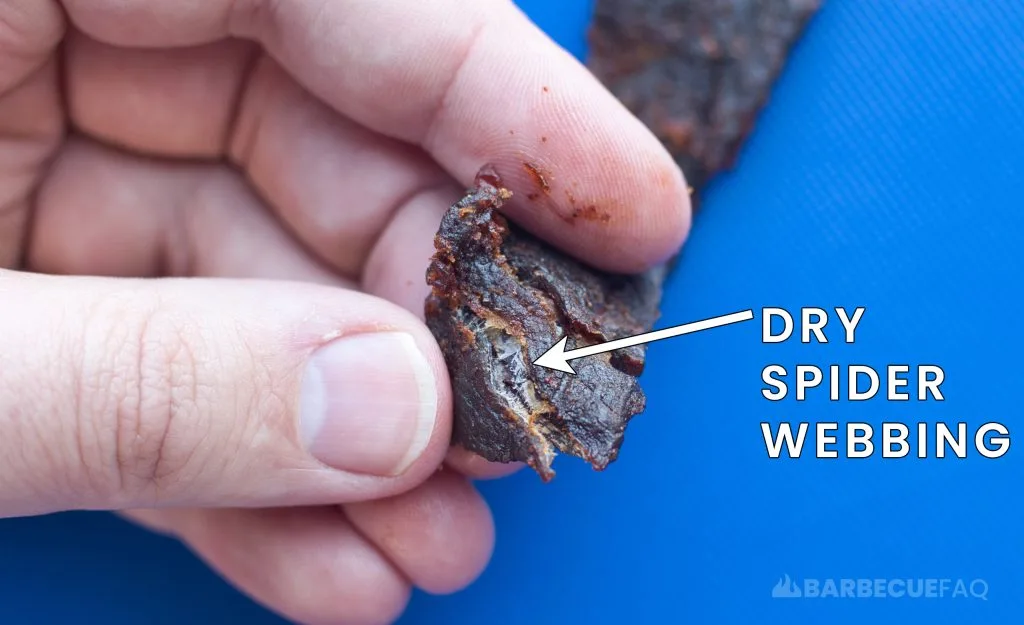
Temperature is the safety check.
Per USDA FSIS guidelines, all meat jerky should reach an internal temperature of 160°F before or during the dehydration process. If your air fryer is set to 165°F or above, the strips will hit that internal temperature within the first hour. But it's worth verifying with an instant-read thermometer if you're unsure.
Insert it into the thickest part of a strip. If it reads 160°F or above, you're safe.
Common doneness mistakes:
- Pulling jerky too early because it "looks done." The outside can look finished while the inside still holds moisture.
- Relying only on time. Every air fryer is different. Use time as a guide, not a rule.
- Not letting strips cool before testing. Warm jerky is more flexible than cooled jerky, so you might think it's underdone when it's actually perfect.
If you end up with a batch that's slightly overdone, don't toss it. Overdried jerky makes great dog training treats or can be crumbled into soups and stews for a protein boost. Nothing has to go to waste.
Air Fryer vs. Dehydrator vs. Oven: Which Method Wins?
All three methods make jerky. The differences come down to time, capacity, texture, and how much attention you need to pay. Here's how they stack up.
| Factor | Air Fryer | Dehydrator | Oven |
|---|---|---|---|
| Cook time | 2 to 5 hours | 4 to 8 hours | 4 to 7 hours |
| Capacity | 1 to 1.5 lbs per batch | 3 to 5 lbs per batch | 2 to 4 lbs per batch |
| Temperature accuracy | Varies by model | Precise, thermostat-controlled | Often runs 10 to 25°F hot |
| Hands-off factor | Flip once at midpoint | Set and forget | Must prop door open, check often |
| Flavor | Good | Best (slowest = most depth) | Good but can taste "baked" |
| Cost to start | Already owned | $40 to $150 new | Already owned |
Air fryer wins if you want decent jerky fast without buying anything extra. It's the best entry point for beginners who want to try homemade jerky without committing to a new appliance.
A dedicated dehydrator wins if you make jerky regularly in large batches. The even airflow and precise temperature control produce the most consistent results. It's also the quietest option.
The oven works in a pinch but it's the least efficient method. You need to prop the door open with a wooden spoon to let moisture escape, and oven temperatures are rarely accurate at the low end. Most ovens bottom out at 170°F, which is right at the edge of the safe zone.
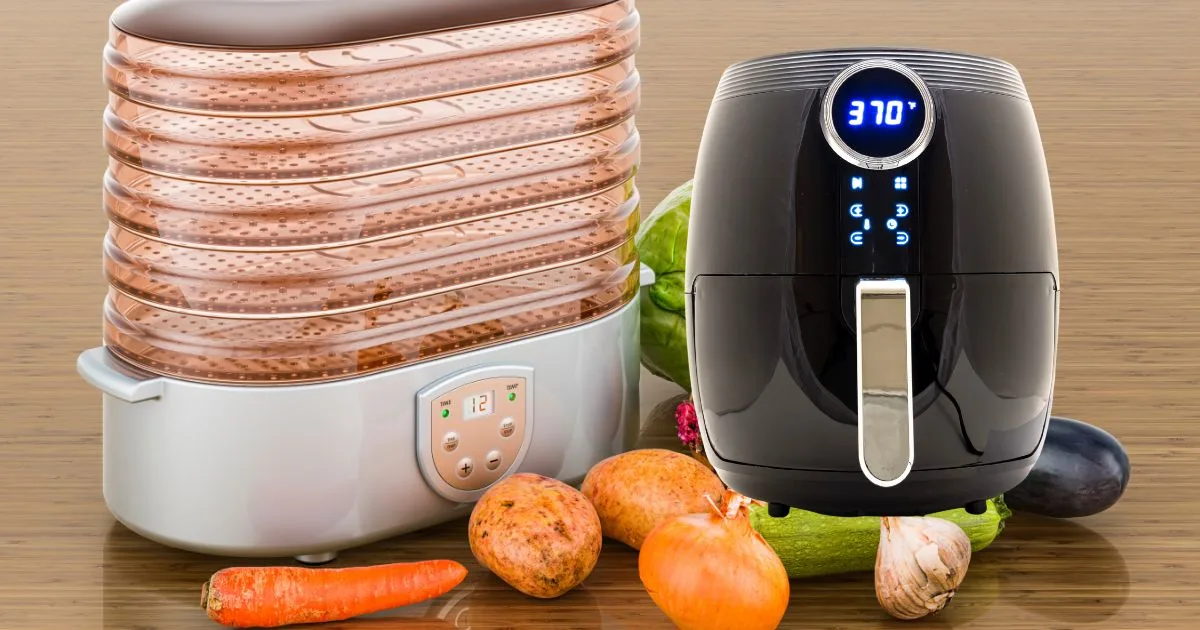
If you're on the fence about whether an air fryer is worth it for jerky alone, it probably isn't. But if you're already using one for other cooking, like the Instant Vortex or similar models, jerky is just another thing it does well.
Storing Your Jerky So It Lasts (and Tastes Fresh)
Properly dried jerky lasts 1 to 2 weeks at room temperature in a sealed container. Refrigerated, that jumps to 1 to 2 months. Frozen with a vacuum seal, you're looking at 6 months or more with no noticeable quality loss.
The enemy is moisture. If you bag up jerky while it's still warm, condensation forms inside the bag. That condensation creates a breeding ground for mold.
Always let strips cool completely before storing.
Best storage practices:
- Use zip-lock bags with as much air pressed out as possible.
- For longer storage, add a food-grade oxygen absorber packet.
- Vacuum sealing is the gold standard for freezer storage.
- Keep jerky away from direct sunlight and heat sources.
- If you see any white fuzzy spots or smell anything sour, toss the whole batch.
One pound of raw beef yields roughly 4 to 5 ounces of finished jerky. That's a significant shrink ratio. Plan accordingly if you're making jerky for a group.
Common Mistakes That Ruin Homemade Jerky
Using fatty meat. This is the number one mistake. Fat doesn't dry. It goes rancid within days and can make you sick.
Stick to eye of round or top round and trim every visible bit of fat.
Skipping the paper towel step. Patting strips dry before cooking removes surface moisture that would otherwise steam the jerky. It adds 30 seconds and saves you an hour of extra cook time.
Overcrowding the basket. Strips piled on top of each other don't dry. They stew in their own moisture. Leave space for air to circulate around every piece.
Setting the temperature too high. If your air fryer runs at 200°F, you're cooking the jerky, not dehydrating it. The outside seals up and traps moisture inside. That's how you get jerky that looks done but spoils in a week.
Not checking for doneness properly. The timer is a suggestion. The bend test is the rule. Always verify with your hands, not the clock.
Flavor Variations to Keep Things Interesting
The basic soy sauce and Worcestershire marinade is a solid foundation. But once you've got the process down, small tweaks create completely different jerky styles.
Teriyaki style: Replace half the soy sauce with pineapple juice. Add 1 tablespoon of rice vinegar and a teaspoon of fresh grated ginger. The sugars caramelize slightly in the air fryer and give you that sticky-sweet teriyaki glaze.
Peppered: Double the black pepper to 2 teaspoons and add 1/2 teaspoon of coarse cracked pepper. Press the cracked pepper into the strips with your hands before loading the basket. It toasts during cooking and gives you an intense pepper kick.
Sweet and spicy: Add 2 tablespoons of honey and 1 teaspoon of cayenne to the base marinade. The honey gives a subtle sweetness that balances the heat. This one's popular for people who like a little fire with their chew.
Smoky chipotle: Swap the liquid smoke for 1 tablespoon of adobo sauce from a can of chipotle peppers. Add 1/2 teaspoon of cumin. This gives you a deep, earthy heat that's completely different from standard jerky.
Marinate overnight for any of these variations. The longer sit time lets the flavors penetrate deeper into the meat.
How Much Does Homemade Jerky Actually Cost?
Homemade jerky costs roughly $15 to $25 per pound of finished product as of 2026. That depends on where you buy the beef and what cut you choose. Eye of round runs about $6 to $8 per pound at most US grocery stores.
You lose about 60% of the weight during dehydration, so 1 pound of raw becomes roughly 9 to 10 ounces of jerky.
Add a few dollars for marinade ingredients, which you probably already have in the pantry. The per-batch cost of soy sauce, spices, and liquid smoke is under $2.
Compare that to store-bought jerky at $30 to $60 per pound. The savings add up fast if you eat jerky regularly. A family of four that goes through a pound a week saves $600 to $1,500 per year by making it at home.
The air fryer uses about 1,400 to 1,800 watts on a low-temperature setting. Running it for 3 hours costs roughly $0.10 to $0.20 in electricity at average US rates. That's negligible compared to the ingredient savings.
Frequently Asked Questions
Can I make beef jerky in any air fryer?
Almost any air fryer works as long as it has a temperature setting of 170°F or lower. Models that bottom out at 180°F or 200°F can still work, but you'll need to check doneness earlier and accept slightly less consistent results. Air fryers with a dedicated dehydrate function give the best results.
How long does beef jerky last?
Properly dried and stored jerky lasts 1 to 2 weeks at room temperature, 1 to 2 months in the refrigerator, and 6 months or more in the freezer. Always let strips cool completely before sealing them in a container.
Do I need curing salt for air fryer jerky?
No. Curing salt, Prague Powder #1, is optional for homemade jerky that you'll eat within a couple of weeks. It helps with color and preservation but isn't required for safety as long as you reach an internal temperature of 160°F during cooking and dry the meat thoroughly.
Why is my jerky chewy instead of crunchy?
Chewy jerky is usually under-dried. The strips need more time in the air fryer. If you prefer a crunchier texture, slice the strips thinner, about 1/16 inch, and cook until they snap when bent.
Just watch for overdoing it, since thin strips go from perfect to burnt quickly.
Can I use ground beef instead of whole muscle?
Yes, but the process is different. Ground beef needs to be formed into strips using a jerky gun or pressed into a flat sheet before drying. The texture and flavor are noticeably different from traditional whole-muscle jerky.
It's a valid option, especially for kids who prefer a softer chew.