
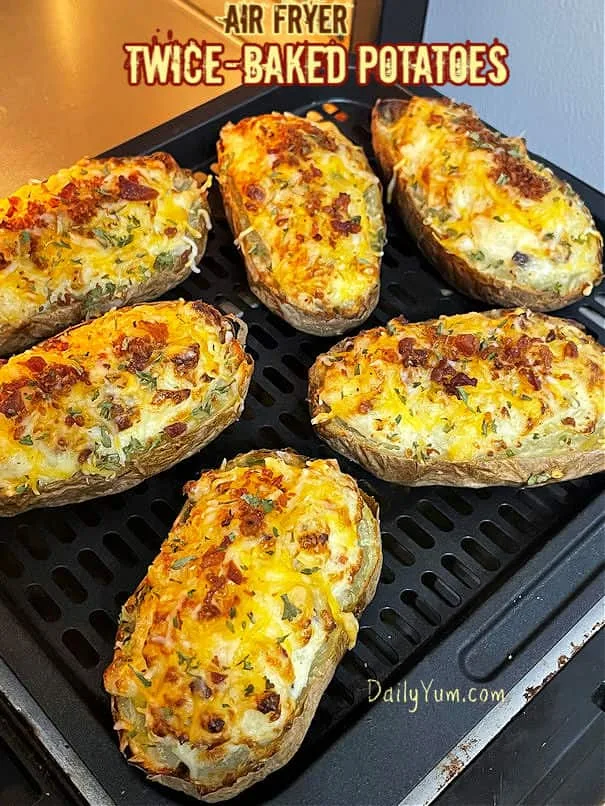
An air fryer twice baked potatoes recipe gives you crispy skins and fluffy, loaded centers in about half the time a conventional oven needs. The hot circulating air in an air fryer (a countertop convection appliance that cooks by circulating superheated air around food at speeds up to 400°F / 205°C) crisps the skin beautifully while keeping the interior tender. You get restaurant-quality results with less energy and without turning your kitchen into a furnace.
The two-stage cook is what makes this recipe different from a standard baked potato. You air fry the whole potato first, then scoop out the flesh, mix it with butter, sour cream, cheese, and whatever toppings you like, stuff it back into the skins, and air fry again until golden. Total active prep is only about 10 minutes.
The whole process takes roughly 50 to 65 minutes from start to table. Here is exactly how to do it right.
Quick Answer
An air fryer twice baked potatoes recipe starts by air frying whole pierced and oiled Russet potatoes at 400°F for 30 to 40 minutes. Scoop out the cooked flesh and mash it with butter, sour cream, shredded cheese, and seasonings. Stuff the mixture back into the potato shells and air fry at 375 to 400°F for another 8 to 12 minutes until golden and heated through.
The result is a crispy-skinned potato with a fluffy, fully loaded center. Total time runs about 50 to 65 minutes.
Why Air Fryer Twice Baked Potatoes Are Worth the Extra Step
Twice baked potatoes sound like more work than they actually are. The "twice" part just means you cook the potato, fill it, and cook it again, and that second round is what takes them from basic to genuinely impressive. The filling gets hot and melty.
The skin crisps up a second time. Every bite has contrast.
Air fryers handle both stages exceptionally well. The concentrated circulating air creates a crispier skin than a standard oven, and the smaller cavity means faster heat-up times and shorter overall cook cycles. Aggregate user reviews across major air fryer models consistently report that potatoes come out with better skin texture compared to oven baking, and the 30 to 40 percent time savings is real.
A potato that takes 60 to 75 minutes in a conventional oven typically finishes in 35 to 42 minutes in an air fryer at 400°F.
The make-ahead angle matters too. You can complete the first bake and scooping step hours or even a day ahead, store the stuffed shells in the refrigerator, and then do the second bake right when you need them. That flexibility makes this recipe practical for weeknight dinners, not just weekend entertaining.
For households running a smaller air fryer (3 to 5 quarts), this recipe scales perfectly. You can cook two to four potatoes at a time, which covers most families without needing the larger 8 to 9 quart models designed for big-batch cooking. If you are working with a compact unit, the shorter cook times still save meaningful time compared to heating a full-size oven for just a few potatoes.
What You Need: Ingredients, Tools, and Potato Selection
The ingredient list is short. The technique matters more than anything you add to the potato.
Potatoes
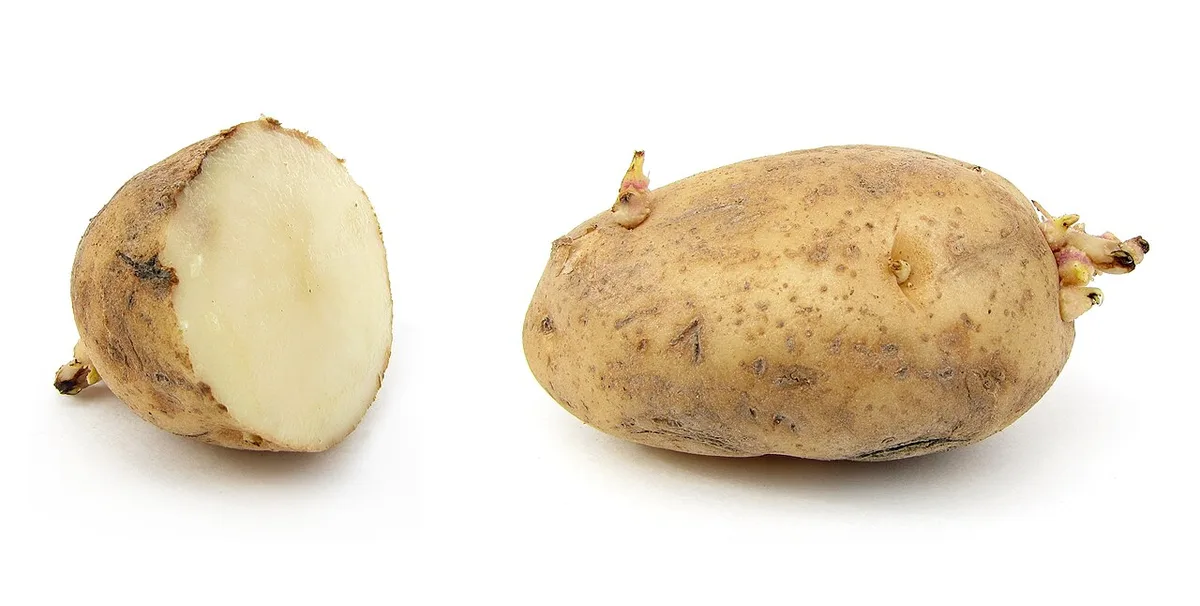
Russet potatoes (Solanum tuberosum, var. Russet Burbank) are the right choice. Their high starch content and thick skin produce a fluffy interior and a shell that holds its shape after scooping.
Each potato should weigh roughly 8 to 10 ounces and be roughly the same size so they cook evenly. Avoid using multiple sizes in the same batch. Smaller potatoes finish early and dry out while larger ones are still firm in the center.
Core Ingredients
The filling itself needs only a handful of pantry staples:
- 4 medium Russet potatoes (8 to 10 oz each)
- 2 tablespoons olive oil or avocado oil (for coating skins)
- Kosher salt and black pepper
- 3 tablespoons butter, softened
- 1/3 cup sour cream
- 1 cup shredded cheddar cheese (reserve 1/4 cup for topping)
- 2 tablespoons chopped chives or green onion
- 4 slices cooked bacon, crumbled (optional)
Scale up or down proportionally. One potato per person works as a side dish. Two per person works as a main course.
Tools
- Air fryer (basket-style or oven-style, 3 quarts and up)
- Sharp paring knife or chef's fork
- Mixing bowl and fork or potato masher
- Spoon for scooping (a grapefruit spoon or small ice cream scoop works well)
- Instant-read thermometer (recommended but not required)
If your air fryer has a perforated parchment liner, using one during the second bake helps prevent cheese from dripping into the basket. Cut small holes in any liner to maintain airflow.
Step 1: Air Fry the Whole Potatoes (The First Bake)
This stage is a straightforward air fry. The goal is a fully cooked, tender potato with a skin that has started to crisp. Everything downstream depends on getting this right.
Prepare the Potatoes
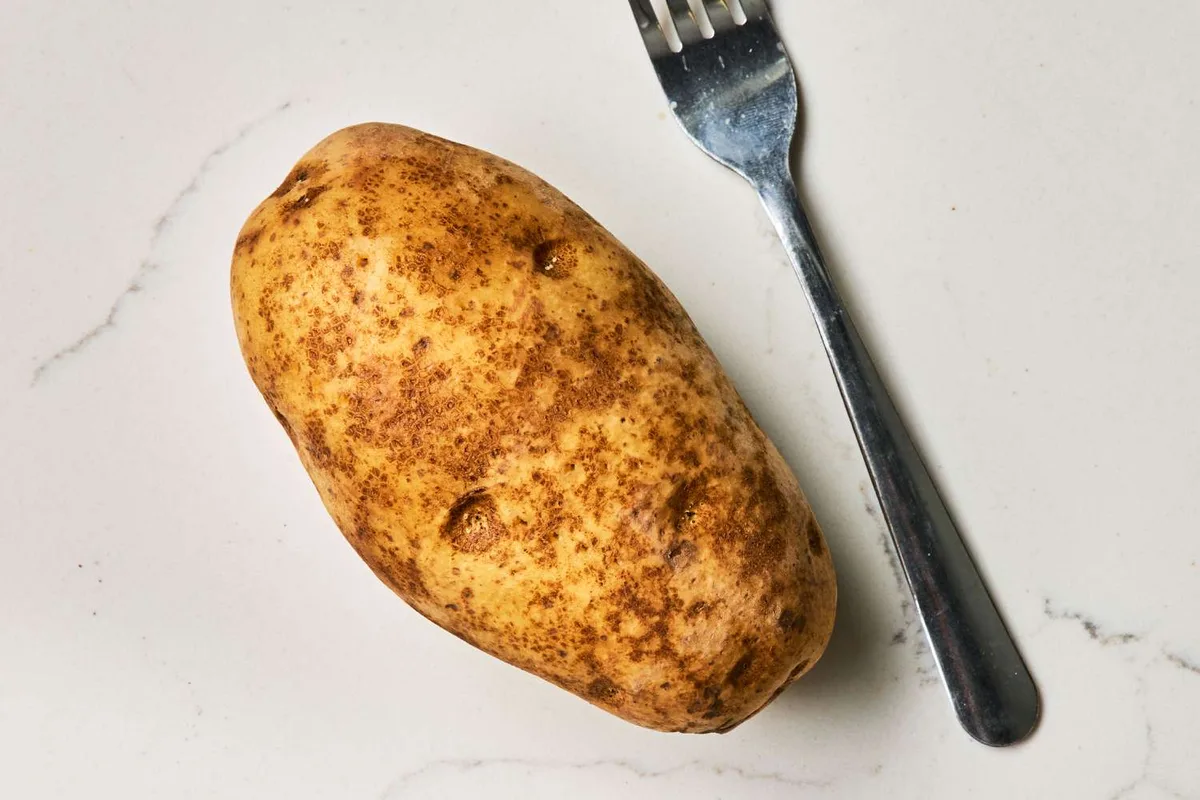
Scrub each potato under cold running water to remove dirt. Pat them completely dry. Any moisture on the skin steams instead of crisping.
Pierce each potato 4 to 5 times with a fork, going about 1/2 inch deep. These punctures let steam escape during cooking and prevent the potato from splitting or creating pressure inside the air fryer.
Coat each potato lightly with oil. Use a brush or your hands to spread a thin, even layer over the entire surface. Season generously with kosher salt.
The oil conducts heat into the skin and helps it crisp. The salt draws out a bit of surface moisture and seasons the skin itself.
Arrange and Cook
Place the potatoes in the air fryer basket in a single layer. Leave at least 1 inch of space between each potato so air circulates on all sides. Overcrowding is the single most common mistake.
It blocks airflow, creates uneven cooking, and produces soggy spots on the skin.

Set the air fryer to 400°F (205°C). Cook for 30 to 40 minutes for medium (8 to 10 oz) potatoes. Turn each potato halfway through at the 15 to 20 minute mark.
Larger potatoes (12 oz and up) may need 42 to 48 minutes.
Check for Doneness
A fully baked potato reaches an internal temperature of 205 to 210°F (96 to 99°C). If you have an instant-read thermometer, insert it into the center of the largest potato. It should slide in with zero resistance.
Without a thermometer, squeeze the potato gently with an oven-mitt-covered hand. It should feel soft and yield easily. A knife inserted into the center should come out clean.
Let the potatoes rest for 5 to 10 minutes after removing them from the air fryer. They need to be cool enough to handle, and the flesh continues to set slightly during this rest.
Step 2: Scoop, Season, and Build the Filling
This is where the recipe becomes twice baked. The scooping step takes about 5 minutes and sets up everything that follows.
Scoop Out the Flesh
Cut each potato in half lengthwise. Using a spoon, scoop the cooked potato flesh into a mixing bowl. Leave a shell about 1/4 inch (6 mm) thick all the way around.
This thin wall is what gives the skin enough structure to hold the filling during the second bake without collapsing or tearing.
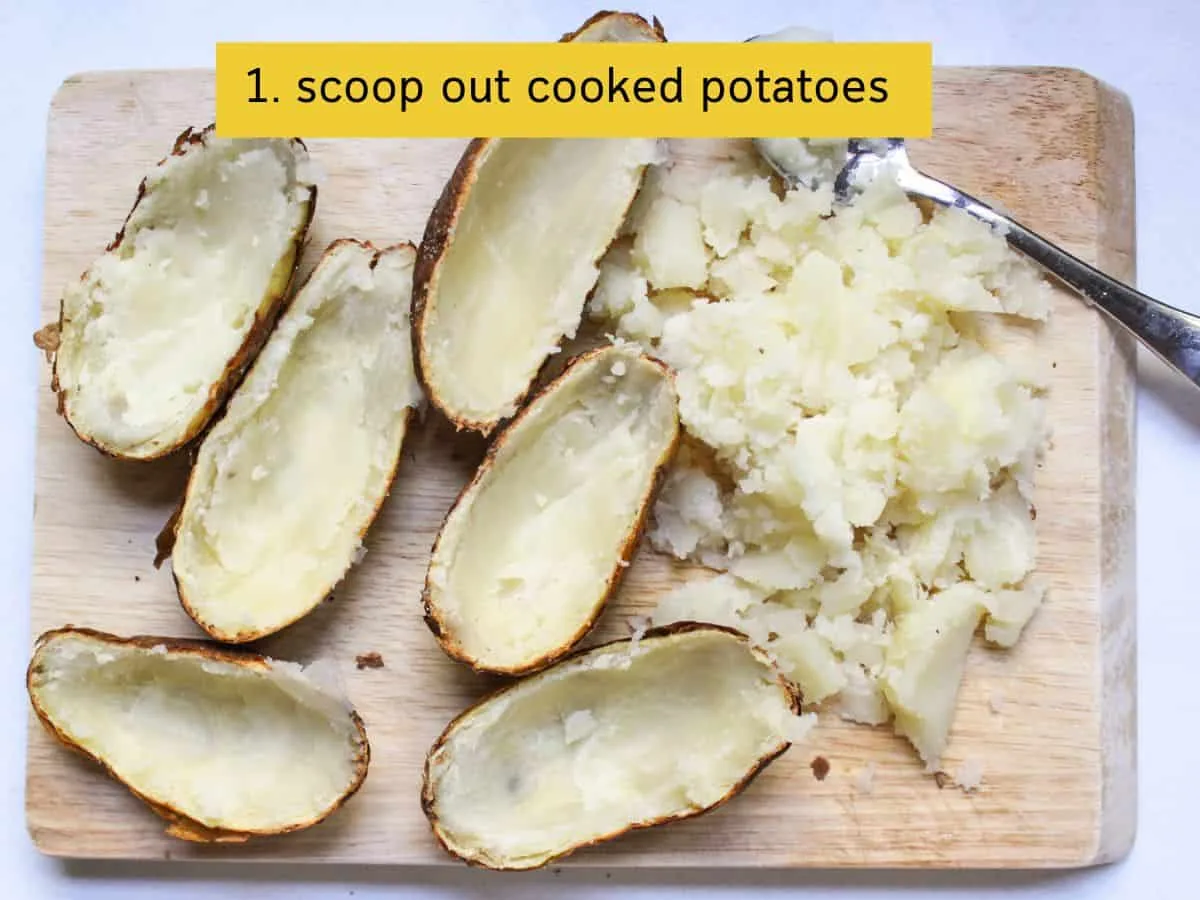
Do not dig all the way to the skin. If you puncture the shell, the filling will leak out during the second round. A grapefruit spoon with its serrated edge makes this step easier, but a regular tablespoon works fine.
Build the Filling
Add the softened butter to the bowl of scooped potato flesh while it is still warm. The residual heat melts the butter and distributes it evenly. Mash with a fork or potato masher until the texture is fluffy but not perfectly smooth.
A few small lumps are fine and actually preferable. Over-mixing activates the starch and makes the filling gluey.
Stir in the sour cream, 3/4 cup of the shredded cheese, chives, and bacon if using. Season with salt and pepper to taste. The filling should be creamy, well-seasoned, and hold a loose shape on a spoon.
If it seems too thick, add another tablespoon of sour cream. If it seems too wet, it likely needs another minute of air drying in the bowl.
Stuff the Shells
Spoon the filling back into each potato shell, mounding it generously above the rim. The filling will not overflow during cooking, so do not be shy. Press it gently into the shell so it makes good contact.
Top each one with the reserved shredded cheese.
At this point, the stuffed potatoes can be refrigerated for up to 24 hours. Cover the tray with plastic wrap or transfer to an airtight container. When you are ready to serve, move on to the second bake.
Add 2 to 3 minutes to the second bake time if the potatoes are going in cold from the refrigerator.
Step 3: Stuff and Crisp (The Second Bake)
The second bake melts the cheese, heats the filling through, and re-crisps the skin. It is the shortest step but the one that makes the finished potato look and taste complete.
Arrange the Stuffed Potatoes
Place the stuffed potato halves back into the air fryer basket. Stand them upright so the filling faces up. If they tilt or lean, you can crumple small pieces of aluminum foil into wedges to prop them in place.
Leave space between each one for airflow.
If you are using a perforated parchment liner, lay it in the basket first. This catches any cheese that melts over the edge and makes cleanup significantly easier.
Air Fry the Second Round
Set the air fryer to 375°F (190°C). Cook for 8 to 12 minutes. The filling should be heated through and the cheese on top should be melted and starting to turn golden.
The skin will crisp further during this stage.
Watch the last few minutes closely. Cheese can go from golden to burnt quickly in an air fryer because of the intense radiant heat from the element above the basket. If the cheese is browning too fast, drop the temperature to 350°F and add 2 more minutes.
Rest and Serve
Let the potatoes cool for 2 to 3 minutes after the second bake. The filling will be extremely hot, and this brief rest lets it set slightly so it holds together when you pick it up. Garnish with extra chives, a small dollop of sour cream, or a crack of black pepper.
Classic Topping Combinations That Actually Work
The basic butter-sour cream-cheese foundation is solid on its own. But a few well-tested combinations take these from good to memorable.
The Classic Bacon Cheddar
Crispy crumbled bacon, sharp cheddar, chives, and a pinch of garlic powder. This is the default for a reason. The salt from the bacon and the sharpness of the cheddar balance the richness of the butter and sour cream.
Broccoli and White Cheddar
Steam 1 cup of broccoli florets until just tender, chop finely, and fold into the filling with shredded white cheddar. Add a pinch of Dijon mustard. This combination adds color and a slight vegetal bite that cuts through the richness.
Southwest Style
Swap cheddar for pepper jack. Fold in 2 tablespoons of canned diced green chiles and a pinch of cumin. Top with pickled jalapeños after the second bake.
Finish with a drizzle of hot sauce or a spoonful of pico de gallo.
Loaded Everything
Bacon, cheddar, sour cream, chives, and a sprinkle of everything bagel seasoning on top after the second bake. It sounds like a lot, but the seasoning adds a savory crunch that works.
Lighter Version
Replace butter with Greek yogurt (same amount). Use reduced-fat cheddar and skip the bacon. Add roasted garlic and fresh herbs.
The texture stays creamy, and you cut roughly 80 to 100 calories per potato.
Keep mix-ins finely chopped or crumbled. Large chunks create uneven filling and make the potatoes harder to eat. Fold additions in gently.
Over-mixing at this stage is the fastest way to end up with a dense, gummy filling.
Timing and Temperature Guide by Air Fryer Model
Not all air fryers run at the same actual temperature when you dial in 400°F. Basket-style units from brands like the Ninja AF101 (1,550W) and the Cosori CP158-AF (1,700W) tend to run slightly hotter than their setpoint, while oven-style models like the Cuisinart TOA-60 heat more evenly but may need an extra 3 to 5 minutes due to their larger cavity volume.
Here is a practical reference for the first bake at 400°F:
| Air Fryer Type | Wattage Range | Medium Potato (8-10 oz) | Large Potato (12+ oz) |
|---|---|---|---|
| Compact basket (3-4 qt) | 1,200-1,500W | 35-42 min | 42-50 min |
| Standard basket (5-6 qt) | 1,500-1,700W | 30-38 min | 38-45 min |
| Oven-style / toaster combo | 1,500-1,800W | 33-40 min | 40-48 min |
The second bake is less sensitive to model differences. Eight to twelve minutes at 375°F works across virtually every unit. If your air fryer has a "reheat" function, that setting (typically 350°F) works for the second bake too.
Just add 3 to 4 minutes.
Altitude matters less with air fryers than with ovens, but if you are cooking above 5,000 feet, add 3 to 5 minutes to the first bake. The sealed, pressurized-like environment of an air fryer basket partially compensates for lower atmospheric pressure, but the reduced air density still slows heat transfer slightly.
How to Tell When Your Potatoes Are Done (Without Guesswork)
An instant-read thermometer is the most reliable tool. Insert it into the thickest part of the potato. At 205 to 210°F (96 to 99°C), the starch has fully gelatinized and the flesh will scoop cleanly.
Below 195°F, the center will still feel firm and the texture will be waxy rather than fluffy.
Without a thermometer, use the squeeze test. Hold the potato with an oven mitt and gently press from opposite sides. A done potato yields evenly and feels soft all the way through.
If the center resists, give it another 5 minutes. The fork test works too. A fork inserted into the center should slide in and pull out with zero resistance.
For the second bake, visual cues matter more than temperature. The cheese should be fully melted and starting to show golden-brown spots. The filling should be bubbling slightly at the edges.
If the cheese is melted but the filling still feels cool in the middle when you touch the side of the potato, add 2 more minutes.
One sign of overbaking: the skin starts to wrinkle and pull away from the filling. This means the potato has been in too long and moisture has evaporated from the shell. Pull them as soon as the cheese is golden.
Common Mistakes That Ruin Twice Baked Potatoes
Skipping the fork piercings is the most frequent error. Whole un-pierced potatoes trap steam, which can cause uneven cooking and, in rare cases, splitting that makes a mess in the basket. Four to five piercings per potato takes 10 seconds and prevents the problem entirely.
Overcrowding the basket is the second most common issue. When potatoes touch each other, the contact points steam instead of crisping. Every surface needs exposure to circulating air.
If you need to cook six potatoes and your basket only fits four comfortably, run two batches. The first batch can rest under foil while the second batch cooks. They will hold their heat for 15 to 20 minutes.
Over-mixing the filling turns it gluey. Potato starch is powerful. Once you add liquid (butter, sour cream), aggressive stirring develops the starch into a paste.
Fold gently with a fork. Stop as soon as the ingredients are combined. Lumps are fine.
Gummy filling is not.
Using cold butter straight from the refrigerator is another easy mistake. Cold butter does not distribute evenly and leaves hard pockets in the filling. Let it sit at room temperature for 20 to 30 minutes before mixing, or microwave it for 10 seconds.
Finally, skipping the rest after the first bake makes scooping harder and increases the chance of tearing the shell. Those 5 to 10 minutes of cooling let the flesh firm up just enough to scoop cleanly.
Make-Ahead and Reheating Strategy
Twice baked potatoes are one of the best make-ahead side dishes. Complete through the stuffing step, arrange the filled shells on a tray, cover tightly with plastic wrap, and refrigerate for up to 24 hours. When you are ready to serve, air fry at 375°F for 10 to 14 minutes.
The extra 2 to 4 minutes account for the cold start.
For longer storage, freeze the stuffed, unbaked shells. Place them on a parchment-lined tray and freeze solid (about 2 hours), then transfer to a freezer bag. They keep for up to 3 months.
Cook from frozen at 375°F for 18 to 22 minutes. Do not thaw first. Thawing releases moisture and makes the skins soggy.
Leftover cooked twice baked potatoes reheat well in the air fryer. Set the temperature to 350°F and cook for 6 to 8 minutes until the center is hot. The air fryer restores crispness to the skin in a way that a microwave simply cannot.
If you only have a microwave, use the reheat setting for 2 to 3 minutes, but expect softer skins.
Per USDA Food Safety and Inspection Service guidelines, refrigerate cooked potatoes within 2 hours of cooking. Store in airtight containers and consume within 3 to 4 days. Reheat leftovers to an internal temperature of 165°F (74°C).
Air Fryer vs. Conventional Oven: Is It Actually Better?
For this specific recipe, the air fryer wins on speed and skin texture. A conventional oven at 400°F takes 55 to 70 minutes for the first bake alone. The air fryer finishes the same job in 30 to 40 minutes.
The difference comes down to cavity size. An air fryer's compact chamber (typically 2 to 6 quarts) heats faster and maintains more consistent airflow around each potato. A full-size oven has to heat 18 to 30 cubic feet of space, which takes longer and circulates air less precisely.
Skin crispness is noticeably better in the air fryer. The concentrated airflow hits the oiled skin from multiple angles simultaneously, creating an even, crackly texture. Oven-baked potatoes often have one crispy side and one softer side where the potato sat against the baking sheet.
The oven does have one advantage: capacity. A standard sheet pan holds 8 to 12 potatoes comfortably. If you are cooking for a crowd, the oven is more practical.
For batches of 1 to 6 potatoes, the air fryer is faster, more energy efficient, and produces better results.
Energy use favors the air fryer as well. A 1,500W air fryer running for 45 minutes uses about 1.1 kWh. A 3,000W oven running for 70 minutes uses about 3.5 kWh.
Over time, that difference adds up, especially if you are cooking potatoes regularly.
If you are deciding between methods for a weeknight side for two to four people, the air fryer is the clear choice. For holiday dinners serving eight or more, use the oven for the first bake and finish individual portions in the air fryer for the second bake if you want the best texture.
Dietary Swaps and Customization Ideas
This recipe adapts well to most dietary needs without sacrificing texture or flavor. The base potato, oil, and salt are naturally gluten-free, so the recipe works for celiac and gluten-sensitive diets as long as any added toppings are verified gluten-free.
For dairy-free versions, replace butter with olive oil or a plant-based butter substitute. Swap sour cream for cashew cream or a dairy-free sour cream alternative. Nutritional yeast adds a savory, cheese-like flavor if you are skipping real cheese entirely.
The filling will be slightly less rich but still creamy.
Low-carb and keto followers can use cauliflower as a partial substitute. Replace half the scooped potato flesh with steamed, well-drained cauliflower florets before mashing. This cuts the carbohydrate content per potato by roughly 15 to 20 grams while keeping enough potato flavor that the result still tastes like a twice baked potato.
For a vegan version, use vegan butter, plant-based sour cream, and a cashew-based cheese sauce. Add smoked paprika or a pinch of liquid smoke to mimic the depth that bacon normally provides. Black beans and diced jalapeños make a hearty vegan filling that holds up well during the second bake.
If you are cooking for someone with nightshade sensitivities, sweet potatoes work as a one-to-one substitute for Russets. They bake slightly faster (reduce the first bake by 5 to 7 minutes) and have a sweeter flavor that pairs well with brown butter, pecans, and a drizzle of maple syrup after the second bake.
Cleaning Up: Basket Maintenance After Cheesy Potatoes
Melted cheese in an air fryer basket is the main cleanup headache with this recipe. A perforated parchment liner during the second bake catches most drips and makes the job significantly easier. If cheese does land on the basket, soak it in warm soapy water for 10 to 15 minutes before scrubbing.
Do not use abrasive pads on non-stick coatings. A soft sponge and dish soap remove residue without damaging the surface.
For oven-style air fryers with wire racks, remove the rack and soak it in the sink. Baking soda sprinkled on stubborn cheese spots helps break down the proteins. Let it sit for 5 minutes, then wipe clean.
Wipe down the interior heating element area with a damp cloth while the unit is cool. Grease buildup near the element can smoke during future cooks. Most air fryer baskets are dishwasher safe, but check your manufacturer's guidelines.
The Ninja AF101 and Cosori CP158-AF baskets are both rated dishwasher safe per their official spec sheets.
Frequently Asked Questions
Can I use Yukon Gold potatoes instead of Russets?
Yes, but expect a slightly different texture. Yukon Golds have a lower starch content and higher moisture, so the filling will be creamier and less fluffy. Reduce the first bake by 3 to 5 minutes since they cook slightly faster.
The skins are thinner, so handle them carefully during scooping.
How many potatoes fit in a standard air fryer?
A 5 to 6 quart basket-style air fryer holds 3 to 4 medium potatoes comfortably. Oven-style models with multiple racks can handle 6 to 8. Never stack potatoes on top of each other.
Every piece needs airflow on all sides.
Why are my potato skins soggy?
The most common causes are skipping the oil coating, overcrowding the basket, or not piercing the potatoes before cooking. Oil conducts heat into the skin and drives off surface moisture. Overcrowding traps steam.
Unpierced potatoes hold internal steam that softens the skin from the inside.
Can I air fry frozen twice baked potatoes?
Yes. Place frozen stuffed potatoes directly into the air fryer basket at 350°F for 18 to 22 minutes. No need to thaw.
The center should reach 165°F before serving. Cover loosely with foil for the first 12 minutes if the tops are browning too quickly.
What is the best cheese for twice baked potatoes?
Sharp cheddar melts well and has enough flavor to stand up to the potato. Gruyere adds a nutty depth. Pepper jack brings heat.
Avoid pre-shredded cheese when possible. Anti-caking agents (cellulose) can make the melt slightly grainy. Shredding from a block gives a smoother result.
How far ahead can I prep the stuffed potatoes?
Assembled and uncooked stuffed potatoes keep in the refrigerator for up to 24 hours. Freeze them for longer storage (up to 3 months). Cook from frozen, adding 6 to 8 minutes to the second bake time.
Final Notes
An air fryer twice baked potatoes recipe is one of those dishes that looks impressive but asks very little of you. The active work adds up to about 10 minutes. The air fryer handles the rest.
Crispy skins, fluffy cheesy centers, and a total time under 65 minutes make this a practical weeknight side that doubles as party food when you need it.
The recipe scales easily, adapts to dietary restrictions, and reheats better than almost any other potato dish. Once you have the two-bake method down, you will find yourself reaching for it regularly. It is the kind of recipe that earns a permanent spot in the rotation.