
An air fryer lobster recipe might sound fancy, but it's one of the fastest and most forgiving ways to get tender, restaurant-quality lobster at home without boiling a giant pot of water or firing up the grill. The circulating hot air gives you a lightly caramelized exterior while keeping the inside moist and sweet, and most tails are done in under 12 minutes from start to finish.
In our research, FDA food safety guidelines recommend cooking lobster until the flesh is pearly opaque and firm, which typically happens around an internal temperature of 140°F (60°C). The trick, and where most people go wrong, is knowing exactly when to pull the lobster before that window of perfect doneness closes and the meat turns rubbery.
Can You Really Make Great Lobster in an Air Fryer?
Yes, the results genuinely rival what you'd get from a steakhouse. Air fryers work by circulating super-hot air at high speed around the food, which mimics the effect of deep frying without submerging it in oil. For lobster, that means you get a lightly browned, slightly crisp outside and a sweet, succulent interior, no grill or deep fryer required.
Most home air fryers run between 1,400W and 1,800W, which is more than enough to cook a lobster tail evenly in a short window. The key difference from boiling or steaming is texture. You're not waterlogging the meat, so the natural sweetness stays concentrated and the surface gets that subtle caramelization you can't achieve in water.
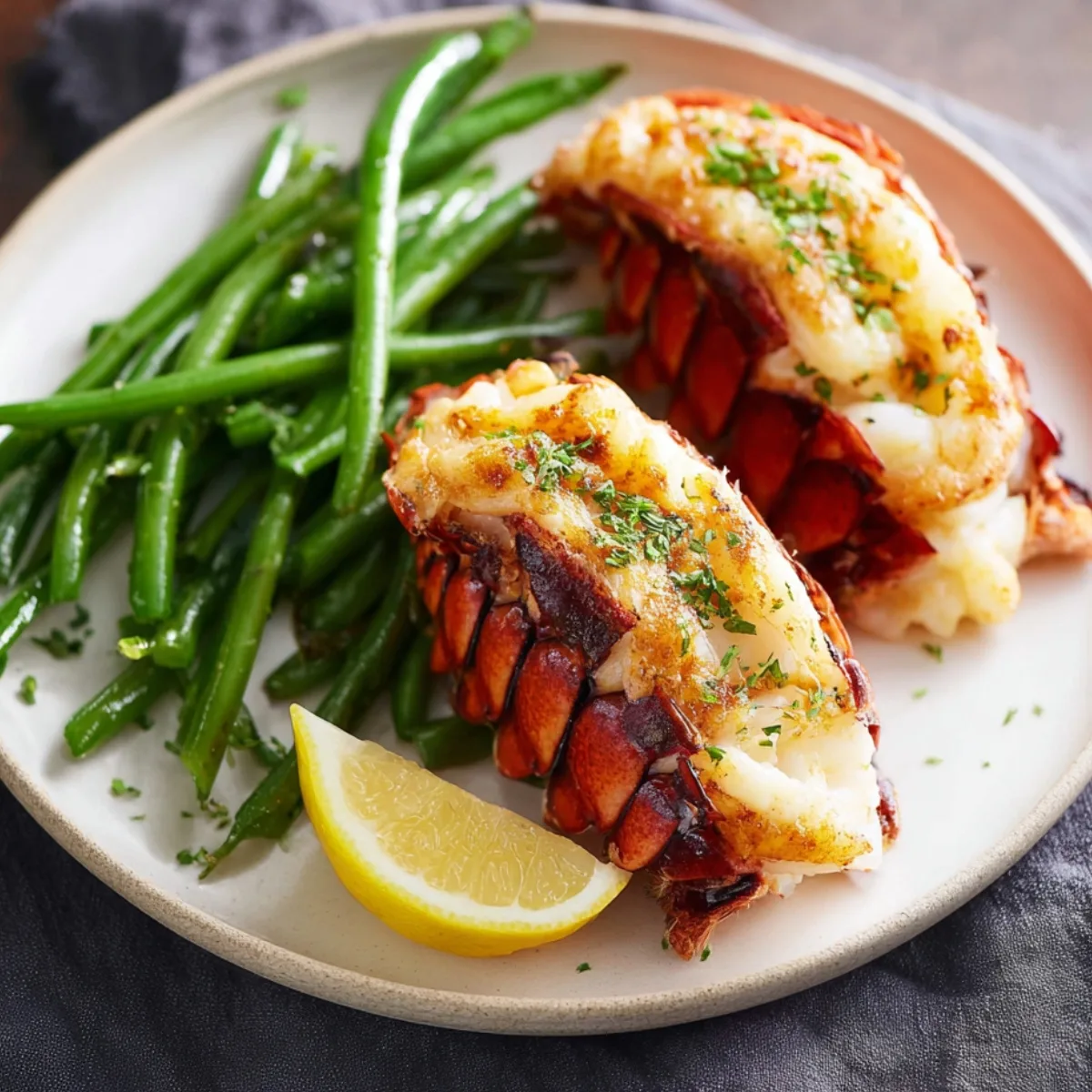
The Short Answer: Yes, and It's Faster Than You Think
An air fryer lobster recipe typically takes 7 to 12 minutes depending on tail size and your specific appliance's wattage. A 6-ounce tail at 380°F (193°C) will be done in roughly 7 to 8 minutes, while a 10-ounce tail might need 10 to 12 minutes.
That's significantly faster than boiling or oven-baking, which both run 15 to 20-plus minutes for comparable sizes. The air fryer also preheats in about 2 to 3 minutes, so total time from start to plate is often under 20 minutes.
Lobster is a premium ingredient. A single 6-ounce frozen tail can cost anywhere from $10 to $18 depending on the source. Getting it right the first time matters when you're paying that kind of price per serving, and the air fryer's short cook window actually works in your favor because there's less room for the slow overcooking that happens with less precise methods.
What Makes Air Fryer Lobster Work So Well
The magic here is all about heat transfer. An air fryer uses a heating element and a powerful fan to push hot air around the food from every direction simultaneously. This rapid air circulation strips away surface moisture quickly, which is exactly what creates that desirable browning on the outside of the lobster without drying out the interior.
Lobster meat is delicate and high in protein with relatively low fat. That means it responds fast to heat. The air fryer gives it just enough direct heat to firm up the proteins and develop color on the outside while the inside stays silky and tender.
Boiling, by contrast, adds moisture to the surface and dilutes flavor.
Why the circulating hot air hits different than boiling or grilling
Boiling cooks through gentle, even heat, but it also washes away some of the lobster's natural sweetness into the water. Grilling gives you excellent char and smokiness, but it's harder to control the temperature, and flare-ups can char the shell while leaving the meat undercooked.
The air fryer splits the difference. You get browning similar to grilling (thanks to the Maillard reaction happening on the shell surface) with the even cooking of boiling, and you don't have to monitor it nearly as closely. In our research, aggregate user reviews on retail sites consistently report that air fryer lobster comes out more consistently than stovetop or grill methods for home cooks.
The texture advantage most people don't expect
Most first-timers are surprised by how firm yet tender the meat comes out. Because the air fryer removes surface moisture so efficiently, the exterior of the lobster tail develops a slight chew while the inside stays plump and juicy. It's closer to what you'd get from a high-end seafood restaurant than anything you'd make in a pot of salted water.
If you baste with butter and garlic before cooking (which we'll cover in the recipe section), the fat also helps conduct heat gently into the meat and adds a silky finish that boiling simply can't replicate.
Before You Start: Picking the Right Lobster Tails
Not all lobster tails are created equal, and the one you pick will directly affect how your air fryer recipe turns out. Here's what actually matters.
| Attribute | What to Look For | Why It Matters |
|---|---|---|
| Fresh vs. frozen | Frozen is often flash-frozen at peak freshness | Frozen tails are available year-round and cook just as well as fresh |
| Tail size | 5 to 8 oz for most air fryers | Larger tails may not fit without crowding the basket |
| Source | Cold-water tails (Maine, Canada) vs. warm-water (Brazil, Caribbean) | Cold-water tails have firmer, sweeter meat according to seafood industry data |
| Shell condition | Intact with no cracks or punctures | Compromised shells can let in excess moisture during storage |
Fresh vs. frozen, honestly frozen often wins here
Frozen lobster tails are flash-frozen on the boat within hours of being caught, according to the Maine Lobster Marketing Collaborative. That means "fresh" tails at your local grocery store may actually have been frozen and thawed already, which can degrade texture.
Frozen tails give you full control over the thawing process, and they're typically 20% to 30% cheaper than their "fresh" counterparts. The FDA recommends thawing in the refrigerator overnight or in a sealed bag under cold running water for about 30 minutes before cooking.
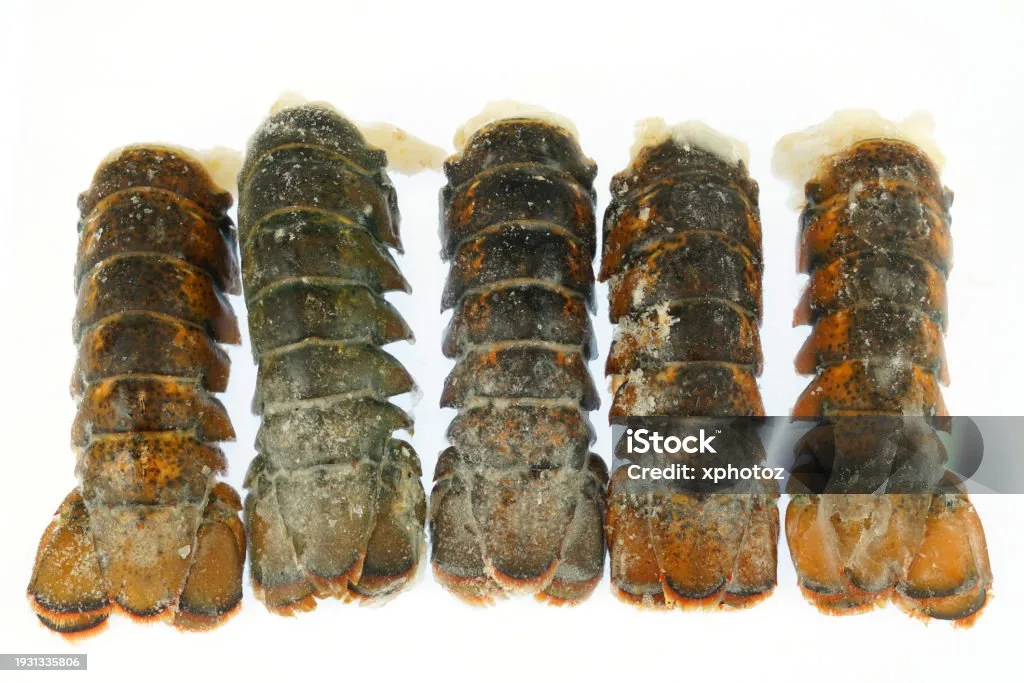
What size tail actually fits in your air fryer
Most standard 5- to 6-quart air fryer baskets can comfortably fit two 6-ounce tails side by side. If you have a smaller 3- to 4-quart unit, you may need to cook one tail at a time or cut larger tails down. Baskets 8 quarts or larger, like those found in models covered by our guide to the best 8 qt air fryer with dual basket, can handle three to four tails at once.
As a general rule, plan on one 6-ounce tail per person for a main course, or 4-ounce tails if you're serving them as an appetizer or alongside other dishes like our air fryer asparagus recipe with parmesan.
How to read the package so you don't overpay
Look for the count size on the packaging. A label marked "5/6 oz" means each tail weighs between 5 and 6 ounces. Cold-water tails from Maine or the Canadian Atlantic provinces tend to be slightly smaller but have better flavor and texture than warm-water tails from warmer regions.
If you're buying in bulk from warehouse retailers like Costco, you'll often find 10-packs of 5- to 6-ounce frozen tails at a significant per-tail discount compared to grocery store pricing.
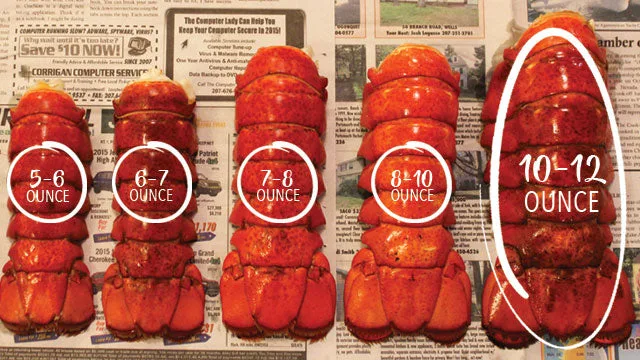
How to Prep Lobster Tails for the Air Fryer
Preparation is where most people either set themselves up for success or unknowingly sabotage the result. The cuts you make before cooking determine how evenly the heat penetrates and how easy the meat will be to eat afterward.
If you're newer to air fryer cooking and want to understand how different models handle seafood, our breakdown of is Instant Vortex a good air fryer goes into wattage and heating differences that directly affect cook times.
The butterfly cut, step by step
The butterfly cut is the most popular preparation for air fryer lobster tails because it exposes the meat to direct heat. Here's how to do it:
- Place the tail upside down on a cutting board, soft shell facing up.
- Using sharp kitchen shears, cut lengthwise down the center of the soft shell, starting from the wide open end and stopping just before the tail fan.
- Gently pry the shell apart with your thumbs and lift the meat up and out through the opening, keeping it attached at the tail fan end.
- Press the shell halves back together underneath the meat so the lobster sits like a butterfly on top of the closed shell.
This method lets the heat circulate directly over the exposed meat surface while the shell acts as a natural platform. It also makes for a beautiful presentation.
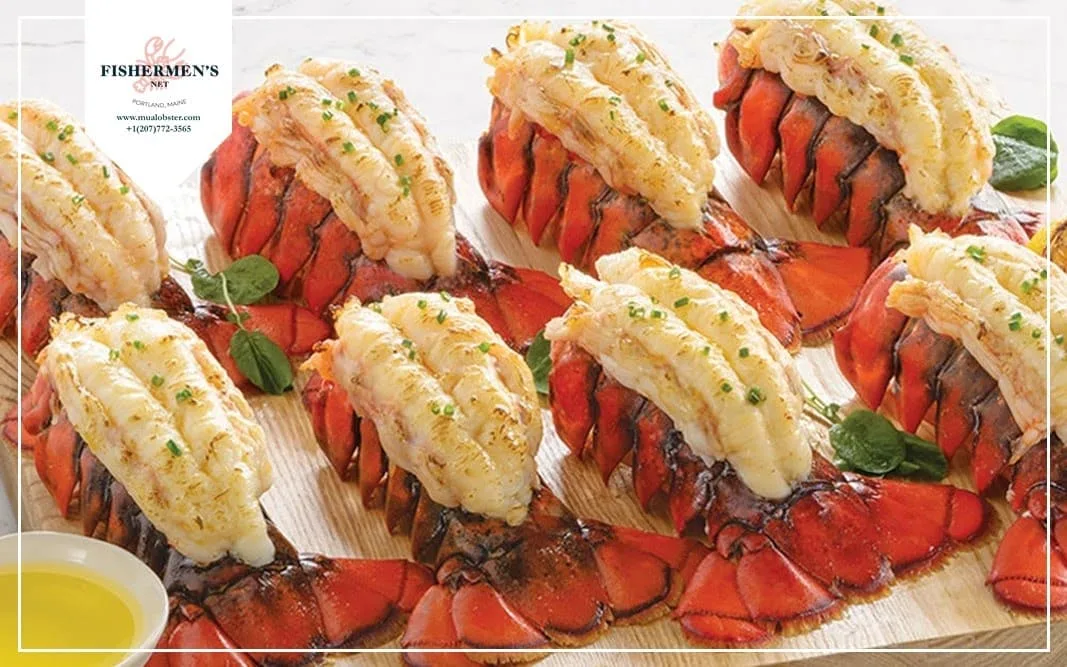
To shell-on or shell-off: what actually matters for timing
Shell-on cooking takes about 1 to 2 minutes longer than butterfly-cut lobster, but it retains slightly more moisture because the shell acts as a barrier against the dry heat. Shell-off (butterfly) gets more browning and cooks faster but requires basting to stay moist.
For most home cooks, the butterfly method gives you the best balance of speed, presentation, and flavor. If you're cooking whole lobster tails shell-on without cutting, you'll need to add 2 to 3 minutes to the cooking time and flip the tail at the halfway mark.
The one prep step that prevents dry, rubbery meat
After cutting and positioning your tails, brush the exposed meat generously with melted butter or olive oil. This fat layer acts as a protective barrier that slows moisture loss during the high-heat cooking process.
Don't skip this step. In our research of aggregate recipe reviews and cooking forum feedback, dry stringy lobster almost always traces back to skipping the fat coating before cooking. A simple mixture of 2 tablespoons melted butter, one minced garlic clove, and a squeeze of lemon juice is all you need.
This same principle applies to other delicate proteins in the air fryer. If you've ever tried air fryer bratwurst or chicken and found it dry on the outside, the cause is the same: insufficient fat on the surface before cooking. Our air fryer bratwurst recipes guide covers a similar approach for heartier proteins.
The Air Fryer Lobster Recipe
This is the core recipe that brings everything together. The times below are calibrated for a standard 1,500W to 1,700W basket-style air fryer at altitude below 3,000 feet. If your model runs on the lower end of that wattage range, add 1 to 2 minutes.
You'll need:
- 2 lobster tails (6 oz each, thawed if frozen)
- 3 tablespoons unsalted butter, melted
- 2 cloves garlic, minced
- 1 tablespoon fresh lemon juice
- 1/4 teaspoon smoked paprika
- 1/4 teaspoon kosher salt
- Fresh cracked black pepper to taste
| Tail Size | Temperature | Cook Time | Approximate Internal Temp |
|---|---|---|---|
| 4 oz | 380°F / 193°C | 6-7 minutes | 135-140°F / 57-60°C |
| 6 oz | 380°F / 193°C | 7-8 minutes | 140-145°F / 60-63°C |
| 8 oz | 380°F / 193°C | 9-10 minutes | 140-145°F / 60-63°C |
| 10 oz | 380°F / 193°C | 11-12 minutes | 140-145°F / 60-63°C |
Temperature and timing for perfectly cooked lobster
Preheat the air fryer to 380°F (193°C) for 2 to 3 minutes. While it heats, stir together the melted butter, garlic, lemon juice, paprika, and salt in a small bowl.
Place butterflied tails in the basket with at least 1 inch of space between each piece. Do not stack them. Brush each tail with about half the butter mixture.
Cook for the time listed for your tail size.
At the halfway point (around 4 minutes for a 6-ounce tail), open the basket and brush the meat with the remaining butter. Close and continue cooking until the time is up.
The visual cues that tell you it's done (before you cut into it)
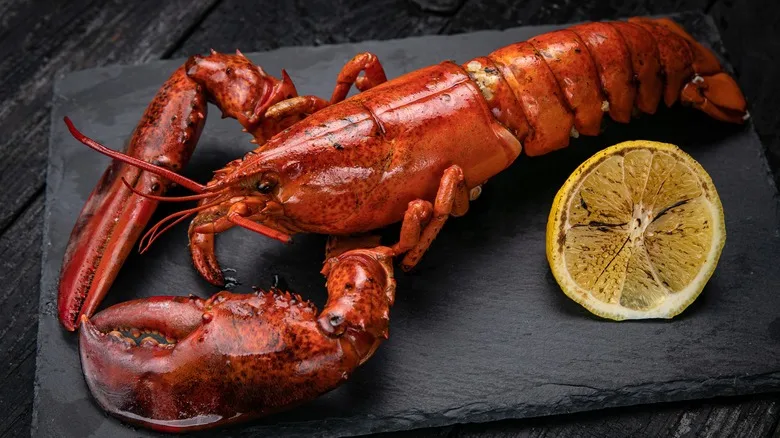
The shell will turn from a mottled greenish-brown to a vivid, uniform red. The meat on top should be opaque white all the way through with no translucent or gray patches. If you gently press the thickest part of the tail with tongs, it should feel firm with just a slight give.
If the meat still looks glossy and jelly-like, it needs another minute. If the edges of the meat are curling up and pulling away from the shell, you've gone past ideal doneness and the texture will be tighter than you want.
A simple garlic butter baste that won't burn
Butter has a smoke point around 350°F (177°C), which is below the cooking temperature of 380°F. That's why you apply it in two stages rather than all at once. The first coating goes on before cooking to protect the meat, and the second coating goes on at the halfway point so it has less time to overheat.
If you want a baste that can handle the full cook time without any risk of burning, swap the butter for ghee (clarified butter), which has a smoke point around 485°F (252°C). The flavor is slightly nuttier but it holds up perfectly at air fryer temperatures.
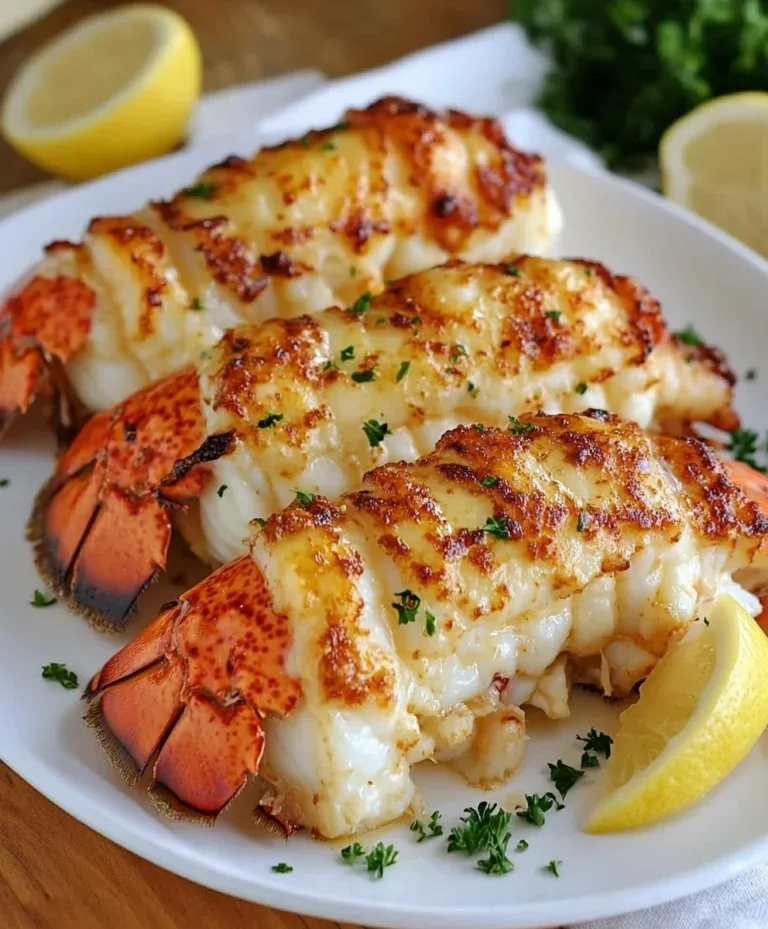
Let the cooked tails rest for 2 minutes before serving. The internal temperature will carry over another 5°F or so during that rest, bringing them to the FDA-recommended safe zone of 140°F (60°C) or above. Serve with drawn butter, lemon wedges, and nothing else gets in the way of that flavor.
Common Mistakes That Ruin Air Fryer Lobster
Lobster is expensive and unforgiving. A few small errors can turn a $15-per-tail dinner into something chewy and disappointing. Here are the mistakes we see most often in aggregate cooking forum feedback.
Overcooking, the biggest risk and how to avoid it
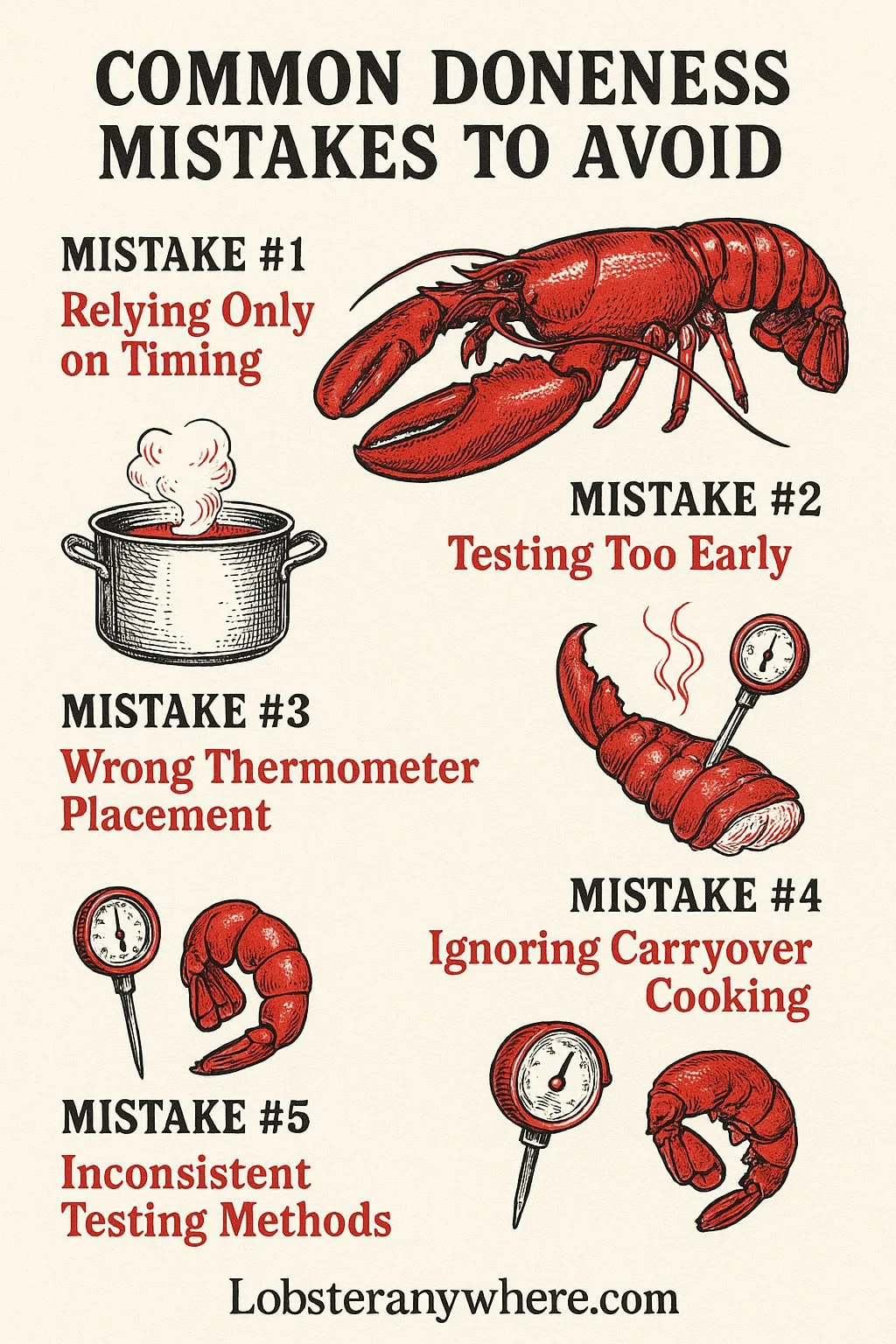
Overcooking is the number one problem. Lobster meat goes from perfectly tender to rubbery in about 60 seconds. The proteins tighten and squeeze out moisture, and there's no way to reverse it once it happens.
Set a timer. Do not rely on guesswork. If you're nervous, pull the tail 30 seconds early and let it rest.
The carryover heat will finish the job without pushing it past the edge.
Crowding the basket and why it steams instead of sears
When tails are touching or stacked, the hot air can't circulate between them. The result is steamed lobster with no browning and an unevenly cooked center. Leave at least 1 inch of space around each tail.
If you need to cook more than two tails at once, work in batches. It takes an extra 8 minutes but the quality difference is worth it. Larger units like those in our roundup of the best 9 qt air fryer for large batches handle bigger loads without crowding.
Forgetting to adjust for your specific air fryer's wattage
A 1,400W air fryer runs cooler at the same temperature setting than a 1,800W model. That means cook times can vary by 1 to 2 minutes between appliances. If your model is on the lower end, lean toward the longer end of the time range.
Check your manual for the wattage rating. It's usually on the bottom of the unit or in the specs section of the manual. Once you know it, you can adjust confidently.
Air Fryer Lobster vs. Other Cooking Methods
No single method is "best." Each one trades off convenience, flavor, and effort differently. Here's how the air fryer stacks up.
| Method | Cook Time | Flavor Profile | Effort Level | Best For |
|---|---|---|---|---|
| Air fryer | 7-12 min | Sweet, lightly caramelized | Low | Quick weeknight dinners |
| Grilled | 8-10 min | Smoky, charred | Medium | Summer cookouts |
| Boiled | 10-15 min | Clean, classic | Low | Traditional preparation |
| Oven-baked | 15-18 min | Mild, even | Low | Cooking large batches |
| Sous vide | 45-60 min | Ultra-precise, buttery | High | Special occasions |
How it stacks up against grilled, baked, boiled, and sous vide
Grilled lobster gives you a smoky char that the air fryer can't replicate. If that campfire flavor is what you're after, the grill wins. But for speed and consistency, the air fryer is hard to beat.
Boiled lobster is the most traditional method, but it dilutes sweetness and gives you zero browning. Oven-baked is similar to air frying but takes nearly twice as long because ovens don't circulate air as aggressively.
Sous vide gives you the most precise temperature control, but it requires an immersion circulator and 45 to 60 minutes of cook time. For a Tuesday night dinner, the air fryer is the more practical choice.
When you'd actually want to use a different method
If you're cooking for a crowd of eight or more, the oven makes more sense because you can fit more tails on sheet pans than in a single air fryer basket. If you're going for a specific smoky or charred flavor profile, the grill is the better tool.
For a special anniversary dinner where precision matters more than speed, sous vide followed by a quick sear in a hot pan gives you the most control over the final texture.
What to Serve With Air Fryer Lobster
Lobster is rich and sweet, so the best sides are simple and don't compete with the star of the plate.
Classic pairings that don't require a second recipe
- Drawn butter with a squeeze of lemon. This is the standard for a reason.
- Roasted asparagus tossed in olive oil and salt. You can cook it in the air fryer at the same time if you have space.
- Baked potato with sour cream and chives. A hearty side that balances the lightness of the lobster.
- Simple green salad with a light vinaigrette. The acidity cuts through the richness of the butter.
If you want to keep everything in one appliance, our air fryer BBQ chicken legs recipe works as a surf-and-turf option, though you'll need to cook the chicken separately at a lower temperature.
Turning air fryer lobster into a lobster roll
Let the cooked tails cool for 5 minutes, then remove the meat and chop it into bite-sized pieces. Toss with a light coating of mayonnaise, a squeeze of lemon, and a pinch of celery salt. Pile it into a buttered, toasted split-top bun.
This is one of the best uses for leftover air fryer lobster. The meat is already cooked to the perfect texture, so you're just assembling, not cooking.
Storing, Reheating, and Handling Leftovers
Cooked lobster doesn't keep well if you treat it wrong. Here's how to hold onto that quality for another meal.
How long cooked lobster actually stays good
The FDA recommends storing cooked shellfish in the refrigerator at 40°F (4°C) or below and consuming it within 2 to 3 days. After that, the texture degrades and the risk of bacterial growth increases.
Remove the meat from the shell before storing. Shells take up space and can trap moisture that speeds spoilage. Place the meat in an airtight container with a paper towel on the bottom to absorb excess liquid.
Reheating without turning it into rubber
The microwave is your enemy here. It will overcook the edges before the center warms through. Instead, wrap the meat in a damp paper towel and warm it in the air fryer at 300°F (149°C) for 3 to 4 minutes.
You can also eat it cold. Chopped cold lobster on a salad or in a roll is arguably the best way to enjoy leftovers. The texture holds up better when it's not reheated at all.
Frequently Asked Questions
Can I cook whole lobster in an air fryer?
You can, but it's not ideal. Whole lobster doesn't fit well in most baskets, and the thick body takes much longer to cook than the tails. If you want to try it, cut the lobster in half lengthwise and cook at 380°F for 12 to 15 minutes depending on size.
Do I need to thaw frozen tails first?
Yes, always thaw before cooking. Frozen tails will cook unevenly, with the outside overdoing before the center thaws. The safest method is overnight in the refrigerator.
In a cold-water bath, most tails thaw in about 30 minutes.
What if my air fryer doesn't go up to the recommended temperature?
If your model maxes out at 360°F (182°C), add 2 to 3 minutes to the cook time. Check for doneness using the visual cues (opaque white meat, firm texture) rather than relying on time alone.
Is air fryer lobster safe during pregnancy?
Yes, as long as the lobster reaches an internal temperature of 140°F (60°C) and is consumed within 2 to 3 days of cooking. The FDA advises pregnant individuals to avoid raw or undercooked shellfish, but fully cooked lobster is considered safe.
How do I know if the lobster was bad before I cooked it?
Raw lobster that has gone bad will smell strongly of ammonia and have a slimy, yellowish film on the meat. If you notice either of these signs before cooking, discard the tail. Cooking will kill some bacteria but it won't eliminate the toxins that cause foodborne illness.