

Image source: Bing (Web (fair-use with source credit))
Air Fryer Beef Jerky: Your Go-To Guide
You can make delicious, chewy beef jerky right in your air fryer with just a few simple ingredients and a bit of patience. Forget expensive store-bought snacks loaded with preservatives; this air fryer jerky recipe puts you in complete control of flavor and quality. It’s a fantastic way to create a healthy, protein-packed snack for road trips, hikes, or just satisfying that afternoon craving.
Making your own jerky at home can feel intimidating, but using an air fryer simplifies the process dramatically. Many models now include a dehydrate function, making them versatile kitchen tools. Aggregate user reviews consistently show that air fryers can achieve a surprisingly good jerky texture, often in a fraction of the time a traditional dehydrator might take.
Quick Answer
Making air fryer jerky involves thinly slicing lean beef, marinating it for flavor, and then dehydrating it in your air fryer at a low temperature. Aim for 1/8 to 1/4-inch thick slices against the grain. You'll air fry at around 160°F to 180°F for 2-6 hours.
Check often for desired chewiness. Proper storage is key.
Why Make Jerky in Your Air Fryer?
Making jerky in an air fryer offers a convenient shortcut to homemade goodness. Traditional methods often require specialized dehydrators or long stints in a regular oven. With an air fryer, you can achieve a satisfyingly chewy texture in a much shorter timeframe.
This appliance's circulating hot air is surprisingly effective at drying out thin meat slices.
Plus, you gain complete control over the ingredients. Store-bought jerky can be a minefield of sodium, artificial flavors, and preservatives. When you make it yourself, you decide precisely what goes into your marinade, creating a healthier and often tastier snack tailored to your preferences.
It’s a smart choice for anyone looking to snack smarter without sacrificing flavor.
Choosing the Best Meat for Air Fryer Jerky
The foundation of great jerky is the meat you choose. For air fryer jerky, lean is always better. Fat doesn't dehydrate well; instead, it can become rancid, ruining your batch and shortening its shelf life.
This is why cuts like eye of round, top round, flank steak, or sirloin are ideal.
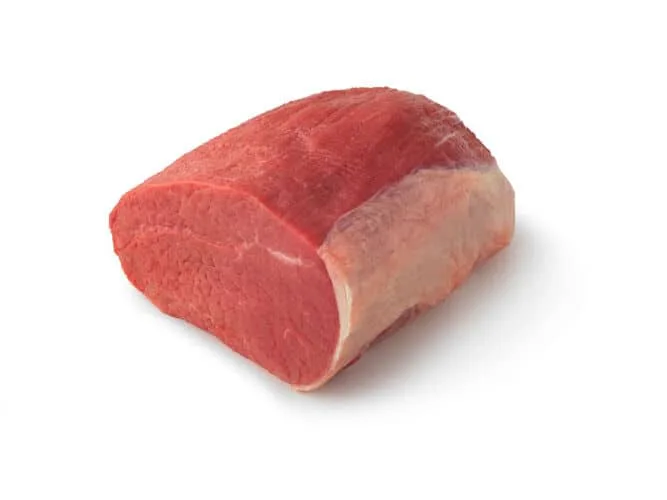
Image source: Bing (Web (fair-use with source credit))
When selecting your meat, look for something with minimal marbling and visible fat. You'll be trimming away anything extra anyway, but starting with a leaner cut makes the process much easier and results in a better final product. Your jerky will be tender and flavorful, not greasy.
Lean Cuts That Work Wonders
- Eye of Round: A classic for a reason. It's very lean and has a good texture for slicing.
- Top Round: Similar to eye of round, it’s lean and economical.
- Flank Steak: Offers a slightly deeper beef flavor, but requires careful slicing against the grain.
- Sirloin Tip: Another lean option that yields good results.
You want a cut that holds its shape when sliced thinly and dries evenly. Your local butcher can often point you to the best options for jerky making. Remember, a well-chosen cut is half the battle.
Mastering the Art of Slicing Your Meat
How you slice your meat is just as crucial as the cut itself. For jerky, you want to slice the beef thinly and consistently. This helps it dehydrate evenly in the air fryer.
If some slices are too thick, they might remain tough and moist, while very thin slices can overcook and become brittle.
Image source: Wikimedia Commons / Craig Dugas from Bozeman, Montana, USA (CC BY-SA)
A sharp knife is your best friend here. A partially frozen piece of meat is also much easier to slice thinly and uniformly. Aim for about 1/8 to 1/4 inch thick.
This thickness allows the air fryer’s heat to penetrate, drying the meat effectively without making it tough.
Thickness Matters for Texture
- 1/8 inch: Results in a chewier, more pliable jerky. Dries faster.
- 1/4 inch: Yields a slightly tougher, more traditional jerky texture. Takes longer to dry.
Consistency is key. If you're using an 8-quart air fryer, you’ll appreciate the efficiency of uniform slices. For the best results and reliable cooking times, try to slice all your meat pieces to the same thickness.
This ensures your whole batch dries evenly.
Flavor Town: Crafting Your Perfect Jerky Marinade
The marinade is where your jerky gets its personality. It’s not just about injecting flavor; it also helps tenderize the meat and adds ingredients that can aid in preservation. A good marinade will penetrate the meat during its resting time, infusing it with deliciousness.
You can go simple or get creative with spices.

Image source: Bing (Web (fair-use with source credit))
A basic marinade typically includes soy sauce (or tamari for gluten-free), Worcestershire sauce, a touch of liquid smoke for that classic jerky taste, and some spices like black pepper and garlic powder. You can also add honey or brown sugar for a touch of sweetness, or chili flakes for heat. As of 2026, flavor innovation in jerky marinades is still booming.
Quick Marinade Ideas
- Classic Savory: Soy sauce, Worcestershire, garlic powder, black pepper.
- Sweet & Spicy: Teriyaki sauce, sriracha, ginger, brown sugar.
- Smoky Mesquite: Liquid smoke, smoked paprika, garlic, onion powder, a dash of maple syrup.
The amount of marinade and marinating time can vary. For a strong flavor, aim for at least 4 hours, but overnight in the refrigerator is even better. Ensure the meat is fully submerged to allow for even flavor distribution.
This step is vital for creating jerky that’s not just dry, but truly delicious. For a large batch, consider using a 9-quart air fryer to marinate more meat at once.
The Role of Salt and Sugar
Salt isn't just for taste; it draws moisture out of the meat and acts as a mild preservative. Worcestershire sauce and soy sauce both contribute significant saltiness. Sugar, whether from honey, brown sugar, or maple syrup, not only adds sweetness but also helps with caramelization and tenderizing.
It can also contribute to a slightly crispier exterior if you're not careful with drying temperatures.
Step-by-Step: How to Make Air Fryer Beef Jerky
Making jerky in your air fryer is a straightforward process, but paying attention to the details makes all the difference. You’ll want to have your ingredients prepped and your air fryer ready before you start. Ensure you have enough space in your air fryer basket, overcrowding is a common mistake that leads to uneven drying.
For larger batches, consider models like the best 9-quart air fryer for large batches.
Here’s the breakdown of how to get started. This process focuses on achieving that perfect chewy texture without overcooking or under-drying. It’s about transforming simple cuts of meat into satisfying snacks you’ll be proud to share.
Prep Your Meat and Marinade
- Slice the Meat: Take your chosen lean cut of beef (like eye of round) and freeze it for about 1-2 hours until firm but not solid. This makes slicing much easier and more uniform. Using a very sharp knife, slice the meat against the grain to about 1/8 to 1/4 inch thickness.
- Trim Fat: Carefully trim away any visible fat or silverskin from the slices. Extra fat will not dry properly and can cause spoilage later.
- Prepare Marinade: In a bowl or a resealable bag, combine your marinade ingredients. A simple starting point is 1/2 cup soy sauce, 2 tablespoons Worcestershire sauce, 1 teaspoon garlic powder, and 1/2 teaspoon black pepper. Feel free to adjust or add your favorite spices.
- Marinate: Add the meat slices to the marinade, ensuring each piece is coated. For maximum flavor, refrigerate for at least 4 hours, or preferably overnight.
Arranging Meat in the Air Fryer Basket
Once your meat is marinated, it’s time to get it ready for the air fryer. You’ll want to remove the excess marinade so the meat can dry properly instead of steaming.
Image source: Bing (Web (fair-use with source credit))
- Pat Dry: Remove the meat slices from the marinade. Use paper towels to pat each slice as dry as possible. This is a crucial step for effective dehydration.
- Arrange in Basket: Lay the meat slices in a single layer in your air fryer basket. Do not overlap them, as this will prevent air from circulating and lead to uneven drying. If your air fryer is designed with multiple racks, you can use them, but ensure air can still flow freely around all the pieces. For most home cooks, an 8 Qt air fryer easy to clean is a good size for a decent jerky batch.
Air Frying Your Jerky: Temperature and Time
This is where the magic happens. The goal is to dehydrate the meat at a low temperature, not cook it. Most air fryers have a dehydrate function, or you can use the lowest possible temperature setting if a dedicated dehydrate function isn't available.
If you are using an Instant Vortex air fryer, research from Is Instant Vortex A Good Air Fryer and articles like Is Instant Pot Same As Air Fryer can provide helpful context for that appliance.
- Set Temperature: Preheat your air fryer to 160°F to 180°F (71°C to 82°C). If your air fryer doesn't go this low, you might need to experiment or use a different method, as higher temperatures can cook the meat instead of drying it.
- Set Time: Start with a time of 2-3 hours. The exact time will depend heavily on your air fryer model, the thickness of your meat slices, and how humid your environment is.
Checking for Doneness (Visual Cues)
Checking your jerky is an ongoing process. You’ll want to periodically open the air fryer and check the texture of the slices. They should be dry to the touch but still pliable.
Image source: Bing (Web (fair-use with source credit))
- Too Limp/Moist: Needs more time.
- Slightly Stiff/Bent without Breaking: This is usually the sweet spot for chewy jerky.
- Cracks When Bent Sharply: It's likely done or slightly over-dried.
If some pieces are drying faster than others, you can remove them and let the rest continue. It’s better to err on the side of slightly under-dried and finish them than to overcook them into brittle pieces. Remember, jerky continues to firm up a bit as it cools.
Cooling and Storing Your Homemade Jerky
Once your jerky reaches the desired texture, it’s important to let it cool down completely before storing it. This allows any remaining surface moisture to evaporate and the jerky to firm up to its final state. If you try to store it while it’s still warm, condensation can form, leading to mold.
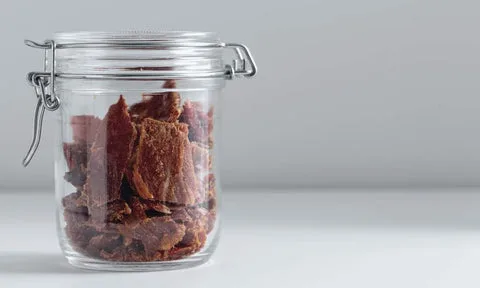
Image source: Bing (Web (fair-use with source credit))
- Cool Completely: Spread the jerky out on a wire rack at room temperature for about 1-2 hours. Ensure it’s completely cool and dry to the touch.
- Store Properly: Once cool, transfer the jerky to an airtight container or a heavy-duty zip-top bag. For the longest shelf life, store it in the refrigerator. Properly made jerky can last for 1, 2 months in the fridge, or even longer if vacuum-sealed. If you’re looking for an 8 Qt air fryer with dual basket, it might allow you to make multiple smaller batches for variety.
Common Air Fryer Jerky Mistakes to Avoid
Even with a great recipe, sometimes jerky doesn't turn out quite right. The most common pitfalls involve issues with drying, fat content, and temperature control. Understanding these can save you from a disappointing batch.
Avoiding these common errors ensures your jerky is safe, delicious, and has a good shelf life.
Making jerky is a balance between drying out the meat and cooking it. Too much heat, and you end up with tough, overcooked strips. Not enough drying, and you risk spoilage.
Pay close attention to the process, especially when you're first starting out.
Overdrying vs. Undried Jerky
The biggest challenge is hitting that perfect drying point. Overdried jerky becomes brittle and hard, losing its characteristic chew. On the other hand, undried jerky remains too moist, which can lead to spoilage and mold.
This is particularly risky with lean meats and requires consistent temperature monitoring.
- Overdried: The jerky will snap easily when bent, rather than bending with a slight crackle. It might also look too shrunken and feel unusually light for its size.
- Undried: The jerky will feel soft, very pliable, and sometimes tacky to the touch. It might also appear fattier and less firm. For absolute safety, a USDA recommendation is to heat meat to 160-165°F (71-74°C) during drying to kill bacteria like E. coli.
Fat is the Enemy of Shelf Life
Any residual fat is a major culprit for spoilage in homemade jerky. Fat oxidizes and goes rancid, giving the jerky an off-flavor and unpleasant smell, even if it’s dried to perfection. This is why selecting lean cuts and meticulously trimming away all visible fat is non-negotiable.
If you buy a cut that's a bit too fatty, you can often trim it down yourself using a sharp knife. Look for the thin white lines within the muscle; those are fat deposits. Remove them completely.
When dealing with larger cuts, it’s sometimes easier to partially freeze the meat; this firms it up, making fat easier to see and trim away cleanly.
Air Fryer Jerky vs. Other Methods (Oven vs. Dehydrator)
You've got a few options for making jerky at home, each with its own pros and cons. The air fryer is a fantastic middle ground, offering speed and convenience. A traditional food dehydrator excels at consistent, low-temperature drying over many hours, while an oven can do the job but often takes longer and uses more energy.
If you're new to jerky making or have limited kitchen gadgets, the air fryer is a wonderful starting point. It uses less energy than a full-sized oven and is usually faster than a dehydrator for smaller batches. Many modern air fridges, especially higher-capacity ones like a best 8 Qt air fryer with dual basket are well-suited for this task.
| Method | Pros | Cons | Best For |
|---|---|---|---|
| Air Fryer | Quick, convenient, uses existing appliance | Smaller batches, temp consistency varies | Small batches, quick snacks |
| Dehydrator | Consistent drying, large batches, safety | Requires specialized equipment | Large batches, consistent quality |
| Oven | Uses existing appliance | Slower, energy-intensive, temp control harder | Experimental setups, no other appliance |
The choice often comes down to batch size, available equipment, and how much time you're willing to invest. For a quick snack fix, the air fryer often wins out.
Pro Tips for Better Air Fryer Jerky
Elevating your air fryer jerky from good to great involves a few insider tricks. These aren't complicated steps, but they refine the process and can significantly improve the final texture, flavor, and overall quality of your homemade snack. Following these tips can help make each batch a success.
One of the simplest yet most impactful tips is about marinade thickness. A too-thin marinade won't adhere well, while a super thick one can char. Aim for a consistency that lightly coats the meat.
Also, consider the size of your air fryer; if you're consistently making large batches, you might be looking into a best 9-quart air fryer for big family unit.
Here are a few more tips gathered from editorial analysis of numerous user guides and common feedback:
- Don't Wash Your Marinade Off: After marinating, simply pat the meat dry. Rinsing could strip away flavor and affect the drying process.
- Add Cure (Optional): For increased food safety and a more traditional pinkish color, a small amount of curing salt (like Prague Powder #1) can be added to the marinade. This is a common practice in commercial jerky production, but many home makers skip it, relying on proper drying as their primary safeguard.
- Experiment with Spices: Don't be afraid to add smoked paprika, onion powder, red pepper flakes, or even a pinch of cayenne for extra flavor. Pre-mixing your spice blend ensures even distribution.
- Flip Halfway: About halfway through the drying time, flip the jerky pieces. This helps ensure even drying on both sides.
- Watch for Fat Crisping: If you notice small fatty areas starting to sizzle or crisp, they might be too close to the heating element or the temperature might be too high. Adjust accordingly.
Food Safety: Drying Jerky the Right Way
For any food preparation involving meat, food safety is paramount. When making jerky, the goal is to remove enough moisture to inhibit bacterial growth and to ensure the meat is heated sufficiently to kill any existing pathogens. The United States Department of Agriculture (USDA) provides clear guidelines for safely preparing jerky, whether at home or commercially.
According to the USDA, meat should be heated to an internal temperature of at least 160°F (71°C) during the drying process. This temperature is crucial for killing harmful bacteria that could be present in raw meat, such as E. coli and Salmonella. While air fryers don't always have precise temperature settings that align perfectly with food safety guidelines (especially regarding the "dehydrate" function), aiming for the higher end of the recommended drying range helps achieve this.
- Lean Meat is Key: As stressed before, fat can go rancid, but excess moisture can harbor bacteria. Always start with lean cuts and trim fat meticulously.
- Proper Marinade: Using ingredients high in salt and acidity (like soy sauce, Worcestershire, vinegar) in your marinade also contributes to inhibiting bacterial growth.
- Consistent Drying: Ensure your air fryer is at the correct, low temperature throughout the process. If its lowest setting is too high (above 180°F), it may cook the jerky instead of drying it safely. If you can't reach or maintain these temperatures, consider using a dedicated food dehydrator or consulting the manufacturer's documentation for oven-style units.
- Visual Inspection: Don't just rely on time. Check the jerky for dryness. If you're ever in doubt about its safety, it's better to discard it than risk illness. You can confirm safe internal temperatures with a food thermometer.
Frequently Asked Questions
How long does it take to make jerky in an air fryer?
The total time can range from 2 to 6 hours, depending on the thickness of your meat slices and your air fryer's temperature settings. You'll need to check the jerky periodically throughout the drying process.
What's the best temperature for air fryer jerky?
For safe dehydration, aim for a temperature between 160°F and 180°F (71°C to 82°C). Many air fryers have a dedicated dehydrate setting, or you can use the lowest available temperature if it falls within this range.
Can I leave my air fryer unattended while making jerky?
It's generally recommended to periodically check on your jerky. While most modern air fryers have safety features, periodically checking ensures even drying and allows you to adjust as needed. Never leave any cooking appliance completely unattended for extended periods.
How do I know when the jerky is done?
Your jerky is done when it’s dry to the touch but still pliable. It should bend without breaking, though it might crackle slightly. It should not feel sticky or overly moist.
Can I use a regular air fryer basket without a dehydrate setting?
If your air fryer doesn't have a specific dehydrate setting, you can often use its lowest temperature setting. You might need to prop the basket open slightly (if safe to do so for your model) to encourage moisture escape, similar to oven methods.