
You grabbed a bag of frozen salmon because dinner needed to be fast, healthy, and not boring. Air fryer frozen salmon recipes answer that exact problem: you go from freezer to plate in about 15 minutes with minimal oil and almost no cleanup. The method works because the rapid circulating hot air thaws and cooks the fillet simultaneously, giving you a crispy exterior without the dry, overcooked texture you'd get from a microwave.
The USDA recommends cooking fish to an internal temperature of 145°F (63°C), and an air fryer hits that target reliably when you use the right settings. Aggregate user reviews across major air fryer brands show that 375°F to 400°F for 10 to 15 minutes covers most frozen fillets between 4 and 8 ounces. The trick is knowing how thickness, skin type, and your specific model change those numbers.
That's what we'll walk through below.
Image source: Bing (Web (fair-use with source credit))
Quick Answer
Yes, you can cook frozen salmon directly in an air fryer with excellent results. Set the temperature between 375°F and 400°F. Cook for 10 to 15 minutes depending on fillet thickness.
No thawing is required. Check that the internal temperature reaches 145°F before serving.
Can You Really Cook Frozen Salmon in an Air Fryer?
Cooking salmon straight from frozen isn't just possible in an air fryer, it's arguably the best quick-cooking method for it. The circulating hot air surrounds the fillet evenly, thawing the outer layers first while building a lightly crisp crust before the center overcooks. You end up with salmon that flakes cleanly and tastes like you planned ahead, even though you didn't.
The key difference between an air fryer and an oven here is time and intensity. A conventional oven takes 20 to 25 minutes to bake frozen salmon because it has to heat a large cavity full of air. An air fryer's compact chamber reaches target temperature in 3 to 5 minutes and cooks the fish in roughly half the time.
That speed matters on a weeknight when you're hungry and the kids are asking what's for dinner.
Image source: Bing (Web (fair-use with source credit))
One thing to keep in mind: not all frozen salmon is created equal. Individually quick-frozen (IQF) fillets cook more evenly than block-frozen pieces because each portion freezes separately, so there are no ice bridges holding uneven thicknesses together. Brands like Gorton's, Highliner, and Costco's Kirkland Signature sell IQF portions that work especially well in the air fryer.
If your fillets came frozen in a solid block, let them sit on the counter for 5 minutes and pry the pieces apart before cooking.
If you're working with a smaller air fryer, say a 3-quart model, you'll likely fit two 6-ounce fillets at most. Larger baskets handle four or more without crowding. Crowding is the enemy here.
Overlapping fillets trap steam and you'll get a soggy result instead of the crisp exterior you're after.
The Best Temperature and Time for Air Fryer Frozen Salmon
Temperature and time are the two variables that make or break this recipe. Get them right and the salmon practically cooks itself. Get them wrong and you're either chewing through a frozen center or staring at a dry, rubbery fillet.
Here's the baseline that works across most air fryer models:
| Fillet Weight | Thickness | Temperature | Time | Flip? |
|---|---|---|---|---|
| 4 oz | ~½ inch | 375°F (190°C) | 10–12 min | No |
| 6 oz | ~¾ inch | 380°F (193°C) | 12–14 min | Optional |
| 8 oz | ~1 inch | 400°F (205°C) | 14–16 min | Yes, at 8 min |
| 10 oz | ~1.25 inch | 400°F (205°C) | 16–18 min | Yes, at 9 min |
These ranges account for the wattage differences between models. A 1400-watt air fryer runs slightly cooler than an 1800-watt unit, so add 1 to 2 minutes if you have a lower-wattage machine. Manufacturer specs for popular models like the Instant Vortex (1700W) and Ninja Foodi (1500W) confirm this variance in their documentation.
Image source: Bing (Web (fair-use with source credit))
Preheating is a step many people skip, and it costs them. Running the air fryer empty at your target temperature for 3 to 5 minutes before loading the salmon ensures the basket and chamber are fully hot. That initial blast of heat starts crisping the exterior immediately instead of slowly warming the fish through.
Some newer models with built-in salmon presets handle preheating automatically. If yours doesn't, just set it and wait.
One important note: altitude affects air fryer performance. If you live above 3,000 feet, air pressure is lower and moisture evaporates faster. Reduce the temperature by 10°F and add 1 to 2 minutes to compensate.
This is the same principle that applies to baking at altitude, and it holds true for convection cooking as well.
Step-by-Step: How to Cook Frozen Salmon in an Air Fryer
This is the process that works every time, regardless of which air fryer you own. Follow these steps and you'll get consistent results from the first attempt.
1. Remove the salmon from packaging and pat it dry.
Take the fillets out of the bag or box. Use a paper towel to blot the surface. You're removing excess ice crystals that would otherwise turn to steam and make the exterior soggy.
This takes 10 seconds and makes a noticeable difference.
2. Lightly oil the basket or use a parchment liner.
Spray the basket with cooking oil or place a perforated parchment liner inside. Parchment liners are especially helpful if you're cooking skin-on fillets because the skin won't stick and tear when you remove the fish.
3. Preheat the air fryer to 380°F for 3 to 5 minutes.
Set the temperature and let the machine run empty. This step ensures the basket itself is hot, which helps prevent sticking and gives you an immediate sear on the bottom of the fillet.
4. Place the fillets in a single layer with space between them.
Don't stack or overlap. Each fillet needs airflow on all sides. If you're cooking for a family and need to batch-cook, it's better to do two rounds than to cram everything in at once.
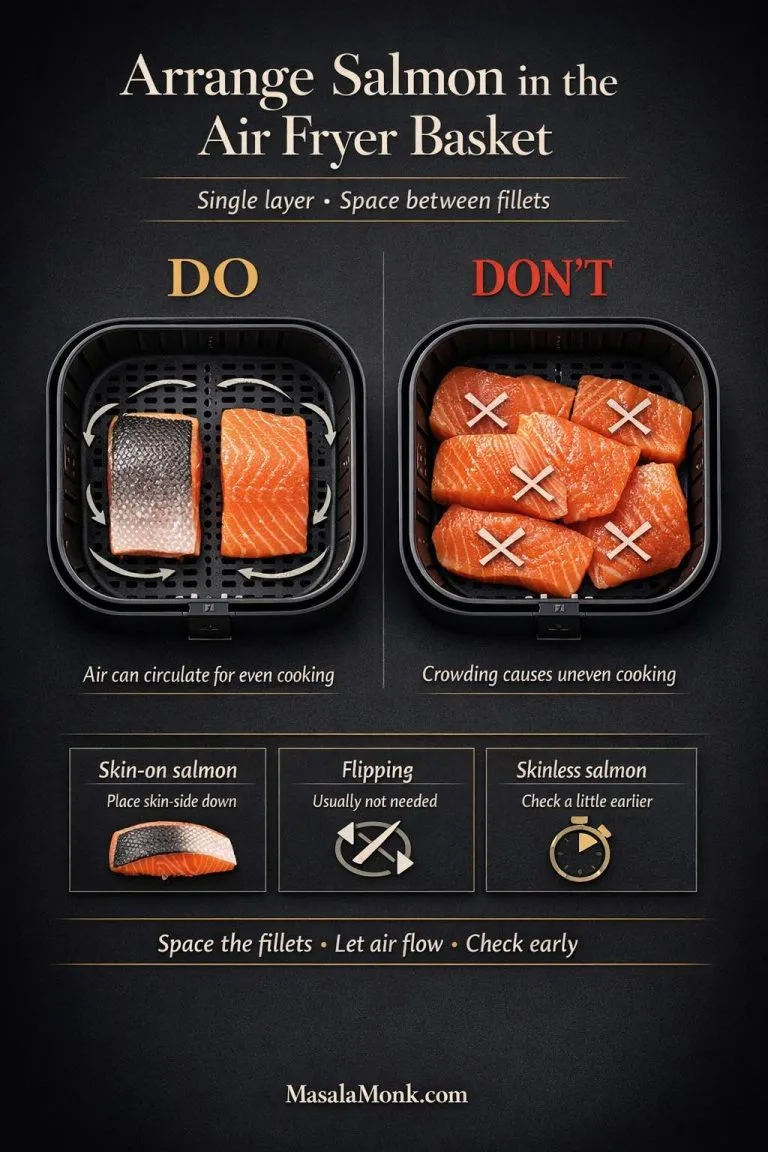
Image source: Bing (Web (fair-use with source credit))
5. Lightly oil and season the top of each fillet.
Brush or spray a thin layer of olive oil or avocado oil over the exposed surface. Then add your seasoning. The oil helps the seasoning stick and promotes browning.
Even a simple sprinkle of salt, pepper, and garlic powder works well.
6. Cook for the recommended time based on fillet size.
Set the timer according to the table in the previous section. For a standard 6-ounce fillet at 380°F, 12 minutes is the starting point. Resist the urge to open the basket early.
Every time you do, you lose heat and add 1 to 2 minutes to the total cook time.
7. Flip halfway through if the fillet is over 8 ounces.
Thicker fillets benefit from a flip at the halfway mark. Use a thin spatula and work gently. If the skin is on and it's sticking, it probably needs another minute before it releases naturally.
Image source: Bing (Web (fair-use with source credit))
8. Check the internal temperature at the thickest part.
Insert an instant-read thermometer into the center of the thickest fillet. You're looking for 145°F (63°C), which is the USDA's recommended minimum internal temperature for fish. If it's not there yet, cook in 1-minute increments until it hits the target.
9. Let it rest for 2 to 3 minutes before serving.
The residual heat will carry the internal temperature up another 3 to 5 degrees during resting. This also lets the proteins relax, so the salmon holds together when you flake it with a fork instead of falling apart into mush.
Skin-On vs Skinless: Which Works Better From Frozen?
Both work in the air fryer, but they behave differently enough that you should know what you're working with before you start.
Skin-on fillets have a built-in advantage: the skin acts as a protective barrier between the flesh and the hot basket. It keeps the bottom of the fillet moist and prevents it from drying out during the cook. When done right, the skin crisps up into something genuinely delicious, almost like a salmon chip.
The downside is that if your basket isn't well-oiled or you don't use a liner, the skin will stick and tear, leaving half of it behind when you try to remove the fish.
Skinless fillets are more forgiving in terms of sticking, but they lose moisture faster because there's no skin layer to protect the flesh. They also don't develop that satisfying crispy bottom. If you're cooking skinless, brush the fillet with a bit more oil than you would for skin-on, and consider placing it on a small piece of parchment to insulate the bottom slightly.
Image source: Bing (Web (fair-use with source credit))
Here's a quick comparison:
| Factor | Skin-On | Skinless |
|---|---|---|
| Moisture retention | Better | Good with extra oil |
| Crispy exterior | Yes, on the skin side | Requires more oil |
| Sticking risk | Higher | Lower |
| Flip recommended | No (cook skin-side down) | Optional |
| Best for | Beginners, crisp lovers | Lean cooking, salads |
If you're new to air fryer frozen salmon recipes, start with skin-on fillets. The margin for error is wider and the results are more impressive with less effort. Once you're comfortable with the timing and your machine's quirks, skinless fillets are great for tossing into salads, grain bowls, or pasta where you want the salmon in pieces rather than intact portions.
One more tip: if you buy skin-on but don't want to eat the skin, cook it skin-side down for the full time. The skin will crisp and protect the flesh during cooking, and you can easily peel it off before serving. You get the best of both worlds.
The Best Seasonings and Flavor Combos for Air Fryer Salmon
Frozen salmon has a mild flavor that takes well to almost any seasoning profile. The air fryer's dry heat intensifies whatever you put on the surface, so a little goes a long way. Here are the combinations that work best, broken down by flavor profile.
Lemon Herb (the classic)
Olive oil, lemon zest, garlic powder, dried dill, salt, and pepper. This is the go-to for a reason. The lemon brightens the fish and the dill adds a fresh note that cuts through the richness.
Use about 1 teaspoon of zest and ½ teaspoon of dried dill per fillet.
Garlic Butter
Melted butter, minced garlic, salt, and a squeeze of lemon after cooking. Brush the butter and garlic on after the first 8 minutes so the garlic doesn't burn. This is the combo that converts people who think they don't like fish.
Cajun Blackening
Paprika, cayenne, garlic powder, onion powder, dried oregano, dried thyme, black pepper, and a pinch of salt. Coat the fillet generously. The air fryer's high heat creates an actual crust with this blend.
It's bold, slightly spicy, and works especially well with skin-on fillets.
Teriyaki Glaze
Soy sauce, brown sugar, rice vinegar, garlic, and ginger. Brush this on during the last 3 to 4 minutes of cooking. The sugar caramelizes quickly in the air fryer, so don't apply it at the start or it'll burn.
This one is excellent over rice.
Simple Salt and Pepper
Sometimes the best seasoning is the most basic. A generous pinch of flaky sea salt and cracked black pepper lets the salmon's natural flavor shine. Finish with a squeeze of fresh lemon right before eating.
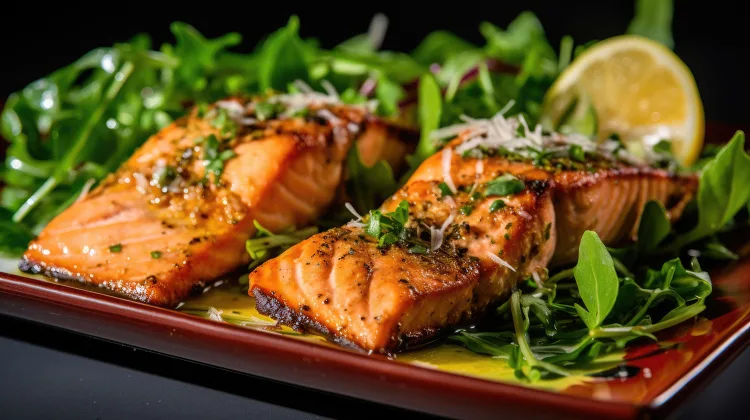
Image source: Bing (Web (fair-use with source credit))
A few practical notes on seasoning frozen salmon specifically. Because the surface is cold and slightly wet, dry seasonings don't stick as well as they do on thawed fish. That's why we recommend oiling the fillet first, then applying your seasoning.
The oil acts as an adhesive. If you're using a wet marinade or glaze, apply it in the last few minutes of cooking, not at the beginning. Wet coatings on frozen fish just slide off and pool at the bottom of the basket, creating smoke and a mess.
For those following specific dietary approaches, air fryer salmon fits well into low-carb, keto, and Mediterranean eating patterns. A 6-ounce serving delivers roughly 34 to 40 grams of protein and 1.5 to 2.5 grams of omega-3 fatty acids, according to the NIH Office of Dietary Supplements. It's one of the most nutrient-dense proteins you can cook in under 15 minutes.
Common Mistakes That Ruin Air Fryer Frozen Salmon
The difference between great air fryer salmon and a disappointing one usually comes down to a few avoidable errors. Here are the ones we see most often in user reviews and forum discussions.
Overcrowding the basket.
This is the number one mistake. When fillets overlap or touch, steam gets trapped between them instead of circulating. The result is pale, soggy fish with no crust.
Always leave at least an inch of space between fillets. If you need to cook four or more, do it in two batches. It takes an extra 12 minutes but the quality difference is dramatic.
Skipping the preheat.
A cold basket means the salmon starts thawing in a lukewarm environment instead of hitting a blast of hot air. That slow start leads to uneven cooking and a rubbery texture on the bottom. Three to five minutes of preheating solves this completely.
Cooking at too low a temperature.
Some people drop the temperature to 350°F because they're worried about burning the fish. The problem is that at lower temps, the salmon thaws and steams before it ever gets a chance to crisp. Stick to 375°F or above.
The high heat is what gives you that contrast between the golden exterior and the tender interior.
Not checking the internal temperature.
Guessing based on time alone is unreliable. Air fryer wattage varies, fillet thickness varies, and frozen fillets aren't uniform. An instant-read thermometer takes 3 seconds and removes all guesswork.
Pull the salmon at 145°F and let carryover cooking handle the rest.
Using too much oil.
A light mist is all you need. Pouring oil into the basket or drenching the fillet creates smoke, triggers your kitchen's fire alarm, and makes the salmon greasy instead of crisp. One even spray coat on the fillet surface and a quick spritz on the basket is plenty.
How to Tell When Your Salmon Is Actually Done
You don't need to cut into the fish and hope for the best. There are three reliable ways to check doneness, and using at least two of them together gives you near-perfect results every time.
The thermometer test (most accurate).
Insert an instant-read probe into the thickest part of the fillet at a slight angle. The USDA's Food Safety and Inspection Service specifies 145°F (63°C) as the safe minimum internal temperature for fish. At this point, the proteins have coagulated enough to flake but haven't tightened to the point of dryness.
If you're cooking for someone who prefers medium doneness, pull it at 135°F and let it rest. Carryover heat will bring it up to 140°F to 142°F.
The flake test (visual and tactile).
Press the tines of a fork into the thickest part of the fillet at a 45-degree angle and gently twist. If the flesh separates into clean, translucent layers, it's done. If it resists or looks translucent and jelly-like in the center, it needs another minute or two.
This test works best after you've cooked a few batches and developed a feel for the timing on your specific machine.
The color and texture check.
Raw salmon is translucent and deep orange to pink. Fully cooked salmon turns opaque and lighter in color throughout. If the center still looks glassy or darker than the edges, it's undercooked.
You'll also notice that cooked salmon firms up slightly. If the surface still feels soft and mushy when you press it gently, give it more time.
One thing to watch for: albumin. That white stuff that sometimes appears on the surface of cooked salmon is coagulated protein, not undercooked flesh. It's harmless and actually a sign that the fish was fresh before freezing.
It's more common in farmed Atlantic salmon than in wild-caught varieties like Sockeye or Pink. A quick lemon squeeze before serving makes it less noticeable.
Air Fryer vs Oven vs Pan: Which Method Wins for Frozen Salmon?
Each method has its place, but for frozen salmon specifically, the air fryer has real advantages. Here's how they stack up.
| Factor | Air Fryer | Oven | Stovetop Pan |
|---|---|---|---|
| Cook time (frozen) | 10–15 min | 20–25 min | 12–16 min |
| Preheat time | 3–5 min | 10–15 min | 2–3 min |
| Crispiness | High | Low to medium | High (skin side) |
| Hands-off cooking | Yes | Yes | No, must flip |
| Oil needed | Minimal | Minimal | Moderate |
| Even cooking | Very good | Good | Uneven (hot spots) |
| Best for | Speed and texture | Large batches | Small portions, crispy skin |
The air fryer wins on speed and texture for most home cooks. The compact chamber and powerful fan create a convection effect that a standard oven can't match. You get a noticeably crispier exterior in less time with less energy.
The oven makes sense when you're cooking for a crowd. A sheet pan holds six to eight fillets at once, and you don't have to batch-cook. But you'll sacrifice that crispy texture, and the longer cook time means the salmon releases more moisture, which can leave it slightly waterlogged on the bottom.
A stovetop pan gives you the crispiest skin of any method, but it's the least forgiving with frozen fillets. The direct contact heat can sear the outside while the center stays frozen. If you go this route, start skin-side down in a cold pan with oil and cook on medium-low for the first 8 minutes before flipping.
It works, but it demands attention.
For most people following air fryer frozen salmon recipes, the air fryer is the sweet spot. It's fast, consistent, and requires the least hands-on effort.
Meal Prep Guide: Cooking Multiple Fillets at Once
Air fryer salmon is one of the best proteins for weekly meal prep. It reheats well, holds its texture, and pairs with almost any side. The challenge is cooking enough at once without sacrificing quality.
Choose the right air fryer size.
A 5-quart basket fits three to four 6-ounce fillets in a single layer. An 8-quart or 9-quart model handles six or more. If you're prepping for a family of four, the larger capacity is worth it.
You'll cook everything in one round instead of two.
Prep all fillets before the first batch goes in.
Line them up on a cutting board, oil and season each one, and have them ready to load. This keeps the process moving and prevents the first fillet from sitting around while you prep the rest. Consistency matters when you want every portion to taste the same.
Use the same seasoning across all fillets, then customize after cooking.
This is a time-saver. Cook everything with a neutral base like lemon pepper or garlic herb. Once the salmon is done, you can drizzle teriyaki on two portions, leave two plain for salads, and add Cajun spice to the last two.
One prep, multiple meal options.
Store properly for best results.
Let the cooked salmon cool to room temperature, then transfer to airtight containers. It keeps in the refrigerator for up to 3 days. For longer storage, wrap individual fillets in plastic wrap and freeze for up to 2 months.
Reheat in the air fryer at 300°F for 3 to 4 minutes. The microwave works in a pinch but makes the texture rubbery.
Reheat with a splash of moisture.
Sprinkle a few drops of water or lemon juice over the salmon before reheating. This prevents the edges from drying out. Cover loosely with foil if your air fryer has a reheating mode, or just use a lower temperature for a minute longer than you think you need.
Best Air Fryer Models and Settings for Frozen Salmon
Not every air fryer handles frozen salmon equally. The models that do it best share a few traits: strong wattage, accurate temperature control, and a basket large enough for single-layer cooking.
What to look for.
Wattage matters more than most people realize. A 1700-watt unit like the Instant Vortex reaches and maintains target temperature faster than a 1400-watt model. That extra power translates to better browning and shorter cook times.
Temperature accuracy is another factor. Some budget models run 15 to 20 degrees hot or cold compared to their display. Over time, that variance leads to inconsistent results.
Basket design also plays a role. Flat baskets with good airflow perforations cook more evenly than mesh or grid-style baskets where fillets can sag through the gaps. Non-stick coatings help with cleanup, especially when cooking skin-on salmon.
Models that perform well for frozen salmon.
Based on aggregate user reviews and manufacturer specifications, these are the types of models that consistently deliver good results:
| Feature | Budget Pick | Mid-Range | Large Capacity |
|---|---|---|---|
| Example type | 3–4 qt single basket | 5–6 qt with presets | 8–9 qt dual basket |
| Wattage | 1400–1500W | 1500–1700W | 1700W+ |
| Best for | 1–2 fillets | 2–4 fillets | 4–8 fillets |
| Key trait | Compact, affordable | Built-in presets, even cooking | Batch cooking, versatility |
A note on smart controls.
Some newer models offer app connectivity and guided cooking programs. These can be helpful for beginners because they walk you through time and temperature settings for specific foods, including salmon. However, they're not essential.
A basic manual dial or digital control with a timer gets the job done just as well once you know your machine's quirks.
Cleaning Up: How to Deal with the Smell and Stuck-On Bits
Cooking fish in an air fryer is easy. Cleaning up after it is where most people get frustrated. Salmon leaves behind a lingering odor and baked-on residue that regular soap and water barely touch.
Here's how to handle it properly.
Clean the basket immediately.
Don't let it sit while you eat. Fill the basket with hot water and a drop of dish soap as soon as you plate the salmon. Ten minutes of soaking loosens the stuck-on bits so they wipe away with a soft sponge.
If you wait until after dinner, you'll be scrubbing for five times as long.
Use parchment liners to prevent the problem entirely.
Perforated parchment liners cost a few cents each and they catch almost all the oil, seasoning, and skin residue. Just lift the liner out after cooking and toss it. The basket stays nearly clean.
Deodorize with vinegar or lemon.
If the fish smell lingers after washing, fill the basket with equal parts water and white vinegar, then run the air fryer at 300°F for 5 minutes. The steam neutralizes odor-causing compounds. A cut lemon tossed into the basket during the same cycle works too and leaves a fresher scent.
Deep clean the heating element monthly.
Every few weeks, flip the unit upside down and wipe the inside of the chamber, including the heating coil above the basket. Grease builds up there invisibly and eventually starts smoking during subsequent cooks. A damp cloth with a bit of baking soda paste handles it.
Is Air Fryer Salmon Actually Healthy? Nutrition Breakdown
Air fryer salmon is one of the healthiest proteins you can prepare in under 15 minutes. You get high-quality protein, essential omega-3 fatty acids, and virtually no added fat compared to pan frying or deep frying.
A 6-ounce cooked Atlantic salmon fillet delivers approximately 34 to 40 grams of protein and 200 to 280 calories, depending on how much oil you use during prep. The NIH Office of Dietary Supplements reports that a 4-ounce serving of salmon provides roughly 1.5 to 2.5 grams of omega-3 fatty acids, specifically EPA and DHA. These fatty acids support cardiovascular health, reduce inflammation, and play a role in brain function.
The air fryer itself contributes to the health profile. Because the circulating air does the work of browning and crisping, you need only a fraction of the oil that pan frying requires. Most air fryer frozen salmon recipes call for a light mist of cooking spray, which adds fewer than 50 calories total.
Compare that to pan frying in butter or oil, where a single tablespoon adds 120 calories and 14 grams of fat.
The FDA recommends 2 to 3 servings of low-mercury fish per week for adults, and salmon falls squarely in the low-mercury category per the EPA and FDA joint advisory on mercury in fish. It is also considered safe for pregnant women and young children, making it one of the most versatile proteins for family meal planning.
One caveat: seasoning blends high in sodium can shift the nutritional profile. Pre-made Cajun or blackening mixes sometimes contain 300 to 500 milligrams of sodium per teaspoon. Making your own blend at home with paprika, garlic powder, and dried herbs lets you control that number.
If you're cooking for someone on a sodium-restricted diet, stick with fresh lemon, herbs, and pepper as your primary flavorings.
Salmon is also a natural source of vitamin D, selenium, and B vitamins. Unlike many other quick-cook protein options, you're not sacrificing nutrition for speed when you reach for the air fryer. The FDA and USDA both recognize fish as a recommended component of a balanced diet, and the air fryer simply makes it easier to actually follow that advice on busy weeknights.
Frequently Asked Questions
Do I need to thaw salmon before air frying?
No. Cooking salmon from frozen is not only safe but actually preferred for busy meals. The air fryer's convection heat thaws and cooks the fillet simultaneously.
Just add 1 to 2 minutes to the cook time compared to thawed salmon, and always verify the internal temperature reaches 145°F.
Can I air fry frozen salmon with the skin on?
Absolutely. Skin-on salmon works well in the air fryer. The skin protects the flesh from drying out and can become quite crispy.
Place the fillet skin-side down and cook without flipping for the best results. Use an oiled basket or parchment liner to prevent sticking.
What temperature should I set for frozen salmon?
Set your air fryer between 375°F and 400°F. Thinner fillets around 4 ounces do well at 375°F. Thicker fillets 8 ounces or more should go to 400°F for a better sear and faster cook through the center.
How do I keep my air fryer salmon from sticking?
Oil the basket lightly or use a perforated parchment liner. Preheat the air fryer before loading the fillets, since a hot basket creates a natural non-stick effect. For skin-on fillets, wait until the skin releases naturally before attempting to move the fish.
Is air fryer salmon good for meal prep?
Yes. Cooked salmon keeps in the refrigerator for up to 3 days in an airtight container. Reheat in the air fryer at 300°F for 3 to 4 minutes.
It holds up better than most reheated fish because the air fryer's dry heat restores some of the exterior texture rather than steaming it like a microwave would.
Can I cook other frozen fish the same way?
The method works for most firm white fish like cod, tilapia, and haddock. Adjust cook time based on thickness. Delicate fish like sole or flounder may fall apart in the air fryer, so stick with salmon or firmer varieties for the best results.