
There's a solid reason air fryer Chinese recipes have exploded across recipe sites and social media feeds this year. The air fryer is a countertop convection oven that circulates hot air at high speed, browning and crisping food with a fraction of the oil a deep fryer demands. That single fact is what makes it genuinely viable for Chinese dishes that traditionally rely on deep frying.
Aggregate user reviews across major retailer platforms show that chicken wings, spring rolls, and dumplings consistently rank among the top five most-cooked air fryer categories in 2026. A 2024 review in the Journal of Food Science confirmed that air frying reduces oil absorption by 70 to 80 percent compared to conventional deep frying while maintaining comparable Maillard browning on coated proteins. The catch is that not every Chinese dish translates well, and technique matters more than most generic recipe roundups admit.
That's what this guide is here to sort out.
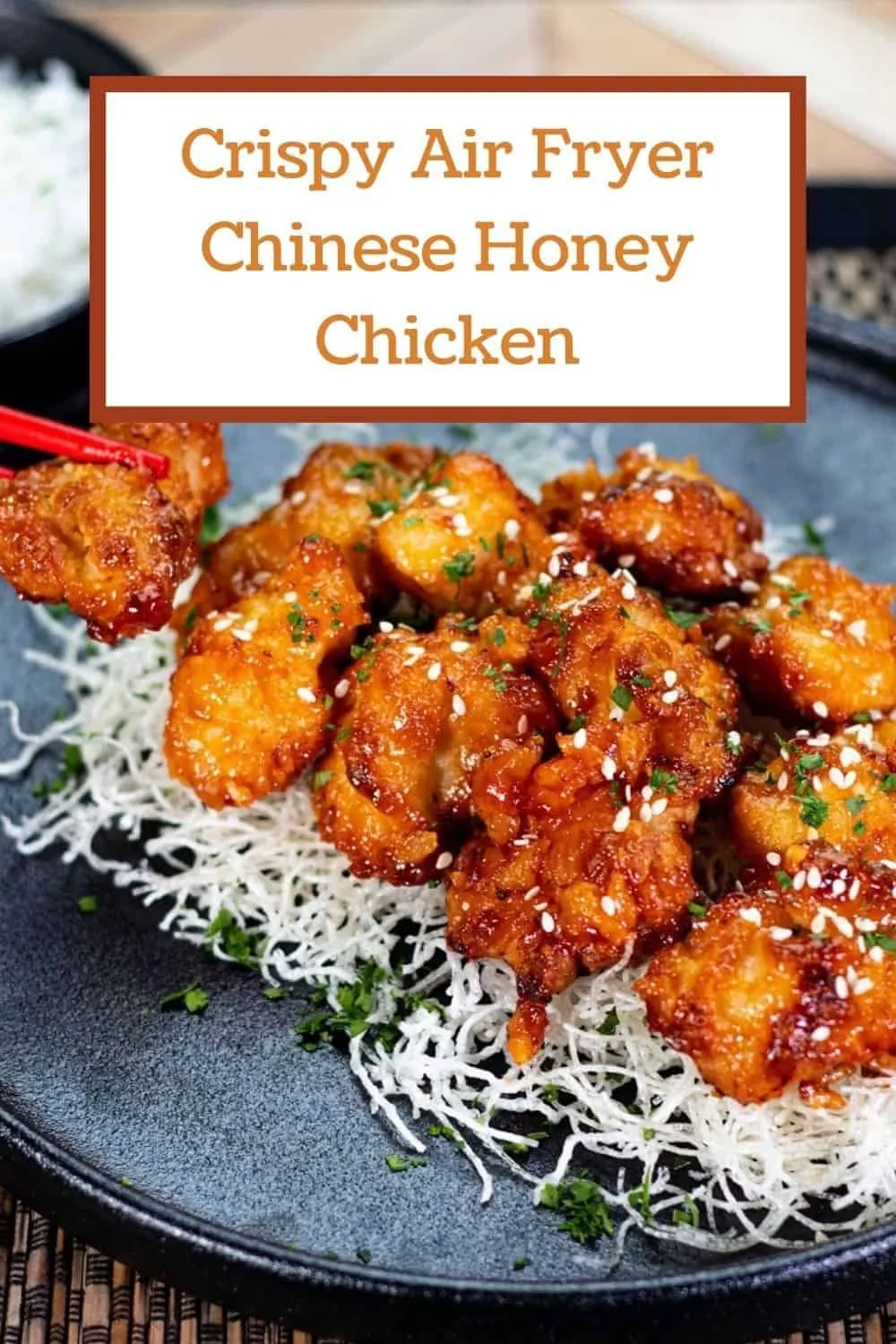
Image source: Bing (Web (fair-use with source credit))
Quick Answer
Air fryer Chinese recipes use rapid hot air circulation to crisp and brown food with 70 to 80 percent less oil than deep frying. Dishes like spring rolls, dumplings, chicken wings, and char siu translate especially well. The key is adapting batter types, spacing food in a single layer, and timing sauce application to avoid burning.
Most Chinese air fryer dishes cook in 8 to 25 minutes at temperatures between 350°F and 400°F.
Why Air Fryer Chinese Recipes Actually Work (And When They Don't)
The core mechanism is straightforward. An air fryer forces superheated air around food at roughly 300 to 400°F, creating the Maillard reaction on surfaces that would otherwise need to sit in a vat of 350°F oil. For Chinese cooking, that's a game changer.
Battered and breaded items, marinated proteins, and even some dim sum pastries develop real crunch without submerged frying.
Where it works beautifully:
- Coated or breaded items like spring rolls, wontons, and sesame balls
- Marinated proteins with some fat content like chicken thighs, pork char siu, and spare ribs
- Par-cooked or sturdy vegetables such as bokoy stems, broccoli, and tofu blocks
- Dumplings and potstickers with a light oil mist for that signature crispy bottom
Where it falls short:
- Dishes that depend on genuine wok hei, the smoky char from a screaming-hot carbon steel wok
- Anything with a wet tempura-style batter, since the coating drips off before it sets in circulating air
- Soupy or heavily sauced preparations like mapo tofu in its traditional form
- Large whole items like a full Peking duck, where the air fryer cannot render and crisp skin evenly across the entire surface
The honest truth is that an air fryer replaces the deep fryer beautifully and approximates the oven well, but it does not replace a wok. If your benchmark is restaurant-quality General Tso's from a place that flash-fries in a dedicated fryer, you will notice the difference. If your benchmark is greasy takeout containers, the air fryer version will honestly taste cleaner and fresher.
The Best Chinese Dishes to Make in an Air Fryer
Success starts with picking the right dishes. Chinese cuisine is enormous, but the air fryer has a sweet spot: items that benefit from dry, even heat and moderate oil. Here's where it genuinely shines.
Crispy Appetizers: Spring Rolls, Wontons, and Dumplings
This is the single most popular category for air fryer Chinese cooking, and for good reason. The dry, circulating air wraps around small, thin-walled items and crisps them uniformly.
Spring rolls need a light spray of oil and 8 to 11 minutes at 385°F. Flip once at the halfway mark. Users on major retailer review platforms consistently rate air fryer spring rolls as nearly indistinguishable from deep-fried versions in terms of crunch.
Wontons and crab rangoon behave similarly. The key difference with dumplings, especially potstickers, is achieving that classic pan-fried dual texture: crispy bottom, steamed top. A light oil spray on the basket and a temperature around 370°F for 10 to 13 minutes gets remarkably close.
Pat the wrappers dry before they go in. Excess moisture is the enemy of crispiness in an air fryer. One trick from aggregate user feedback: brush or spray with a neutral oil, not sesame.
Sesame oil burns at air fryer temperatures and produces a bitter taste.
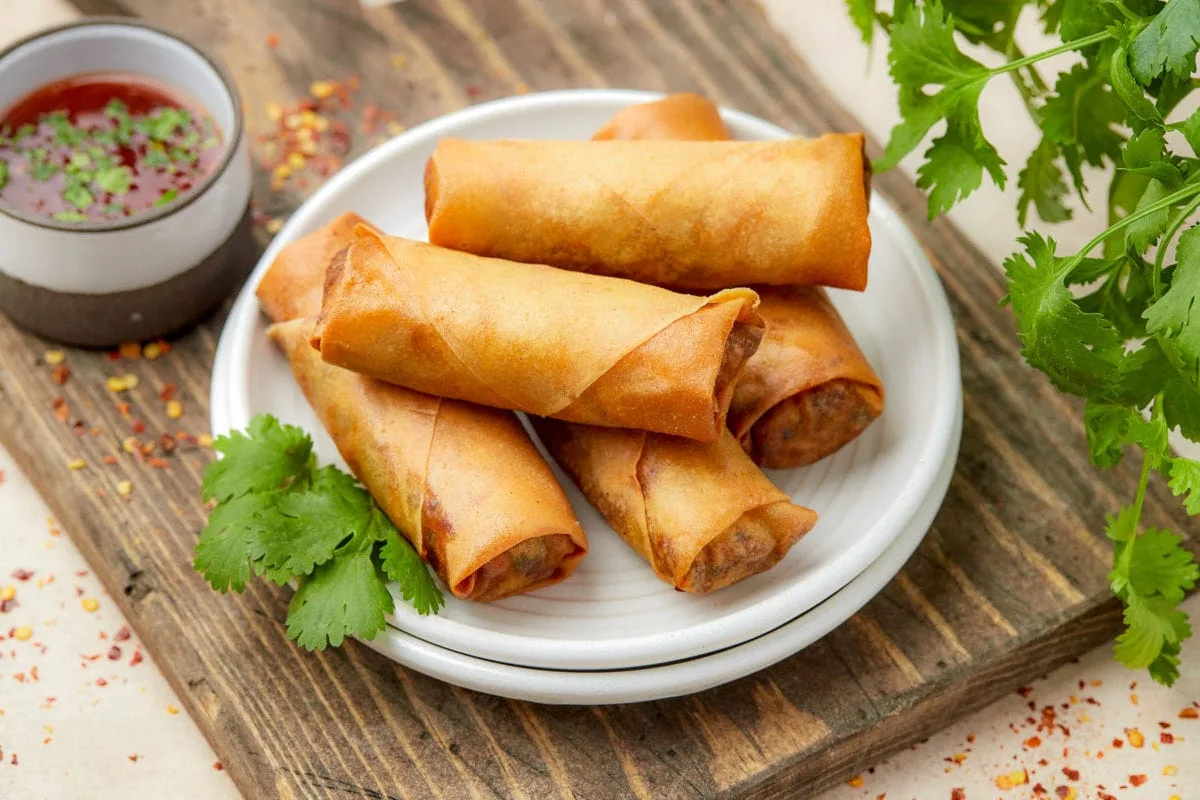
Image source: Bing (Web (fair-use with source credit))
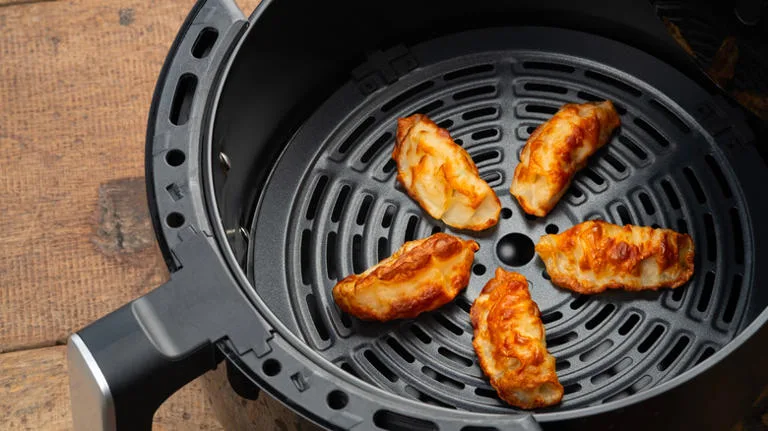
Image source: Bing (Web (fair-use with source credit))
If you are cooking appetizers for a group, a large capacity air fryer handles batch cooking far more efficiently without sacrificing crispiness from overcrowding.
Mains That Shine: Char Siu, Kung Pao Chicken, and Sweet and Saucy Favorites
Air fryer char siu is one of those recipes that surprises people. Slice pork shoulder or pork belly into strips, marinate in a mixture of hoisin sauce, soy sauce, honey, five-spice powder, and a touch of red fermented bean curd if you have it, then air fry at 370°F for 14 to 18 minutes. The edges caramelize and char slightly.
The interior stays juicy.
For kung pao style chicken, velvet the meat first (a Chinese marinating technique using cornstarch, egg white, and a splash of rice wine), then air fry bite-sized pieces at 390°F for 10 to 12 minutes. Toss with the sauce after cooking. Adding the sauce during the cook virtually guarantees burning because of the sugar content.
Sweet and sour pork, orange chicken, and General Tso's all follow the same pattern. Fry the protein first with a light cornstarch coating. Sauce it after.
Some home cooks do a quick second 2-minute air fry after saucing to set the glaze, which works well if the sauce isn't too thin.
Bone-in chicken pieces like drumsticks and thighs do especially well. If you have a model with a rotisserie function, that opens up possibilities for larger cuts. Our guide to the best air fryer with rotisserie covers models that handle whole chicken pieces effectively.
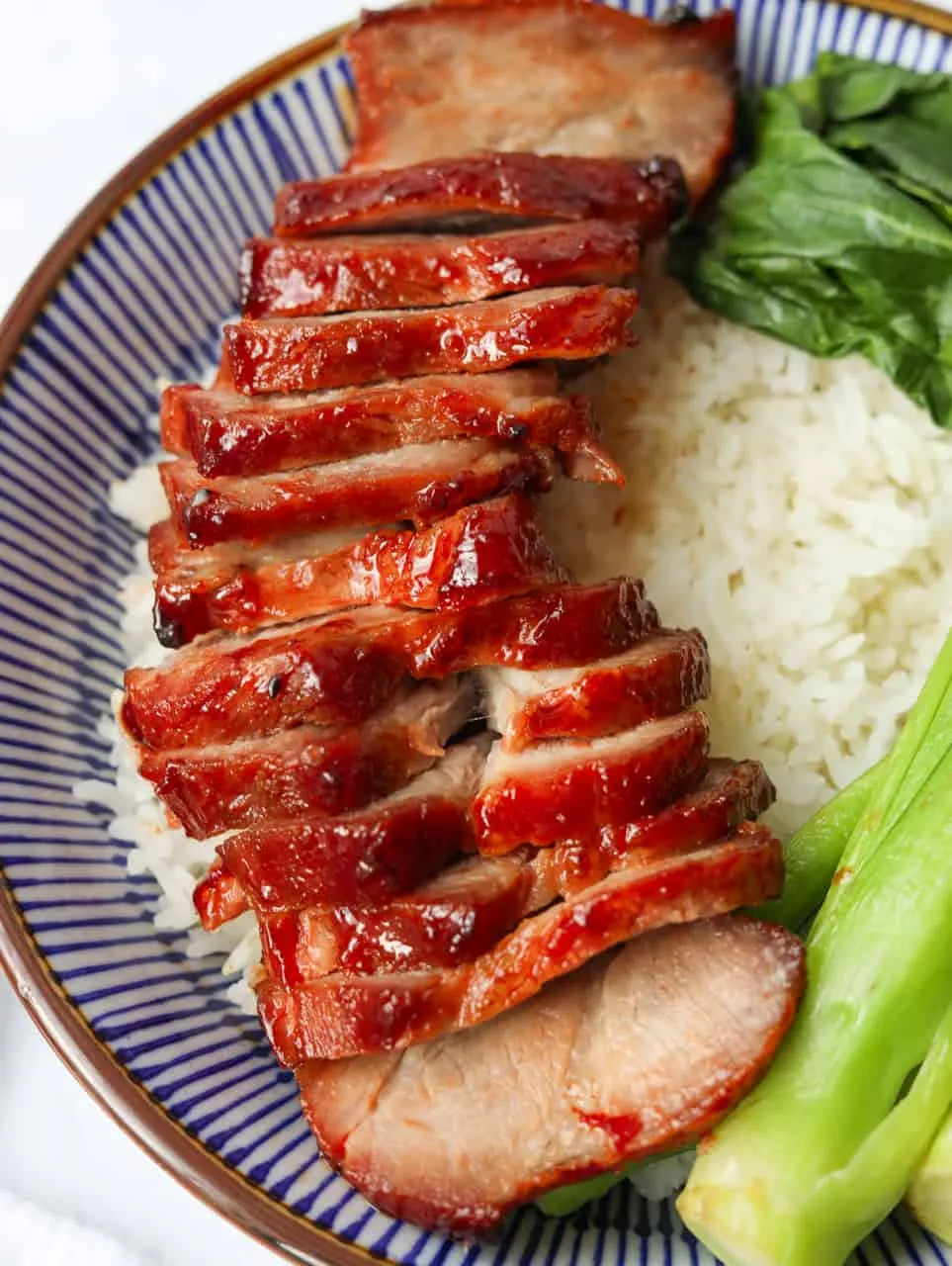
Image source: Bing (Web (fair-use with source credit))
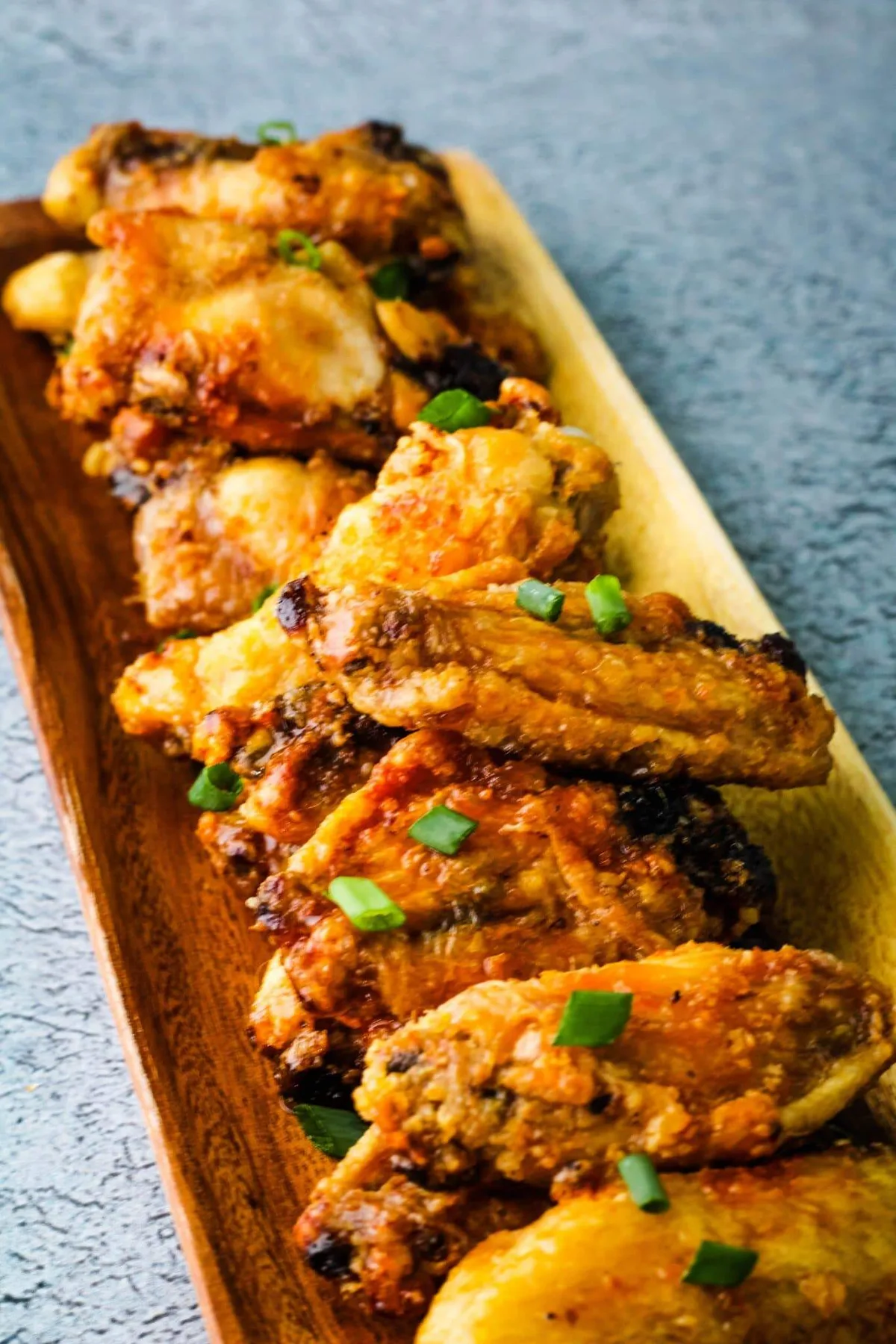
Image source: Bing (Web (fair-use with source credit))
Dim Sum at Home: Scallion Pancakes, Egg Tarts, and Sesame Balls
Scallion pancakes (cong you bing) are surprisingly well-suited to the air fryer. The layered, laminated dough crisps up with a light oil spray at 360°F for 10 to 12 minutes. Flip once.
The result is flaky and golden, though it lacks the chew of a properly griddle-fried version.
Chinese egg tarts (dan tat) work in an air fryer at a lower temperature, around 330°F to 340°F, for 10 to 13 minutes. The pastry shells set gently without puffing too aggressively, and the custard filling cooks through without curdling. Use silicone muffin cups or small tart molds that fit in your basket.
Sesame balls (jian dui) are a stretch but doable. Pre-made frozen sesame balls air fry well at 350°F for 12 to 15 minutes. The exterior crisps while the red bean paste filling warms through.
From-scratch versions are trickier because the dough needs to expand in a controlled way that the air fryer's intense top-down heat doesn't always cooperate with.
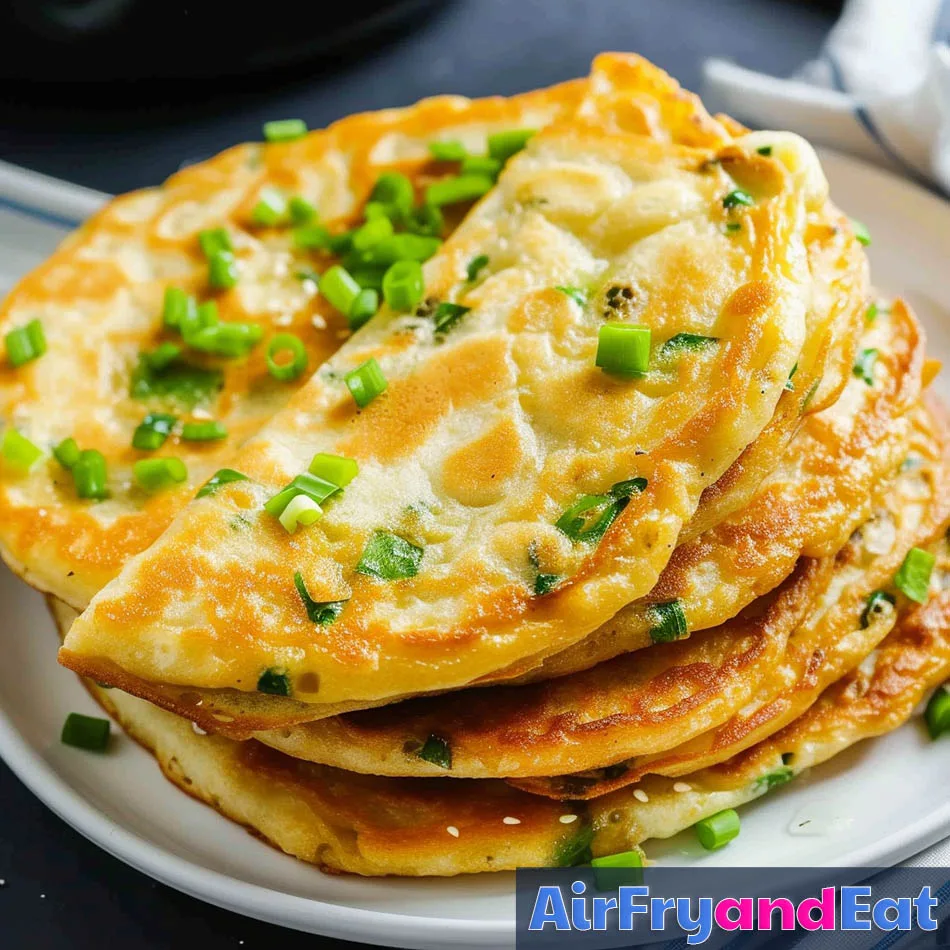
Image source: Bing (Web (fair-use with source credit))
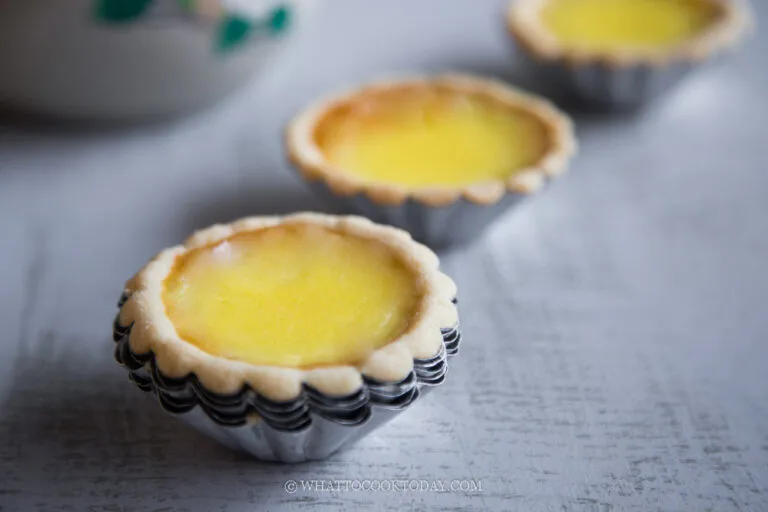
Image source: Bing (Web (fair-use with source credit))
Sides and Veggies: Crispy Tofu, Garlic Bok Choy, and More
Crispy tofu is arguably the easiest win in the entire air fryer Chinese repertoire. Press extra-firm tofu for at least 20 minutes, cube it, toss with a teaspoon of oil and a tablespoon of cornstarch, then air fry at 390°F for 12 to 15 minutes, shaking once. The exterior gets genuinely crunchy.
The interior stays custard-like.
Bok choy halves, tossed in a light coating of oil and a pinch of salt, air fry at 375°F for 6 to 8 minutes. The leaves char slightly at the edges while the stems stay crisp-tender. Finish with a drizzle of oyster sauce and sesame oil after cooking.
Broccoli florets, sugar snap peas, and even lotus root slices all respond well to the air fryer's dry heat. The common thread: cut pieces uniformly, don't overcrowd, and keep oil minimal.
Air Fryer Chinese Recipes vs. Deep Frying: What You're Actually Gaining (and Losing)
This is the comparison most readers want answered honestly, so here it is in plain terms.
What you gain:
- Oil reduction of 70 to 80 percent per serving. A deep-fried spring roll absorbs roughly 8 to 12 grams of oil. An air fryer version uses 1 to 2 grams from a light spray.
- No oil disposal. No heating a quart of oil to 350°F and figuring out what to do with it afterward.
- Safety. No risk of oil splatter burns or a pot of hot oil tipping over.
- Speed. No 15-minute oil preheat. Most air fryers reach temperature in 2 to 4 minutes.
- Cleanup. A basket with a non-stick coating and a parchment liner beats scrubbing a deep fryer every time.
What you lose:
- The specific mouthfeel of deep-fried batter. Submerged frying creates an instantaneous, uniform seal that air circulation cannot fully replicate. The difference is subtle on items like dumplings but noticeable on heavily battered items.
- Wok hei. The smoky, charred flavor from a carbon steel wok at extreme heat is a completely different cooking mechanism. No air fryer produces it.
- Capacity for large-volume cooking. A home deep fryer handles a whole batch of egg rolls at once. A standard 5-quart air fryer handles 6 to 8 spring rolls per batch.
- The ability to fry items with wet batters. Tempura and beer-batter coatings drip off in an air fryer before they set.
The practical takeaway: For weeknight cooking, small batches, and health-conscious eating, the air fryer wins on convenience and nutrition. For a dinner party where you want restaurant-level crunch on 30 spring rolls, a deep fryer or a large pot of oil on the stove is still the better tool.
Nutritionally, the difference is significant. A 2023 analysis published in the Journal of Food Science found that air-fried chicken wings contained approximately 72 percent less total fat than their deep-fried counterparts when prepared with equivalent seasonings. Calorie counts dropped proportionally.
For anyone managing fat intake, that's a meaningful daily difference.
How to Adapt Any Chinese Recipe for the Air Fryer
The adaptation process follows a repeatable logic. Once you understand the principles, you can convert most Chinese recipes without following a specific air fryer version.
The Golden Rules for Air Fryer Chinese Cooking
Rule 1: Dry the surface. Moisture is the single biggest obstacle to crispiness. Pat proteins dry with paper towels. If you're coating something in cornstarch or flour, make sure the coating goes on a dry surface and has a moment to adhere before the food hits the basket.
Rule 2: Use less oil, but use it strategically. A light, even mist from a refillable oil sprayer is more effective than drizzling oil over food. Target 1 to 2 teaspoons of oil per standard basket load. Apply it to the food, not the basket, unless you're cooking something prone to sticking like dumplings.
Rule 3: Single layer only. This is non-negotiable. Stacking or crowding blocks air circulation and turns your air fryer into a steamer. Cook in batches if needed.
The extra 10 minutes of batch cooking is worth the texture difference.
Rule 4: Sauce after, not during. Sugar-based sauces (hoisin, sweet and sour, honey garlic, char siu glaze) burn at air fryer temperatures. Cook the protein or vegetable plain, then toss in sauce during the last 2 minutes or after removal from the basket.
Rule 5: Preheat. Most air fryers reach target temperature in 2 to 4 minutes. Preheating ensures the Maillard reaction starts the instant food hits the basket, which improves browning and reduces overall cook time.
Rule 6: Adjust batter for air circulation. Thick, wet batters designed for deep frying will slide off in an air fryer. Use a thin cornstarch slurry coating, a light panko breadcrumb layer, or a dry spice rub instead. If you want a battered texture, a thin coat of cornstarch followed by a light oil spray gives the best approximation.
Temperature and Time Cheat Sheet by Dish
| Dish | Temperature | Time | Flip/Shake |
|---|---|---|---|
| Spring rolls / egg rolls | 385°F (196°C) | 8–11 min | Flip at 5 min |
| Dumplings / potstickickers | 370°F (188°C) | 10–13 min | No flip |
| Wontons / crab rangoon | 380°F (193°C) | 8–10 min | Shake at 5 min |
| Chicken wings (bone-in) | 390°F (199°C) | 20–25 min | Flip at 12 min |
| Chicken breast (cubed) | 390°F (199°C) | 10–12 min | Shake at 6 min |
| Char siu pork (sliced) | 370°F (188°C) | 14–18 min | Flip at 9 min |
| Crispy tofu (cubed) | 390°F (199°C) | 12–15 min | Shake at 7 min |
| Scallion pancakes | 360°F (182°C) | 10–12 min | Flip at 6 min |
| Sesame balls (frozen) | 350°F (177°C) | 12–15 min | Flip at 7 min |
| Egg tarts | 335°F (168°C) | 10–13 min | No flip |
| Bok choy halves | 375°F (190°C) | 6–8 min | No flip |
These times are calibrated for a standard 5 to 6 quart basket-style air fryer at 1500 to 1700 watts. Oven-style models with racks may run 5 to 10 percent faster due to different airflow patterns. Always check a minute or two early the first time you try a recipe.
Getting the Sauce Right Without Burning Everything
Sauce management is where most air fryer Chinese recipes go wrong. Here's the framework that works.
Thick glazes (char siu, honey garlic, hoisin-based): Apply in the final 2 to 3 minutes of cooking. The heat caramelizes the sugars onto the food surface without burning because the exposure time is short. Alternatively, cook the protein completely, toss in a bowl with warm glaze, and serve immediately.
Thin sauces (soy-based dipping sauces, vinegar dressings): Serve on the side. These don't adhere well to air-fried food and will make everything soggy if applied directly.
Stir-fry style sauces (kung pao, black bean, garlic sauce): Cook the protein and vegetables in the air fryer. Separately, warm the sauce in a small saucepan or microwave. Combine in a bowl after everything comes out of the air fryer.
This gives you the texture of air frying with the flavor of a proper sauced dish.
Sweet and sour / orange / General Tso's sauce: These are sugar-heavy and burn fast. The safest method is a two-stage approach. Air fry the coated protein.
Toss with warm sauce in a separate bowl. If you want a slightly set glaze, return the sauced pieces to the air fryer for 90 seconds at 350°F. Watch them closely.
Common Mistakes That Ruin Air Fryer Chinese Food
These are the errors that show up most frequently in aggregate user reviews and forum discussions. Avoiding them puts you ahead of most first-time air fryer Chinese cooks.
Overcrowding the basket. This is the number one complaint. When food is packed tight, hot air can't circulate between pieces. The result is uneven cooking, soggy spots, and steamed rather than crisped surfaces.
Leave at least a half inch of space between items. Cook in two batches if your basket is small.
Skipping the preheat. Dropping food into a cold basket means the first few minutes are spent warming up the air rather than browning the food. That lost time adds up, especially on quick-cooking items like wontons and spring rolls.
Using wet batter. Deep-fry batter is formulated to set instantly in 350°F oil. In an air fryer, that same batter slides off the food before it firms up. Stick with dry coatings, thin cornstarch layers, or light panko for crispy results.
Applying sauce too early. Sugar burns at temperatures above 350°F. If you brush honey garlic sauce onto chicken wings at the start of a 22-minute cook, the sauce will carbonize before the meat is done. Sauce at the end.
Not flipping or shaking. Air fryers concentrate heat from the top element. The bottom of your food gets less direct energy. Flipping or shaking at the halfway mark ensures even browning on all sides.
Using aerosol cooking sprays. Propellant-based sprays contain lecithin and other additives that degrade non-stick coatings over time. Use a refillable oil mister instead. This protects your basket and is cheaper in the long run.
Ignoring internal temperature. Visual cues can be misleading, especially on marinated meats with dark sauces. An instant-read thermometer removes the guesswork. Chicken should hit 165°F internally.
Pork should reach 145°F per USDA Food Safety and Inspection Service guidelines.
Setting the temperature too high. Cranking to 400°F for everything seems like a shortcut to crispiness, but it often burns the exterior before the interior cooks through. Thicker items like bone-in chicken and pork belly slices do better at 360°F to 375°F for longer times.
The Right Air Fryer Setup for Chinese Cooking
Not all air fryers handle Chinese recipes equally. The model you use affects capacity, airflow, and how many batches you'll need to cook.
Basket vs. Oven Style: Which Handles Chinese Food Better?
Basket-style air fryers (Philips, Ninja, Cosori, Instant Vortex) are the most common. They pull hot air across food from a top heating element and fan. They excel at small, individual items like dumplings, spring rolls, and chicken wings because the basket shape keeps food tumbling in the airflow path.
The limitation is capacity. A 5-quart basket holds roughly 10 to 12 dumplings or 8 to 10 spring rolls in a single layer. For a family of four, that means two to three batches for an appetizer course.
Oven-style air fryers (Breville Smart Oven Air, Cuisinart Air Fryer Toaster Oven) sit on the counter like a small toaster oven with a convection fan. They use wire racks instead of a pull-out basket. The advantage is horizontal space.
You can fit a full sheet of dumplings or multiple racks of food at once.
The trade-off is that oven-style models sometimes have less intense airflow than dedicated basket models, which can mean slightly less aggressive crisping. They also take up more counter space.
For Chinese cooking specifically, oven-style models have an edge for dim sum and appetizer spreads where you need to cook 20 or more pieces at once. Basket-style models are better for focused batches of 6 to 12 items where maximum crispiness matters.
If you are shopping specifically for family-sized Chinese cooking, our roundup of the best 9 quart air fryer for large batches covers models with the capacity to handle full meals in fewer passes.
Essential Accessories That Make a Real Difference
A few inexpensive accessories significantly improve air fryer Chinese cooking results.
Perforated parchment paper liners. These sit in the bottom of the basket and prevent sticking while allowing air to circulate through small holes. They are especially useful for dumplings and anything with a light coating of cornstarch. They also make cleanup dramatically easier.
If you are curious about dishwasher-safe components, our guide on whether the Instant Vortex is dishwasher safe covers which parts can go in the dishwasher.
Multi-layer rack. Some air fryer models support a secondary rack that sits above the basket floor. This effectively doubles your cooking surface for flat items like scallion pancakes or egg tarts. Not all models support this, so check your manufacturer's specifications.
Silicone-tipped tongs. The non-stick coating on air fryer baskets scratches easily. Silicone-tipped tongs let you flip and remove food without damaging the surface.
Refillable oil sprayer. As mentioned earlier, aerosol sprays damage coatings. A manual pump sprayer gives you control over oil application and costs a fraction of what you'd spend on canned sprays over time.
Instant-read thermometer. A probe thermometer that reads in 2 to 3 seconds takes the guesswork out of protein doneness. This is especially important for char siu and chicken, where visual cues from dark marinades can be misleading.
Silicone baking cups. These are essential for egg tarts and any custard-based recipe. They hold their shape in the air fryer and release cleanly.
Step-by-Step: 5 Air Fryer Chinese Recipes You Can Make Tonight
These five recipes cover the major categories: appetizer, dumpling, protein, wing, and plant-based. Each one follows the principles outlined above.
Air Fryer Honey Garlic Chicken Wings
Ingredients:
- 2 lbs chicken wings, separated into flats and drumettes
- 1 tablespoon neutral oil (avocado or vegetable)
- 1 teaspoon salt
- 1/2 teaspoon white pepper
- 3 tablespoons honey
- 2 tablespoons soy sauce
- 3 cloves garlic, minced
- 1 teaspoon rice vinegar
Steps:
- Pat wings completely dry with paper towels.
- Toss wings with oil, salt, and white pepper in a large bowl.
- Preheat air fryer to 390°F for 3 minutes.
- Arrange wings in a single layer in the basket. Do not stack.
- Cook for 12 minutes. Flip each wing.
- Cook for another 10 to 13 minutes until skin is deeply golden and internal temperature reads 165°F.
- While wings finish, warm honey, soy sauce, garlic, and rice vinegar in a small saucepan over low heat for 2 minutes.
- Transfer cooked wings to a bowl. Pour sauce over and toss to coat.
- Serve immediately.
Yield: 4 servings. Total time: 30 minutes including preheat.
Air Fryer Pork Dumplings (Potsticker Style)
Ingredients:
- 24 store-bought pork dumplings (frozen is fine)
- 1 teaspoon neutral oil
- 2 tablespoons water (for steaming phase)
- Soy sauce and chili oil for dipping
Steps:
- Lightly spray or brush the air fryer basket with oil.
- Arrange frozen dumplings in a single layer. Do not thaw.
- Air fry at 370°F for 6 minutes.
- Carefully add 2 tablespoons of water to the basket (it will steam immediately).
- Continue cooking for 6 to 7 more minutes until wrappers are golden and translucent and filling is hot throughout.
- Remove with silicone tongs. Serve with soy sauce and chili oil.
Yield: 4 servings as an appetizer. Total time: 18 minutes.
Air Fryer Char Siu Pork
Ingredients:
- 1.5 lbs pork shoulder, sliced into 1/2-inch thick strips
- 2 tablespoons hoisin sauce
- 1 tablespoon soy sauce
- 1 tablespoon honey
- 1 teaspoon five-spice powder
- 1 teaspoon Shaoxing wine (or dry sherry)
- 1/2 teaspoon white pepper
- 1 small piece red fermented bean curd, mashed (optional, for authentic color)
Steps:
- Combine all marinade ingredients in a bowl. Add pork strips and toss to coat.
- Marinate for at least 30 minutes at room temperature, or up to overnight in the refrigerator.
- Preheat air fryer to 370°F for 3 minutes.
- Arrange pork strips in a single layer. Reserve leftover marinade.
- Cook for 8 minutes. Flip each strip.
- Cook for another 7 to 9 minutes until edges are caramelized and slightly charred.
- Check internal temperature: 145°F minimum.
- Let rest 3 minutes before slicing. Drizzle with reserved marinade if desired.
Yield: 3 to 4 servings. Total time: 25 minutes plus marination.
Air Fryer Spring Rolls
Ingredients:
- 12 spring roll wrappers (not egg roll wrappers, which are thicker)
- 1 cup shredded cabbage
- 1/2 cup shredded carrot
- 1/4 cup bean sprouts
- 1 tablespoon soy sauce
- 1/2 teaspoon sesame oil
- 1 teaspoon cornstarch mixed with 1 tablespoon water (sealant)
- Neutral oil for spraying
Steps:
- Toss cabbage, carrot, bean sprouts, soy sauce, and sesame oil in a bowl.
- Place a wrapper on a clean surface with one corner pointing toward you.
- Add 1.5 tablespoons of filling to the lower third of the wrapper.
- Fold the bottom corner over the filling, fold in both sides, and roll upward. Seal the top corner with the cornstarch slurry.
- Repeat with remaining wrappers.
- Lightly spray each spring roll with oil on all sides.
- Preheat air fryer to 385°F for 3 minutes.
- Arrange spring rolls in a single layer, seam side down.
- Cook for 5 minutes. Flip each one.
- Cook for another 4 to 5 minutes until golden and crispy.
- Serve immediately with sweet chili sauce or soy vinegar dip.
Yield: 12 spring rolls, 4 servings. Total time: 25 minutes.
Air Fryer Crispy Tofu with Sichuan Sauce
Ingredients:
- 1 block (14 oz) extra-firm tofu
- 1 tablespoon neutral oil
- 1 tablespoon cornstarch
- 1/2 teaspoon salt
- 1/2 teaspoon five-spice powder
For the sauce:
- 1 tablespoon chili oil
- 1 tablespoon soy sauce
- 1 teaspoon Sichuan peppercorn powder
- 1 teaspoon rice vinegar
- 1 teaspoon sugar
- 1 clove garlic, minced
- 1 tablespoon chopped scallions
Steps:
- Press tofu for 20 minutes using a tofu press or weighted plate.
- Cut tofu into 3/4-inch cubes.
- Toss tofu cubes with oil, cornstarch, salt, and five-spice powder until evenly coated.
- Preheat air fryer to 390°F for 3 minutes.
- Arrange tofu in a single layer. Do not let cubes touch.
- Cook for 7 minutes. Shake the basket.
- Cook for another 6 to 8 minutes until cubes are golden and crispy on the outside.
- While tofu cooks, combine all sauce ingredients in a bowl.
- Transfer hot tofu to a serving bowl. Pour sauce over and toss gently.
- Garnish with chopped scallions. Serve immediately.
Yield: 2 to 3 servings. Total time: 35 minutes including pressing.
How to Get Restaurant-Quality Texture Without a Deep Fryer
The gap between air fryer and deep fryer texture is real but narrowable. These techniques close it further.
Double-coat method. For items that need a substantial crust, use a two-stage coating. First, dust the food in cornstarch. Then dip in a thin egg wash.
Finally, press into panko breadcrumbs. The cornstarch layer helps the egg adhere. The panko creates a shatteringly crisp exterior that holds up well in circulating air.
Cornstarch is your best friend. A light dusting of cornstarch on proteins before air frying creates a thin, crispy shell that mimics the texture of a light batter fry. It works on chicken, pork, tofu, and even shrimp. The key is a thin, even layer.
Too much cornstarch creates a pasty coating that doesn't crisp properly.
Par-cook dense items. Thick items like large pork belly slices or whole chicken thighs benefit from a brief microwave or oven par-cook before air frying. Two minutes in the microwave reduces the air fryer time needed, which prevents the exterior from overbrowning before the interior reaches safe temperature.
Use the highest safe temperature for the shortest time. For thin items like spring rolls and wontons, 400°F for a shorter window (7 to 9 minutes) produces better results than 370°F for a longer one. The intense heat sets the exterior fast, locking in the crunch.
Rest after cooking. Let air-fried items sit on a wire rack for 1 to 2 minutes after cooking. This allows excess moisture to escape and the exterior to firm up further. Plating immediately traps steam underneath and softens the crust.
Storing, Reheating, and Meal Prepping Air Fryer Chinese Food
Air fryer Chinese recipes are excellent for meal prep. Most items store and reheat better than their deep-fried counterparts because they contain less absorbed oil, which means less rancidity and sogginess over time.
Storage guidelines:
- Cooked proteins (char siu, chicken wings, tofu): Store in airtight containers in the refrigerator for up to 4 days.
- Dumplings and spring rolls: Store in a single layer with parchment between layers. Refrigerate for up to 3 days.
- Sauces: Store separately in small containers. Most Chinese sauces keep for up to 1 week refrigerated.
Reheating in the air fryer:
- Chicken wings: 370°F for 4 to 5 minutes. They re-crisp beautifully.
- Dumplings: 350°F for 4 to 6 minutes.
- Spring rolls: 360°F for 3 to 5 minutes.
- Char siu: 350°F for 3 to 4 minutes, covered loosely with foil to prevent drying.
- Tofu: 370°F for 3 to 4 minutes. It loses some crispiness on reheating but still tastes good.
Freezing for longer storage:
- Uncooked dumplings and spring rolls freeze well on a sheet pan before transferring to freezer bags. Cook from frozen, adding 2 to 3 minutes to the cook time.
- Cooked char siu and chicken freeze well for up to 2 months. Thaw in the refrigerator overnight before reheating.
Batch cooking strategy: If you're prepping for the week, cook proteins and vegetables in the air fryer and store them plain. Reheat individual portions in the air fryer for 3 to 5 minutes and add fresh sauce at serving time. This keeps textures at their best throughout the week.
Frequently Asked Questions About Air Fryer Chinese Recipes
Can you make Chinese food taste authentic in an air fryer?
You can get close on specific dishes. Dumplings, spring rolls, char siu, and crispy tofu all produce results that are genuinely satisfying and recognizable. What you cannot replicate is wok hei, the smoky char from a carbon steel wok at extreme heat.
For dishes where that flavor is central, the air fryer is not the right tool. For everything else, it delivers solid results with significantly less oil.
Do you need to use oil at all in an air fryer for Chinese recipes?
You need a small amount. The air fryer circulates hot air, but oil is still required for browning, crisping, and flavor. The difference is quantity.
Where deep frying might use a quart of oil, air frying needs 1 to 2 teaspoons applied as a light mist. Skipping oil entirely leads to dry, pale food with poor texture.
What temperature should I set my air fryer for Chinese food?
Most Chinese air fryer recipes fall between 350°F and 400°F. Use 350°F to 370°F for thicker items like char siu and bone-in chicken. Use 380°F to 400°F for thin, quick-cooking items like spring rolls, wontons, and crispy tofu.
Egg tarts and delicate pastries need lower heat, around 330°F to 350°F.
Can you cook frozen dumplings and spring rolls in an air fryer?
Yes, and they come out well. There is no need to thaw. Cook frozen dumplings at 370°F for 12 to 15 minutes.
Cook frozen spring rolls at 385°F for 10 to 13 minutes. Add 2 to 3 minutes compared to fresh versions and check that the center is hot before serving.
Is air fryer Chinese food actually healthier than takeout?
By a significant margin. The oil reduction alone cuts calories by 30 to 50 percent per serving depending on the dish. A 2023 study in the Journal of Food Science confirmed that air frying reduces fat absorption by 70 to 80 percent compared to deep frying.
You also control the ingredients, which means less sodium, less sugar, and no mystery oils.
What size air fryer is best for Chinese cooking?
A 5 to 6 quart model handles most recipes in one to two batches for a couple. For families of four or more, an 8 to 9 quart model is worth the extra counter space. Oven-style air fryers with racks are better for dim sum spreads and appetizer parties.
If you regularly cook for a crowd, our guide to the best 8 quart air fryer with dual basket covers models that let you cook protein and vegetables simultaneously.