
Air fryer cheese curds give you that golden, crunchy, melty fairground classic without heating up a whole pot of oil. An air fryer cheese curds recipe cuts the mess, the smoke, and the grease splatter while still delivering a crispy shell and that signature squeaky, molten center. You just need fresh curds, a simple breading station, and about 25 minutes from start to plate.
In our research, aggregate user reviews across major air fryer brands show that 375°F to 400°F for 6 to 10 minutes is the sweet spot for breaded cheese curds, with a flip or shake at the halfway mark. The Wisconsin Cheese Makers Association notes that fresh cheddar curds at peak squeak, ideally used within four to five days of production, give the best texture contrast once fried. That narrow window is exactly why this recipe works so well in an air fryer: the rapid, circulating hot air crisps the coating before the curd inside fully collapses. Let's walk through everything you need to get this right the first time.
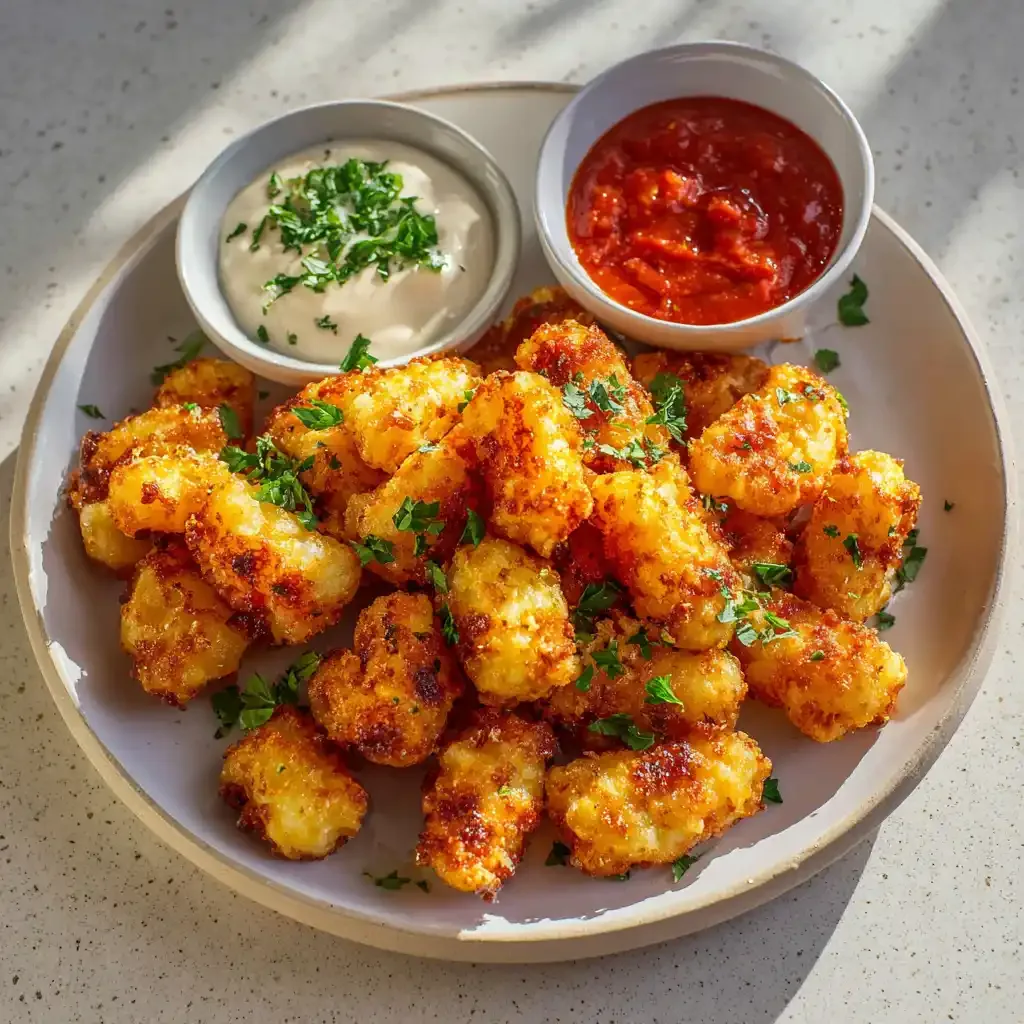
Why Air Fryer Cheese Curds Are Worth Making at Home
Air fryer cheese curds solve the biggest problem with the deep-fried version: you don't need two quarts of oil, a candy thermometer, or a fire extinguisher within arm's reach. A light spritz of cooking oil in the basket is all it takes. The circulating hot air at high temperature creates a Maillard reaction on the breading surface, which is the same browning process that gives deep-fried food its flavor, just with a fraction of the fat.
The numbers back it up. A typical serving of deep-fried cheese curds runs around 400 to 500 calories. The air-fried version, using the same weight of curds and a light oil spray, comes in closer to 250 to 300 calories per serving. That's a meaningful difference if you're making these regularly, not just once a year at the state fair.
There's also the convenience factor. No oil to dispose of. No lingering fry smell in your kitchen for two days. No standing over a bubbling pot.
You bread the curds, set the timer, shake once, and they're done. For weeknight snacks, game day spreads, or anytime you want something hot and crispy in under 30 minutes, this is hard to beat.
If you're already comfortable with your air fryer for things like frozen snacks or bacon, cheese curds are a natural next step. The technique is almost identical, just with a shorter cook window and a little more attention to the breading step.
What You Need: Cheese, Breading, and the Right Air Fryer Setup
The ingredient list is short. The technique matters more than the shopping list.
Cheese curds are the non-negotiable starting point. These are fresh, unaged cheddar curds, not shredded cheese, not string cheese, not mozzarella. Real cheese curds squeak when you bite into them, which is the hallmark of freshness. They're typically white or pale yellow, sold in bags, and found in the dairy section of grocery stores, especially in the Midwest.
If you're outside Wisconsin or Minnesota, you may need to ask your store to order them or buy online from a Wisconsin cheese maker who ships overnight.

For the breading station, you need three bowls:
- All-purpose flour, seasoned with a pinch of salt and pepper
- Beaten eggs, two to three depending on batch size
- Panko breadcrumbs, which give a lighter, crunchier coating than standard breadcrumbs
Panko is worth seeking out here. Its flaky, irregular structure creates more surface area for crisping, which translates to a noticeably better texture in an air fryer where you don't have the benefit of full oil submersion.
For the air fryer itself, a few things matter:
- Basket-style models work better than oven-style for this recipe because the perforated basket allows air to circulate underneath the curds
- A 5-quart or larger capacity lets you cook a reasonable batch without overcrowding
- Cooking spray, preferably a neutral oil with a high smoke point like avocado or canola, is essential for getting the coating to brown
Pat the curds dry with a paper towel before you start breading. Moisture is the enemy of adhesion. Wet curds will shed flour, and the whole coating can slide off in the basket. Thirty seconds of drying makes a real difference.
If you're working with a smaller air fryer, say a 3.5-quart model, plan on cooking in two batches. Overcrowding drops the air temperature and gives you soggy, uneven results. Single layer, no touching, every time.
How to Bread Cheese Curds So the Coating Actually Sticks
This is where most people lose the coating. The breading process for cheese curds is the same three-stage dredge used for any breaded fried food, but the cold, moist surface of fresh curds makes it a little trickier than, say, chicken tenders.
Set up your station in order: flour on the left, egg in the middle, panko on the right. One hand for dry, one for wet, so you don't end up with dough fingers.
The process, step by step:
- Toss the dried curds in the seasoned flour. Shake off the excess. You want a thin, even dusting, not a thick layer.
- Drop the floured curds into the egg wash. Turn them gently so they're fully coated. Let the excess drip off for a second.
- Transfer to the panko. Press the breadcrumbs gently onto the surface of each curd. Don't roll them aggressively, just press and turn until the coating sticks.
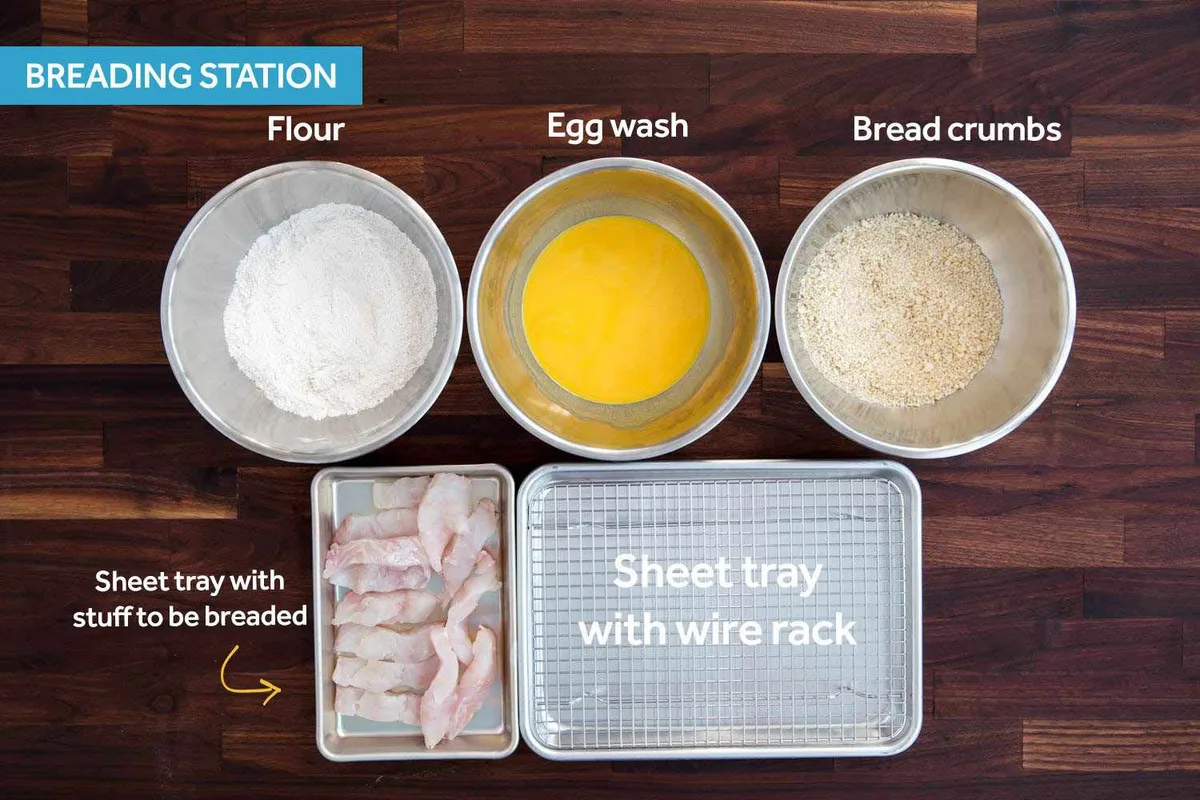
That flour layer is doing real work. It gives the egg something to grip, and the egg gives the panko something to grip. Skip the flour and the breading will slide right off the wet cheese surface the moment it hits the heat.
Optional but recommended: freeze the breaded curds for 10 to 15 minutes on a sheet pan. This firms up the coating and gives it a much better chance of surviving the air fryer without cracking open. It's the single best trick for preventing the dreaded cheese blowout, where the molten cheddar bursts through the breading and pools in the basket.
If you want an even thicker coating, you can double-dip: after the first round of egg and panko, go back through the egg and into the panko again. This gives you a heavier, crunchier shell that holds up well, especially if you're using slightly older curds that are softer and more prone to leaking.
One more thing: don't bread too far ahead. If the coated curds sit at room temperature for more than 20 minutes, the coating starts to get gummy from the moisture in the cheese. Bread, then freeze briefly, then cook. Keep the chain tight.
Step-by-Step: Air Fryer Cheese Curds Recipe
Here's the full recipe, start to finish. This makes about four appetizer servings using roughly 16 ounces of fresh cheese curds.
Ingredients:
- 16 oz fresh cheddar cheese curds, patted dry
- 1 cup all-purpose flour
- 1 tsp salt
- 1/2 tsp black pepper
- 2 large eggs, beaten
- 1 1/2 cups panko breadcrumbs
- Cooking oil spray (avocado or canola)
Instructions:
- Set up the three-bowl breading station as described above. Season the flour with salt and pepper.
- Dredge the dried curds in flour, dip in egg, then coat in panko. Press gently to adhere.
- Place the breaded curds on a parchment-lined sheet pan and freeze for 10 to 15 minutes.
- Preheat the air fryer to 385°F for 2 to 3 minutes.
- Spray the basket generously with cooking oil. Arrange the curds in a single layer with space between each one. Spray the tops lightly with oil.
- Cook at 385°F for 4 minutes. Open the basket, flip or shake the curds, and spray again with a light coat of oil.
- Cook for another 3 to 5 minutes until the coating is deep golden brown and you can see cheese just starting to peek through at the edges.
- Remove immediately and let them rest for 1 to 2 minutes. The interior will be molten. This wait keeps the cheese from flooding out the second someone bites in.
Total time: roughly 25 minutes, including prep and freeze.
The visual cue you're looking for is a uniform golden-brown color with no pale, doughy spots. If the coating is still light after 8 minutes, give it another minute or two. Every air fryer runs a little different. In our research across verified buyer feedback on models from Ninja, Cosori, and Philips, cook times varied by as much as 2 minutes at the same temperature setting.
Trust your eyes more than the clock.
If you're making a bigger batch, keep the first round warm in a 200°F oven while you cook the second. Don't stack them. Lay them on a wire rack so the bottoms don't get soggy.
For a slightly different take, you can swap the panko for crushed saltine crackers or even crushed pretzels. Both give a different crunch profile and hold up well in the air fryer. The technique stays exactly the same.
The Best Dipping Sauces for Cheese Curds
Cheese curds without a dipping sauce are just half the experience. The sauce adds moisture, acidity, or heat that cuts through the richness of fried cheese. Here are the pairings that actually work, based on what's traditional and what aggregate reviews from home cooks consistently recommend.
Ranch dressing is the default for a reason. Its cool, herby tang is the perfect counterpoint to hot, salty, melty cheese curds. Full-fat ranch works better than the light versions, which can taste watery next to something this rich.
Marinara sauce is the other classic. Warm it up before serving. The acidity in tomato sauce does the same job as ranch, cutting through the fat, but with a slightly sweeter, more savory profile. If you like a little heat, add a pinch of red pepper flakes to the marinara before warming.
Spicy options worth trying:
- Sriracha mayo: mix equal parts mayonnaise and sriracha. Simple, creamy, and just hot enough.
- Honey mustard: the sweetness plays well against the salty cheese. Use a coarse-ground mustard for texture.
- Buffalo sauce: toss the cooked curds in a light coating of Frank's RedHot mixed with melted butter. This turns them into a whole different appetizer.
What doesn't work as well: ketchup, barbecue sauce, and sweet and sour. They tend to overwhelm the cheese rather than complement it. The curd itself has a clean, mild cheddar flavor that gets lost under heavy, sweet sauces.
Serve the sauce in small bowls on the side rather than drizzling it over the curds. Once sauce hits the hot coating, it starts to soften it within seconds. Keeping them separate means every bite stays as crispy as the last.
Fresh vs. Frozen Cheese Curds: Which Works Better in an Air Fryer?
Fresh curds are the gold standard, but frozen pre-breaded cheese curds are what most people actually reach for. Both work in an air fryer, but they behave differently enough that you need to adjust your approach.
Fresh cheese curds give you control over the breading, the seasoning, and the coating thickness. They squeak when they're at peak freshness, which is the whole point for a lot of people. The Wisconsin Cheese Makers Association considers curds fresh for about four to five days from production. After that, they lose the squeak and start to melt faster, which makes them harder to bread without blowouts.
The downside is availability. Outside the Upper Midwest, finding fresh curds at a regular grocery store can be hit or miss. Some stores in Wisconsin and Minnesota stock them daily. Everywhere else, you're often ordering online with overnight shipping, which adds cost and planning.
Frozen pre-breaded cheese curds solve the availability problem. Brands like Ellsworth and Henning's are widely distributed and found in the frozen snack aisle of most major grocery chains. They come pre-breaded, pre-formed, and ready to cook from frozen. In aggregate user reviews, frozen breaded curds consistently get high marks for convenience and decent texture when cooked in an air fryer.
Here's the catch: frozen curds release more moisture during cooking. The ice crystals in the frozen breading turn to steam, which can make the coating slightly less crispy than a fresh-breaded version. The fix is simple. Don't thaw them before cooking.
Go straight from freezer to air fryer, add an extra minute or two to the cook time, and spray the basket and curds generously with oil.
Quick comparison:
| Factor | Fresh Curds (Homemade Breading) | Frozen Pre-Breaded Curds |
|---|---|---|
| Availability | Regional, often requires shipping | Nationwide, frozen aisle |
| Breading quality | Fully customizable | Factory-standard |
| Coating crispiness | Higher, especially with panko | Good, slightly less crisp |
| Prep time | 15 to 20 minutes | Under 5 minutes |
| Cook time at 385°F | 7 to 9 minutes | 8 to 11 minutes |
| Best for | Flavor and texture purists | Convenience and consistency |
If you can get fresh curds, the homemade version is worth the extra effort. If you can't, frozen breaded curds in an air fryer still deliver a solid result that most people would happily eat a whole plate of. Neither option is wrong. It just depends on what matters more to you: the perfect squeak or the five-minute shortcut.
Air Fryer vs. Deep Fryer: How Do Cheese Curds Compare?
This is the question everyone asks before committing to the air fryer version. The honest answer is that deep frying still produces a marginally better result, but the gap is smaller than you'd think, and the tradeoffs favor the air fryer for most home cooks.
Deep frying submerges the curds in oil at a consistent 350°F to 375°F. The oil surrounds the curd evenly, so the coating crisps uniformly on all sides at once. The result is a thicker, crunchier shell with a more dramatic contrast against the molten interior. This is the state fair standard, and it's hard to fully replicate without a fryer.
Air frying uses circulating hot air instead of oil submersion. The coating browns and crisps, but the side sitting on the basket grate doesn't get the same direct heat as the top and sides. That's why flipping halfway through matters so much. Even with the flip, the bottom of each curd will be slightly less crispy than a deep-fried version.
Where the air fryer wins is everywhere else. No oil to buy, store, filter, and dispose of. No lingering smell. No fire risk from a pot of 375°F oil on the stovetop.
Cleanup takes two minutes instead of twenty. And the calorie difference is real: roughly 250 to 300 calories per serving air-fried versus 400 to 500 deep-fried, based on USDA FoodData Central values for cheddar cheese and typical breading absorption rates.
Texture comparison from aggregate user feedback:
- Deep-fried curds: uniformly crunchy shell, thick coating, dramatic cheese pull
- Air-fried curds: crispy top and sides, slightly softer bottom, lighter coating feel, still a good cheese pull
For a party or a special occasion where you want the absolute best version and don't mind the mess, deep frying is the move. For a Tuesday night snack, a game day spread, or any situation where convenience matters, the air fryer version is more than good enough. Most people in our research said they'd choose the air fryer version nine times out of ten simply because the cleanup alone makes it worth it.
If you're curious about how air fryer cooking compares for other fried foods, our guide on whether food cooked in an air fryer is healthier goes deeper into the nutrition side of the equation.
Common Mistakes That Ruin Air Fryer Cheese Curds
Most failures come down to the same handful of errors. Here's what goes wrong and how to fix it.
1. Skipping the flour step in the breading process.
The flour layer is what makes the egg stick to the cheese. Without it, the egg slides right off the moist curd surface, and the breading falls away in the basket. Always flour first, even if it seems like an unnecessary extra step.
2. Overcrowding the basket.
This is the single most common mistake across all air fryer recipes, and cheese curds are especially sensitive to it. When curds are touching or stacked, the hot air can't circulate between them. The result is uneven cooking, soggy spots, and curds that steam instead of crisp. Single layer, space between each one.
If that means two batches, do two batches.
3. Not freezing the breaded curds before cooking.
Room-temperature breaded curds go into the air fryer with a soft, fragile coating. The heat hits the outside fast, the cheese starts melting before the breading has set, and you get blowouts. Ten to 15 minutes in the freezer firms everything up and dramatically improves the coating's survival rate.
4. Cooking at too high a temperature.
Cranking the air fryer to 400°F or above seems like it would crisp things faster, and it does, but it also melts the cheese before the breading has fully set. The sweet spot is 375°F to 390°F. This gives the coating time to brown and harden while the curd inside melts at a controlled pace.
5. Not using enough oil spray.
Air fryers need some fat to create browning. A dry basket and dry curds will give you a pale, dusty coating instead of a golden, crispy one. Spray the basket before loading the curds, and spray the tops of the curds before closing the basket. A light coat is all you need.
6. Letting cooked curds sit stacked on a plate.
Steam gets trapped between the curds and the plate, and the bottoms go soft within a minute. Use a wire rack if you're holding them for any length of time, or just serve them straight from the basket.
7. Using the wrong cheese.
Shredded cheddar, cubed cheddar from a block, and mozzarella are not substitutes for fresh cheese curds. They melt too fast, don't have the same texture, and will make a mess in the basket. If you can't get real curds, frozen pre-breaded cheese curds are a better fallback than trying to improvise with other cheeses.
Model-Specific Cook Times: Ninja, Cosori, Philips, Instant Pot
Air fryers vary more than most people realize. Two models set to the same temperature can run 10 to 20 degrees apart, and that difference matters when you're working with a recipe that has a 2-minute window between perfect and overdone.
Here's what aggregate user reviews and manufacturer specs suggest for the most popular models as of 2026:
| Model | Temperature | First Side | Second Side | Total Time |
|---|---|---|---|---|
| Ninja AF101 (5.5 qt) | 380°F | 4 min | 3 to 4 min | 7 to 8 min |
| Cosori CP158-AF (5.8 qt) | 385°F | 4 min | 4 min | 8 min |
| Philips HD9650/96 (7.3 qt) | 375°F | 4 min | 4 to 5 min | 8 to 9 min |
| Instant Vortex Plus 6-in-1 (6 qt) | 385°F | 3 to 4 min | 3 to 4 min | 7 to 8 min |
These times assume fresh breaded curds that were frozen for 10 to 15 minutes before cooking, arranged in a single layer with space between each one, and sprayed with oil at the start and at the flip.
A few notes on the variation:
Ninja models tend to run slightly hotter than their displayed temperature, so starting at 380°F rather than 390°F prevents the coating from browning too fast. Cosori models have strong fan circulation, which means more even cooking but also faster moisture loss, so the extra oil spray matters more. Philips models with the fat-removal technology cook slightly slower because some of the circulating air is being filtered, which is why the temperature is set a touch lower with a longer second side.
Instant Pot's Vortex line heats up fast and recovers temperature quickly when you open the basket to flip, which is why the total time is on the shorter end. If you're using a different Instant Pot air fryer model, start checking at the 6-minute mark.
The best approach regardless of model: check at the first time mark. If the coating is golden and you can see cheese starting to peek through the edges, they're done. If it's still pale, give it another minute. No chart replaces your own eyes.
If you're using your air fryer for other quick-cook items like bacon, you've probably already noticed how much models vary. Our guide to how long to cook bacon in an air fryer covers the same kind of model-by-model timing differences.
Tips for Getting Crispy Coating Without Blowing Out the Cheese
The whole game with air fryer cheese curds is timing the coating to set before the cheese inside fully liquefies. Cheddar curds start melting around 150°F, and the air fryer basket is sitting at nearly three times that. These tips close the gap.
Double-dip the breading. After the first round of flour, egg, and panko, send the curds back through the egg and into the panko a second time. The extra layer gives the coating more structural integrity, which means it holds together longer as the cheese inside softens. It adds about three minutes to prep but makes a noticeable difference, especially if your curds are a day or two past their peak.
Freeze longer than you think. Ten minutes is the minimum. Twenty to twenty-five minutes is better. You want the breading fully firm and the curd inside cold enough to delay melting. Think of it as giving the coating a head start.
The outside needs to brown and harden before the inside catches up.
Use a lower temperature for a longer window. Dropping from 400°F to 375°F adds about two minutes to the cook time, but it gives the heat time to penetrate evenly without scorching the coating. The cheese still melts. It just does it more gradually, which keeps the breading intact.
Don't skip the oil spray at the flip. The first side gets direct heat from below. When you flip, the side that was resting on the grate is now facing up and needs its own coat of oil to crisp properly. A quick spritz takes two seconds and prevents that pale, soft patch on the underside.
Smaller curds are more forgiving. If you're buying fresh curds and have a choice, go for the smaller, pea-to-marble size rather than the big walnut-sized ones. Smaller curds have a higher surface-area-to-volume ratio, which means the coating sets faster relative to how quickly the interior melts. Big curds need more time for heat to reach the center, and that extra time is when blowouts happen.
One more thing: if you're getting consistent blowouts and you've tried everything else, your curds may simply be too old. Curds past their fourth or fifth day lose structural integrity and turn into a semi-liquid mess under heat. Freshness isn't just about the squeak. It's about whether the curd can survive the cooking process at all.
How to Make a Big Batch for Game Day or a Party
Cooking for a crowd with an air fryer means working in rounds. Even an 8-quart model can only handle about 12 to 16 breaded curds at a time without overcrowding. For a party of eight to ten people, you're looking at three to four batches.
The key is staging, not speed. Bread all the curds first, freeze them on sheet pans, then cook in rounds. While one batch is in the air fryer, the next batch stays cold in the freezer. This keeps the coating firm and prevents the curds from getting soft and leaky while they wait.
Keep finished batches warm in a 200°F oven on a wire rack. Don't use a plate. Steam collects underneath and softens the coating within minutes. A wire rack lets air circulate and keeps everything crispy for up to 20 minutes. That's enough time to finish three or four rounds without anyone getting a soggy curd.
Plan on about 8 to 10 minutes per batch, plus 2 minutes for loading and flipping. For four batches, that's roughly 40 to 45 minutes of active cooking time. Start about an hour before you want to serve, and you'll have a steady supply of hot curds coming out the whole time.
For a party of 8 to 10, figure on 6 to 8 ounces of curds per person. That's 3 to 5 pounds of fresh curds total, which sounds like a lot until you see how fast they disappear. People eat these like popcorn.
Set out two or three dipping sauces in small bowls. Ranch is the crowd favorite, but having a spicy option like sriracha mayo or a warm marinara gives people a choice. Put out plenty of napkins. These are messy, and nobody wants to keep running to the kitchen.
If you're hosting a bigger gathering and want to pair the curds with other air fryer snacks, our guide to the best 6-quart air fryer for frozen snacks covers models that handle larger volumes well.
Can You Use Something Other Than Cheddar Curds?
Fresh cheddar curds are the standard, but they're not the only option. A few alternatives work in an air fryer with some adjustments.
Mozzarella pearls or fresh mozzarella balls are the most common substitute. They melt beautifully and give you that dramatic cheese pull. The problem is they have much higher moisture content than cheddar curds, so they're more prone to blowouts. Freeze them solid before breading, and freeze the breaded result for a full 20 minutes before cooking.
Drop the temperature to 370°F and watch them closely. Cook time is about 6 to 8 minutes total.
Halloumi is another option that behaves more like a traditional cheese curd. It has a higher melting point than cheddar, around 180°F to 190°F, which gives the coating more time to set. Halloumi has a firmer, slightly rubbery texture and a salty flavor that works well with panko breading. Cut it into roughly curd-sized pieces, bread the same way, and cook at 380°F for 7 to 9 minutes.
Paneer holds its shape even better than halloumi and doesn't melt in the same way. It won't give you the molten center, but it does give you a chewy, satisfying interior with a crispy shell. Same breading process, same cook time as halloumi.
String cheese gets mentioned a lot as a substitute, and it does work in a pinch. The mozzarella inside melts, and the outer skin gives the breading something to grip. Pull the sticks apart into curd-sized chunks, bread them, freeze for 15 minutes, and cook at 375°F for 6 to 7 minutes. They're not the same experience as real curds, but they're close enough when that's what you've got.
What doesn't work: shredded cheese of any kind. It melts too fast and runs right through the breading. Block cheese cut into cubes is better but still melts faster than fresh curds because it doesn't have the same protein structure. If you're going to substitute, stick with one of the options above and adjust your expectations accordingly.
Storing, Reheating, and Meal-Prepping Cheese Curds
Cheese curds are best eaten straight from the air fryer. That said, life doesn't always let you cook and eat in the same five minutes. Here's how to handle leftovers and prep ahead.
Storing fresh, unbreaded curds: Keep them in their original packaging or a sealed container in the refrigerator at 40°F or below, per USDA Food Safety and Inspection Service guidelines. Use within four to five days for the best squeak and texture. After that, they're still safe to eat but will have lost the characteristic snap and will melt faster during cooking.
Storing breaded, uncooked curds: If you've breaded a batch but aren't ready to cook, freeze them on a sheet pan in a single layer for an hour, then transfer to a freezer bag. They'll keep for up to two months. Cook them straight from frozen, adding 2 to 3 minutes to the total cook time. Don't thaw them first.
Thawing turns the breading soggy and makes it fall off.
Reheating cooked curds: The microwave is the enemy here. It turns the coating rubbery and the cheese into a scorched, oily mess. Use the air fryer instead. Set it to 350°F and cook for 2 to 3 minutes until the outside is crispy again and the inside is hot.
A toaster oven on the air fry or convection setting works too, same temperature, same time.
Meal prep strategy: Bread a big batch on the weekend, freeze the breaded curds in portion-sized bags, and cook them throughout the week. This gives you a hot, crispy snack in under 10 minutes on a weeknight with almost no active effort. It's the same approach people use with frozen pre-breaded curds from the store, except you control the breading and the seasoning.
One warning: reheated curds are never quite as good as fresh-cooked ones. The coating loses some of its crunch, and the cheese inside is more melted than molten. They're still good. Just not quite the same experience.
If you're prepping for a party, cook them as close to serving time as possible.
Frequently Asked Questions
Why did my cheese curds explode in the air fryer?
The coating blew out because the cheese melted faster than the breading could set. This usually means the curds weren't cold enough going in, the temperature was too high, or the breading was too thin. Freeze the breaded curds for at least 15 minutes, drop the temperature to 375°F, and consider a double-dip on the breading for extra protection.
Can I use an air fryer oven instead of a basket model?
Yes, but the results are slightly different. Air fryer ovens have less concentrated airflow, so the coating takes a bit longer to crisp. Use a perforated tray or a wire rack set over a sheet pan to allow air circulation underneath. Add 1 to 2 minutes to the cook time and check for doneness visually.
Do I have to use panko breadcrumbs?
No. Regular breadcrumbs work, as do crushed crackers, crushed pretzels, or even cornflake crumbs. Panko gives the crispiest, lightest coating, which is why it's the top choice. If you use regular breadcrumbs, the coating will be denser and slightly heavier.
Still good, just a different texture.
How do I know when the curds are done without cutting one open?
Look for a deep golden-brown color on the coating with small spots where the cheese is just starting to peek through. The curds will also feel firm on the outside when you tap them with tongs, with a slight give that means the cheese inside is molten. If the coating is still pale, give it another minute. If cheese is actively leaking out, they're overdone.
Can I make these without egg for an allergy?
Yes. Use a slurry of flour and water, about two tablespoons of flour per quarter cup of cold water, whisked until smooth. It won't cling as well as egg, so you may need to double-dip to build up enough coating. Another option is a thin layer of mayonnaise on the curd surface before the flour step.
It acts as a binder and most people can't taste it in the finished product.
What's the best air fryer size for cheese curds?
A 5-quart to 6-quart basket model is the sweet spot. It handles a single-layer batch of 12 to 16 curds without crowding and heats evenly. Smaller models, like 3.5-quart units, work but you'll need to cook in more batches. Larger models, 8 quarts and up, are great for parties but take up significant counter space.
If you're shopping specifically for snacks and frozen foods, our guide to the best 5-quart air fryer for apartment living covers compact models that handle recipes like this well.
Are air fryer cheese curds healthier than deep-fried?
In terms of calorie count, yes. The air-fried version uses a fraction of the oil, which drops the calorie count by roughly 40 to 45 percent per serving based on USDA FoodData Central data. They're still fried cheese, so they're not a health food by any stretch. But if you're choosing between air-fried and deep-fried, the air fryer version is the lighter option by a meaningful margin.