
Air fryer bok choy recipes give you crispy, charred, restaurant-quality greens in under 10 minutes with almost no oil. If you've been roasting bok choy on a sheet pan and wondering why it never quite gets those blistered edges, the air fryer fixes that problem completely. The circulating hot air hits every surface evenly, and the short cook time means the stalks stay tender while the leaves go genuinely crispy.
Our research into aggregate user reviews and manufacturer cooking guides shows that bok choy is one of the highest-rated vegetables for air frying, with a cook time of just 5 to 8 minutes for baby bok choy halves at 375°F. That speed, plus the minimal cleanup, is why it keeps showing up in meal prep communities and weeknight dinner rotations. Let's walk through exactly how to get it right, from cutting to plating.
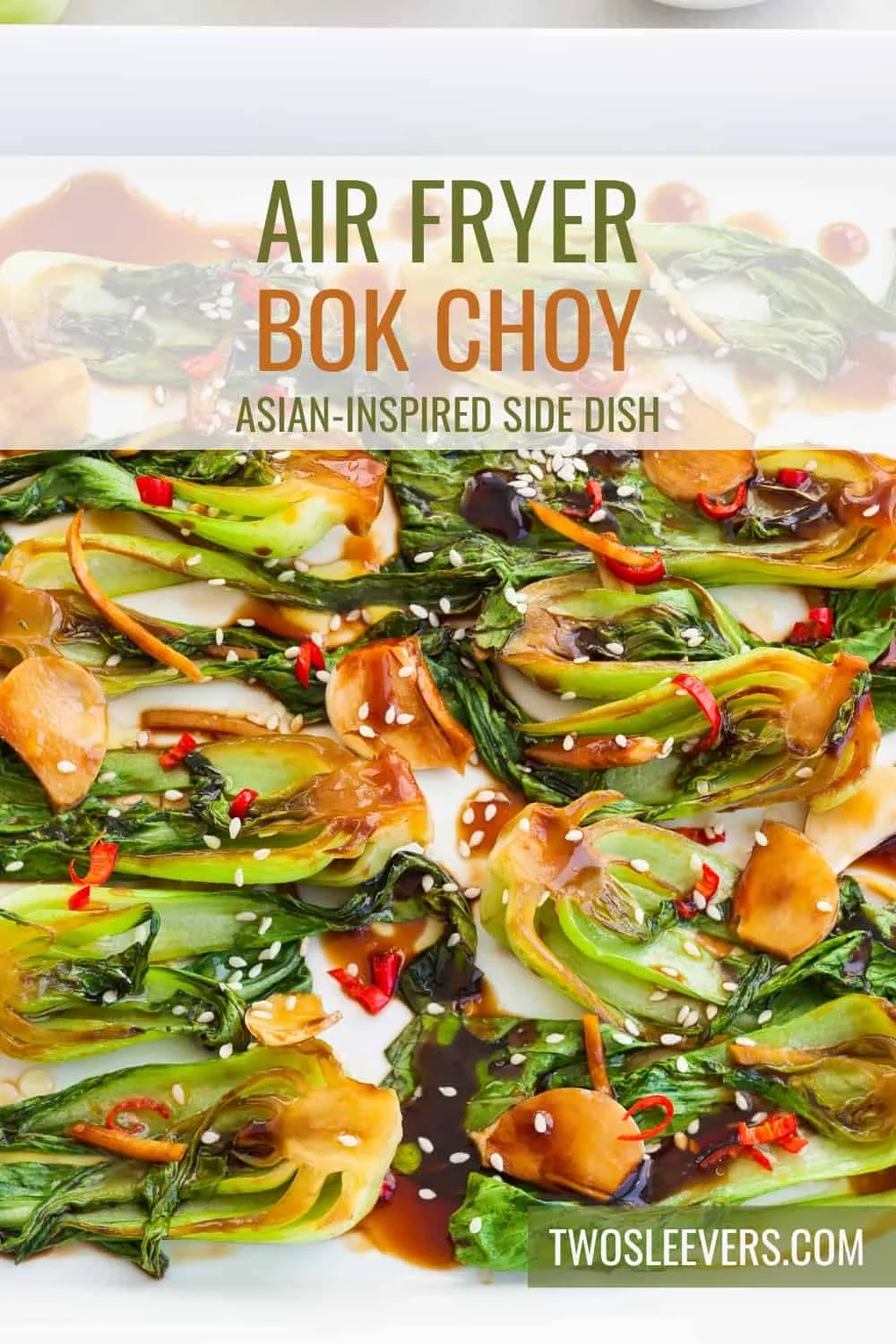
Why Air Fryer Bok Choy Is Worth Making
Air frying bok choy delivers a texture you genuinely cannot get from steaming, boiling, or even oven roasting. The leaves crisp and char at the edges while the thick white stalks turn tender and slightly sweet. It's the kind of side dish that makes people ask what you did differently.
Here's what makes it stand out from other cooking methods:
- Speed. Baby bok choy halves cook in 5 to 7 minutes at 375°F. Full-size quartered bok choy takes 7 to 10 minutes at 400°F. That's roughly half the time of oven roasting.
- Minimal oil. One to two teaspoons of oil per bunch is all you need. Pan-searing typically requires three to four times that amount.
- Even crisping. The circulating hot air hits the cut surface and leaf edges uniformly. No flipping, no hot spots, no burnt patches from a uneven stovetop pan.
- Concentrated flavor. The rapid moisture loss intensifies bok choy's natural sweetness and gives it a slight smokiness that steaming completely misses.
A 2021 study published in the Journal of Food Science found that air frying retained more water-soluble vitamins in leafy vegetables compared to deep frying, while still achieving comparable surface browning and texture. That's the practical sweet spot: better texture than steaming, less oil than pan frying, and solid nutrient retention.
If you already use your air fryer for frozen snacks or proteins, adding bok choy rounds out your rotation with something genuinely fresh and fast. It pairs well with soy-glazed salmon, garlic ginger tofu, or just a bowl of jasmine rice.
The Visual Guide: What Bok Choy Should Look Like Every Step of the Way
The biggest reason air fryer bok choy recipes fail is that people don't know what to look for. Timing alone isn't enough. You need to read the vegetable. Here's what each stage should look like.
Raw and prepped. After halving or quartering, the interior of the stalk should look pale green to white, moist, and tightly layered. The leaves should be dark green and perky. If the leaves are wilted before you start, they'll overcook before the stalks are done.
At the halfway shake. Around the 3 to 4 minute mark for baby bok choy, the leaves will have darkened and started to curl at the edges. The cut surface of the stalk will look slightly more translucent. This is when you shake the basket or flip the pieces.
Done. The stalks should be fully translucent and yield easily to tongs without feeling mushy. The leaf edges will be deep green to brown, with some charring. The flat cut surface should have golden-brown spots. Overall volume will have reduced by roughly half.
Overcooked. If the stalks look wrinkled and shrunken and the leaves are uniformly dark brown or black, you've gone too long. The window between perfect and burnt is about 90 seconds at the end, so watch closely in the final 2 minutes.
Glazed bok choy has its own visual cues. If you're adding a honey soy or gochujang glaze in the last 1 to 2 minutes, the surface should look glossy and caramelized, not blackened. Sugar-based glazes burn fast, so apply them late and keep the temperature at or below 375°F.
Prepping Bok Choy for the Air Fryer (Cutting, Washing, Drying)
Prep is where most air fryer bok choy recipes succeed or fail. The vegetable holds dirt between the stalks at the base, and any leftover moisture will steam it instead of crisping it. Take the extra two minutes here. It matters.
Washing. Cut the bok choy first, then rinse the separated pieces under cold running water. If you wash before cutting, dirt stays trapped at the root end. For full-size bok choy, trim about a quarter inch off the base, then separate the stalks. Swish them in a bowl of cold water and lift them out.
Don't let them sit in the water, since they'll reabsorb it.
Drying. This step is non-negotiable. Use a salad spinner for the leaves, then pat the cut stalks dry with paper towels. Any surface moisture will turn to steam in the air fryer and prevent browning. In our research, this was the single most common mistake mentioned in user reviews of air fryer vegetable recipes.
Cutting strategy depends on the type you're working with:
- Baby bok choy (4 to 6 inches long): Halve lengthwise. The two halves lay flat in the basket, exposing the interior for even cooking.
- Full-size bok choy (8 to 12 inches long): Quarter lengthwise, or separate the stalks from the leaves and cut the stalks into 2-inch pieces. The stalks take longer than the leaves, so if you keep them attached, the leaves will burn before the stalks are tender.
- Shanghai bok choy (smaller, spoon-shaped): Halve lengthwise or leave whole if very small. These cook the fastest, so start checking at 4 minutes.
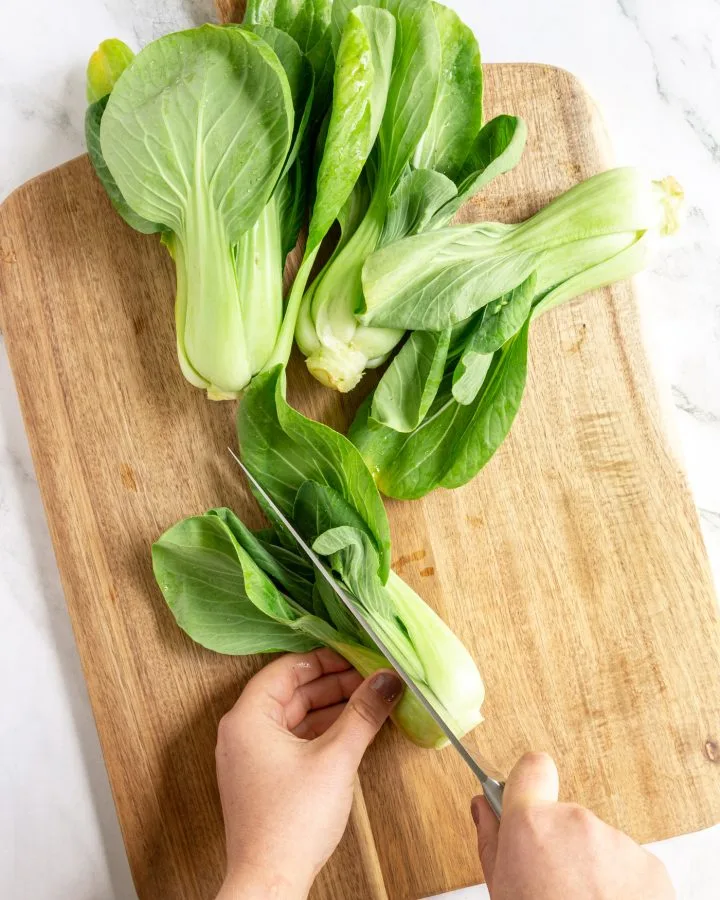
Oiling and seasoning. Toss the prepped bok choy in a bowl with 1 to 2 teaspoons of a neutral high-smoke-point oil. Grapeseed and avocado oil both work well. Add a pinch of salt and pepper. That's your base.
The oil serves two purposes: it helps conduct heat to the surface, and it acts as a binder for any dry seasonings. Don't skip it, but don't overdo it. Too much oil pools in the basket and causes smoking.
If you're using a glaze or wet sauce, apply it in the last 1 to 2 minutes of cooking. More on that in the flavor variations section.
The Basic Air Fryer Bok Choy Recipe
This is the foundation recipe that every variation below builds on. Master this first, then experiment.
Ingredients:
- 1 bunch baby bok choy (about 6 to 8 ounces / 170 to 225 g), halved lengthwise
- 1 teaspoon avocado or grapeseed oil
- 1/4 teaspoon fine sea salt
- 1/4 teaspoon black pepper
Steps:
- Preheat the air fryer to 375°F for 2 minutes if your model allows preheating. Not all do, and that is fine. Add 30 seconds to the cook time if you skip this step.
- Toss the halved bok choy with oil, salt, and pepper in a bowl until evenly coated.
- Arrange the pieces cut-side down in a single layer in the basket. Do not stack or overlap. Work in two batches if needed.
- Air fry at 375°F for 3 minutes.
- Open the basket and shake it gently, or flip the pieces with tongs.
- Continue cooking for another 2 to 4 minutes until the leaf edges are charred and the stalks are translucent.
- Remove immediately. Finish with flaky sea salt or a squeeze of lime.
Total cook time: 5 to 7 minutes for baby bok choy halves.
For full-size bok choy, quarter the stalks, increase the temperature to 400°F, and cook for 7 to 10 minutes with a shake at the 4-minute mark.
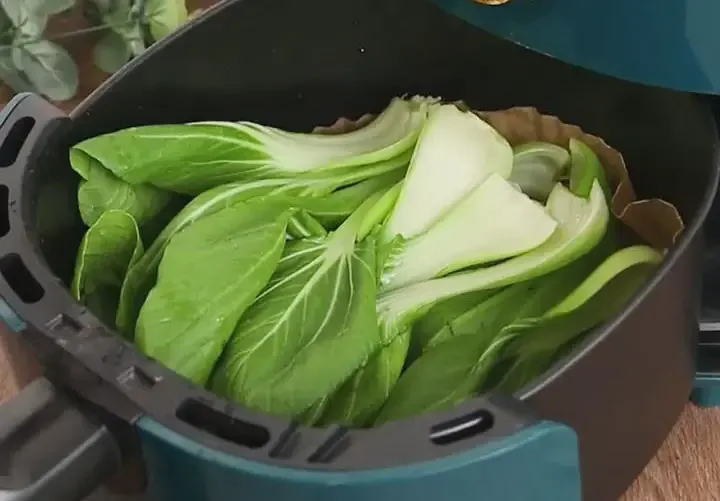
Key details that make this work:
- Single layer only. Crowding the basket traps moisture and steams the bok choy instead of crisping it. If your air fryer is on the smaller side, cook in two batches. It only takes a few minutes each.
- Cut-side down orientation. The flat interior surface makes direct contact with the hottest air in the basket. This is where you get the best browning.
- Shake at halfway. This exposes the other side to direct airflow and prevents one side from overcooking.
- Pull it slightly early. Bok choy continues to soften for about 30 seconds after you remove it from the basket. If it looks perfect in the fryer, it will be slightly overdone by the time it hits the plate.
If you're cooking for a family of 4, you'll likely need to work in batches unless you have a larger model. A 6 quart air fryer handles a full bunch in one go, which makes weeknight cooking significantly easier.
Three Flavor Variations That Actually Work
Once you've got the basic method down, these three variations take it in different directions. Each one uses the same cook time and temperature as the base recipe. The only difference is when and how you add the flavorings.
Garlic Soy Glaze
This is the crowd-pleaser. Savory, slightly sweet, and it clings to the bok choy's textured surface.
Glaze ingredients:
- 1 tablespoon soy sauce (low sodium preferred)
- 1 teaspoon toasted sesame oil
- 1 teaspoon honey or maple syrup
- 1 clove garlic, minced
Mix the glaze in a small bowl. After the bok choy has cooked for 5 minutes and you've done the halfway shake, brush or drizzle the glaze over the cut surfaces. Cook for 1 to 2 more minutes until the glaze looks glossy and slightly caramelized. Finish with toasted sesame seeds and sliced scallion.
The sugar in the honey will burn if you apply it too early. Keep it to the last 2 minutes.
Spicy Gochujang Bok Choy
For anyone who likes heat, this one delivers a slow-building warmth with a sticky, savory coating.
Sauce ingredients:
- 1 tablespoon gochujang (Korean chili paste)
- 1 teaspoon rice vinegar
- 1 teaspoon soy sauce
- 1/2 teaspoon honey
Thin the gochujang with the other ingredients so it's brushable. Apply in the last 90 seconds of cooking. The high heat activates the fermented chili flavor and creates a slightly tacky finish. Top with sesame seeds and a few drops of lime juice to cut the richness.
If gochujang is hard to find, sriracha mixed with a small amount of miso paste is a reasonable substitute.
Simple Sesame and Lemon
The lightest option. Best when you want the bok choy to play a supporting role alongside something more heavily seasoned.
After the bok choy comes out of the air fryer, toss it with 1 teaspoon of toasted sesame oil, a squeeze of fresh lemon juice, and a pinch of flaky sea salt. The residual heat wilts the sesame oil slightly and releases its aroma. Add white or black sesame seeds for texture.
This version works especially well in grain bowls and alongside grilled fish or chicken. If you're building out a full air fryer meal, you might also want to check out our guide on whether food cooked in an air fryer is healthier for a deeper look at the nutrition side.
A note on glazes in general: Wet sauces applied at the start of cooking will burn, slide off, or create excess smoke. The rule is simple. Dry seasonings go on before cooking. Wet glazes go on in the final 1 to 2 minutes.
Every time.
Baby Bok Choy vs. Full-Size: How to Adjust Your Approach
Not all bok choy is built the same, and treating full-size and baby bok choy identically is one of the most common mistakes in air fryer recipes. The size difference changes everything: cook time, cutting method, temperature, and even how you arrange pieces in the basket.
Baby bok choy is 4 to 6 inches long with tender, loosely packed leaves and slender stalks. The whole head cooks evenly because the stalk and leaf are roughly the same thickness. Halve it lengthwise, toss it in oil, and you're done. Cook at 375°F for 5 to 7 minutes.
Full-size bok choy is 8 to 12 inches long with thick, dense white stalks and broad dark green leaves. The stalk takes significantly longer to cook than the leaf. If you throw a full head in the air fryer whole, the leaves will incinerate while the stalk is still raw. You need to cut it into quarters lengthwise, or separate the stalks from the leaves entirely and give the stalks a head start of 2 to 3 minutes before adding the leaves.
Here's a quick comparison:
| Factor | Baby Bok Choy | Full-Size Bok Choy |
|---|---|---|
| Length | 4 to 6 inches | 8 to 12 inches |
| Cut | Halve lengthwise | Quarter lengthwise or separate stalk/leaf |
| Temperature | 375°F | 400°F |
| Cook time | 5 to 7 minutes | 7 to 10 minutes |
| Stalk/leaf timing | Cook together | Stalks need 2 to 3 min head start |
| Best for | Beginners, quick sides | Larger portions, meal prep |
If you're buying specifically for the air fryer, baby bok choy is the easier starting point. It's more forgiving, cooks faster, and fits in smaller baskets without awkward trimming. Full-size bok choy gives you more volume per dollar but demands a bit more attention to the cutting and timing.
Shanghai bok choy, the smaller spoon-shaped variety, falls somewhere in between. It's about 5 to 7 inches with a thicker base than baby bok choy but more tender than full-size. Halve it lengthwise and cook at 375°F for 5 to 6 minutes. It's the fastest option and has a slightly sweeter flavor.
Common Mistakes That Ruin Air Fryer Bok Choy
Even with a solid recipe, a few recurring errors turn crispy bok choy into a soggy, burnt, or bland mess. Here's what goes wrong most often and how to fix it.
Not drying the bok choy after washing. Trapped moisture is the number one enemy of crisping. Water on the surface turns to steam in the air fryer, and steamed bok choy is limp bok choy. After washing, spin the pieces dry and pat the cut surfaces with paper towels. Take the extra 60 seconds.
It makes a visible difference.
Overcrowding the basket. When pieces overlap or pile up, hot air can't circulate between them. The result is uneven cooking: the top pieces crisp while the bottom ones steam. Always work in a single layer. If your basket is small, cook in two batches.
Each batch only takes 5 to 7 minutes, so the time cost is minimal.
Using too much oil. More oil does not mean more crispiness. Excess oil drips through the basket, hits the drip pan, and creates smoke. One to two teaspoons per bunch is the right amount. Toss the bok choy in a bowl to coat evenly rather than pouring oil directly into the basket.
Applying glazes too early. Sugar-based glazes (honey, gochujang, maple) will burn and turn bitter if applied at the start of cooking. The rule is consistent across every variation: dry seasonings go on before, wet glazes go on in the final 1 to 2 minutes. No exceptions.
Skipping the halfway shake. The side of the bok choy facing down in the basket gets more direct heat. If you don't shake or flip at the halfway point, one side overcooks while the other stays underdone. Set a timer for the halfway mark so you don't forget.
Cooking at the wrong temperature. Below 350°F, bok choy steams instead of crisping. Above 400°F, the leaves burn before the stalks soften. The sweet spot is 375°F for baby bok choy and 400°F for full-size quartered pieces. If your air fryer runs hot or hot, adjust down by 10 degrees and add 1 to 2 minutes.
Not pulling it early enough. Bok choy continues to cook from residual heat after you remove it from the basket. If it looks perfectly done in the fryer, it will be slightly overdone on the plate. Pull it about 30 seconds before it reaches your ideal doneness.
Air Fryer Bok Choy vs. Oven Roasted, Pan-Seared, and Steamed
Each cooking method produces a genuinely different result. The air fryer isn't automatically the best choice for every situation. Here's how the four main methods compare.
Air fryer. The fastest option at 5 to 10 minutes. Produces crispy leaf edges and tender stalks with minimal oil. Best for small batches (1 to 3 servings). The compact basket limits volume, so cooking for a crowd requires multiple rounds.
Flavor is concentrated and slightly smoky from the rapid browning.
Oven roasting. Takes 15 to 20 minutes at 425°F on a sheet pan. Handles larger volumes easily since you can spread bok choy across a full pan. The results are good but less crisp than the air fryer because the oven's ambient heat doesn't hit the surface as intensely. You also need to flip the pieces halfway through, which the air fryer handles automatically through convection.
Pan-searing. The fastest stovetop method at 4 to 6 minutes in a hot skillet. Gives you the most direct control over charring since you can watch the bok choy in real time and adjust the heat. Requires more oil than the air fryer (2 to 3 tablespoons) and constant attention. Best for single servings.
The flat-bottomed skillet gives excellent contact browning on the cut surface.
Steaming. Takes 3 to 5 minutes in a steamer basket. Produces soft, mild bok choy with no browning at all. This is the right choice when you want a gentle, delicate texture, like for congee or baby food. It won't give you any crispness or char, so it serves a completely different purpose.
| Method | Time | Oil Needed | Crispiness | Batch Size | Hands-On Effort |
|---|---|---|---|---|---|
| Air fryer | 5 to 10 min | 1 to 2 tsp | High | Small (1 to 3 servings) | Low |
| Oven roasting | 15 to 20 min | 1 to 2 tbsp | Medium | Large (4+ servings) | Medium |
| Pan-searing | 4 to 6 min | 2 to 3 tbsp | High | Small (1 to 2 servings) | High |
| Steaming | 3 to 5 min | None | None | Any size | Low |
The air fryer wins on speed and crispiness per unit of oil. The oven wins on volume. Pan-searing wins on control. Steaming wins on gentleness.
If you're cooking a quick weeknight side for two, the air fryer is the clear choice. If you're prepping vegetables for a week's worth of meal prep containers, the oven gets it done in one shot.
How to Use Air Fryer Bok Choy in Bowls, Meals, and Meal Prep
Air fryer bok choy isn't just a standalone side. It works as a component in a wide range of meals, and that's where it really earns its place in a regular rotation.
Grain and rice bowls. This is the most natural home for air fryer bok choy. Start with a base of jasmine rice, brown rice, or quinoa. Add the bok choy, a protein (air fried tofu, grilled chicken, seared salmon), and a drizzle of sauce. The crispy bok choy adds texture that soft rice and protein alone don't provide.
A soy-sesame or peanut sauce ties everything together.
Noodle bowls. Toss air fryer bok choy into soba noodles, rice noodles, or ramen. The slight char and concentrated flavor hold up well against rich broths and bold sauces. Add soft-boiled eggs, sliced scallions, and a splash of chili oil for a complete meal.
Buddha bowls. Combine air fryer bok choy with roasted sweet potato, chickpeas, avocado, pickled red onion, and a tahini or miso dressing. The variety of textures and temperatures makes this style of bowl satisfying without feeling heavy.
Stir-fry addition. You can air fry bok choy first and then toss it into a stir-fry at the end. This gives you the crispy edges from the air fryer while integrating it with the sauce and other vegetables from the wok. It's a hybrid approach that takes a few extra minutes but produces a noticeably better texture than stir-frying bok choy on its own.
Meal prep. Air fryer bok choy reheats reasonably well. Store it in an airtight container in the refrigerator for up to 3 days. Reheat in the air fryer at 350°F for 2 to 3 minutes to restore some of the crispness. The microwave works in a pinch but will soften the leaves further.
For meal prep, cook the bok choy on Sunday and portion it into containers with your grain and protein of choice.
If you're building out a full air fryer meal prep system, it's worth reading our guide on whether food made in an air fryer is healthy for a deeper look at how the cooking method affects nutrient content across different food groups.
Tips for Different Air Fryer Models and Basket Sizes
Not all air fryers behave the same way, and the model you own affects how bok choy turns out. Here's what to adjust based on your setup.
Basket-style air fryers (Cosori, Ninja, Philips) are the most common. They cook fast and crisp well, but the basket size varies. A 3.5-quart model fits about 4 to 6 baby bok choy halves per batch. A 5 to 6-quart model handles a full bunch in one go.
If you have a smaller unit, accept that you'll need two batches and plan accordingly.
Air fryer toaster ovens (Breville Smart Oven Air, Cuisinart TOA) use a flat tray or wire rack instead of a basket. These give you more surface area but slightly less intense convection since the chamber is larger. Increase the temperature by 10 to 15 degrees or add 1 to 2 minutes to the cook time compared to basket-style recipes. The flat tray also means bok choy can roll around, so cut it into pieces that sit flat.
Dual-basket models (Ninja Foodi Dual Zone) let you cook two batches simultaneously or run two different temperatures. This is useful if you're making bok choy alongside something else, like air fried chicken thighs, that needs a different cook time and temperature.
Key adjustments by model type:
- Compact (2 to 3 qt): Reduce batch size. Cook in 2 rounds. Watch closely since smaller chambers heat faster.
- Standard (4 to 6 qt): Follow the base recipe as written. This is the range most tested recipes are built around.
- Large / toster oven (8+ qt): Increase temperature by 10 to 15 degrees or extend cook time by 1 to 2 minutes. The larger air volume takes longer to circulate tightly around the food.
Preheating matters more on some models than others. Cosori and Ninja basket fryers heat up in about 2 minutes and benefit from preheating. Breville and Cuisinart toaster ovens take 4 to 5 minutes to preheat, and the difference in results is smaller. If preheating feels like a hassle, just add 30 seconds to the total cook time and move on.
Perforated parchment liners make cleanup easier but slightly reduce airflow. If you use one, add 30 seconds to the cook time and make sure the liner is perforated, not solid. A solid liner traps steam and defeats the purpose of the air fryer.
If you're shopping for a new model or upgrading, our roundup of the best air fryer toaster oven combos that are easy to clean covers the options that handle vegetables particularly well, along with the features that matter most for everyday cooking.
Nutrition Facts and What You're Actually Getting
Bok choy is one of the most nutrient-dense vegetables you can cook in an air fryer, and the air frying method preserves most of what makes it worth eating. Here's what you're working with.
According to USDA FoodData Central, one cup of raw bok choy (about 70 grams) contains roughly 9 calories, 1 gram of protein, 1.5 grams of carbohydrates, and virtually no fat. It's an excellent source of vitamin C (about 45% of the daily value), vitamin A (about 60% DV), and vitamin K (about 40% DV). It also provides meaningful amounts of calcium, potassium, and folate.
Air frying does cause some loss of heat-sensitive vitamin C, as any cooking method does. However, a 2015 study in the Journal of Food Science found that air frying retained significantly more water-soluble vitamins in vegetables compared to deep frying, primarily because the cook time is shorter and there's no oil to leach nutrients into. The rapid, dry heat of the air fryer is gentler on nutrients than you might expect.
Per serving of air fryer bok choy (about 3.5 ounces / 100 grams cooked, with 1 teaspoon oil):
| Nutrient | Amount | % Daily Value |
|---|---|---|
| Calories | 50 to 70 kcal | 3% |
| Total fat | 2.5 g | 3% |
| Carbohydrates | 3 g | 1% |
| Fiber | 1 g | 4% |
| Protein | 1.5 g | 3% |
| Vitamin C | 25 mg | 28% |
| Vitamin A | 280 mcg RAE | 31% |
| Vitamin K | 35 mcg | 29% |
| Calcium | 80 mg | 6% |
These numbers are estimates based on USDA reference data for cooked bok choy with a small amount of added oil. Actual values vary depending on the variety, how much oil you use, and how long you cook it. Longer cook times break down more vitamin C, so pulling the bok choy at the earlier end of the window preserves slightly more nutrition.
The low calorie count and high water content make bok choy a strong choice for anyone managing calorie intake while still wanting volume and texture on the plate. It fills out a bowl without weighing it down, and the fiber content helps with satiety.
If you're tracking macros or following a specific dietary pattern, bok choy fits cleanly into vegan, keto, paleo, Whole30, and low-FODMAP frameworks. It's one of the most universally compatible vegetables you can cook.
Frequently Asked Questions
Can I air fry bok choy without oil?
You can, but the results are noticeably different. Without oil, the bok choy will still wilt and soften, but it won't develop the same golden-brown surface or crispy leaf edges. The oil acts as a heat conductor and a browning agent. If you're avoiding oil entirely, use the smallest amount you can, about 1/2 teaspoon, and accept that the texture will be closer to roasted than fried.
Do I need to preheat the air fryer for bok choy?
It helps but isn't essential. Preheating for 2 minutes at 375°F gives you a more consistent start and slightly better browning on the cut surface. If you skip it, add about 30 seconds to the total cook time. The difference is small enough that if preheating feels like a hassle, don't worry about it.
Can I use frozen bok choy in the air fryer?
Frozen bok choy works, but it releases a lot more water during cooking, which makes it harder to get crispy results. If that's what you have, thaw it first and pat it very dry. Increase the temperature to 400°F and cook for 8 to 10 minutes, shaking halfway. The texture will be softer than fresh, but it's still a usable option.
How do I keep bok choy from getting soggy in the air fryer?
Three things cause sogginess: moisture on the surface, overcrowding, and too low a temperature. Dry the bok choy thoroughly after washing. Cook in a single layer with space between pieces. And keep the temperature at 375°F or higher.
If your bok choy comes out limp, one of those three factors is the culprit.
What other vegetables cook well at the same temperature as bok choy?
Broccoli florets, asparagus, halved Brussels sprouts, and green beans all cook well at 375°F to 400°F in roughly the same time window. If you're making a mixed vegetable batch, cut everything to a similar size and start with the densest vegetables first. Add quicker-cooking items like bok choy in the last 3 to 4 minutes.
How long does cooked bok choy last in the fridge?
Stored in an airtight container, cooked bok choy keeps for 3 to 4 days. Reheat in the air fryer at 350°F for 2 to 3 minutes to bring back some crispness. The microwave works too, but it will soften the leaves further. For meal prep, cook a batch on your prep day and portion it out with grains and protein.
Is air fryer bok choy safe for kids?
Bok choy is safe and nutritious for children. The mild flavor and crispy texture make it more appealing to picky eaters than steamed or boiled greens. For toddlers, chop the cooked bok choy into small pieces to reduce choking risk. Avoid adding spicy glazes or excessive salt for young children.
Can I use a parchment liner when air frying bok choy?
Yes, but use a perforated liner designed for air fryers. Perforated liners allow enough airflow to maintain crispiness while making cleanup easier. A solid sheet of parchment blocks airflow and traps steam, which defeats the purpose of the air fryer. If you use a perforated liner, add about 30 seconds to the cook time.
Final Thoughts: When to Make This and Why It Works
Air fryer bok choy recipes earn their place in a regular rotation because they're fast, forgiving, and genuinely delicious. The method takes 5 to 10 minutes, uses minimal oil, and produces a texture that steaming and boiling simply cannot match. Once you've got the basic technique down, the flavor variations are easy to rotate through so it never gets repetitive.
The best time to make this is on a weeknight when you want a vegetable side that doesn't require your full attention. Get the bok choy in the air fryer, set a timer, and use the 7 minutes to handle the rest of the meal. It's also a strong choice for meal prep since it reheats well and pairs with almost any grain or protein.
If you're new to air frying vegetables, start with baby bok choy halves at 375°F for 6 minutes. That's the simplest version and the hardest to mess up. From there, experiment with glazes, different bok choy varieties, and mixed vegetable batches. The air fryer is one of the most efficient tools in the kitchen for cooking vegetables well, and bok choy is one of the best things you can put in it.