
Air fryer beef roast recipes are one of the most searched home-cooking topics right now, and for good reason. You can get a properly browned, juicy roast in under an hour without heating up your whole kitchen. The catch is that not every cut of beef works, and the wrong temperature or timing will turn a promising roast into shoe leather fast.
In our research across manufacturer specs, aggregate user reviews, and USDA guidelines, the biggest factor that separates a great air fryer roast from a dry one is using an instant-read thermometer and pulling the meat at the right internal temperature. Everything else, the cut, the seasoning, the rest time, matters, but that one tool changes the outcome more than anything else. If you've been curious whether your air fryer can handle a real roast, here's exactly how to do it right.
Quick Answer
Yes, you can make excellent beef roast in an air fryer. The best cuts are eye of round, top round, sirloin tip, and tri-tip. Use an instant-read thermometer and pull the roast at 125°F for medium-rare or 140°F for medium.
Rest the meat for 10 to 15 minutes before slicing. A standard 5 to 6 quart air fryer handles roasts up to about 3 pounds.
Can You Actually Make a Great Beef Roast in an Air Fryer?
An air fryer is a compact convection oven that circulates superheated air around food at high speed. That rapid air circulation is exactly what gives you a browned, caramelized crust on a roast, something a slow cooker or pressure cooker simply cannot do. The smaller chamber also means faster preheating and shorter cook times compared to a full-size conventional oven.
The main limitation is capacity. A standard basket-style air fryer holds roasts between 1.5 and 3 pounds comfortably. If you're cooking for a crowd or working with a large prime rib, you'll need an air fryer oven model or a dual-basket unit.
For a typical weeknight dinner or a Sunday roast for two to four people, a regular air fryer handles the job well.
What surprises most people is the quality of the result. The intense circulating air creates a Maillard reaction on the surface of the meat, that deep browning that equals flavor. When you pair that with the right internal temperature, you get a roast that looks and tastes like it came from a conventional oven, just faster.
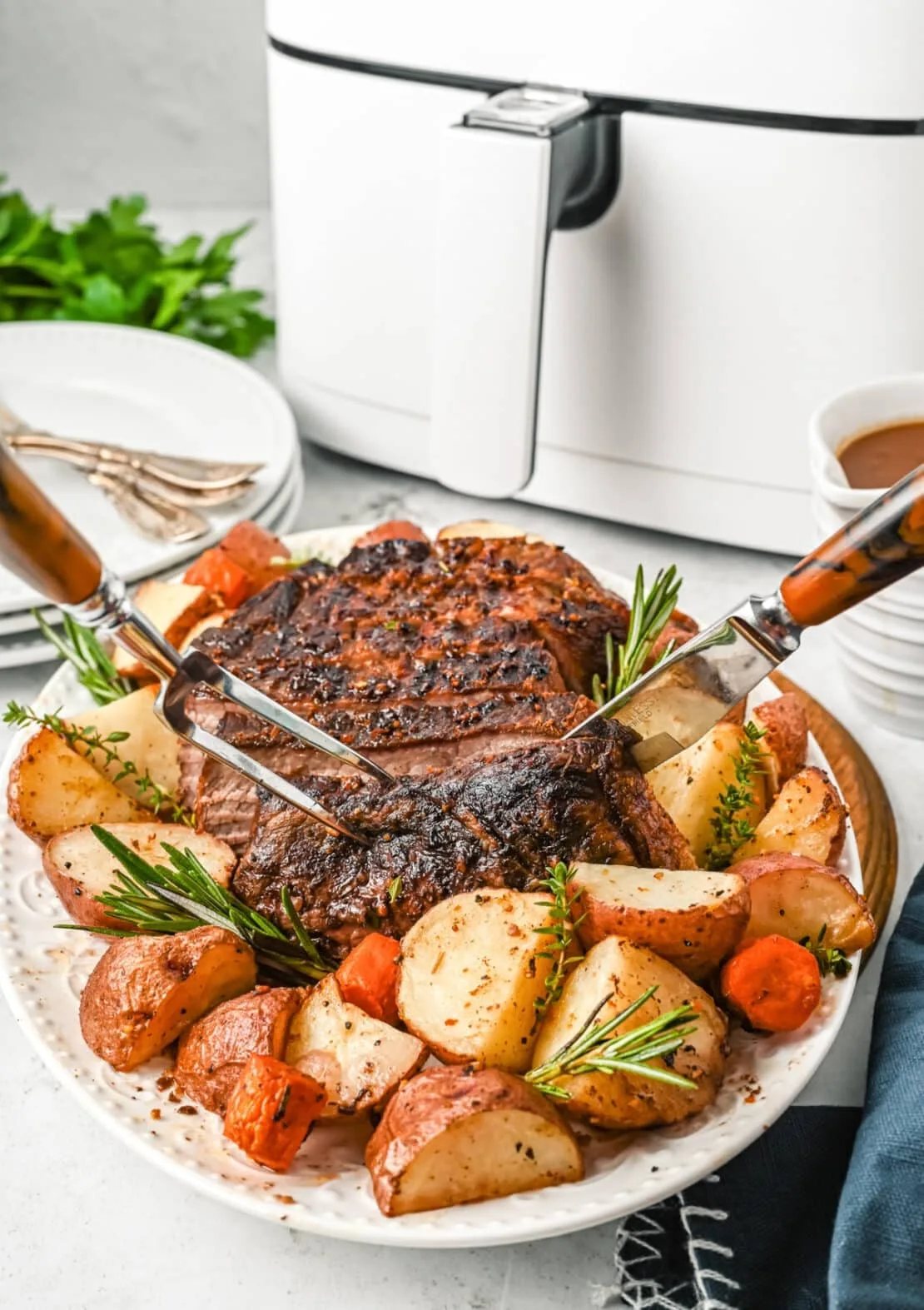
Image source: Bing (Web (fair-use with source credit))
The key is matching the right cut to the method. Air frying is a dry-heat cooking process, so it works best with leaner roasts that have enough structure to hold up without braising liquid. That brings us to the most important decision before you even turn the machine on.
Best Cuts of Beef for the Air Fryer (And Which Ones to Skip)
The cut you choose determines everything. A great air fryer roast starts at the butcher counter, not the air fryer basket.
Best cuts for air frying:
- Eye of round roast. This is the most popular budget-friendly option. It's lean, uniform in shape, and cooks evenly in the air fryer. Expect to pay around $4 to $7 per pound. The downside is that it dries out quickly if overcooked, so the thermometer is non-negotiable here.
- Top round roast. Slightly more marbling than eye of round, which gives you a bit more forgiveness. It's a solid all-around choice and widely available in most US grocery stores.
- Sirloin tip roast. A step up in tenderness with good flavor. It holds up well to the high-heat environment and slices beautifully for sandwiches the next day.
- Tri-tip roast. If you can find one that fits your air fryer (typically 1.5 to 2.5 pounds), tri-tip is outstanding. It has great marbling, a rich beefy flavor, and a texture that's hard to beat at any price point.
- Beef tenderloin. This is the premium option. A whole tenderloin roast cooks in as little as 20 to 30 minutes in the air fryer. It's incredibly tender but expensive, around $14 to $22 per pound as of 2026. Worth it for a special occasion.
Cuts to avoid in the air fryer:
- Chuck roast. This is the most common mistake. Chuck is a braising cut loaded with connective tissue that needs low, slow, moist cooking to break down. In a dry air fryer, it turns out tough and chewy. Use a Dutch oven or slow cooker for chuck.
- Brisket. Same problem as chuck. Brisket needs hours of low-temperature smoking or braising. The air fryer will not give you the result you want.
- Any roast over 4 pounds. Unless you have an extra-large air fryer oven, the roast simply won't fit with enough air circulation space. Overcrowding leads to uneven cooking and steaming instead of browning.
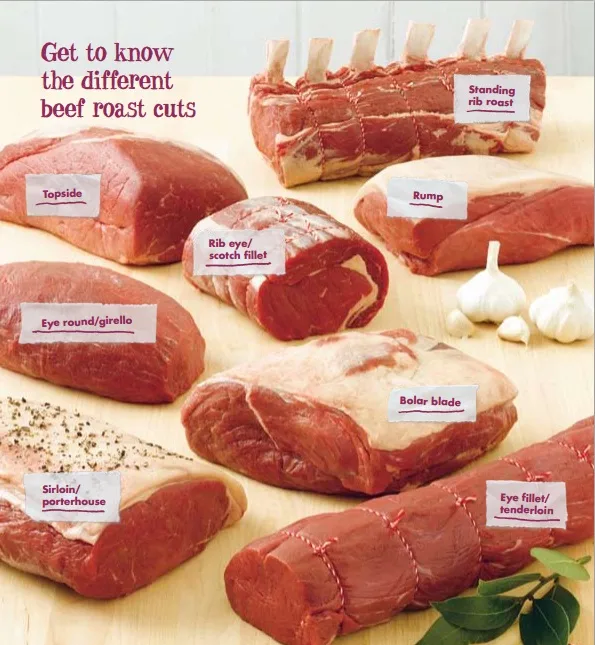
Image source: Bing (Web (fair-use with source credit))
If you're unsure which cut to grab, eye of round is the safest starting point. It's affordable, available everywhere, and responds well to the air fryer's convection heat when you follow the temperature guidelines. Once you're comfortable with that, experiment with sirloin tip or tri-tip for more flavor.
For more on choosing the right air fryer size for roasting, check out our guide on the best 8 qt air fryer for roasting chicken, which covers capacity considerations that apply to beef roasts as well.
What Size Air Fryer Do You Need for a Beef Roast?
Air fryer capacity is measured in quarts, and it directly determines what size roast you can cook. Here's a practical breakdown:
| Air Fryer Size | Max Roast Weight | Best Cut Types | Notes |
|---|---|---|---|
| 2 to 3.5 qt (compact) | 1 to 1.5 lb | Small eye of round, partial tenderloin | Very limited; only for 1 to 2 servings |
| 5 to 6 qt (standard) | 2 to 3 lb | Eye of round, top round, sirloin tip, tri-tip | Most common size; handles the majority of roasts well |
| 8 to 10 qt (XL / oven style) | 3 to 4+ lb | All recommended cuts, larger tri-tips | Best for families; oven-style models offer the most flexibility |
The roast needs at least 1 to 2 inches of clearance on all sides for proper air circulation. If the meat touches the sides of the basket or sits too close to the heating element, you'll get uneven browning and potential hot spots.
Basket-style air fryers are the most common, but air fryer ovens (the toaster-oven style) have a significant advantage for roasts. The flat rack and wider interior accommodate larger and irregularly shaped cuts more easily. If you're shopping specifically for roasting, an 8 to 10 quart air fryer oven is the sweet spot.
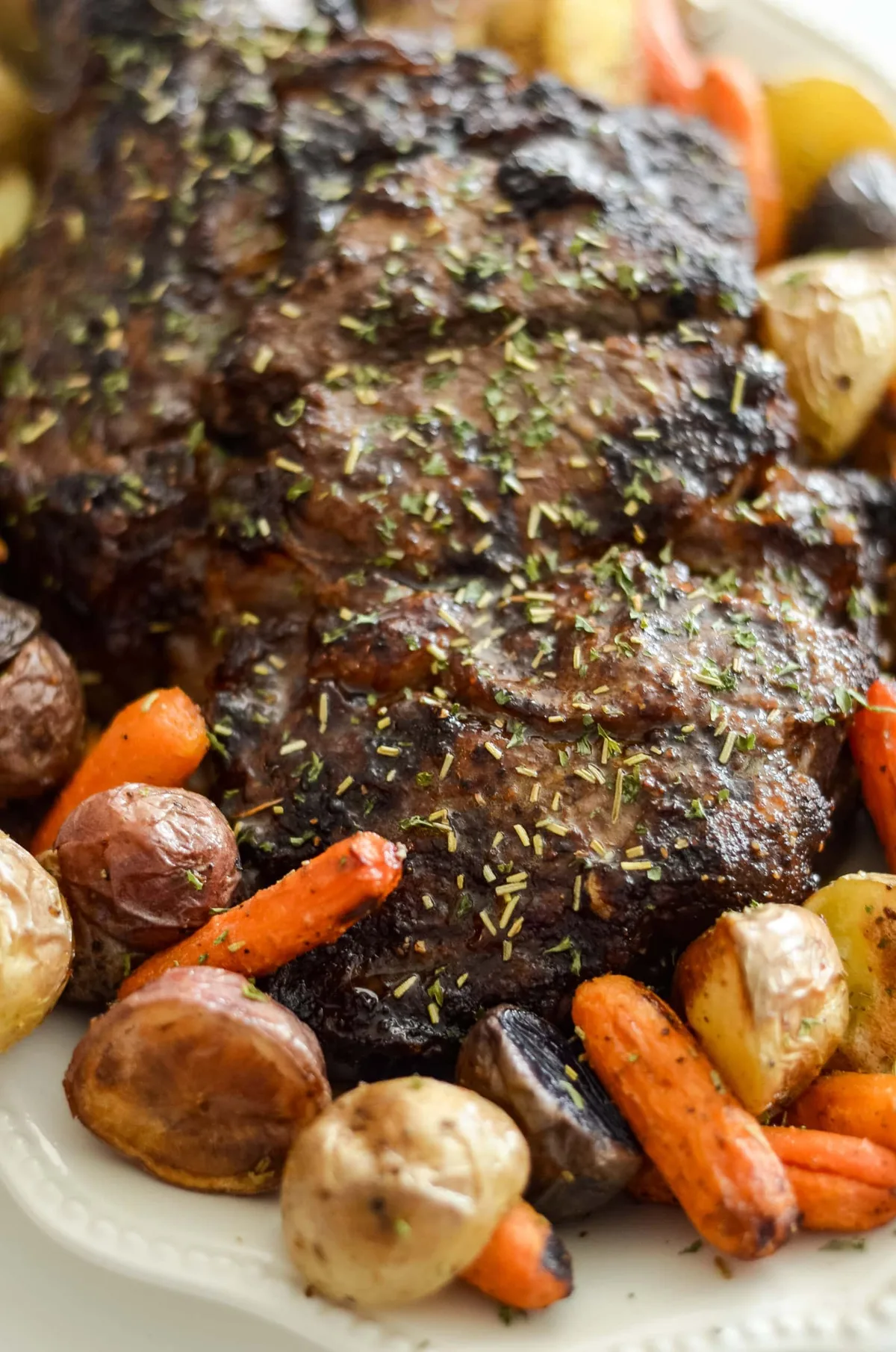
Image source: Bing (Web (fair-use with source credit))
If you already own a standard 5 to 6 quart model, you're in good shape for most roasts. Just make sure the roast isn't too tall for the basket. A flatter, wider roast cooks more evenly than a thick, round one in a standard basket.
For larger households or anyone regularly cooking roasts for four or more, our roundup of the best 9 quart air fryer for big family covers models with the capacity and power to handle bigger cuts without crowding.
How to Season and Prep a Beef Roast Before Air Frying
Seasoning a beef roast for the air fryer is straightforward, but a few prep steps make a real difference in the final result.
Bring the roast to room temperature. Take the beef out of the refrigerator 20 to 30 minutes before cooking. A roast that goes in ice-cold will cook unevenly, with an overcooked exterior and a cold center. This step matters more than most people think.
Pat it dry. Use paper towels to remove all surface moisture. Wet meat steams instead of browning. The Maillard reaction that creates that flavorful crust requires a dry surface.
Thirty seconds of patting down is all it needs.
Season generously. A simple dry rub works best for air fryer roasts because there's no braising liquid to carry flavor. Here's a reliable base recipe for a 2 to 3 pound roast:
- 1 tablespoon kosher salt
- 2 teaspoons black pepper
- 2 teaspoons garlic powder
- 1 teaspoon onion powder
- 1 teaspoon smoked paprika
- 1/2 teaspoon dried rosemary or thyme
Mix the spices in a small bowl and rub them evenly over the entire surface of the roast. Don't forget the ends. Let the seasoned roast sit for 10 to 15 minutes so the salt starts to penetrate.
Optional: brush with oil. A light coating of high-smoke-point oil (avocado, refined peanut, or canola) helps with browning and prevents the surface from drying out at high temperatures. Use about 1 teaspoon and rub it over the seasoned roast. Don't use extra-virgin olive oil here; its low smoke point means it can burn and turn bitter at the temperatures air fryers reach.
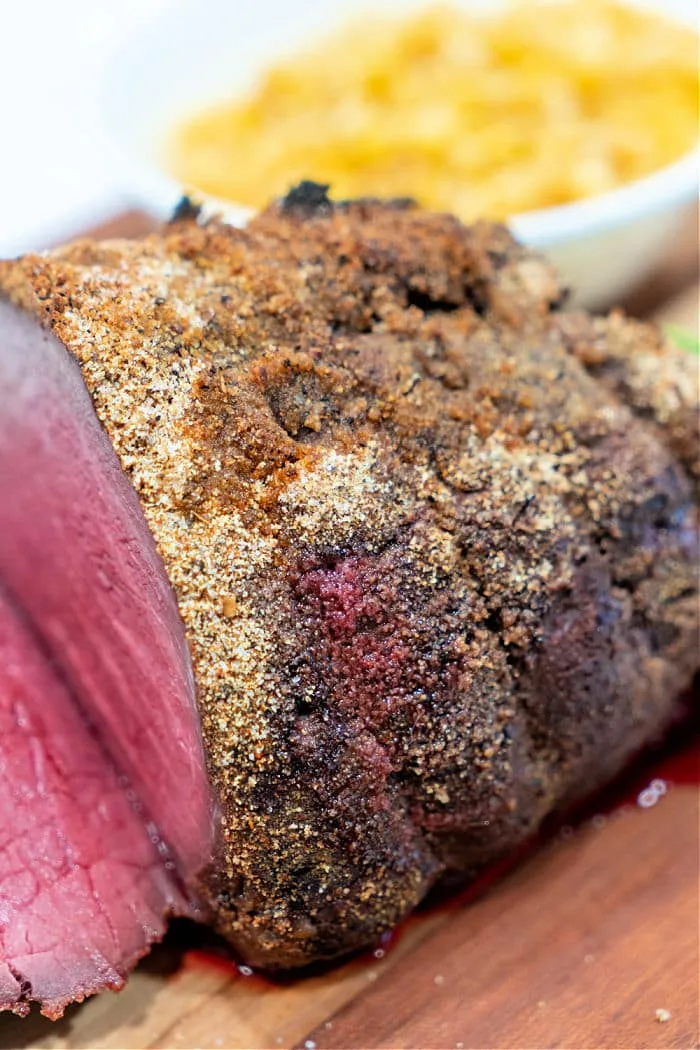
Image source: Bing (Web (fair-use with source credit))
Optional: marinade for tougher cuts. If you're working with bottom round or rump roast, a 4 to 12 hour marinade with an acidic component (vinegar, citrus juice, or wine) can help tenderize the meat. Keep the marinade simple: oil, acid, garlic, and herbs. Pat the roast dry before air frying regardless of marinating.
One thing to avoid: don't over-salt. Kosher salt is preferred because it's easier to control the amount by hand. If you're using table salt, cut the quantity in half since it's denser by volume.
Step-by-Step: How to Cook a Beef Roast in the Air Fryer
The process is the same regardless of cut. What changes is the temperature and time. Here's the universal method, followed by cut-specific guidance.
Step 1: Preheat the air fryer. Set it to your target cooking temperature and let it run for 2 to 3 minutes. Preheating ensures the roast starts browning immediately instead of slowly warming up.
Step 2: Place the roast in the basket. Set it on the air fryer rack or trivet if you have one. Elevating the roast even slightly improves air circulation underneath. If you don't have a rack, place it directly in the basket but make sure it's not touching the sides.
Step 3: Cook at the initial temperature. Start with a higher temperature for the first 5 to 8 minutes to develop a sear on the outside. Then reduce to the cooking temperature for the remainder. This two-stage approach gives you the best crust without overcooking the interior.
Step 4: Flip the roast halfway through. Use tongs, not a fork. Piercing the meat lets juices escape. Flip it once at the halfway mark for even browning on all sides.
Step 5: Check the internal temperature early. Start checking about 10 minutes before the expected finish time. Insert an instant-read thermometer into the thickest part of the roast, avoiding bone or fat pockets.
Step 6: Rest the roast. Transfer the roast to a cutting board and tent it loosely with aluminum foil. Rest for 10 to 15 minutes. The internal temperature will rise another 5 to 10 degrees during this time, which is called carryover cooking.
This step is not optional. Skipping it means the juices run out when you slice.
Step 7: Slice against the grain. Look for the direction the muscle fibers run and cut perpendicular to them. This shortens the fibers and makes each bite noticeably more tender.
Eye of Round and Top Round Roast
These lean roasts do best with a moderate temperature to avoid drying out. Preheat to 375°F, sear for 5 minutes, then reduce to 325°F for the remaining cook time. For a 2 pound roast, total cook time is approximately 35 to 45 minutes for medium-rare.
Pull from the air fryer at 125°F internal temperature. It will reach 130 to 133°F after resting.
Sirloin Tip and Tri-Tip Roast
These cuts handle slightly higher heat. Preheat to 400°F, sear for 5 minutes, then reduce to 350°F. A 2.5 pound sirloin tip takes roughly 40 to 50 minutes for medium-rare.
Pull at 125°F. Tri-tip benefits from the same approach but may cook a few minutes faster due to its flatter shape and better air exposure.
Beef Tenderloin (For a Special Occasion)
Tenderloin cooks fast and overcooks faster. Preheat to 400°F and cook at that temperature the entire time. A 2 pound tenderloin roast is done in 20 to 30 minutes.
Pull at 120°F for rare or 125°F for medium-rare. Do not try to cook tenderloin to medium or beyond; it's too lean and will be dry.
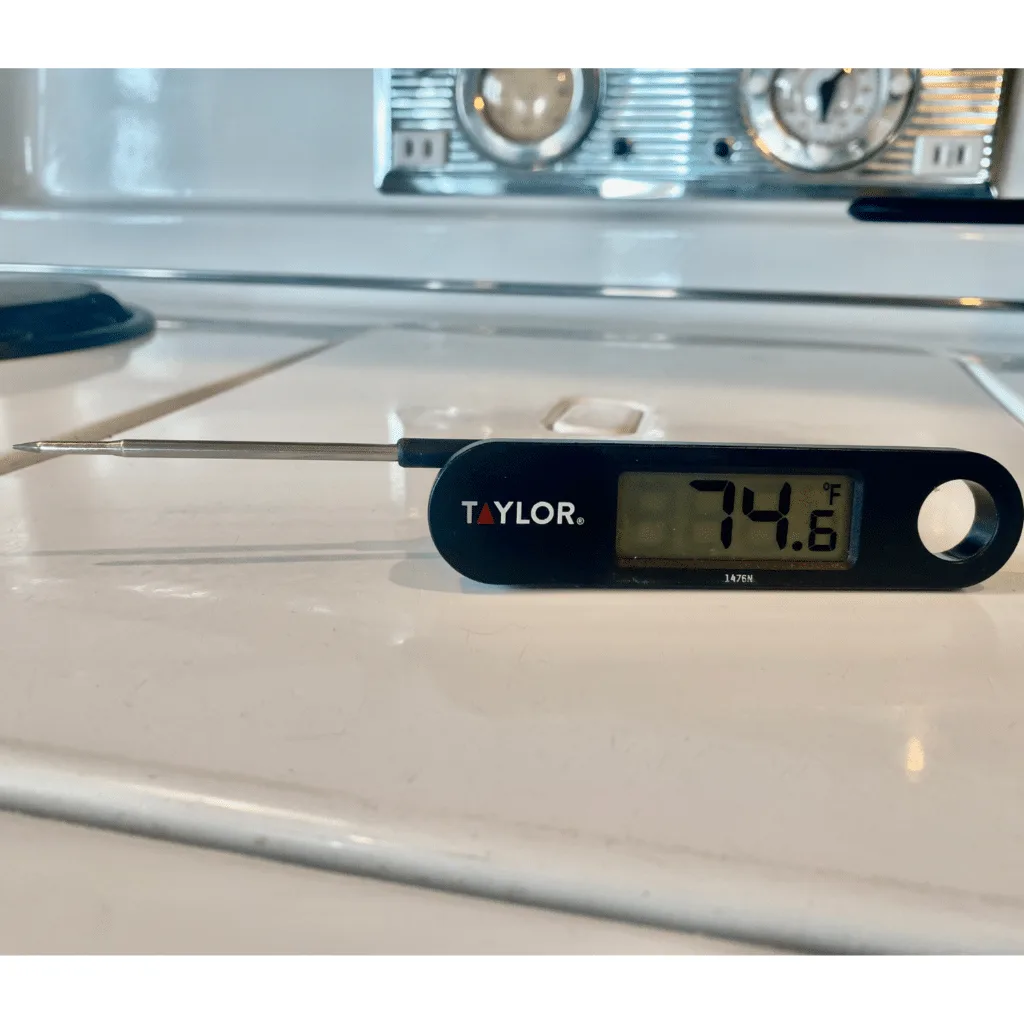
Image source: Bing (Web (fair-use with source credit))
Every air fryer runs a little different. The times above are starting points based on aggregate user reports across popular models like the Ninja, Cosori, and Instant Vortex lines. Your specific unit may run slightly hotter or cooler.
That's exactly why the thermometer matters more than the clock.
If you're using an Instant Vortex or similar model and want to confirm your unit's performance, our Is Instant Vortex Air Fryer Good review covers real-world temperature accuracy and cooking consistency across common recipes.
Internal Temperature Guide: When Is Your Roast Actually Done?
The single most reliable way to judge doneness is the internal temperature, not the clock. Every air fryer runs a little different, and the shape and starting temperature of your roast affect cook time more than any recipe can predict. An instant-read probe thermometer takes the guesswork out entirely.
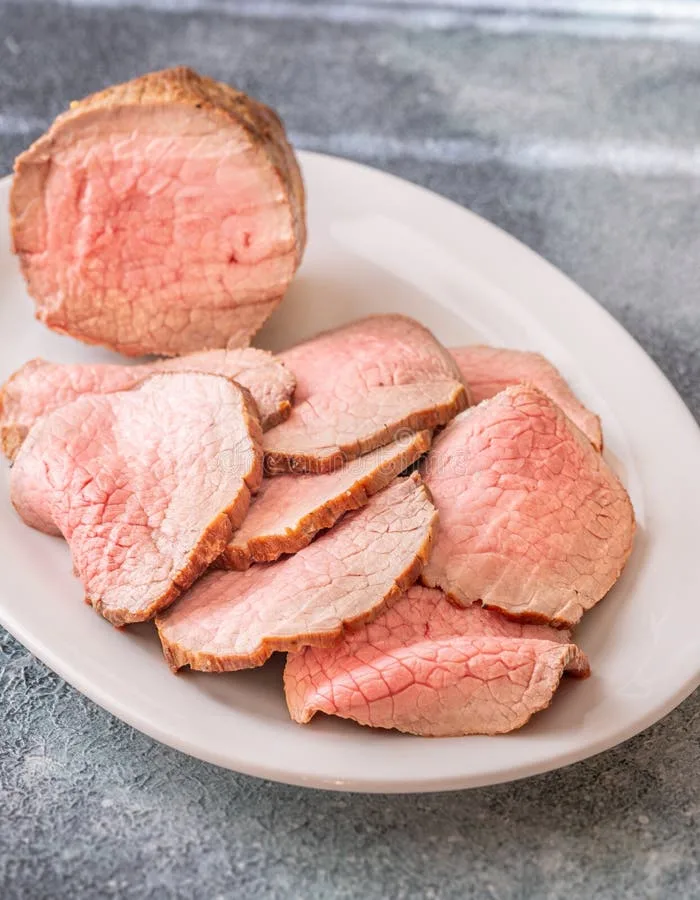
Image source: Bing (Web (fair-use with source credit))
Here are the target temperatures to pull your roast from the air fryer, accounting for carryover cooking during the rest period:
| Doneness | Pull Temp (from air fryer) | Final Temp (after rest) | Appearance When Sliced |
|---|---|---|---|
| Rare | 120°F | 125–128°F | Cool red center |
| Medium-rare | 125°F | 130–135°F | Warm red to pink center |
| Medium | 135°F | 140–145°F | Pink center, more brown throughout |
| Medium-well | 145°F | 150–155°F | Slightly pink center, mostly gray-brown |
| Well-done | 155°F | 160°F+ | Fully gray-brown, minimal moisture |
Per USDA FSIS guidelines, the safe minimum internal temperature for whole-muscle beef is 145°F with a 3-minute rest period. That said, whole intact roasts are lower risk than ground beef because surface bacteria is the primary concern, not interior contamination. Many home cooks and professional chefs serve roast beef at 130 to 135°F (medium-rare) and consider it safe for whole cuts.
Insert the probe into the thickest part of the roast, avoiding fat pockets and bone. Check in at least two spots if the roast is an irregular shape. Start checking 10 minutes before you expect it to be done so you don't overshoot.
Common Mistakes That Ruin Air Fryer Roast Beef
Most failed air fryer roasts come down to the same handful of errors. Here's what goes wrong and how to fix it.
Skipping the thermometer. This is the number one mistake. Times in any recipe, including ours, are estimates. Your air fryer might run 15 to 25 degrees hotter or cooler than the dial says.
A $12 instant-read thermometer eliminates the guesswork completely.
Cooking a braising cut like a roast. Chuck, brisket, and short ribs need moisture and time. The air fryer's dry heat makes them tough. Save those cuts for the slow cooker or Dutch oven.
Not resting the meat. When you slice into a roast immediately, the juices pour out onto the cutting board instead of staying in the meat. A 10 to 15 minute rest lets the muscle fibers relax and reabsorb moisture. The difference between a rested and unrested roast is dramatic.
Overcrowding the basket. If the roast touches the sides or sits too close to the heating element, air can't circulate properly. You get uneven cooking, pale spots, and sometimes steaming instead of browning. Leave at least an inch of space on all sides.
Starting with a cold roast. A roast straight from the fridge can take 15 to 20 minutes longer to reach target temperature in the center, which means the exterior overcooks while you wait. Let it sit out for 20 to 30 minutes before cooking.
Overcooking lean cuts. Eye of round and top round have very little fat. They go from perfectly pink to dry and stringy in just a few degrees. Pull them on the early side of your target and let carryover cooking do the rest.
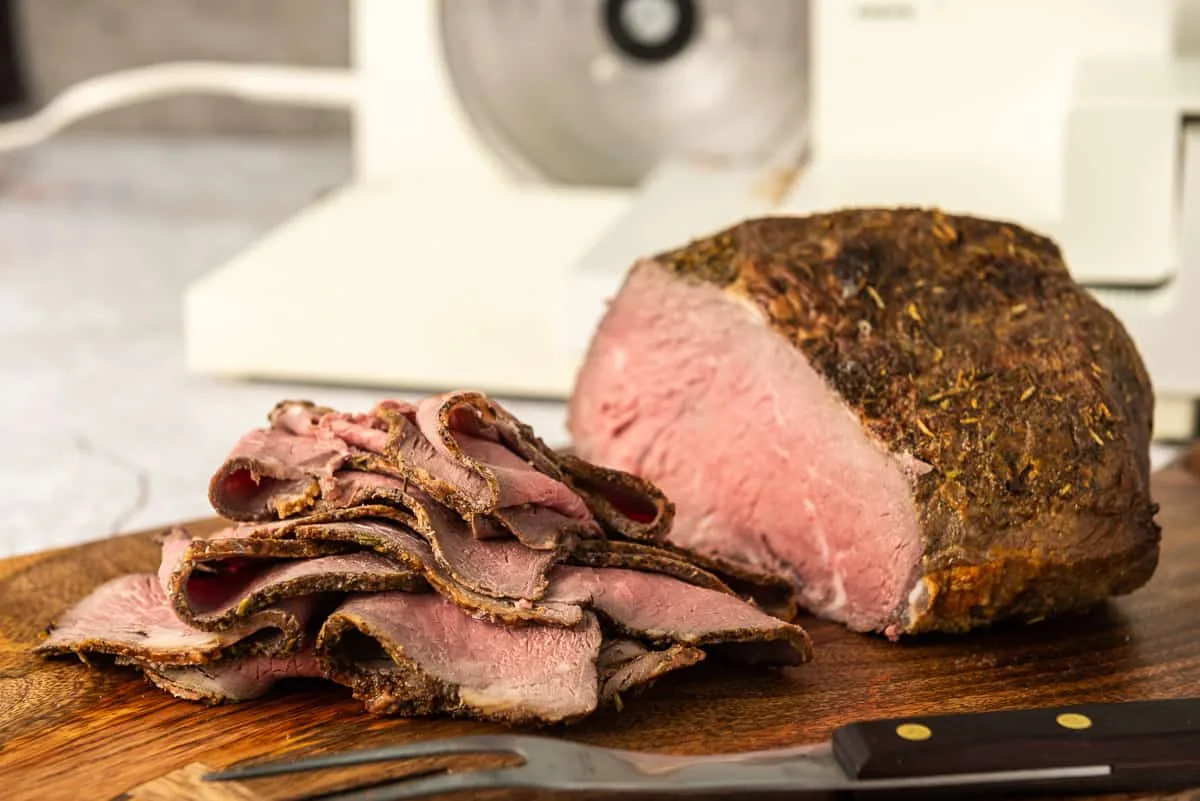
Image source: Bing (Web (fair-use with source credit))
One more mistake worth mentioning: not flipping the roast. The side facing down gets less direct heat. A single flip at the halfway point evens out the browning and helps the center cook through at the same rate as the exterior.
How to Get a Good Crust Without Drying Out the Middle
A great roast has two things: a deeply browned exterior and a juicy interior. Getting both in an air fryer is absolutely doable, but it requires a two-stage temperature approach.
Start hot. Preheat the air fryer to 375 to 400°F and let the roast sear for the first 5 to 8 minutes. This high-heat blast triggers the Maillard reaction, the chemical process that creates browning and complex flavor on the meat's surface.
You'll hear sizzling and see the exterior darken within minutes.
Then drop the temperature. After the initial sear, reduce to 325 to 350°F for the remainder of the cook. The lower temperature lets the interior come up to target without overcooking the outer layers.
This is the same principle as the reverse-sear method used by professional chefs, just adapted for the air fryer's smaller chamber.
A light brush of high-smoke-point oil before cooking helps the crust develop faster and more evenly. Avocado oil works well because it won't burn or smoke at 400°F. About a teaspoon rubbed over the seasoned surface is all you need.
If the crust still isn't as deep as you'd like after the roast is done, you can do a quick finish sear. After resting, pop the roast back in at 400 to 450°F for 2 minutes. The interior won't overcook much because the rest period already stabilized the temperature, but the exterior will get an extra layer of browning.
Air Fryer vs. Oven vs. Slow Cooker: Which Is Best for Roast Beef?
Each method produces a different result. The best choice depends on what you're prioritizing: speed, texture, convenience, or capacity.
Air fryer. Fastest cook time, best crust development, and the most energy efficient. A 2 pound eye of round takes 35 to 45 minutes in the air fryer versus 60 to 75 minutes in a conventional oven. The tradeoff is limited capacity.
If you're cooking for two to four people, the air fryer wins on almost every front.
Conventional oven. Best for larger roasts (4+ pounds) and for cooks who want precise, familiar temperature control. A full-size oven gives you more room and more even heat distribution for big cuts. The downside is longer preheating time, higher energy use, and a hotter kitchen.
Slow cooker. Produces a completely different texture: fall-apart tender with no crust. This is ideal for braising cuts like chuck roast that need hours of moist heat. If you want a traditional roast with a browned exterior and sliced presentation, the slow cooker won't deliver that.
| Factor | Air Fryer | Conventional Oven | Slow Cooker |
|---|---|---|---|
| Cook time (2 lb roast) | 35–45 min | 60–75 min | 6–8 hours |
| Crust/browning | Excellent | Good | None |
| Max roast size | 3–4 lb | 8+ lb | 4–6 lb |
| Energy use | Low | High | Low (over long time) |
| Best for | Lean roasts, small households | Large roasts, big families | Braising cuts, hands-off cooking |
For most people cooking a standard weeknight or Sunday roast, the air fryer is the best balance of speed, quality, and convenience. If you need to feed a crowd or cook a large prime rib, the conventional oven is still the right tool.
If you're trying to decide between an air fryer and a multi-cooker like the Instant Pot, our comparison at Is Instant Pot Or Air Fryer Better breaks down the strengths of each for different cooking styles.
How Long Does It Take to Cook a Beef Roast in an Air Fryer?
Cook times vary by cut, weight, and your specific air fryer model. The ranges below are for a standard 5 to 6 quart air fryer at the temperatures recommended in the step-by-step section above. Always verify with a thermometer rather than relying on time alone.
| Cut | Weight | Approximate Time (medium-rare) |
|---|---|---|
| Eye of round | 2 lb | 35–45 min |
| Eye of round | 3 lb | 45–55 min |
| Top round | 2 lb | 35–45 min |
| Sirloin tip | 2.5 lb | 40–50 min |
| Tri-tip | 2 lb | 35–45 min |
| Beef tenderloin | 2 lb | 20–30 min |
These times assume the roast started at or near room temperature. Add 10 to 15 minutes if cooking from refrigerator-cold. A frozen roast needs roughly 50% more time, though we recommend partial thawing for the best results.
Altitude, air fryer wattage, and even the color of your basket (dark baskets absorb more heat) can shift these numbers. That's another reason the thermometer is your most important tool. Start checking early, and pull the roast when it hits the target pull temperature for your desired doneness.
What to Do With Leftover Air Fryer Roast Beef
Leftover air fryer roast beef is one of the best problem-to-solution situations in home cooking. It keeps well, slices beautifully, and works in more meals than you'd expect.
Sandwiches. Thin-sliced air fryer roast beef makes a deli-quality sandwich. Layer it on crusty bread with horseradish mayo, sharp cheddar, and arugula. This is probably the single most popular use for leftovers, and it's the reason many people intentionally cook a larger roast than they need for dinner.
Beef bowls. Slice the cold roast into strips and toss them over rice with roasted vegetables, a fried egg, and a drizzle of soy-ginger sauce. The air fryer's dry heat gives the beef a texture that holds up well in grain bowls without getting soggy.
Salads. Thin strips of cold roast beef turn a simple green salad into a full meal. Pair it with a vinaigrette, some crumbled blue cheese, and toasted walnuts.
Freezing for later. Roast beef freezes well for up to 3 months. Slice it before freezing so you can pull out just what you need. Thaw in the refrigerator overnight for the best texture.
Store leftovers in an airtight container in the refrigerator. Sliced roast beef stays good for 3 to 4 days. Keep the remaining whole roast unsliced if you can, since cut surfaces dry out faster.
Expert Tips Nobody Tells You About Air Fryer Roast Beef
Use a rack or trivet. Elevating the roast even half an inch improves air circulation underneath and prevents the bottom from steaming. If your air fryer didn't come with a rack, a small wire cooling rack that fits inside the basket works perfectly.
Save the drippings. The brown bits and juices that collect in the basket are flavor gold. Pour them into a small saucepan, add a splash of beef broth, and reduce for a quick pan gravy. It takes 3 minutes and makes the meal feel complete.
Compound butter is your friend. Mix softened butter with minced garlic, chopped parsley, and a pinch of flaky salt. Slice the rested roast and lay a thin round of compound butter on each slice. It melts into the warm meat and adds richness that lean cuts especially benefit from.
Don't skip the flip, but keep it to one. Flipping once at the halfway point is ideal. Flipping more than that disrupts the crust formation and doesn't improve results.
Let your air fryer do its job. Resist the urge to open the basket constantly to check on things. Every time you open it, you lose heat and add 2 to 3 minutes to the cook time. Trust the thermometer and check only when it's time.
Frequently Asked Questions
Can I cook a frozen beef roast in the air fryer?
Yes, but expect about 50% longer cook time. A 2 pound frozen eye of round will take roughly 55 to 70 minutes instead of 35 to 45. The exterior may not brown as well.
For the best results, thaw the roast in the refrigerator overnight before cooking.
Why did my roast come out dry?
The most common cause is overcooking. Lean cuts like eye of round go from juicy to dry within a narrow temperature window. Pull the roast at 120 to 125°F for medium-rare and let carryover cooking bring it up.
Not resting the meat is the second most common cause. Always rest for 10 to 15 minutes.
Do I need to preheat the air fryer?
It helps. A preheated air fryer starts the browning process immediately. Most models preheat in 2 to 3 minutes.
If you skip preheating, add a few minutes to the total cook time and expect slightly less crust development.
Can I use a rub with sugar in it?
Be careful. Sugar burns at high temperatures and can create a bitter, blackened crust. If your rub contains brown sugar or any sweetener, keep the initial sear time short and the cooking temperature on the lower side, around 325°F.
What's the best air fryer for cooking roasts?
An 8 to 10 quart air fryer oven gives you the most flexibility for roasting. Basket-style models in the 5 to 6 quart range work well for roasts up to 3 pounds. If you're shopping for a model that handles larger cuts, our guide to the best 9 qt air fryer for large batches covers the top options as of 2026.
Is air fryer roast beef healthy?
Air fryer roast beef uses little to no added fat compared to pan-searing or deep-frying. The convection method cooks the meat in its own juices with minimal oil. Per USDA FoodData Central, a 4-ounce serving of eye of round contains roughly 140 calories, 24 grams of protein, and 4 grams of fat, making it one of the leaner beef options available.