
Many home cooks wonder if an air fryer is just a small convection oven. While they share similarities in using hot air for cooking, there are distinct differences in their design, performance, and best applications. This guide will break down these differences, helping you understand which appliance is best suited for your culinary needs. Discover the unique advantages of each, from speed and crispiness to versatility and capacity.
# Is An Air Fryer Different Than A Convection Oven?
The kitchen is a magical place where ingredients transform into delicious meals. With so many gadgets available, it’s easy to get confused about what each one does best. Two popular appliances that often cause a stir are the air fryer and the convection oven. You might be asking, “Is an air fryer just a mini convection oven?” While they share a common principle—using hot air to cook food—they have distinct differences that make them shine in different ways.
This guide will clear up the confusion. We’ll dive deep into what makes an air fryer unique and how it compares to its larger cousin, the convection oven. By the end, you’ll understand their individual strengths, how they cook, and which one is the right tool for your next culinary adventure. Whether you’re looking for a quick weeknight meal or preparing a feast for the family, this guide will help you choose wisely.
## Understanding the Basics: Hot Air Cooking
At their core, both air fryers and convection ovens work on the same fundamental principle: circulating hot air around the food. This process, known as convection cooking, is what gives food a nicely browned exterior and a cooked-through interior. It’s a much healthier alternative to deep frying, as it requires significantly less oil, if any at all.
### How Convection Ovens Work
A traditional oven heats food using radiant heat from heating elements, usually located at the top and bottom. A convection oven, on the other hand, adds a fan. This fan is the key. It actively circulates the hot air within the oven cavity.
This constant movement of hot air has several benefits:
- Faster Cooking: The moving air transfers heat more efficiently to the food’s surface, meaning your food cooks faster than in a conventional oven.
- Even Browning: The circulation helps to brown food more evenly on all sides, reducing the need for frequent turning.
- Crispier Textures: The intense airflow can create a delightful crispiness on the outside of foods.
### How Air Fryers Work
An air fryer is essentially a compact, countertop convection oven. It also uses a heating element (usually at the top) and a powerful fan to circulate hot air at very high speeds. The design of an air fryer is crucial to its performance. Most air fryers have a basket or tray that elevates the food, allowing air to circulate all around it.
The concentrated space and high-speed fan in an air fryer create an environment that mimics deep frying very effectively.
## Key Differences: Air Fryer vs. Convection Oven
Now that we understand the basic principle, let’s explore the key differences that set these two appliances apart. These differences influence how they cook, what they’re best at, and their overall utility in the kitchen.
### 1. Size and Capacity
This is perhaps the most obvious difference.
Air Fryers
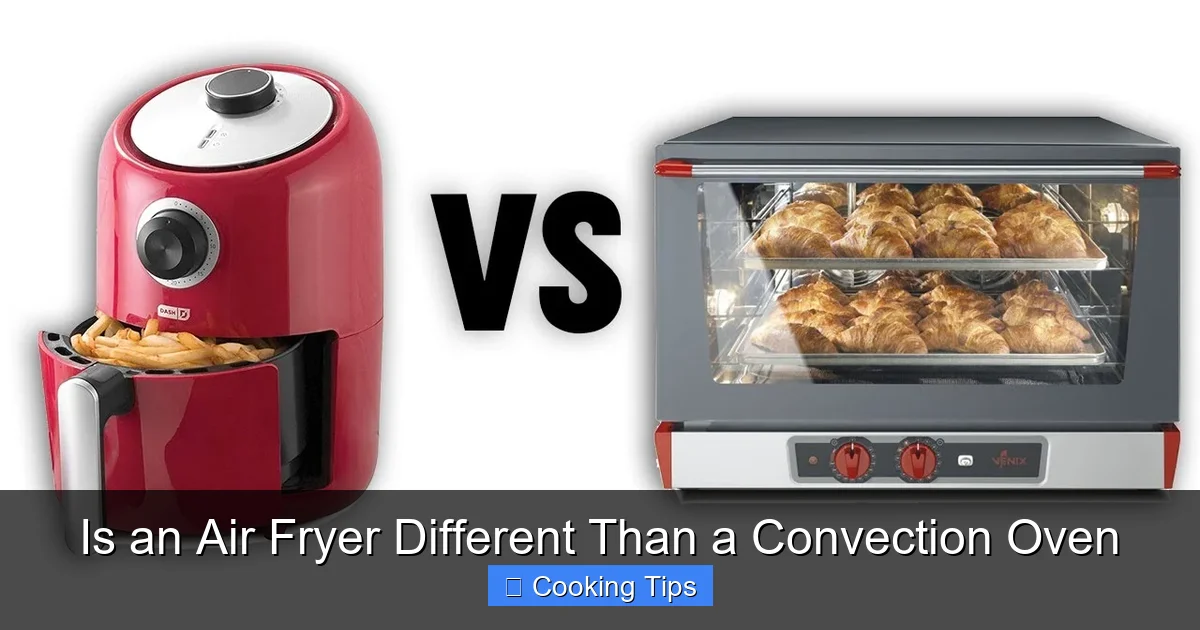
Air fryers are designed as compact countertop appliances. They come in various sizes, from small personal units to larger ones that can feed a family of four. However, even the largest air fryers have a significantly smaller capacity than a standard oven.
Example: A typical air fryer basket might hold enough fries for two people or a few chicken wings. Trying to cook a whole roast chicken or a large batch of cookies might be challenging or impossible.
Convection Ovens
Convection ovens are much larger. They can be built-in appliances that replace traditional ovens or larger countertop models that offer oven-like functionality. Their capacity is substantial, allowing you to cook large roasts, multiple dishes simultaneously, or bake a full-sized cake.
Example: You can easily roast a turkey, bake several pans of cookies, or cook a large pot pie in a convection oven, something that would be difficult or impossible in most air fryers.
### 2. Cooking Performance and Intensity
The way hot air is circulated and the size of the cooking chamber significantly impact performance.
Air Fryers
The combination of a compact space and a powerful, high-speed fan in an air fryer creates a very intense blast of hot air. This concentrated airflow is what gives air-fried food its signature crispiness and “fried” texture with minimal oil. It’s excellent for achieving a golden-brown crust on items like french fries, chicken wings, and even vegetables.
Intensity: The hot air is directed very specifically and powerfully at the food, leading to rapid cooking and browning. This can sometimes mean that food at the edges might cook faster than food in the center, requiring occasional shaking of the basket. For perfectly cooked items, learning how to operate an air fryer step by step is key.
Convection Ovens
While convection ovens also use a fan to circulate air, the larger cooking space and often less intense fan speed result in a gentler, more even distribution of heat. This is ideal for baking, roasting larger cuts of meat, and cooking delicate items where a super-crispy exterior isn’t the primary goal, or where uniformity is paramount.
Evenness: The broader circulation in a convection oven generally leads to more consistent cooking throughout the entire oven cavity. This makes it a better choice for baking multiple trays of cookies or ensuring a roast is evenly cooked on all sides without constant attention.
### 3. Speed and Preheat Time
Speed is another area where air fryers often have an edge.
Air Fryers
Because of their small size, air fryers heat up very quickly. Many require little to no preheating, meaning you can often start cooking almost immediately after turning them on. This makes them incredibly convenient for quick meals, snacks, or reheating leftovers.
Example: You can pop some frozen hamburgers in an air fryer and have them ready in under 15 minutes, including minimal preheat time.
Convection Ovens
Convection ovens, being much larger, take longer to preheat. While the fan helps them heat up faster than conventional ovens, they still require a significant preheating period before you can start cooking. This means that for very quick tasks, they might not be as efficient as an air fryer.
### 4. Best Uses and Food Types
Understanding what each appliance excels at can help you make the best choice for your cooking needs.
Air Fryers are Great For:
- Crispy Snacks: French fries, onion rings, chicken wings, mozzarella sticks.
- Reheating: Leftovers like pizza or fried chicken get wonderfully crispy again.
- Small Portions: Cooking for one or two people.
- Quick Meals: Fast cooking times for items like brats or chicken tenders.
- Vegetables: Roasting vegetables like broccoli or Brussels sprouts to a perfect crisp.
- Specific Items: Cooking items like crab cakes or beef patties to achieve that desirable crunchy exterior.
Convection Ovens are Great For:
- Roasting Large Meats: Whole chickens, turkeys, large roasts.
- Baking: Cakes, cookies, pies, bread, pastries, where even heat is crucial.
- Multiple Dishes: Cooking several items at once.
- Larger Batches: Preparing meals for families or gatherings.
- Even Cooking: When a uniformly cooked interior is more important than extreme crispiness.
- Delicate Items: Such as pastries or custards that might dry out too quickly in an air fryer.
### 5. Oil Usage
Both appliances are healthier alternatives to deep frying, but there are nuances.
Air Fryers
Air fryers are champions of minimal oil. You can achieve a crispy, fried-like texture with just a tablespoon or even no oil at all for many foods. For best results and even browning, a light spray or toss with oil is often recommended.
Convection Ovens
Convection ovens also reduce the need for oil compared to conventional roasting or frying, but they might require slightly more oil than an air fryer for achieving a similar level of crispiness, especially on larger items.
### 6. Versatility Beyond Roasting/Frying
While both excel at roasting and achieving crispiness, their versatility differs.
Air Fryers
Some air fryers offer multi-functionality, acting as dehydrators, rotisseries, or even slow cookers, depending on the model. However, their primary strength remains in mimicking the results of deep frying and quick roasting.
Convection Ovens
Convection ovens are highly versatile. They can perform all the functions of a conventional oven (baking, broiling, roasting) and do them more efficiently. They can handle a wider range of cooking techniques and food types due to their size and temperature control.
## When to Choose Which Appliance?
Making the right choice depends on your cooking habits and kitchen setup.
Choose an Air Fryer if:
- You frequently cook for one or two people.
- You love crispy snacks and appetizers like fries, wings, or nuggets.
- You want to reheat leftovers and make them crispy again.
- You’re looking for a fast way to cook weeknight meals.
- You have limited counter space.
- You want to reduce your oil consumption significantly.
- You are interested in cooking specific items like steaks or biscuits quickly.
Choose a Convection Oven if:
- You regularly cook for a family or entertain guests.
- You do a lot of baking (cakes, cookies, bread).
- You frequently roast large cuts of meat or whole poultry.
- You want a single appliance that can handle a wide variety of cooking tasks efficiently.
- You have ample kitchen space.
- You need to cook multiple dishes at once.
- You are looking for even heat distribution for delicate recipes.
Key Takeaways
- Air Fryers Excel at Crispiness: Due to their compact size and intense, concentrated hot air circulation, air fryers produce exceptionally crispy results, ideal for foods like fries and fried chicken.
- Convection Ovens Offer Versatility and Capacity: With larger capacity and more even, broader heat distribution, convection ovens are better suited for roasting larger items, baking multiple dishes, and accommodating bigger meals.
- Speed is an Air Fryer’s Advantage: Air fryers preheat faster and cook most foods more quickly than convection ovens, making them a great option for weeknight meals.
- Convection Ovens Provide More Even Cooking: While air fryers are powerful, their concentrated airflow can sometimes lead to uneven cooking if food isn’t arranged properly. Convection ovens generally offer more uniform heat.
- Size and Space Matter: Air fryers are countertop appliances, ideal for smaller kitchens or for cooking smaller portions. Convection ovens are typically built-in or larger countertop units, suitable for families and larger cooking tasks.
- Air Fryers Use Less Oil: Both appliances cook with hot air, reducing the need for oil compared to traditional deep frying, but air fryers are particularly efficient in achieving a fried texture with minimal or no added fat.
Can You Use an Air Fryer Like a Convection Oven?
Yes, to a certain extent. An air fryer is, in essence, a specialized, compact convection oven. You can cook many of the same foods in an air fryer that you would cook in a convection oven, such as vegetables or smaller cuts of meat. However, you must be mindful of the size limitations and the intensity of the airflow.
Trying to bake a large cake or roast a turkey in an air fryer designed for smaller portions will likely lead to uneven cooking and disappointing results. Conversely, using a large convection oven for a single serving of fries might be less efficient than using a dedicated air fryer.
Can You Use a Convection Oven Like an Air Fryer?
Yes, you can achieve similar results to an air fryer in a convection oven, but with some caveats. You’ll need to adjust cooking times and temperatures, and the results might not be as intensely crispy as what an air fryer can produce. The smaller, more concentrated cooking chamber of an air fryer, coupled with its powerful fan, is specifically designed to mimic deep frying.
To get crispier results in a convection oven, you might need to:
- Set the convection setting to a higher temperature.
- Ensure good air circulation around the food by not overcrowding the pans.
- Consider using a wire rack for better airflow underneath.
- For smaller items, using a countertop convection oven that’s smaller than a full-sized one can bring you closer to air fryer results. Many air fryer toaster oven recipes leverage this.
Troubleshooting Common Issues
Even with the best appliances, you might encounter a few snags.
Problem: Food is too dry in the air fryer.
Solution:
Air fryers can sometimes dry out food due to the intense hot air. Try using a little more oil, or ensure you are not overcooking. Some foods, like cornish hens, benefit from a light basting or wrapping in foil for part of the cooking time.

Visual guide about Is an Air Fryer Different Than a Convection Oven
Image source: greenkithome.com
Visual guide about Is an Air Fryer Different Than a Convection Oven
Image source: i.ytimg.com
Problem: Uneven cooking in the air fryer.
Solution:
This is often due to overcrowding the basket or not shaking the food. Ensure there’s space for air to circulate around each piece. Shake the basket halfway through cooking for even browning. If cooking larger items, check how to pick a good air fryer that might suit your needs, as size and basket design can impact this.
Problem: Convection oven is taking too long to cook.
Solution:
Ensure your convection oven is properly preheated. Also, check that the convection fan is actually on and working. Sometimes, the fan speed can be adjusted, so verify it’s set appropriately for the recipe.
Problem: Food isn’t getting crispy in the convection oven.
Solution:
Try increasing the temperature slightly or using the convection setting if you aren’t already. Ensure you’re not overcrowding the baking sheet, as this restricts airflow. For extra crispiness, you might want to try cooking smaller portions, similar to how you would in an air fryer, perhaps by dividing a large batch into smaller pans.
Conclusion

Visual guide about Is an Air Fryer Different Than a Convection Oven
Image source: zestfulkitchen.com
So, is an air fryer different than a convection oven? Yes, they are. While both leverage the power of hot air circulation for cooking, their design, size, and intensity create distinct cooking experiences.
The air fryer is a champion of speed and crispiness, perfect for quick snacks, smaller meals, and achieving that desirable fried texture with minimal oil. It’s your go-to for convenience and achieving golden-brown perfection on items like frozen pizza or chicken wings.
The convection oven, on the other hand, is the versatile workhorse of the kitchen. Its larger capacity and more even heat distribution make it ideal for baking, roasting larger items, and cooking for a crowd. It offers a broader range of culinary possibilities for family-sized meals.
Understanding these differences allows you to choose the right tool for the job, maximizing efficiency and deliciousness in your kitchen. Whether you own one, the other, or both, you’re well-equipped to create amazing meals!