
Curious if your air fryer has exposed heating coils? This guide clarifies that air fryers do not use open coil heating elements like traditional broilers. Instead, they feature a compact, enclosed heating element combined with a powerful fan. This design creates a hot air circulation system, mimicking deep-frying results without immersion in oil.
Welcome to our guide on a question many air fryer users ponder: “Is an air fryer an open coil appliance?” If you’ve ever looked at your air fryer and wondered about its internal workings, you’re in the right place. Many kitchen appliances, like broilers and some toaster ovens, use visible, exposed heating coils. This can lead to confusion about how air fryers achieve their signature crispy results.
In this comprehensive guide, we’ll break down exactly how an air fryer heats up, what its heating element looks like, and why it’s distinctly different from appliances with open coils. We’ll explore the technology behind this popular kitchen gadget, ensuring you understand its operation, safety features, and the amazing meals you can create. Get ready to demystify your air fryer and cook with confidence!
Key Takeaways
- Air fryers use a contained heating element, not an open coil: Unlike broilers or toaster ovens with visible, exposed coils, an air fryer’s heating element is safely enclosed within the appliance’s body.
- Rapid air circulation is key: The enclosed heating element works with a high-speed fan to rapidly circulate hot air, creating a crispy texture similar to deep-frying.
- Safety is a priority: The enclosed design of the heating element prevents direct contact with food or hands, making it safer than appliances with open coils.
- Efficiency and even cooking: This closed-loop system heats food quickly and evenly, leading to consistent results and faster cooking times.
- Difference from traditional ovens: The enclosed, concentrated heat and fan mechanism distinguish air fryers from traditional ovens and broilers, which rely on radiant heat from open coils.
Understanding Appliance Heating Elements
Before we dive into the specifics of air fryers, let’s quickly touch upon what “open coil” really means in the context of kitchen appliances.
What Are Open Coils?
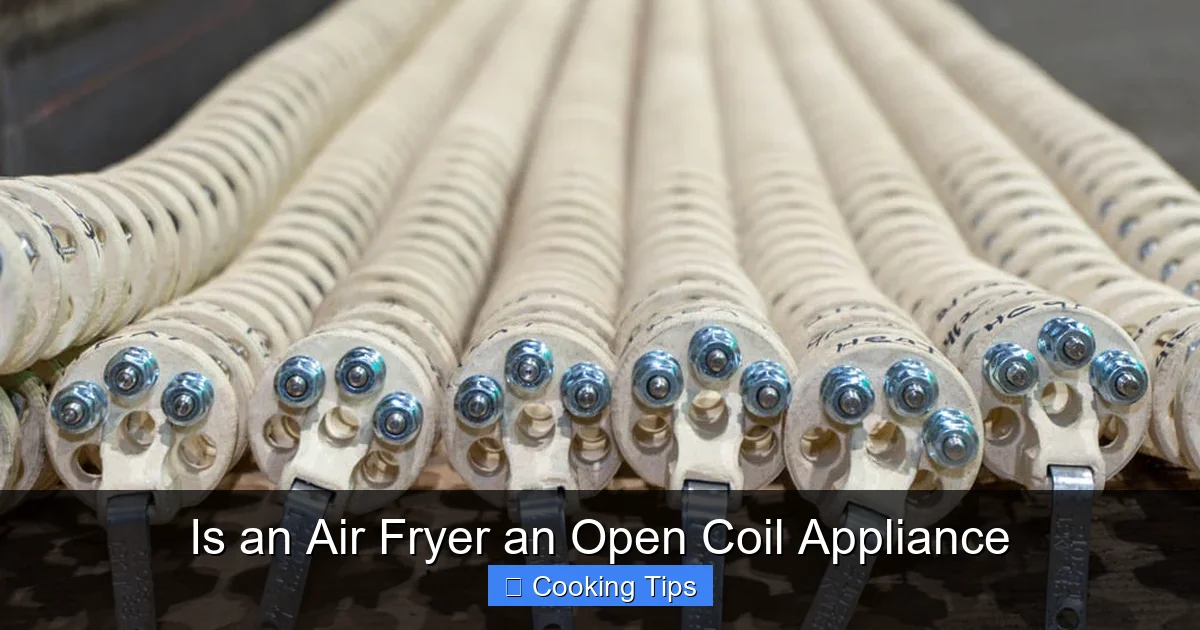
Appliances with open coil heating elements typically have visible, metallic coils that glow red hot when powered on. These coils directly radiate heat. You’ll commonly find these in:
- Broilers: Found in many conventional ovens, broilers use intense, direct heat from exposed coils to quickly cook and brown food from above.
- Toaster Ovens: Many older or simpler toaster ovens also utilize visible heating coils, both at the top and bottom, to toast bread or bake small items.
- Electric Stovetop Burners: Some electric stovetops have coiled burners that heat up directly.
The primary characteristic of an open coil is that the heating element is not shielded. It’s directly exposed to the cooking environment. This allows for intense radiant heat but also poses potential safety risks if something comes into direct contact with the hot coil.
How Does an Air Fryer Heat Up?
Now, let’s shift our focus to the star of the show: the air fryer. The way an air fryer generates heat is quite different from the radiant heat of open coils.
The Enclosed Heating Element
The most crucial point to understand is that **an air fryer does NOT use an open coil heating element.** Instead, it houses a heating element that is safely enclosed within the appliance’s chassis. This element is typically located at the top of the air fryer, directly above the cooking basket.
Location and Design
You won’t see glowing red coils when you look inside a typical air fryer. The heating element is usually a metal rod or a tightly wound coil that is concealed behind a protective cover or integrated into the top fan assembly. This enclosure is vital for both safety and efficient operation.
The Role of the Fan
The magic of the air fryer truly comes to life with its powerful, high-speed fan. This fan is positioned close to the heating element. When the heating element gets hot, the fan immediately begins to circulate this superheated air at an incredibly rapid pace around the food placed in the cooking basket.
Mechanism of Action
This rapid circulation of hot air is what gives the air fryer its name and its unique cooking capabilities. It creates a convection effect, similar to a convection oven but much more concentrated and intense. The hot air constantly surrounds the food, cooking it quickly and evenly while simultaneously drawing out moisture from the surface, leading to that desirable crispy, “fried” texture.
Air Fryer vs. Open Coil Appliances: Key Differences
Understanding the distinct heating mechanisms highlights several key differences between air fryers and appliances with open coils.
Heat Distribution
*
Air Fryer: Uses convection. The enclosed heating element heats the air, and the fan distributes this hot air in a swirling motion around the food. This results in very even cooking and browning.

Visual guide about Is an Air Fryer an Open Coil Appliance
Image source: static.wixstatic.com

Visual guide about Is an Air Fryer an Open Coil Appliance
Image source: airfryingfoodie.com
*
Open Coil Appliance: Uses radiant heat. The exposed coils directly emit heat, cooking the food that is closest to them and often leading to uneven cooking if not carefully managed. For instance, when cooking a steak with an air fryer, the consistent hot air circulation ensures a more uniform sear than you might achieve with a broiler’s direct, intense heat.
Cooking Results
*
Air Fryer: Achieves a crispy exterior and a moist interior, mimicking deep-fried food without excessive oil. It’s excellent for foods like french fries, chicken wings, and even Tyson chicken nuggets.
Open Coil Appliance: Primarily excels at charring, browning, and quickly cooking the surface of food, like in a broiler. It can also dry out food more easily due to direct heat exposure.
Safety Features
*
Air Fryer: The enclosed heating element and often a filter system make it safer. There’s no risk of accidental contact with hot coils or food drippings igniting directly on the element.
Open Coil Appliance: Requires more caution. Grease or food particles can drip onto the exposed coils, potentially causing smoke or even flames. This is why careful monitoring is needed when cooking bacon in an Instant Pot air fryer attachment or a traditional broiler.
Energy Efficiency
*
Air Fryer: Generally more energy-efficient for small to medium-sized cooking tasks. The compact space and rapid air circulation mean less time and energy are needed compared to preheating a large oven.
Open Coil Appliance: Can be less efficient. Broilers, for example, consume a lot of energy to generate intense heat quickly. A full-size oven using open coils for baking is also less efficient than an air fryer for smaller portions.
Why the Distinction Matters for Home Cooks
Visual guide about Is an Air Fryer an Open Coil Appliance
Image source: heat-inc.com
Understanding the difference between an air fryer’s enclosed heating system and an open coil setup has practical implications for your cooking and appliance usage.
Cooking Techniques and Expectations
Knowing that your air fryer is a convection device, not a radiant broiler, helps set the right expectations. While it can brown and crisp food beautifully, it’s not designed for the same charring intensity as a broiler. For example, while you can get a fantastic sear on a porterhouse steak in an air fryer, achieving the same deep char marks you might want from grilling or broiling might require a different approach or appliance.
Cleaning and Maintenance
The enclosed nature of the air fryer’s heating element makes it significantly easier to clean. Food debris is less likely to directly contact the element, and any splatters are usually contained. This contrasts with open coil appliances, where cleaning can be more challenging and requires careful maneuvering around delicate, hot elements.
Safety and Peace of Mind
For households with children or pets, the enclosed heating element in an air fryer offers an added layer of safety. The risk of burns from touching a hot element is greatly reduced. This is a significant advantage over appliances where exposed coils are a common feature.
Troubleshooting Common Air Fryer Concerns Related to Heating
While air fryers are generally reliable, you might encounter issues related to their heating system.
Uneven Cooking
If you notice uneven cooking, it’s usually not a fault of the heating element itself but rather how the air is circulating.
Solutions:
- Ensure you don’t overcrowd the basket. Food needs space for the hot air to circulate freely.
- Shake the basket halfway through cooking. This is especially important when cooking items like vegetables or fries.
- Make sure the air fryer is on a level surface.
Food Not Getting Crispy
This can happen if the temperature is too low or the cooking time is insufficient.
Solutions:
- Always preheat your air fryer.
- Ensure you’re using the recommended temperature and time for your recipe. Experimenting with slightly higher temperatures or longer times can help.
- Pat your food dry before cooking, especially meats and vegetables. Excess moisture prevents crisping.
Strange Smells
A slight plastic smell upon first use is normal as manufacturing residues burn off. However, persistent or burning smells could indicate an issue.
Solutions:
- For new units, run the air fryer empty at a high temperature for 10-15 minutes to dissipate any manufacturing odors.
- If the smell persists, it might be food residue building up on the heating element or fan area. Refer to your manual for cleaning instructions. Avoid using abrasive cleaners on the heating element.
- Ensure there’s no foreign object obstructing the fan or heating element.
Conclusion
So, to answer the question definitively: **No, an air fryer is not an open coil appliance.** It operates using a sophisticated system that involves an enclosed heating element and a powerful fan to circulate hot air rapidly. This design is what allows it to “fry” food with minimal oil, delivering crispy, delicious results.
Understanding this fundamental difference helps you appreciate the technology behind your air fryer, use it more effectively, and cook with greater confidence. Whether you’re making crispy fries, perfectly cooked biscuits, or tender chicken, knowing your appliance’s capabilities ensures you get the best results every time. Enjoy your healthier, crispy creations!