
Many home cooks wonder if an air fryer is the same as a microwave. While both are convenient kitchen appliances, they operate very differently and produce distinct results. An air fryer cooks by circulating hot air to create crispy, browned food, similar to deep frying. A microwave, however, uses electromagnetic radiation to heat food from the inside out, resulting in soft, steamed textures. Understanding these core differences is key to choosing the right appliance for your culinary tasks.
Is Air Fryer The Same As Microwave? Understanding the Differences
In today’s busy world, kitchen gadgets that promise speed and convenience are incredibly popular. Two appliances that often grace kitchen countertops are the air fryer and the microwave. It’s a common question: Is an air fryer the same as a microwave? While they both offer a way to get food ready quickly, the answer is a resounding no. They are fundamentally different machines with distinct cooking methods, capabilities, and end results. Understanding these differences is crucial for any home cook looking to make the most of their kitchen appliances. This guide will break down exactly how each appliance works, what they’re best at, and why you might choose one over the other.
Key Takeaways
- Air fryers and microwaves are fundamentally different appliances, despite both being common in modern kitchens.
- Air fryers use hot air circulation to cook food, mimicking the effect of deep frying and producing crispy textures.
- Microwaves use electromagnetic radiation to heat food quickly, often resulting in softer, steamed textures.
- Cooking time varies greatly; microwaves are significantly faster for reheating and cooking certain items, while air fryers excel at achieving crispiness.
- Food texture and flavor are distinctly different; air fryers brown and crisp, while microwaves tend to make food moist and sometimes rubbery.
- Versatility differs; air fryers are great for roasting, baking, and crisping, while microwaves are best for reheating and defrosting.
- Energy efficiency can also be a consideration, with microwaves generally being more energy-efficient for short tasks.
How an Air Fryer Cooks Food
At its core, an air fryer is a compact, high-powered convection oven. Its primary cooking mechanism involves circulating extremely hot air at high speeds around the food. This rapid air movement is key to its effectiveness.
The Science Behind the Crisp
Imagine a powerful fan at the top of the air fryer chamber. This fan blows hot air down and around the food basket, ensuring that every surface of your food is exposed to intense heat. This process mimics the results of deep frying by creating a Maillard reaction – the chemical process responsible for browning and developing rich flavors on the surface of food. The dry, hot air essentially dehydrates the exterior of the food while cooking it through, leading to that desirable crispy texture.
What an Air Fryer is Best For
Because of its hot air circulation, an air fryer excels at tasks that require crisping, browning, and even a bit of roasting. It’s a fantastic tool for:
- Making french fries, onion rings, and other fried favorites healthier and crisper than oven-baked versions.
- Reheating leftovers to restore their original crispiness, something a microwave struggles with. Think pizza, fried chicken, or even roasted vegetables.
- Cooking small batches of proteins like chicken wings, fish fillets, or even a small roast. For example, learning how to cook a roast in the air fryer can yield surprisingly tender results with a nice crust.
- Baking small items like cookies, muffins, or even a small cake. You can even explore how to cook a cake in the air fryer for a convenient treat.
- Roasting vegetables to perfection, bringing out their natural sweetness and adding a slight char.
Practical Air Fryer Tips
To get the best results from your air fryer:
- Don’t overcrowd the basket: This is crucial for proper air circulation. Cook in batches if necessary.
- Shake or flip food: For even cooking and crisping, shake the basket halfway through or flip larger items.
- Use a little oil: While you don’t need to deep fry, a light mist or toss with oil helps achieve a golden-brown exterior.
- Preheat your air fryer: Just like a conventional oven, preheating ensures your food starts cooking immediately at the right temperature.
How a Microwave Cooks Food
A microwave oven uses a completely different technology to heat food: electromagnetic radiation. It’s designed for speed and convenience, particularly for reheating and defrosting.
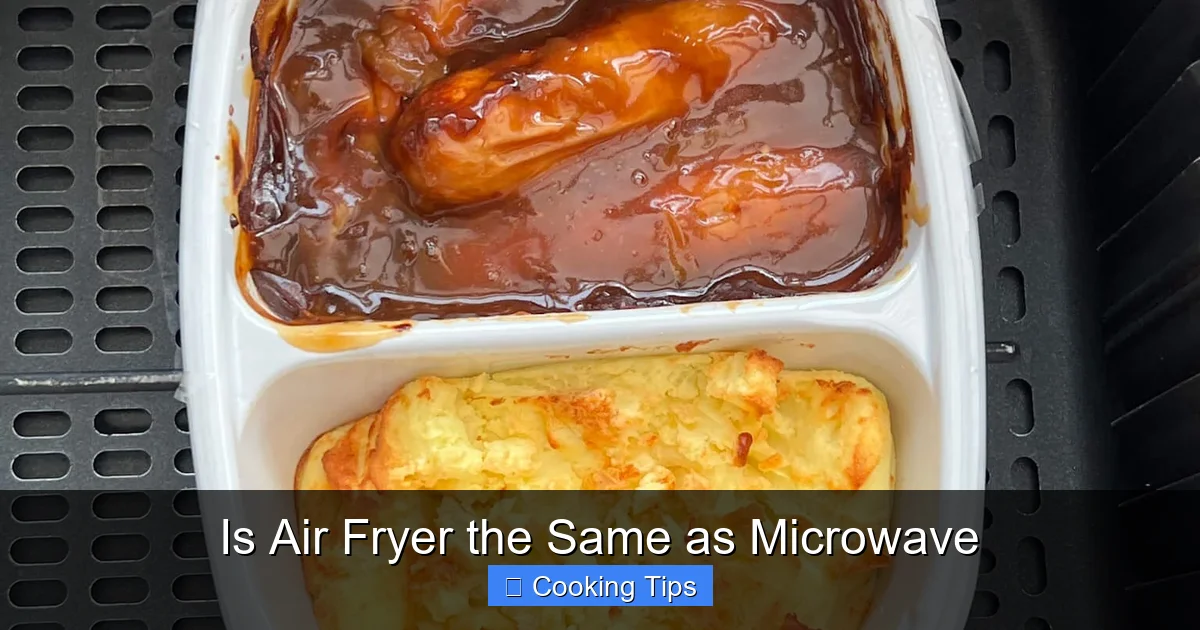
Visual guide about Is Air Fryer the Same as Microwave
Image source: recipethis.com
The Science of Microwave Cooking
Inside a microwave, a component called a magnetron generates microwaves, a type of electromagnetic wave. These waves are directed into the cooking chamber, where they interact with water molecules in your food. The microwaves cause these water molecules to vibrate rapidly, generating heat. This process heats the food from the inside out, making it cook very quickly. However, because it relies on water content, it doesn’t typically lead to browning or crisping.
What a Microwave is Best For
Microwaves are champions of speed and convenience for specific tasks:
- Reheating leftovers: They are incredibly fast at warming up most foods.
- Defrosting frozen items: Microwaves can quickly thaw meats and other frozen ingredients.
- Cooking foods with high water content: Vegetables, rice, and some pre-packaged meals cook well in a microwave.
- Making quick snacks: Think popcorn, instant oatmeal, or mug cakes.
- Steaming: While not as controlled as a dedicated steamer, a microwave can effectively steam vegetables.
Practical Microwave Tips
To make the most of your microwave:
- Use microwave-safe dishes: Avoid metal, as it can cause sparks.
- Cover food: This helps to retain moisture and heat evenly, preventing splatters. Use a microwave-safe lid or plastic wrap with vents.
- Stir or rotate food: Microwaves can sometimes heat unevenly, so stirring halfway through ensures a more consistent temperature.
- Cook in shorter intervals: It’s easier to add more time than to fix overcooked food.
Key Differences Summarized
The fundamental differences between an air fryer and a microwave lie in their cooking method, the texture they produce, their speed, and their versatility.
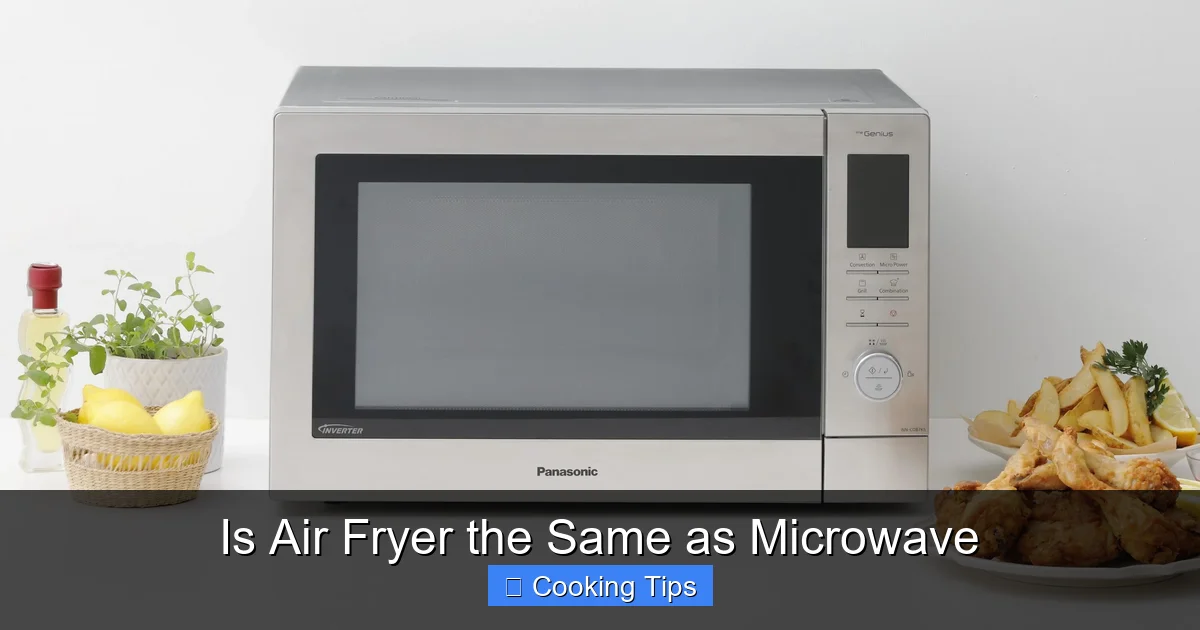
Visual guide about Is Air Fryer the Same as Microwave
Image source: gadgetvoize.com
Cooking Method
Air Fryer: Uses hot air circulation (convection). This method is similar to how a small oven or broiler works.
Microwave: Uses electromagnetic radiation to excite water molecules. This is a unique heating method that doesn’t involve traditional heat transfer like conduction or convection.
Texture and Flavor
Air Fryer: Produces crispy, browned, and often slightly dehydrated exteriors. It develops flavors through browning, much like roasting or frying.
Microwave: Tends to produce moist, soft, and sometimes steamed textures. It generally does not brown or crisp food, which can lead to a less appealing texture for certain items.
Speed
Air Fryer: Faster than a conventional oven for many tasks due to its compact size and powerful fan, but typically slower than a microwave for simple reheating.
Microwave: Extremely fast for reheating, defrosting, and cooking foods with high water content.
Versatility
Air Fryer: Excellent for achieving crispy textures, roasting, and some baking. It can replace some functions of a toaster oven or a small oven.
Microwave: Primarily for quick reheating, defrosting, and cooking specific types of food. It’s not designed for browning or crisping.
Energy Efficiency
Air Fryer: Can be more energy-efficient than a large oven for small portions, but generally uses more energy per minute than a microwave.
Microwave: Generally very energy-efficient for short cooking times due to its speed and focused heating method.
When to Use Which Appliance
The choice between using an air fryer or a microwave often comes down to the desired outcome and the type of food you’re preparing.

Visual guide about Is Air Fryer the Same as Microwave
Image source: cdn.mos.cms.futurecdn.net
Choose the Air Fryer For:
- Achieving that satisfying crunch on fries, chicken tenders, or breaded items.
- Reheating pizza or leftovers that you want to taste fresh and crispy again.
- Roasting small vegetables to perfection.
- Cooking small batches of proteins like a pork steak or some delicious cornish hen.
- Making homemade items like waffle fries from scratch.
Choose the Microwave For:
- Quickly reheating yesterday’s dinner.
- Defrosting a pack of chicken or ground beef.
- Making a quick cup of tea or heating up water for instant soup.
- Cooking popcorn.
- Steaming vegetables to retain nutrients.
Can They Be Used Together?
Absolutely! In many cases, the two appliances can complement each other beautifully.
- Pre-cook and then crisp: You might microwave certain foods to cook them through quickly (like some vegetables or even a pot pie) and then transfer them to the air fryer for a few minutes to crisp up the exterior.
- Thaw and cook: You can use the microwave’s defrost function to thaw a frozen item, like a frozen burger, and then finish it in the air fryer for a perfect sear and crust.
Troubleshooting Common Issues
While both appliances are generally user-friendly, you might encounter a few hiccups.
Air Fryer Issues:
- Food isn’t crispy: This is usually due to overcrowding the basket, not using enough (or any) oil, or not cooking at a high enough temperature. Ensure good air circulation and consider a light coating of oil.
- Uneven cooking: Make sure to shake the basket or flip food halfway through the cooking process.
Microwave Issues:
- Food is rubbery or dry: This can happen if food is overcooked. Try cooking in shorter intervals and stirring more frequently. Using a microwave-safe cover can also help retain moisture.
- Uneven heating: Stirring or rotating food is the best solution. Arrange food in a ring shape on the plate for more even heating.
Conclusion
So, is an air fryer the same as a microwave? No, they are distinct appliances with different strengths. An air fryer is your go-to for achieving crispy, browned, and roasted foods using hot air circulation. It’s excellent for everything from making healthier fries to reheating leftovers to taste like they were freshly cooked. A microwave, on the other hand, is your speed champion, utilizing electromagnetic radiation to heat food rapidly from the inside out, making it ideal for reheating, defrosting, and cooking foods with high moisture content.
Having both in your kitchen provides a powerful toolkit for diverse cooking needs. One isn’t necessarily “better” than the other; they simply serve different purposes. By understanding how each appliance works and what it excels at, you can make informed decisions in the kitchen, saving time and achieving delicious results, whether you’re craving a crispy bite or a quick warm-up.